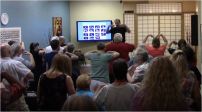
Why Exercise Your Whole Body?

Why Exercise Your Whole Body?

“I run everyday, but my knees and back always ache.”

“Stretching is great for my hamstrings and back, but I get winded walking up 2 flights of stairs”

“My muscles look strong and athletic but I can’t touch my toes and my stomach is always bloated or uncomfortable”

I workout at the gym everyday but still trip walking up or down stairs”

“Staying active is so important to me, but I don’t have time to learn about how my body works”

People walk, run, swim, stretch and many other methods to stay healthy. In the US Only 23.2% of U.S. adults 18 to 64 met the 2018 CDC guidelines for both aerobic and muscle-strengthening exercise. Most people that do exercise, do so with the intention that by increasing their heart rate, strengthening the main muscles groups and breaking a sweat, that they will maintain a greater level of overall fitness and/or wellness. These actions don’t always provide whole body wellness.

Does anybody really exercise with specific goals of maintaining joint strength, bone density, spinal flexibility, range of motion, balance, control, eye-hand coordination, lung capacity, stress relief or health of all of the internal organs? Maybe.
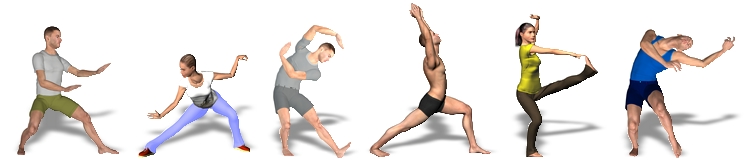
Those that are knowledgeable in their practices of yoga, qigong, Pilates, Tai Chi and other martial arts, often exercise specifically to engage the whole body and mind with every exercise. They don’t wait to have arthritis in their body to strengthen the joints. Or begin to stumble and lose balance to realize that vestibular balance diminishes as we age with muscles weakening and stiffening. These practices inherently provide benefits that most conventional exercises (walking, running, swimming, weight lifting, cycling, etc.) offer at limited amounts or are somewhat geared towards younger or more fit individuals.
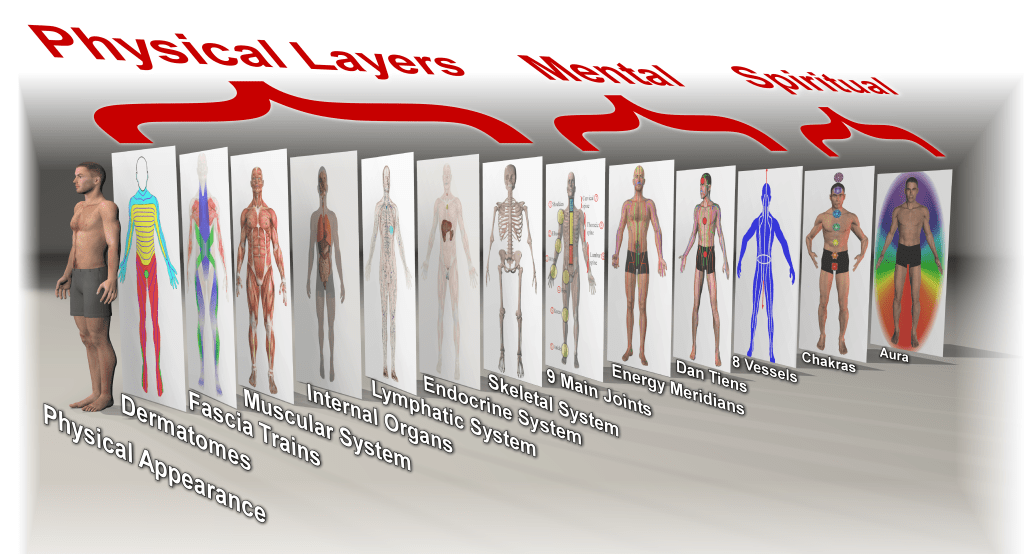
For example, will running strengthen the joints, provide flexibility in the spine or improve digestion? Does weight training help prevent arthritis in the toes and fingers or strengthen the immune and lymphatic systems? Does swimming increase bone density or balance? Each method has its own set of pros and cons.
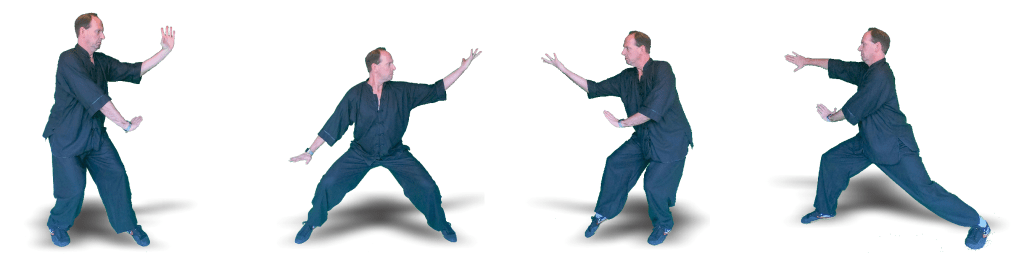
So if want to increase your lung capacity, practice exercises that can offer deliberate and deeper breathing. If you have a stiff or injured lower back, practice methods that stretch and strengthen the muscles, tendons and ligaments relative to the spine. If your bones are weak, weight bearing exercises are needed. Yoga, qigong and tai chi provide all of the the prior benefits and many more, all within their respective curriculums.

Learn how this all works from private, small or group instruction.

Be well!

Jim Moltzan 407-234-0119

www.MindAndBodyExercises.com

https://www.facebook.comMindAndBodyExercises

https://www.youtube.com/c/MindandBodyExercises

https://mindandbodyexercises.wordpress.com

/https://umareg.com/masters-council/

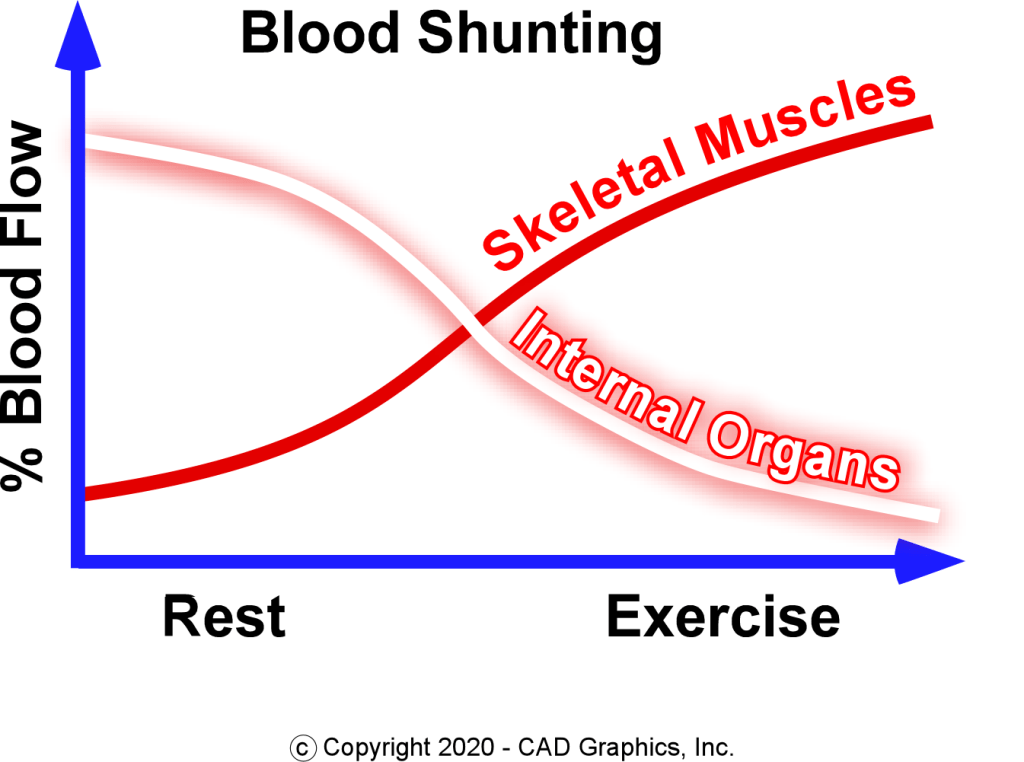
Blood Shunting (redirecting of the blood flow)

Blood Shunting (redirecting of the blood flow)

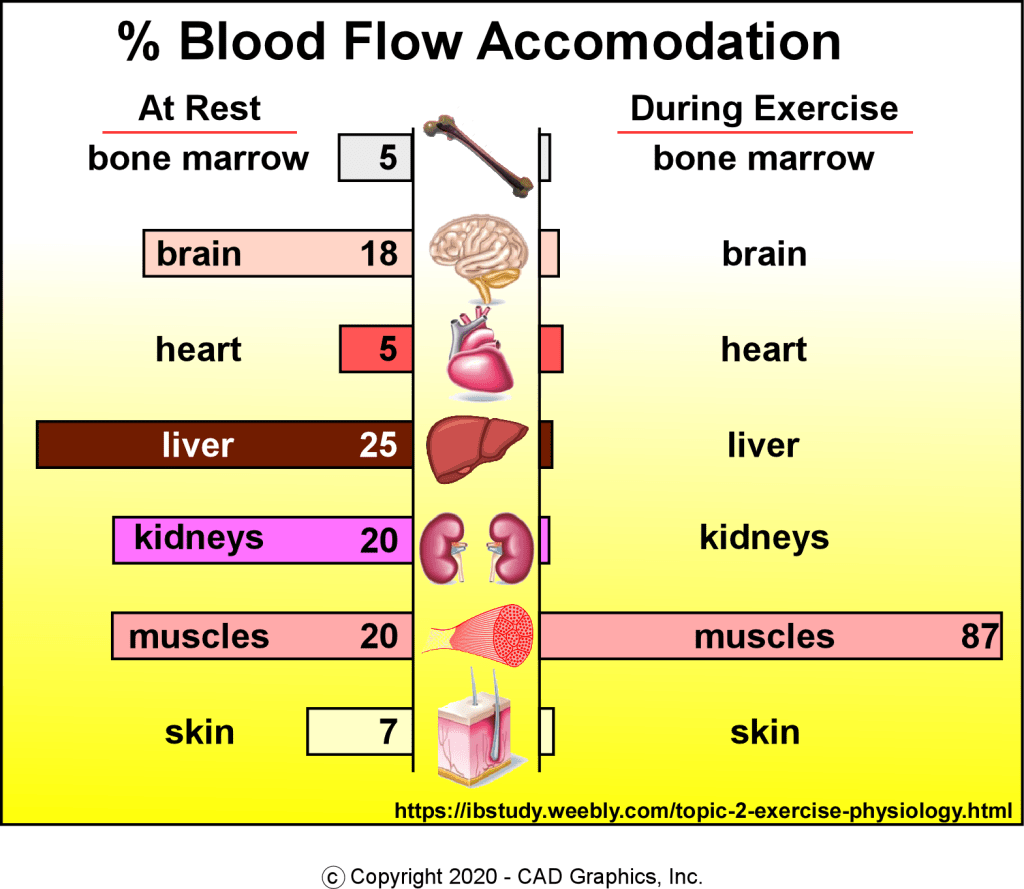
Shunting or accommodation means to redirect or divert, specifically blood to where it is needed most. Blood goes mostly to the skeletal muscles when exercising. When resting, blood goes mostly to the internal organs. This why you can get stomach cramps when exercising soon after eating.

Why is this important to know? As we try to become more responsible for our own healthcare, it is extremely helpful to understand how your body works. It is your body and your well-being!

When you take your car in for service for maintenance or repairs, doesn’t it help to know the difference between an oil change and a blown head gasket? If your home needs repairs don’t you try to become knowledgeable about the costs before you get a new roof or air conditioner? Your health is far more valuable than your car, house or other material assets. It pays off in the long run to learn some basics facts about your body, anatomy and physiology before becoming ill or injured. Gaining this knowledge while in the emergency room or doctor’s office is usually not a fun way to learn about your health.

During Normal Rest:

  • 15-20% of cardiac output is directed to skeletal muscles
  • the liver receives 25%
  • the kidneys receive 20%
  • Blood is mostly in the organs

During Exercise:
During physical activity, blood flow is redirected to oxygen starved muscles and away from inactive organs. As body heat increases, some blood flow is redirected to the skin to help maintain internal body temperature.

During Eating:
Blood flow is shunted to the engaged digestive system, and decreased from the skeletal muscles. This is why stomach cramps can occur if exercising too soon after eating.

Learn how this all works from private, small or group instruction.

Be well!

Jim Moltzan 407-234-0119

www.MindAndBodyExercises.com

https://www.facebook.comMindAndBodyExercises

https://www.youtube.com/c/MindandBodyExercises
https://mindandbodyexercises.wordpress.com

/https://umareg.com/masters-council/

Lecture/Seminars/Discussions

All events below are for a 1-hour lecture/seminar consisting of explanations,question & answer time and various amounts of physical interaction depending upon the theme.

Lectures & Seminars are held within the Wekiva Neighborhood of Longwood, FL or at other negotiated locations.

_______

Themes – including but not limited to:

Basics – Informational with Exercises

Acupressure (general)

Breathing – Importance of Deep Breaths

Chi Kung (Qigong) – Mindful Breathing

Balance – How to Improve Yours

12 Energy Meridians

Effects of Sitting Too Much

Effort Required to Exercise

Energetic Anatomy

Internal Exercise Comparison

Self-defense & Situational Awareness

Tai Chi, Taiji – Moving Meditation

Informational – Theories & Concepts

3 Planes of Symmetry & Body Posture

3 Treasures – Mind, Body & Spirit

5 Element Stages of Life

7 Chakras – Energy Centers

8 Fold Path – Change Your Reality

9 Gates – 3 Hearts

Keys to Longevity

Kung Fu Family Tree

Learning & Retention

Mind & Body Connection with Tai Chi

Poor Posture – Cause & Effects

Sleep Quality – Cause & Effects

Static Exercises – For Focus & Strength

Understand Your Thoughts -Cause & Effects

Warrior – Scholar – Sage (a blueprint to Happiness)

Informational with Exercises

6 Opposition Forces

8 Vessels – Opening & Filling

Acupressure – Jing Well & Hands

Acupressure for Headaches

Chull Sa Su – Reflexology & Hand Conditioning

Energy Amplification – Kundalini Energy

Kinetic Linking of the Body

Exercises for the Mind, Body & Spirit

5 Element Qigong – Standing Breathing Exercises

8 Pieces of Brocade – Moving Qigong

18 Qi Exercises – Ship Pal Gye

32 Long Fist – Mental & Physical Exercises

36 Noble Stances – Moving Qigong

Abdominal Exercises – Core Training

Back Exercises for Chronic Issues

Bagua Nei Gong – Still & Moving Qigong

BaguaZhang (8 Trigram Palm) Basics

Bone Tapping Meridian Exercises

Bottle Exercises for Increased Strength

Broadsword – Basic Weapon Training

Dao Cosmology – Philosophy of Our Reality

Dao Yin – Mind & Body Exercises

Fascia Exercises – Muscles & Connective Tissue

Music – How Sound Effects Our Emotions

Knee Exercises for Chronic Issues

Myung Sang – Meridian Exercises

Pal Ja Kwon – Qigong with a Heavy Ball

Progressive Myung Sang Exercises – Sets 1 & 2

Progressive Qigong Exercise set

San Ti – Still Qigong

Short Staff – Basic Weapon Training

Small Circulation Exercise Set

Unique Exercise Stances – Still & Moving Qigong

Weights with Dynamic Tension Exercise Sets

Yin & Yang – Philosophy of Balance

Yoga for Martial Arts

_____

2-4 participants $50 per person

5-10 participants $40 per person

11-20 participants $30 per person

21 or more participants $25 per person

For more info, contact Jim Moltzan at info@mindandbodyexercises.com, 407-234-0119 or through my site at http://www.mindandbodyexercises.com

Jim
cropped-header-image2.jpg
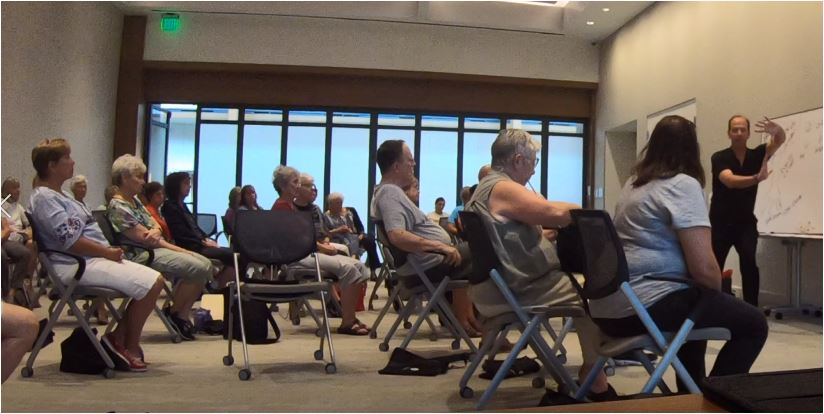
Florida Hospital Healthier Bones Lecture 10-05-2018-12
Jing Well3

Jim Moltzan started his martial arts training at the age of 16, starting with Korean martial arts and evolving into BaguaZhang, Tai Chi, and Qigong. Jim has been training, studying and teaching for almost 40 years effectively educating hundreds of students.

Master Instructor Jim Moltzan has trained with a diverse group of masters and high-level martial arts teachers of many different disciplines. Jim’s specialty is teaching exercises to improve chronic conditions, working with people of all ages, especially senior adults. Offering guidance and instruction, Jim has also worked with Parkinson Disease patients through Florida Hospital. Jim gives regular lectures as requested by AdventHealth (Florida Hospital) regarding the benefits of Eastern practices.

He is the author and graphic artist of numerous journals, graphic charts and study guides relative to the mind and body connection and how it relates to martial arts, fitness and self-improvement.

Jim continues his training and teaching in the Orlando, Florida area conducting classes, seminars and lectures as his schedule allows. He balances his teachings and businesses with his own personal cultivation and time spent with his wife and two college-age kids

Learning Options

Learning Options

Center for Well Being3

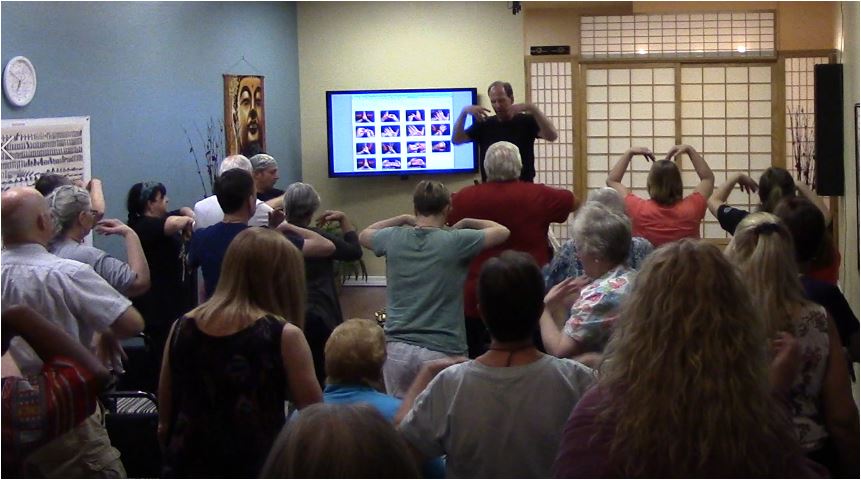
Qigong, Tai Chi & Wellness lectures, seminars & discussions. These events are for a 1-hour, consisting of explanations, question & answer time and various amounts of physical interaction depending upon the theme. Cost varies upon event and amount of attendees.

2016-08-15 12.33.11a

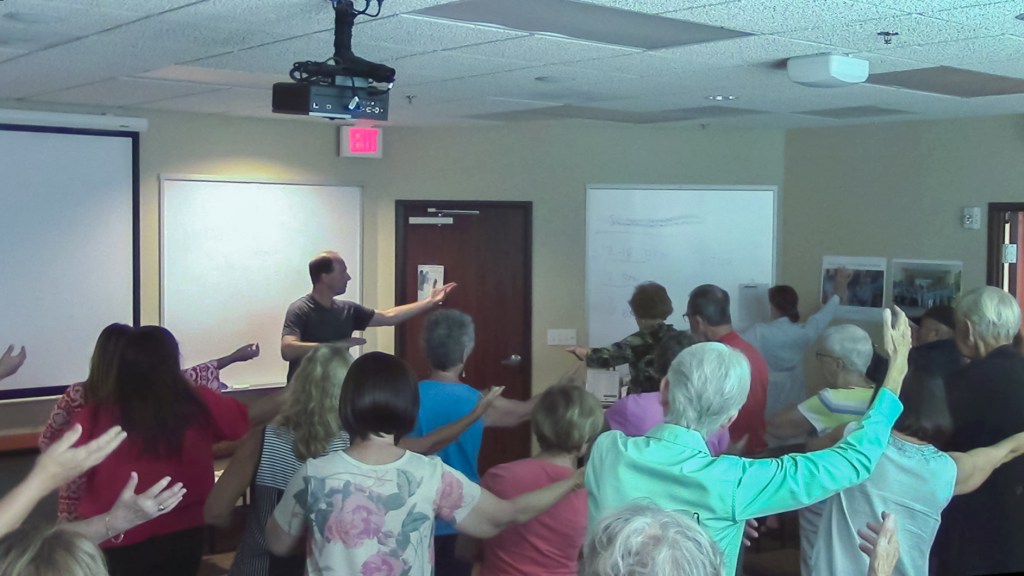
Qigong, Tai Chi & Wellness group classes at Winter Park Presbyterian Church, Most Mondays & Fridays, 11:30am to 12:30pm.  Classes usually in the Fellowship hall or the Education Building upstairs.  Free to church members, $10.00 per drop-in class for non-church members.  Class is open to all 18 years of age and older.  Average age though, for this class is about 65 & up.  Every month we practice a set of movements which changes from month to month.

Class 2011_006

Qigong, Tai Chi & Wellness group classes are available in the Longwood-Wekiva neighborhood. I offer many levels of self-improvement and awareness through:

– Qigong
– Kung Fu (tai chi, baguazhang and various other types of training)
– acupressure/reflexology
– iron palm/iron body/bone marrow washing
– Traditional Chinese Medicine methods and concepts
– herbal extracts for injuries and conditioning
– weapons training for enhanced awareness
– core strengthening methods
– practical self-defense methods
– management of chronic pain issues through movement, meditation and herbal extracts
– study guides and booklets showing graphics of various exercises, concepts & theories

For more info, contact Jim Moltzan at info@mindandbodyexercises.com, 407-234-0119 or through my site at http://www.mindandbodyexercises.com

Jim
cropped-header-image2.jpg
Florida Hospital Healthier Bones Lecture 10-05-2018-12
Jing Well3

Jim Moltzan started his martial arts training at the age of 16, starting with Korean martial arts and evolving into BaguaZhang, Tai Chi, and Qigong. Jim has been training, studying and teaching for almost 40 years effectively educating hundreds of students.

Master Instructor Jim Moltzan has trained with a diverse group of masters and high-level martial arts teachers of many different disciplines. Jim’s specialty is teaching exercises to improve chronic conditions, working with people of all ages, especially senior adults. Offering guidance and instruction, Jim has also worked with Parkinson Disease patients through Florida Hospital. Jim gives regular lectures as requested by AdventHealth (Florida Hospital) regarding the benefits of Eastern practices.

He is the author and graphic artist of numerous journals, graphic charts and study guides relative to the mind and body connection and how it relates to martial arts, fitness and self-improvement.

Jim continues his training and teaching in the Orlando, Florida area conducting classes, seminars and lectures as his schedule allows. He balances his teachings and businesses with his own personal cultivation and time spent with his wife and two college-age kids

How Are You Motivated?

Intrinsic vs. Extrinsic Motivation

Self-reflection can lead one to contemplate about how they are motivated to accomplish specific tasks and goals.

Intrinsic Motivation:

Intrinsic motivation is executing an activity for its own sake. Enjoy the activity because it is fun, satisfying or challenging. Not because you’ll get a reward or avoid punishment.

Extrinsic Motivation:

Extrinsic motivation is doing something not because you enjoy it, but rather because you want to receive a reward or avoid punishment. This is the opposite of intrinsic motivation.

____________________

Be well, stay healthy, be wise.

Jim Moltzan 

www.MindAndBodyExercises.com

https://www.facebook.com/MindAndBodyExercises

https://www.youtube.com/c/MindandBodyExercises
https://mindandbodyexercises.wordpress.com/