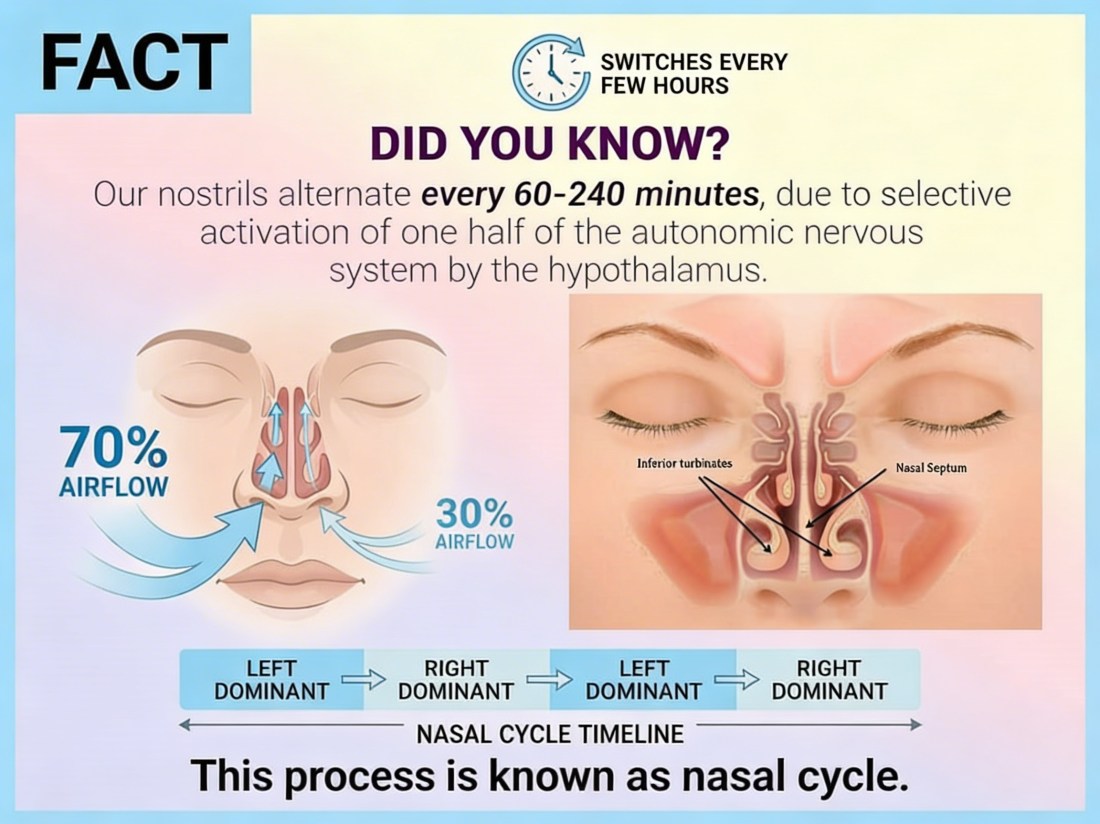
Among many healthcare professionals, fitness enthusiasts, martial artists, musical instrument performers, and others understand that breathing through the nose, or nasal breathing is generally considered better than breathing solely through the mouth for several reasons:
1. Improved Air Filtration
Moist nasal passages help to filter pollen, dust, pathogens, and other allergens through tiny hairs called cilia and mucus which protect the lungs from harmful particles.
2. Increased Oxygen Absorption
Nasal breathing can slow down the rate of airflow, allowing more time for oxygen exchange in the lungs. This consequently leads to better oxygen delivery to tissues.
3. Better Air Humidification and Temperature Regulation
The nasal passages warm and humidify incoming air, helping to reduce irritation to the respiratory tract and improving overall comfort, particularly in dry or cold climates.
4. Nitric Oxide Production
Nasal breathing aids in the production of nitric oxide (NO), which improves blood circulation by dilating blood vessels, enhances oxygen absorption and boosts immune function by killing harmful bacteria and viruses.
5. Supports Proper Diaphragmatic Breathing
Nasal breathing encourages deeper, more controlled breathing, activating the respiratory diaphragm and reducing shallow, chest-dominated breaths often associated with stress.
6. Better Sleep Quality
Nasal breathing reduces snoring and thus reduces the risk of sleep apnea, promoting more restful and restorative sleep.
7. Improved Oral Health
Keeping the mouth closed during breathing is thought to prevent dry mouth, reducing the risk of cavities, gum disease, and bad breath.
8. Enhancement of Athletic Performance
Nasal breathing increases endurance and efficient energy use, by improving oxygen uptake and reducing the buildup of carbon dioxide within the bloodstream.
9. Balanced CO₂ and Oxygen Levels
Breathing through the nose helps maintain an optimal balance of carbon dioxide and oxygen in the blood, supporting cellular metabolism and calming the nervous system.
10. Supports Facial Development (in Children)
In children, nasal breathing promotes proper tongue posture and jaw development, reducing the risk of orthodontic issues and improving facial structure.
11. Promotes Postural Alignment
Nasal breathing supports proper tongue posture, which can improve overall posture and reduce strain on the neck and back.
12. Reduced Stress and Anxiety
Nasal breathing activates the parasympathetic nervous system, which helps reduce heart rate and stress levels, promoting a calm and focused state of mind.
13. Boosts Cognitive Function
Consistent oxygen distribution to the brain enhances focus, memory, and decision-making capabilities.
14. Voice Quality and Speech Clarity
Maintaining nasal breathing increases vocal cord health and improves voice resonance and clarity.
There may be situations where breathing through the mouth is necessary or preferable, such as during intense physical exertion or when experiencing nasal congestion. However, nasal breathing is considered the more natural and physiologically advantageous way to breathe. If someone experiences chronic nasal congestion or other issues that impede nasal breathing, it’s advisable to consult with a healthcare professional.
I teach and offer lectures about holistic health, physical fitness, stress management, human behavior, meditation, phytotherapy (herbs), music for healing, self-massage (acupressure), Daoyin (yoga), qigong, tai chi, and baguazhang.
Please contact me if you, your business, organization, or group might be interested in hosting me to speak on a wide range of topics related to better health, fitness, and well-being.
I look forward to further sharing my message by partnering with hospitals, wellness centers, VA centers, schools on all levels, businesses, and individuals who see the value in building a stronger nation through a healthier population.
I also have hundreds of FREE education video classes, lectures, and seminars available on my YouTube channel at:
Breathing is both an automatic physiological process and a foundational medium through which emotional regulation and somatic stability are maintained. Among the many respiratory patterns observed in humans, the physiological sigh represents a unique convergence of pulmonary mechanics, autonomic nervous system regulation, and traditional breath observations preserved in Daoist practices. Characterized by two sequential inhalations followed by a prolonged exhalation, the physiological sigh is an innate reflex that occurs spontaneously in healthy individuals and plays a critical role in maintaining lung function and nervous system balance (Del Negro et al., 2018; West, 2012).
While modern neuroscience and respiratory physiology have clarified the mechanisms underlying this breath pattern, Daoist and Traditional Chinese Medicine frameworks identified the functional importance of sighing centuries earlier, particularly in relation to Lung Qi regulation and emotional release. Examining the physiological sigh through both lenses reveals a rare alignment between classical somatic wisdom and contemporary scientific explanation.
Pulmonary Function and Alveolar Recruitment
From a biomedical perspective, the primary function of the physiological sigh is alveolar recruitment. During normal respiration, particularly under conditions of stress, fatigue, or restricted posture, small numbers of alveoli may partially collapse, reducing surface area available for gas exchange (West, 2012). Over time, this can lead to reduced lung compliance and diminished respiratory efficiency.
The physiological sigh counteracts this process through a brief second inhalation that increases transpulmonary pressure, allowing collapsed alveoli to reopen. This mechanism preserves lung elasticity and optimizes oxygen exchange, making the sigh an essential component of healthy respiratory maintenance rather than an incidental behavior (Del Negro et al., 2018).
Autonomic Nervous System Regulation
Beyond its mechanical function, the physiological sigh exerts a powerful influence on the autonomic nervous system. The prolonged exhalation phase enhances parasympathetic activity, primarily through vagal pathways, resulting in decreased heart rate, reduced sympathetic arousal, and rapid attenuation of stress responses (Porges, 2011).
Research in applied psychophysiology demonstrates that breathing patterns emphasizing extended exhalation improve heart rate variability and stabilize respiratory rhythm, contributing to reductions in perceived anxiety and respiratory discomfort (Lehrer et al., 2000). Because the sigh operates at the level of brainstem control rather than conscious effort, it remains effective even during states of emotional overwhelm or impaired cognitive processing.
Neurophysiological Basis of the Sigh Reflex
The physiological sigh is generated by respiratory rhythm centers located in the medulla, particularly the pre-Bötzinger complex and associated neural networks (Ramirez et al., 2013). These circuits integrate chemosensory feedback related to carbon dioxide levels and lung stretch, allowing the sigh to emerge automatically when respiratory efficiency declines.
This brainstem dominance explains why sighing is commonly observed during crying, emotional release, and moments of relief, as well as during sleep. It also explains why voluntary imitation of the physiological sigh can produce rapid calming effects when higher cognitive strategies are ineffective.
Daoist and Traditional Chinese Medicine Perspective
In Daoist breath theory and Traditional Chinese Medicine, sighing is closely associated with the Lung system, which governs respiration, rhythm, and the distribution of Qi (vital energy) throughout the body. The Lung is also linked to the Po, or corporeal soul, which is sensitive to grief, shock, and emotional contraction. Classical medical texts describe sighing as a spontaneous mechanism through which constrained Lung Qi is released and chest tension is alleviated.
The double inhalation observed in the physiological sigh can be interpreted within this framework as a restoration of Zong Qi, the gathering Qi of the chest, while the extended exhalation facilitates the descent and regulation of Lung Qi. This process supports Lung and Kidney coordination, a foundational principle in Daoist internal cultivation and breath regulation practices.
Dao Yin and qigong systems frequently incorporate a subtle secondary inhalation at the top of the breath, followed by a slow and complete exhalation. While historically described in energetic terms, modern physiology reveals that these practices align closely with alveolar recruitment and parasympathetic activation, suggesting that Daoist practitioners were observing functional outcomes long before their mechanisms could be scientifically articulated.
Integrative Application and Intentional Use
The physiological sigh can be intentionally reproduced as a practical tool for acute regulation:
A gentle nasal inhalation
A short secondary inhalation at the top of the breath
A slow, extended exhalation until comfortably empty
This sequence may be repeated one to three times and is best used as a reset rather than a continuous breathing pattern. Excessive repetition may lead to lightheadedness due to altered carbon dioxide levels.
From an integrative perspective, this method represents neither a purely mechanical intervention nor a symbolic ritual. Rather, it is a functional reset that simultaneously restores lung mechanics, autonomic balance, and somatic coherence.
The physiological sigh exemplifies a rare point of convergence between modern respiratory science and Daoist breath theory. Scientifically, it functions as an essential mechanism for maintaining lung compliance and autonomic regulation through innate brainstem circuits. Traditionally, it has been recognized as a natural means of releasing chest constraint, settling the Heart Mind, and restoring respiratory rhythm.
This convergence underscores an important principle in integrative health: some of the most effective regulatory mechanisms are not learned techniques, but inherent biological safeguards that can be consciously supported when needed. The physiological sigh stands as a compelling example of how ancient somatic observation and contemporary neuroscience can inform and enrich one another.
References:
Balban, M. Y., Neri, E., Kogon, M. M., Weed, L., Nouriani, B., Jo, B., Holl, G., Zeitzer, J. M., Spiegel, D., & Huberman, A. D. (2023). Brief structured respiration practices enhance mood and reduce physiological arousal. Cell Reports Medicine, 4(1), 100895. https://doi.org/10.1016/j.xcrm.2022.100895
Lehrer, P. M., Vaschillo, E., & Vaschillo, B. (2000). Resonant frequency biofeedback training to increase cardiac variability. Applied Psychophysiology and Biofeedback, 25(3), 177–191. https://doi.org/10.1023/A:1009554825745
Porges, S. W. (2011). The polyvagal theory: Neurophysiological foundations of emotions, attachment, communication, and self-regulation. W. W. Norton & Company.
Li, P., Janczewski, W. A., Yackle, K., Kam, K., Pagliardini, S., Krasnow, M. A., & Feldman, J. L. (2016). The peptidergic control circuit for sighing. Nature, 530(7590), 293–297. https://doi.org/10.1038/nature16964
West, J. B. (2012). Respiratory physiology: The essentials (9th ed.). Lippincott Williams & Wilkins.
Respiratory Mechanics and Nervous System Regulation
The physiological sigh is an innate respiratory pattern characterized by two sequential inhalations followed by a prolonged exhalation. This breathing reflex occurs spontaneously in healthy individuals at regular intervals, including during sleep, and serves an essential role in maintaining lung function and regulating the autonomic nervous system (Del Negro et al., 2018; West, 2012).
Unlike voluntary breathing techniques that rely on conscious control, the physiological sigh is generated by brainstem respiratory circuits, allowing it to function even during states of emotional distress, fatigue, or diminished cognitive capacity (Li et al., 2016).
Pulmonary Function and Alveolar Recruitment
One primary function of the physiological sigh is alveolar recruitment. During normal respiration, especially under conditions of stress, shallow breathing, or prolonged sitting, small clusters of alveoli may partially collapse, reducing gas exchange efficiency (West, 2012).
The second, brief inhalation increases transpulmonary pressure, allowing collapsed alveoli to reopen and restoring optimal lung compliance. Without periodic sighing, lung stiffness and impaired oxygen exchange may gradually develop (Del Negro et al., 2018).
Autonomic Nervous System Regulation
The extended exhalation phase of the physiological sigh plays a critical role in autonomic regulation. Prolonged exhalation enhances parasympathetic activity via the vagus nerve, resulting in reduced heart rate, decreased sympathetic arousal, and rapid attenuation of stress responses (Porges, 2011).
Research has shown that exhalation-weighted breathing patterns can quickly lower perceived anxiety and respiratory discomfort by improving carbon dioxide regulation and restoring respiratory rhythm stability (Lehrer et al., 2000).
Neurophysiological Basis
The physiological sigh is coordinated by respiratory rhythm-generating centers within the medulla, particularly the pre-Bötzinger complex and associated neural networks (Ramirez et al., 2013). Because these circuits operate independently of cortical processing, the sigh remains functional during emotional overwhelm, panic states, and trauma responses.
This brainstem dominance explains why sighing often occurs during crying, emotional release, or moments of relief, and why intentional imitation of the sigh can be effective when cognitive strategies fail.
Intentional Application
The physiological sigh can be voluntarily reproduced for acute nervous system regulation:
Inhale gently through the nose
Take a second short inhalation at the top of the breath
Slowly exhale until the lungs feel comfortably empty
Repeat one to three times
This method should not be performed continuously, as excessive repetition may cause lightheadedness.
Integrative Perspective
Traditional breath practices observed in yoga, Dao Yin and qigong systems (tai chi and other martial arts) describe sighing as a natural mechanism for releasing chest tension and restoring respiratory rhythm. Modern physiology now provides a mechanistic explanation for these observations, revealing a convergence between classical somatic practices and contemporary neuroscience.
The physiological sigh is a mechanical respiratory reset, not a relaxation technique dependent on belief or visualization. Its effectiveness lies in its ability to directly restore lung mechanics and autonomic balance through innate neural pathways.
Lehrer, P. M., Vaschillo, E., & Vaschillo, B. (2000). Resonant frequency biofeedback training to increase cardiac variability. Applied Psychophysiology and Biofeedback, 25(3), 177–191. https://doi.org/10.1023/A:1009554825745
Porges, S. W. (2011). The polyvagal theory: Neurophysiological foundations of emotions, attachment, communication, and self-regulation. W. W. Norton & Company.
Li, P., Janczewski, W. A., Yackle, K., Kam, K., Pagliardini, S., Krasnow, M. A., & Feldman, J. L. (2016). The peptidergic control circuit for sighing. Nature, 530(7590), 293–297. https://doi.org/10.1038/nature16964
West, J. B. (2012). Respiratory physiology: The essentials (9th ed.). Lippincott Williams & Wilkins.
Entrainment, Emotional Contagion, and Co-Regulation
Human beings are inherently social organisms whose internal states are shaped by the people and environments around them. Modern affective neuroscience, psychology, and physiology increasingly show that when individuals share a space, their emotional expressions, nervous system activity, behavioral rhythms, and even biological oscillations begin to align. This subtle but powerful process has been described through three interconnected mechanisms: entrainment, emotional contagion, and co-regulation. Together, these processes help explain why the emotional “tone” of a room shifts when a certain person enters, how stress can spread through groups, and why calm individuals can stabilize others.
1. Entrainment: Synchronizing Rhythms and Biological Oscillations
Entrainment refers to the process by which two or more independent rhythmic systems become synchronized through interaction. Originally a physics term (Huygens’ discovery that pendulum clocks synchronize when placed near each other), entrainment is now recognized as a central phenomenon in human physiology and social behavior.
1.1 Physiological Entrainment
Human biological systems such as heart rate, breathing, neural oscillations, and circadian rhythms, are sensitive to the rhythms of others. When people interact, especially face-to-face, their internal states often fall into alignment. This synchronization can occur through respiration, posture, vocal patterns, or subtle movement cues.
Research shows that:
Breathing rhythms spontaneously synchronize during shared tasks, cooperative work, or group chanting and singing (Vickhoff et al., 2013).
Heart rate variability (HRV) and autonomic activity entrain between individuals during emotionally meaningful or coordinated interactions (Palumbo et al., 2017).
Brainwave patterns can synchronize between people who are making eye contact, cooperating, or experiencing shared emotions (Dumas et al., 2010).
This form of entrainment provides a nonverbal channel of communication that shapes how individuals relate and how groups function.
1.2 Social and Behavioral Entrainment
Humans also entrain on behavioral levels. Vocal tone, speech pace, posture, and gestures subtly influence and mirror each other in dyadic interactions. This is often unconscious and facilitates social bonding.
Bernieri and Rosenthal (1991) found that the degree of interpersonal coordination, sometimes called “interactional synchrony,” is strongly associated with perceptions of empathy, rapport, and cooperation.
2. Emotional Contagion: The Spread of Affect Through Social Networks
While entrainment focuses on rhythmic alignment, emotional contagion describes the spread of emotional states from one person to another. It occurs rapidly, automatically, and often outside conscious awareness.
Emotional contagion works through two primary mechanisms:
2.1 Mimicry and Feedback Loops
Humans instinctively mimic facial expressions, vocal patterns, and body language. This mimicry activates mirror-neuron and limbic circuits that generate similar feelings in the observer. Hatfield, Cacioppo, and Rapson (1994) demonstrated that people unconsciously imitate emotional expressions within milliseconds, leading their own physiological state to shift toward the emotion they are observing.
This means:
An anxious person can elevate others’ heart rates and muscle tension.
A relaxed or smiling person can reduce group stress levels.
A hostile or negative presence may shift the emotional climate of an entire room.
2.2 Group-Level Emotional Transmission
Emotional contagion also spreads through groups. Barsade (2002) showed that a single individual’s positive or negative mood significantly influences group cooperation, conflict, decision-making, and performance. This group-level emotional transmission occurs even when people believe they are not being influenced.
In organizational settings, research shows that leaders’ emotional expressions strongly predict team emotions, stress levels, and motivation (Sy, Côté, & Saavedra, 2005). This explains why “energy vampires” (chronically negative individuals) can drain a room, while “positive energizers” can elevate it.
3. Co-Regulation: Interpersonal Stabilization of the Nervous System
Co-regulation is a concept rooted in attachment theory and polyvagal theory. It refers to the process by which two people regulate each other’s emotional and physiological states through relational cues such as tone of voice, eye contact, posture, and presence.
3.1 The Polyvagal Basis of Co-Regulation
Stephen Porges’ polyvagal theory emphasizes that the human autonomic nervous system evolved to require social safety signals for stable functioning. According to Porges (2011), the vagus nerve and the social engagement system continuously scan the environment for threat or safety. The presence of a calm, attuned individual can activate safety pathways, lowering sympathetic arousal.
Co-regulation occurs when:
A calm person helps another down-regulate stress.
A dysregulated individual triggers sympathetic activation in others.
A pair or group maintains collective stability through mutual attunement.
Parents and infants co-regulate naturally, but adults also rely on interpersonal cues to stabilize their internal states.
3.2 Co-Regulation in Adult Relationships and Groups
Siegel (2012) describes co-regulation as a cornerstone of interpersonal neurobiology: humans maintain their emotional equilibrium largely through connection with others. In group settings, such as workplaces, classrooms, or family systems, members’ nervous systems are constantly responding to each other’s cues.
Co-regulation is especially strong under conditions of:
This explains why certain people feel grounding and others feel destabilizing.
4. How These Processes Interact in Real-World Settings
Although entrainment, emotional contagion, and co-regulation are often studied separately, in real life they operate simultaneously. When individuals enter a shared environment:
Autonomic states mutually regulate (co-regulation).
4.1 The Emotional Climate of a Room
Consider a meeting where one person enters feeling stressed:
Their breathing rate and vocal tension increase.
Others begin matching these cues (entrainment).
Within minutes, anxiety spreads (emotional contagion).
The group’s autonomic tone shifts toward sympathetic activation (co-regulation).
By contrast, the presence of a grounded, calm individual can entrain the group toward slower breathing and more regulated states, spreading emotional stability.
4.2 Health and Well-Being Implications
Positive co-regulation has been shown to:
Improve stress recovery (Messina et al., 2021)
Increase prosocial behavior.
Enhance learning environments.
Strengthen group cohesion and interpersonal trust.
Negative emotional contagion, conversely, is associated with:
Increased cortisol
Impaired cognitive performance
Defensive communication
Reduced social safety
Thus, the emotional composition of a room has measurable physiological consequences.
5. Implications for Leadership, Teaching, Therapy, and Everyday Life
These processes are essential to fields such as psychotherapy, education, leadership, and martial arts instruction, areas highly relevant to my own professional work.
Down-regulated sympathetic activity, increased vagal tone, calm restorative states.
Trust, emotional safety, improved learning and communication, conflict reduction.
Where They Overlap
All three shape interpersonal physiology and emotion.
Rhythmic, emotional, and autonomic alignment interact.
Shared arousal states; collective regulation.
A stable or unstable “room-wide” emotional atmosphere.
5.1 Leaders and Teachers
Leaders who maintain emotional regulation can set the tone for entire groups. Research in organizational behavior demonstrates that emotionally positive leaders measurably improve team performance and resilience through emotional contagion and co-regulation (Barsade & Gibson, 2007).
5.2 Therapists and Healers
Therapists use vocal tone, body language, and attuned presence to co-regulate clients’ nervous systems. Safety cues support trauma recovery by enabling the client to access regulated autonomic states (Schore, 2021).
5.3 Everyday Relationships
Couples, friends, and families are constantly co-regulating. A dysregulated household breeds chronic stress, whereas emotionally stable members can serve as regulatory anchors for others.
Humans are wired for connection, and our nervous systems continuously respond to the rhythms, emotions, and physiological states of those around us. Entrainment allows biological rhythms to synchronize. Emotional contagion transmits affective states through mimicry and neural resonance. Co-regulation provides interpersonal stability that supports health and emotional well-being.
Understanding these processes helps explain why some individuals elevate a room while others destabilize it, why certain relationships feel grounding, and how human beings are always shaping one another even in silence. In recognizing this dynamic, people can deliberately cultivate a presence that promotes harmony, safety, and collective well-being.
References:
Barsade, S. G. (2002). The ripple effect: Emotional contagion and its influence on group behavior. Administrative Science Quarterly, 47(4), 644–675. https://doi.org/10.2307/3094912
Barsade, S. G., & Gibson, D. E. (2007). Why does affect matter in organizations? Academy of Management Perspectives, 21(1), 36–59. https://doi.org/10.5465/amp.2007.24286163
Bernieri, F. J., & Rosenthal, R. (1991). Interpersonal coordination: Behavior matching and interactional synchrony. In R. S. Feldman & B. Rimé (Eds.), Fundamentals of nonverbal behavior (pp. 401–432). Cambridge University Press.
Dumas, G., Nadel, J., Soussignan, R., Martinerie, J., & Garnero, L. (2010). Inter-brain synchronization during social interaction. PLoS ONE, 5(8), e12166. https://doi.org/10.1371/journal.pone.0012166
Hatfield, E., Cacioppo, J. T., & Rapson, R. L. (1994). Emotional contagion. Cambridge University Press.
Messina, I., Calvo, V., Mastria, S., & Harvey, A. (2021). Interpersonal emotion regulation: A review of foundational frameworks and research directions. Frontiers in Psychology, 12, 636919. https://doi.org/10.3389/fpsyg.2021.636919
Palumbo, R. V., et al. (2017). Interpersonal autonomic physiology: A systematic review of the literature. Personality and Social Psychology Review, 21(2), 99–141. https://doi.org/10.1177/1088868316628405
Porges, S. W. (2011). The polyvagal theory: Neurophysiological foundations of emotions, attachment, communication, and self-regulation. W. W. Norton.
Schore, A. N. (2021). Right brain psychotherapy. W. W. Norton.
Siegel, D. J. (2012). The developing mind: How relationships and the brain interact to shape who we are (2nd ed.). Guilford Press.
Sy, T., Côté, S., & Saavedra, R. (2005). The contagious leader: Impact of the leader’s mood on the mood of group members. Journal of Applied Psychology, 90(2), 295–305. https://doi.org/10.1037/0021-9010.90.2.295
Vickhoff, B., et al. (2013). Music structure determines heart rate variability of singers. Frontiers in Psychology, 4, 334. https://doi.org/10.3389/fpsyg.2013.00334
In a world saturated with fragmented advice on health, fitness, and personal development, there remains a need for something more complete, structured, integrated, and grounded in both lived experience and timeless principles.
Over the course of several decades of study, practice, and teaching across the fields of holistic health, martial arts, and human development, a unifying framework has gradually taken shape. This framework does not isolate the body from the mind, nor the mind from the spirit. Instead, it recognizes that human growth unfolds through the dynamic interaction of multiple systems of physical, biological, energetic, behavioral, and philosophical.
It is from this perspective that a new six-part book series emerges:
The Architecture of the Human Journey
This series is not simply a collection of books. It is a structured exploration of what it means to develop as a human being: physically, mentally, energetically, and ethically within the realities of modern life.
Each volume builds upon the others, forming a progressive pathway toward greater awareness, resilience, and self-mastery.
Book 1: The Self-Healing Body
The journey begins with the body—not as a machine to be pushed or punished, but as a living system designed for adaptation, repair, and resilience.
The Self-Healing Body explores the foundational principles of movement, posture, breathing, and recovery. It challenges the modern tendency toward inactivity and over-reliance on external interventions, instead emphasizing the body’s innate capacity to restore balance when given the proper conditions.
Readers are guided toward a deeper understanding of how daily habits of sitting, standing, walking, breathing shape long-term health outcomes. The message is clear: the body is not broken; it is often simply underused, misused, or misunderstood.
Book 2: The Biological Mind
If the body is the foundation, the mind is the regulator.
The Biological Mind examines how thoughts, emotions, stress responses, and neurological patterns influence both behavior and physiology. Rather than viewing the mind as something abstract or separate, this book presents it as a biological system, deeply connected to the nervous system, hormones, and physical health.
Topics include stress conditioning, attention, perception, and the ways in which modern environments can dysregulate natural mental processes. Readers are encouraged to recognize how their internal dialogue and external inputs shape their lived experience.
Book 3: The Energetic Body
Beyond the physical and biological lies a more subtle, yet equally important dimension: the energetic system.
The Energetic Body draws from Traditional Chinese Medicine, Daoist practices, and internal martial arts to explore concepts such as qi, meridians, breath, and internal flow. While often overlooked in Western models, these systems have guided health and movement practices for thousands of years.
This volume bridges the gap between ancient insight and modern understanding, offering practical ways to cultivate energy through breathwork, posture, and intentional movement.
Book 4: Embodied Discipline
Knowledge without application remains incomplete.
Embodied Discipline focuses on the integration of body, mind, and energy through consistent practice. It is here that theory becomes lived experience. Discipline is reframed not as rigid control, but as the steady cultivation of habits that align with one’s values and goals.
Drawing from martial arts training, this book explores how structure, repetition, and intentional challenges build not only physical capacity, but mental clarity and emotional resilience.
Book 5: The Healthcare Paradox
Modern healthcare offers remarkable advancements, yet widespread chronic illness continues to rise.
The Healthcare Paradox examines this contradiction. It explores how systems designed to treat disease often overlook the foundational behaviors that prevent it. Nutrition, movement, stress, environment, and personal responsibility all play a role, yet are frequently underemphasized.
This book does not reject modern medicine but rather places it within a broader context. One that encourages individuals to become active participants in their own health rather than passive recipients of care.
Book 6: The Human Journey
The final volume steps back to consider the broader question: What is all of this for?
The Human Journey explores meaning, purpose, relationships, and the realities of growth over a lifetime. It integrates the lessons of the previous volumes into a larger philosophical perspective, drawing from both Eastern and Western traditions.
It recognizes that strength, clarity, and health are not ends in themselves, but tools that support a more meaningful and connected life.
A Complete Framework for Modern Living
Taken together, these six books form a cohesive system:
The body provides structure
The mind provides direction
The energy system provides flow
Discipline provides integration
Awareness of systems provides context
Meaning provides purpose
This is the architecture – not of a building, but of a life.
In a time when information is abundant, but wisdom is scattered, The Architecture of the Human Journey offers a way to reconnect the pieces. It invites readers not just to learn, but to observe, reflect, and ultimately take responsibility for their own development.
This is not a quick fix or a temporary program. It is a long-term approach to living with greater awareness, strength, and integrity.
The journey is ongoing. The architecture is yours to build.