
Poor posture and relative lifestyle habits are a topic I write about often, as these are such integral components in avoiding chronic pain. Chronic ailments can often escalate to other mental and physical health issues. Coping with chronic pain eventually takes its toll on the individual and those around them.

Posture is the relative placement of the human body and its components such as, but not confined to, the spine and limbs. Many people in the United States experience some type of chronic pain at some time in their lives. Causes of pain can vary depending upon the individual and their circumstances. Poor posture can be responsible for many ailments ranging from ankle, knee, hip and back pain. A spinal misalignment, due to improper posture, an injury, hereditary or even congenital conditions, can have an eventual ripple effect throughout the human body. A shift of .375″ (13mm) can cause the many ailments. A simple habitual tilt of the head or shift in the body weight over time, changes the alignment of the spine. This re-alignment begins to effect the muscles, tendons, ligaments and nerves causing a total imbalance within these body systems. An injured ankle or knee can become the spark that cause a ripple effect literally from head to toe.
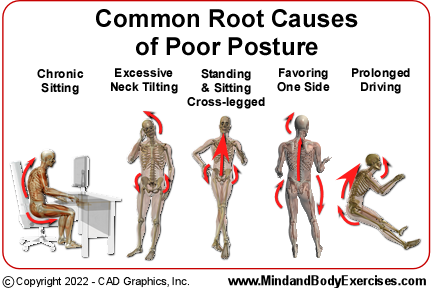
Common causes of poor posture:
- Poor standing habits
- Driving with one arm forward, back hunched, knees higher than hips
- Head and shoulder pinching together to hold telephone
- Sitting or standing cross legged
- Short leg syndrome
- Lack of muscle tone and core strength
- No regular exercise schedule
NOTE: Occasional execution of the a fore mentioned practices, doesn’t necessarily lead to pain and other problems. It is the repetitive and accumulative effect over years that seem to cause the dysfunction.
Straining the neck forward to see closer, puts strain on the neck and upper back. This leads to hunching forward of the spine and a gradual realignment of the 3 natural curves (cervical, thoracic & lumbar).

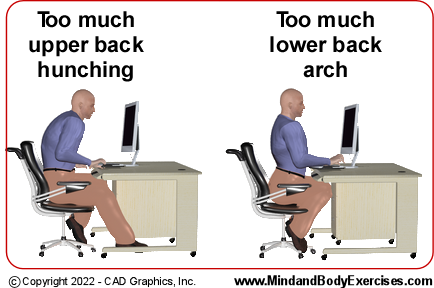
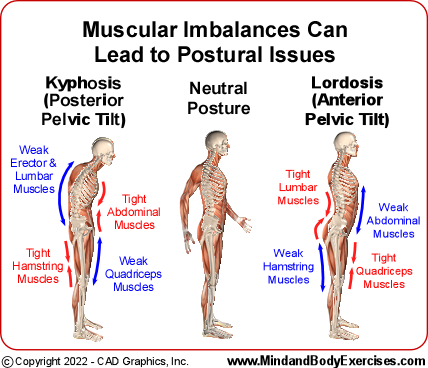
Poor posture, combined with long hours sitting stagnant in a chair working or driving, can cause muscles within the legs to shorten and tighten over time. These muscles, specifically the hamstrings, cause the pelvis to tilt the tailbone forward. Or the quadriceps can tighten causing the tailbone to tilt backward and the lumbar spine to arch even more forward.

Habits of stress on the cervical spine caused by posture and position of the head, specifically an increase in forward head position. This increases the weight on the cervical spine especially in the C-7 to T-1 vertebrae. Addition bone mass is accumulated in this area to compensate for the extra strain on the muscles, tendons and ligaments within the neck.
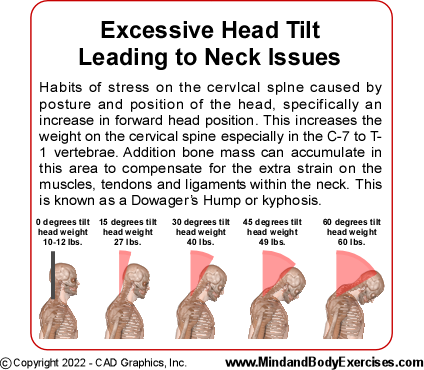

Anterior head position can cause permanent damage resulting in:
– Back, neck, shoulder arm pain
– Decrease in spinal curves
– Gastrointestinal problems
– Headaches
– Lung capacity decreased
– Muscle damage
– Nerve damage
– Spinal disc compression
– Spinal disc herniation

What is the solution to these issues?
- get up out of the chair more often
- become more active
- consult with your physician or chiropractor
- have your posture checked
- stretch regularly
- perform non-specific symmetrical exercises
- inspect footwear for uneven wear patterns
- evaluate poor posture habits and adjust
- review career choices if necessary
- exercises from tai chi, yoga and qigong offer methods that specifically focus on balancing poor postural habits.

______________
I write often about topics that affect our health and well-being. Additionally, I teach and offer lectures about qigong, tai chi, baguazhang, and yoga.
For more info, contact Jim Moltzan at info@mindandbodyexercises.com, 407-234-0119 or through my site at http://www.mindandbodyexercises.com




 United Martial Arts Association