
The human brain functions as an expansive network of roughly 86 to 90 billion neurons. This network contains two distinct modes of the awake brain, to engage in thought processes. The first mode of the brain is the task positive network (TPN) or focused mode (Dal Lin et al., 2015). Focused mode is engaged when we are actively paying attention, in the present moment, or concentrating upon tasks using short-term memory, as the brain processes information deemed as very important, interesting, or even sometimes dangerous. For example, if you are engaged in an interesting movie, you may not notice time passing by because your thoughts are focused on what is happening in the movie. If one’s life was to be threatened by a venomous snake, they might become extremely focused upon not moving too quickly, while also keeping their focus on the movement of that snake. Playing a musical instrument, riding a bike, taking a test, or using a knife while cooking are other examples of using this first mode of the brain – focused mode. We often enjoying being in this mode, in spite of not spending the majority of our time here. However, too much time in focus mode left unchecked, can often lead to stress and relative psychological and physiological disorders.
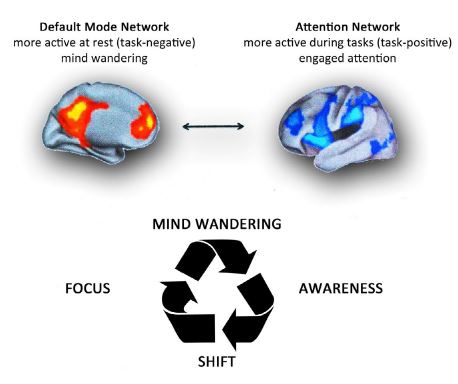
Lin, Carlo & Poretto, Anna & Scodro, Marta & Marra, Martina & Iliceto, Sabino & Tona, Francesco. (2015). Coronary microvascular and endothelial function regulation: Crossroads of psychoneuroendocrine immunitary signals and quantum physics [Part C]. Journal of Integrative Cardiology. 1. 10.15761/JIC.1000137.
The second mode of the brain is called the default mode network (DMN), the turbid mind or sometimes it is referred to as the “monkey mind”. In this mode we occupy 50-80 percent of our time with this wandering attention, juggling about 150 undone tasks at any particular time. When we perform mundane tasks, such as getting dressed, taking a shower, brushing our teeth, driving to work, or maybe jogging around the block, our mind is often wandering elsewhere. Our brain is not really focusing much on the physical task at hand but rather thinking of other issues or events elsewhere. We sometimes refer to this as multitasking. Our mind is constantly wandering in and out of the past, present, and future. Becoming and staying focused on specific tasks is a large challenge for the human brain.
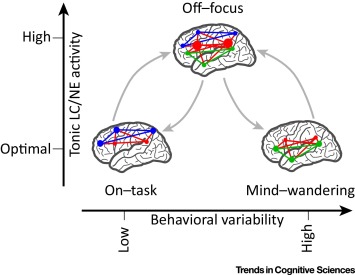
Humans have a neural predisposition for our mind to wander. Research studies have shown that the more time we spend in the default mode of wandering thoughts, the greater our risk of psychological disorders such as depression, anxiety, attention deficiency, dementia, and many others. We constantly toggle between the wandering and focus modes all day long. A major challenge for us, is not to focus solely on negative aspects. We have a tendency to get complacent with the positive aspects within our lives, and then start to focus on more negative thoughts (negativity bias) of safety, survival and imperfections in ourselves and those around us. If we are mainly focused upon negative thoughts, our brain will continue to evolve mostly around these as a means to bring us peace, comfort, and happiness, in spite of being rooted in stressful thoughts. However, we can deliberately control our mind-wandering. When the brain utilizes a particular neural network, it can become stronger. If we spend a certain amount of time practicing on focusing our thoughts on the present moment, this action may become a habit. People can change how they behave and how they think, as a method to decrease harmful mind-wandering. In the clinical setting, this is called cognitive behavioral therapy and can be quite helpful for managing anxiety, depression, and other disorders.
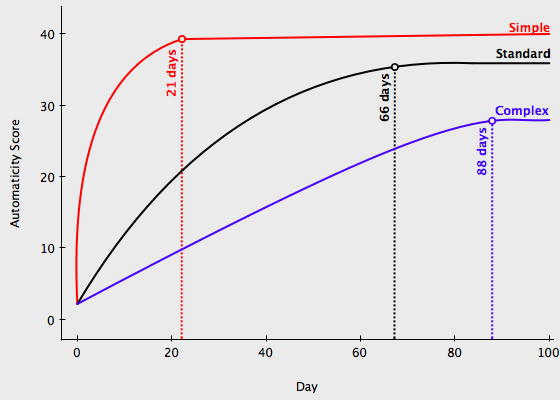
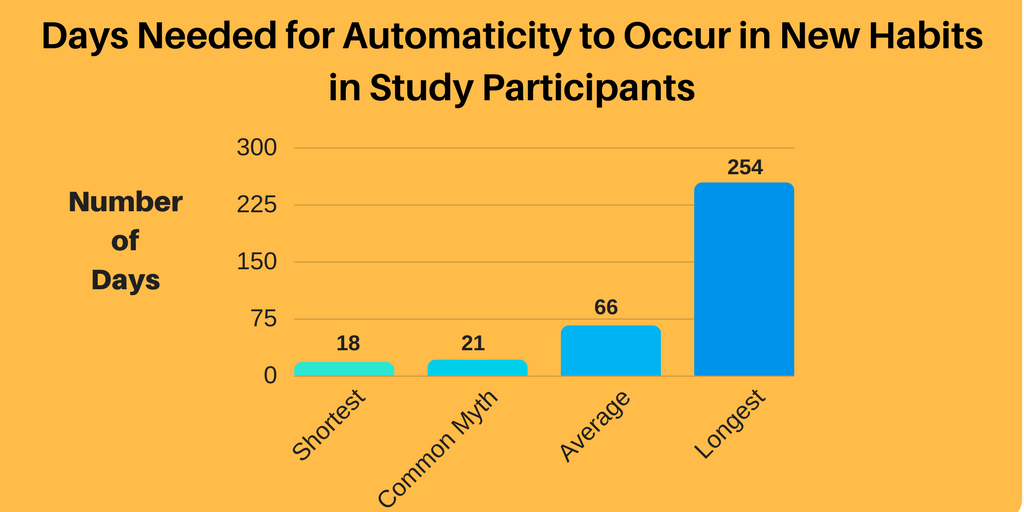
Our personal happiness has very much to do with having good health, adequate nutrition, positive social interactions, and other resources often not that of wealth, fame, or celebrity. Happiness comes from within an individual, as an inner state of awareness. We can cultivate our happiness. One way is to form a habit to practice deliberate mental exercises. Simple behavior tasks can take about 21 days of repletion to become a habit, whereas more complex or difficult behavior adjustments may take 66-88 days to master, depending upon the individual and their particular circumstances (Morris, 2022).
Tai chi, qigong and yoga are all methods that specifically focus upon mindfulness and the switching from the default network mode (DNM) to that of the task positive (focused) mode.
References:
Dal Lin, C., Poretto, A., Scodro, M., Perazzolo Marra, M., Iliceto, S., & Tona, F. (2015). Coronary microvascular and endothelial function regulation: Crossroads of psychoneuroendocrine immunitary signals and quantum physics [Part C]. Journal of Integrative Cardiology, 1(5). https://doi.org/10.15761/jic.1000137
Mittner, M., Hawkins, G. E., Boekel, W., & Forstmann, B. U. (2016). A Neural Model of Mind Wandering. Trends in Cognitive Sciences, 20(8), 570–578. https://doi-org.northernvermont.idm.oclc.org/10.1016/j.tics.2016.06.004
Morris, S. (2022, February 27). Two Problems Safety Professionals Need to Consider About Habit Formation. Safety Talk Ideas. https://www.safetytalkideas.com/safetyprofessional/habit-formation-workplace-safety/
I write often about topics that affect our health and well-being. Additionally, I teach and offer lecture about qigong, tai chi, baguazhang, and yoga. I also have hundreds of FREE education video classes, lectures and seminars available on my YouTube channel at:
https://www.youtube.com/c/MindandBodyExercises
Mind and Body Exercises on Google: https://posts.gle/aD47Qo
Jim Moltzan
407-234-0119
www.Amazon.com/author/jimmoltzan























 United Martial Arts Association