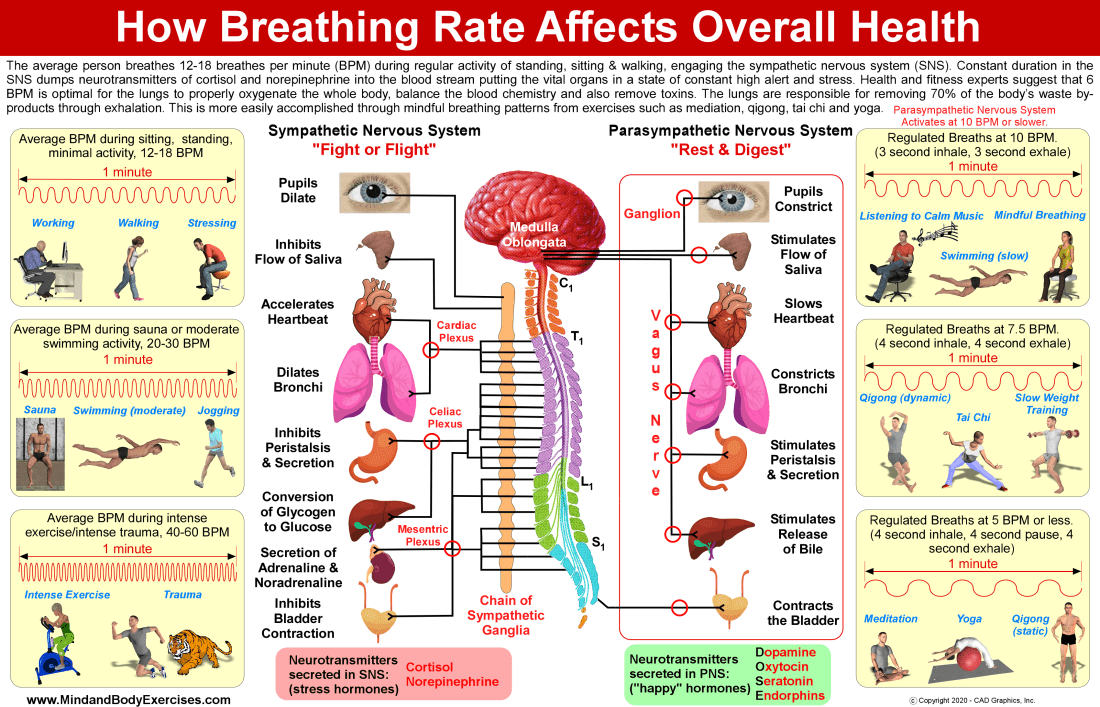
The human body is an incredible pharmacy within all individuals, where our thoughts and relative emotions can manifest various chemical reactions that affect organ function, either in positive or negative manners. There are four main neurotransmitters that affect our nervous system in positive and beneficial aspects. These are also referred to as the key “feel-good chemicals” as they help contribute to positive emotions. I have come to understand these and remember them through the acronym of DOSE, where Dopamine, Oxytocin, Serotonin, Endorphins.
Dopamine is often called the “reward chemical,” as dopamine within the nervous system surges as we feel a sense of pleasure from achieving goals, or while anticipating and receiving something perceived as enjoyable. Dopamine motivates us to pursue rewarding experiences, while playing a role in learning and memory.
Serotonin is a neurotransmitter that contributes to our feelings of calmness, well-being, and emotional stability. Having low serotonin levels is linked to anxiety, depression, insomnia and other mental disorders. Serotonin production within the body can be increased through activities that promote relaxation and a sense of accomplishment.
Oxytocin is also called the “love hormone.” Oxytocin is released during events of physical contact, social bonding, and acts of kindness where it brings about a sense of trust, empathy, and connections with others.
Endorphins are the body’s natural painkillers that are released during exercise, eating of spicy foods and laughter. Endorphins have the ability to help to reduce stress and anxiety.
Understanding of the mind-body connection of these chemicals is well known throughout fields of study, such as biology, physiology, and chemistry, as to their roles in management of thoughts and emotions and their physiological effects on the body’s autonomic nervous system. There are various ways to illicit the physiological mechanisms that release these powerful chemicals, where proper nutrition, exercise, meditation practices and social interactions are the common denominators for all. Management of breathing is one of the most effective ways to self-regulate thoughts and emotions and relative overall health of the nervous system which manages organ function.
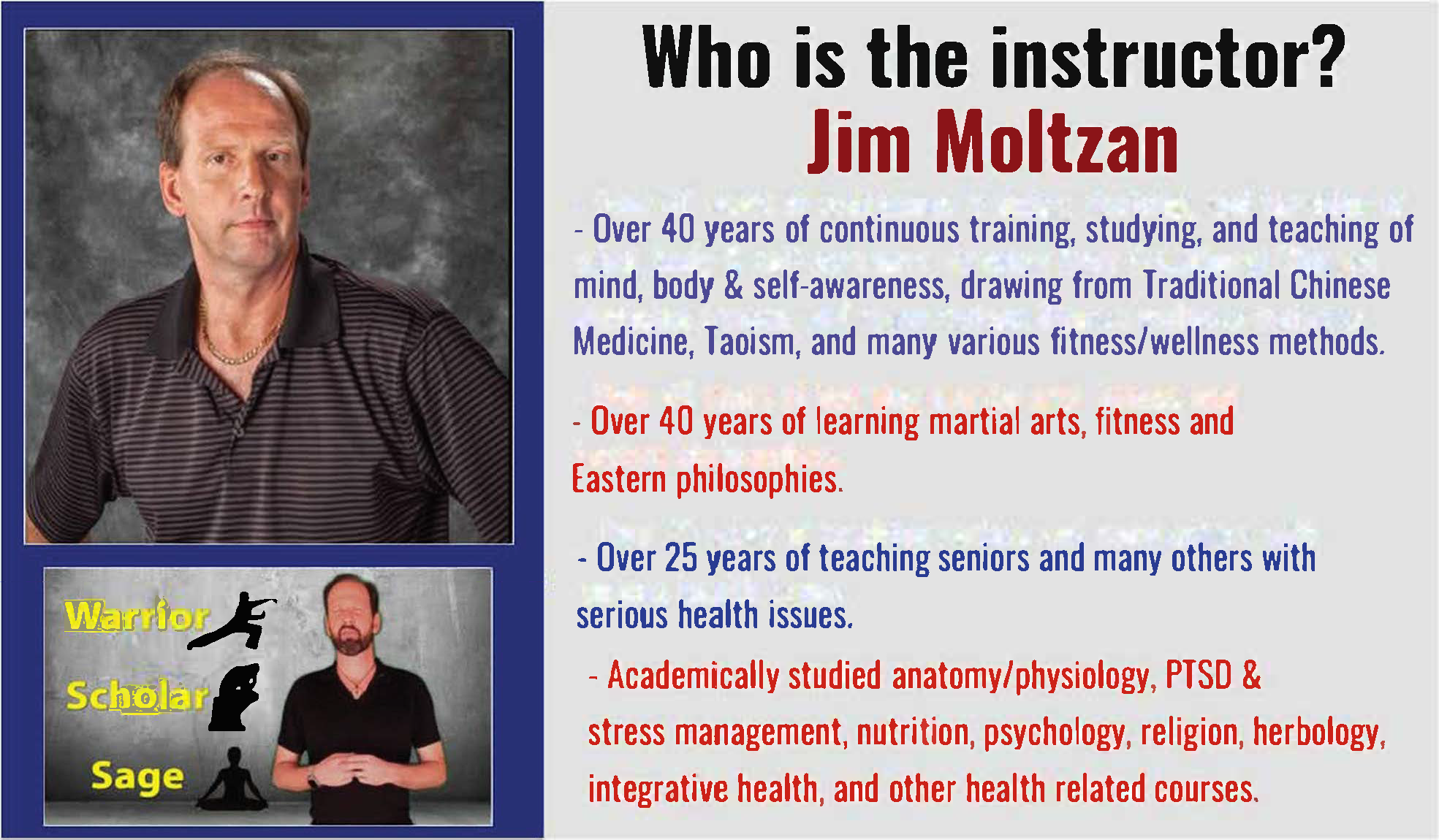
I teach and offer lectures about holistic health, stress management, qigong, tai chi, baguazhang, meditation, phytotherapy (herbs), music for healing, self-massage, and Daoyin (yoga).
I look forward to further sharing more of my message by partnering with hospitals, wellness centers, VA centers, schools on all levels, businesses and individuals that see the value in building a stronger nation through building a healthier population. I also have hundreds of FREE education video classes, lectures and seminars available on my YouTube channel at:
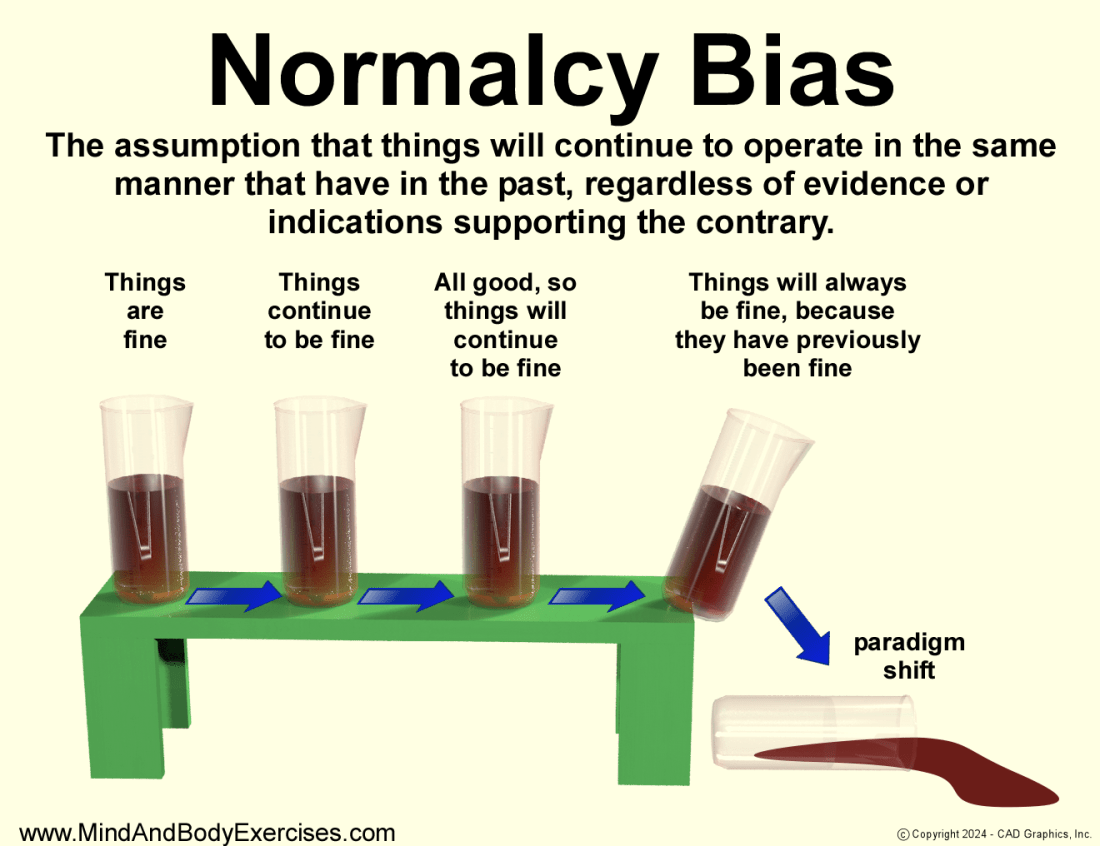
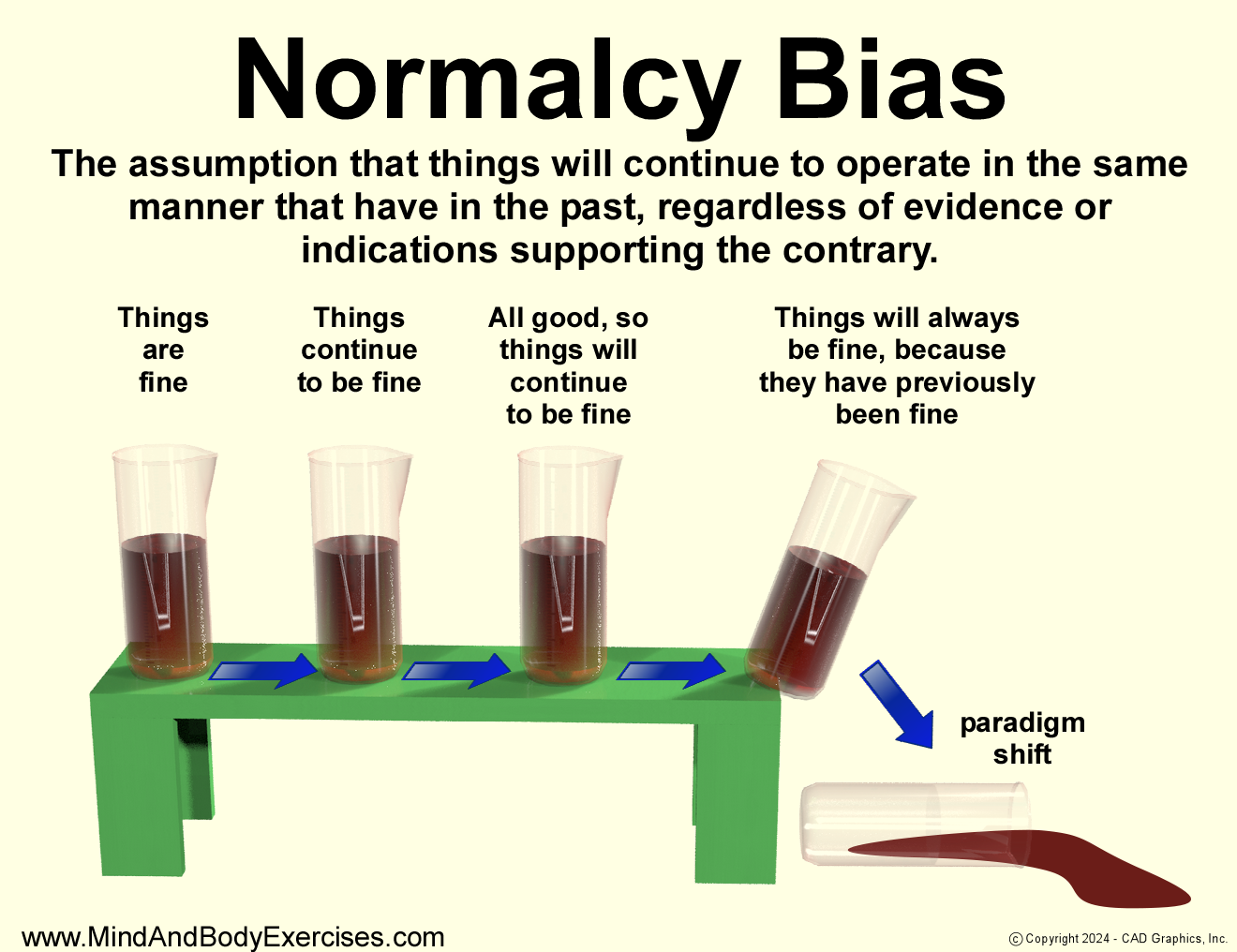
Normalcy bias is a cognitive behavior where a person has a propensity to underestimate the likelihood of a significant negative event or disaster occurring, as well as dismissing potential impacts if the event were to happen. This bias is based in the assumption that things will continue to operate in the same manner that have in the past, regardless of evidence or indications supporting the contrary.
Typical characteristics of normalcy bias include:
Optimistic Bias is often linked to normalcy bias, where an individual is so optimistic that they may believe that they are not as likely to encounter negative events than that of others. Too much of this optimism may lead to a lack of preparedness.
A Reluctance to Take Action – People that are influenced by normalcy bias may resist taking proactive actions or preparations towards high-impact events that might not happen. This reluctance can be rooted in a belief that relative events are improbable.
Over Dependence upon Familiar Patterns – Individuals with normalcy bias may rely upon familiar patterns or cycles, thinking that the future events will repeat similarly to the past, influencing their ability to adapt to changing circumstances.
Minimizing Perception of a Threat – People with normalcy bias often have a tendency to simplify the importance of potential threats or risks. They may think that because a threat has never come about, it is not likely to occur in the future.
Desire to Maintain a Sense of Normality – Individuals prone to experiencing normalcy bias often gravitate toward keeping a sense of normality and routine, even when faced with eminent dangers or threats. This may influence inadequate or delayed responses to warnings of impending negative events.
Examples of normalcy bias:
Living in an earthquake-prone area, regardless of warnings and historical evidence of seismic activity. Belief that a major earthquake is unlikely to occur because it hasn’t happened recently. This bias can lead to lack of awareness, preparedness and relative response in the event of an actual earthquake. Other natural disaster-prone areas also apply (hurricanes, tornadoes, flooding, etc.).
Those in financial distress, will just somehow get by in spite of their spending budget showing otherwise.
During World War II in Nazi Germany, many Jews hoped and believed that things would return to normal.
Up until the terrorist attacks on the US of 9/11, many Americans thought that there would never be an attack on US soil. A paradigm shift ensued, leading us to where we are today with heightened awareness, fear, anxiety, TSA and many other adjustments to our society that have been the new normal.
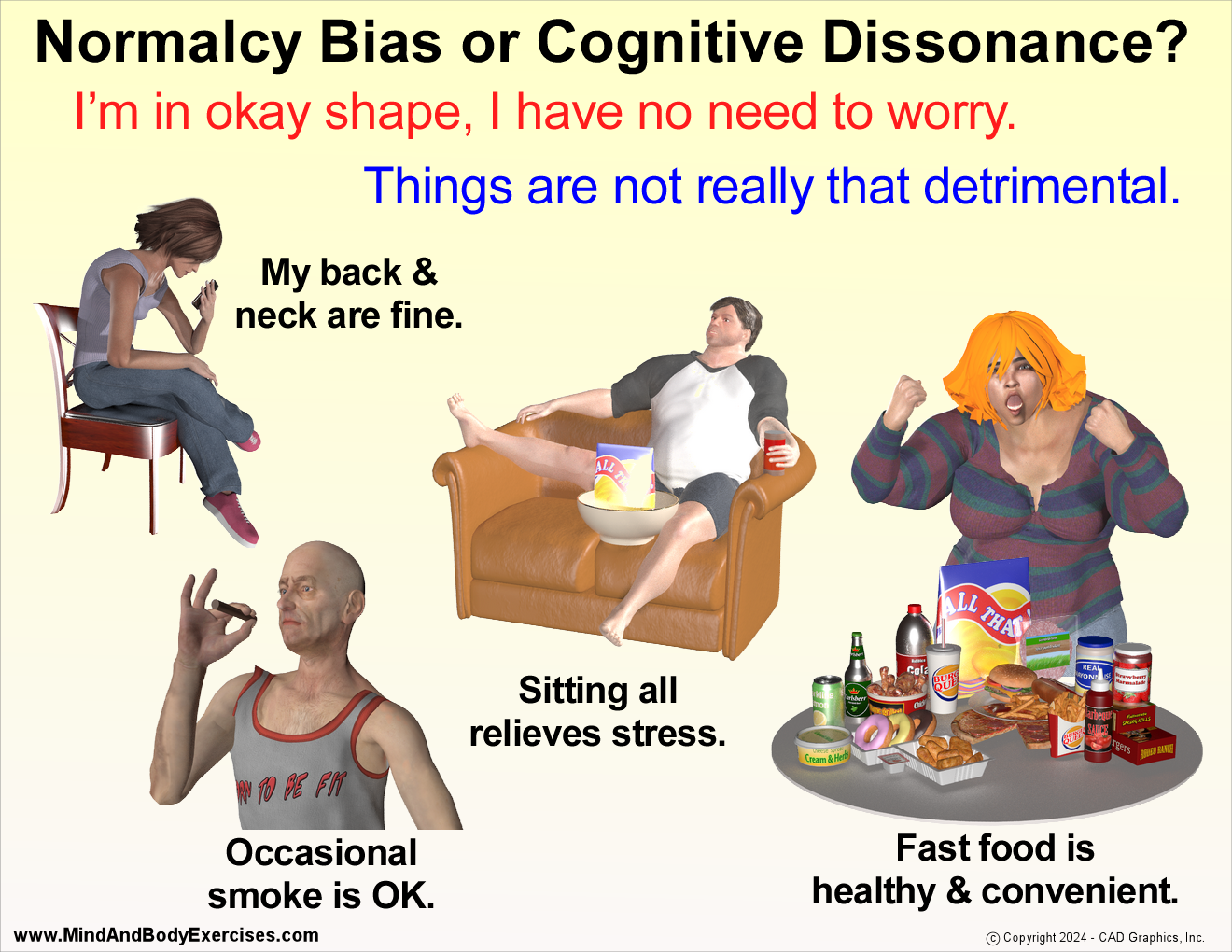
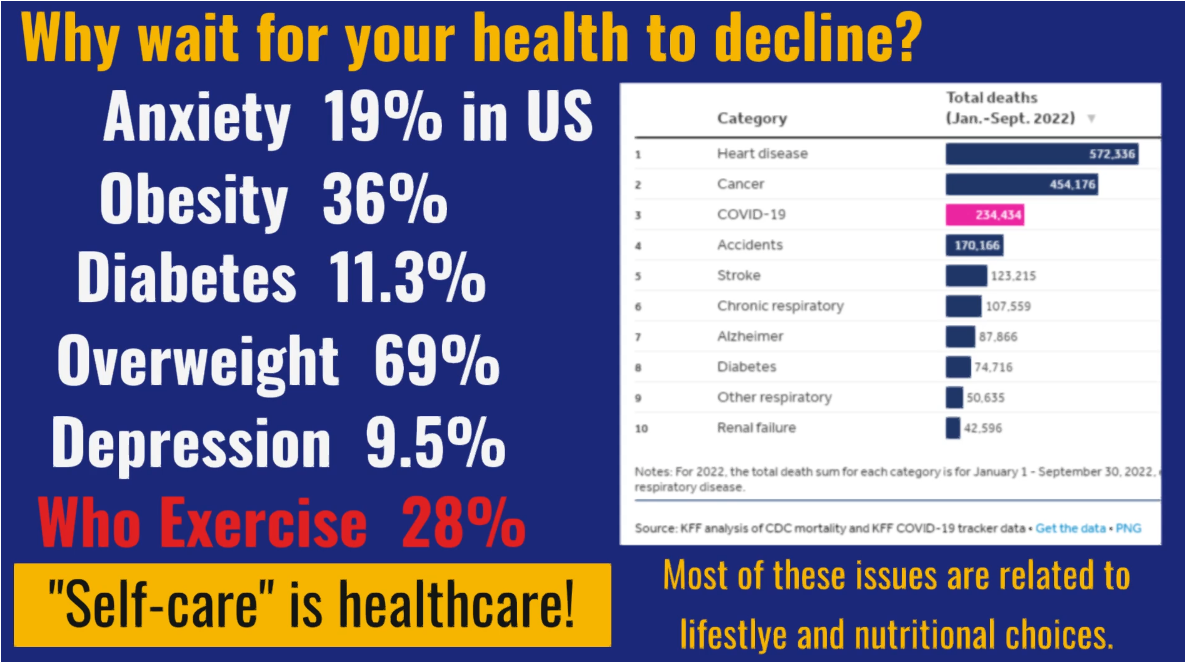
People in relatively fine health, believe that because they haven’t been seriously ill, sick or injured, that their health will continue to be healthy despite other factors and circumstances. This has been evident over many years with people smoking of tobacco, alcohol consumption and poor diet.
From a fitness perspective, people often don’t realize how much of their strength, flexibility, coordination, and balance that they may lose as they age. A simple fall or injury may create a paradigm shift in how an individual views their well-being.
Criminals, illegal drug dealers/user, tax cheats, reckless drivers and others may also fall into the normalcy bias, where they see themselves never being caught, as normal so therefore in their thoughts they will never get caught.
Normalcy bias and cognitive dissonance are two similar but different terms defining psychological behaviors. Normalcy bias is more focused on downplaying the possibility or significance of negative events. Cognitive dissonance is more broad concept associated with the unease caused by conflicting beliefs. Both concepts involve cognitive processes, but pertain to different aspects of cognition and behavior.
In conclusion, normalcy biased can often lead to lack of, or delay of appropriate mental and physical preparedness for potential future events and relative circumstances. Nobody wants to live in fear or anxiety of events that may or may not come about. However, becoming adequately educated and/or informed may help to better manage an individual’s thoughts and relative actions concerning any particular potentially negative event.
__________________________
I teach and offer lectures about holistic health, stress management, qigong, tai chi, baguazhang, meditation, phytotherapy (herbs), music for healing, self-massage, and Daoyin (yoga).
I look forward to further sharing more of my message by partnering with hospitals, wellness centers, VA centers, schools on all levels, businesses and individuals that see the value in building a stronger nation through building a healthier population. I also have hundreds of FREE education video classes, lectures and seminars available on my YouTube channel at:
I do not believe that God, Allah, Yahweh, the Divine, or whatever term we use for the higher power has a gender, nor race, ethnicity. These labels are all made from humans assuming that something greater and beyond us could be labeled as categorized by clergy, linguists or scientists is quite narcissistic on our part. Over the history of humanity, there were only two choices of male or female, so the higher power had to be one or the other in view of humans. When the Bible states in Genesis 1:27 “And God created man in His own image, in the image of God He created him; male and female He created them.” If man (humans) was created in the image of God, many are led to think that God must be a male as Adam was the first human and a male.
If we can break away from our thoughts that the earth and humans are the center of the universe, we may be able to entertain the idea that other life or entities exist beyond what we know here on Earth. Perhaps elsewhere in the universe, their exists something beyond male or female, animal, or plant, etc. Perhaps when humans or other life passes on to their relative afterlife, all labels are removed. I would like to think that in heaven, Valhalla or whatever comes next, our age, gender, race, ethnicity, or any other dividing status would not follow us to that place of bliss.
_________________
I teach and offer lectures about holistic health, stress management, qigong, tai chi, baguazhang, meditation, phytotherapy (herbs), music for healing, self-massage, and Daoyin (yoga).
I look forward to further sharing more of my message by partnering with hospitals, wellness centers, VA centers, schools on all levels, businesses and individuals that see the value in building a stronger nation through building a healthier population. I also have hundreds of FREE education video classes, lectures and seminars available on my YouTube channel at:
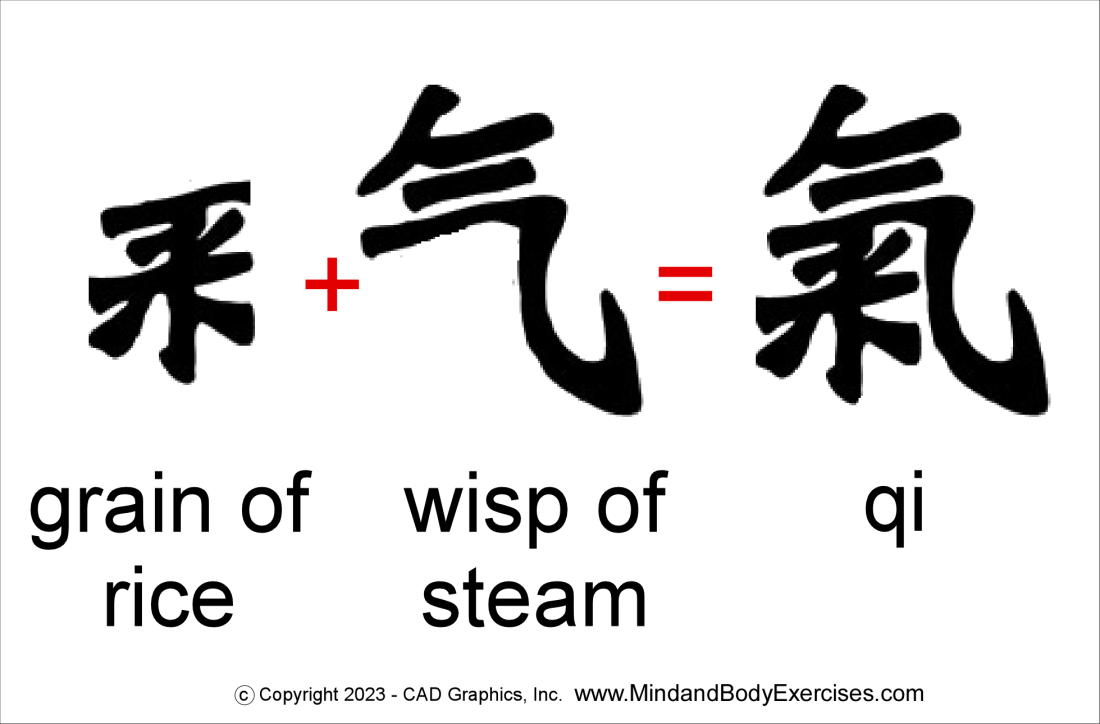
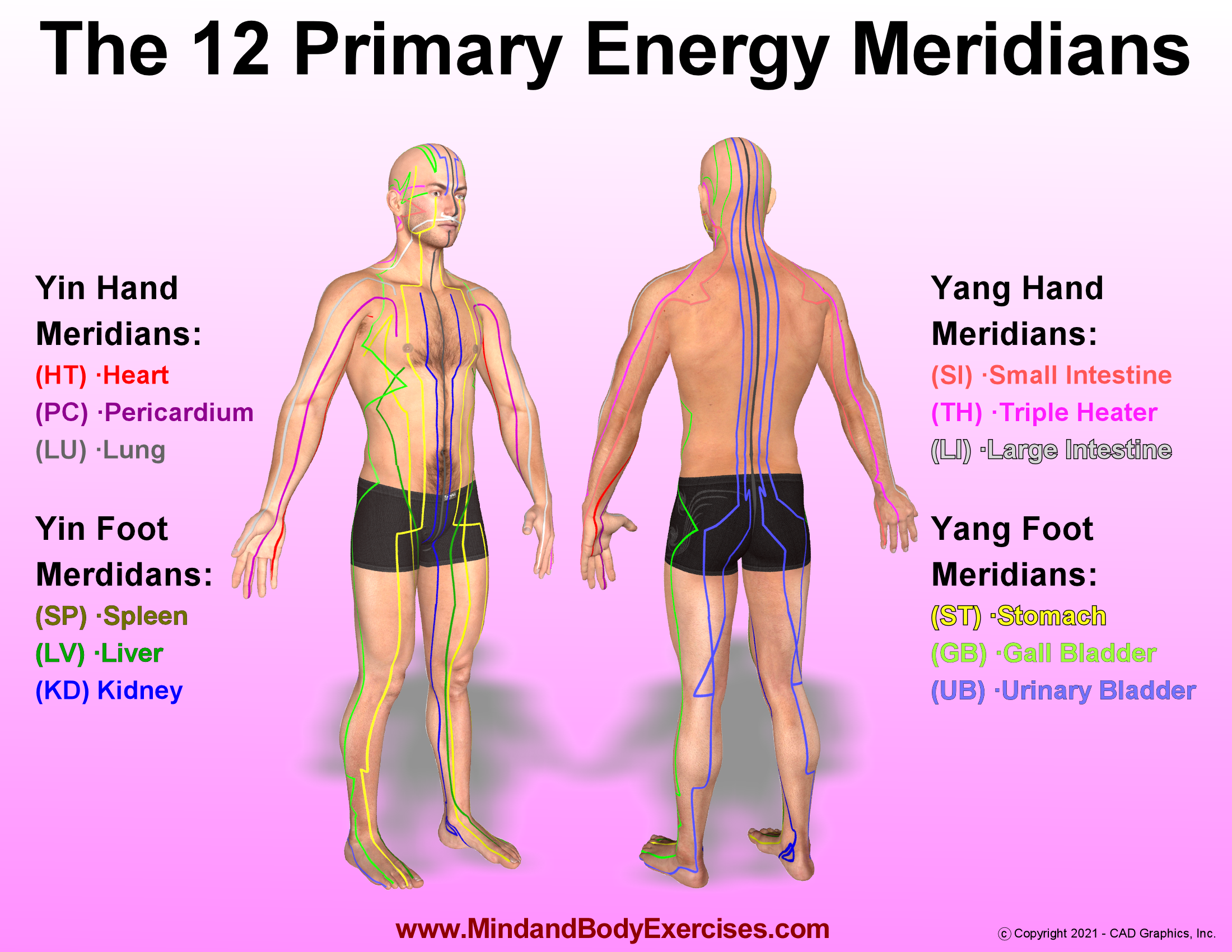
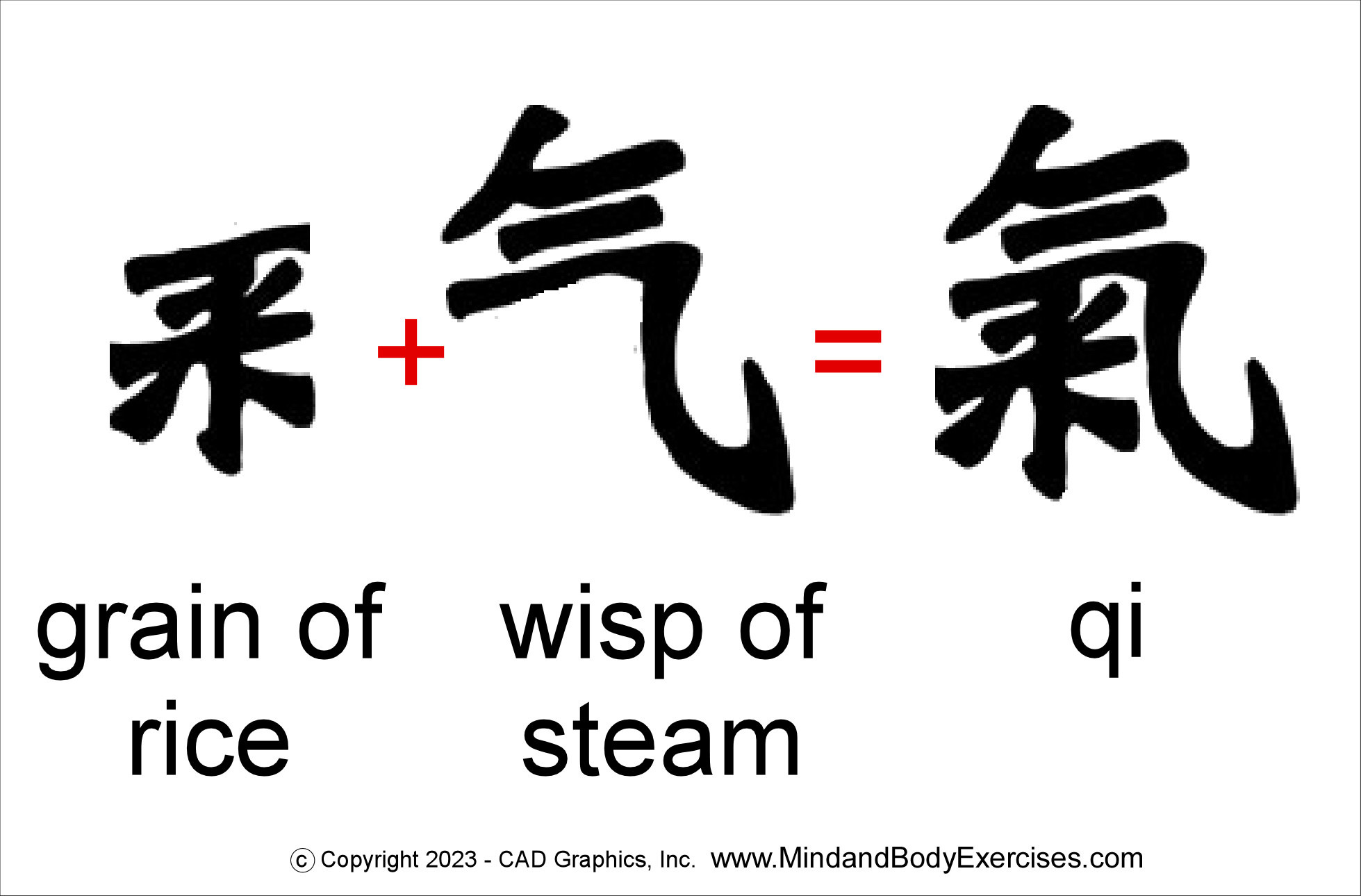
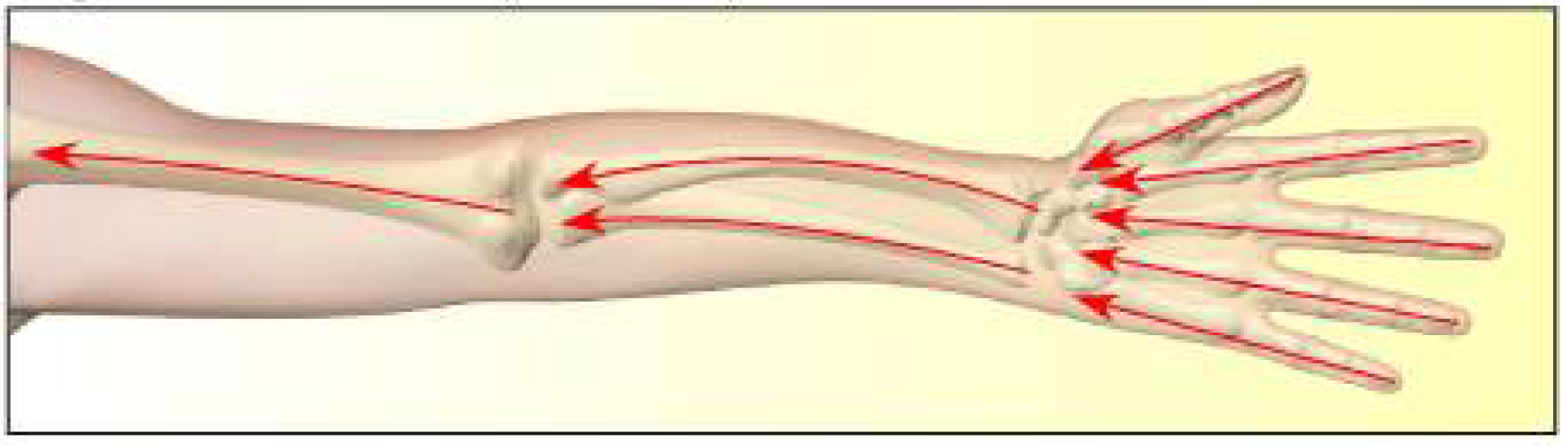
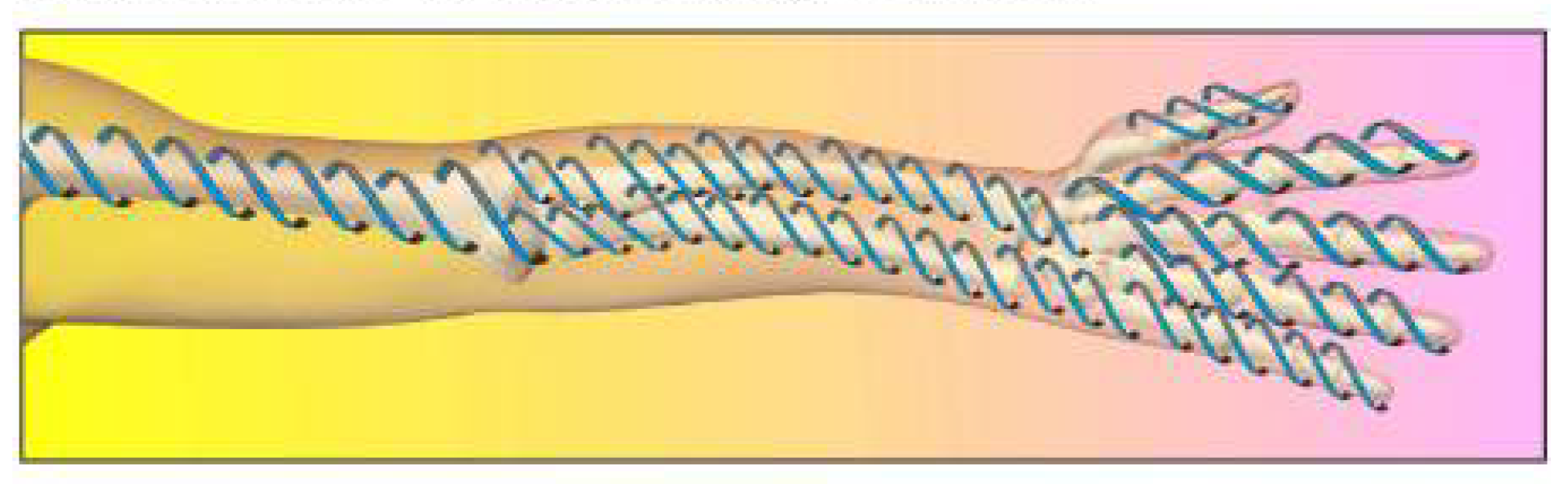
Chi or Qi (pronounced as “chee”) translates to mean “breath” in Chinese. Chi is the life energy that all living creatures require in order to exist. Different cultures call this energy, Ki (from Japanese), Gi (Korean) or Prana (Indian). Chi is a type of energy in the human body and circulates within the blood throughout. Chi flows in a specific pattern from the chest, down the front of the arms to the fingers. It then travels up the back of the arms to the head. The chi then travels down the back to the feet and back up the front of the body to the chest. It travels through meridians within the body that can be best described as something similar to the electrical lines on a printed circuit board. There are 12 main meridians and 8 extraordinary ones as well. There are points along these meridians that are known as “pressure points” or acupoints for acupressure and acupuncture.
Why is Chi important?
The amount of chi in one’s body and the quality of it determines whether an individual is generally healthy or prone to illness. There is a finite amount in our bodies and is gradually exhausted due to age and possible abuses. When it decreases so does the lifespan of the individual.
How do we obtain the chi we have?
Prenatal chi comes from our parents.
Nutritional chi comes from the food we eat.
Air chi comes from the air we breathe.
Other types of chi are manifested from the previous three types to form others.
What types of chi are there? Similar to how there can be many different types of plants for example, each having its own name and characteristics, there are various types of chi.
Prenatal, original or primary chi, are different names for the same type of chi that is inherited from the mother (and father) at the time of conception. At birth, the chi resides in and around the kidneys, eventually spreading throughout the rest of the organs and body. In order for the prenatal chi to be maintained, food, drink and air are required. Our health and quality of it are directly linked to the quality of these components. Even if someone’s prenatal chi is weak, it can still be properly nourished by proper diet, exercise and life style. Postnatal or nutritional chi and is derived from food and life style. Nutritional chi is responsible for producing the blood as well as providing the body with nourishment. Where the chi circulates, the blood will follow. The blood nourishes the chi; it is a synergistic relationship just is yin and yang.
Pectoral or air chi is drawn into our lungs from the air we breathe. People lacking stamina, are known to be deficient in air chi. It enables the lungs to control respiratory functions and enables the heart to circulate blood, relying upon the arms and legs to circulate chi throughout the body.
Defensive or guardian chi (Wei Qi) circulates on the surface of the body, protecting it from outside influences and dangers. Originating from the food we eat, defensive chi is responsible for the operation of the skin’s pores, thereby regulating the body’s temperature and ability to provide moisture when needed.
Normal chi or Zangfu Zhi chi, is that which circulates through the organs.
Jing Luo Zhi chi is that which circulates through the meridians.
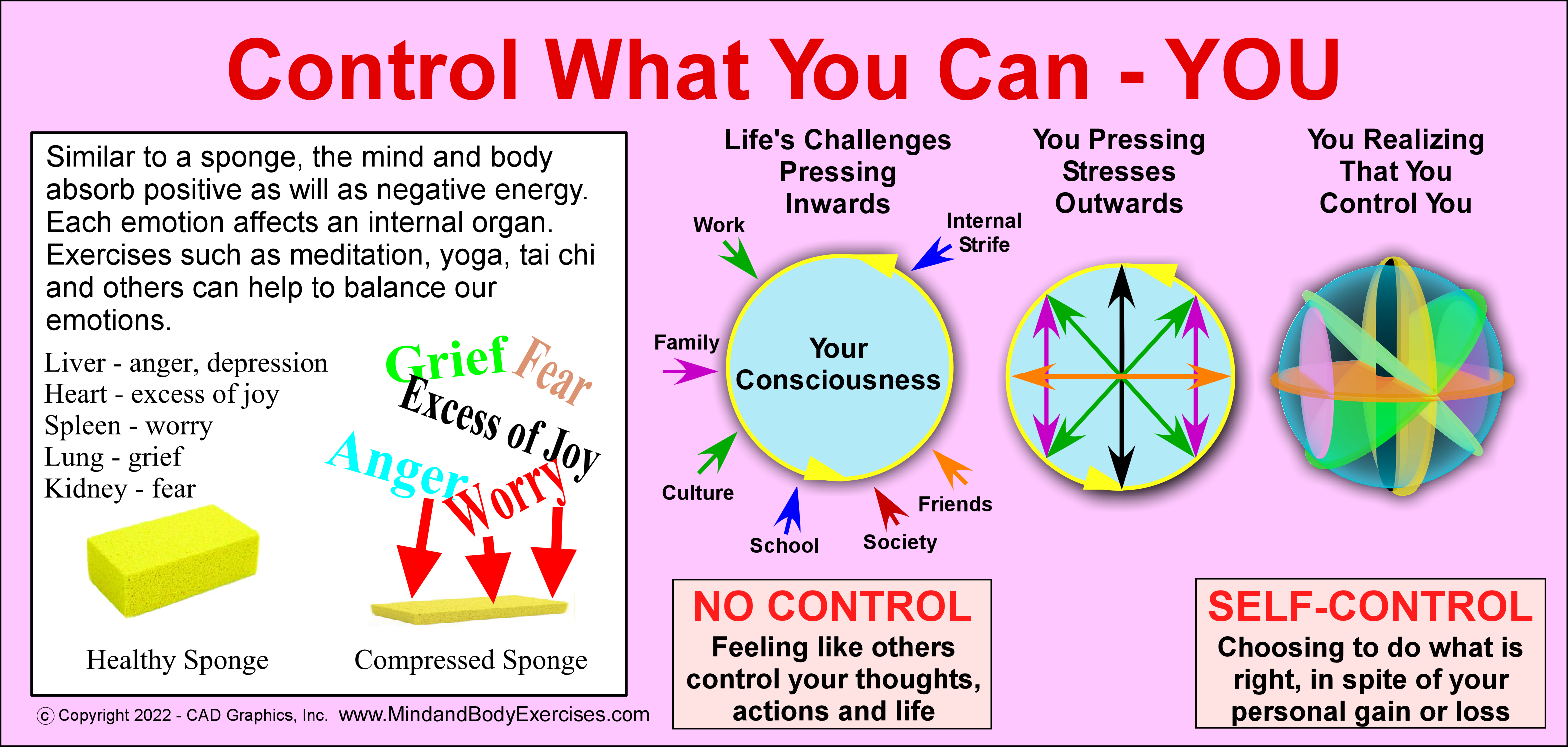
How do I keep what I have? A proper balance of nutrition, exercise and a healthy lifestyle directly affect the quality and abundance of chi. Emotions and their balance or lack there of, affects the quality of an individual’s chi. The 7 emotions are Joy, Anger, Sadness, Grief, Pensiveness, Fear, and Fright. Energy (Chi) is regarded as one of the 3 Treasures or essential components of life, with essence (Jing) and spirit (Shen) being the other two. When energy, essence and spirit are in harmony with one another, the person finds himself or herself alert, healthy and vibrant. Or the opposite, if their treasures are in imbalance. If this harmonious flow is disrupted, illness occurs.
Can I get more?
Better quality food or herbs
Better quality of air we breathe
Deep breathing exercises such as Qigong
Other forms of internal martial arts training such as Tai Chi, Hsing Yi or BaguaZhang
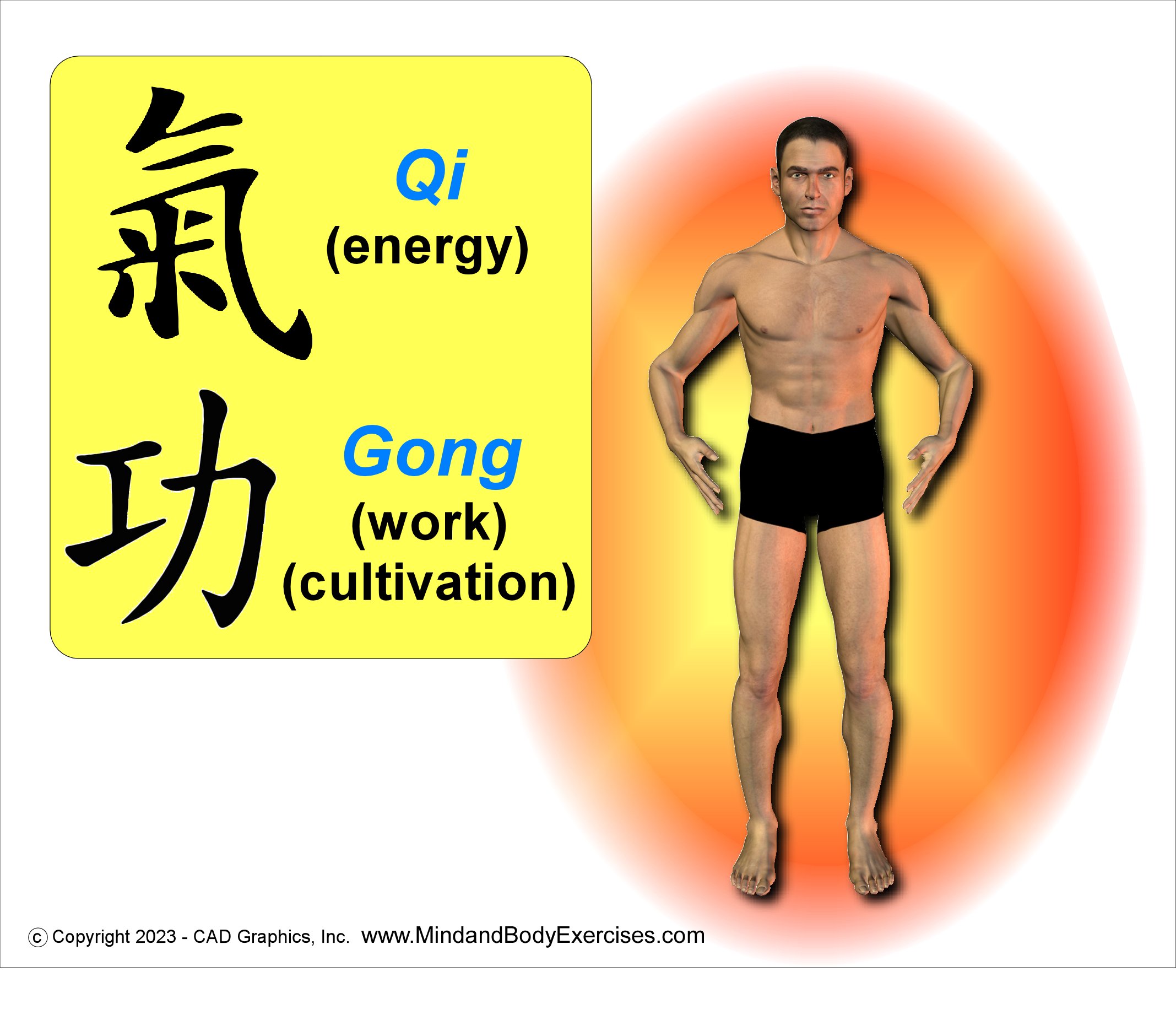
What is Chi Kung, Qigong or Gi Gong? Exercises originating in India and China, for enhancing or “cultivating” chi. The above names reflect different spellings for the same concept. Cultivate is an appropriate word because, as living things require nourishment and nurturing to grow, chi must be nourished and encouraged to develop.
How do these exercises work? By regulating one’s breath and rhythm of it, an individual can begin to affect the parasympathetic nervous system which slows their heart rate, lowers the blood pressure, relieves muscle tension and consequently changes their body chemistry. This is basically the same state of being one achieves while sleeping and is when the body rests, heals and recharges its energy levels.
What are the benefits of practicing these types of exercises?
Increased energy
Relief from chronic illnesses
Increased self awareness
Expansion of one’s thought process
Spiritual awareness
Increased longevity
Better control of emotions
Provides a release of one’s internal chatter
Can Qigong exercises really cure serious diseases and ailments? It is important to note that the claim of practicing chi kung to overcome illness and promote health is based on countless testimonials of practical cases spanning centuries. If someone is physically impaired, this affects his or her emotions and mental state. Consequently, someone’s emotions can easily affect their health, for better or worse. If our psychological and physiological systems function as they should, illness should not occur. Illness occurs when one or more of the body’s systems fail in their functions. The specialty of chi kung is to restore and enhance harmonious energy flow, thereby overcoming illness.
What is the difference between Qigong and Nei Dan (Nae Gung)? Qigong is exercises focusing on increasing one’s energy by regulating their breath. Nei Dan is somewhat more advanced in that one uses their thought and awareness to guide and increase their energy throughout the spine and bones within the body.
Why pursue these methods? The American Health Care Crisis might not be as such if all Americans assumed more personal responsibility for their own health. Many spend small fortunes on doctor visits, medication, chiropractic adjustments, massage therapy, acupuncture and other forms of health care and pain relief. Chi kung is relatively cheap to learn, takes little space and only minutes a day to reap the benefits. The only side effects are positive and it doesn’t require a prescription from your doctor.
I teach and offer lectures about holistic health, stress management, qigong, tai chi, baguazhang, and yoga.
I also have hundreds of FREE education video classes, lectures and seminars available on my YouTube channel at:

 United Martial Arts Association