
In recent decades, there has been growing debate and public dissatisfaction surrounding the effectiveness of major U.S. government agencies such as the National Institutes of Health (NIH), Centers for Disease Control and Prevention (CDC), Food and Drug Administration (FDA), Environmental Protection Agency (EPA), and Department of Education (DOE). From a holistic health and wellness standpoint, the concerns raised are not only legitimate but crucial for the future well-being of American society.
Despite the enormous budgets allocated to these institutions, many key indicators of national health and environmental quality have not improved and in some cases, have greatly worsened. Rates of chronic diseases, such as obesity, diabetes, and autoimmune disorders, have surged over the past several decades (FaST FaCTs: Health and Economic Costs of Chronic Conditions, 2024). American food products are heavily processed and laden with additives, while issues such as polluted drinking water continue to affect vulnerable populations (Environmental Protection Agency [EPA], 2023). Meanwhile, the pharmaceutical industry’s extensive influence over agencies like the FDA and CDC has raised serious ethical questions about regulatory capture and conflicts of interest (Abbott & Dukes, 2009).
The educational sector is similarly troubled. Despite increased federal involvement, American students have shown declining scores in key academic areas compared to previous generations (National Center for Education Statistics, 2024). From a systems thinking perspective central to holistic health, these problems are interconnected. Poor nutrition, environmental toxicity, and weakened educational outcomes contribute collectively to the degradation of overall societal wellness.
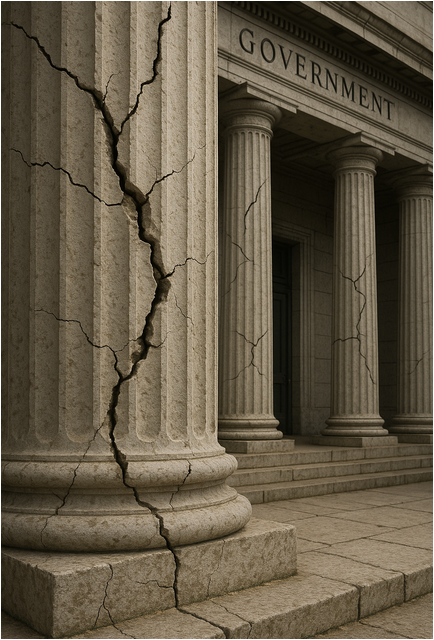
If these agencies operated within the private sector, the level of dysfunction witnessed would likely result in significant consequences for leadership, including firings, lawsuits, or even criminal prosecutions. Companies that consistently fail their customers typically lose credibility and cease to exist. However, because these government organizations are taxpayer-funded and politically shielded, they continue to operate with limited accountability.
The principle of accountability is foundational to any healthy democracy. Citizens not only have the right but the responsibility to demand reforms when institutions fail to serve the public interest. As political theorist John Locke emphasized, government derives its legitimacy from the consent of the governed, and when it ceases to act for the public good, reform becomes necessary (Locke, 1988).
There is significant evidence that Americans are not being adequately protected or served in key areas of health, environment, and education, which are all pillars of a thriving and holistic society. It would therefore not be wrong, but entirely appropriate and vital, for citizens to call for drastic reforms or even overhauls of these agencies. From a holistic health perspective, reform is not simply a political preference; it is a matter of survival and future flourishing.
Holistic wellness emphasizes balance, responsibility, interconnectedness, and long-term thinking. If the government institutions designed to protect health, the environment, and education are misaligned with these principles, it is imperative that we, as a society committed to holistic well-being, advocate for transformative change. Without public awareness and pressure, the existing system will continue to perpetuate dysfunction to the detriment of both current and future generations.
References
Abbott, F. M., & Dukes, G. (2009). Global Pharmaceutical Policy. https://doi.org/10.4337/9781849801843
Environmental Protection Agency. (2023). Drinking water pollution and health risks. https://www.epa.gov/ground-water-and-drinking-water
FaST FaCTs: Health and economic costs of chronic conditions. (2024, July 12). Chronic Disease. https://www.cdc.gov/chronic-disease/data-research/facts-stats/index.html
Locke, J. (1988). John Locke Two treatises of government. In Cambridge University Press eBooks. https://doi.org/10.1017/cbo9780511810268
National Center for Education Statistics. (2024). The Nation’s Report Card | NAEP. https://nces.ed.gov/nationsreportcard/
I look forward to further sharing more of my message by partnering with hospitals, wellness centers, VA centers, schools on all levels, businesses, and individuals who see the value in building a stronger nation through building a healthier population.
I also have hundreds of FREE education video classes, lectures, and seminars available on my YouTube channel at:
https://www.youtube.com/c/MindandBodyExercises
Many of my publications can be found on Amazon at:
http://www.Amazon.com/author/jimmoltzan
My holistic health blog is available at:
http://www.mindandbodyexercises.wordpress.com
http://www.MindAndBodyExercises.com
Mind and Body Exercises on Google: https://posts.gle/aD47Qo
Jim Moltzan
407-234-0119


 United Martial Arts Association