Cheo-se – “Worldly Conduct and the Art of Social Navigation”

In Korean culture, few words capture the tension between wisdom and opportunism as clearly as Cheo-se. At its most basic level, the term refers to worldly conduct, or the way one carries oneself and manages relationships within society. Yet beneath this neutral definition lies a spectrum of connotations ranging from admirable diplomacy to manipulative flattery for personal benefit (Lee, 2003).

Literal Meaning and Origins

The word Cheo-se composed of two Chinese-derived syllables:

  • Cheo – “to be placed, to deal with, to handle.” It conveys the idea of one’s position or manner of responding to circumstances.
  • Se – “world, age, society.” It points toward the social and historical context in which one lives.

Together, Cheo-se literally means “to handle oneself in the world” (Sohn, 2001). Traditionally, this encompassed the skills of tact, discernment, and adaptability, qualities necessary for survival and success in a hierarchical society.

The Dual Nature of Cheo-se

Like many cultural concepts, cheo-se is not purely positive or negative. Its interpretation depends on intention and execution:

  • Positive sense: Cheo-se may describe the wisdom of diplomacy, courtesy, and adaptability. A person who practices it skillfully builds harmonious relationships, avoids unnecessary conflict, and thrives in diverse social settings. It reflects prudence and emotional intelligence.
  • Negative sense: At the same time, cheo-se can slide into opportunism. When “worldly conduct” is driven by ambition or self-interest, it becomes flattery, sycophancy, or manipulation. In this sense, cheo-se is akin to “knowing which way the wind blows” and adjusting behavior for personal gain, even at the cost of sincerity.

This dual nature has made cheo-se a subject of moral reflection in Korean history and literature, where figures are often judged by whether their social navigation was genuine or self-serving.

Korean proverbs warn of this danger. For example, “Sweet words may contain poison” emphasizes the risk of insincere praise. Similarly, “Words smeared on the lips” is a colloquial phrase for superficial flattery.

Cheo-se in Korean Society

Throughout Korean history, cheo-se has been shaped by Confucian values. In a system where respect for hierarchy and proper conduct were paramount, knowing how to present oneself appropriately could mean the difference between success and disgrace (Deuchler, 1992). For officials at court, scholars in examinations, or merchants in the marketplace, cheo-se was a vital skill.

In modern Korea, the term remains relevant. Navigating workplace hierarchies, academic competition, and social networks often requires an intuitive grasp of cheo-se. Compliments to a superior, careful word choice in meetings, or outward agreement with group consensus can all be forms of worldly conduct. While some see these as strategic necessities, others criticize them as shallow flattery that undermines authenticity.

Proverbs reflect this pragmatic side as well. “A word can pay back a thousand nyang debt” highlights the enormous power of speech and tact in relationships. While not inherently negative, it illustrates how skillful words, whether genuine or flattering can transform one’s fortunes.

Universal Lessons Beyond Korea

Although cheo-se is rooted in Korean language and culture, the underlying dilemma is universal. Every society wrestles with the line between:

  • Healthy diplomacy that fosters harmony and cooperation, and
  • Insincere flattery that erodes trust and integrity.

This concept resonates with English expressions such as “political savvy,” “social maneuvering,” or “playing the game.” In both East and West, the art of social navigation often raises the same ethical questions: How much should one adapt to the expectations of others? When does tact become manipulation? (Goffman, 1959).

A Holistic Perspective

From a holistic viewpoint, balancing body, mind, and spirit – cheo-se challenges us to consider authenticity in our interactions. While adaptability and courtesy are valuable, they lose their integrity when they mask true intentions or exploit others for personal benefit. Mindfulness practice, Taoist and Confucian philosophy, and even modern psychology all suggest the same principle: genuine respect must underlie social conduct (Tu, 1985; Kabat-Zinn, 2005).

Authentic cheo-se is not about bending to every wind of circumstance but about maintaining harmony while remaining true to one’s values. It is the art of being skillful without being deceitful, diplomatic without being servile, adaptive without being opportunistic.

Conclusion

The Korean concept of cheo-se offers a rich lens for examining the balance between adaptability and authenticity in human relationships. While it can describe admirable social wisdom, it can also slip into the realm of flattery and opportunism. Reflecting on cheo-se reminds us that our conduct in the world is always a dance between outer harmony and inner integrity.

For readers seeking to navigate modern life with grace, the lesson is clear: cultivate the art of cheo-se, but let sincerity and respect guide its practice.

References:

Deuchler, M. (1992). The Confucian transformation of Korea: A study of society and ideology. Harvard University Press. https://archive.org/details/confuciantransfo0000deuc

Goffman, E. (1959). The presentation of self in everyday life. Anchor Books.https://archive.org/details/presentationofs00goff

Kabat-Zinn, J. (2005). Coming to our senses: Healing ourselves and the world through mindfulness. Hyperion.

Lee, P. H. (2003). Sourcebook of Korean civilization: From the seventeenth century to the modern period. Columbia University Press.

Sohn, H. M. (2001). The Korean language. Cambridge University Press.

Tu, W. M. (1985). Confucian thought: Selfhood as creative transformation. State University of New York Press.

Sae Hwalgi – “Renewed Energy”

The Path of Renewed Vitality and the Reality of Aging

In Korean martial arts and traditional language, expressions often carry layered meanings. One such expression is “Sae Hwalgi,” which literally translates to “new vitality” or “renewed energy.” At first glance, the phrase appears simple, but within martial instruction and holistic health contexts, it reflects both the natural vitality of youth and the inevitable decline of the body with age.

Linguistic Foundations

The phrase can be broken down into two key parts: Sae, meaning new or fresh, and hwalgi, meaning energy, vigor, or vitality (WordHippo, n.d.; Collins Dictionary, n.d.). In Korean everyday usage, hwalgi refers to liveliness and robustness, the spark of vigor that animates one’s daily life. In martial culture, however, the term also resonates with deeper energetic qualities, similar to the concept of qi (ki, or gi) – the life force that sustains movement and resilience.

Martial Perspective

For martial artists, aging creates a paradox. With experience comes wisdom, but with age comes loss of flexibility and suppleness. In youth, sae hwalgi manifests as hydrated tissues, supple joints, and rapid recovery. With age, however, connective tissues lose hydration, collagen stiffens, and movements that were once effortless become labored.

Research in connective tissue physiology supports this traditional observation. Studies have shown that aging reduces elastic fibers and hyaluronan content in muscles, while collagen type I increases, creating stiffness and functional decline (Fede et al., 2022). Martial masters may describe this process metaphorically as the loss of hwalgi, reminding practitioners that vitality is not permanent but must be cultivated.

The Science of Aging Tissues

From a biomedical perspective, hwalgi correlates with measurable changes in the body. Collagen loss, a systemic process associated with cellular aging, directly impacts tissue elasticity and hydration (Collagen loss, 2025). Fascia, the web of connective tissue supporting movement, is also profoundly affected by aging. Maintaining fascia through elastic training, hydration, and mobility work is crucial for sustaining vitality (Petersen, 2015).

These physical realities mirror what martial language describes: the transition from supple vitality (sae hwalgi) to diminished energy and rigidity as time passes.

Holistic Dimension

The decline of vitality is not purely physical. In holistic traditions, vitality depends on the balance of body, mind, and spirit. A calm, focused mind preserves energy, while a scattered or stressed mind depletes it. Similarly, qi depends on unobstructed circulation through meridians. Stress, stagnation, and aging create blockages that restrict this flow, contributing to both physical stiffness and mental fatigue.

Thus, sae hwalgi is not just a description of youthful elasticity but a call to action: to cultivate renewal of vitality through breath, awareness, and lifestyle practices that harmonize mind and body.

Renewal Practices: Cultivating Sae Hwalgi

While aging cannot be reversed, vitality can always be renewed in relative terms. Modern science and traditional practices converge on this principle. Ways to cultivate sae hwalgi include:

  1. Breathwork – Deep diaphragmatic breathing regulates the autonomic nervous system and restores energy balance (Petersen, 2015).
  2. Hydration and Nutrition – Adequate water and mineral intake support tissue elasticity (Fede et al., 2022).
  3. Movement and Fascia Training – Martial forms, qigong, and mobility drills help fascia remain hydrated and resilient (Petersen, 2015).
  4. Mental Clarity and Stress Management – Meditation prevents energy “leakage” and supports qi flow.
  5. Adapting Martial Practice – Shifting from sheer force to refined technique preserves energy and allows martial arts to be practiced into old age (U.S. Kido Federation, 2024).

Conclusion

The wisdom of sae hwalgi lies in its dual nature. On one hand, it embodies the vigor of youth and the freshness of life’s energy. On the other, it acknowledges the inevitable loss of that vitality with age. Yet it is ultimately a hopeful concept. Through martial practice, breath, movement, and holistic awareness, vitality can be renewed at any stage of life.

For the martial artist, sae hwalgi is not a static state but a living reminder: though time may stiffen the body, the choice to renew vitality always remains.

References:

Collagen loss. (2025). In Wikipedia. Retrieved August 19, 2025, from https://en.wikipedia.org/wiki/Collagen_loss

Collins Dictionary. (n.d.). Vigor – Translation in Korean. Retrieved August 19, 2025, from https://www.collinsdictionary.com/dictionary/korean-english/%ED%99%9C%EA%B8%B0

Fede, C., Fan, C., Pirri, C., Petrelli, L., Biz, C., Porzionato, A., Macchi, V., De Caro, R., & Stecco, C. (2022). The effects of aging on the intramuscular connective tissue. International Journal of Molecular Sciences, 23(19), 11061. https://doi.org/10.3390/ijms231911061

Petersen, S. (2015). The secret of fascia in the martial arts. In Fascial fitness [Conference paper]. ResearchGate. https://www.researchgate.net/publication/275968128_The_secret_of_fascia_in_the_martial_arts

U.S. Kido Federation. (2024). Aging in the dojang: Adapting and thriving in Korean martial arts. U.S. Kido Federation. https://uskido.org/aging-in-the-dojang-adapting-and-thriving-in-korean-martial-arts/

WordHippo. (n.d.). What does 활기 (hwalgi) mean in Korean? Retrieved August 19, 2025, from https://www.wordhippo.com/what-is/the-meaning-of/korean-word-82ef1040fadbb9ea22d29d96a20391f04305253b.html

The Power of Connection: Building a Life Beyond Suffering

From adolescence onward, many people witness the ways in which pain and suffering manifest in daily life. The young often see relatives struggle with chronic illnesses, neighbors burdened by poor health choices, and peers wrestling with emotional distress. Such early encounters plant seeds of awareness, where pain is unavoidable in the human journey, but suffering may be shaped, managed, and sometimes transformed.

The Path of Pain and Lifestyle Choices

Physical pain is often the result of neglecting foundational aspects of health such as nutrition, exercise, rest, and stress management. The body, a remarkably resilient organism, also has limits. When repeatedly deprived of balanced nourishment or consistent movement, it expresses its distress in the form of aches, fatigue, or chronic illness (Gaskin & Richard, 2012).

Modern societies exacerbate this reality by promoting convenience foods, sedentary work, and overstimulation. The cumulative effects are clear in rising rates of cardiovascular disease, diabetes, and musculoskeletal disorders. Such conditions create cycles of pain that can erode quality of life, often leading individuals to medical dependence rather than prevention. The lesson is that while pain may be unavoidable, much of it can be reduced or delayed through conscious lifestyle choices.

The Broader Dimension of Suffering

Yet suffering goes deeper than the body. Many people live with a sense of emptiness, disconnected from community and deprived of meaning. They may have food and shelter, yet suffer from emotional instability, loneliness, or lack of direction. This suffering often stems not from physical injury but from existential concerns of not knowing answers to questions of “Why am I here?” or “Does my life matter?” (Frankl, 2006).

Unlike pain, which often demands medical attention, suffering requires reflection, relationships, and a search for purpose. Without these, people drift into despair, self-destructive behaviors, or emotional volatility. Such suffering demonstrates that health is not only about the body but also about the mind, relationships, and spirit.

Loneliness and the Weight of Suffering

One of the most powerful drivers of suffering is loneliness. Being socially isolated not only worsens emotional health but also amplifies physical pain by magnifying stress responses and weakening resilience (Cacioppo & Patrick, 2008). Studies have shown that chronic loneliness can be as detrimental to health as smoking or obesity, leading to higher risks of depression, cardiovascular disease, and premature mortality (Holt-Lunstad et al., 2015).

Loneliness is particularly insidious because it often perpetuates itself. Those who feel isolated may withdraw further, avoiding opportunities to connect, which deepens their sense of separation. This cycle of isolation fuels suffering far beyond the body, affecting identity, hope, and self-worth.

Broken Hearts and Aging Connections

A striking example of how emotional suffering manifests in the body is “broken heart syndrome,” or stress-induced cardiomyopathy. This condition occurs when intense emotional distress, often from the loss of a spouse or loved one triggers severe, temporary heart dysfunction (Sato et al., 1990; Templin et al., 2015). The heart literally weakens under the weight of grief, illustrating the inseparable link between emotional suffering and physical health.

As people grow older, they often seek new or renewed connections to ease loneliness and sustain emotional well-being. Humans are inherently social creatures, and emotional relationships, whether with people or even pets, help fulfill this basic need. When a spouse or others that are close to us passes away or social networks shrink with age, individuals may experience profound loneliness, intensifying their suffering. In these cases, companionship becomes not a luxury but a lifeline.

Opportunities for older adults to engage in community activities, intergenerational groups, or pet companionship can reduce both emotional and physical suffering. These connections reinforce the truth that resilience and health are not maintained in isolation but in relationships.

The Shared Human Path

One universal truth is that everyone will encounter both pain and suffering. No one escapes illness, injury, or loss entirely. The recognition of this shared path can bring humility and compassion. Yet what differs among individuals is how they respond. Some choose avoidance, denial, or bitterness, while others confront pain and suffering with acceptance, resilience, and even gratitude.

The difference lies not in the inevitability of these experiences but in the interpretation of them. As Viktor Frankl (2006) observed, while suffering cannot always be avoided, it can be given meaning and through meaning, it can be endured. This insight has been confirmed in modern psychology, where resilience and purpose are linked to better coping with both pain and adversity (Ryff & Singer, 2008).

Lessons from Research and Tradition

Insights from long-term studies and cultural traditions further illuminate how pain and suffering can be softened through meaning, purpose, and connection.

The Harvard Grant Study

The Harvard Study of Adult Development, often referred to as the Grant Study, followed participants for more than 80 years initiated in 1938, making it one of the longest longitudinal studies on human well-being. Its most consistent finding was that close relationships are the strongest predictor of happiness and health, more important than wealth, social class, or even genetics (Vaillant, 2012; Waldinger & Schulz, 2010). Good relationships not only reduce emotional suffering but also protect against physical pain by lowering stress and inflammation over time.

Ikigai: A Japanese Path to Meaning

In Japan, the concept of ikigai, literally translated as “a reason for being,” captures the balance of what one loves, what one is good at, what the world needs, and what one can contribute to. Ikigai provides a framework for resilience by encouraging individuals to align their daily lives with purpose and community (García & Miralles, 2017). Those who cultivate ikigai often report lower levels of existential suffering and higher life satisfaction, even in the face of aging and physical decline.

Blue Zones and Longevity

Research into the world’s “Blue Zones” or regions where people live significantly longer than average, reveals strikingly similar themes. Whether in Okinawa (Japan), Sardinia (Italy), or Nicoya (Costa Rica), communities with the greatest longevity consistently share features such as strong social ties, daily movement, plant-rich diets, and clear purpose in life (Buettner, 2012). These factors not only extend lifespan but also reduce suffering by integrating meaning, belonging, and resilience into everyday living.

Together, these insights affirm that pain and suffering are not best addressed in isolation. Instead, they are mitigated by community, purpose, and the daily practices of gratitude and connection that strengthen resilience over a lifetime.

Epilogue: Gratitude and Encounters That Shape Us

Life is short, and its brevity underscores the importance of gratitude. To practice gratitude is to recognize the gifts already present, in our love, our friends, our memories, our knowledge, and hopefully our wisdom. Gratitude does not deny pain or suffering, but rather it balances them by highlighting what is still good and enduring.

Along the way, we meet people who, whether for a moment, a year, or a lifetime, shape our paths. Sometimes these encounters steer us in new directions, open our hearts to deeper compassion, or recalibrate our perspectives. Influence is not measured by duration but by depth. Each interaction becomes part of the mosaic of our lives, enriching our journey with meaning.

In this sense, gratitude and human connection soften suffering. They remind us that while pain is unavoidable, we need not endure it in isolation or despair. By appreciating what we have and valuing the people who cross our paths, we transform life’s hardships into opportunities for growth and renewal. What might seem fleeting in time can, in fact, echo across a lifetime as a source of guidance and strength.

A Call to Action: Choosing Connection and Meaning

The challenge before us is clear. Pain will touch every life, and suffering will knock on every door. Yet within that reality lies our freedom to choose how we respond. Each of us has the capacity to soften suffering, both in ourselves and in others, by building healthier habits, nurturing relationships, and seeking meaning in everyday life.

Take time to care for your body through movement, rest, and nourishment. Cultivate your mind through learning, reflection, and discipline. Strengthen your spirit by practicing gratitude and living with purpose. Most importantly, reach out to others, because connection is the antidote to isolation. Join a group, call a friend, volunteer, or simply open your heart to a neighbor.

If we each commit to these small but powerful choices, we not only transform our own experience of pain and suffering, but we also create ripples of compassion and resilience that extend into our families, communities, and beyond.

The gift of living is not just to endure but to grow, connect, and share. The time to begin is today.

References:

Buettner, D. (2012). The blue zones: 9 lessons for living longer from the people who’ve lived the longest. National Geographic Books.

Cacioppo, J. T., & Patrick, W. (2008). Loneliness: Human nature and the need for social connection. W. W. Norton & Company.

Frankl, V. E. (2006). Man’s search for meaning. Beacon Press. https://antilogicalism.com/wp-content/uploads/2017/07/mans-search-for-meaning.pdf

García, H., & Miralles, F. (2017). Ikigai: The Japanese secret to a long and happy life. Penguin Books.

Gaskin, D. J., & Richard, P. (2012). The economic costs of pain in the United States. Journal of Pain, 13(8), 715–724. https://doi.org/10.1016/j.jpain.2012.03.009

Holt-Lunstad, J., Smith, T. B., Baker, M., Harris, T., & Stephenson, D. (2015). Loneliness and social isolation as risk factors for mortality: A meta-analytic review. Perspectives on Psychological Science, 10(2), 227–237. https://doi.org/10.1177/1745691614568352

Ryff, C. D., & Singer, B. H. (2008). Know thyself and become what you are: A eudaimonic approach to psychological well-being. Journal of Happiness Studies, 9(1), 13–39. https://doi.org/10.1007/s10902-006-9019-0

Sato, H., Tateishi, H., Uchida, T., Dote, K., & Ishihara, M. (1990). Takotsubo-type cardiomyopathy due to multivessel spasm. Clinical Aspect of Myocardial Injury: From Ischemia to Heart Failure, 56, 56–64.

Templin, C., Ghadri, J. R., Diekmann, J., Napp, L. C., Bataiosu, D. R., Jaguszewski, M., … & Lüscher, T. F. (2015). Clinical features and outcomes of Takotsubo (broken heart) syndrome. New England Journal of Medicine, 373(10), 929–938. https://doi.org/10.1056/NEJMoa1406761

Vaillant, G. E. (2012). Triumphs of experience: The men of the Harvard Grant Study. Belknap Press.

Waldinger, R. J., & Schulz, M. S. (2010). What’s love got to do with it? Social functioning, perceived health, and daily happiness in married octogenarians. Psychology and Aging, 25(2), 422–431. https://doi.org/10.1037/a0019087

Living Meditation: Bright Reflection in Taoist and East Asian Traditions

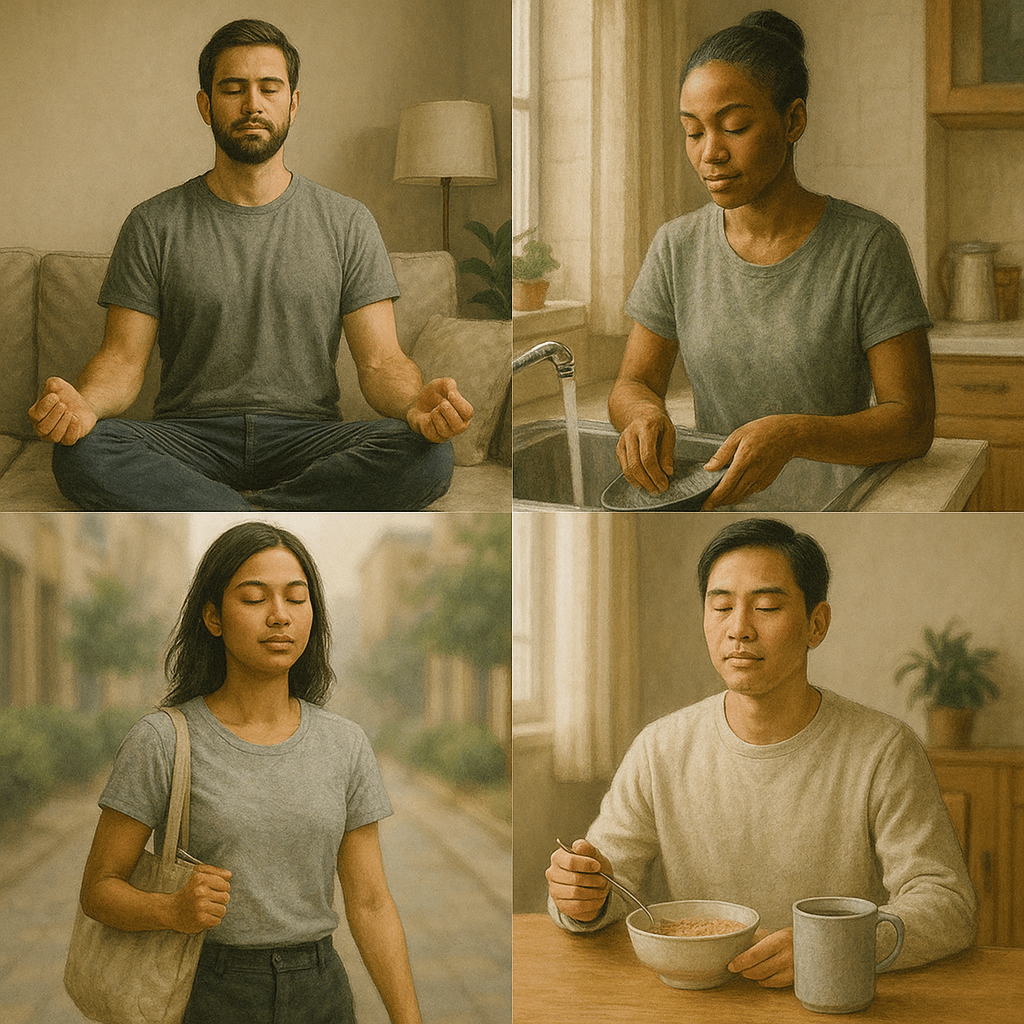
The Korean phrase Myung Sung literally translates as bright thought or clear reflection. In modern Korean, it is also the standard term for “meditation.” In English, the concept has been presented as Living Meditation, an embodied, everyday mindfulness woven into the fabric of ordinary life.

Although Myung Sung is distinctly Korean in name, its roots are Sino-Korean, derived from the Chinese characters 明 (ming, bright/clear) and 想 (xiang, thought/reflection). Comparable ideas appear across East Asian traditions: in Chinese Taoism, alignment with the Dao emphasizes clarity and flow; In Japanese, Meisō is the most direct equivalent, while Ichigyō Zanmai describes being fully absorbed in a single activity, similar to the idea of “Living Meditation.” Thus, “Living Meditation” is not confined to one culture, it is a shared practice of engaging fully and harmoniously with life.

This article critically examines the guiding principles of Living Meditation (Myung Sung), situating them within Taoist philosophy, Zen practice, and modern mindfulness research.

Taoist and Cultural Foundations of Living Meditation

Taoist philosophy views life as an ongoing process of aligning with the Tao, or the natural order of the universe. The Tao emphasizes balance, spontaneity, and effortless action (wu wei) (Kohn, 2020). In Korea, these ideas merged with Confucian ethics and Buddhist practices, producing unique expressions such as Myung Sung. In Japan, Zen Buddhism developed a parallel emphasis on mindfulness in daily activities, from tea ceremonies to martial arts (Suzuki, 1956).

The literal meaning of Myung Sung being “bright reflection” captures the essence of Taoist and Zen practice: illuminating the mind, clarifying perception, and cultivating awareness moment by moment. By viewing meditation as an active, daily process, Living Meditation stands apart from traditions that encourage withdrawal from worldly concerns. Instead, it insists that clarity, harmony, and enlightenment are found in the midst of life.

Mindfulness and Living Meditation

Western psychology defines mindfulness as “moment-to-moment awareness of one’s experience without judgment” (Kabat-Zinn, 2015, p. 148). Myung Sung aligns with this definition but extends it. Rather than being limited to seated practice, it emphasizes that every action, from working to communicating to parenting, can become an act of mindful clarity.

This mirrors Taoist teaching on yin-yang balance and Zen’s shikan taza (“just sitting”), but it goes further in emphasizing relational legacy. Myung Sung asks not only how one lives in the present, but also what seeds of goodness and compassion one leaves for future generations. This collectivist orientation aligns with East Asian traditions of intergenerational responsibility (Li, 2007).

Developments in mindfulness research indicate that these interventions can be successfully adapted to diverse environments, including schools, workplaces, clinical settings, prisons, and military contexts, confirming their wide applicability in contemporary society (Creswell, 2016).

1. Know Your True Self

Self-awareness is described as the foundation of all growth. To know the “true self” is to recognize both the visible and invisible aspects of being. Taoism encourages similar introspection, while Zen uses the term kenshō (“seeing one’s true nature”) to describe this realization.

2. The True-Right-Correct Method

Decision-making is guided by balancing the true (inner feelings), the right (socially beneficial actions), and the correct (harmonious integration of both). This echoes Taoist ethics of balance and the Confucian Doctrine of the Mean (zhongyong).

3. Stop Being Drunk on Your Own Thoughts

In Korean, the phrase Doe Chi literally means to be “drunk on” something or caught up, clouded, and overly attached to one’s own mental noise. This principle warns against excessive attachment to rigid beliefs. Taoism also cautions against clinging to fixed ideas, while Zen emphasizes detachment from discursive thinking.

4. How Will You Be Remembered?

Legacy is framed as the planting of seeds for future generations. Confucian philosophy similarly stresses filial piety and the continuation of virtue across time.

5. Seek Connectedness and Honor

All beings are interrelated, and honor means living with respect, integrity, and compassion. Taoist cosmology views humans as part of a larger web of qi (vital energy), while Confucian ren emphasizes relational humaneness.

6. Change Your Reality for the Better

Living Meditation insists that inner states shape external realities. Taoist practice of aligning qi with the environment parallels this principle, while modern psychology recognizes the transformative power of reframing thought patterns (Beck, 2011).

7. It Only Takes One Match to Light a Thousand

Small actions produce ripple effects. Taoist yin-yang dynamics and Zen karmic teachings both affirm that even minor choices influence larger outcomes.

8. Be Like Bamboo

Bamboo, strong yet flexible, symbolizes resilience. Taoist writings and Zen poetry both use natural metaphors to highlight adaptability, balance, and endurance.

The Three Pillars: Meditation, Medicine, and Movement

Living Meditation is supported by three interconnected practices:

  1. Meditation – continuous mindfulness integrated into daily activity.
  2. Medicine – natural remedies and holistic care, paralleling Chinese and Japanese traditional medicine.
  3. Movement – practices such as Qigong, Tai Chi, or martial arts, uniting body, mind, and spirit.

These three dimensions resemble integrative health frameworks that modern medicine increasingly recognizes (Rakel, 2017).

Conclusion

Though the term Myung Sung originates in Korea and literally means “bright reflection,” its essence transcends culture. Chinese Taoism calls for clarity and balance through the Tao; Japanese Zen offers expressions such as meisō, ichigyō zanmai, and kenshō. English captures it as “Living Meditation,” underscoring its practical, everyday application.

Across languages and traditions, the message is consistent: meditation is not withdrawal from life but illumination within it. By practicing Living Meditation, individuals cultivate clarity, resilience, compassion, and legacy becoming, in essence, living embodiments of bright reflection.

LanguageTermLiteral MeaningCommon Use / Context
KoreanMyung SungBright reflection, clear thoughtGeneral word for meditation; reframed as “Living Meditation”
ChineseMíng XiǎngBright reflectionClassical and modern meditation term
JapaneseMeisōClosing the eyes and reflectingGeneral meditation term, closest literal match to Myung Sung
JapaneseIchigyō ZanmaiSamadhi in one activityZen concept of mindfulness in everyday action, similar to Living Meditation
JapaneseKenshōSeeing one’s true natureZen awakening experience, parallels “Know Your True Self”
EnglishLiving MeditationPractical mindfulness in daily lifeTranslation/adaptation of Myung Sung for modern contexts

References:

Beck, J. S. (2011). Cognitive behavior therapy: Basics and beyond (2nd ed.). Guilford Press.

Creswell, J. D. (2016). Mindfulness interventions. Annual Review of Psychology, 68, 491–516. https://doi.org/10.1146/annurev-psych-042716-051139

Kabat-Zinn, J. (2015). Mindfulness. Mindfulness, 6(6), 1481–1483. https://doi.org/10.1007/s12671-015-0456-x

Kohn, L. (2020). The Taoist experience: An anthology. SUNY Press. https://archive.org/details/thetaoistexperienceliviakohn

Li, C. (2007). An Introduction to Chinese Philosophy: From Ancient Philosophy to Chinese Buddhism ? by JeeLoo Liu. Journal of Chinese Philosophy, 34(3), 458–461. https://doi.org/10.1111/j.1540-6253.2007.00432.x

Rakel, D. (2017). Integrative Medicine: Fourth Edition. ResearchGate. https://www.researchgate.net/publication/328497403_Integrative_Medicine_Fourth_Edition

Suzuki, D. T. (1956). Zen Buddhism: Selected writings. Grove Press. https://archive.org/details/zenbuddhismselec00dais

Mass Psychology, Hysteria, and the Wellness Perspective

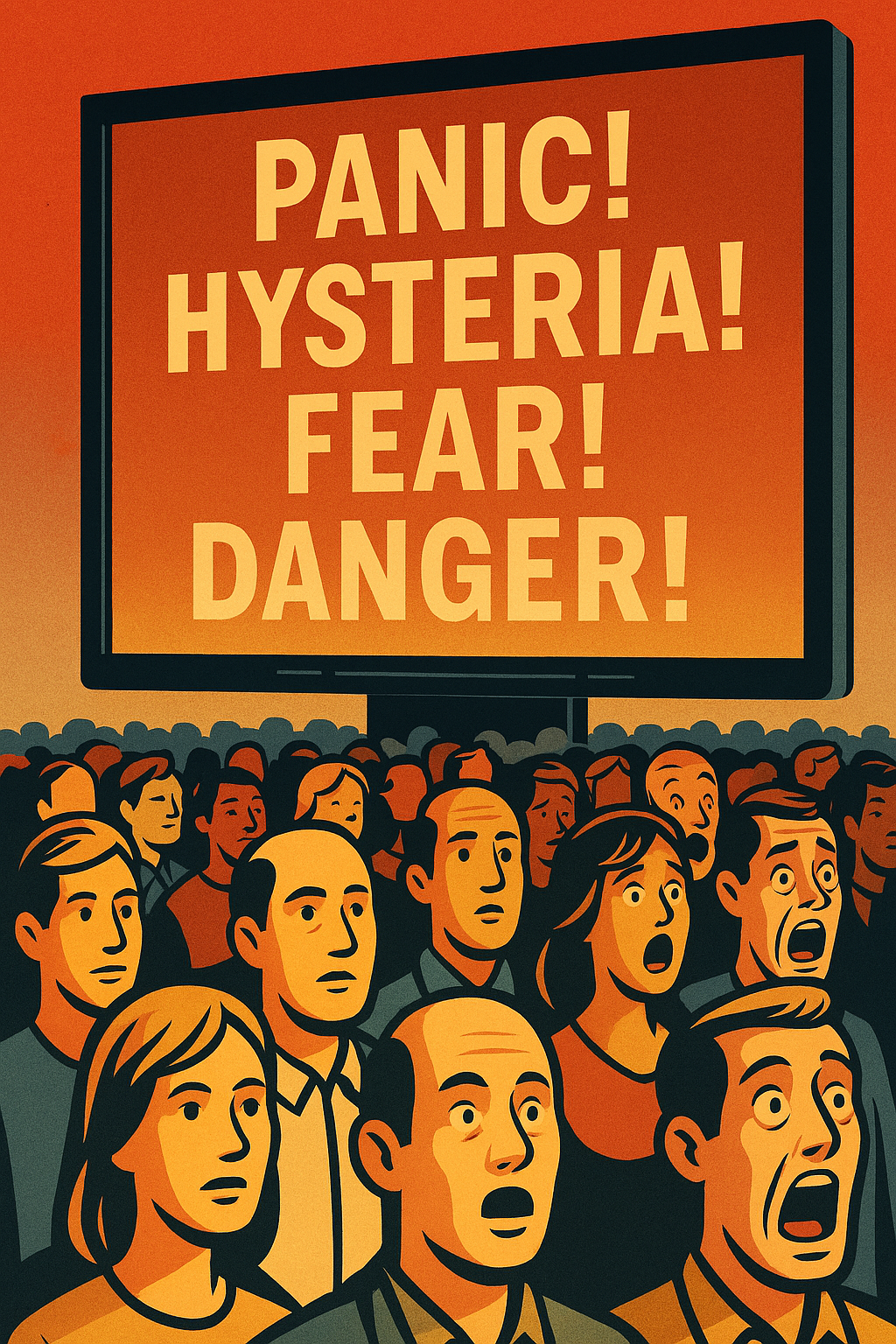
Mass psychology, also called crowd psychology, examines how individuals’ behavior, thoughts, and emotions are shaped by being part of a larger group. Early thinkers such as Gustave Le Bon (1895/2002), Sigmund Freud (1922/1959), Leon Festinger (1954), and Floyd Allport (1924) explored phenomena such as emotional contagion, suggestion, and conformity, showing that people can act very differently in a group than when alone. Le Bon argued that when individuals join a crowd, they may lose critical judgment, become easily swayed by suggestions, and display heightened emotionality.

Understanding Mass Psychosis

Mass psychosis refers to collective disruptions in perception or judgment, when large groups of people adopt beliefs, behaviors, or emotions that seem disconnected from rational assessment. In such states, ego strength can weaken, leaving individuals vulnerable to overwhelming waves of fear or delusion.

A common precursor is what Freud (1922/1959) and later theorists described as free-floating anxiety; ageneralized fear or unease not tied to a specific cause. Contemporary research defines it as persistent anxiety without an identifiable object, often making individuals more susceptible to suggestion (Tyrer, 2018). When large numbers of people experience this form of anxiety, the psychological environment becomes fertile ground for collective panic.

Mass Hysteria Through History

Mass hysteria (sometimes termed collective hysteria or conversion disorder) involves groups manifesting physical or emotional symptoms without a medical cause, often triggered by suggestion or fear (Hacking, 2002). Historical examples include the Salem witch trials of 1692–1693, where accusations of witchcraft fueled widespread panic and executions (Norton, 2002).

More modern examples include the panic caused by Orson Welles’s 1938 radio broadcast of War of the Worlds, in which many listeners believed an alien invasion was underway (Cantril, 1940). Other documented cases include fainting outbreaks in schools, unexplained illness among military units, and even the 2016 “clown sightings,” which spread rapidly across media platforms and heightened fear without clear cause (Romano, 2016).

Mass Formation and Collective Behavior

Psychologist Matthias Desmet (2022) reframed this dynamic as mass formation, a process that arises when four conditions converge:

  1. Widespread social isolation
  2. Loss of meaning and purpose
  3. Free-floating anxiety without clear cause
  4. Frustration or anger lacking a specific outlet

When these conditions are present, a unifying narrative or authority can provide focus, giving individuals a sense of belonging and solidarity. While this can create cohesion, it can also reduce critical thinking and increase conformity to potentially destructive patterns. Desmet (2022) argues that aspects of the COVID-19 pandemic illustrated this process, as widespread fear and social disconnection amplified collective susceptibility to authority and groupthink.

The Wellness Connection

From a wellness standpoint, understanding mass psychology, hysteria, and mass formation is essential for both individual and community health. Recognizing how free-floating anxiety and social isolation can feed collective fear allows us to take proactive steps toward resilience.

Practices such as mindfulness, meditation, stress reduction, and intentional community building counteract these forces (Creswell, 2017). Media literacy and critical thinking further strengthen individual autonomy, enabling people to resist being swept into narratives that thrive on fear. By cultivating self-awareness and balanced perspectives, individuals protect their mental well-being while also fostering healthier collective environments.

Examples of Mass Psychosis:

“War of the Worlds” radio broadcast (1938) — Newspaper headlines reported that thousands of Americans were plunged into panic over an Orson Welles radio play, convinced that America was under a deadly Martian attack.

Mount Pleasant, Mississippi (1976) — School officials suspected drug use after 15 students fell to the ground writhing, but no drugs were found and hysteria is assumed to be the culprit. At one point, one third of the school’s 900 students stayed home for fear of being “hexed”.

San Diego (1988) — The U.S. Navy evacuated 600 men from barracks; 119 were sent to San Diego hospitals with complaints of breathing difficulty. No evidence of toxins, food poisoning, or any other cause was found.

North Carolina (2002) — Ten girls developed seizures and other symptoms at a rural North Carolinian high school. Symptoms persisted for five months across various grade levels. Incidents tended to happen outside of class, with half of all incidents estimated to have occurred around lunch hour. Half of the affected were cheerleaders or former cheerleaders.

2016 clown sightings — Sightings of people in evil clown costumes in the United States, Canada, and 18 other countries were dismissed as a case of mass hysteria, stating that a fear of clowns (which is common in children and adults) may be an underlying cause.

References:

Allport, F. H. (1924). Social psychology. Houghton Mifflin. https://pure.mpg.de/rest/items/item_2246895_6/component/file_2281854/content

Cantril, H. (1940). The invasion from Mars: A study in the psychology of panic. Princeton University Press. https://archive.org/details/invasionfrommars0000hadl/page/232/mode/2up

Creswell, J. D. (2017). Mindfulness interventions. Annual Review of Psychology, 68, 491–516. https://doi.org/10.1146/annurev-psych-042716-051139

Desmet, M. (2022). The psychology of totalitarianism (Els Vanbrabant, Trans.). Chelsea Green Publishing. https://ia600508.us.archive.org/25/items/the-psychology-of-totalitarianism-2022-mattias-desmet_202308/The%20Psychology%20of%20Totalitarianism%20%282022%29-%20Mattias%20Desmet.pdf

Festinger, L. (1954). A theory of social comparison processes. Human Relations, 7(2), 117–140. https://doi.org/10.1177/001872675400700202

Freud, S. (1922). GROUP PSYCHOLOGY AND THE ANALYSIS OF THE EGO (J. Strachey, Trans.). https://peachf.org/images/SoScience/PsyGroupAnalysisEgoFreud.pdf

Hacking, I. (2002). Mad travelers: Reflections on the Reality of Transient Mental Illnesses. Harvard University Press. https://archive.org/details/madtravelersrefl0000hack/page/2/mode/2up

Le Bon, G. (2002). The crowd: A study of the popular mind. Dover Publications. (Original work published 1895) https://www.files.ethz.ch/isn/125518/1414_LeBon.pdf

Norton, M. B. (2002). In the Devil’s snare: The Salem witchcraft crisis of 1692. Vintage. https://archive.org/details/indevilssnare00mary

Romano, A. (2016, October 12). The great clown panic of 2016 is a hoax.  But the terrifying side of clowns is real. Vox. https://www.vox.com/culture/2016/10/12/13122196/clown-panic-hoax-history

Tyrer, P. (2018). Recent advances in the understanding and treatment of health anxiety. Current Psychiatry Reports, 20(7). https://doi.org/10.1007/s11920-018-0912-0