The Eternal Now – Consciousness, Christianity, and Quantum Reality

Human beings have long sensed that the deepest layer of existence is not found in linear time, external circumstance, or the physical body, but in the silent, witnessing presence that experiences them all. The ancient spiritual insight that “it has always been now” suggests that consciousness is not bound to the past or future but resides permanently in the living immediacy of the present moment. When this insight is expanded, it evokes a larger metaphysical possibility: that consciousness may be primary, timeless, and eternal, briefly expressing itself through human form. Though such a claim seems philosophical or mystical, aspects of Christian theology and modern quantum physics unexpectedly converge with this view when interpreted through their deepest lenses.
The Christian Understanding of Eternal Presence

Christian theology has long affirmed a form of “eternal present” that is foundational to the nature of God. Saint Augustine famously argued that time itself is a created dimension, and that God exists in an unchanging, timeless “Now” (Augustine, trans. 2008). This aligns with the scriptural assertion that in God, “there is no variation or shadow of turning” (James 1:17, NRSV), emphasizing a dimension of being where temporality does not apply.

Christ Himself uses the language of timeless identity: “Before Abraham was, I AM” (John 8:58). This statement echoes Exodus 3:14 of “I AM THAT I AM,” suggests a divine consciousness that is eternally present rather than confined to sequential time. The Apostle Peter supports this when he writes, “With the Lord one day is like a thousand years, and a thousand years are like one day” (2 Peter 3:8). These passages collectively reveal a clear theological framework: God is not simply everlasting but eternally present, existing beyond linear time.

Christian mystics expand this further. Meister Eckhart taught that the soul has a “spark” capable of experiencing God in the Eternal Now (Eckhart, trans. 1981). St. John of the Cross described the innermost self as a “lamp of the Lord” (echoing Proverbs 20:27) that perceives God in stillness. Brother Lawrence emphasized continual awareness of God’s presence in the present moment (Lawrence, 1982). These traditions view consciousness, particularly the silent witness within, as the point of contact between the human person and the eternal presence of God.

From a Christian perspective, then, the idea of eternal consciousness residing temporarily in form” aligns closely with biblical anthropology: humanity receives life through the divine breath (Genesis 2:7), exists in God (Acts 17:28), and returns to God at death (Ecclesiastes 12:7). This is not pantheism, nor a denial of individuality, but a recognition that the human spirit participates in the timeless presence of God.
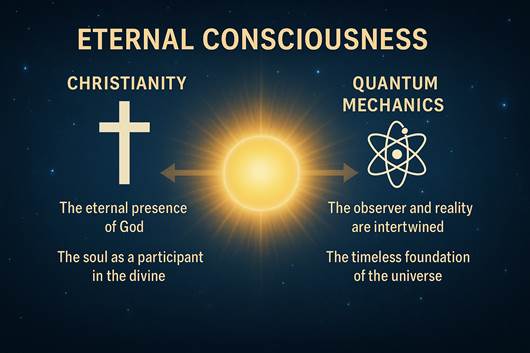
The Quantum Universe: Time, Observation, and Non-Locality

While Christianity approaches timelessness through theology, quantum physics approaches it through the structure of reality. Einstein’s theory of relativity first challenged the assumption of flowing time, proposing instead that past, present, and future coexist in a four-dimensional spacetime “block” (Einstein & Infeld, 1938). Physicists now widely refer to the “block universe” or eternalism, an interpretation in which time is a dimension we move through, not something that moves through us.

Quantum mechanics deepens this mystery.

1. The Observer and the Measurement Problem

In quantum theory, particles exist in a probabilistic superposition until measured. But what ends the superposition?

John von Neumann (1955) demonstrated mathematically that purely physical systems cannot complete a measurement; the chain of interaction must eventually terminate in a non-physical observer, traditionally interpreted as conscious awareness. Nobel physicist Eugene Wigner argued that consciousness plays a direct role in determining physical reality (Wigner, 1961). This does not mean “mind creates reality,” but it strongly suggests that consciousness is not an accidental byproduct of matter but rather it is woven directly into the act of manifestation.

2. Non-Locality and the Unity of Reality

Bell’s Theorem and subsequent experiments (Aspect et al., 1982) revealed that particles separated even by great distances behave as a single, non-local system. This implies that the universe is fundamentally interconnected, not composed of isolated parts. This resembles the idea of one underlying field or ground of being, expressing itself as many forms.

3. The Quantum Vacuum and Emergence of Form

Quantum field theory proposes that what we call “empty space” is in fact a powerful field of potentiality known as the zero-point field, from which all particles emerge (Davies & Brown, 1988). Matter is not fundamental; fields are. Some physicists, including David Bohm, likened this underlying order to a deeper, implicate reality (Bohm, 1980). This parallels the concept of eternal consciousness: a formless ground that expresses temporary forms.

4. The Participatory Universe

John Archibald Wheeler’s “participatory anthropic principle” boldly declared:

In other words: consciousness is not in the universe; the universe is participatory with consciousness.

Crossing the Bridge: Where Christianity and Quantum Physics Meet Eternal Consciousness

While Christianity and quantum mechanics differ in language and purpose, both suggest that:

  • Physical time is not fundamental.
  • Reality is not purely material.
  • Observation/consciousness interacts with the structure of reality.
  • The deepest layer of being is unified and timeless.
  • Human consciousness participates in something larger.

Christianity interprets this as the human spirit participating in the eternal presence of God.

Quantum mechanics interprets this as the observer participating in the manifestation of quantum events.
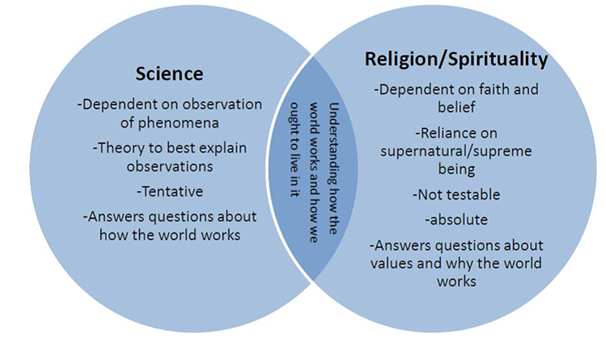
Both perspectives converge on a central point:

Consciousness is not merely the product of matter; it is involved in the structure of reality itself.

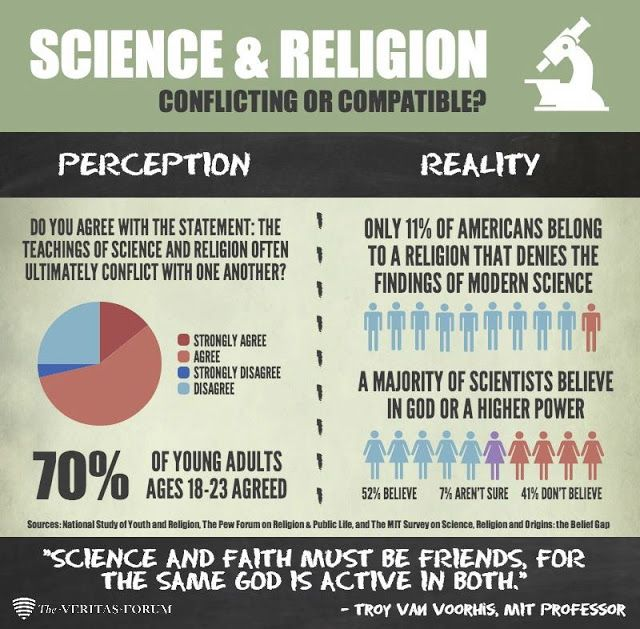
Neither field proves “eternal consciousness,” but both make it philosophically and scientifically plausible. The Christian view gives consciousness an eternal source (God), while quantum physics removes mechanistic constraints and reveals a universe that is deeply relational, non-local, and dependent on observation.

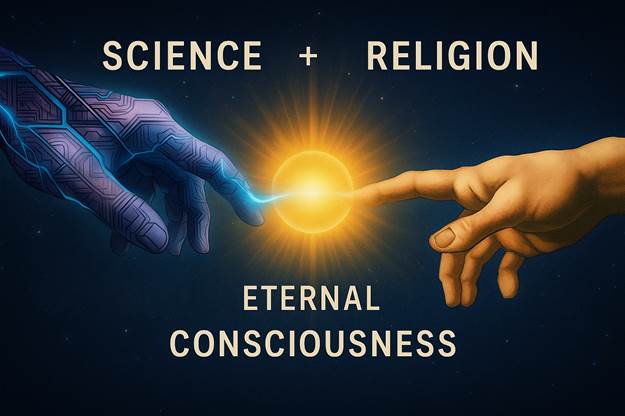
When understood at depth, Christianity and quantum physics do not conflict with the idea of eternal consciousness. Instead, they illuminate it from different angles. Christianity describes a divine, timeless presence in which the human spirit participates. Quantum physics reveals a universe that is non-material at its foundation, observer-dependent, and timeless in structure. Together, these perspectives support the philosophical insight that consciousness may be fundamental as an eternal presence momentarily experiencing itself through human form, always now, always here.
References:

Aspect, A., Grangier, P., & Roger, G. (1982). Experimental realization of Einstein-Podolsky-Rosen-Bohm Gedankenexperiment: A new violation of Bell’s inequalities. Physical Review Letters, 49(2), 91–94. https://doi.org/10.1103/PhysRevLett.49.91

Augustine. (2008). Confessions (H. Chadwick, Trans.). Oxford University Press. (Original work published ca. 397 CE) https://archive.org/details/confessions0000augu_k5u5

Bohm, D. (1980). Wholeness and the implicate order. Routledge & Kegan Paul. http://www.gci.org.uk/Documents/DavidBohm-WholenessAndTheImplicateOrder.pdf

Davies, P. C. W., & Brown, J. (Eds.). (1988). The ghost in the atom: A discussion of the mysteries of quantum physics. Cambridge University Press. https://archive.org/details/ghostinatomdiscu0000davi

Eckhart, M. (1981). The essential sermons, commentaries, treatises and defense (E. Colledge & B. McGinn, Trans.). Paulist Press.

Einstein, A., & Infeld, L. (1938). The evolution of physics. Cambridge University Press. https://archive.org/details/evolutionofphysi033254mbp/page/n9/mode/2up

Lawrence, Brother. (1982). The practice of the presence of God. Whitaker House. (Original work published 1693)

von Neumann, J. (1955). Mathematical foundations of quantum mechanics (R. T. Beyer, Trans.). Princeton University Press.

Wheeler, J. A. (1989). Information, physics, quantum: the search for links. https://philarchive.org/rec/WHEIPQ

Wigner, E. P. (1961). Remarks on the mind–body question. In I. J. Good (Ed.), The scientist speculates (pp. 284–302). Heinemann.
Quantum Consciousness and Healing

Bridging Science, Mind–Body Practices, and Universal Law

Quantum physics, once confined to subatomic phenomena, has gradually reshaped how we understand life, health, and consciousness. Its principles of nonlocality, superposition, and the observer effect are beginning to inform research in medicine, psychology, and ancient healing systems such as Traditional Chinese Medicine (TCM) and Ayurveda. These traditions, long grounded in concepts of subtle energy and consciousness, align remarkably with emerging scientific insights into mind–body interaction and the creative role of awareness in shaping reality.

Consciousness and the Quantum Field

Quantum theory proposes that all matter arises from a field of potential, or an underlying energetic continuum known as the quantum field. This mirrors spiritual concepts of Qi, Prana, and universal consciousness, which describe an intelligent energy animating and interconnecting all life. Just as the brain functions as a receiver of consciousness, the body is a conductor of subtle energies flowing through energy meridians or nadis. In both frameworks, reality manifests when consciousness interacts with potential, giving form to experience.

This synthesis challenges materialism’s assumption that consciousness is a mere by-product of brain activity. Instead, consciousness is the primary reality, a view increasingly supported by researchers like Amit Goswami (1995) and Rupert Sheldrake (2012), whose theories of morphic resonance suggest that patterns of thought and emotion can influence both biology and behavior across space and time.

The Placebo Effect and Quantum Observation

The placebo effect, where healing occurs through belief and expectation rather than pharmacological action, serves as a measurable example of consciousness influencing physical outcomes. Neuroimaging studies show that patients receiving inert treatments can trigger endorphin release, alter brain activity, and even induce measurable physiological change (Benedetti, 2014). From a quantum perspective, the placebo effect exemplifies the observer effect: belief and attention collapse probabilistic potentials into tangible results.

In this context, healing becomes less about external substances and more about the alignment of perception, belief, and intention. When the mind focuses coherently, whether through faith, meditation, or energy practice, it organizes biological systems toward balance. This parallels Traditional Chinese Medicine’s (TCM) notion that mental states influence Qi circulation and Ayurveda’s understanding that consciousness imbalance is the root of disease (Chopra, 2015).

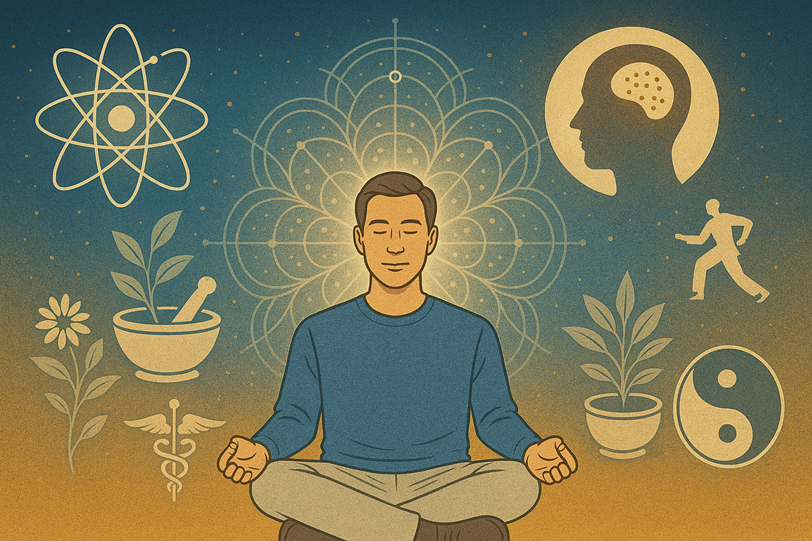
Qigong and Tai Chi are living laboratories of quantum coherence in action. Both disciplines train practitioners to harmonize body, breath, and mind, cultivating a state of flow or resonance that optimizes internal energy fields. Research has shown that these practices improve heart rate variability, reduce inflammation, and regulate brainwave synchrony, evidence of the body entering a quantum-coherent state (Jahnke et al., 2010).

In quantum terms, Qigong and Tai Chi operate as biological resonance systems. When practitioners focus attention on energy flow (Qi), they create measurable electromagnetic fields detectable around the body. These biofields, according to biophysicist Fritz-Albert Popp, may represent coherent light emissions or biophotons, quantum particles that facilitate communication between cells (Popp & Beloussov, 2003). Thus, ancient energy practices may function as methods for tuning the human organism into harmony with the quantum field.

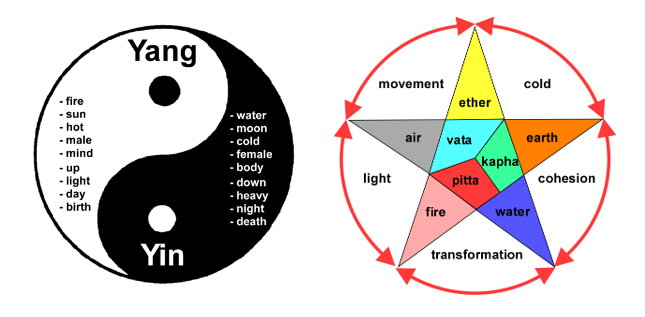
Traditional Chinese Medicine (TCM) views the universe and body as reflections of a dynamic balance between yin and yang, two complementary forces governing all existence. Similarly, Ayurveda describes health as a balance of the three doshas of Vata, Pitta, and Kapha, energetic principles derived from consciousness manifesting through the five elements. Both systems recognize that disease begins as a disruption in the flow or coherence of subtle energies before physical symptoms appear.

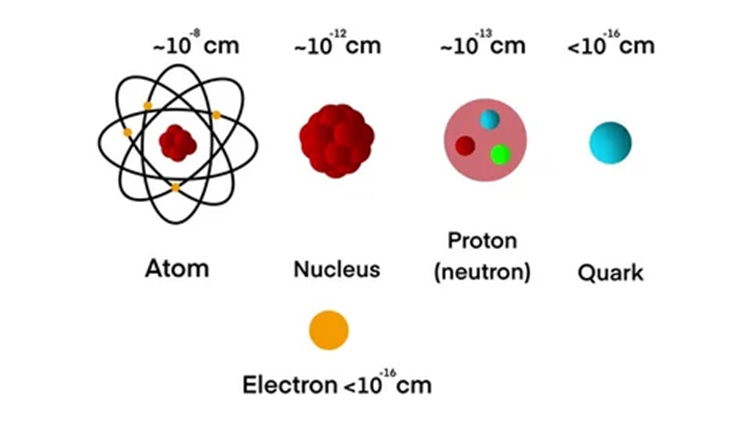
Quantum physics validates these insights by demonstrating that physical reality is not solid but vibrational. Just as Qi or Prana represent life energy, subatomic particles are not objects but energy waves interacting within fields. Healing, therefore, involves restoring resonance by realigning vibrational frequencies between the body’s systems and the larger universal field (Capra, 1999). Meditation, herbal medicine, sound, and mindful movement all serve to reestablish this resonance.

Conscious Mind, Subconscious Patterns, and Healing

There exist dual levels of mind, where the conscious and subconscious and their interplay shape experience. Modern psychoneuroimmunology confirms that subconscious beliefs influence immune function and cellular activity. Placebo and nocebo studies illustrate how deep-seated emotions can either heal or harm, reinforcing TCM’s emphasis on emotional balance and Ayurveda’s stress on sattvic (pure) consciousness as the foundation of well-being.

Meditation and Qigong act as tools for reprogramming the subconscious, quieting habitual thought patterns, and entraining the nervous system to a coherent rhythm. Through neuroplasticity, repeated focus on compassion, gratitude, or peace rewires neural circuits, embodying the principle that mind precedes matter (Doidge, 2007).

Ethical Integrity and Vibrational Clarity

Quantum and spiritual traditions agree that coherence requires ethical and emotional alignment. Dishonesty, anger, or greed introduce vibrational noise that distorts the clarity of consciousness. Conversely, gratitude, service, and moral integrity raise vibrational resonance, enabling access to higher frequencies of the universal field. This explains why moral cultivation is central in Confucian, Taoist, and Vedic systems, and is considered essential to effective healing and manifestation.

Toward an Integrated Science of Consciousness and Health

As science evolves, the boundaries between physics, medicine, and spirituality continue to blur. Quantum biology now examines how wave interference, entanglement, and energy coherence operate within living cells, suggesting that consciousness may be an organizing force behind biological order (Al-Khalili & McFadden, 2014). The same laws governing particles in superposition may govern energy in meridians or chakras.

The integration of quantum principles with TCM, Ayurveda, Qigong, and Tai Chi offer a profound framework for whole-person healing.  One that honors both physical mechanisms and the metaphysical dimensions of consciousness. These traditions, long dismissed as mystical, now gain empirical support as science rediscovers what sages have taught for millennia: that consciousness, energy, and matter are inseparably one.

Quantum physics invites humanity to reconsider its role in creation not as passive observers, but as conscious participants in the unfolding of reality. Practices like meditation, Qigong, and Tai Chi exemplify how coherent intention can modulate physiology and align with universal laws. The placebo effect further affirms that belief, emotion, and attention are powerful instruments of healing. Integrating ancient wisdom with modern physics reveals a unified vision of human potential where health, consciousness, and the cosmos resonate in a single quantum symphony.

References:

Al-Khalili, J., & McFadden, J. (2014). Life on the edge: The coming of age of quantum biology. Crown. https://djvu.online/file/L7pTHgmdok2kx

Benedetti, F. (2014). Placebo effects. https://doi.org/10.1093/acprof:oso/9780198705086.001.0001

Capra, F. (1999). The Tao of physics: An exploration of the parallels between modern physics and Eastern mysticism. Shambhala. https://archive.org/details/fritjof-capra-tao-of-physics-ocr

Chopra, D. (2015). Quantum healing: Exploring the frontiers of mind/body medicine. Harmony.

Doidge, N. (2007). The brain that changes itself. Viking

Goswami, A., Reed, R. E., & Goswami, M. (1993). The Self-Aware Universe: How consciousness creates the material world. https://www.thejungletimes.com/page/downloads/files/Amit%20Goswami-The%20Self-Aware%20Universe-Tarcher%20(1995).pdf

Jahnke, R., Larkey, L., Rogers, C., Etnier, J., & Lin, F. (2010). A comprehensive review of health benefits of qigong and tai chi. American journal of health promotion : AJHP24(6), e1–e25. https://doi.org/10.4278/ajhp.081013-LIT-248

Popp, F. A., & Beloussov, L. (Eds.). (2003). Integrative biophysics: Biophotonics. Springer.

Sheldrake, R. (2012). The Scientific Creed. The Science Delusion: Freeing the Spirit of Enquiry. Coronet Publications.
http://blogspersonals.ara.cat/desdelparadis/2018/11/15/the-scientific-creed/