Metacognition and the Inner Dialogue

Their Role in Holistic Health and Wellness

Holistic health emphasizes the integration of mind, body, and spirit. Within this framework, the ways in which we think about our thoughts and talk to ourselves internally play a central role in overall well-being. Two important but distinct psychological constructs, metacognition and the inner dialogue, form the foundation of self-awareness and self-regulation. While inner dialogue reflects the ongoing commentary of the mind, metacognition is the reflective process that evaluates and guides those thoughts. Understanding the distinction and interplay between the two provides powerful insight into mental, physical, and spiritual health.

Defining Metacognition

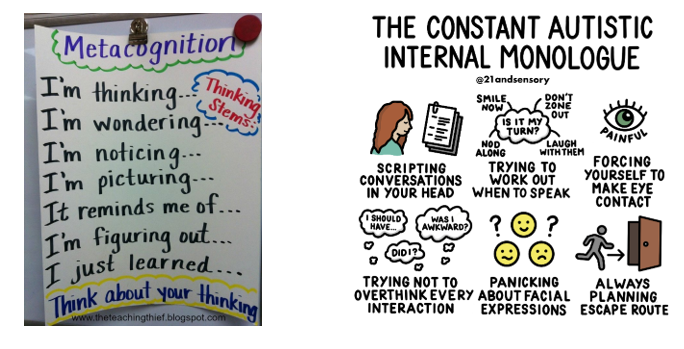
Metacognition, often described as “thinking about thinking,” refers to the awareness and regulation of one’s cognitive processes (Flavell, 1979). It includes both:

  • Metacognitive knowledge: recognizing one’s strengths, weaknesses, and strategies for thinking and learning.
  • Metacognitive regulation: the ability to plan, monitor, and adapt thought patterns and behaviors to reach goals (Schraw & Dennison, 1994).

For example, when someone recognizes they are struggling to focus and decides to change their study method or environment, they are applying metacognition. It functions as a higher-order system of self-observation, enabling intentional choices rather than automatic reactions.
Understanding the Inner Dialogue

The inner dialogue, also known as self-talk or inner speech, represents the continuous stream of words and judgments we silently direct toward ourselves. This internal commentary can be supportive (“I am capable of handling this challenge”) or critical (“I’ll never succeed at this”) (Morin, 2009). Unlike metacognition, which is strategic and reflective, inner dialogue is often spontaneous, shaped by prior experiences, beliefs, and emotional states (Beck, 2011).

Because inner dialogue can strongly influence emotion and physiology, triggering stress responses or enhancing motivation. It plays a direct role in daily wellness.

The Relationship Between Metacognition and Inner Dialogue

Although related, these two processes serve distinct roles:

  • Inner dialogue is the content of thought, with words, judgments, and narratives playing out in the mind.
  • Metacognition is the process that monitors and evaluates that content, determining whether it is useful, accurate, or aligned with one’s values and goals.

For example, a negative inner dialogue may say, “I am too tired to exercise.” Metacognition, however, can step in to evaluate this thought: “Is this fatigue physical exhaustion or just lack of motivation? What choice best supports my health goals?” This oversight allows individuals to reshape self-talk into a more adaptive pattern, such as: “I will start with a light walk to see how I feel.”

In this way, metacognition acts as a regulator of the inner dialogue, creating a feedback loop in which self-awareness leads to more balanced decisions.

Implications for Holistic Health and Wellness

Mental Wellness

Unchecked inner dialogue can amplify stress, worry, or self-doubt. Metacognition provides the awareness needed to identify unhelpful thought patterns, reduce rumination, and foster cognitive reappraisal (Wells, 2002). Metacognitive therapy, for example, helps individuals gain distance from destructive inner dialogue, improving resilience and emotional balance (Normann & Morina, 2018).

Physical Health

Health behaviors such as exercise, nutrition, and sleep are influenced by the interplay between self-talk and metacognition. Inner dialogue may discourage healthy action (“I don’t have time to cook tonight”), but metacognition allows for reflection and redirection (“If I prepare something simple now, I will feel better tomorrow”). Research suggests that higher levels of metacognitive awareness correlate with proactive health behaviors (Frazier et al., 2021).

Spiritual Growth

In the spiritual dimension of wellness, metacognition and inner dialogue intersect through practices such as meditation and prayer. Inner dialogue may be quieted, observed, or transformed during these practices, while metacognition supports discernment of which thoughts are distractions, and which carry deeper meaning (Vago & Silbersweig, 2012). This reflective process nurtures clarity, purpose, and transcendence—core elements of holistic health.

Practical Applications

  1. Mindfulness and Meditation – Strengthen awareness of the inner dialogue and cultivate metacognitive observation without judgment.
  1. Reflective Journaling – Encourage conscious monitoring of thought patterns, helping distinguish helpful from harmful self-talk.
  1. Cognitive-Behavioral Practices – Use metacognition to challenge negative self-talk and reinforce positive, health-supporting narratives.
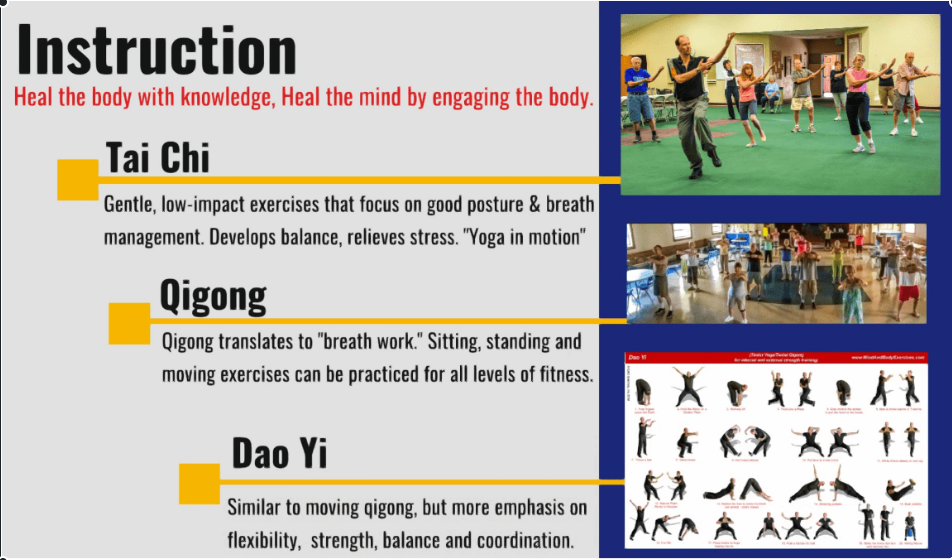
  1. Holistic Disciplines (e.g., Tai Chi, Qigong, Yoga) – Integrate body awareness with reflective thought, aligning physical sensations with mindful inner regulation.
Metacognition and inner dialogue are distinct yet complementary processes that shape human experience. Inner dialogue provides the immediate content of thought, while metacognition serves as the higher-order process that monitors and reshapes those thoughts. Together, they influence mental clarity, physical choices, and spiritual insight, making them central to holistic health and wellness. By cultivating both awareness of the inner dialogue and the reflective power of metacognition, individuals can foster resilience, self-regulation, and a deeper sense of integration across mind, body, and spirit.

References:

21andsensory, V. a. P. B. (2022, February 15). The constant autistic internal monologue. 21andsensory. https://21andsensory.wordpress.com/2022/02/15/the-constant-autistic-internal-monologue/

Beck, J. S. (2011). Cognitive behavior therapy: Basics and beyond (2nd ed.). Guilford Press. https://psycnet.apa.org/record/2011-22098-000

Flavell, J. H. (1979). Metacognition and cognitive monitoring: A new area of cognitive–developmental inquiry. American Psychologist, 34(10), 906–911. https://doi.org/10.1037/0003-066x.34.10.906

Frazier, L. D., Schwartz, B. L., & Metcalfe, J. (2021). The MAPS model of self-regulation: Integrating metacognition, agency, and possible selves. Metacognition and Learning, 16(2), 297–318. https://doi.org/10.1007/s11409-020-09255-3

Getting Started with Metacognition. (n.d.). https://theteachingthief.blogspot.com/2012/09/getting-started-with-metacognition.html

Morin, A. (2009). Self-awareness deficits following loss of inner speech: Dr. Jill Bolte Taylor’s case study. Consciousness and Cognition, 18(2), 524–529. https://doi.org/10.1016/j.concog.2008.09.008

Normann, N., & Morina, N. (2018). The efficacy of metacognitive therapy: A systematic review and meta-analysis. Frontiers in Psychology, 9, 2211. https://doi.org/10.3389/fpsyg.2018.02211

Schraw, G., & Dennison, R. S. (1994). Assessing metacognitive awareness. Contemporary Educational Psychology, 19(4), 460–475. https://doi.org/10.1006/ceps.1994.1033

Vago, D. R., & Silbersweig, D. A. (2012). Self-awareness, self-regulation, and self-transcendence (S-ART): A framework for understanding the neurobiological mechanisms of mindfulness. Frontiers in Human Neuroscience, 6, 296. https://doi.org/10.3389/fnhum.2012.00296

Wells, A. (2002). Emotional disorders and metacognition. https://doi.org/10.1002/9780470713662
Just Because We Can Be Offended, Doesn’t Mean We Have to Be

Cultivating Emotional Sovereignty in a Reactive Culture

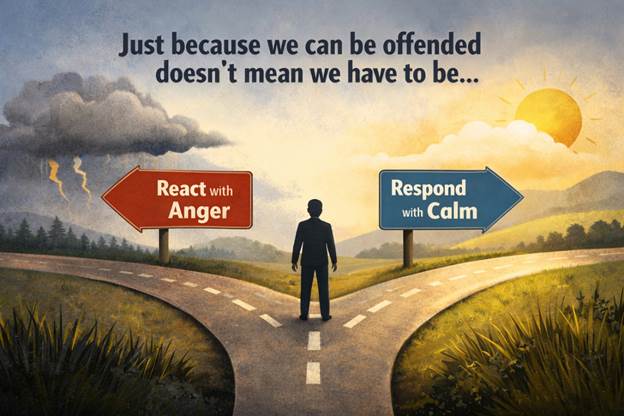
In contemporary society, offense has become both a currency and a contagion. Social media platforms amplify outrage, news cycles thrive on indignation, and personal identity is increasingly intertwined with ideological positioning. In such an environment, the mere possibility of being offended is often treated as justification for emotional reactivity. Yet the capacity to feel offended does not obligate us to live offended. The distinction between stimulus and response, between what happens to us and how we choose to interpret and embody that experience, lies at the heart of psychological maturity, emotional resilience, and personal sovereignty.

The statement “Just because we can be offended doesn’t mean we have to be offended” is not a call to emotional suppression or moral indifference. Rather, it reflects a deeper philosophy of self-regulation, discernment, and conscious agency. It invites individuals to reclaim authorship over their internal states rather than surrendering that authority to external forces.

Offense as a Psychological Reflex

Offense is not merely a moral judgment; it is a psychological reaction shaped by cognition, emotion, identity, and conditioning. From a cognitive perspective, offense arises from appraisal processes, our interpretations of meaning, intent, and threat (Lazarus, 1991). When a statement, behavior, or symbol is perceived as violating one’s values or identity, the nervous system often responds defensively, activating the stress response.

Neuroscientifically, perceived social threat activates the same brain regions associated with physical danger, including the amygdala and anterior cingulate cortex (Eisenberger et al., 2003). The body reacts as though under attack, even when the “threat” is symbolic or ideological. In this sense, offense is not merely an opinion, but rather it is a somatic experience.

However, cognitive-behavioral research demonstrates that emotional reactions are not caused directly by events, but by our interpretations of those events (Beck, 1976; Ellis, 1962). Two people can encounter the same stimulus and respond in radically different ways. One becomes enraged; the other remains curious. One feels attacked; the other feels unmoved. The difference lies not in the event, but in the meaning assigned to it.

The Illusion of Emotional Obligation

Modern culture increasingly frames emotional reactions as moral imperatives. If something is offensive, one is expected to be offended. If one is not offended, one may be accused of apathy, complicity, or ignorance. This creates a form of emotional coercion in which outrage becomes a social requirement rather than a personal choice.

Yet emotional autonomy is a cornerstone of psychological well-being. Self-determination theory emphasizes that autonomy, or the ability to regulate one’s own internal states and behavior, is essential for mental health and resilience (Deci & Ryan, 2000). When individuals surrender their emotional regulation to external narratives, they become psychologically reactive rather than self-directed.

Viktor Frankl (1959), writing from the extreme conditions of Nazi concentration camps, articulated this principle with profound clarity:

Offense collapses that space. It replaces reflection with reflex. It trades discernment for reaction.

Identity, Ego, and the Architecture of Offense

Offense is often less about the external stimulus and more about the internal structure of identity. When beliefs become fused with the ego, disagreement feels like annihilation. When narratives become moral absolutes, questioning feels like betrayal.

Social identity theory explains how individuals derive self-concept from group membership, which can intensify defensiveness when group values are challenged (Tajfel & Turner, 1979). In such contexts, offense becomes a mechanism for protecting identity boundaries.

However, psychological flexibility, or the ability to hold beliefs lightly and remain open to new perspectives, is strongly associated with well-being and adaptive functioning (Kashdan & Rottenberg, 2010). Rigid identity structures create fragile egos. Fragile egos seek offense.

The Stoic philosophers understood this dynamic long before modern psychology. Epictetus wrote:

In Taoist philosophy, offense is seen as an expression of imbalance, a disturbance of inner harmony caused by attachment to form, opinion, and self-image (Laozi, trans. 2003). The Tao Te Ching repeatedly emphasizes softness, yielding, and non-contention as expressions of true strength.

The Cost of Chronic Offense

Living in a constant state of offense is physiologically and psychologically costly. Chronic emotional reactivity sustains activation of the hypothalamic-pituitary-adrenal (HPA) axis, elevating cortisol levels and contributing to inflammation, anxiety, cardiovascular strain, and immune dysregulation (McEwen, 2007).

Psychologically, habitual offense fosters rumination, polarization, and cognitive rigidity. It narrows perception, reduces empathy, and erodes social cohesion. Over time, it becomes a form of self-imposed imprisonment or leaned helplessness, a mental posture of perpetual conflict.

From a social perspective, outrage culture rewards emotional escalation rather than thoughtful dialogue. Nuance is punished. Complexity is flattened. The loudest voices dominate, while reflective voices retreat.

Yet human flourishing depends not on ideological purity, but on psychological resilience, moral humility, and relational intelligence.

Emotional Sovereignty and the Practice of Non-Offense

To choose not to be offended is not to abandon values. It is to embody them with maturity.

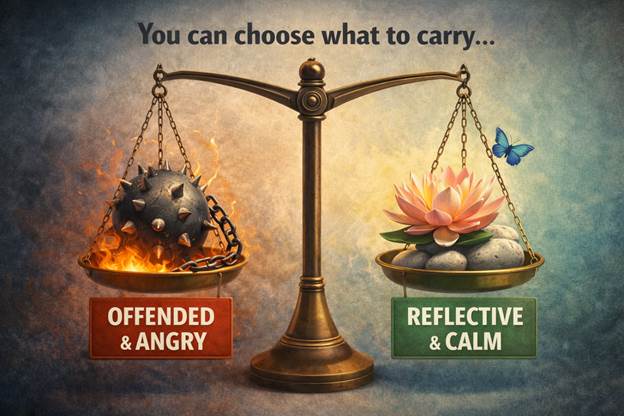
Emotional sovereignty means reclaiming authority over one’s internal state. It means recognizing that while we cannot control what others say or do, we can control how we metabolize those experiences.

Mindfulness research consistently demonstrates that cultivating present-moment awareness reduces emotional reactivity and increases cognitive flexibility (Kabat-Zinn, 2003; Tang et al., 2015). When individuals observe their reactions without immediately identifying with them, the emotional charge dissipates.

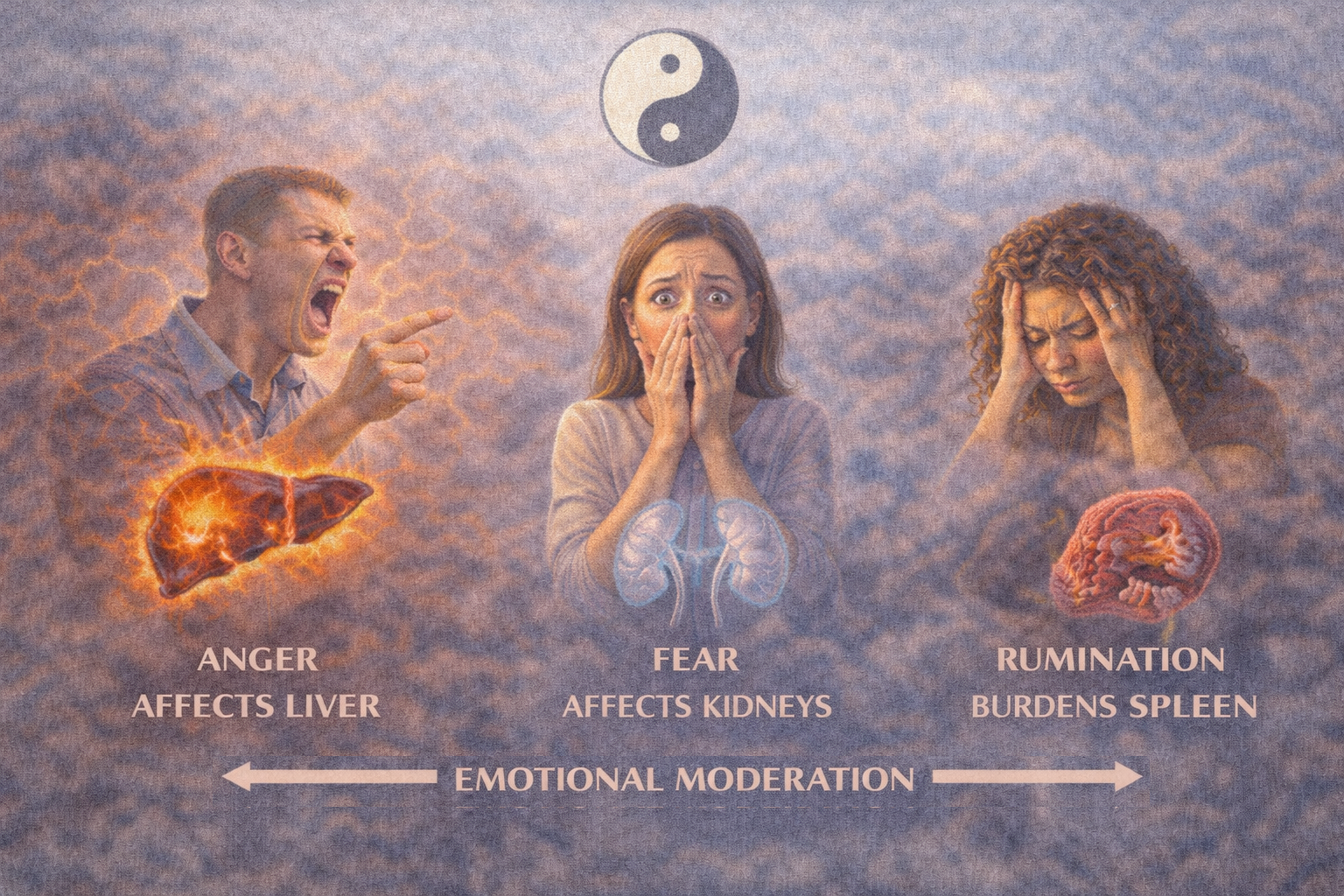
In Taoist internal cultivation practices, emotional regulation is viewed as an essential aspect of health. Excessive anger is believed to disturb liver qi, excessive fear weakens kidney essence, and excessive rumination burdens the spleen (Kaptchuk, 2000). Emotional moderation is not merely ethical, it is physiological.

Similarly, in classical Stoicism, the goal is not emotional numbness, but emotional mastery. One learns to respond rather than react, to act from reason rather than impulse, and to maintain inner stability amid external chaos.

Choosing Power Over Fragility

To be easily offended is to live at the mercy of others. To be unoffendable is to live from inner authority.

This does not mean tolerating injustice or abandoning moral clarity. It means engaging with the world from a position of grounded strength rather than reactive fragility. It means speaking when speech is necessary, acting when action is required, and walking away when engagement serves no constructive purpose.

In a culture addicted to outrage, non-offense is a radical act of sovereignty.

The capacity to feel offended is part of being human. The wisdom to choose not to be offended is part of becoming whole.

References

Beck, A. T. (1976). Cognitive therapy and the emotional disorders. International Universities Press. https://psycnet.apa.org/record/1976-28303-000

Deci, E. L., & Ryan, R. M. (2000). The “what” and “why” of goal pursuits: Human needs and the self-determination of behavior. Psychological Inquiry, 11(4), 227–268. https://doi.org/10.1207/S15327965PLI1104_01

Eisenberger, N. I., Lieberman, M. D., & Williams, K. D. (2003). Does rejection hurt? An fMRI study of social exclusion. Science, 302(5643), 290–292. https://doi.org/10.1126/science.1089134

Ellis, A. (1962). Reason and emotion in psychotherapy. Lyle Stuart. https://psycnet.apa.org/record/1963-01437-000

Epictetus. (2008). The Enchiridion (N. P. White, Trans.). Hackett Publishing. https://archive.org/details/epictetus-the-enchiridion

Frankl, V. E. (1959). Man’s search for meaning. Beacon Press. https://antilogicalism.com/wp-content/uploads/2017/07/mans-search-for-meaning.pdf

Kabat-Zinn, J. (2003). Mindfulness-based interventions in context: Past, present, and future. Clinical Psychology: Science and Practice, 10(2), 144–156. https://doi.org/10.1093/clipsy/bpg016

Kaptchuk, T. J. (2000). The web that has no weaver: Understanding Chinese medicine (2nd ed.). McGraw-Hill.

Kashdan, T. B., & Rottenberg, J. (2010). Psychological flexibility as a fundamental aspect of health. Clinical Psychology Review, 30(7), 865–878. https://doi.org/10.1016/j.cpr.2010.03.001

Laozi. (2003). Tao Te Ching (D. C. Lau, Trans.). Penguin Classics.

Lazarus, R. S. (1991). Emotion and adaptation. https://doi.org/10.1093/oso/9780195069945.001.0001

McEwen, B. S. (2007). Physiology and neurobiology of stress and adaptation: Central role of the brain. Physiological Reviews, 87(3), 873–904. https://doi.org/10.1152/physrev.00041.2006

Tajfel, H., & Turner, J. C. (1979). An integrative theory of intergroup conflict. In W. G. Austin & S. Worchel (Eds.), The social psychology of intergroup relations (pp. 33–47). Brooks/Cole.

Tang, Y.-Y., Hölzel, B. K., & Posner, M. I. (2015). The neuroscience of mindfulness meditation. Nature Reviews Neuroscience, 16(4), 213–225. https://doi.org/10.1038/nrn3916