
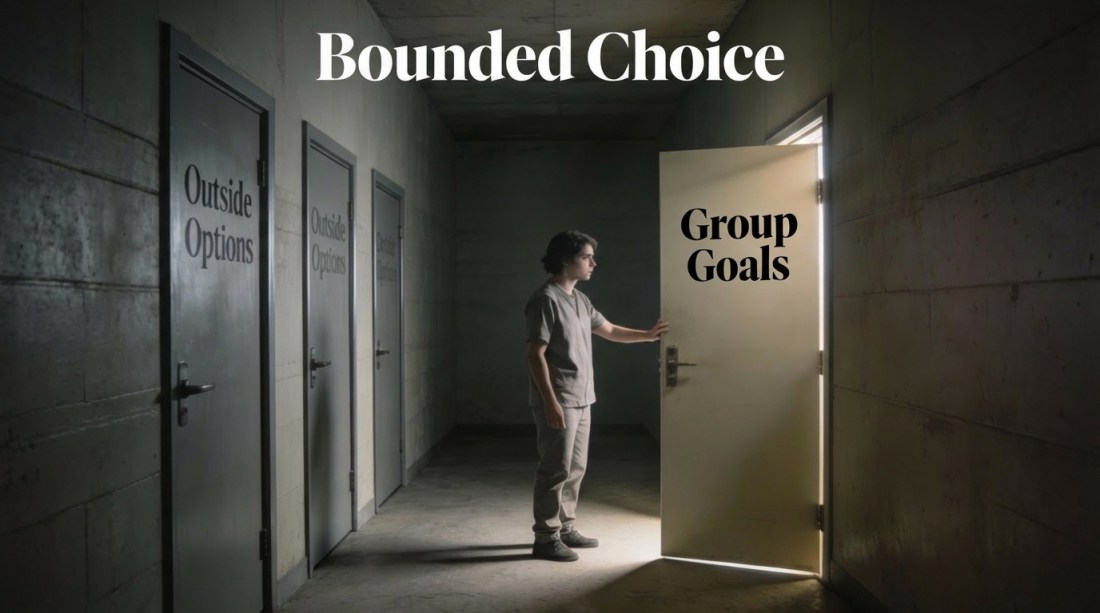
Human freedom is not merely the ability to select between options. True freedom depends upon whether those options are real, informed, and unconstrained by coercion. A person may appear to be choosing voluntarily while operating inside a closed psychological system that has already defined what is acceptable, moral, and permissible. This phenomenon is known as bounded choice, a condition in which individuals experience subjective freedom within an objectively restricted framework (Lalich, 2004).
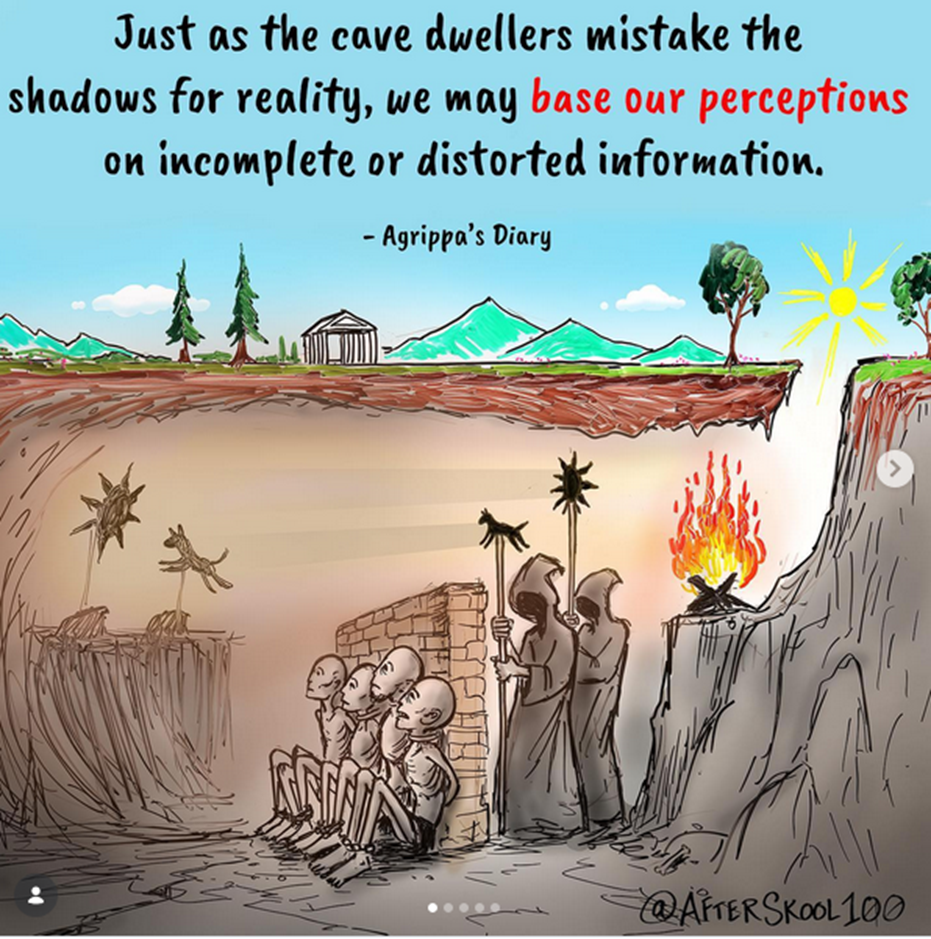
In high-control groups, authoritarian systems, abusive relationships, ideological movements, and coercive institutions, bounded choice becomes the invisible architecture of compliance. Individuals come to believe they are freely choosing loyalty, sacrifice, obedience, and submission, while the system quietly eliminates all meaningful alternatives.
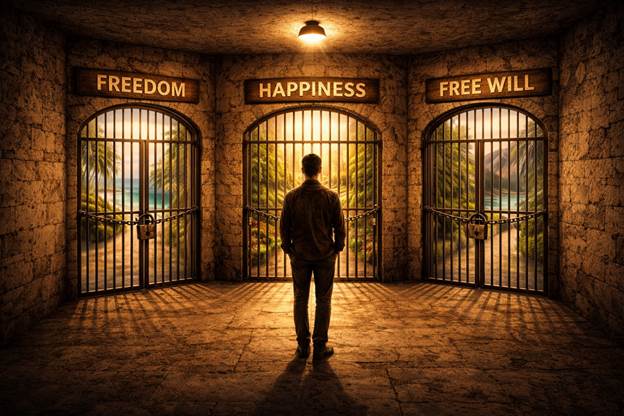
The Warrior: Defender of Autonomy
The Warrior represents sovereignty, courage, and the capacity to protect one’s psychological and moral boundaries.
In bounded choice systems, the Warrior is systematically dismantled. Authority is reframed as virtue. Obedience is reframed as strength. Submission is reframed as discipline. The individual is taught that questioning leadership is weakness, and independence is ego.
Lalich (2004) describes how charismatic, high-demand groups construct a totalistic moral universe in which only one path is considered righteous. Members are told they are choosing their own devotion, but the cost of choosing otherwise is framed as spiritual failure, betrayal, or existential collapse.
Zimbardo (2007) demonstrates how situational power and systemic authority can override personal conscience, causing individuals to surrender moral agency in favor of role-based obedience. In such environments, compliance is not demanded, it is normalized.
The Warrior awakens when a person realizes:
“If I am punished for questioning, my freedom is already gone.”

The Scholar: Seeker of Truth
The Scholar represents inquiry, critical thinking, historical awareness, and intellectual independence. Bounded choice systems operate by controlling information. They:
- Restrict outside sources
- Rewrite history
- Redefine language
- Frame dissent as ignorance
- Portray outsiders as corrupt or dangerous
This creates what Lifton (1961) termed a closed belief system, in which ideology replaces objective reality and critical thought is reframed as disloyalty.
Hassan (2015) explains that coercive influence systems depend upon behavioral, informational, thought, and emotional control (the BITE model). By shaping perception and emotional responses, the system creates the illusion of voluntary participation while quietly eliminating informed consent.
The Scholar recognizes that freedom requires:
- Access to multiple perspectives
- The ability to compare narratives
- The right to question doctrine
- The freedom to revise beliefs
Truth does not fear scrutiny. Only control does.

The Sage: Guardian of Wisdom
The Sage represents integration, ethical clarity, and long-range vision. Bounded choice systems collapse complexity into absolutism. They offer:
- Simple answers to complex problems
- Moral superiority over outsiders
- A grand mission narrative
- A sense of chosen identity
This creates what Lalich (2004) identifies as identity fusion, where the individual’s self-concept becomes inseparable from the group. Leaving the group is experienced not merely as separation, but as existential annihilation.
Zimbardo (2007) further explains that prolonged immersion in authoritarian systems reshapes moral perception, producing what he terms the “banality of wrongdoing,” where harmful actions become psychologically normalized.
The Sage recognizes that wisdom requires:
- Moral nuance
- Emotional maturity
- Tolerance for ambiguity
- Personal conscience
No institution, ideology, or leader owns truth.
The Architecture of Bounded Choice
Bounded choice is sustained through five interlocking mechanisms:
- Moral Absolutism – One worldview is declared universally correct (Lifton, 1961)
- Fear Conditioning – Leaving is framed as catastrophic (Lalich, 2004)
- Identity Fusion – Selfhood becomes dependent on group membership (Lalich, 2004)
- Information Control – External perspectives are discredited (Hassan, 2015)
- Redefinition of Freedom – Obedience becomes virtue (Zimbardo, 2007)
Over time, members no longer perceive alternatives as real options. They believe they are choosing freely, while their psychological perimeter has already been engineered.
As Lalich (2004) explains, bounded choice is not passive victimhood. It is coerced agency, a system that exploits the human need for meaning, belonging, and certainty.
Open Choice: The Landscape of Authentic Freedom
Open choice systems cultivate:
- Informed consent
- Psychological safety
- Moral autonomy
- Freedom of exit
- Freedom of inquiry
- Respect for dissent
- Multiplicity of perspectives
They strengthen rather than replace the individual’s conscience (Hassan, 2015; Lifton, 1961).
Where bounded choice collapses the self into the system, open choice strengthens the self within society.
Bounded choice is one of the most sophisticated mechanisms of human control ever developed. It does not remove choice, it weaponizes it. It converts obedience into virtue, submission into identity, and captivity into meaning (Lalich, 2004; Zimbardo, 2007).
The Warrior–Scholar–Sage stands as a timeless archetype of liberation: strong enough to resist coercion, wise enough to discern truth, and grounded enough to live by conscience rather than command.
Freedom is not given by institutions, but rather it is cultivated by individuals.
When you write your autobiography someday, will you be the lead character, a supporting actor, or merely an extra in someone else’s story? Will your life reflect the building of your own legacy, or the quiet reinforcement of someone else’s shadow?
The Warrior defends autonomy, the Scholar seeks truth, and the Sage lives by conscience. To live freely is not simply to choose, but to choose consciously to ensure that the life being lived is truly one’s own.
References
After Skool. (2023, September 19). The profound meaning of Plato’s allegory of the cave [Video]. YouTube. https://www.youtube.com/watch?v=4nHj3gL_JN0
Hassan, S. (2015). Combating cult mind control (Updated ed.). Freedom of Mind Press.
Lalich, J. (2004). Bounded ChoiceTrue believers and charismatic cults. https://doi.org/10.1525/california/9780520231948.001.0001
Lifton, R. J. (1961). Thought reform and the psychology of totalism: A study of “brainwashing” in China. W. W. Norton & Company.
Zimbardo, P. G. (2007). The Lucifer effect: Understanding how good people turn evil. Random House. https://psycnet.apa.org/record/2007-04177-000
 United Martial Arts Association