Distance Between Words, Space Between Thoughts

The phrase “distance between words, space between thoughts” invites contemplation of both communication and consciousness. It suggests that meaning and wisdom arise not merely from the words or thoughts themselves but from the intervals between them, in the pauses, silences, and moments of reflection that allow comprehension to deepen. Just as music depends on silence to shape melody, awareness depends on mental stillness to reveal insight.

Silence Within Speech

Philosophically, language is a double-edged instrument. It enables expression but also confines it. Ludwig Wittgenstein (2013) argued that the limits of our language are the limits of our world; yet within those limits, silence holds a special power, where it points to what words cannot capture. The distance between words represents this silent gap where meaning crystallizes. In conversation, it is the pause that allows listening; in poetry, it is the rhythm that gives emotion room to breathe.

In mindfulness traditions, similar emphasis is placed on the pause between breaths or thoughts. The Yoga Sutras of Patanjali describe mental control not as suppression but as recognition of the stillness between modifications of the mind (citta-vṛtti nirodha). This stillness parallels the spaces between words: both act as boundaries that define expression while inviting contemplation beyond it (Feuerstein, 1989).

The Space Between Thoughts

The space between thoughts is where consciousness reclaims its sovereignty. Neuroscientific studies on meditation suggest that when the brain transitions from active thinking to a resting state, networks associated with self-referential processing, such as the default mode network (DMN), quiet down and allowing awareness to expand beyond habitual mental chatter (Brewer et al., 2011). In this spacious awareness, thoughts can be observed rather than obeyed.

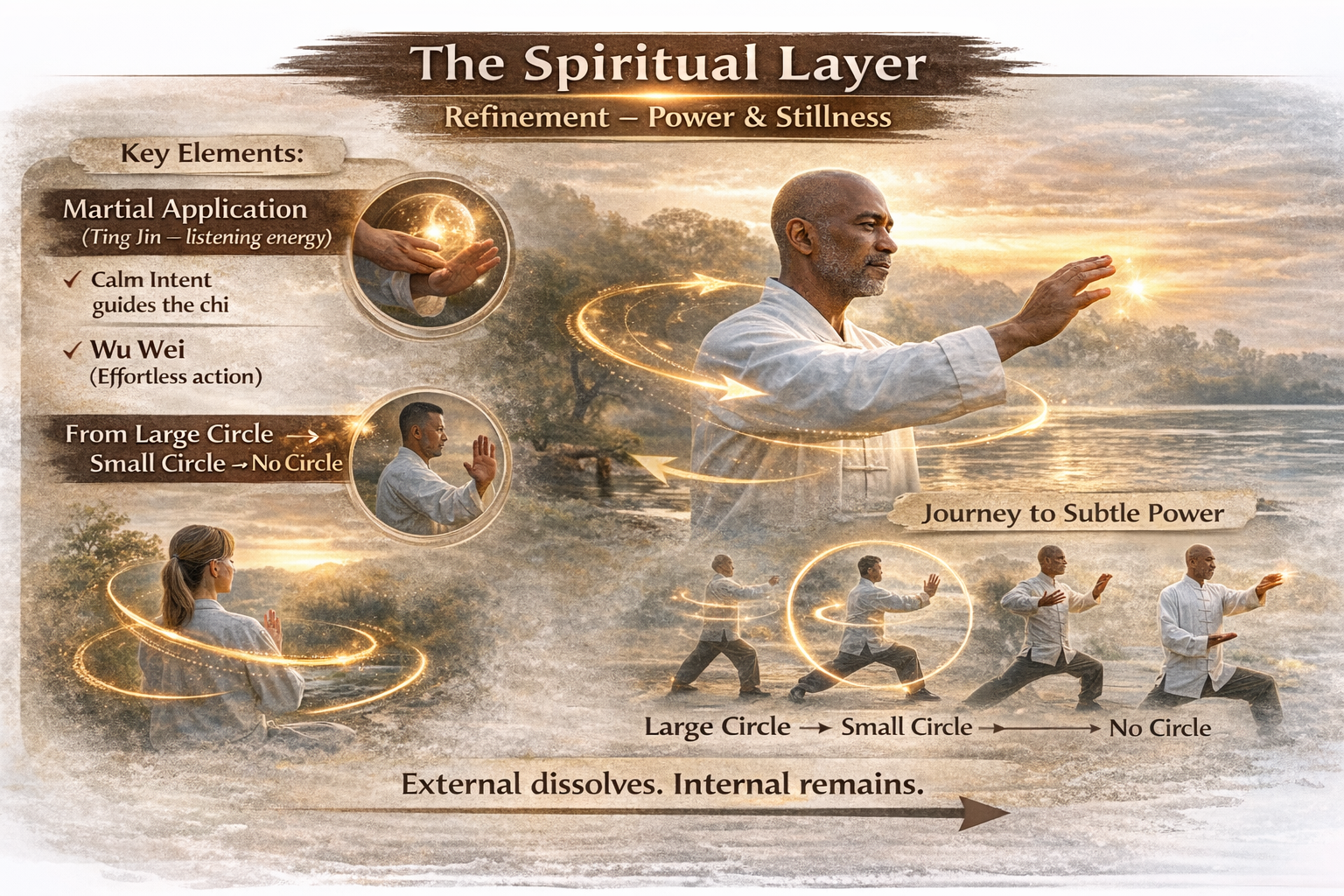
From a Taoist perspective, this reflects the concept of wu wei, oreffortless action” that arises from harmony with the natural flow of existence. When thought pauses, intuition and spontaneous wisdom emerge. Lao Tzu’s Tao Te Ching reminds us that “the usefulness of a pot lies in its emptiness” (Mitchell, 2006). The space is not absence but potential as it allows all forms to exist.

Communication, Presence, and Mindful Dialogue

Applied practically, the distance between words cultivates mindfulness in communication. Modern life is saturated with noise. Such as digital, emotional, and informational, leaving little room for genuine listening. Yet, when one learns to pause before responding, the conversation gains depth. Marshall Rosenberg (2015) emphasized that nonviolent communication begins with awareness of one’s inner state before speaking; silence becomes an ally rather than an awkward void.

Similarly, in contemplative psychology, the space between thoughts allows the practitioner to discern reaction from response. Viktor Frankl (1959) famously wrote, “Between stimulus and response there is a space. In that space lies our power to choose our response.” This power to pause, to inhabit the space between thoughts, grants freedom from reflexive conditioning and opens the door to wisdom.

The Aesthetic of Intervals

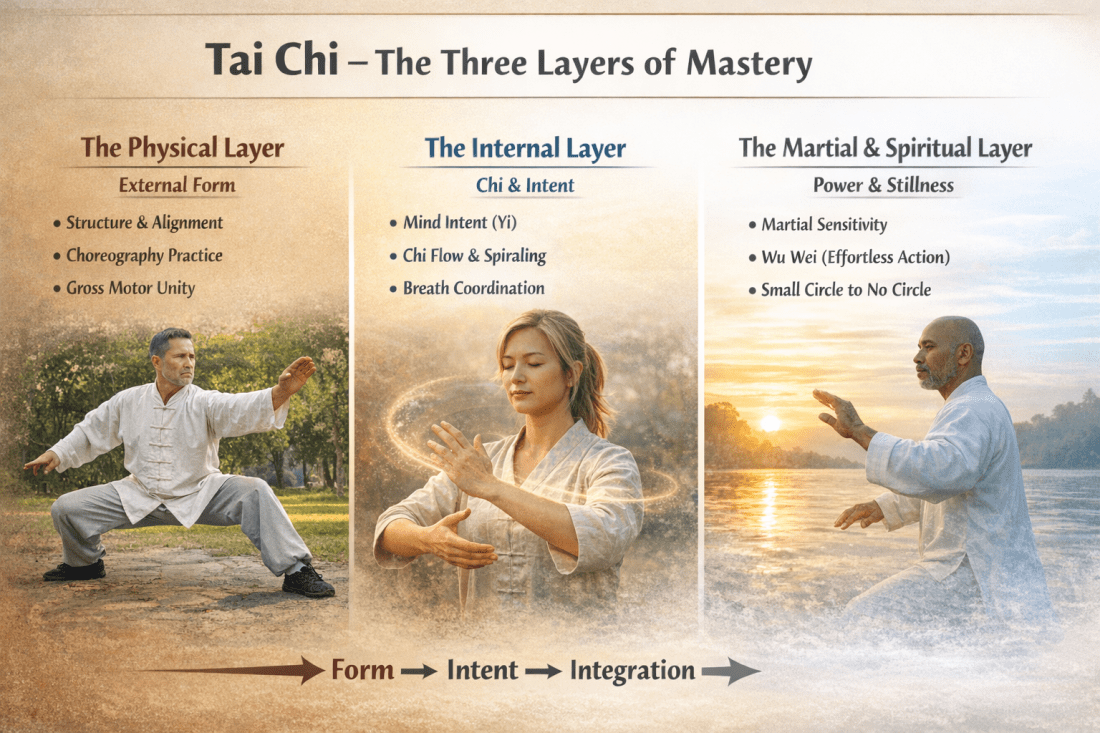
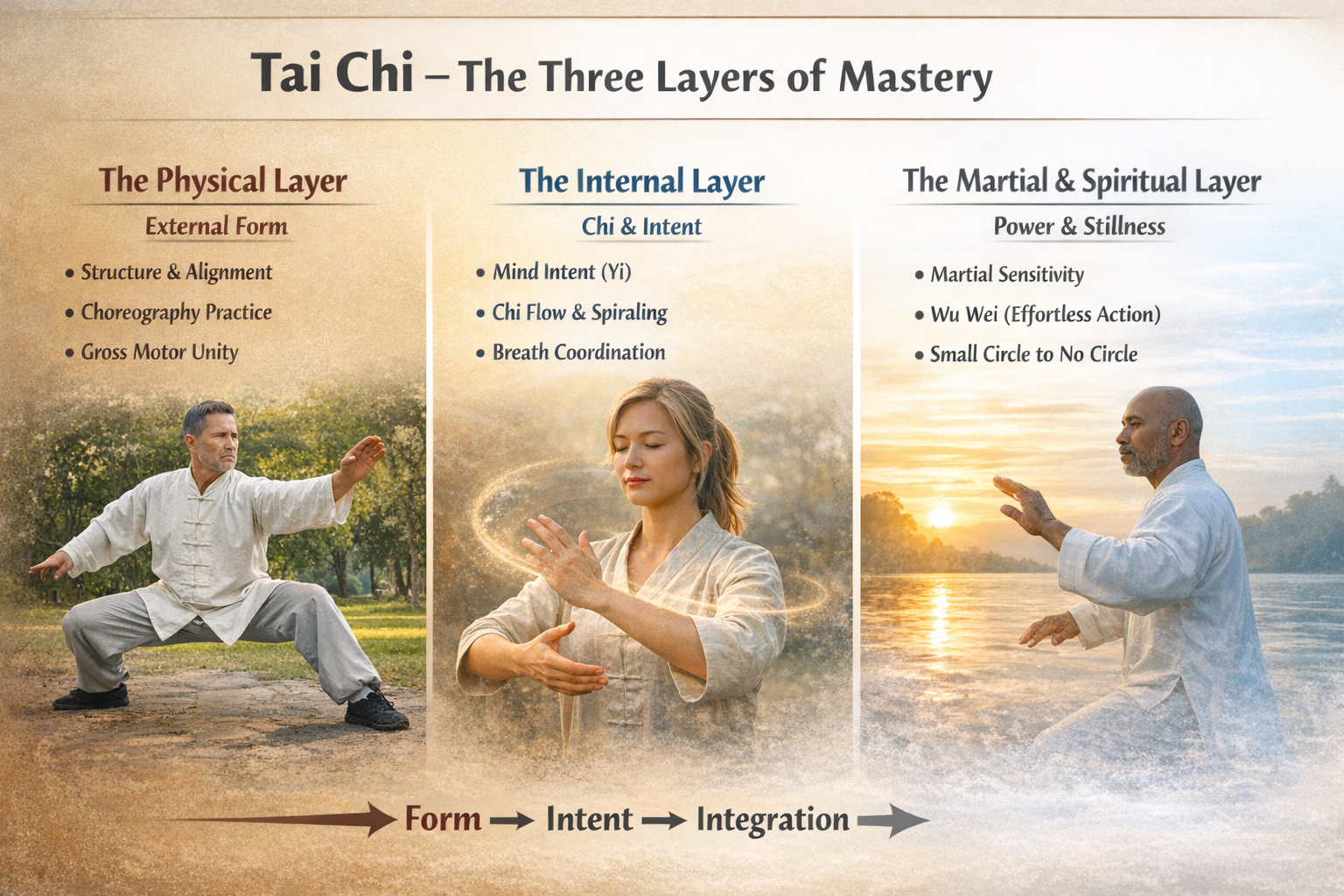
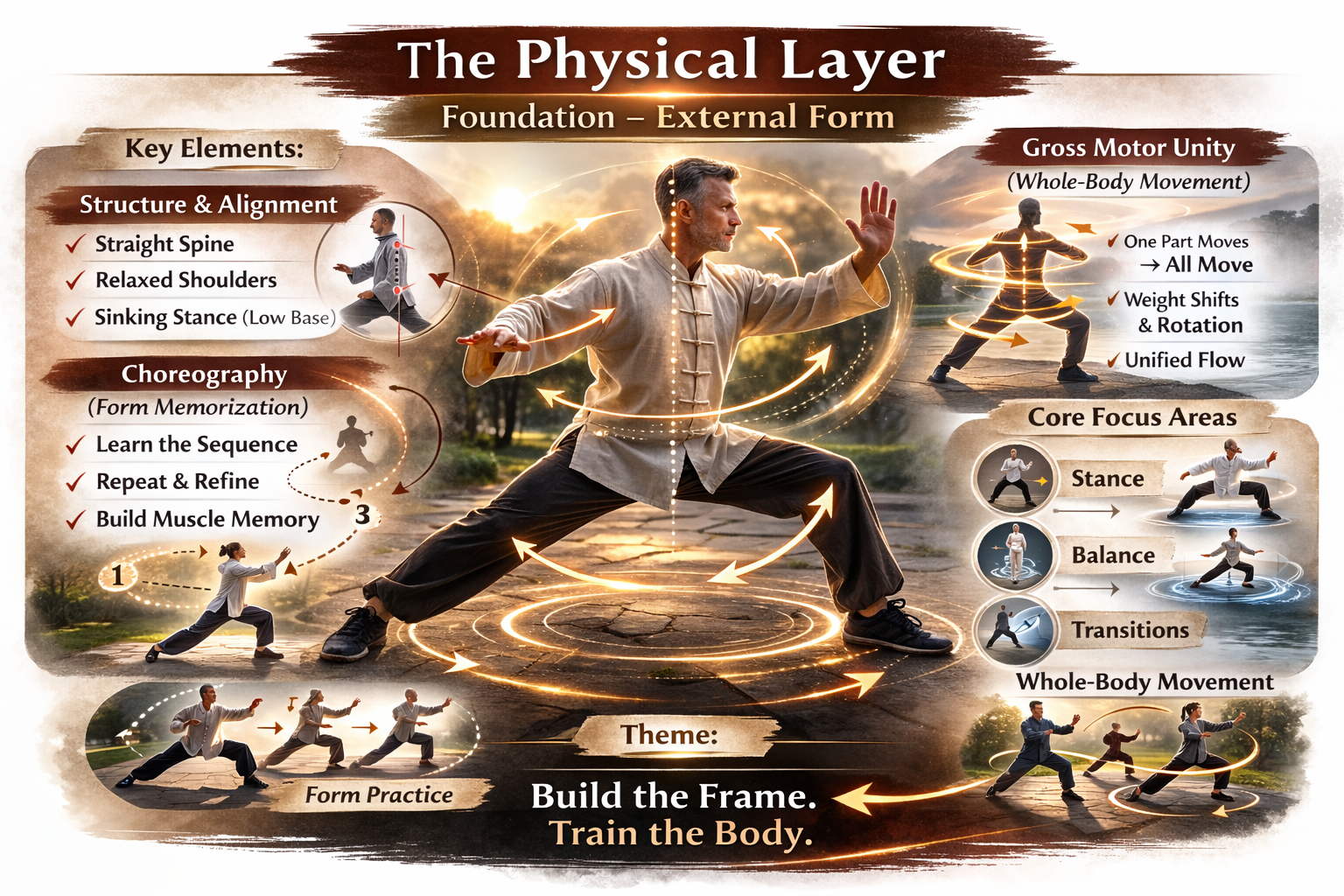
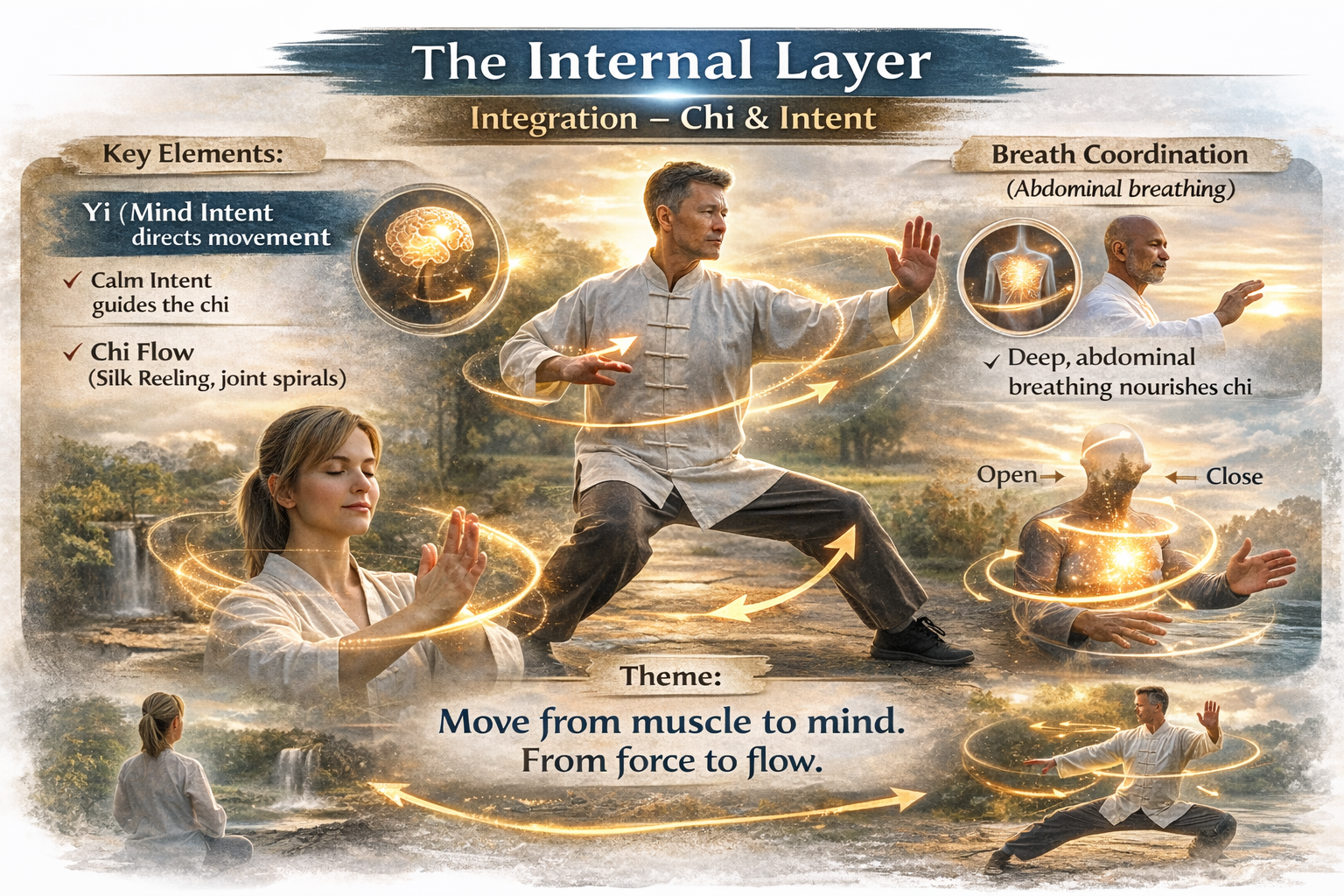
Artists, writers, and martial artists alike understand that mastery lies not in constant motion but in timing and the intervals that define rhythm and flow. In calligraphy, the beauty of each stroke depends on the proportion of blank space around it; in tai chi or qigong, the pauses between movements express the continuity of energy rather than its cessation (Shahar, (2008). In both language and life, pacing and silence create balance.

__________

__________

The Presence Beyond Thought

Ultimately, distance between words and space between thoughts converge in the practice of presence. When we learn to honor the intervals, whether in speech, thought, or action, we align with a deeper rhythm of consciousness that underlies all form. The wisdom of silence is not emptiness but awareness itself. In those spaces, the mind becomes clear, the heart receptive, and communication authentic.

To live with awareness of the spaces between words, between breaths, between thoughts, is to step into the fullness of being. In that quiet expanse, truth is not spoken but known.

References:

Brewer, J. A., Worhunsky, P. D., Gray, J. R., Tang, Y.-Y., Weber, J., & Kober, H. (2011). Meditation experience is associated with differences in default mode network activity and connectivity. Proceedings of the National Academy of Sciences, 108(50), 20254–20259. https://doi.org/10.1073/pnas.1112029108

Feuerstein, G. (1989). The Yoga-Sūtra of Patañjali: A New Translation and Commentary. Shambhala Publications. https://archive.org/details/yogasutraofpatan00pata

Frankl, V. E. (1959). Man’s Search for Meaning. Beacon Press.

Mitchell, S. (Trans.). (2006). Tao Te Ching. Harper Perennial.

Rosenberg, M. B. (2015). Nonviolent Communication: A Language of Life (3rd ed.). PuddleDancer Press.

Shahar, M. (2008). The Shaolin Monastery: History, Religion, and the Chinese Martial Arts. University of Hawai‘i Press. https://archive.org/details/shaolinmonastery0000shah

Wittgenstein, L. (2013). Tractatus Logico-Philosophicus (1st ed.). Taylor and Francis. Retrieved from https://www.perlego.com/book/1557526/tractatus-logicophilosophicus-pdf

The Still Mind and the Snow Globe

The human mind can be likened to a Christmas snow globe. When resting in stillness, it is calm and transparent, revealing its contents clearly. When shaken, the glittering particles obscure the view until motion ceases and calm returns. In much the same way, the human mind loses clarity when it is agitated by thought, emotion, or distraction. Yet, when stillness is restored, insight becomes visible again.

This analogy is ancient in spirit though modern in form. Taoist, Buddhist, and contemplative traditions have long taught that the unsettled mind is filled with “ten thousand thoughts” and is like muddy water that cannot reflect the sky. When the water is left alone, sediment sinks and the surface becomes clear, mirroring reality without distortion. Neuroscience has since confirmed that mental agitation disrupts attentional networks and self-regulation, whereas calm awareness engages prefrontal regions that enhance clarity and emotional balance (Vago & Silbersweig, 2016).

Agitation, Clarity, and the Nature of Mind

Just as the snowflakes in a globe swirl when shaken, so do thoughts and emotions when the mind is disturbed by stress, fear, or overstimulation. The more one reacts, the longer the “flakes” take to settle. Mindfulness teacher Jillian Pransky (2023) uses this same metaphor to describe how meditation allows the inner “snow” to fall to rest and thus revealing stillness and depth beneath the surface.

In a similar vein, meditation research shows that repeated exposure to calm awareness enhances the brain’s ability to disengage from habitual thinking and recover from agitation (Fox et al., 2016). Thus, stillness is not passivity; it is active regulation, a physiological return to balance. This capacity for returning to center is what Tai Chi and Qigong practitioners seek to cultivate daily.

The Snow Globe and the Internal Arts

In Qigong and Tai Chi, movement arises from stillness and returns to it. Between each form lies a subtle pause or an internal settling. When agitation arises, practitioners are taught to “let the mind sink to the dantian,” mirroring how snow settles to the bottom of the globe. Breath slows, the nervous system calms, and the clarity of awareness expands.

Daoist classics such as the Qingjing Jing emphasize this principle: “If the mind is pure and still, all things will become clear of themselves” (Li, 1981). Stillness (jing) is not an absence of life but the foundation for transformation. Without it, internal energy (qi) becomes scattered, and consciousness (shen) clouded. With it, harmony between body, breath, and mind is restored, a concept echoed in modern psychophysiology as “parasympathetic dominance,” when calm awareness stabilizes physiological rhythms (Mayo Clinic, 2023).

From this lens, the snow globe becomes a teaching instrument:

  • The glass represents the body—transparent but containing.
  • The water symbolizes consciousness.
  • The flakes represent thoughts, memories, and emotions.
  • The base is the dantian—the center of gravity, both physical and spiritual.
    When the practitioner “shakes” with stress or emotion, the particles rise and obscure vision. When stillness returns, the scene or the true nature of mind becomes visible once again.

Table: Mind States vs. Snow-Globe States

AspectSnow Globe StateMind State EquivalentPractical Cultivation Method
UnsettledShaken; snow whirling chaoticallyAgitated thoughts, anxiety, scattered focusPause; deep diaphragmatic breathing; grounding awareness in body
SettlingFlakes gradually fallThoughts subside; awareness re-centersGentle movement; slow Qigong; rhythmic breathing
StillWater clear and unmovingCalm mind; perceptual clarity; inner balanceMeditation; standing post; mindful observation
Re-agitatedGlobe shaken againEmotional disturbance or overstimulationRecognize trigger; respond with patience and non-reactivity
Restored ClarityScene visible againInsight, creativity, emotional regulationContinued practice of calm-abiding (samatha) and mindful awareness

Embodied Awareness and the Settling of Qi

In Tai Chi, teachers often say, “Where the mind goes, qi follows.” When the mind is disturbed, the qi scatters; when the mind is calm, qi gathers. The settling of mental “snow” mirrors the condensation of energy within the body’s core. The nervous system reflects this change: heart rate variability improves, cortisol decreases, and attention stabilizes (Fox et al., 2016; Mayo Clinic, 2023).

This internal stillness is not a withdrawal from life, but rather it is refinement. It allows the practitioner to perceive without distortion and to respond without haste. It is what the Zen tradition calls mushin, “no-mind,” where thought does not vanish but becomes transparent and responsive rather than turbulent (Li, 1981). The snow globe thus offers a contemporary bridge between contemplative science and ancient practice, a visualization of how calm leads to wisdom.

Transmutation Through Stillness

The deeper message of this metaphor lies in transformation. When one repeatedly allows the snow to settle, a new pattern of being forms. Neural pathways shift; emotional reactivity decreases; intuition sharpens. In Taoist alchemy, this is nei dan or the refinement of essence (jing) into energy (qi), and energy into spirit (shen). What begins as calming the surface mind evolves into inner transmutation or the awakening of clarity that is no longer dependent on circumstance.

Therefore, to train the mind is not to eliminate its contents but to see through them, to let every swirl of snow reveal rather than obscure. Through stillness, awareness refracts light instead of scattering it. Through daily practice, one learns to set down the globe and simply watch the snow fall.

References:

Fox, K. C. R., Dixon, M. L., Nijeboer, S., Girn, M., Lifshitz, M., Ellamil, M., Sedlmeier, P., & Christoff, K. (2016). Functional neuroanatomy of meditation: A review and meta-analysis of 78 functional neuroimaging investigations. arXiv preprint arXiv:1603.06342. https://arxiv.org/abs/1603.06342

Fox, K. C. R., Kang, Y., Lifshitz, M., & Christoff, K. (2016). Increasing cognitive-emotional flexibility with meditation and hypnosis: The cognitive neuroscience of de-automatization. arXiv preprint arXiv:1605.03553. https://arxiv.org/abs/1605.03553

Li, J. (1981). Qingjing Jing (清靜經): The Scripture of Clarity and Stillness. Beijing: Zhonghua Shuju. https://archive.org/details/daoist-scripture-qing-jing-jing-louis-komjathy/QJJ%20-%20Louis%20Komjathy%20%28Editor%29/

Mayo Clinic. (2023, December 14). Meditation: A simple, fast way to reduce stress. https://www.mayoclinic.org/tests-procedures/meditation/in-depth/meditation/art-20045858

Pransky, J. (2023, June 11). a meditation to create space in the midst of chaos — jillian pransky. Jillian Pransky. https://www.jillianpransky.com/blog/creating-space-snowglobe-meditation

Vago, D. R., & Zeidan, F. (2016). The brain on silent: mind wandering, mindful awareness, and states of mental tranquility. Annals of the New York Academy of Sciences1373(1), 96–113. https://doi.org/10.1111/nyas.13171

The Fall Season of Letting Go – Clarity and Change

As we transition from the active season of Fall into the quiet of Winter, it’s time to intentionally slow down and embrace one of life’s most powerful lessons:

Nature shows us plainly that everything cycles. This time of year, the leaves fall, trees look bare, and the world seems to contract. But this “decay” isn’t an ending; it’s a profound process of renewal. The earth is being fertilized, getting ready for the next spring. Right now, though, our job is to observe the letting go. Fall teaches us the hardest truth for the human mind:

Winter then brings stillness. It’s the moment for gathering energy, conserving resources, and resting. It is the great silence that precedes a new start.

The Practice of Essentialism

As the days get shorter and we naturally feel more inward, it’s the perfect time for introspection (looking within). This is your chance to reflect, declutter your life (mentally and physically), and focus only on what is essential.

Your Breath is Your Control Switch

We continue to use the breath not just for physical health, but as a direct way to manage the mind. It doesn’t matter if you take a few deep breaths or hundreds. What matters is the results of stopping the mental chatter (inner dialogue) and your internal state becomes still enough to see clearly.

Think of the breath as the doorway to your subconscious mind. You will either feed the subconscious unconsciously (with shallow, stressed breathing that reinforces survival-mode stress) or consciously (with deep, slow, intentional breaths). As soon as you breathe consciously, your entire system shifts toward calm and regulation.

This is how we manage the “Instinctual Mind.”  This part of your brain is designed to run the body and excel at survival, but it floods your subconscious with anxiety and chaotic signals. To regulate this instinctual part, you must regulate your breath. To regulate your breath, you regulate your mind.

Reflective Meditation: Reprocessing the Past

This time of year, is ideal for reviewing your life story. You can look back at significant life stages (e.g., grade school, adolescence, young adult, adulthood, etc.) or focus on a recent, emotionally charged event that changed your outlook, whether it was a trauma, a betrayal, a regret, or a success.

Try to tap into an experience that has lodged itself inside you, creating a kind of emotional stagnation that prevents you from moving forward.

The Method:

  1. Get Still: Sit down, breathe consciously, and calm your mind.
  2. Be the Witness: As a neutral observer, revisit the difficult moment.
  3. Gain Clarity: Your goal is not to rewrite the past, but to re-experience it through the lens of your current wisdom. You may realize things like:
    • You may have been young and/or naïve at the time
    • You weren’t at your best then, and that’s okay.
    • They weren’t attacking you; they were simply reacting out of their own suffering.
    • You may realize you were collateral damage to someone else’s unprocessed pain.

The point isn’t to judge the past, but rather it’s to release the story you’ve been carrying about it. Letting go of that unnecessary narrative is the highest medicine this season offers.

Reframing to Free Your Future

You revisit the moment, see it clearly, and analyze it from the perspective of the witness, not the wounded self. You breathe into the memory, letting the emotions reorganize. This is a process that unfolds over time, not in one session. Eventually, the energy tied up in the event loosens. You emotionally “digest” the experience, the stagnation dissolves, and your vital energy is free to move forward again.

The Ultimate Check-in: Meeting Your Younger Self

Once you’ve built stability in this practice, try this powerful exercise:

  1. Form Your Current Self: Clearly visualize the you of today as in your body, clothes, expression, and presence. This is your “Authentic Self.”
  2. Visit the Past: Send this Authentic Self back to meet a younger version of you, say, the a time in your youth or young adulthood, or at a crucial decision point.
  3. Just Sit: You don’t have to “heal” anything. Simply sit across from that past self, like two friends at a restaurant, and see: Would my younger self see me as an inspiration… or a warning… by who I have become?

This is the most honest mirror you’ll ever find. Your younger self knows your true, unburdened potential and remembers the promise you made to your own being. The question is: Have you kept that promise?

This honest self-assessment is the “Blade of Clarity.” It cuts away delusion and reveals the truth.

Finding Your Inner Compass

The world is constantly changing as is your circumstances, relationships, finances, and other people’s opinions are always in flux. Everything external moves.

But a mountain does not move. Its surface changes with weather and time, but its core profile, its Inner Compass or Unmoving Center,remains the same. In this philosophy,

If you don’t locate this unmoving center, you will constantly chase experiences, objects, and relationships that don’t align with your Highest Self.

  • The Mountain is your continuity.
  • It is your loyalty to your highest version.
  • It is the promise you keep to your future and past self.

Fall/Clarity gives you the insight to locate the mountain. Winter/Stillness gives you the stability to sit on it. Spring/Growth gives you the momentum to move from it.

We are nearing the end of this Season of Clarity, the cutting away, the letting go of old stories, the regulation of mind and breath, the reclaiming of your internal state, the reflection upon who you were, and the commitment to who you can still become.

Stay grounded, be clear, and remain loyal to yourself; your mountain.

Quantum Consciousness and Healing

Bridging Science, Mind–Body Practices, and Universal Law

Quantum physics, once confined to subatomic phenomena, has gradually reshaped how we understand life, health, and consciousness. Its principles of nonlocality, superposition, and the observer effect are beginning to inform research in medicine, psychology, and ancient healing systems such as Traditional Chinese Medicine (TCM) and Ayurveda. These traditions, long grounded in concepts of subtle energy and consciousness, align remarkably with emerging scientific insights into mind–body interaction and the creative role of awareness in shaping reality.

Consciousness and the Quantum Field

Quantum theory proposes that all matter arises from a field of potential, or an underlying energetic continuum known as the quantum field. This mirrors spiritual concepts of Qi, Prana, and universal consciousness, which describe an intelligent energy animating and interconnecting all life. Just as the brain functions as a receiver of consciousness, the body is a conductor of subtle energies flowing through energy meridians or nadis. In both frameworks, reality manifests when consciousness interacts with potential, giving form to experience.

This synthesis challenges materialism’s assumption that consciousness is a mere by-product of brain activity. Instead, consciousness is the primary reality, a view increasingly supported by researchers like Amit Goswami (1995) and Rupert Sheldrake (2012), whose theories of morphic resonance suggest that patterns of thought and emotion can influence both biology and behavior across space and time.

The Placebo Effect and Quantum Observation

The placebo effect, where healing occurs through belief and expectation rather than pharmacological action, serves as a measurable example of consciousness influencing physical outcomes. Neuroimaging studies show that patients receiving inert treatments can trigger endorphin release, alter brain activity, and even induce measurable physiological change (Benedetti, 2014). From a quantum perspective, the placebo effect exemplifies the observer effect: belief and attention collapse probabilistic potentials into tangible results.

In this context, healing becomes less about external substances and more about the alignment of perception, belief, and intention. When the mind focuses coherently, whether through faith, meditation, or energy practice, it organizes biological systems toward balance. This parallels Traditional Chinese Medicine’s (TCM) notion that mental states influence Qi circulation and Ayurveda’s understanding that consciousness imbalance is the root of disease (Chopra, 2015).

Qigong and Tai Chi are living laboratories of quantum coherence in action. Both disciplines train practitioners to harmonize body, breath, and mind, cultivating a state of flow or resonance that optimizes internal energy fields. Research has shown that these practices improve heart rate variability, reduce inflammation, and regulate brainwave synchrony, evidence of the body entering a quantum-coherent state (Jahnke et al., 2010).

In quantum terms, Qigong and Tai Chi operate as biological resonance systems. When practitioners focus attention on energy flow (Qi), they create measurable electromagnetic fields detectable around the body. These biofields, according to biophysicist Fritz-Albert Popp, may represent coherent light emissions or biophotons, quantum particles that facilitate communication between cells (Popp & Beloussov, 2003). Thus, ancient energy practices may function as methods for tuning the human organism into harmony with the quantum field.

Traditional Chinese Medicine (TCM) views the universe and body as reflections of a dynamic balance between yin and yang, two complementary forces governing all existence. Similarly, Ayurveda describes health as a balance of the three doshas of Vata, Pitta, and Kapha, energetic principles derived from consciousness manifesting through the five elements. Both systems recognize that disease begins as a disruption in the flow or coherence of subtle energies before physical symptoms appear.

Quantum physics validates these insights by demonstrating that physical reality is not solid but vibrational. Just as Qi or Prana represent life energy, subatomic particles are not objects but energy waves interacting within fields. Healing, therefore, involves restoring resonance by realigning vibrational frequencies between the body’s systems and the larger universal field (Capra, 1999). Meditation, herbal medicine, sound, and mindful movement all serve to reestablish this resonance.

Conscious Mind, Subconscious Patterns, and Healing

There exist dual levels of mind, where the conscious and subconscious and their interplay shape experience. Modern psychoneuroimmunology confirms that subconscious beliefs influence immune function and cellular activity. Placebo and nocebo studies illustrate how deep-seated emotions can either heal or harm, reinforcing TCM’s emphasis on emotional balance and Ayurveda’s stress on sattvic (pure) consciousness as the foundation of well-being.

Meditation and Qigong act as tools for reprogramming the subconscious, quieting habitual thought patterns, and entraining the nervous system to a coherent rhythm. Through neuroplasticity, repeated focus on compassion, gratitude, or peace rewires neural circuits, embodying the principle that mind precedes matter (Doidge, 2007).

Ethical Integrity and Vibrational Clarity

Quantum and spiritual traditions agree that coherence requires ethical and emotional alignment. Dishonesty, anger, or greed introduce vibrational noise that distorts the clarity of consciousness. Conversely, gratitude, service, and moral integrity raise vibrational resonance, enabling access to higher frequencies of the universal field. This explains why moral cultivation is central in Confucian, Taoist, and Vedic systems, and is considered essential to effective healing and manifestation.

Toward an Integrated Science of Consciousness and Health

As science evolves, the boundaries between physics, medicine, and spirituality continue to blur. Quantum biology now examines how wave interference, entanglement, and energy coherence operate within living cells, suggesting that consciousness may be an organizing force behind biological order (Al-Khalili & McFadden, 2014). The same laws governing particles in superposition may govern energy in meridians or chakras.

The integration of quantum principles with TCM, Ayurveda, Qigong, and Tai Chi offer a profound framework for whole-person healing.  One that honors both physical mechanisms and the metaphysical dimensions of consciousness. These traditions, long dismissed as mystical, now gain empirical support as science rediscovers what sages have taught for millennia: that consciousness, energy, and matter are inseparably one.

Quantum physics invites humanity to reconsider its role in creation not as passive observers, but as conscious participants in the unfolding of reality. Practices like meditation, Qigong, and Tai Chi exemplify how coherent intention can modulate physiology and align with universal laws. The placebo effect further affirms that belief, emotion, and attention are powerful instruments of healing. Integrating ancient wisdom with modern physics reveals a unified vision of human potential where health, consciousness, and the cosmos resonate in a single quantum symphony.

References:

Al-Khalili, J., & McFadden, J. (2014). Life on the edge: The coming of age of quantum biology. Crown. https://djvu.online/file/L7pTHgmdok2kx

Benedetti, F. (2014). Placebo effects. https://doi.org/10.1093/acprof:oso/9780198705086.001.0001

Capra, F. (1999). The Tao of physics: An exploration of the parallels between modern physics and Eastern mysticism. Shambhala. https://archive.org/details/fritjof-capra-tao-of-physics-ocr

Chopra, D. (2015). Quantum healing: Exploring the frontiers of mind/body medicine. Harmony.

Doidge, N. (2007). The brain that changes itself. Viking

Goswami, A., Reed, R. E., & Goswami, M. (1993). The Self-Aware Universe: How consciousness creates the material world. https://www.thejungletimes.com/page/downloads/files/Amit%20Goswami-The%20Self-Aware%20Universe-Tarcher%20(1995).pdf

Jahnke, R., Larkey, L., Rogers, C., Etnier, J., & Lin, F. (2010). A comprehensive review of health benefits of qigong and tai chi. American journal of health promotion : AJHP24(6), e1–e25. https://doi.org/10.4278/ajhp.081013-LIT-248

Popp, F. A., & Beloussov, L. (Eds.). (2003). Integrative biophysics: Biophotonics. Springer.

Sheldrake, R. (2012). The Scientific Creed. The Science Delusion: Freeing the Spirit of Enquiry. Coronet Publications.
http://blogspersonals.ara.cat/desdelparadis/2018/11/15/the-scientific-creed/

Unseen Wounds: How Emotional Trauma Shapes Our Health

Despite living in an age of advanced medicine and rising health awareness, chronic illness, emotional suffering, and addiction continue to rise. This contradiction invites us to question not just our treatments but also the mindset and motivations behind them. Increasingly, research and lived experience point to unprocessed pain and trauma as the core drivers of both psychological and physiological illness.

Medicine’s Narrow Focus: Suppressing Symptoms Instead of Healing

Contemporary medical practices often focus on symptom suppression rather than root-cause healing. For example, elevated cortisol, a hormone associated with stress, is frequently managed with pharmaceuticals that reduce inflammation but fail to address the underlying source of distress (Sapolsky, 2004). In cases of chronic illness, especially cancer, mainstream interventions often fall back on drastic methods: cutting (surgery), poisoning (chemotherapy), or burning (radiation), with minimal inquiry into psychosomatic or emotional contributors.

The pharmaceutical industry has also come under scrutiny for prioritizing profit-driven solutions that treat stress biochemically without offering tools for actual emotional or relational healing (Gabor Maté, 2010).

A Society Obsessed with Health Yet Unwell

We live in a paradoxical society: obsessed with fitness, diet, and health optimization, yet disconnected from authentic well-being. Emotional pain is frequently seen as a personal failure, and expressions of vulnerability are often equated with weakness. Shame becomes a hidden driver of behavior, shaping identity through internalized messages like “I’m not enough” or “My needs don’t matter” (Brown, 2012).

The metaphor of the “monster” within, like the transformation of Bruce Banner into the Hulk, illustrates how repressed emotions can erupt when unacknowledged. We often assume that other people’s issues are about us, leading to further internal conflict and disconnection.

Trauma: The Root Cause of Addiction and Illness

Pain, especially unresolved emotional pain, is at the root of many afflictions. According to trauma expert Gabor Maté (2008), addiction is not a disease or choice but a response to deep suffering. Whether through substances, work, food, or achievement, people are often trying to soothe pain they may not even fully understand.

Social disconnection, abandonment, and lack of emotional education perpetuate trauma across generations. Society offers little support or guidance for managing grief, shame, or stress. Many turn to coping mechanisms without the tools to process their trauma, which is especially evident in marginalized communities where chronic stress is linked to disproportionately higher rates of illness (Williams & Mohammed, 2009).

The Cost of Disconnection and the Need for Authenticity

In professional fields like medicine, unresolved trauma is common. Some individuals pursue high-achieving careers not from passion but to compensate for feelings of inadequacy or unlovability. Emotional detachment, often a survival strategy in childhood, becomes normalized in adulthood. This disconnection between mind and body leads to chronic stress, illness, and burnout (Van der Kolk, 2014).

Authentic healing requires honoring two essential human needs: attachment and authenticity. When these needs are in conflict, as they often are in trauma survivors, authenticity is usually sacrificed for the sake of relational survival. Reconnecting with one’s truth, expressing anger constructively, and embracing emotional honesty are key steps toward transformation.

Healing the Generational Wounds

Trauma doesn’t disappear. It is often passed from one generation to the next, not just through genetics but through behavior, belief systems, and emotional suppression. Children absorb the stress of their caregivers. Without awareness and intervention, these patterns replicate over time (Yehuda & Lehrner, 2018).

What may appear as weakness, in hypervigilance, dissociation, emotional volatility, is often a response to longstanding unmet needs. Healing begins by naming these patterns and allowing space for expression and integration.

A Shift Toward Integration and Compassion

The healing path is not just clinical, it is relational, emotional, and spiritual. Psychedelic-assisted therapy, somatic practices, plant medicines like ayahuasca, and trauma-informed psychotherapy are gaining traction because they center empathy, connection, and emotional truth (Carhart-Harris & Goodwin, 2017).

As we reevaluate addiction, trauma, and illness through this lens, we begin to see that these challenges are not signs of brokenness. Rather, they are indicators of what needs acknowledgment, healing, and reintegration. Addiction, far from being a moral failure or inherited defect, can be seen as a solution to an emotional problem, a cry for help that must be understood before it can be addressed.

References

Brown, B. (2012). DARING GREATLY. In GOTHAM BOOKS. GOTHAM BOOKS. https://site.ieee.org/sb-nhce/files/2021/06/Brene-brown-book1.pdf

Carhart-Harris, R. L., & Goodwin, G. M. (2017). The therapeutic potential of psychedelic drugs: Past, present, and future. Neuropsychopharmacology, 42(11), 2105–2113. https://doi.org/10.1038/npp.2017.84

Maté, G. (2008). In the realm of hungry ghosts: Close encounters with addiction. Knopf Canada. https://drgabormate.com/book/in-the-realm-of-hungry-ghosts/

Maté, G. (2010). When the body says no: The cost of hidden stress. Wiley. When the Body Says No – Dr. Gabor Maté

Sapolsky, R. (2004). Why Zebras don’t get Ulcers: The acclaimed Guide to Stress, Stress-Related Diseases, and Coping. ResearchGate. https://www.researchgate.net/publication/272161275_Why_Zebras_Don’t_Get_Ulcers_The_Acclaimed_Guide_to_Stress_Stress-Related_Diseases_and_Coping

Van der Kolk, B. (2014). The body keeps the score: Brain, mind, and body in the healing of trauma. Viking. The body keeps the score: Brain, mind, and body in the healing of trauma.

Williams, D. R., & Mohammed, S. A. (2009). Discrimination and racial disparities in health: Evidence and needed research. Journal of Behavioral Medicine, 32(1), 20–47. https://doi.org/10.1007/s10865-008-9185-0

Yehuda, R., & Lehrner, A. (2018). Intergenerational transmission of trauma effects: Putative role of epigenetic mechanisms. World Psychiatry, 17(3), 243–257. https://doi.org/10.1002/wps.20568