The Buddhist Eightfold Path & the Taoist 8 Keys of Wisdom

The Eightfold Path in Buddhism and the Eight Keys of Wisdom both emphasize self-awareness, ethical living, and inner transformation, but they approach wisdom from different angles. Buddhism focuses on liberation from suffering and Taoism emphasizes harmony with the Tao (the Way). Below are summaries and correlations between them.

The Buddhist Eightfold Path is a core teaching of the Buddha, forming the practical aspect of the Four Noble Truths. It guides ethical conduct, mental discipline, and wisdom, leading to the cessation of suffering and enlightenment (nirvana).

Wisdom (Prajñā / Panna)

  1. Right View (Sammā-diṭṭhi) – Understanding the Four Noble Truths and seeing reality as it is.
  2. Right Intention (Sammā-saṅkappa) – Cultivating thoughts of goodwill, and harmlessness, avoiding harmful desires and ill-will.

Ethical Conduct (Śīla / Sīla)

  1. Right Speech (Sammā-vācā) – Speaking truthfully, kindly, and avoiding lying, gossip, or harmful words
  2. Right Action (Sammā-kammanta) – Acting ethically by resisting from harming living beings, stealing, and engaging in improper sexual conduct.
  3. Right Livelihood (Sammā-ājīva) – Earning a living in a way that does not cause harm or exploit others.

Mental Discipline (Samādhi)

  1. Right Effort (Sammā-vāyāma) – Cultivating positive states of mind, preventing negative thoughts, and striving for self-improvement.
  2. Right Mindfulness (Sammā-sati) – Maintaining awareness of one’s body, feelings, thoughts, and phenomena through consistent mindfulness practice.
  3. Right Concentration (Sammā-samādhi) – Developing deep meditative states of focus to achieve insight and tranquility.

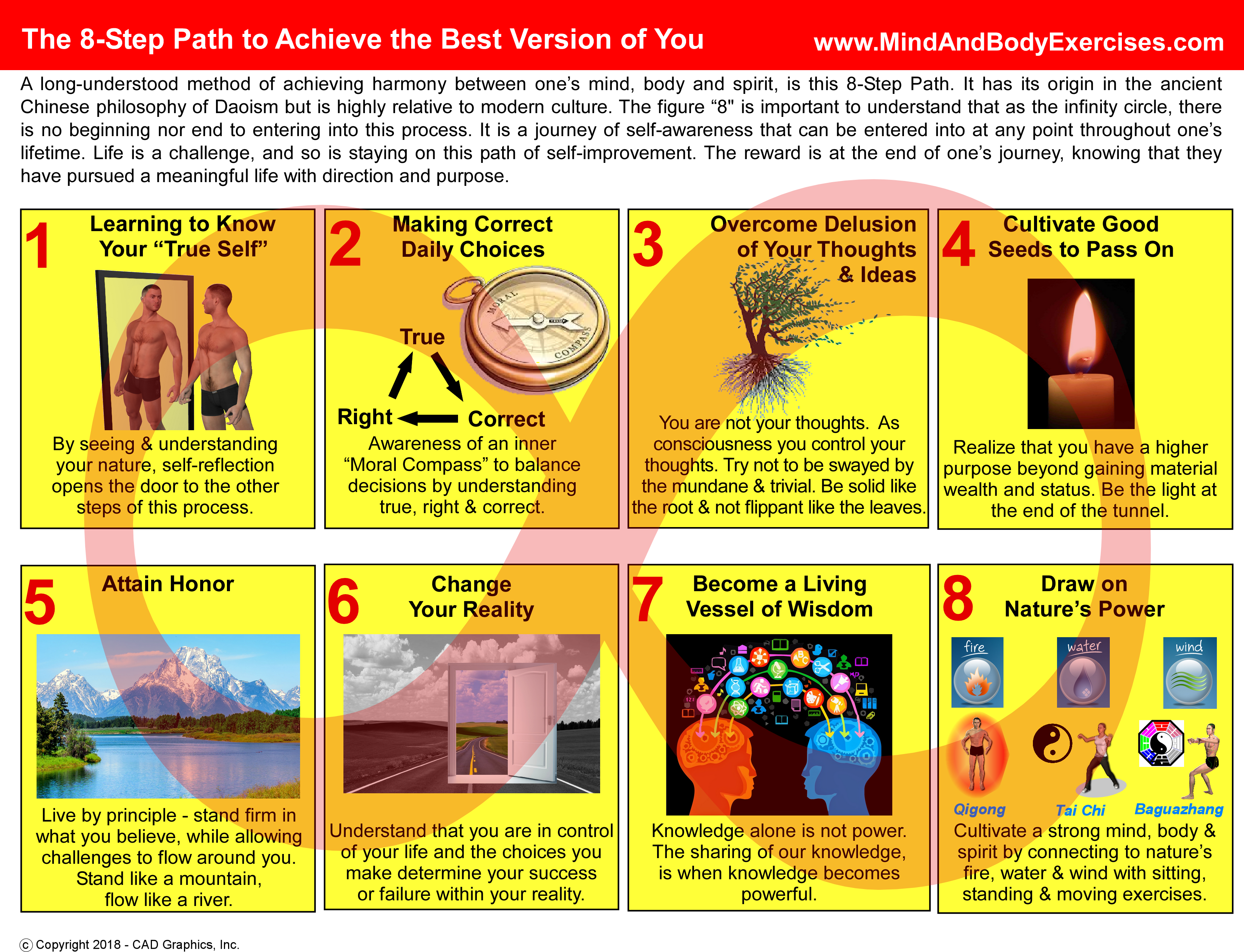
Like the Eightfold Path, The Eight Keys of Wisdom is a core teaching in ancient wisdom, drawing from Taoism, Buddhism, and Confucianism. It guides ethical conduct, mental discipline, and wisdom, leading to the cessation of suffering and enlightenment (nirvana).

  1. Reflection – See yourself as others see you
  2. Make correct choices (Hun & Po) – Discerning true, right, and correct. Dealing with the inner conflict
  3. Overcome your delusion – 5 agents, 7 distractions
  4. Turn on your light – See and be seen, plant good seeds
  5. Be the mountain – Attain honor rooted in principle
  6. Change your reality – Assume responsibility of your fate or destiny
  7. Become a vessel of wisdom – Practice what you preach, become a role model rather than a warning
  8. Water over fire – Draw from nature’s energies
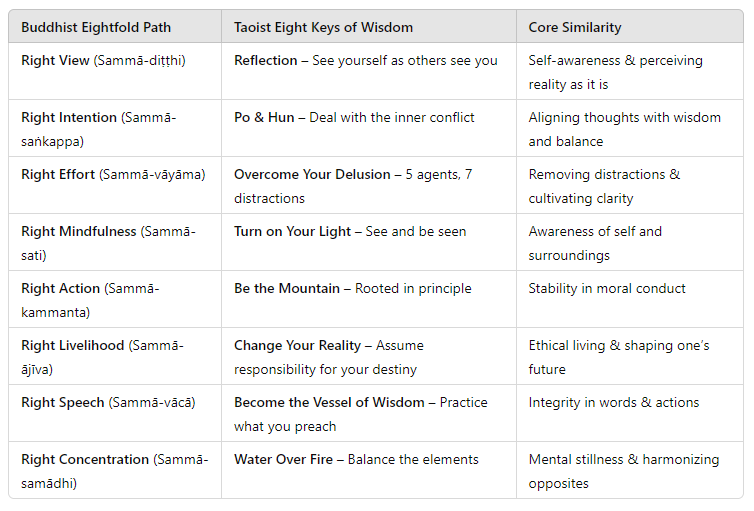
  1. ReflectionRight View (Sammā-diṭṭhi)
    • Taoist Wisdom: See yourself as others see you.
    • Buddhist Parallel: The Right View teaches seeing reality as it is, free from illusion. In Buddhism, self-awareness includes understanding how others perceive us and recognizing our attachments and biases.
  2. True, Right and Correct (Hun & Po)Right Intention (Sammā-saṅkappa)
    • Taoist Wisdom: Manage and cope with inner conflicts.
    • Buddhist Parallel: Right Intention involves aligning thoughts with ethical and wholesome goals, reducing inner conflict between desire (Po) and higher wisdom (Hun). Both traditions emphasize balancing these opposing aspects of the psyche.
  3. Overcome Your Delusion – Right Effort (Sammā-vāyāma)
    • Taoist Wisdom: 5 agents, 7 distractions (Five Elements & Emotional Imbalances).
    • Buddhist Parallel: Right Effort means actively working to remove unwholesome states (such as greed, anger, and delusion) and cultivate wisdom. In Taoism, recognizing the interplay of the Five Elements and overcoming distractions aligns with maintaining mental clarity.
  4. Turn on Your Light – Right Mindfulness (Sammā-sati)
    • Taoist Wisdom: See and be seen. Plant good seeds to leave a legacy of knowledge.
    • Buddhist Parallel: Right Mindfulness is about clear awareness of one’s actions, emotions, and thoughts. “Turning on the light” in Taoism refers to conscious self-awareness, which aligns with the Buddhist practice of mindfulness meditation.
  5. Be the Mountain – Right Action (Sammā-kammanta)
    • Taoist Wisdom: Achieve honor and respect by being rooted in principle.
    • Buddhist Parallel: Right Action means living with integrity, abstaining from harm and unethical behavior. Being “the mountain” represents stability in virtue, just as Right Action is about unwavering moral conduct.
  6. Change Your Reality – Right Livelihood (Sammā-ājīva)
    • Taoist Wisdom: Assume responsibility for your fate or destiny.
    • Buddhist Parallel: Right Livelihood encourages earning a living ethically and shaping one’s future through right choices. Taoism’s view that we shape our destiny aligns with Buddhism’s emphasis on karma and responsibility for one’s path.
  7. Become the Vessel of Wisdom – Right Speech (Sammā-vācā)
    • Taoist Wisdom: Practice what you preach. Strive to live as an example and not a warning to others.
    • Buddhist Parallel: Right Speech teaches honest, compassionate communication. In Taoism, becoming a “vessel of wisdom” means embodying truth, much like Right Speech requires sincerity in words.
  8. Water Over Fire – Right Concentration (Sammā-samādhi)
    • Taoist Wisdom: Balance the elements; maintain peace in chaos.
    • Buddhist Parallel: Right Concentration cultivates mental stillness and deep meditative absorption, similar to Taoist teachings on harmonizing the forces of water (yin) and fire (yang) to maintain balance and clarity.
I teach and offer lectures about holistic health, physical fitness, stress management, human behavior, meditation, phytotherapy (herbs), music for healing, self-massage (acupressure), Daoyin (yoga), qigong, tai chi, and baguazhang.

Please contact me if you, your business, organization, or group, might be interested in hosting me to speak on a wide spectrum of topics relative to better health, fitness, and well-being.

I look forward to further sharing more of my message by partnering with hospitals, wellness centers, VA centers, schools on all levels, businesses, and individuals who see the value in building a stronger nation through building a healthier population.

I also have hundreds of FREE education video classes, lectures, and seminars available on my YouTube channel at:

https://www.youtube.com/c/MindandBodyExercises

Many of my publications can be found on Amazon at:

http://www.Amazon.com/author/jimmoltzan

My holistic health blog is available at:

https://mindandbodyexercises.wordpress.com/

http://www.MindAndBodyExercises.com

Mind and Body Exercises on Google: https://posts.gle/aD47Qo

Jim Moltzan

407-234-0119

Opening the Circle: How Wise Educators Welcome Outside Insight

As someone who has spent a lifetime immersed in holistic health, martial arts, qigong, and Eastern traditions, and authored 30 books on these subjects, I’ve encountered a curious dynamic when trying to share my work with fellow educators, programs, and organizations in the field.

Some colleagues and group leaders have wholeheartedly embraced my books, integrating them into their programs and recommending them to their students as complementary resources. These individuals and institutions see value in offering a broader lens and deeper tools, without fear of comparison or competition. They understand that true education isn’t about controlling a student’s learning but about nurturing it. However, not everyone responds this way.

Some instructors, schools, and even entire systems appear hesitant to recommend or promote my work or that of others outside of their bubble. In certain cases, there seems to be an unspoken fear. A fear that perhaps their students will see gaps in their own curriculum or discover new or more complete skills and insights not offered in their current learning path. It’s as though by acknowledging an external source of knowledge, they feel their authority or cohesion might be challenged.

This has raised an important question that others working in fields of mastery and personal development may also face:

Ego in the Path of Learning

In the very traditions many of us teach, ego is framed as the primary obstacle to growth. Yet even in practices designed to transcend ego, such as tai chi, meditation, and internal martial arts, ego often remains hidden in plain sight. A teacher or institution may subtly discourage external learning, not because the material lacks value, but because they feel exposed or threatened by it.

The deeper truth is this: a student’s growth should never be seen as a threat to a teacher’s role or a program’s identity. If anything, it’s a testament to the strength of their foundational guidance. When leaders cling to authority at the expense of their students’ evolution, they ultimately hinder the very progress their mission was meant to support.

The Role of Loyalty and Closed Systems

Another dimension that often goes unspoken is the role of loyalty. A quality that, while admirable, can sometimes limit a student’s growth when tied to overly hierarchical or ideologically rigid systems.

In some organizations, students are immersed in highly structured environments where authority is concentrated, hierarchies are strict, and questioning the curriculum is discouraged. These groups often cultivate a deep sense of allegiance, whether to a teacher, lineage, ideology, or system. This loyalty can create a powerful psychological barrier, making students feel that seeking information elsewhere is a form of betrayal.

When this dynamic becomes dominant, students may become hesitant to explore new resources, even when those resources are directly aligned with their path of growth. Out of respect or fear, they remain in a tightly controlled learning environment, sometimes unaware of how limited their exposure has become.

This kind of immersion often leads to echo chambers, where the same concepts, styles, and interpretations are reinforced over and over. While repetition is a valid and often necessary method of training, when it replaces diversity of thought and cross-pollination of ideas, the result is stagnation, both intellectually and spiritually.

From Competition to Collaboration

The mindset that views another’s work as a threat is rooted in scarcity: the idea that there’s only so much wisdom, attention, or recognition to go around. But those of us who have walked these paths know better. Real mastery breeds humility and a sense of abundance. There is always more to explore, more to share, and more to co-create together.

That’s why I’ve shifted my focus toward collaboration with those who operate from an open, growth-oriented paradigm. To teachers, schools, organizations, and systems that view education as a dynamic and shared mission, and not a personal or ideological pedestal. These “out of the box” thinkers are actively transforming how knowledge is shared, empowering their students with rich, multidimensional resources that enhance the learning journey.

Reframing the Message

To support this shift, I’ve worked to frame my books as teaching companions, not replacements. They’re meant to enhance the student experience, deepen understanding of nuanced principles, and provide historical and philosophical context that may not fit into the rhythm of regular classes or structured programs.

Some schools and instructors have even offered to write forewords for custom editions or bundle my books into their recommended reading lists, helping students understand how the material supports, not replaces their core instruction.

Creating Supportive Alliances

Rather than positioning my work as something to be adopted with hesitation, I aim to foster supportive alliances or mutual relationships with like-minded educators and organizations who are excited about sharing resources for the benefit of the student body. This spirit of collaboration builds trust and empowers everyone involved.

Sometimes, these collaborations emerge through casual conversations, mutual respect, or shared experiences. Other times, they’re sparked by a school or group seeking to expand its curriculum without reinventing the wheel. My books are here to serve those needs. They are carefully written and researched, richly illustrated, and grounded in lived experience.

Direct to the Seeker

At the same time, I recognize that today’s students are often independent seekers, driven not only by the structure of a school or system, but by curiosity and personal growth. These individuals pursue knowledge through other teachers, books, online resources, workshops, and direct inquiry. They are the ones finding my materials, using them to deepen their practice, and reaching out with appreciation and questions.

And that’s where my focus continues to grow in serving the serious student, the progressive educator, school, or wellness program that wants to support them.

Closing Thoughts

If anyone has created something meaningful, rooted in truth and cultivated through experience, it will find its audience. Not everyone will embrace it at first. Some may resist it. But the people and organizations that are ready will not only welcome it, but they’ll also help it flourish. In time, the strength of offering additional resources will speak louder than any insecurity.

I look forward to further sharing more of my message by partnering with hospitals, wellness centers, VA centers, schools on all levels, businesses, and individuals who see the value in building a stronger nation through building a healthier population.

I also have hundreds of FREE education video classes, lectures, and seminars available on my YouTube channel at:

https://www.youtube.com/c/MindandBodyExercises

Many of my publications can be found on Amazon at:

http://www.Amazon.com/author/jimmoltzan

My holistic health blog is available at:

https://mindandbodyexercises.wordpress.com/

http://www.MindAndBodyExercises.com

Mind and Body Exercises on Google: https://posts.gle/aD47Qo

Jim Moltzan

407-234-0119

Announcing a Powerful Collaboration for Inner and Outer Transformation

After decades of study, practice, and teaching, I’ve come to a simple but powerful truth: personal transformation is possible. through committed effort, self-reflection, and time-proven methods that honor both the body and the spirit.

For over 40 years, I’ve dedicated my life to exploring and sharing the profound wisdom of holistic health, qigong, tai chi, martial arts, and traditional Eastern systems of healing and self-realization. These practices were once dismissed as esoteric or somewhat “out there,” but have never been more relevant. In a culture dominated by distraction, disconnection, and stress, they offer a lifeline back to balance, clarity, strength, and peace.

Today, I’m excited to share something new. A step forward in expanding the reach of this message.

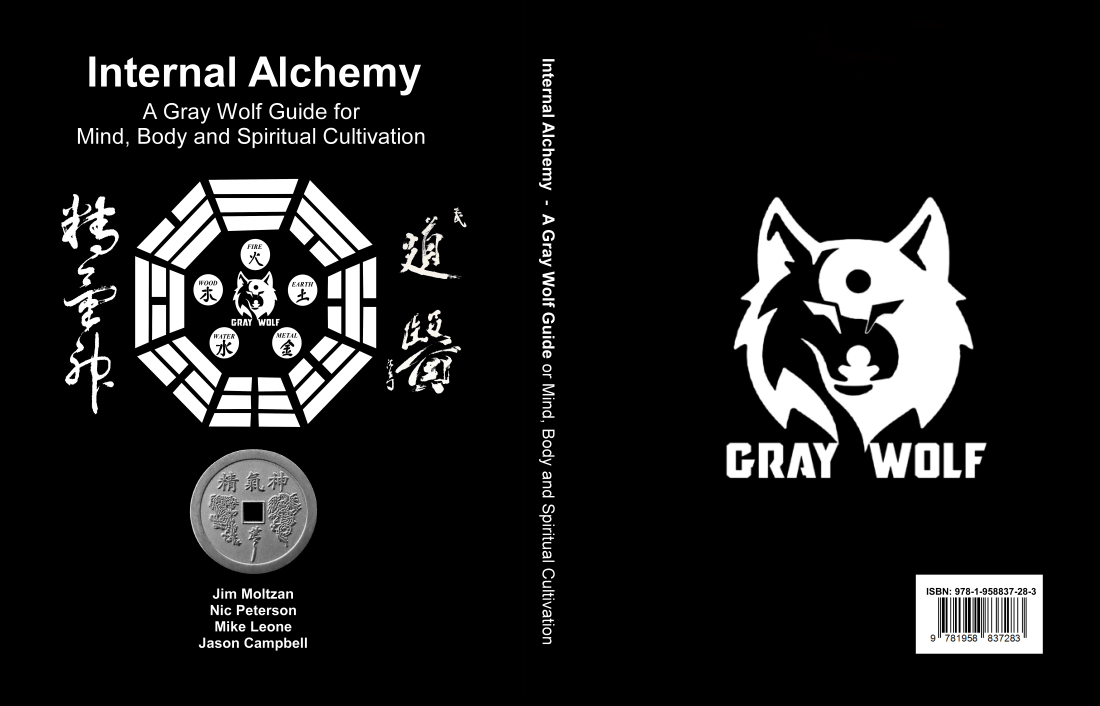
I’m partnering with Nic Peterson  (https:/www.nicpeterson.com/) a respected lineage holder of the Gray Wolf Clan, whose commitment to mastery, stewardship, and the preservation of traditional wisdom deeply aligns with my own. Nic recently wrote a powerful foreword for a private-label edition of one of my foundational works, newly titled Internal Alchemy: The Gray Wolf Guide to Body, Mind, and Consciousness. His contribution reflects the values we both hold dear of humility in teaching, discipline in practice, and the profound responsibility that comes with authentic knowledge.

We come from a warrior–scholar–sage tradition. Our masters are healers and fighters, philosophers and practitioners. They are as capable of restoring life as they are of taking it. Many other masters and grandmasters, though unnamed, have left their mark here too. That’s the nature of a true lineage: the teachings carry many hands, many voices.

Internal Alchemy is not a light read. It is a manual that is quite dense, and a deliberate reference that can (and should) be returned to time and again. Each page could be unpacked over days of study. It’s not meant to be skimmed; it’s meant to be integrated.

Alongside Nic, I am also honored to acknowledge the contributions of two remarkable individuals:

Michael Leone, my friend, peer, and sometimes teacher, a doctor of Chinese medicine, and a true warrior-scholar-sage, has been the wellspring of much of the knowledge this book is built upon. His insight into internal energetics, martial arts, and the healing systems of the East has deeply shaped my own understanding and practice. His teachings live within every page of Internal Alchemy, and his guidance continues to inform and inspire everything I share. Michael can be reached at: https://zenwellness.com/

Jason Campbell, a highly recognized teacher, musician, and meditation guide, adds a profound layer to this collaboration. His work bridges the gap between ancient practices and modern lives, using sound, rhythm, and stillness to create doorways into deeper awareness. His presence in this effort expands our ability to reach those seeking peace not just in body and mind, but also in spirit and daily life. Jason’s works can be found at: https://www.jasoncampbellmusic.com/

Together, we represent a community of practitioners who believe that ancient knowledge must be preserved, respected, and made relevant in the modern age. Our collaboration is a commitment to serving the global community of seekers who value depth over trends, practice over theory, and legacy over ego.

Internal Alchemy is more than a book. It’s a living transmission of teachings designed to support your path toward self-mastery and inner freedom. Whether you are a beginner or a lifelong practitioner, we invite you to join us on this journey.

If you feel the call to the mountain, to the stillness, to something deeper within, you’re already on the path.

To learning, growing, and giving back.

Jim Moltzan
Author, Educator, Practitioner

I teach and offer lectures about holistic health, physical fitness, stress management, human behavior, meditation, phytotherapy (herbs), music for healing, self-massage (acupressure), Daoyin (yoga), qigong, tai chi, and baguazhang.

Please contact me if you, your business, organization, or group, might be interested in hosting me to speak on a wide spectrum of topics relative to better health, fitness, and well-being.

I look forward to further sharing more of my message by partnering with hospitals, wellness centers, VA centers, schools on all levels, businesses, and individuals who see the value in building a stronger nation through building a healthier population.

I also have hundreds of FREE education video classes, lectures, and seminars available on my YouTube channel at:

https://www.youtube.com/c/MindandBodyExercises

Many of my publications can be found on Amazon at:

http://www.Amazon.com/author/jimmoltzan

My holistic health blog is available at:

https://mindandbodyexercises.wordpress.com/

http://www.MindAndBodyExercises.com

Mind and Body Exercises on Google: https://posts.gle/aD47Qo

Jim Moltzan

407-234-0119
Spring has Sprung. Are You a Wood Element Constitution?

“Knowing others is intelligence;
Knowing
yourself is true wisdom.
Mastering others is strength;
Mastering yourself is true power.”
― Lao Tzu, Tao Te Ching

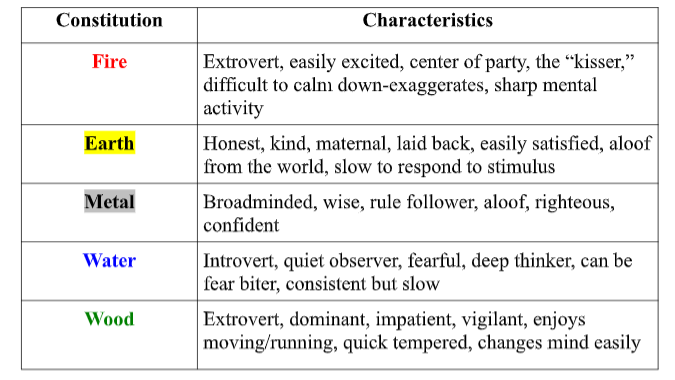
Knowing one’s own constitution, as well as others in their life can help to better understand how and why people behave the way they do under certain situations. Some may see this concept as somewhat controversial or as a version of “profiling.” However, this concept has been used for over thousands of years in various cultures across the world, such as with Traditional Chinese Medicine (the 5 Elements), Hippocratic & Greco-Roman Medicine (the Four Humors), Jungian Psychology, Tibetan Medicine (Sowa Rigpa), Western Biopsychological Models (Sheldon’s Somatotypes). Ayurveda (Indian “study of life”) and indigenous peoples across the globe.

The Wood Element in Traditional Chinese Medicine

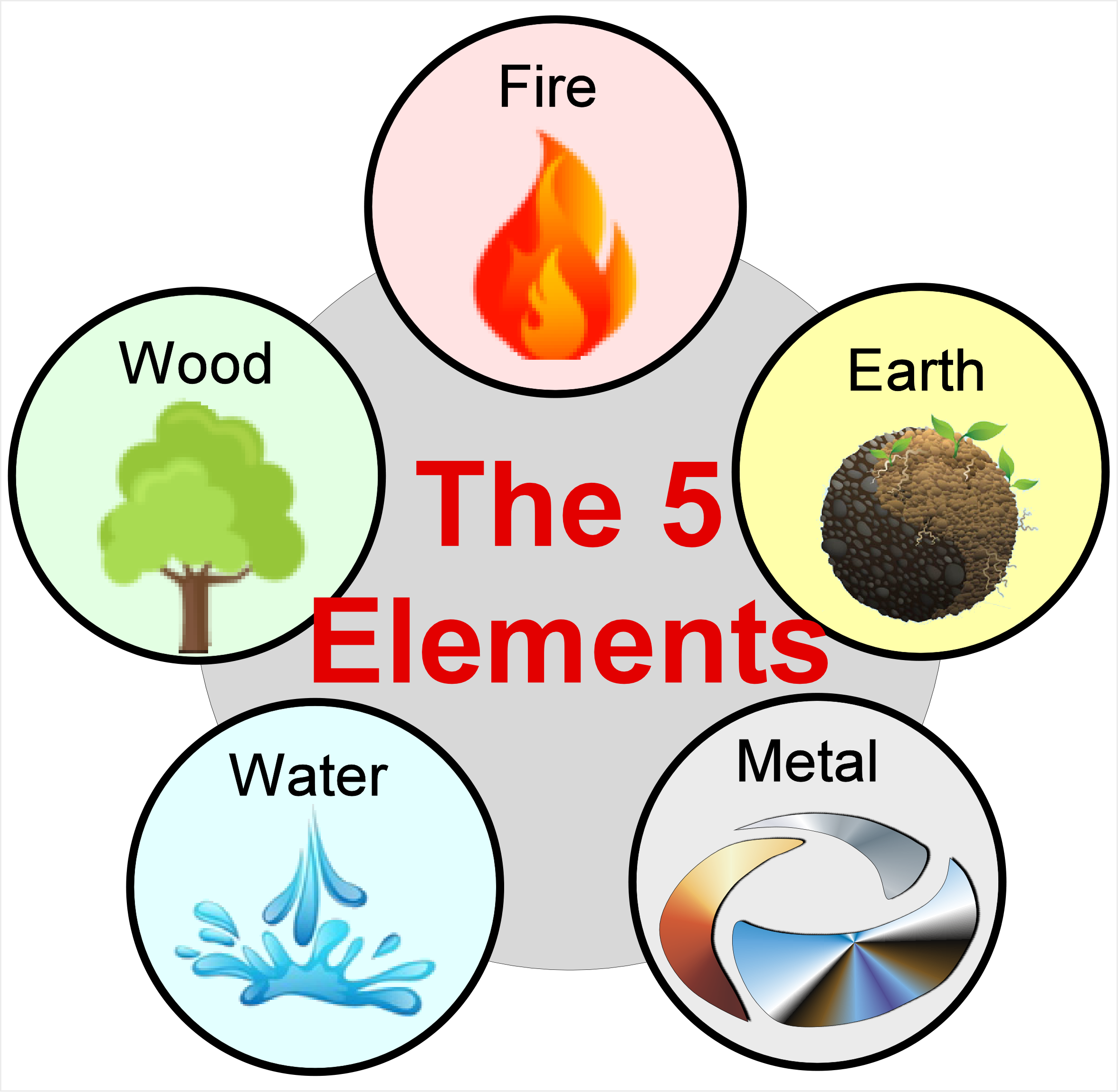
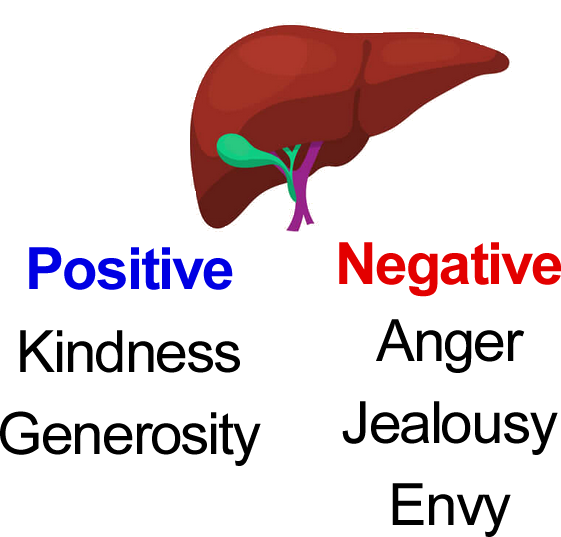
In Traditional Chinese Medicine (TCM), the Wood Element is one of the five fundamental forces in the Five Element Theory, which explains the interconnection between natural phenomena and human life. Each element of Wood, Fire, Earth, Metal, and Water, corresponds to specific seasons of the year, organs, emotions, and physiological processes. Wood, in particular, is linked to the season of spring, the liver and gallbladder, shaping both physical and psychological characteristics in individuals with a “Wood constitution.” The Wood Element is characterized by physical movement, ambition, and outward energy. While Wood types are dynamic and goal-driven, they must cultivate mental and physical flexibility and adequate rest to prevent stress and stagnation.

1. Physical Traits of a Wood Constitution

  • Body Structure: Individuals influenced by the Wood Element typically have a sinewy, muscular build, often appearing strong and tall with an inherent sense of vitality.
  • Strength and Flexibility: They usually possess endurance and adaptability, both physically and mentally, with a natural propensity toward movement and expansion.
  • Common Health Challenges: Wood types may encounter liver and/or gallbladder-related concerns, including digestive disturbances, migraines, muscle and tendon stiffness, and detoxification difficulties. Liver Qi stagnation can also lead to menstrual irregularities or eye discomfort.

2. Mental and Emotional Aspects

  • Core Emotion: The primary emotion linked to Wood is anger. When balanced, Wood individuals express healthy assertiveness, confidence, and determination. However, an imbalance can lead to frustration, irritability or struggles with managing emotions.
  • Personality and Leadership: Wood types are often natural leaders, driven by vision, ambition, and a desire for growth. They excel in planning and organization, where they always seek progress.
  • Decision-Making: They tend to be quite decisive and pioneering, eager to initiate change.
  • Emotional Imbalances: When unbalanced, Wood individuals may become uptight, rigid, impatient, overly perfectionistic, and prone to burnout from excessive effort.

3. Spiritual Dimensions

  • Growth and Transformation: The Wood Element embodies expansion, renewal, and personal evolution. Wood constitution individuals are often goal-oriented and deeply invested in self-improvement.
  • Purpose and Mission: They often possess a deep connection to their life’s purpose, inspired by justice, creativity, or a desire to bring new ideas into the world.
  • Bond with Nature: Reflecting the qualities of trees and plants, Wood types people often feel extremely connected to the natural world, drawing vitality and inspiration from outdoor environments.

4. Maintaining Balance in the Wood Element

To maintain harmony within the Wood Element, it is essential to cultivate their physical, emotional, and spiritual well-being:

  • Physical Care: Regular body movement, stretching, and flexibility exercises help to support the liver and gallbladder. Regular consumption of liver-friendly foods like leafy greens also promotes internal balance.
  • Emotional Regulation: Journaling, meditation, mindfulness, and relaxation techniques can help process emotions and reduce stress. Cultivating adaptability and releasing rigid perfectionism contribute to emotional equilibrium.
  • Spiritual Nourishment: Making time to be present in nature, engaging in continuous learning, and setting personal growth goals can cultivate a sense of fulfillment and alignment.

I teach and offer lectures about holistic health, physical fitness, stress management, human behavior, meditation, phytotherapy (herbs), music for healing, self-massage (acupressure), Daoyin (yoga), qigong, tai chi, and baguazhang.

Please contact me if you, your business, organization, or group, might be interested in hosting me to speak on a wide spectrum of topics relative to better health, fitness, and well-being.

I look forward to further sharing more of my message by partnering with hospitals, wellness centers, VA centers, schools on all levels, businesses, and individuals who see the value in building a stronger nation through building a healthier population.

I also have hundreds of FREE education video classes, lectures, and seminars available on my YouTube channel at:

https://www.youtube.com/c/MindandBodyExercises

Many of my publications can be found on Amazon at:

http://www.Amazon.com/author/jimmoltzan

My holistic health blog is available at:

https://mindandbodyexercises.wordpress.com/

http://www.MindAndBodyExercises.com

Mind and Body Exercises on Google: https://posts.gle/aD47Qo

Jim Moltzan

407-234-0119
Deception in Education and Practice: Why Even Highly Educated Professionals Fall for Misinformation

As someone who has spent over four decades practicing, studying, and teaching martial arts and holistic health, I have witnessed firsthand the gradual erosion of authenticity and deception in traditional practices, particularly in the United States. With a Bachelor of Science in Holistic Health and formal studies in psychology, sociology, PTSD, physiopsychology, religion, philosophy, Eastern thought, and the U.S. healthcare system, I have sought to understand why deception in professional and educational settings is so prevalent.

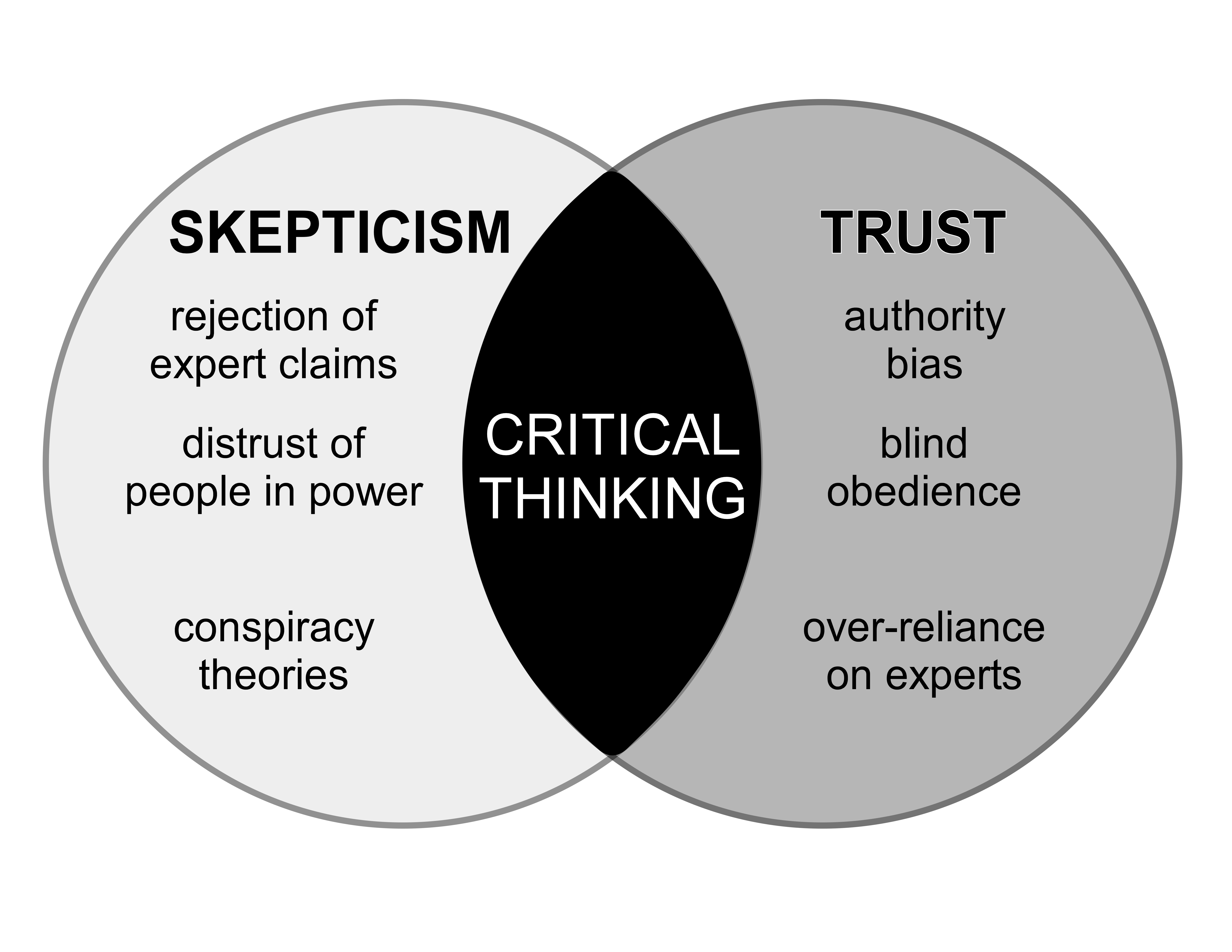
Beyond martial arts, my experience includes 20 years at a high level within a highly insular, strongly hierarchical, and ideologically rigid organization that fostered a deeply immersive and echo-chamber environment. Within this structure, dogmatic teachings were reinforced, and critical inquiry was often discouraged. These insights have given me firsthand exposure to the power of groupthink, social conditioning, and blind trust in authority, leading me to question why even highly educated professionals, those who pride themselves on knowledge and integrity, can fall for deceptive practices, sometimes unknowingly, sometimes willingly.

The answer lies in a mix of psychological phenomena, social conditioning, and systemic complacency, all of which contribute to the uncritical acceptance of misinformation and misrepresented traditions.

How Deception Manifests in Professional Circles

The Bait-and-Switch Model

A classic example of deception is called the “bait-and-switch” model, orthe practice of marketing one thing while delivering something entirely different.

In martial arts, particularly tai chi, many instructors advertise lineage-based training but actually teach a mix of simplified qigong movements that lack the biomechanical structure, martial application, and philosophical depth of true tai chi. This bait-and-switch is not always done with malice, sometimes, these instructors were themselves misled.

The same pattern occurs in healthcare, education, and professional training programs. A wellness coach may be certified in “tai chi” after a weekend workshop that teaches nothing more than generic breathing exercises. A doctor might recommend a therapeutic method without investigating its legitimacy, relying solely on institutional backing.

Why does this happen? Because highly educated individuals are just as susceptible to deception as anyone else, sometimes even more so.

Understanding how misinformation spreads among professionals requires a closer examination of the psychological mechanisms at play. Many assume that education alone is enough to safeguard against deception, but the reality is more complex. The intersection of cognitive biases, institutional structures, and social pressures creates an environment where even well-meaning professionals may unknowingly perpetuate falsehoods.

Psychological Mechanisms That Enable Deception

1. Groupthink and Echo Chambers

Groupthink occurs when individuals prioritize group cohesion over critical thinking. In professional circles, questioning widely accepted practices can be socially and professionally risky. If an institution, hospital, or wellness center endorses a particular method, many professionals will blindly accept it rather than challenge its legitimacy.

Similarly, echo chambers are where people are only exposed to information that reinforces their beliefs, creating an illusion of consensus. In other words, if “everyone” in the field is saying something is true, then it must be, right?

Example: A hospital integrates “tai chi” into patient care, but what they are actually promoting is a set of disconnected qigong exercises. Because multiple institutions endorse the same program, no one questions its authenticity.

2. Compliance and Institutional Authority

Many professionals trust authority figures and institutions over personal investigation. If a method is backed by a well-known organization, it is often assumed to be legitimate. Compliance within hierarchical structures, such as hospitals, universities, or corporate training programs, discourages critical inquiry.

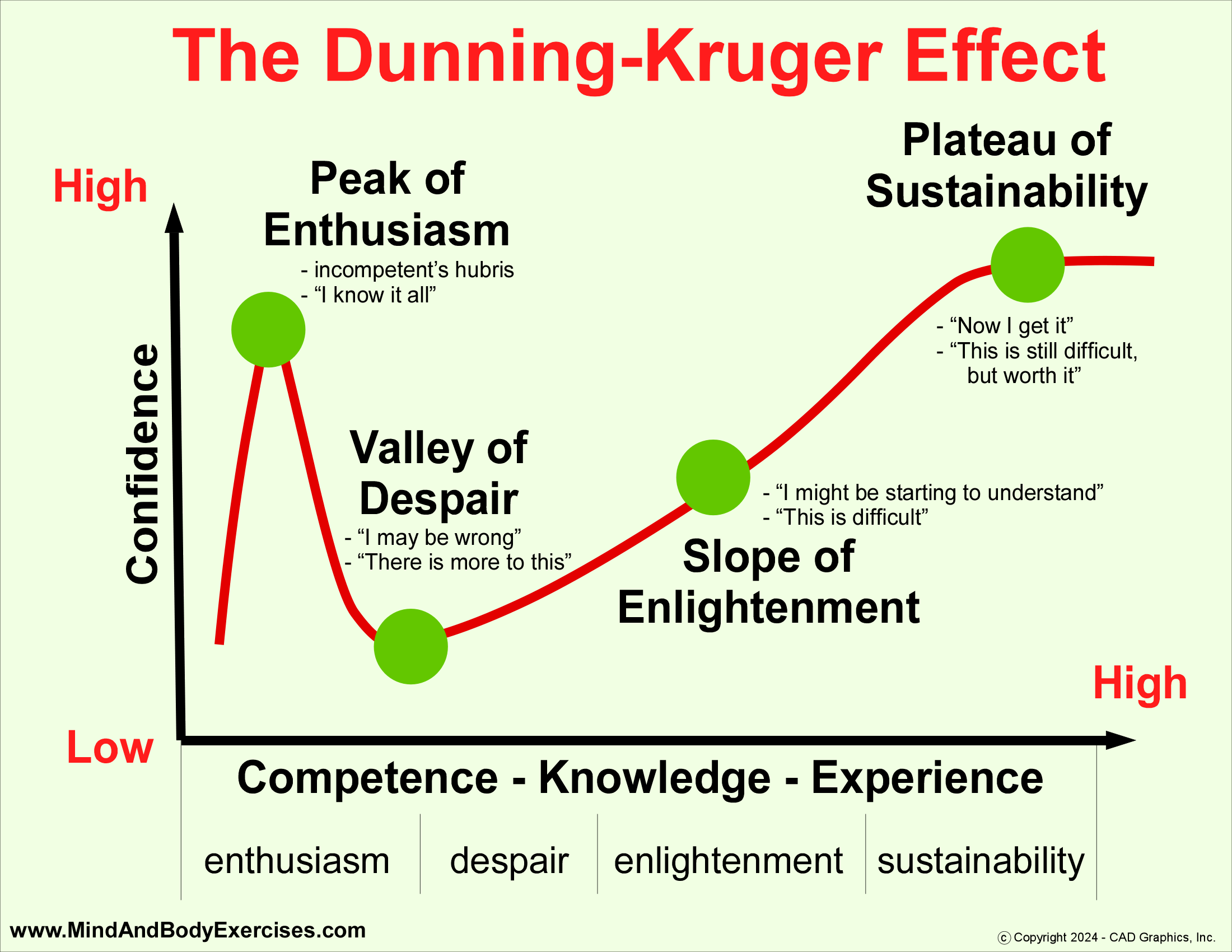
Another crucial factor is the Dunning-Kruger Effect, where individuals with limited knowledge overestimate their competence. This is particularly problematic in fields where professionals receive superficial training in a subject yet assume they have mastered it. A healthcare provider who attends a weekend seminar on tai chi, for example, may believe they fully grasp its principles and applications, despite lacking the years of rigorous training required for true expertise. This misplaced confidence can lead them to misrepresent tai chi, endorse incorrect practices, or dismiss criticisms from those with deeper knowledge.

Example: A university offers a “Tai Chi for Rehabilitation” certification, but the course is taught by individuals with no connection to lineage-based tai chi. Students accept the curriculum as valid because it comes from an academic institution.

3. Cognitive Dissonance and The Need to Justify Investment

Cognitive dissonance occurs when individuals experience psychological discomfort due to conflicting beliefs. Rather than admit they were misled, they will often rationalize their choices.

Example: A doctor who has been teaching “tai chi” to patients later discovers that what they learned has no real connection to tai chi principles. Instead of acknowledging the error, they convince themselves that what they teach is “good enough” because patients seem to benefit from it.

The greater the investment, whether in time, money, or personal reputation, the harder it becomes to admit fault.

4. Loss of Agency and The Illusion of Knowledge

Loss of agency happens when people rely too much on external validation rather than personal research. Many professionals believe that because they are educated, they are immune to deception, a form of bias of overconfidence.

Example: A physical therapist learns tai chi from a single continuing education course and assumes they now “know” tai chi. They never think to seek a lineage-based teacher because they believe their credentials alone make them competent.

This illusion of knowledge creates a false sense of expertise, making individuals less likely to seek out authentic sources.

5. The Hawthorne Effect and Operant Conditioning

The Hawthorne Effect refers to people modifying their behavior when they know they are being observed, often leading them to reinforce whatever system they are operating within. When professionals receive positive feedback for their work, they are more likely to continue it, even if it is flawed.

Example: A wellness instructor receives praise and recognition for teaching “tai chi” to seniors. Even if they later realize that what they are teaching lacks real tai chi principles, they continue anyway because the system rewards them for it.

Similarly, operant conditioning reinforces behaviors through rewards (career advancement, financial incentives, social approval), making individuals hesitant to challenge the status quo.

6. Professional Bias and Status Quo Thinking

Many educated professionals believe they are too intelligent to be misled, ironically making them more vulnerable to deception. They assume that because they have degrees or certifications, they are automatically capable of discerning truth from falsehood. This leads to status quo bias where established norms are favored, even when evidence suggests a better alternative.

Example: A medical board endorses a “tai chi” program without verifying its authenticity. Because it is institutionally approved, healthcare professionals continue promoting it even if they suspect it is inaccurate.

The Responsibility of Professionals to Seek Truth

Highly educated individuals, especially those who interact with the public, must be held to a higher standard of due diligence. Their decisions impact patients, students, and clients, and therefore, they have an ethical obligation to verify the accuracy of what they promote.

While many professionals fall for misinformation unintentionally, willful ignorance is not an excuse. In an era where information is readily available, professionals should be expected to:

  • Question the validity of institutional endorsements.
  • Seek primary sources and traditional lineages when applicable.
  • Acknowledge and correct misinformation rather than doubling down on errors.

Failure to do so not only undermine their credibility but also erodes public trust in education, healthcare, and martial arts traditions.

Conclusion: A Call for Intellectual Integrity

Deception in martial arts, healthcare, and other fields is not just an individual issue. It is a systemic problem rooted in cognitive biases, institutional authority, and social conditioning. By understanding the psychological mechanisms behind why professionals fall for misinformation, we can begin to challenge these patterns and restore integrity to our disciplines.

Education should not be about blind acceptance, but rather it should be about critical inquiry, truth-seeking, and personal responsibility. Those who pride themselves on knowledge must be willing to go beyond surface-level expertise and seek the depth that true mastery requires.

I look forward to further sharing more of my message by partnering with hospitals, wellness centers, VA centers, schools on all levels, businesses, and individuals who see the value in building a stronger nation through building a healthier population.

I also have hundreds of FREE education video classes, lectures, and seminars available on my YouTube channel at:

https://www.youtube.com/c/MindandBodyExercises

Many of my publications can be found on Amazon at:

http://www.Amazon.com/author/jimmoltzan

My holistic health blog is available at:

https://mindandbodyexercises.wordpress.com/

http://www.MindAndBodyExercises.com

Mind and Body Exercises on Google: https://posts.gle/aD47Qo

Jim Moltzan

407-234-0119