Meditation for Kids – Plant Good Seeds

I especially like the idea of getting children involved in meditating at a young age. Teaching kids how to manage their own stress and well-being, is like planting good seeds with the intent of a giving them tools for a better future for them and everyone around them.

I researched that in China, children do meditate at the different age levels in school. It is also different in different schools. In some elementary schools, kids might meditate every day. In middle school they might twice a week. In some high schools, they might meditate once a week. I did find also, that in a particular primary school in Foshan, China, parents objected to meditation practices in place of nap time at school. The school was basically forced to remove the practice from the school setting. Maybe things in China are more like the US than we care to admit. Regardless, mediation practices have been part of many cultures for thousands of years.

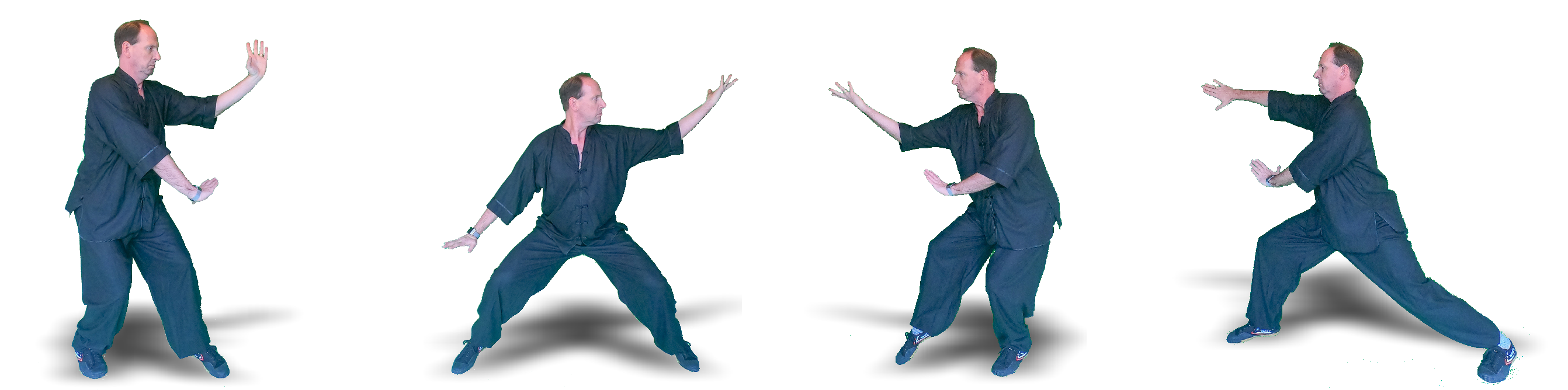
Let us not forget, that in years past, recess and physical education (PE) were part of the school day from kindergarten through elementary school. High school students had PE every school day until graduation. Regular exercise has been known and proven to help manage stress and maintain better health and mental well being. Meditation is a mental exercise that can be accomplished in many ways. Aside from the still of sitting meditation that most people think of, there are also moving mediation methods such as walking, tai chi, yoga and qigong. Gardening can even be a type of mediation as some grade schools get the kids outdoors and get their hands in the dirt.

Remember, unhealthy kids quickly turn into unhealthy adults. The health of our people is directly affecting the safety of our nation. For the sake of our youth and ultimately our country, put PE, meditation of some sort, and health education back into the school system, as a priority and not just a minimal requirement.

References:

https://jeffreyalexandermartin.medium.com/meditation-in-chinese-schools-and-beyond-6c71f18cc01aLinks to an external site.

http://en.people.cn/n/2015/0907/c98649-8946673.html

I write often about topics that affect our health and well-being. Additionally, I teach and offer lecture about qigong, tai chi, baguazhang, and yoga.

For more info, contact Jim Moltzan at info@mindandbodyexercises.com, 407-234-0119 or through my site at http://www.mindandbodyexercises.com

Intro to Transcendental Meditation

The Maharishi Mahesh Yogi (1917-2008) is known to have founded Transcendental Meditation or simply TM, inspired from his teacher and guru Swami Brahmananda Saraswati (who died 1953), and drawing upon the ancient Indian traditions of Vedic. He introduced the technique to the United States in the 1960s, where the British rock band the Beatles and other celebrities embraced the teachings adding to its popularity.

Maharishi Mahesh Yogi

Transcendental Meditation is a meditation method that attempts to avoid distracting thoughts while promoting a state of relaxed awareness. Somewhat different from other types of meditation methods, TM teaches practitioners to stay focused on a mantra which is a specific phrase. The mantra is then repeated internally within one’s inner dialogue of their thoughts.  Transcendental Meditation came to be taught and practiced as a non-spiritual nor religious path toward mental, emotional, and physical well-being.

The goal when meditating, is to “transcend” the regular thought process. It is replaced by a state of pure consciousness. In this state, the practitioner seeks to achieve perfect stillness, rest, order, stability, completely without of mental boundaries. This state of being is thought to lead to increased contentment, creativity and vitality.

From a physiological perspective, Transcendental Meditation can relax and revitalize the body and the mind by engaging the parasympathetic nervous system where stress and anxiety are reduced, blood pressure (hypertension) decreases, and changing the blood chemistry to help relieve depression.

A typical TM practice session might follow this progression:

  • Sit in a comfortable chair keeping the feet on the ground and hands in your lap. Legs and arms are uncrossed.
    • Eyes are closed while taking a few deep breaths in order to relax the body.
    • Repeat a mantra in your mind.
    • When you recognize you’re having a thought, return to the mantra.
    • After about 20 minutes, begin to move the fingers and toes, easing yourself back to the world.
    • Open your eyes.
    • Sit and relax for a few more minutes until ready to continue with your day.

References:

https://themindfool.com/transcendental-meditation-and-its-various-benefits/

Edlin, G. PhD, Golanty, E. Phd (2020), Health & Wellness, 13th edition, Jones & Bartlett Learning

https://www.webmd.com/balance/guide/transcendental-meditation-benefits-technique

How to Practice Transcendental Meditation – DOPE YOGI

__________

I write often about topics that affect our health and well-being. Additionally, I teach and offer lecture about qigong, tai chi, baguazhang, and yoga.

For more info, contact Jim Moltzan at info@mindandbodyexercises.com, 407-234-0119 or through my site at http://www.mindandbodyexercises.com

Practice a Body Scan Meditation

Top 10 Benefits of Meditation:

  • Reduced Stress.
  • Emotional Balance.
  • Increased Focus.
  • Reduced Pain.
  • Reduced Anxiety.
  • Increased Creativity.
  • Reduced Depression.
  • Increased Memory

Carve out time in your schedule to practice a 15-minute body scan meditation practice. You will thank yourself afterwards. Set an alarm for 15 minutes or longer if you care to. As the wise old saying states “if you don’t have time to meditate for an hour everyday, you should meditate for two hours”. We can make time to do the things we prioritize if we care to do so.

Lay flat on a couch or flat comfortable surface allowing yourself to go through a progression from physical awareness to mental realization, and then to an emotional release to become present in the moment. Become aware of your body becoming a bit heavier as you put your focus into your body instead of everything outside of your physical being. From here focus on your breathing becoming deeper and longer with pauses between each inhale and exhale.

Start at your head and work your way towards your feet. This allows you to release muscular tension as you move downwards ending in your toes and then out and away from your body. Become aware of the tension in your eyelids, eyebrows, jaw, and lips allowing you to relax these same areas by first tensing and then releasing the muscles.

Feel the tension in your upper back, and move your neck and shoulders a little side to side, and up and down to feel the contrast between tension and relaxation of these areas. Stressful emotions of anxiety or frustration develop in your neck and shoulders. Once you direct your focus on these muscle areas, you may be able to engage them with your thoughts to relax them and the surrounding muscle areas.

Work your way down through your torso, letting your skin and muscles hang and sink into the couch beneath you. Your hip bones (pelvis) sink into your glutes. Once you are comfortable with the physical awareness of your body, move on to becoming aware of your senses and what is occurring in your immediate environment. Your fingertips and toe tips may tingle when you focus more so on your breathing, all while relaxing of muscular tension throughout your whole body.

When your alarm goes off, open your eyes slowly and re-enter into seeing what is around you. The rest of your body may be more relaxed and comfortable, while feeling calm and refreshed thereafter. The room may appear slightly brighter and sharper. You usually will feel better during and after these practices. Sensations of feeling more refreshed, more calm, more aware, and even more energetic after each session. This session allowed you to “reset” your tension in your body, while releasing mental stress. When your body is relaxed, your emotions become neutral or calm once again.

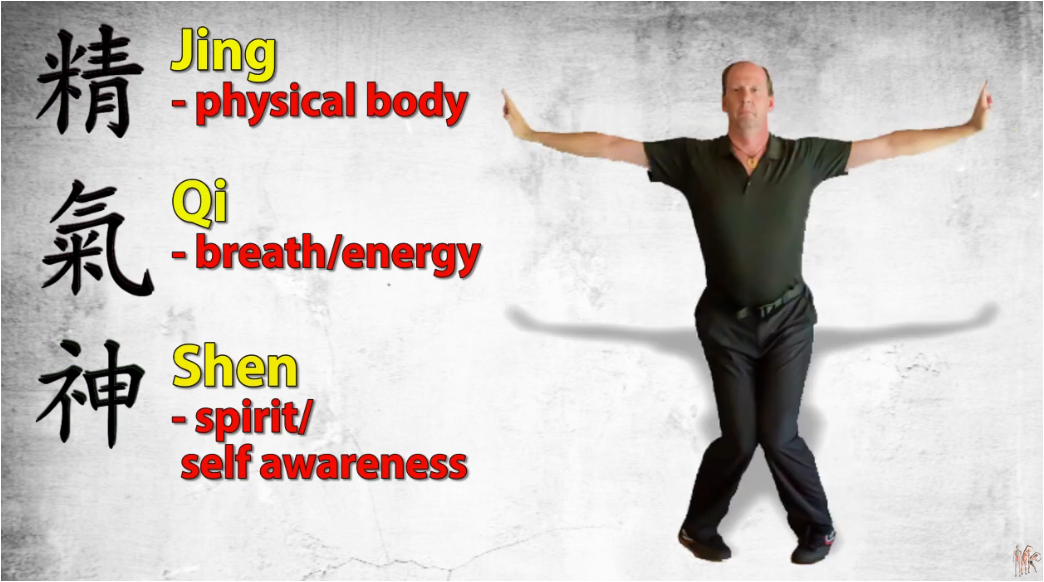
These practice sessions may become priceless for some people. With these methods, you can have control over your well-being on the levels of physical (body), mental (mind) and emotional (self-awareness). Often, I see people who are constantly seeking the goals of achieving pleasure, peacefulness, joy, love, compassion, ecstasy, and bliss but not being aware that we ourselves are in control of gaining and maintaining these aspects of our lives.

________

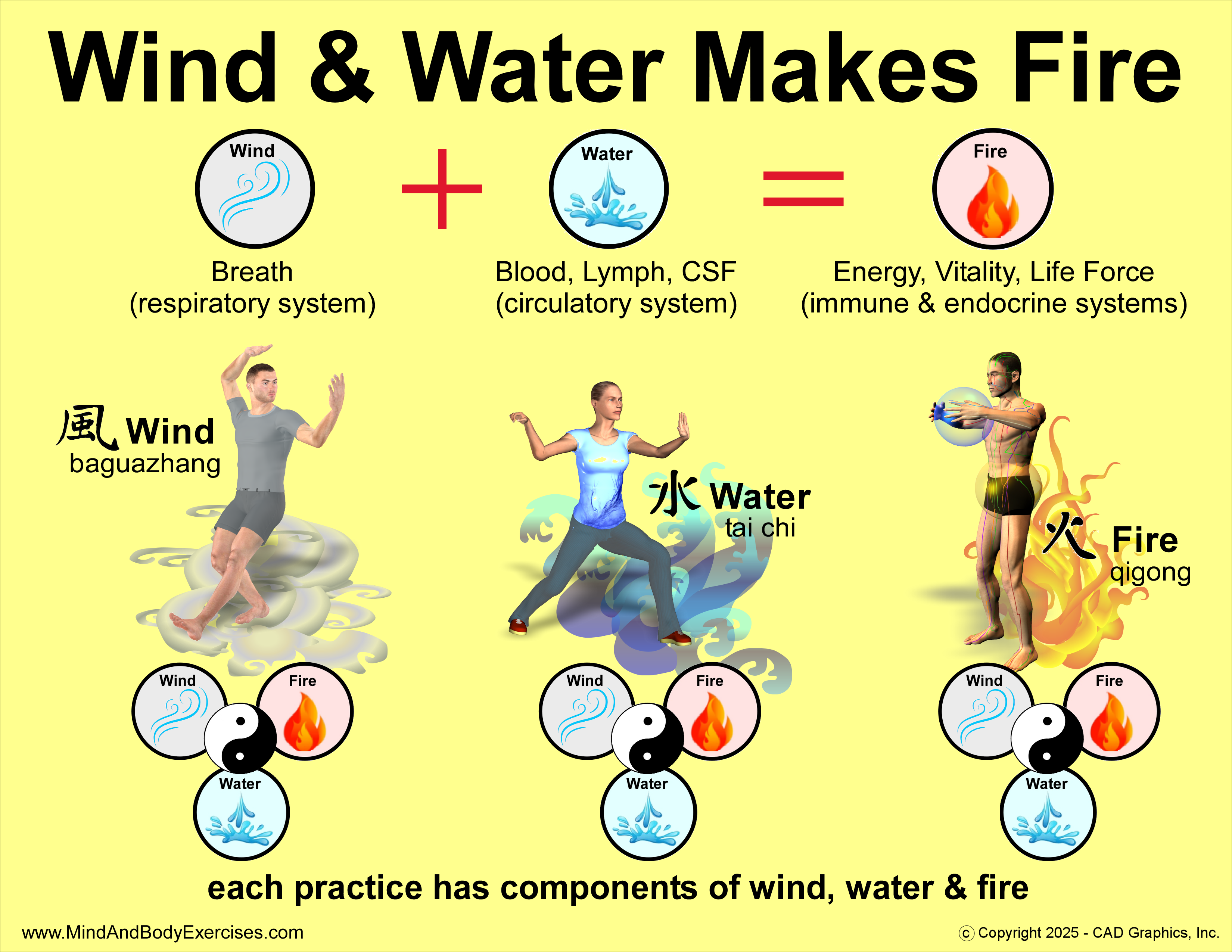
Qigong, tai chi, baguazhang, and yoga are not the only methods that can be used within this formula but have proven the test of time as methods to cultivate harmony of the mind, body and spirit. These exercise practices offer a wide spectrum of physical wellness benefits, stress relief as well as means of self-awareness.  Not all teachers nor students practice these for the same goals.

For more info, contact Jim Moltzan at info@mindandbodyexercises.com, 407-234-0119 or through my site at http://www.mindandbodyexercises.com