Ayurveda and Traditional Chinese Medicine (TCM) are probably the two oldest systems of healthcare practiced throughout the world. Ayurveda has its origins in the Hindu religion within India from 5000 years ago. Traditional Chinese Medicine also has origins from thousands of years ago (475–221 BC) but in China. Both systems have been practiced widely throughout the world, with seemingly very little interest in the US when compared to Western allopathic or biomedicine practices. However, TCM has seemed to have gained more popularity in recent years in the US, maybe starting when President Nixon visited China back 1972.
Ayurveda and TCM philosophies believe that all things alive or not, are interconnected and have relationships on various levels with one another. When these relationships become out of balance disease can occur.
Ayurveda is based upon the 5 fundamental elements of space, air, fire, water and earth. Both of these systems use this understanding of the elements as a way to diagnose and treat disease and illness. Ayurveda uses the physical and well-being constitutions of vata, piita and kapha. Similarly, TCM has 5 constitutions of wood, fire, earth, metal and water. The human life force or breath is expressed as prana in Ayurveda and as qi in TCM. Both prana or qi flow within the body, are a key component in maintaining balance of the elements and an individual’s health in regard to their mind, body and spirit.
Both systems have components that include herbs, massage, and exercise in order to balance harmony of the mind, body and spirit.
I have and will continue to use TCM treatments and methods to help treat ailments as well as maintain better health and wellness. Less invasive methods as well as more natural ingredients are my main reasons for pursuing TCM methods. I am not opposed to Ayurveda if I had a condition that could be better treated through those methods.
Having a strong background in Korean and Chinese martial arts, which are deeply connected with TCM, I have been exposed to an education that has deep roots in thousands of years in Asian culture, science and practical practice. While some people may look at TCM as an alternative or new age approach to maintaining health, I see a time-proven system that has been practiced by probably millions of people over a very long period of time. When studied and researched thoroughly, I find the methods from TCM of acupuncture, cupping, tuina, qigong, auriculotherapy, herbology and others to make logical sense as to why these options are so beneficial. When looked at from a physiological perspective, I have found the following:
Acupuncture & Auriculotherapy – stimulates the healing response through regulation of the nervous system.
Qigong – regulates the autonomic nervous system through deliberate deep breathing patterns, as well as some styles offering flexibility, strengthening and vestibular balance exercises.
Herbology – helps to manage systemic organ function through naturally occur plants without use of pharmaceuticals.
Be well!
References:
“What is Ayurvedic Medicine?” National Center for Complementary and Alternative Medicine (2007). 30 August 2021.
Diamond, M.D., J. W. (2001). The Clinical Practice of Complementary, Alternative, and Western Medicine [E-book]. CRC Press.
____________
I write often about topics that affect our health and well-being. Additionally, I teach and offer lecture about qigong, tai chi, baguazhang, and yoga.
Acupressure (no needles) and its parent of acupuncture (needles) from Traditional Chinese medicine, has been around for a few thousand years. I have been leaning and practicing acupressure for almost 40 years with great results.
I will be speaking next week at the University Club of Winter Park, about the benefits of this type of self massage. Headaches, low energy, faintness, stress, general & specific pain, and restless leg syndrome are conditions that I will teach specific techniques to better manage.
If interested in attending this FREE event, please contact me at 407-234-0119 for more details. Class is limited so let me know as soon as possible if serious about joining us for an hour of learning.
University Park Club
841 N. Park Avenue, WP
2-3pm, January 13th
Be well, get healthy, be wise.
I am currently available for health and wellness lectures and classes for group, & private instruction in the Orlando, Florida area. Mind and Body Exercises on Google: https://posts.gle/aD47Qo
Ancient Chinese scholars from thousands of years ago, recognized continuous patterns of change and transformation of natural cycles within the world and its environments that we exist in. The simple explanation can be distilled down to that basically everything we know of exists, in a delicate balance where each component affects every other component.
Not as basic, was how these patterns were interpreted using yin-yang (balance & harmony) logic. Later these interpretations were expanded to become somewhat more complex and called The Five Phase Theory (Wu Xing) or the Five Element Theory. The 5 Phase Theory is based on observation, contemplation, and meditation upon these various cycles and their processes, functions, and phenomena of nature and inner relationships with one another.
The theory proclaims that aspects of matter, can be divided into one of five basic elements of wood, fire, earth, metal, and water. Each element contains their own specific characteristics and interrelationships. In modern times, the Five Phase Theory is still used as a tool for grouping substances and structures, as well as a method for studying changes of natural phenomena relative to health and disease.
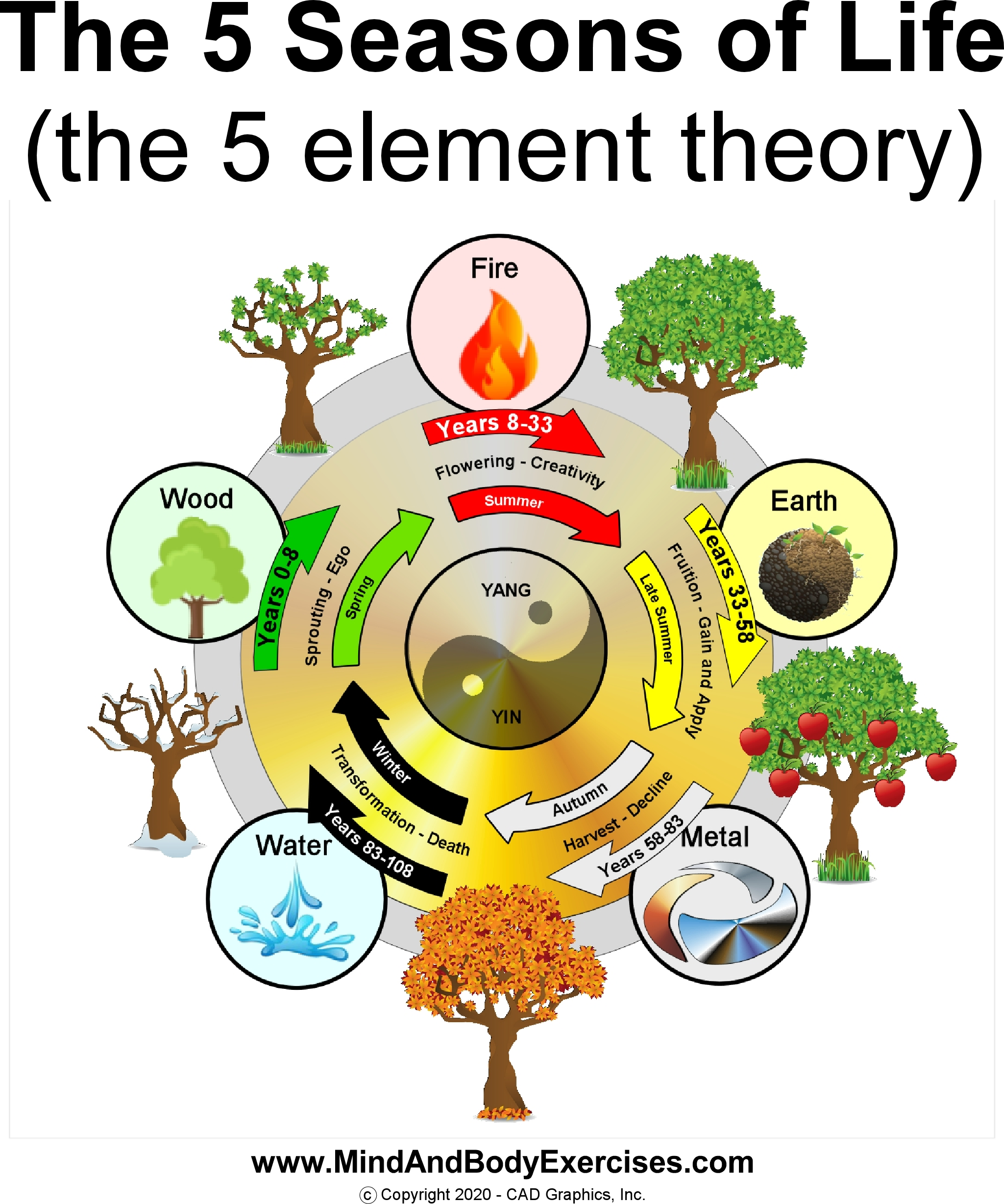
One of the more obvious cycles is that of the change of climatic seasons from one to the next, initiating from the Earth’s yearly revolution around the Sun. Each season has a corresponding element as well as a relative balance of yin and yang. Spring spouts like growing plants (wood), Summer brings warmth (fire), late Summer brings maturation (earth), Fall brings the harvest (metal) while Winter brings transformation of death and rebirth (water). Just as these seasons affect the earth, so is plant and animal life affected.
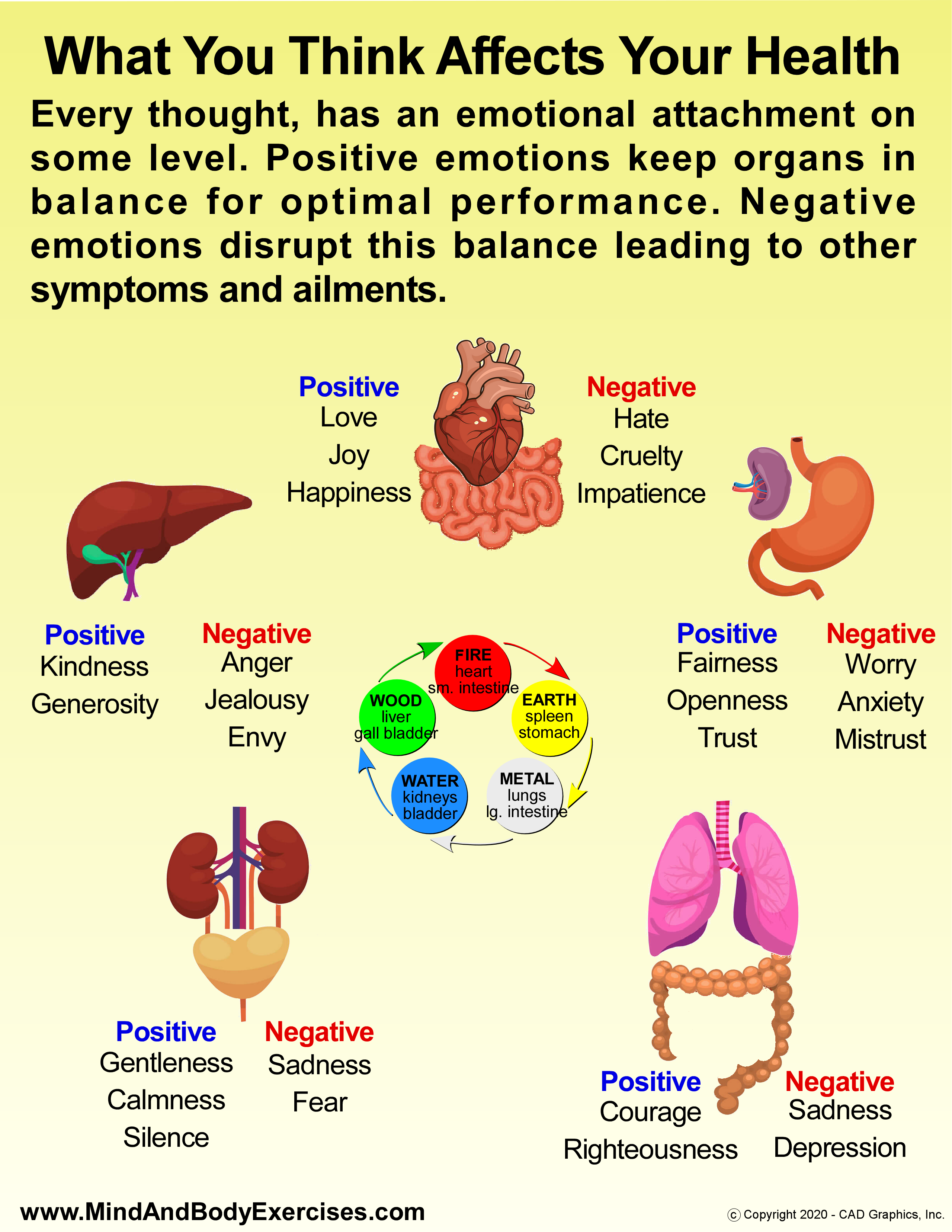
The 5 Phase Theory is a major component of thought within TCM or traditional Chinese medicine. These elements have corresponding relationships within our environment as well as within our own being specifically the internal organs and emotions connected to them.
Most people are looking for some type of balance and harmony within their lives. Often, they have no plan nor method to achieve this other than doing their best on a day-to-day basis to find happiness. The 5 Phase Theory represents ancient wisdom that when studied and applied, can help to find the balance we seek.
I attached a graphic that I use to show the simplicity progressing to the complexity of this concept.
Be well!
Learn how this works and relates to your health and well being.
Ancient Chinese scholars of the time approximately from 1600-1000 BC, recognized continuous patterns of change and transformation. Initially, these patterns were interpreted using yin-yang (balance) logic, but later these interpretations were expanded to the theory called The Five Elements. The 5 Elements Theory is based on observation, contemplation and meditation of the natural world and the environment we exist within.
The Five Elements Theory evolved from the observation of various processes, functions, and phenomena of nature. The theory proclaims that aspects of matter, can be divided into one of five basic elements of wood, fire, earth, metal and water. Each element contains their own specific characteristics and interrelationships. In modern times, the five elements theory is still used as a tool for grouping substances, as well as a method for studying changes of natural phenomena.
The 5 Elements Theory is a major component of thought within TCM or traditional Chinese medicine. These elements have corresponding relationships within our environment as well as within our own being.
The Six Levels or Six Stages is a theory that is thought to have originated from Shang Han Lun (translated into “On Cold Damage”) by Zhang Zhongjing in 220 CE or about 1800 years ago.
The six stages are: Tai Yang or Greater Yang Yang Ming or Bright Yang Shao Yang or Lesser Yang Tai Yin or Greater Yin Shao Yin or Lesser Yin Jue Yin or Terminal Yin
The names of the syndrome levels are the same as the names of the head and foot pairs of acupuncture meridians. The order is roughly the order that a disease takes as an individual goes from healthy to death. Some disease levels are skipped or the order changed depending upon the person and their individual conditions.
Traditional Chinese Medicine has many relationships to Tai Chi, qigong and other martial as well as wellness practices. I have learned, studied, practiced and teach literally hundreds of various low-impact exercises that can build stronger bones, muscles and joints. Private, small or group instruction.
Is Modern Western Medicine any better than Traditional Chinese Medicine?
By James Moltzan
People in general, do not like change. Allopathic medicine also known as traditional medicine or Western medicine has been firmly ingrained in American culture for only about 200 years. It is what most people in the United States have grown up with and have come to understand as science-based healthcare. Traditional Chinese Medicine or TCM has been in existence for thousands of years. Why is it then, often considered as a new “alternative medicine” within the United States?
Western medicine is actually at least a few hundred years old based upon using science to treat a person’s individual symptoms. This includes the use of technology, pharmaceuticals, and scientific data to treat diseases and illnesses. If a person has headaches, Western medicine addresses the symptoms of pain in the forehead and treats this by relieving the pain, possibly through a chemical that reduces inflammation throughout the body. Traditional Chinese medicine would look at headaches as an imbalance and look for the root cause of possibly stress that could be relieved with herbal teas, massage to the forehead and neck muscles or deep breathing qigong exercises to relax muscle tension.
TCM has over 3000 years of maturity from scholars observing naturally occurring patterns or cycles within the earth, and consequently within the human body. TCM is based upon treating the body as a whole by trying to balance all of the systems within the body and mind together. For example, we adjust our clothing throughout the year to adjust with the seasons being hot, warm, or cold. TCM suggests that the foods we eat should also be adjusted per the seasons of the year similarly. This could be the reason why we like a cool and refreshing drink during steamy hot days and a foamy hot chocolate or warming tea during the winter months. TCM goes ways beyond food consumption for the seasons to include what type of herbs, medicines, exercises, and even what emotions are affected by the cycles of the year.
In Western medicine each internal organ is independent and is treated separately. Each organ has a specific function unique to itself that may or may not affect other organs. The stomach has no direct connection to the spleen; the heart has no special relationship to the small intestines beyond providing blood flow. Our emotions of worry, fear, angry, joy and grief are not usually considered for affecting the functions of the organs other than stress affecting the heart more so than the other organs.
TCM views the lungs and large intestine, stomach and spleen, kidneys and bladder, liver and gall bladder, heart and small intestine as organ pairings that need to be in balance. This balance is slightly similar to Western medicine’s homeostasis or ability for the body to maintain a stable internal environment. When one organ is out of balance, this can cause the others one by one to all fall out of balance. Each organ relates to one or more emotions. Excessive worrying is thought to affect the functioning of the stomach. Fear is thought to affect the bladder.
Western medicine is based upon recognizing symptoms of an illness, usually relying upon questioning and then technology to confirm a patient’s condition. Methods include x-rays, test instrumentation, biopsies (a surgical procedure), blood and fluid tests. Instrumentation that tests certain organ functions are not always reliable. Such as an electrocardiogram (ECG or EKG) only detecting heartbeat rhythm but not heartbeat strength which also can cause severe heart problems.1 Western medicine diagnosis can sometimes be considered invasive by involving the instruments or other objects into the body or body cavities for inspection. However, these methods definitely can offer insights to internal conditions unseen on the surface.
There are four main TCM diagnostic methods2:
Inspection – to observe visible signs and external conditions of a patient which can include vitality, color, appearance as well as secretions, and excretions.
Auscultation and olfaction – utilizing the listening and smelling to gather information about a patient’s voice, breathing, coughing, and odor.
Interrogation – to ask various questions about patients’ family history, major complaints, living states, diets, sleeping habits, and such like these physical conditions
Palpation (pulse examination) – Palpation examines a patient’s pathological changes of internal organs by using three fingers touching three specific positions upon the radial artery pulse at the anterior wrist.
The methods of TCM diagnosis are generally considered to be non-invasive, but also cannot see exactly below the surface of the skin.
If a person has stomach pain, they often are prescribed antacids to counter the discomfort. More severe ailments might warrant more aggressive options. Western medicine relies upon some of the following methods to treat the symptoms of disease and illnesses:
Drugs, medicines, or pharmaceuticals – chemical substances that relieve or mask the symptoms or certain ailments but can also have severe adverse effects if used more than what might be determined as the proper amount or dosage.
Radiation therapy – using beams of intense radiation energy to kill damaged or mutated cells.
Chemotherapy – drug treatment that utilizes powerful chemicals to destroy mutated or cancerous cells in your body.
Surgery – treatment of injuries, diseases, and deformities by physically removing, repairing, or readjusting of specific structures such as organs or tissues, most often involving cutting within the body.
TCM includes the following treatment methods:
Acupuncture – the use of exceptionally fine needles to stimulate energy flow at the surface of the skin.
Moxibustion – the burning of herbs on or near the surface of the body to stimulate energy flow.
Cupping – the use of glass jars to create suction on the surface of the body to draw blood flow to specific acupoints.
Massage – manipulation of the skin, fascia and muscles to break up adhesions within the tissue and enhance healing
Herbal remedies – includes internal teas from natural herbs as well as external liniments and poultices.
Movement and concentration exercises – such as tai chi and qigong (yoga-type breathing exercises)
A TCM doctor might treat a patient’s stomach pain by looking for the root cause and possibly find that an excess of eating spicy foods causing an imbalance in the stomach’s function of processing nutrients. Or possibly the patient has an emotional imbalance due to excessive worrying which affects the stomach function. The treatment might be to stop eating spicy foods and exercises to distract the mind from the constant thoughts of worry.
I do not necessarily believe that either Western medicine or Traditional Chinese medicine is better or worse than the other. However, I do think that there is much to be gained from the integration of the differing methods to achieve what is best for the individual and not a “one size fits all” solution for all of our various health issues. New and alternative might be how Americans perceive TCM because it has been relatively unknown within the United States up until a few decades ago. 3000 years ago, people could not imagine that an x-ray or magnetic resonance imaging (MRI) could allow one to “see” within the human body. Modern day doctors have a hard time believing that traditional Chinese medicine practitioners could perform surgery thousands of years ago. The most famous surgeon in Chinese history is Hua T’o having lived from 141–208AD.3
References:
1 A Wealth of Health by Frieda Mah, L.Ac., International Speaker
Jim Moltzan started his martial arts training at the age of 16, starting with Korean martial arts and evolving into BaguaZhang, Tai Chi, and Qigong. Jim has been training, studying and teaching for almost 40 years effectively educating hundreds of students.
Master Instructor Jim Moltzan has trained with a diverse group of masters and high-level martial arts teachers of many different disciplines. Jim’s specialty is teaching exercises to improve chronic conditions, working with people of all ages, especially senior adults. Offering guidance and instruction, Jim has also worked with Parkinson Disease patients through Florida Hospital. Jim gives regular lectures as requested by AdventHealth (Florida Hospital) and other groups regarding the benefits of Eastern practices.
He is the author and graphic artist of numerous journals, graphic charts and study guides relative to the mind and body connection and how it relates to martial arts, fitness and self-improvement.
Jim continues his training and teaching in the Orlando, Florida area conducting classes, seminars and lectures as his schedule allows. He balances his teachings and businesses with his own personal cultivation and time spent with his wife and two college-age kids.
_______________
Be more active, eat healthier, sleep better, stress less these are the key components to maintaining a strong immune system.
I am currently offering lectures and classes for group, small group & private instruction in Wekiva, Longwood and Winter Park.Mind and Body Exercises on Google: https://posts.gle/aD47Qo








 United Martial Arts Association