Executive Function Development

Understanding Why the Human Prefrontal Cortex Matures Late

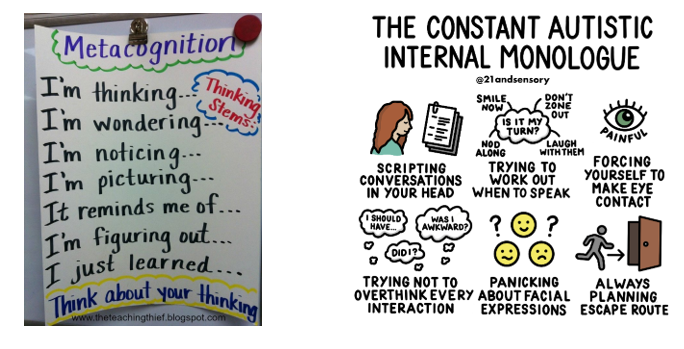
One of the most profound discoveries in neuroscience over the last several decades is that the human brain does not fully mature until well into the mid-twenties. While physical growth often plateaus by late adolescence, cognitive and emotional maturity continue to evolve long afterward. This discrepancy between physical and neural development is primarily due to the slow maturation of the prefrontal cortex, the region responsible for executive functions such as decision-making, impulse control, foresight, and moral reasoning. Understanding this process not only explains the often turbulent behavior of adolescents and young adults but also highlights how life experiences, education, and mindfulness practices can support optimal brain development.

Neurological Foundations of Brain Maturation

During early childhood, the human brain undergoes explosive growth in both neural density and connectivity. However, the adolescent and early adult years are marked by a different kind of neurological transformation, one of refinement rather than expansion. The brain’s gray matter, which is abundant in synaptic connections, peaks in volume during adolescence before undergoing a process called synaptic pruning. This selective elimination of unused connections allows for greater efficiency and specialization within neural networks (Giedd et al., 2012). Simultaneously, myelination, the insulation of neural pathways with fatty sheaths that enhance signal transmission, continues to progress through the frontal lobes well into the mid-twenties (Paus et al., 2008).

The prefrontal cortex, located just behind the forehead, is the last major brain region to complete these processes. It orchestrates what psychologists call executive functions: planning, organizing, prioritizing, regulating emotions, and exercising self-control. The delayed maturation of this region explains why adolescents and even young adults often display risk-taking behavior, heightened emotionality, and difficulty predicting the long-term consequences of their actions (Casey et al., 2008). In a sense, the “hardware” for rational decision-making exists, but the “software” or the refined connections and pathways that support mature judgment, is still under construction.

Emotional Regulation and Risk Behavior

Because the prefrontal cortex matures later than the limbic system (the brain’s emotional center) there is often a developmental mismatch during adolescence. The limbic system, including structures such as the amygdala and nucleus accumbens, becomes highly active and sensitive to reward, novelty, and social approval during the teenage years (Steinberg, 2010). This imbalance leads to emotional intensity and impulsiveness that can overshadow rational thought. Consequently, young people may engage in high-risk behaviors, from reckless driving to substance use, not necessarily because they lack intelligence, but because their cognitive control systems are still evolving.

Hormonal surges during puberty further amplify emotional reactivity, creating a neural environment that prioritizes sensation and social belonging over long-term reasoning (Somerville et al., 2010). While this can lead to errors in judgment, it also fuels exploration, learning, and creativity, all essential components of human development. In this sense, adolescence is not a flaw in design but an adaptive phase that prepares individuals for independence, innovation, and identity formation.

The Role of Experience and Neuroplasticity

The extended development of the prefrontal cortex offers a unique evolutionary advantage: a prolonged window of neuroplasticity. This means that the brain remains malleable and highly responsive to environmental influences throughout the teens and early adulthood. Experiences such as education, social interaction, mentorship, and even adversity all sculpt the brain’s architecture through repeated patterns of thought and behavior (Blakemore & Choudhury, 2006). Positive experiences like supportive relationships, mindfulness training, or structured skill development, strengthen neural circuits associated with resilience, empathy, and foresight.

Conversely, chronic stress, trauma, or exposure to substance abuse during this sensitive period can disrupt prefrontal development and lead to long-term difficulties in emotional regulation and decision-making (Luna et al., 2015). This highlights the importance of nurturing environments, holistic education, and practices that promote self-regulation and body awareness during the formative years of brain development.

Enhancing Prefrontal Development Through Mind-Body Practices

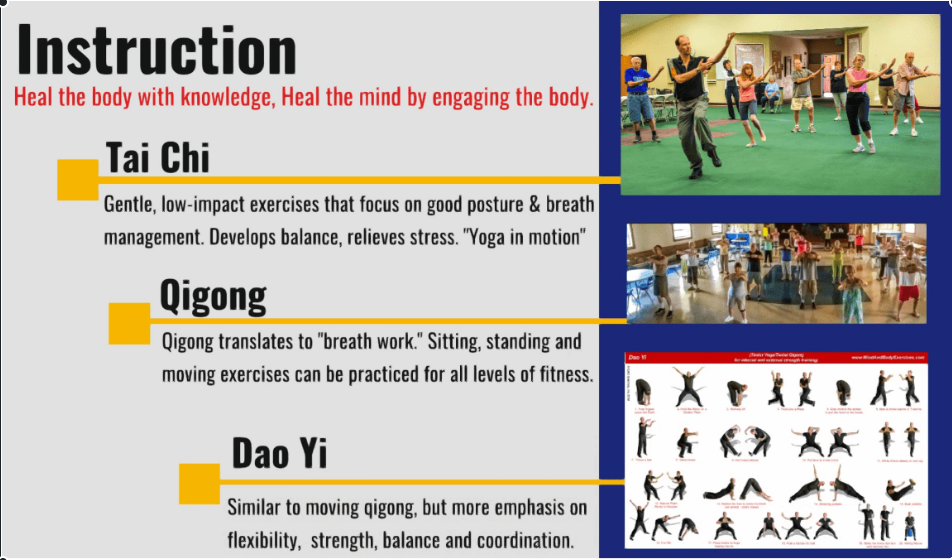
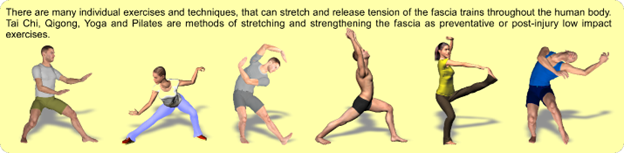
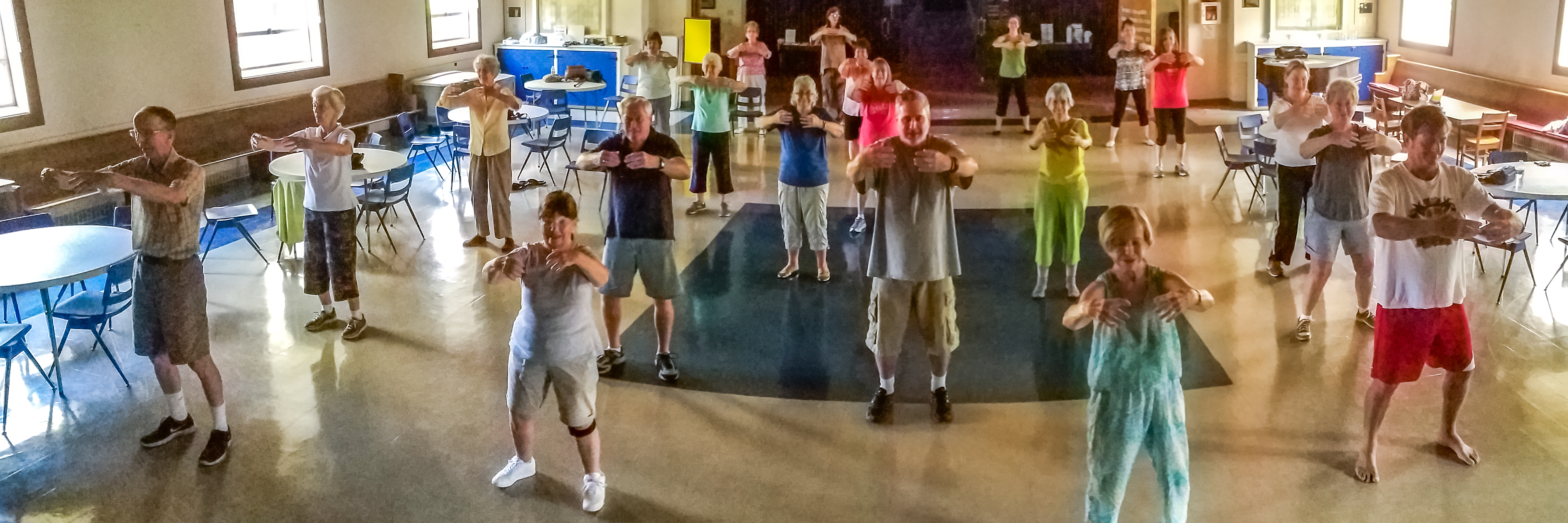
Mind-body disciplines such as yoga, Qigong, Tai Chi, and Bagua Zhang provide valuable pathways to enhance prefrontal development by integrating attention, movement, and emotional regulation. These practices require individuals to cultivate mindfulness, balance, and fine motor control, all of which engage the same neural circuits responsible for executive functioning. Studies have shown that consistent engagement in mindfulness and meditative movement practices can increase cortical thickness and functional connectivity in the prefrontal cortex, leading to improvements in attention, emotional balance, and self-awareness (Tang et al., 2015).

Furthermore, activities that require coordinated, deliberate movement such as martial arts, dance, or even playing a musical instrument, stimulate both hemispheres of the brain and reinforce the mind-body connection. These practices can effectively “train” the prefrontal cortex, helping individuals refine focus, control impulses, and manage stress more effectively. Thus, while biology sets the stage for brain maturation, experience and intentional practice determine the quality of that development.

Implications for Lifelong Growth

Recognizing that the brain continues to mature into the mid-twenties carries significant implications for education, parenting, and social policy. It suggests that late adolescence and early adulthood should not be viewed as the endpoint of development but rather as a critical phase of refinement and responsibility-building. Encouraging environments that promote autonomy, reflection, and self-regulation can help young adults transition more smoothly into mature, balanced individuals.

From a holistic perspective, the developing prefrontal cortex reflects a broader principle of human growth: maturity is not merely a biological milestone but a process of integration of body, mind, and spirit. The capacity for foresight, empathy, and moral reasoning emerges not only through neural wiring but through conscious cultivation. Just as physical training strengthens the body, mindful discipline strengthens the brain, allowing individuals to live with greater purpose, clarity, and wisdom.

References:

Blakemore, S.-J., & Choudhury, S. (2006). Development of the adolescent brain: Implications for executive function and social cognition. Journal of Child Psychology and Psychiatry, 47(3–4), 296–312. https://doi.org/10.1111/j.1469-7610.2006.01611.x

Casey, B. J., Jones, R. M., & Hare, T. A. (2008). The adolescent brain. Annals of the New York Academy of Sciences, 1124(1), 111–126. https://doi.org/10.1196/annals.1440.010

Giedd, J. N., Raznahan, A., Mills, K. L., & Lenroot, R. K. (2012). Review: magnetic resonance imaging of male/female differences in human adolescent brain anatomy. Biology of Sex Differences, 3(1), 19. https://doi.org/10.1186/2042-6410-3-19

Luna, B., Marek, S., Larsen, B., Tervo-Clemmens, B., & Chahal, R. (2015). An integrative model of the maturation of cognitive control. Annual Review of Neuroscience, 38, 151–170. https://doi.org/10.1146/annurev-neuro-071714-034054

Paus, T., Keshavan, M., & Giedd, J. N. (2008). Why do many psychiatric disorders emerge during adolescence? Nature Reviews Neuroscience, 9(12), 947–957. https://doi.org/10.1038/nrn2513

Somerville, L. H., Jones, R. M., & Casey, B. J. (2010). A time of change: Behavioral and neural correlates of adolescent sensitivity to appetitive and aversive environmental cues. Brain and Cognition, 72(1), 124–133. https://doi.org/10.1016/j.bandc.2009.07.003

Steinberg, L. (2010). A dual systems model of adolescent risk-taking. Developmental Psychobiology, 52(3), 216–224. https://doi.org/10.1002/dev.20445

Tang, Y.-Y., Hölzel, B. K., & Posner, M. I. (2015). The neuroscience of mindfulness meditation. Nature Reviews Neuroscience, 16(4), 213–225. https://doi.org/10.1038/nrn3916

“Polishing the Sword with the Soul”

The Tao of Inner Refinement in MuDo Practice

(wikiHow, 2025)

The phrase “polish the sword with the soul” is rooted in Taoist and Mu-Do (武道) traditions and expresses a universal ideal of continuous self-cultivation through disciplined practice and moral awareness. Like a sword that must be repeatedly sharpened to retain its edge, the human being must refine body, mind, and spirit to express the full potential of Dao (道) or The Way. This teaching transcends martial technique; it symbolizes the transformation of the practitioner into a vessel of harmony, wisdom, and integrity.

1. The Sword as the Symbol of Self and Spirit

In both Chinese and Korean philosophical systems, the sword (jian) is not merely a weapon but a metaphor for consciousness itself. The Taoist classic Zhuangzi likens the true swordsman to one whose blade never dulls because his mind is empty of attachment (Watson, 2013). Within Mudo, the sword embodies the shin (mind-heart), which when pure, reflects truth without distortion. The practitioner’s journey is to temper this “inner blade,” learning balance between yang (activity, assertion) and yin (stillness, receptivity), a theme central to traditional Taoist cosmology (Kohn, 2009).

In the Korean context, this teaching resonates with the ideal of Su-shin, meaning “cultivation of the body/self.” Confucius placed Su-shin at the foundation of social and cosmic harmony: “When the self is cultivated, the family is regulated; when the family is regulated, the state is in order” (Great Learning, trans. Legge, 1893). Thus, polishing the sword is both personal and social, in refining oneself to act justly in the world.

2. The Polishing Process: Friction as Transformation

Polishing requires friction, an apt metaphor for life’s challenges, failures, and self-confrontations. In Taoist alchemy, this process is described through the San Bao or “Three Treasures” of jing (essence), qi (energy), and shen (spirit). Through disciplined practice, essence is refined into energy, energy into spirit, and spirit into emptiness (xu) (Chia, 2008). The polishing of the sword thus mirrors Neidan, or internal alchemy: the transformation of raw life energy into luminous awareness.

In Mudo philosophy, this transformation parallels the Way of the Warrior – Scholar- Sage, a triadic path uniting physical discipline, intellectual cultivation, and moral-spiritual awareness. The warrior’s physical training tempers jing; the scholar’s contemplation refines qi; and the sage’s insight elevates shen and ultimately leading to harmony between heaven, earth, and man. This mirrors Jung’s (1968) notion of individuation, where the conscious and unconscious are integrated into a unified Self through continual refinement of opposites.

3. The Soul as the Source of Mastery

To “polish with the soul” means to engage one’s innermost consciousness as the agent of refinement. The soul (hun) represents the luminous, yang aspect of spirit that animates purpose and creativity (Larre & de la Vallée, 1996). Without the engagement of the soul, practice becomes mechanical; a sword swung without intention. When the soul infuses the art, each motion reflects authenticity, compassion, and clarity.

Modern psychological parallels can be found in self-determination theory, where mastery arises from intrinsic motivation aligned with personal values (Ryan & Deci, 2017). The Mudo practitioner’s polishing, therefore, is not merely technical repetition but the alignment of inner motive and outer action, manifesting into a harmony of virtue (de) and expression (gong).

4. Integrative Reflection: The Sword as Mirror of the Way

In the broader context of Taoist cultivation, “polishing the sword with the soul” signifies a return to the Dao through continuous refinement. Each moment of training, contemplation, or service becomes a stroke of the whetstone against the blade of consciousness. The goal is not perfection, but rather clarity to remove the rust of ego and reveal the reflective surface of awareness.

As explored in prior discussions of the yin–yang dynamic, strength and vulnerability, action and stillness, are not opposites but mutually transformative forces (Kaptchuk, 2000). The act of polishing symbolizes this balance in assertive effort (yang) combined with humble introspection (yin). Ultimately, the soul becomes both the craftsman and the mirror, through which the practitioner perceives the infinite in the finite.

To polish the sword with the soul is to practice Mudo as a living Tao, where every strike, breath, and thought becomes an act of refinement. The practitioner becomes both the sword and the polisher: a self-reflective being who tempers strength with compassion, power with humility, and mastery with moral integrity. In this process, technique becomes transcendent, and the path of the warrior, scholar, and sage merges into one continuous motion of the soul returning to its source.

References:

Jung, C. G. (1968). The collected works of C. G. Jung: Vol. 9 (Part 2). Aion: Researches into the phenomenology of the self. Princeton University Press.

Kaptchuk, T. J. (2000). The web that has no weaver: Understanding Chinese medicine. McGraw-Hill.

Kohn, L. (2009). The Taoist experience: An anthology. State University of New York Press. https://archive.org/details/thetaoistexperienceliviakohn

Larre, C., & de la Vallée, E. (1996). The seven emotions: Psychology and health in ancient China. Monkey Press.

Legge, J. (1893). The Chinese classics: Vol. I. The Great Learning. Oxford University Press. https://archive.org/details/chineseclassics41legg/page/n5/mode/2up

Chia. M. (2008). Healing light of the Tao: Foundations of internal alchemy. Universal Tao Publications.

Ryan, R. M., & Deci, E. L. (2017). Self-determination theory: Basic psychological needs in motivation, development, and wellness. The Guilford Press. https://doi.org/10.1521/978.14625/28806

Watson, B. (2013). The complete works of Chuang Tzu. Columbia University Press.

wikiHow. (2025, February 7). How to Take Care of Swords (with Pictures) – wikiHow. wikiHow. https://www.wikihow.com/Take-Care-of-Swords

The Student Becomes the Master, and the Master Becomes the Student

Across human history, the progression from student to master has symbolized growth, transformation, and the unfolding of wisdom. This dynamic relationship is not a simple ascent from ignorance to knowledge but a cyclical process of continual renewal. The journey encompasses humility, discipline, and self-realization, leading to a profound paradox: when the student attains mastery, the master must again become a student. This recursive pattern reflects the principles of Eastern philosophy, particularly Taoist and Confucian thought and aligns with modern educational theories emphasizing lifelong learning and self-reflection.

The Student’s Path Toward Mastery

The journey begins with a recognition of one’s limitations and a willingness to learn. Confucius emphasized humility and perseverance as the foundations of wisdom, observing that “to learn without thinking is labor lost; to think without learning is perilous” (Analects 2:15; Confucius, trans. 1997). In this early stage, the student relies on imitation and structured practice. The discipline of repetition is common to both martial and academic traditions, laying the groundwork for understanding.

According to Dreyfus and Dreyfus’s (1980) model of skill acquisition, learners progress through stages from novice to expert, eventually developing intuition born of experience. In martial arts or philosophy, this phase marks the transition from external technique (jing) to internal essence (shen). As the student refines skill through practice and reflection, understanding becomes embodied knowledge, not merely intellectual comprehension.

Taoist philosophy describes this evolution as harmony between wu wei (effortless action) and ziran (naturalness), where mastery manifests as unselfconscious expression (Laozi, trans. 1963). The master no longer performs from memory but from presence. This state of integration unites form and spirit, leading to authentic mastery.

The Master’s Return to Studenthood

True mastery dissolves the illusion of finality. As Zen teachings remind us, “In the beginner’s mind there are many possibilities, but in the expert’s there are few” (Suzuki, 1970, p. 21). The master who clings to certainty ceases to evolve. Thus, mastery demands a return to humility, with a willingness to once again become the student.

In this reversal, the teacher learns from experience, from new disciplines, and from students themselves. This concept parallels Schön’s (1992) model of reflective practice, wherein professionals continually re-examine their assumptions and adapt to changing circumstances. The act of teaching becomes itself a form of learning; the master refines understanding through articulating, demonstrating, and witnessing the struggles of learners.

Taoism and Zen Buddhism alike emphasize the cyclical nature of wisdom: knowledge transforms into unknowing, fullness returns to emptiness, and mastery flows back into inquiry (Watts, 1957). The wise master recognizes that wisdom is inexhaustible, and therefore, every conclusion opens new questions.

The Yin–Yang of Learning and Teaching

The relationship between student and master reflects the balance of yin and yang. The student, receptive and absorptive, represents yin, the principle of stillness and potential. The master, expressive and guiding, represents yang, the principle of activity and realization. Yet within each is the seed of the other. When yin and yang harmonize, growth continues.

In Confucian tradition, learning (xue) and reflection (si) are inseparable (Confucius, trans. 1997). Similarly, in martial philosophy, the practitioner cycles between discipline and spontaneity, form and formlessness. The process ensures that wisdom remains fluid rather than rigid, evolving with each generation. As the master learns anew from teaching, the lineage of knowledge remains living and dynamic in a continuous circle rather than a vertical hierarchy.

Conclusion

The transformation from student to master and back to student encapsulates the eternal rhythm of growth. Both roles coexist within the same individual, manifesting as phases in an endless cycle of becoming. Mastery is not the termination of learning but its most refined form. A state of perpetual openness and renewal.

As modern educators and ancient sages alike affirm, the essence of wisdom lies in humility. The student becomes the master by integrating knowledge into being. The master becomes the student by recognizing that learning never ends. Thus, the truest path of mastery is circular, infinite, and alive reflecting the natural flow of the Tao itself.

References:

Confucius. (1997). The Analects of Confucius (A. Waley, Trans.). Vintage Classics. https://archive.org/details/theanalectsconfucius

Dreyfus, S., & Dreyfus, H. L. (1980). A Five-Stage model of the mental activities involved in directed skill acquisition. ResearchGate. https://www.researchgate.net/publication/235125013_A_Five-Stage_Model_of_the_Mental_Activities_Involved_in_Directed_Skill_Acquisition

Laozi. (1963). Tao Te Ching (D. C. Lau, Trans.). Penguin Books. https://archive.org/details/taoteching0000laoz/page/n9/mode/2up

Schön, D.A. (1992). The Reflective Practitioner: How Professionals Think in Action (1st ed.). Routledge. https://doi.org/10.4324/9781315237473

Suzuki, S. (1970). Zen mind, beginner’s mind. Weatherhill. https://archive.org/details/ZenMindBeginnersMind-ShunruyuSuzuki

Watts, A. (1957). The way of Zen. Pantheon Books. https://archive.org/details/wayofzen0000alan/page/n5/mode/2up

Drinking from the Well, Denying the Source

The Conscious Exploiter: When Awareness Replaces Gratitude

In human relationships, it is natural to give and to hope that our giving is met with acknowledgment, respect, or at the very least basic appreciation. But what happens when someone receives generously, with full awareness of the giver’s effort or sacrifice, yet responds with silence, indifference, or calculated detachment?

This is the subtle, unsettling behavior of what we may call a conscious exploiter. A person who takes with mindfulness but withholds gratitude by choice.

Unlike the oblivious or socially inept, the conscious exploiter is often intellectually aware and emotionally capable but operates with an internal moral economy that excludes reciprocation. Their mindset resembles a form of calculated opportunism, wherein taking becomes justified through rationalizations, entitlements, or social positioning. As psychologist George Simon explains in In Sheep’s Clothing (2010), manipulative personalities often know what they’re doing but frame their actions to appear innocent or justified, making their ingratitude seem subtle or even acceptable (Simon, 2010).

Gratitude as a Marker of Moral Awareness

Gratitude is more than a polite gesture; it’s a sign of mutual recognition, emotional intelligence, and social maturity. Psychologist Robert Emmons, a leading researcher in gratitude science, describes it as “a relationship-strengthening emotion” that connects giver and receiver in a mutual bond of awareness (Emmons & McCullough, 2003). When someone consciously receives but fails to show appreciation, they break the cycle of relational reciprocity, often creating emotional imbalance and mistrust.

Yet in modern society, especially in competitive environments or hierarchical communities, this behavior can become normalized. When success or advantage is prioritized above virtue, even intelligent and aware individuals may suppress expressions of gratitude to maintain power, status, or detachment.

The Ethical Cost of Calculated Ingratitude

From a philosophical lens, this conduct undermines ethical living. The Stoics, such as Seneca, warned of taking without gratitude as a sign of moral decline, arguing that “he who receives a benefit with gratitude repays the first installment on his debt” (On Benefits, trans. Basore, 1935). In Taoist tradition, the natural flow of energy (or qi) depends on balance and reciprocity, not unilateral absorption. To receive while withholding thanks is to disrupt the harmonious flow that underpins healthy relationships.

Such individuals may outwardly maintain charm, social grace, or even spiritual language, but their inner posture remains self-serving. They are “courteous faces masking consuming hearts,” quietly draining emotional resources from those around them.

Recognizing the Pattern

The conscious exploiter is not always easy to identify. Their ingratitude is not loud; it is quiet, measured, and often cloaked in charisma or deflection. You may notice:

  • They accept help readily but never inquire about your well-being.
  • They benefit from your time, knowledge, or effort, yet leave without acknowledgment.
  • They strategically maintain relationships that serve their needs, but dissolve or ignore those that ask for emotional investment.

Unlike the unaware, these individuals choose not to give back. Not out of inability, but out of intention.

Healing the Pattern

For those affected by such dynamics, healing begins with clear boundaries, conscious awareness, and a return to self-honoring. Recognize the signs not with bitterness, but with clarity. You are not obliged to pour into vessels that give nothing in return. As spiritual teacher Gabor Maté emphasizes, boundaries are not walls, but necessary structures to protect your energy and values (Maté, 2022).

References:

  • Emmons, R. A., & McCullough, M. E. (2003). Counting blessings versus burdens: An experimental investigation of gratitude and subjective well-being in daily life. Journal of Personality and Social Psychology, 84(2), 377–389. https://doi.org/10.1037/0022-3514.84.2.377
  • Maté, G. (2022). The Myth of Normal: Trauma, Illness & Healing in a Toxic Culture. Avery.
  • Seneca L. (1935). On Benefits (trans. Aubrey Stewart & E.H. Warmington, Loeb Classical Library). Harvard University Press.
  • Simon, G. (2010). In Sheep’s Clothing: Understanding and Dealing with Manipulative People. Parkhurst Brothers Publishers.

Unseen Wounds: How Emotional Trauma Shapes Our Health

Despite living in an age of advanced medicine and rising health awareness, chronic illness, emotional suffering, and addiction continue to rise. This contradiction invites us to question not just our treatments but also the mindset and motivations behind them. Increasingly, research and lived experience point to unprocessed pain and trauma as the core drivers of both psychological and physiological illness.

Medicine’s Narrow Focus: Suppressing Symptoms Instead of Healing

Contemporary medical practices often focus on symptom suppression rather than root-cause healing. For example, elevated cortisol, a hormone associated with stress, is frequently managed with pharmaceuticals that reduce inflammation but fail to address the underlying source of distress (Sapolsky, 2004). In cases of chronic illness, especially cancer, mainstream interventions often fall back on drastic methods: cutting (surgery), poisoning (chemotherapy), or burning (radiation), with minimal inquiry into psychosomatic or emotional contributors.

The pharmaceutical industry has also come under scrutiny for prioritizing profit-driven solutions that treat stress biochemically without offering tools for actual emotional or relational healing (Gabor Maté, 2010).

A Society Obsessed with Health Yet Unwell

We live in a paradoxical society: obsessed with fitness, diet, and health optimization, yet disconnected from authentic well-being. Emotional pain is frequently seen as a personal failure, and expressions of vulnerability are often equated with weakness. Shame becomes a hidden driver of behavior, shaping identity through internalized messages like “I’m not enough” or “My needs don’t matter” (Brown, 2012).

The metaphor of the “monster” within, like the transformation of Bruce Banner into the Hulk, illustrates how repressed emotions can erupt when unacknowledged. We often assume that other people’s issues are about us, leading to further internal conflict and disconnection.

Trauma: The Root Cause of Addiction and Illness

Pain, especially unresolved emotional pain, is at the root of many afflictions. According to trauma expert Gabor Maté (2008), addiction is not a disease or choice but a response to deep suffering. Whether through substances, work, food, or achievement, people are often trying to soothe pain they may not even fully understand.

Social disconnection, abandonment, and lack of emotional education perpetuate trauma across generations. Society offers little support or guidance for managing grief, shame, or stress. Many turn to coping mechanisms without the tools to process their trauma, which is especially evident in marginalized communities where chronic stress is linked to disproportionately higher rates of illness (Williams & Mohammed, 2009).

The Cost of Disconnection and the Need for Authenticity

In professional fields like medicine, unresolved trauma is common. Some individuals pursue high-achieving careers not from passion but to compensate for feelings of inadequacy or unlovability. Emotional detachment, often a survival strategy in childhood, becomes normalized in adulthood. This disconnection between mind and body leads to chronic stress, illness, and burnout (Van der Kolk, 2014).

Authentic healing requires honoring two essential human needs: attachment and authenticity. When these needs are in conflict, as they often are in trauma survivors, authenticity is usually sacrificed for the sake of relational survival. Reconnecting with one’s truth, expressing anger constructively, and embracing emotional honesty are key steps toward transformation.

Healing the Generational Wounds

Trauma doesn’t disappear. It is often passed from one generation to the next, not just through genetics but through behavior, belief systems, and emotional suppression. Children absorb the stress of their caregivers. Without awareness and intervention, these patterns replicate over time (Yehuda & Lehrner, 2018).

What may appear as weakness, in hypervigilance, dissociation, emotional volatility, is often a response to longstanding unmet needs. Healing begins by naming these patterns and allowing space for expression and integration.

A Shift Toward Integration and Compassion

The healing path is not just clinical, it is relational, emotional, and spiritual. Psychedelic-assisted therapy, somatic practices, plant medicines like ayahuasca, and trauma-informed psychotherapy are gaining traction because they center empathy, connection, and emotional truth (Carhart-Harris & Goodwin, 2017).

As we reevaluate addiction, trauma, and illness through this lens, we begin to see that these challenges are not signs of brokenness. Rather, they are indicators of what needs acknowledgment, healing, and reintegration. Addiction, far from being a moral failure or inherited defect, can be seen as a solution to an emotional problem, a cry for help that must be understood before it can be addressed.

References

Brown, B. (2012). DARING GREATLY. In GOTHAM BOOKS. GOTHAM BOOKS. https://site.ieee.org/sb-nhce/files/2021/06/Brene-brown-book1.pdf

Carhart-Harris, R. L., & Goodwin, G. M. (2017). The therapeutic potential of psychedelic drugs: Past, present, and future. Neuropsychopharmacology, 42(11), 2105–2113. https://doi.org/10.1038/npp.2017.84

Maté, G. (2008). In the realm of hungry ghosts: Close encounters with addiction. Knopf Canada. https://drgabormate.com/book/in-the-realm-of-hungry-ghosts/

Maté, G. (2010). When the body says no: The cost of hidden stress. Wiley. When the Body Says No – Dr. Gabor Maté

Sapolsky, R. (2004). Why Zebras don’t get Ulcers: The acclaimed Guide to Stress, Stress-Related Diseases, and Coping. ResearchGate. https://www.researchgate.net/publication/272161275_Why_Zebras_Don’t_Get_Ulcers_The_Acclaimed_Guide_to_Stress_Stress-Related_Diseases_and_Coping

Van der Kolk, B. (2014). The body keeps the score: Brain, mind, and body in the healing of trauma. Viking. The body keeps the score: Brain, mind, and body in the healing of trauma.

Williams, D. R., & Mohammed, S. A. (2009). Discrimination and racial disparities in health: Evidence and needed research. Journal of Behavioral Medicine, 32(1), 20–47. https://doi.org/10.1007/s10865-008-9185-0

Yehuda, R., & Lehrner, A. (2018). Intergenerational transmission of trauma effects: Putative role of epigenetic mechanisms. World Psychiatry, 17(3), 243–257. https://doi.org/10.1002/wps.20568