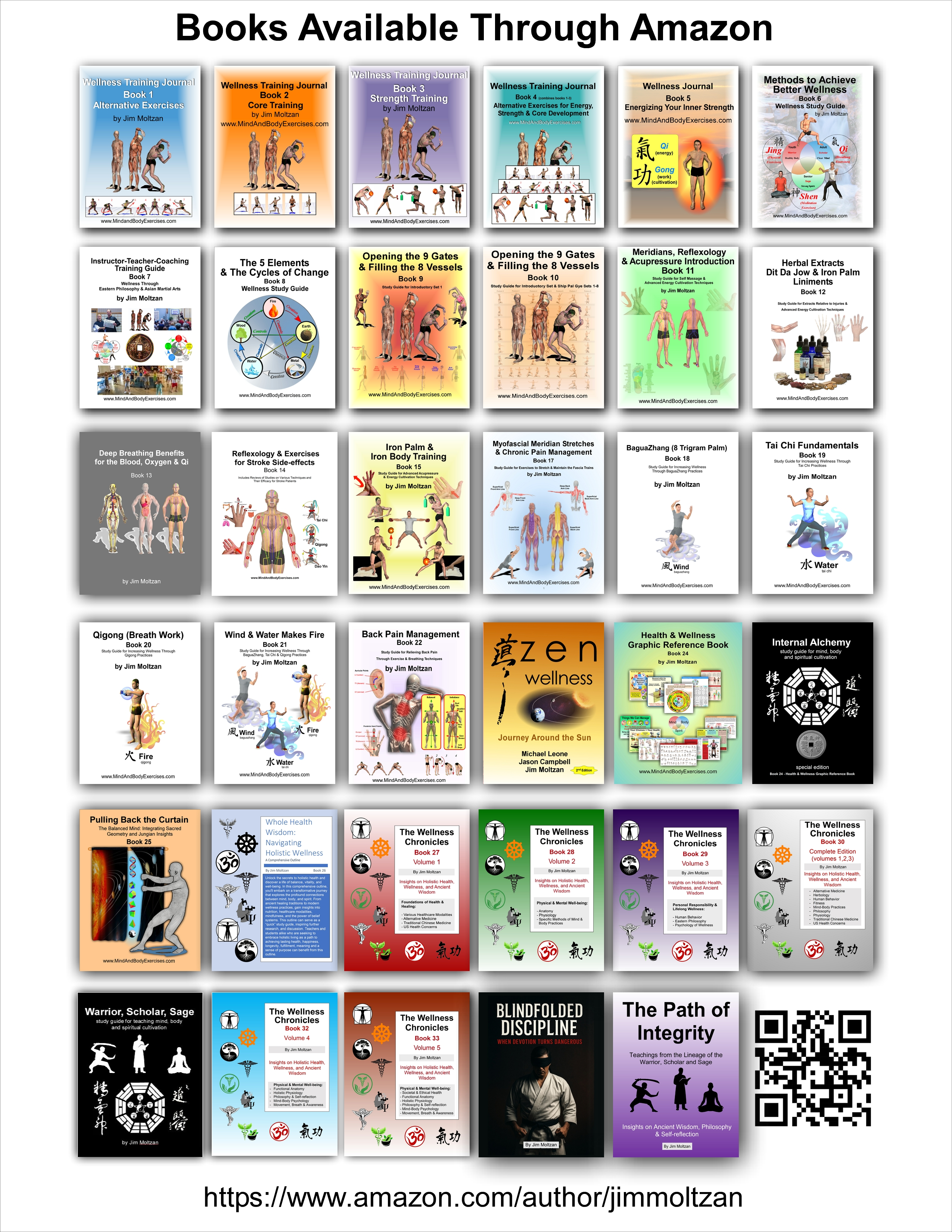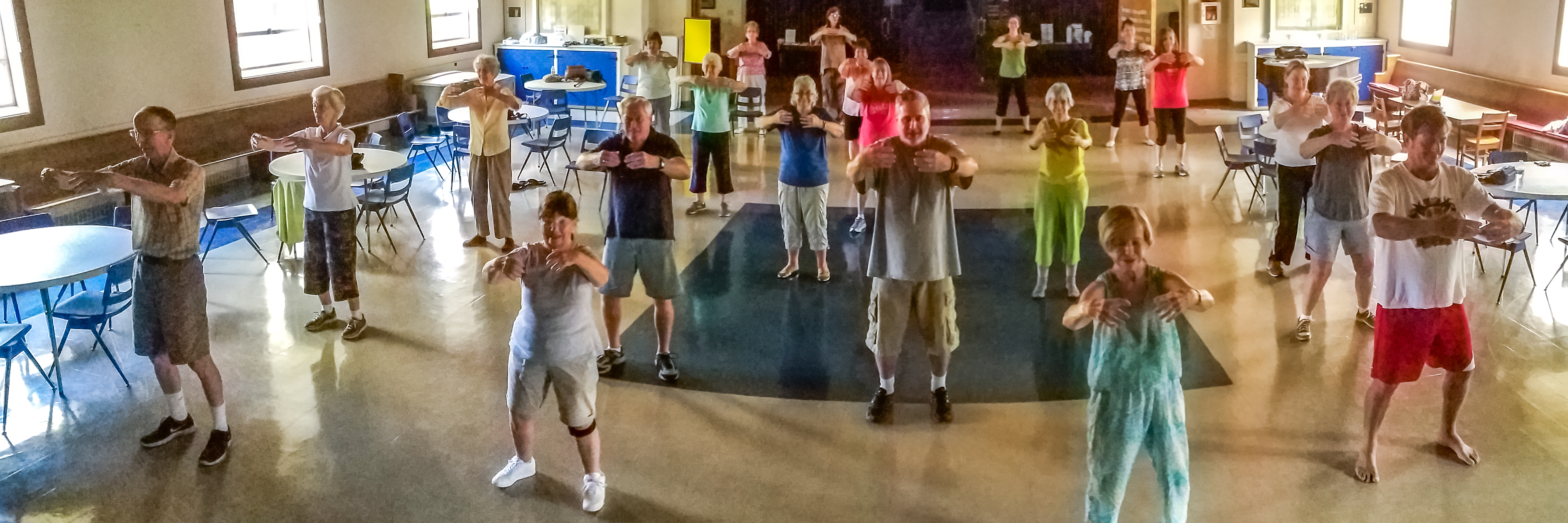
In my book, Spiritual Enlightenment Across Traditions: Teachings from the Lineage of the Warrior, Scholar and Sage, I share the insights I’ve gathered over more than four decades of walking a path that weaves together holistic health, martial arts, and spiritual philosophy. This work is both deeply personal and broadly comparative, a look at how different cultures and traditions have understood and lived the experience we call “enlightenment.”
Why I Wrote This Book
I’ve met many seekers, teachers, and wanderers on this road. I’ve seen genuine awakening and I’ve also seen premature or false claims of it. I wanted to write something that cuts through the noise, honoring the diversity of spiritual traditions while pointing to the shared essence they all reflect: a transformation beyond ego, a liberation from suffering, and a deepening of compassion.
What Enlightenment Means to Me
For me, enlightenment is not an abstract ideal. It is an intimate shift in how we see and engage with life. A moment when the boundaries of the self dissolve, and we know, not as an idea but as a direct experience, that we are inseparable from the whole. Buddhists call it emptiness; Christians call it union with God; Sufis call it the annihilation of self in the Divine; Hindus call it self-realization. These words may differ, but the lived reality they point to is strikingly similar.
Traveling Through Many Traditions
In this book, I explore enlightenment as it’s understood in:
Buddhism — from the discipline of Theravāda to the spontaneous recognition of Dzogchen to achieve nirvana.
Hinduism — devotion, self-inquiry, and the pursuit of liberation (moksha).
Christianity — theosis, spiritual marriage, and the mystics’ union with God.
Sufism — the journey through fanā’ into baqā’, dying to the ego and living in the Divine.
Judaism and other mystical traditions — where awakening is as much about ethical living as it is about inner vision.
I also reflect on contemporary teachers, such as Ramana Maharshi, Jiddu Krishnamurti, Eckhart Tolle, who frame enlightenment in ways that make sense in today’s secular, globalized world.
The Question of Authenticity
Over the years, I’ve learned that authentic awakening requires more than self-claim. In many traditions, enlightenment is confirmed through lineage, acknowledged by respected teachers, and recognized by a community, not only for mystical insight but for how a person lives. Humility, compassion, and ethical conduct are the truest signs. Without them, even the most dazzling “spiritual experiences” can be little more than ego in disguise.
Enlightenment in Daily Life
One of the most important lessons I’ve learned is that enlightenment isn’t about escaping the world. It’s about engaging with it more fully. Zen calls it “returning to the marketplace.” Hinduism calls it lokasangraha or working for the welfare of the world. In my own life, this has meant teaching, serving, and trying to embody what I have learned, not just in meditation halls, but in everyday interactions.
A Unique Practice: Chamsa Meditation
In my exploration, I also share Chamsa meditation, a Korean-Taoist practice that blends Taoist inner alchemy, Seon Buddhism, and Korean shamanic elements. It’s a stage-based method of self-inquiry that dissolves identity and returns awareness to its original, formless nature. To me, it’s a living example of how traditions can blend to create powerful paths to awakening.
Awakening as a Lifelong Journey
Some people think enlightenment is a single, dramatic moment. My experience and the testimony of many traditions says otherwise. Awakening deepens over time. Insight grows. Compassion expands. And presence becomes more natural. Even science is beginning to confirm this: neuroscience now observes brain changes in long-term meditators, hinting at a bridge between spiritual experience and measurable transformation.
An Invitation to Seekers
I wrote this book to serve as both a map and a mirror. It offers a map of the many authentic paths, and a mirror to help you see where you are on your own. My advice is simple:
Commit to your practice.
Seek authentic teachers and communities.
Be patient, as real transformation takes time.
Live your insights in the world, not just in private.
In the end, enlightenment is not about becoming something extraordinary. It’s about becoming fully human, being present, compassionate, and free in this very life, wherever you are. I believe it’s possible for anyone who walks the path with sincerity, discipline, and an open heart.
Many people believe that a person’s brain only ever exercises 10% of its capacity.
The Potential for Extraordinary Human Abilities
For over a century, a persistent misconception has claimed that most people use only 3–10% of their brain capacity, while exceptional individuals, such as Albert Einstein supposedly accessed much more, some unique individuals perhaps even 100%. While appealing, this notion is unsupported by credible neuroscience. Modern research shows that humans use all parts of their brain over time, and differences in intellectual performance are due to efficiency, connectivity, and specialized skill development rather than large unused reserves.
The Origins and Fallacy of the “10% Brain” Myth
The “10% brain myth,” sometimes altered to 3%, 5%, or 8%, appears to have originated in the late 19th and early 20th centuries. Early neuroscientists misunderstood the roles of various brain regions, sometimes labeling underexplored areas as inactive. Pioneer psychologist William James’s statement that “we are making use of only a small part of our possible mental and physical resources” was also misinterpreted as a literal statement about unused brain tissue rather than human potential (Beyerstein, 2004).
Today, brain imaging techniques such as functional magnetic resonance imaging (fMRI) and positron emission tomography (PET) scans clearly show that nearly all regions of the brain are active over the course of a normal day, even during rest and sleep (Raichle & Gusnard, 2002). Moreover, the brain’s high metabolic cost accounts for ~2% of our body weight but ~20% of resting energy expenditure, makes it implausible that most of it lies dormant (Attwell & Laughlin, 2001). Even minor injuries can cause significant deficits, further demonstrating that all areas contribute to normal function.
Einstein’s Brain: Anatomical Variations and Cognitive Implications
Albert Einstein appears to have never claimed to use a greater “percentage” of his brain than others. However, his preserved brain, examined by Dr. Thomas Harvey and later researchers, revealed several structural distinctions. Notably, Einstein’s inferior parietal lobules, which are critical for spatial reasoning, mathematical processing, and visual imagery, were about 15% wider than average (Witelson et al., 1999). Additionally, his Sylvian fissure pattern was atypical, allowing more cortical connectivity between mathematical and spatial areas. Increased glial cell ratios in certain regions may have provided enhanced metabolic support for sustained cognitive work (Witelson et al., 1999).
Einstein’s Documented Brain Features vs. Modern Trainable Extraordinary Abilities
Einstein’s Documented Brain Features
Modern Trainable Extraordinary Abilities
Enlarged inferior parietal lobules – 15% wider than average, linked to advanced spatial reasoning, mathematics, and visual imagery (Witelson et al., 1999).
Spatial mastery through training – Architects, pilots, and martial artists develop exceptional spatial awareness via repeated practice and sensory-motor mapping.
Unusual Sylvian fissure pattern – Reduced fissure depth allowed more cortical connectivity between regions for math, spatial visualization, and abstract thinking (Witelson et al., 1999).
Cross-domain skill integration – Interdisciplinary study and problem-solving enhance connectivity between brain networks (e.g., combining art and engineering in design thinking).
Increased glial cell ratio – Higher density in certain regions, possibly providing better metabolic support for sustained thought.
Endurance of cognitive focus – Meditation, mindfulness, and cognitive endurance training improve attention regulation and mental stamina (Goleman, 2013).
High neuron density in integrative areas – Supports rapid processing of complex, abstract information.
Likely enhanced interhemispheric connectivity – Possibly allowing faster and richer information exchange between hemispheres.
Bilateral coordination training – Activities like music performance, ambidextrous martial arts practice, or juggling increase interhemispheric communication.
Innate neuroanatomical advantage from birth – Unlikely to be replicated through training alone.
Neuroplasticity-driven gains – Long-term skill practice in domains like language learning, navigation, or musical performance physically alters brain structure and function (Eagleman, 2023).
These features likely supported Einstein’s remarkable ability to mentally visualize and manipulate physical concepts, as seen in his thought experiments on relativity. However, his genius also stemmed from decades of intense study, curiosity, and integrative thinking, all factors rooted in training and persistence rather than sheer anatomy.
Extraordinary Cognitive Abilities and the “Sixth Sense”
While the term “sixth sense” often evokes supernatural connotations, neuroscience recognizes several sensory modalities beyond the traditional five. These include proprioception (awareness of body position), vestibular sense (balance), and interoception (perception of internal bodily states). In certain individuals, these senses may be unusually acute, giving the impression of extraordinary perception.
Extraordinary abilities can arise from different mechanisms:
Synesthesia involves cross-activation between sensory regions, sometimes enhancing memory or creativity.
Savant syndrome allows individuals with developmental or acquired conditions to demonstrate exceptional skills in calculation, art, or memory.
Intuitive expertise emerges when professionals make rapid, accurate judgments by subconsciously recognizing complex patterns from experience (Kahneman & Klein, 2009).
Heightened situational awareness, often found in elite athletes, martial artists, or soldiers, develops through systematic training in sensory attention and pattern detection.
These capabilities are grounded in neuroplasticity, or the brain’s ability to reorganize and strengthen neural pathways through repeated use (Goleman, 2013). Sensory compensation, such as improved hearing in those with vision loss, also illustrates how the brain can refine and amplify perception in certain channels (Eagleman, 2023).
Conclusion
The myth that most humans use only a small fraction of their brain capacity is not supported by scientific evidence. Instead, differences in performance, whether in Einstein’s theoretical physics or in individuals demonstrating exceptional perception stem from variations in brain structure, connectivity, training, and experience. Einstein’s brain offered anatomical advantages that may have facilitated his unique style of thinking, but his genius was equally shaped by intellectual discipline and curiosity. Similarly, so-called “sixth sense” abilities are the result of heightened sensory integration, superior pattern recognition, and deliberate practice, illustrating that human potential is less about unlocking unused brain areas and more about refining and optimizing the capacities we already employ.
References:
Attwell, D., & Laughlin, S. B. (2001). An energy budget for signaling in the grey matter of the brain. Journal of Cerebral Blood Flow & Metabolism, 21(10), 1133–1145. https://doi.org/10.1097/00004647-200110000-00001
Kahneman, D., & Klein, G. (2009). Conditions for intuitive expertise: A failure to disagree. American Psychologist, 64(6), 515–526. https://doi.org/10.1037/a0016755
Raichle, M. E., & Gusnard, D. A. (2002). Appraising the brain’s energy budget. Proceedings of the National Academy of Sciences, 99(16), 10237–10239. https://doi.org/10.1073/pnas.172399499
At its heart, The Path of Integrity is both a philosophical treatise and a psychological guide. A rare combination that bridges ancient wisdom traditions with contemporary understandings of human growth, resilience, and meaning-making.
From a psychological perspective, the manuscript reflects a humanistic foundation, echoing thinkers like Carl Rogers and Abraham Maslow in its focus on authenticity, self-knowledge, and the pursuit of a life aligned with core values. The text moves beyond prescriptive “self-help” to address the deeper internal architecture of the self in the mind, body, spirit, and relational being and how each must be cultivated in balance.
The book also engages with existential psychology, confronting questions of purpose, mortality, and moral responsibility. By drawing parallels between the “Path of Integrity” and the “Way of Dissonance,” it frames life as a series of choices that either bring us into alignment with our highest potential or lead us away from it. This dichotomy functions as a form of cognitive re-framing, helping readers see their daily decisions in a broader, values-driven context.
Importantly, the manuscript explores post-traumatic growth, not as an abstract theory but as a lived reality. It acknowledges that adversity, when met with awareness and intention, can deepen resilience, empathy, and wisdom. This theme is woven throughout personal reflections, martial philosophy, and spiritual principles to create a layered and authentic approach to transformation.
The emphasis on discipline, self-awareness, and service aligns closely with self-determination theory, which holds that autonomy, competence, and relatedness are essential to psychological well-being. The book’s integration of martial arts principles, such as inner guarding, patience, and strategic action, translates these abstract needs into concrete practices.
The style is psycho-educational, offering not only insight but also practical steps, from developing mental clarity and setting energetic boundaries to cultivating stillness as a tool for decision-making. This pedagogical approach makes it equally relevant to martial artists, spiritual seekers, and those navigating the complexities of modern life.
Psychologically, The Path of Integrity stands out because it addresses both the inner terrain (belief systems, emotional regulation, moral reasoning) and the outer application (relationships, teaching, leadership, legacy). This dual focus ensures that readers do not merely reflect but act, integrating new perspectives into daily living.
Ultimately, the book’s psychological message is clear. Integrity is not an abstract ideal. It is a lived state of alignment that requires ongoing attention, honest self-evaluation, and the courage to choose what is right over what is easy. By walking this path, we move beyond survival into a life of grounded purpose, resilience, and contribution.
Sun-style Baguazhang founded by Sun Lutang in the early 20th century, is a unique synthesis of internal martial arts, integrating elements of:
Xingyi Quan (Form-Intent Fist),
Taiji Quan (Sun-style),
and traditional Baguazhang (particularly from the Cheng style under Cheng Tinghua).
While Sun-style Baguazhang emphasizes smooth, flowing footwork, spiraling energy, and compact yet expansive movements, it also preserves the foundational concept of the “Eight Animals”, each linked to a Bagua trigram and embodying a specific energy quality, fighting method, and movement strategy.
Key Characteristics of Sun-Style Baguazhang
Smooth, gliding footwork (“mud-wading” step is less exaggerated than in Cheng style)
Vertical spirals rather than overt horizontal swings
Compact circular walking and short explosive bursts
Heavy emphasis on internal structure, breath, and intent
More linear expressions drawn from Sun’s Xingyi Quan influence
Training Methods
Single palm change and eight mother palms form the foundation
Animal forms are often practiced after the basics, each representing a way to internalize energy and tactics
Circle walking remains central, helping to refine awareness, timing, and structure
Sun Lutang’s written works, especially Baguaquan Xue (The Study of Baguazhang), emphasized the energetic and internal alchemical aspect of these animals.
The trigrams represent both cosmological and tactical frameworks. For example:
Dragon/Thunder (Zhèn) symbolizes suddenness, matching the explosive spirals of Dragon techniques.
Phoenix/Wind (Xùn) represents subtle, flowing changes, aligning with evasive and redirective qualities.
Unicorn is not just a mythical creature but symbolizes a fusion of gentleness and strength, perfect for the Earth trigram’s yielding-yet-solid essence.
Explanation of Each Animal-Palm Correspondence
🦁 Lion – Heaven – Scooping Palm
Heaven (Qián) is pure Yang, representing assertive, generative force from above.
Lion’s energy is dignified and expansive. The scooping palm lifts and uproots, symbolizing Heaven reaching downward to lift Earth.
This palm captures the rising, spiraling Yang power, useful in uprooting throws and explosive redirects.
🐦 Phoenix – Wind – Drilling Palm
Wind (Xùn) is flexible and constant, penetrating spaces invisibly but powerfully.
The drilling palm spirals inward and upward like a corkscrew, expressing finesse, control, and internal power.
The phoenix as an image of transcendence and elegance matches the continuous, coiling intent of the drilling palm.
🦄 Unicorn – Earth – Embracing Palm
Earth (Kūn) is receptive, stabilizing, nurturing, the source of all.
The unicorn embodies gentle power, blending grace and solidity.
The embracing palm draws in, neutralizes, and absorbs, symbolizing the earth’s ability to contain and harmonize force.
🐍 Snake – Water – Downward Palm
Water (Kǎn) flows downward, seeks the lowest point, and adapts to all.
The snake slithers, coils, and sinks to avoid or entrap.
The downward palm pushes or leads energy downward, draining the opponent’s center or redirecting force into the ground, embodying water’s sinking nature.
🐉 Dragon – Thunder – Piercing Palm
Thunder (Zhèn) is sudden, startling, and forceful.
The dragon in Chinese cosmology often rides the thunderclouds, appearing with a burst.
The piercing palm thrusts sharply, with intent to penetrate defenses, expressing the shock and speed of thunder, coupled with dragon’s spiral motion.
🐻 Bear – Mountain – Upright Palm
Mountain (Gèn) is still, unmoving, and massive.
The bear is rooted, strong, and direct.
The upright palm rises vertically or stands firm against pressure, exemplifying the bear’s towering strength and the unwavering solidity of a mountain.
🐒 Monkey – Lake – Plucking Palm
Lake/Canyon (Duì) is reflective, deep, and often deceptive, calm on the surface but powerful underneath.
The monkey is clever, agile, quick to seize and let go.
The plucking palm snatches or intercepts, sudden entry and escape, mirroring the monkey’s unpredictability and the reflective qualities of a still surface hiding motion.
🦅 Hawk – Fire – Splitting Palm
Fire (Lí) is expansive, bright, and sharp — consuming and illuminating.
The hawk dives with speed and precision.
The splitting palm cleaves through space, like talons descending, fast, straight, and precise, expressing the fire-like intensity and clarity of the hawk.
Summary
Each animal-palm pairing in Sun-style Baguazhang is a holistic model:
Trigram (Ba Gua): Provides cosmological and energetic context.
Animal: Offers symbolic and behavioral metaphor.
Palm: Expresses physical techniques and combat function.
This creates a threefold training method, integrating heaven (intent), earth (body), and man (expression). Practicing these palm changes while circle walking allows the practitioner to cycle through energetic qualities, mental states, and combat strategies.
References
Sun Lutang. (2013). The Study of Bagua Quan (Bagua Quan Xue) (F. Fick, Trans.). Shen Long Publishing. (Original work published 1917)
Sun Lutang. (2002). Baguaquan Xue: The Study of Eight Trigrams Boxing (J. Crandall, Trans.). Smiling Tiger Martial Arts. (Original work published 1916)
Korean neigong, or internal cultivation, represents a rich and multifaceted tradition rooted in the intersections of Seon (Zen) Buddhism, Daoism, indigenous shamanism (Muism), and martial arts. Though often compared to Chinese neidan (internal alchemy), Korean systems possess their own unique methods, spiritual philosophies, and training structures. These practices cultivate internal strength, breath control, meditative awareness, and according to lineage traditions, can even develop extraordinary energetic capabilities within the human body.
Foundations of Korean Internal Cultivation
At the core of Korean neigong is the concept of danjeon training, the Korean analog to the Chinese dantian, representing energy reservoirs in the lower abdomen, heart center, and forehead. Training typically begins with breath regulation (hoheupbeop), emphasizing deep abdominal breathing and the storage of gi (qi), in the lower danjeon. Complementary postural training fosters rootedness and structural alignment to optimize energetic circulation.
Breathing practices are often paired with dynamic postures (dong gong) and stillness meditation (jing gong). Stillness can take the form of seated meditation (jwaseon), standing meditation (ipseon), or lying meditation (woseon). These practices are further enhanced by internal visualizations and energy circuit training (e.g., small celestial circulation (so cheon-ju), echoing the microcosmic orbit known in Daoist internal work.
Ethical cultivation is not separated from physical training. In Seon Buddhism, self-discipline, clarity of mind, and non-attachment are prerequisites for deeper spiritual realization. Korean shamanism and folk practices also include cathartic or vibrational techniques intended to release emotional and energetic blockages (Kendall, 2009).
I. Core Practices in Korean Neigong
1. Breathing Techniques
Emphasis on abdominal breathing focused on the danjeon, Korea’s equivalent to dantian
Breath retention and pressurization techniques to build internal heat and energy
2. Danjeon Development
Training begins with the lower danjeon as the energy reservoir, with advanced practice involving the middle and upper danjeon
Strengthening of energy through posture, breath, and mental focus
3. Stillness & Movement Forms
Alternation between static meditation (jing gong) and dynamic exercises (dong gong)
Includes seated (jwaseon), standing (ipseon), and walking meditations (Wŏnhyo. (2007)
4. Energy Circulation Pathways
Refinement of energy through microcosmic and macrocosmic orbit-like methods
Known in Korean as So Cheon-ju and Dae Cheon-ju, reflecting small and great celestial circuits
5. Vocal Resonance and Chanting
Use of sound (vibration or mantra) to stimulate meridians or brain centers
Buddhist hwadu practice or shamanic incantations are used for energetic activation (Kendall, 2009)
6. Moral and Spiritual Development
Cultivation of shin (spirit) and refinement of ki (qi) is inseparable from ethical living, compassion, and clarity of mind
These echo the Confucian and Buddhist emphasis on inner purity (Buswell, 2007)
II. Stages of Progression in Neigong
Korean systems typically follow a three-phase transformation of internal substances, paralleling Daoist inner alchemy:
Stage
Focus
Goal
1. Jeong
Essence
Cultivation and storage in lower danjeon
2. Ki
Energy
Circulation through meridians, activation
3. Shin
Spirit
Enlightenment, calm, and intuitive awareness
This structure reflects a philosophical progression from form to formlessness, body to spirit, and effort to naturalness (mu-shim).
III. Structured Systems in Lineage-Based Curricula
Some While historical documentation of standardized curricula is limited, several lineage-based or temple-administered systems reveal structured sequences of internal exercises.
1. Sunmudo
Sunmudo, a Korean Zen martial art maintained at Golgulsa Temple, exemplifies a synthesis of Seon meditation, martial forms, and yogic movement. Training includes:
Breathing forms for energy refinement
Dynamic martial sequences for vitality and physical strength
Sitting meditation to deepen spiritual awareness
While specific counts of exercises vary, temple curricula often include dozens to hundreds of postures practiced cyclically and ceremonially (Gatling & Svinth, 2010; Buswell, 1992).
2. Sundo (Kouk Sun Do)
Sundo is a Daoist-based system emphasizing long-term energetic development through structured, belt-ranked progressions:
Early stages introduce forms of 20–30 postures each, integrating breath and motion
Intermediate levels include multiple 10–12 posture forms with increased internal pressure
Higher ranks culminate in single postural meditations held for long durations
Though no canonical source confirms the existence of 640 exercises, advanced Sundo practitioners speak of multiple series comprising dozens of unique sequences, many kept orally or within private manuals (Baker, 2008).
3. Private and Temple-Based Neigong Curricula
Certain modern Daoist-influenced schools teach internal cultivation through sequential stages such as:
Ming Jin – Obvious or external power
An Jin – Hidden or internalized power
Hua Jin – Transformative or refined power
Each stage includes multiple breathing patterns, static postures, shaking or loosening exercises, and visualization practices. While primarily documented in Chinese systems, some Korean offshoots follow similar developmental arcs (DaoistMagic.com, 2018).
IV. The 640 Neigong Foundation Exercises
The “640 foundational exercises” for neigong training is an intriguing concept. While there seems to be no standardized system in Korea or China universally recognized by that number, similar structured sets have been mentioned in some martial and internal arts traditions.
Possible explanations:
Categorized Curricula: Some advanced traditional neigong systems (especially temple-based or private transmission lineages) are reported to have hundreds of discrete exercises, including:
Static postures (standing, seated)
Dynamic movements
Meridian tapping or shaking
Breath-retention patterns
Visualizations or inner orbits
Numerical Symbolism: The number 640 may also be symbolic or organizational, reflecting a highly structured internal system for advanced practitioners. Comparable systems:
72 movements in Sundo
108 prostrations in Seon Buddhism
360 meridian-related points, often doubled for bilateral flow
Private or Temple Transmission: It’s plausible that a master or temple in Korea (or China) compiled a curriculum totaling 640 methods as part of a closed-door (munpa) tradition, though no academic or published source verifies this number explicitly.
V. Reports of Extraordinary Abilities and Energy Mastery
Anecdotal reports from both Korean and Chinese internal arts describe practitioners capable of moving energy to specific areas of the body at will, producing heat, shaking, or subtle vibration. Some traditions describe this as “naegong hwa” (internal fire) or “danjeon activation.”
In neijia (internal martial arts) circles, Chinese masters have demonstrated:
Fa jin – Explosive internal force from still postures
Intentional energy projection through limbs or meridians
Energetic sensitivity during partner work, reflecting advanced internal perception
While these claims lack robust scientific verification, ethnographic accounts support that dedicated practice over years may result in unusually fine motor control, breath retention capacity, and subjective energetic awareness (Buswell, 1992; ResearchGate, 2021).
In Korean contexts, practitioners of Sunmudo and Sundo have similarly reported the ability to move internal energy in ways that affect circulation, body temperature, or mental state. These effects are typically cultivated over decades of intensive, daily practice in monastic or semi-monastic settings. However, it is important to address, that “extraordinary claims, require extraordinary evidence,” where a claim that is highly improbable or contradicts established knowledge, one should demand a higher standard of proof than for more ordinary claims. This principle, popularized by Carl Sagan, emphasizes that the strength of evidence needed to support a claim should be proportional to its degree of unusualness.
VI. Conclusion
Korean neigong is a dynamic and integrated tradition combining physical health, meditative stability, and moral clarity. Its practices span breath regulation, posture, mental focus, and internal energy movement, often embedded within temple or lineage-based systems.
While the concept of 640 foundational exercises remains unverified in published literature, structured multi-stage curricula in Sunmudo, Sundo, and other private lineages offer clear evidence of comprehensive internal development systems. Stories of energetic control or internal transformation continue to circulate in traditional circles, pointing to the long-term potential of dedicated inner practice, not necessarily as supernatural, but as refined physiological, neurological, and spiritual discipline.
Wŏnhyo. (2007). Cultivating original enlightenment : Wŏnhyo’s Exposition of the vajrasamādhi-sūtra (Paperback edition). University of Hawaiʻi Press. https://searchworks.stanford.edu/view/13457065