Balancing Mind, Body & Spirit Awareness – a graphical presentation

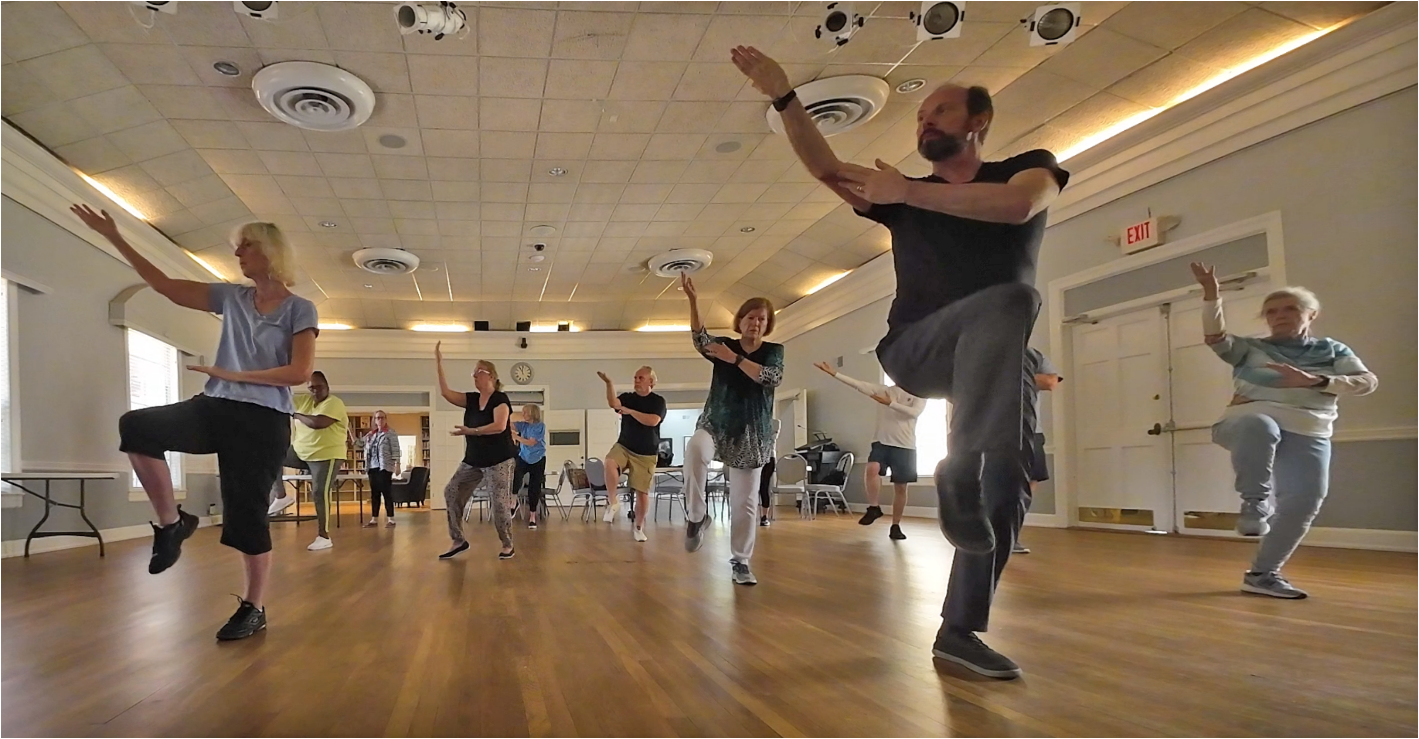
This is a graphical summary of my recent public discussion emphasizing the interconnectedness of physical, mental, and spiritual health in maintaining balance. A large portion of my discussion touched upon vestibular balance and how to prevent falls not just by cleaning up your walkways, but by increasing one’s ability to manage their center of gravity, increase leg strength, improving range of motion and the need to become more self-aware of one’s attention, one’s physical body as well as surrounding envirnment.

The role of knowledge, intelligence, and cognitive processes in balance.

The connection between beliefs, morals, values, and spiritual awareness.

The impact of mental health and emotional well-being on balance.

The concept of “deep roots” and their connection to physical balance.

The influence of diet, medications, and lifestyle choices on balance.

The potential negative effects of recreational drug use.

The importance of environmental factors and injury prevention.    

The relationship between the feet and overall health, including the concept of “death begins in the big toe.”

The importance of sleep hygiene and quality sleep for overall health.

The use of technology, such as LED lights, and its potential impact on sleep and well-being.

The role of the feet in overall balance and stability.

The impact of injuries and falls on balance, particularly the “fracture cascade.”

The importance of maintaining physical fitness and strength for balance.

Engaging in regular physical activity, such as tai chi or yoga.

Improving posture and body alignment.

Being mindful of surroundings and potential hazards.

Practicing deep breathing exercises to regulate the nervous system.

Use “3 points of contact” when standing, sitting, climbing, hiking, etc. for a more stable structure.

Understand that the human body is very similar to a tree with roots (lower body), trunk (middle or core), and branches and leaves (arms and hands).

Become more self-aware that you have a purpose, a calling, bliss or “ikigai,” a Japanese term for a sense of purpose and meaning that can affect others beyond the self.

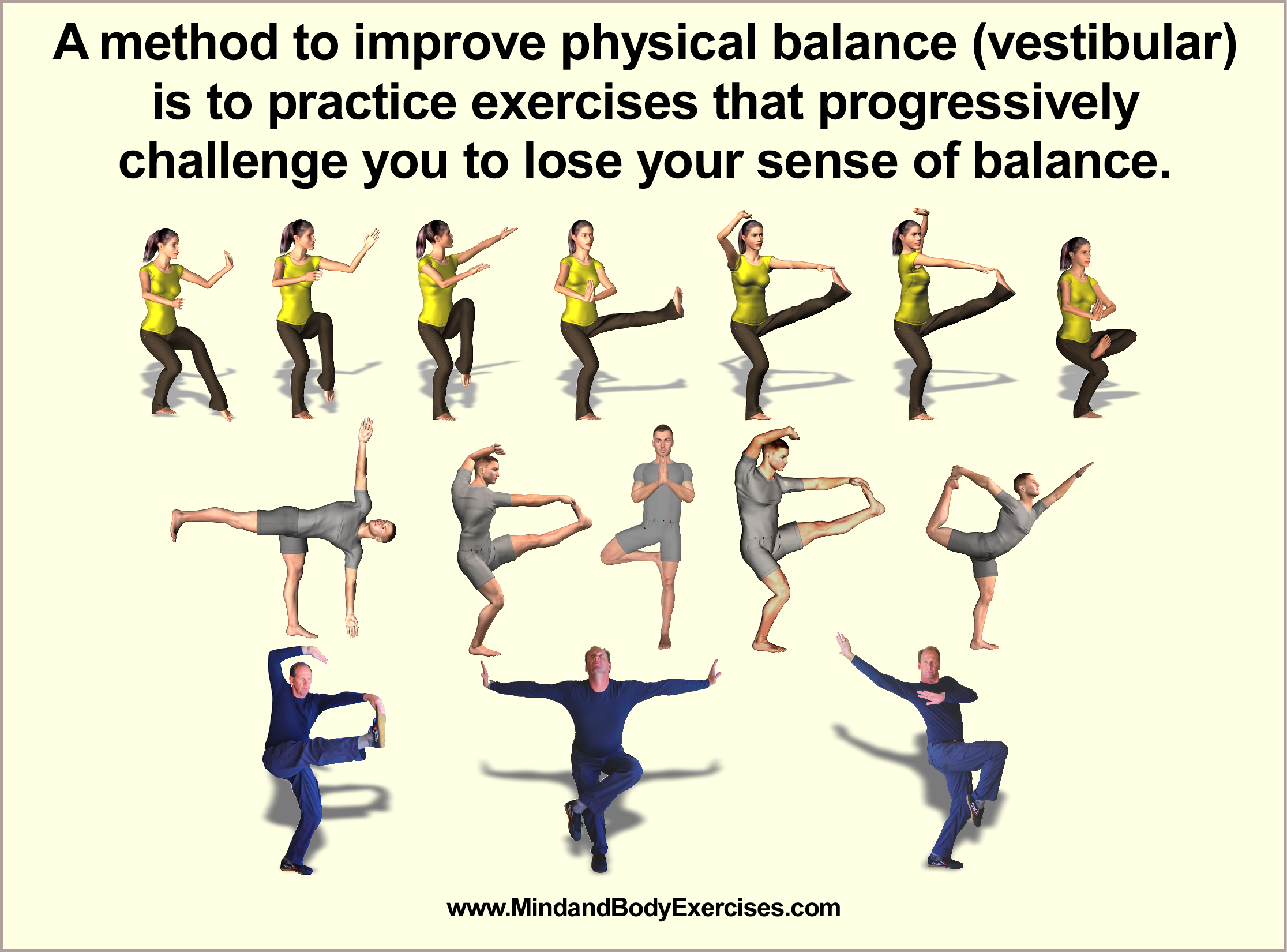
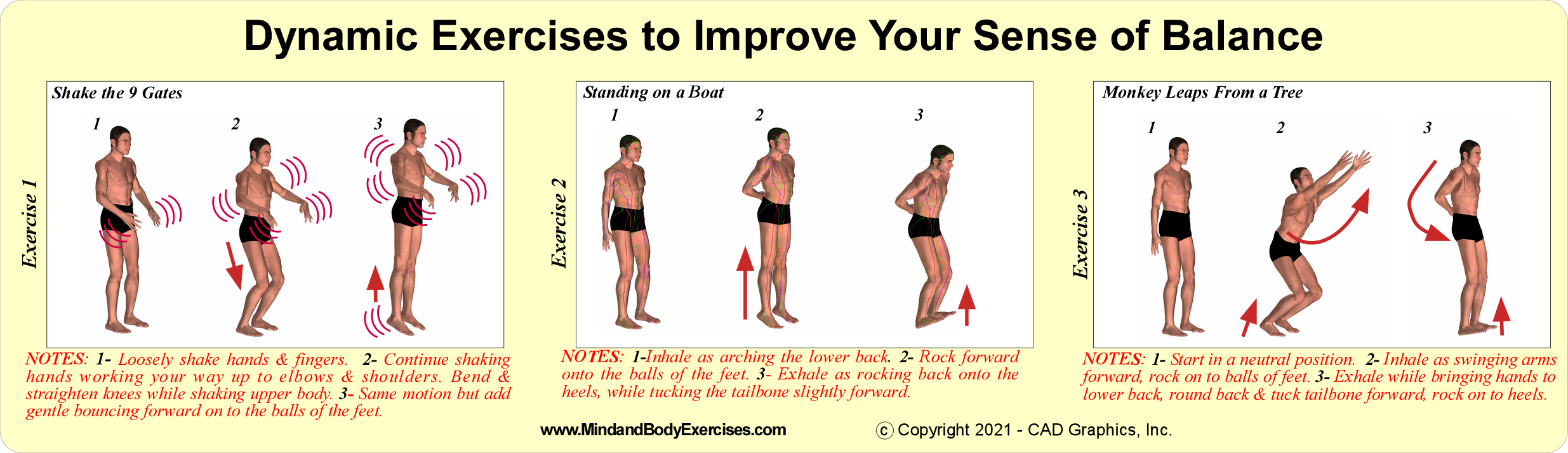
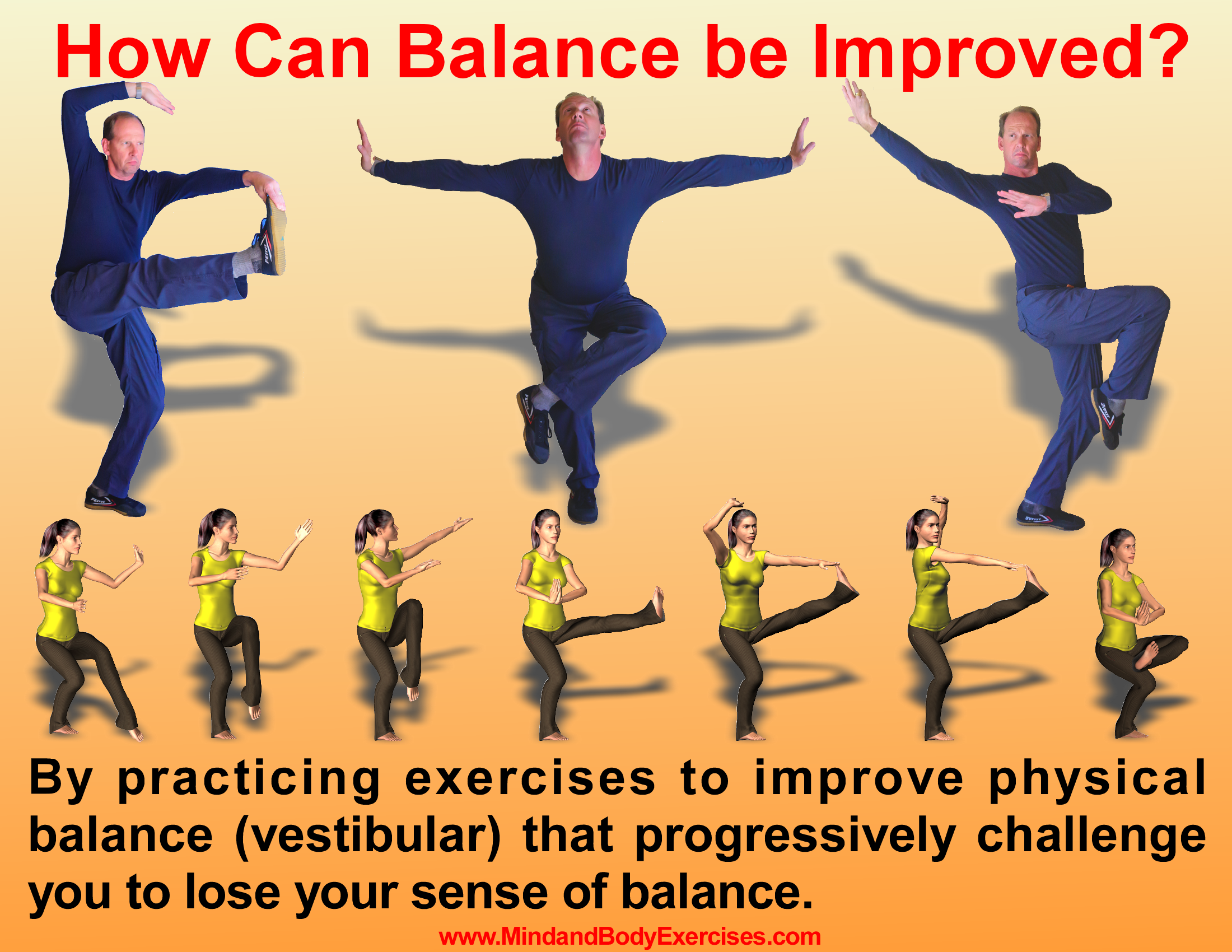
One has to put in the time and effort to achieve anything of value. One can be non-active, proactive, or reactive, depending upon their attitude, goals, and resources. Physical exercises to improve balance can consist of a combination of static, dynamic, and locomotive movements and methods.
I teach and offer lectures about holistic health, physical fitness, stress management, human behavior, meditation, phytotherapy (herbs), music for healing, self-massage (acupressure), Daoyin (yoga), qigong, tai chi, and baguazhang.

Please contact me if you, your business, organization, or group, might be interested in hosting me to speak on a wide spectrum of topics relative to better health, fitness, and well-being.

I look forward to further sharing more of my message by partnering with hospitals, wellness centers, VA centers, schools on all levels, businesses, and individuals who see the value in building a stronger nation through building a healthier population.

I also have hundreds of FREE education video classes, lectures, and seminars available on my YouTube channel at:

https://www.youtube.com/c/MindandBodyExercises

Many of my publications can be found on Amazon at:

www.Amazon.com/author/jimmoltzan

My holistic health blog is available at:

https://mindandbodyexercises.wordpress.com/

www.MindAndBodyExercises.com

Mind and Body Exercises on Google: https://posts.gle/aD47Qo

Jim Moltzan
Can You Easily Stand on One Leg?

Can you easily stand on one leg? Why would you even care to do this?

If you can easily stand and balance on one leg for more than a few seconds, chances are you can balance even better on two legs where you spend time standing, walking, running, etc. From my research, most people do not exercise or train themselves to improve or maintain balance until an event presents itself of where the individual loses their physical balance, stumbles, and/or falls and becomes injured. Then the search begins for them to find ways to improve their balance: physical therapy, medications or even refraining from activities that are now hazardous to the individual. The following is information I have gained from my own practicing and studying of martial arts and wellness methods spanning almost 40 years. Hopefully this will put readers on a path to achieving and maintaining better balance.

The human body contains many examples of balance. We have exterior symmetry in having 2 arms, 2 legs, 2 eyes, etc. We have interior symmetry within our bodies in the way of the muscular and skeletal systems being mostly equal from left to right sides. The external body protects the internal organs, while the organs provide for the exterior. The mind governs the body while the body protects the mind. Vestibular balance is what most people think of as our spatial positioning and equilibrium in relation to standing, walking and general movement.

Let’s go into some basic anatomy and physiology relative to what allows the human body to not fall over with every movement we may execute.

Body Components Connected to Balance

Brain – the brain processes the signals from the eyes, inner ear and the sensory systems (skin, joints, muscles, nerves) of the human body.

Eyes – the eyes relate information to the brain such as spatial orientation and environmental conditions.

Inner Ear – the inner ear and the Vestibular system, regulates equilibrium while providing directional information to the brain to process.

Sensory Receptors -nerves in the joints called proprioceptors, sense vibrations that flow through joints, muscles and skin sending the information to the brain to process.

Skeletal Muscles – the muscular system provides strength and stability to the skeletal systems, while maintaining flexibility in movement.

Joints – healthy joints help form a strong foundation for the body to navigate daily activities. Vibrations in movement are transferred through the bones and muscles to the brain to process.

Factors in Maintaining Balance

Awareness – understanding where ones center of gravity sits, greatly helps to become more sensitive to correct body positioning. Also, being more observant of environmental changes such as lighting, weather, terrain, etc. can prevent loss of balance.

Focus – keeping the eyes steady, helps keep the mind focused to be able to better control the bodies fine tuning of muscle control and body positioning leading to better balance.

Muscular Strength – maintaining muscle tone contributes to having stability whether the body is in motion or stationary.

Range of Motion (flexibility) – when the limbs, muscles and joints are free to move,
it is much easier to adjust ones center of gravity to a more balanced position.

I have found and studied 2 types of balance exercises, being dynamic and static.

Dynamic Balance – maintaining stability with ones center of gravity situated outside an axis of vertical rotation, with body movement or the body in motion.

Static Balance – maintaining stability with ones center of gravity situated on an axis of vertical rotation, with little or no body movement.

Be well, stay healthy, be wise.

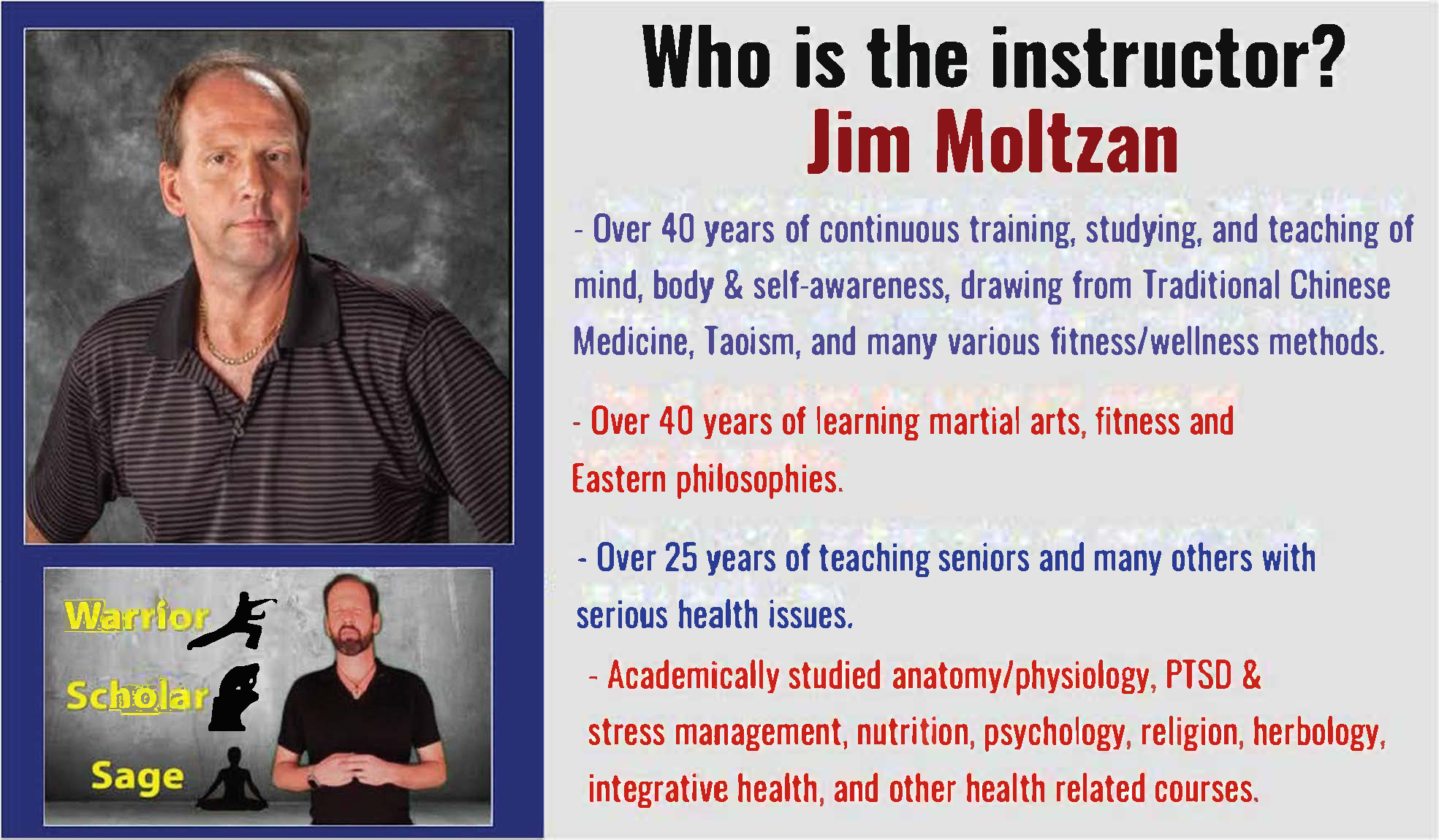
I can help. I have almost 40 years worth of experience in practicing and teaching others to take control of their health and well-being.

Wellness lectures, classes, study guides & booklets.For more information, contact Jim Moltzan at 407-234-0119 or www.MindAndBodyExercises.com

https://www.facebook.com/MindAndBodyExercises/

https://www.youtube.com/c/MindandBodyExercises

https://mindandbodyexercises.wordpress.com

/https://umareg.com/masters-council/