The 12 Primary Energy Meridians & The 8 Extraordinary Vessels

Primary Energy Meridians & 8 Vessels2

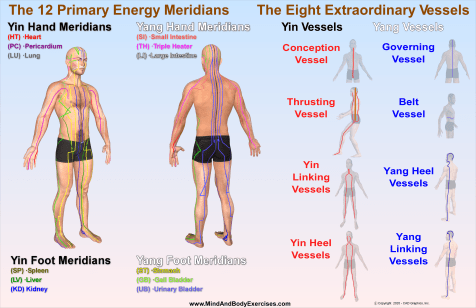
The 12 Primary Energy Meridians & The 8 Extraordinary Vessels
Within Chinese Medicine, there exists the theory of the 12 Primary Energy Meridians. Also, there is the Eight Extraordinary Vessels representing the body’s deepest level of energetic structuring. These vessels are the first to form in utero, and are carriers of Yuan Qi – the ancestral energy which corresponds to our genetic inheritance. They function as deep reservoirs from which the twelve main meridians can be replenished and into which the latter can drain their excesses of qi. Other names for these Eight Extraordinary Vessels include: the Eight Curious Vessels, the Eight Marvelous Meridians, and the Eight Irregular Vessels.
Western medicine does not recognize the meridians nor vessels existence as they are not physical components that can be seen nor dissected in a lab environment. However, other types of energy such as electricity, radiation and heat also are not visible to the human eye but are accepted as existing.
The blood, fascia and nervous system are all presumed to be the conduit in which the qi circulates throughout the human body. Mind and body practices such as tai chi, yoga and qigong are all methods of exercise and wellness known to affect the meridians, vessels and qi flow in a positive way. Improving the immune system is just one benefit of increasing this flow of energy.
Be well, stay healthy, be wise!
Jim Moltzan

The 36 Noble Stances (moving qigong set)

The 36 Noble Stances

Noble stances are a combination of various stances from different styles of Chinese martial arts. Stances, in this case, meaning correct placement of the feet, knees, hips, and arm positions relative to one’s center of gravity. Executing static positions and holding the particular body positions for anyway from a few seconds to several minutes reaps many benefits foremost being able to cultivate a strong and healthy core.

This is another time-proven method to increase the capacity of  the nervous system! By holding the body in specific alignments, the nervous system is strengthened to endure more pain, stress and discomfort. Think of tempering steel in fire to strengthen the metal.
When engaging the muscles, tendons, bones and fascia, the 12 regular energy meridians are engaged plus the 8 extraordinary meridians are opened and filled as reservoirs to adjust the ebb and flow of energy throughout the body and thereby strengthening the immune system among other bodily functions.
Exercise methods like these have been known for centuries, but are considered new or “alternative” to modern western culture.
Learn how this all works from private, small or group instruction.
Be well, stay healthy, be wise!
Jim Moltzan
407-234-0119


Deep Breathing Benefits

Breathing Deeper – more than just more oxygen

Learning how to regulate the breath is truly one of the key components to maintaining good health and well-being. Most people do not regulate their breath or even think about it, until a health issue presents itself.
Deep Breathing Benefits
Breathing shallow helps the body to produce cortisol and adrenaline.
Breathing deeper helps the body to produce dopamine, oxytocin, seratonin and endorphines.
Controlling how you breathe can affect your emotions.
Emotions cause the brain to adjust and affect the body’s blood chemistry.
The blood chemistry directly affects the internal organs and consequently all of the bodily systems and functions.

Moving Qigong (tae guk chung set #1)

How deep you breathe directly affects your health! And it is FREE, doesn’t require a prescription, no special clothes nor equipment. Just YOU making the effort to breathe slower and deeper.
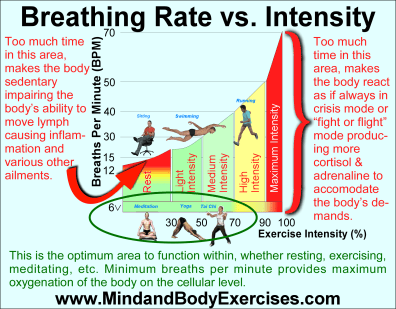
Breathing Rate vs Intensity
Breathing deep and slower is a key component to good health and longevity. We all have the ability to use the breath to take responsibility for OUR own healthcare. Desire and self-discipline are 2 more components that come into play.
The parasympathetic nervous system is activated when breaths per minute, are 10 or less. There are many ways to get to below 10 BPM, with tai chi, yoga and qigong among the most popular methods.
Be well and stay healthy!

Jim Moltzan

www.MindAndBodyExercises.com

https://www.facebook.com/MindAndBodyExercises/

https://www.youtube.com/c/MindandBodyExercises

https://mindandbodyexercises.wordpress.com/

The Cross Crawl Concept

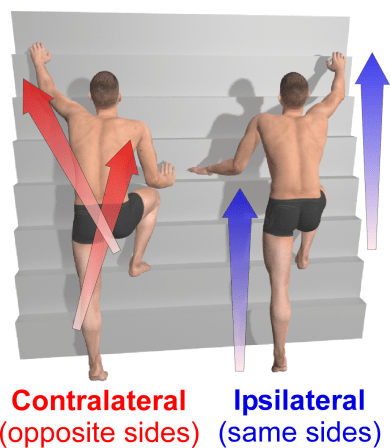
Opposition or contralateral, in regards to body movement or mechanics, means that opposite sides of the body work together to coordinate the right arm and left leg, and then the left arm and right leg. Ipsilateral refers to same side coordination.

stair climbing3

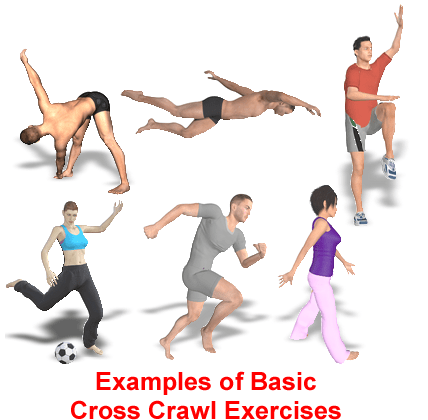
Cross crawl refers to movements in which we use opposition such as walking, climbing, crawling, walking, running, and swimming. These are intentional cross-lateral activities, which you cross the mid-line of the body. Touching the hand to the opposite knee or foot.

examples of cross crawl

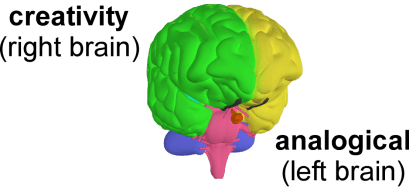
This type of movement builds the connection between the right and left hemispheres of the brain. This allows for the electrical impulses and information to pass freely between the two hemispheres. This is essential for physical coordination as well as cerebral activities, such as reading, listening, teaching or learning a skill, and hand-eye coordination.

brain2

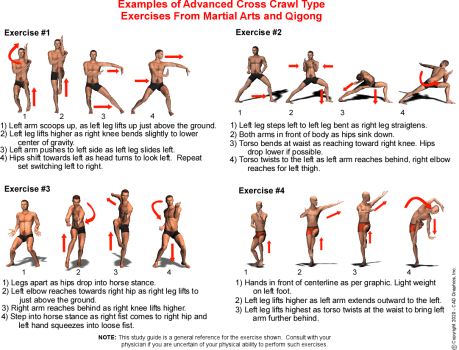
The cross crawl technique is an easy way to activate brain development and the nervous system. It gives motor and sensory stimuli needed to take control of bodily functions, thereby preventing or rehabilitating health problems. Exercises from martial arts such as Tai Chi (kung fu), qigong and yoga focus greatly on contralateral and ipsilateral movements throughout their curriculum.

Advanced examples

Exercise methods like these have been known for centuries, but are considered new or “alternative” to modern western culture.
Learn how this all works from private, small or group instruction.
Be well!