“Up to 40 minutes of “moderate to vigorous intensity physical activity” every day is about the right amount to balance out 10 hours of sitting still, the research says – although any amount of exercise or even just standing up helps to some extent.”
Long hours of sitting is also a known cause for lower back issues. Most people in the United States will experience back pain at some time in their lives. Causes of back pain are many ranging from poor posture, heavy lifting and lack of exercise amongst others. Some find relief through chiropractic or acupuncture therapy. Most pain goes away within a few days or weeks only to return at a later date. Unless the root cause is fixed, most treatments only offer temporary relief. In many cases, the root cause of back pain is tight hamstring muscles. Excessive sitting can tighten these muscles as well as lack of proper stretching on a regular basis.
The following set of exercises develop strength and flexibility which improve posture. Good health of the lower back starts with good posture. Strength in the back, hips and abdomen provide a strong cage that houses the internal organs. Flexibility in these areas helps to maintain good blood circulation to the organs and lower body. Lengthening of the spine while exercising reduces stress and tension on the nervous system. Relax the body into the positions in spite of any tension in the muscles. Deep and relaxed breathing is essential while performing these exercises.
————-
I have learned, studied, practiced and teach literally hundreds of various low-impact exercises that can build stronger bones, muscles and joints. Private, small or group instruction.
Ancient Chinese scholars of the time approximately from 1600-1000 BC, recognized continuous patterns of change and transformation. Initially, these patterns were interpreted using yin-yang (balance) logic, but later these interpretations were expanded to the theory called The Five Elements. The 5 Elements Theory is based on observation, contemplation and meditation of the natural world and the environment we exist within.
The Five Elements Theory evolved from the observation of various processes, functions, and phenomena of nature. The theory proclaims that aspects of matter, can be divided into one of five basic elements of wood, fire, earth, metal and water. Each element contains their own specific characteristics and interrelationships. In modern times, the five elements theory is still used as a tool for grouping substances, as well as a method for studying changes of natural phenomena.
The 5 Elements Theory is a major component of thought within TCM or traditional Chinese medicine. These elements have corresponding relationships within our environment as well as within our own being.
The Six Levels or Six Stages is a theory that is thought to have originated from Shang Han Lun (translated into “On Cold Damage”) by Zhang Zhongjing in 220 CE or about 1800 years ago.
The six stages are: Tai Yang or Greater Yang Yang Ming or Bright Yang Shao Yang or Lesser Yang Tai Yin or Greater Yin Shao Yin or Lesser Yin Jue Yin or Terminal Yin
The names of the syndrome levels are the same as the names of the head and foot pairs of acupuncture meridians. The order is roughly the order that a disease takes as an individual goes from healthy to death. Some disease levels are skipped or the order changed depending upon the person and their individual conditions.
Traditional Chinese Medicine has many relationships to Tai Chi, qigong and other martial as well as wellness practices. I have learned, studied, practiced and teach literally hundreds of various low-impact exercises that can build stronger bones, muscles and joints. Private, small or group instruction.
How aware are you, of seeing yourself for who your truly are? Can you see every line, mark or feature on your face in your thoughts without looking in the mirror? If no one is around to see your actions, do you still keep your morals and values in check? Seeing yourself as others see you, and not caring what others think of you are two entirely different discussions. This post is about the ongoing cultivation of trying to become the best version of yourself and not about how to justify our poor behavior or actions towards those we interact with. Now then, how can we become more self-aware to be the best we can be?
I have found from my almost 40 years of studying, practicing and teaching of martial arts and other Eastern wellness methods, that it is much easier to become aware of our physical body than to know how our mind works. Therefore, the body is the key into the mind. The mind controls the body. Our body protects our mind. We are not our thoughts, but rather the observer of our thoughts or consciousness. Our body doesn’t move on its own, other than for reflexes and autonomic functions. Our body doesn’t make the decisions to get up, open the refrigerator, and put something to eat in our mouth. Junk food or healthy snack? You as the observer makes these choices. Our thoughts do not make these decisions either, but rather our consciousness. Once one becomes self-aware of their consciousness, now they can observe their thoughts and choose to direct them with our without emotion. For example, after opening the refrigerator and accidentally dropping a glass container that shatters, we choose how to react to this maybe by experiencing regret, anger, frustration, sadness, etc. Or maybe you really didn’t like that container to begin with and now you are happy, relieved or indifferent after all it was only a glass container and not your house catching on fire or someone being seriously injured.
You are not your thoughts!
For most people, it is very difficult to train or discipline their mind and consequently, their body. People often say or do things they regret only to realize later that they lacked the self control and self awareness to make good decisions to begin with. By gaining control of the physical anatomy, a relationship with the physical body is developed. Attention to the details of your body positioning, is what trains the mind to become more self-aware. When aligning the limbs and joints to stretch and strengthen them, while also maintaining deep and deliberate breathing rhythms, an individual can cultivate a more harmonious link between the mind, body and spirit (self-awareness). Practice of exercises that truly engage the mind and body, (very much like yoga, tai chi, isometrics) to improve health & wellness. The mind directs the body, while the body protects the mind.
Ship Pal Gye, Taoist yoga or the “Filling the 8 Vessels”
Ship Pal Gye, Taoist yoga or the “Filling the 8 Vessels” are methods to increase the capacity of your nervous system. By holding the body in specific alignments, the nervous system is strengthened to endure more pain, stress and discomfort. Think of tempering steel in fire to strengthen the metal. Building self-discipline of the mind and body simultaneously!
When engaging the muscles, tendons, bones and fascia, the 12 regular energy meridians are engaged plus the 8 extraordinary meridians are opened and filled as reservoirs to adjust the ebb and flow of energy throughout the body and thereby strengthening the immune system among other bodily functions.
Exercise methods like these have been known for centuries, but are considered new or “alternative” to modern western culture.
Often times people will ask me, “where did you learn this?” Well…almost 40 years ago I began studying Korean kung fu, then Traditional Chinese Medicine, medical qigong, fitness, wellness and anatomy. It didn’t happen overnight or from a weekend seminar. It took me decades of learning, studying and teaching from and with high level masters and teachers. And I’m not done learning yet, are you?
Learn how this all works from private, small or group instruction.
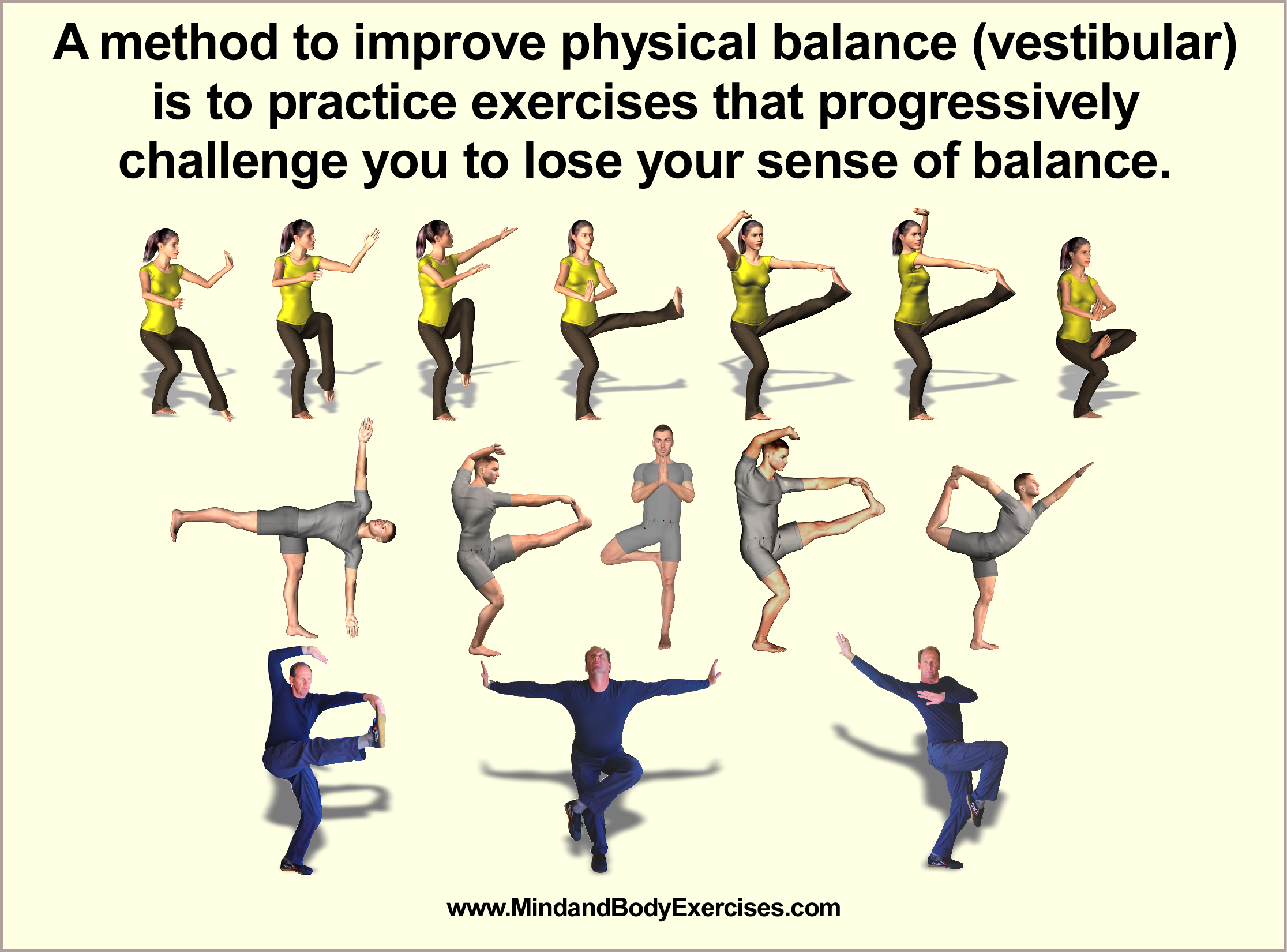
Can you easily stand on one leg? Why would you even care to do this?
If you can easily stand and balance on one leg for more than a few seconds, chances are you can balance even better on two legs where you spend time standing, walking, running, etc. From my research, most people do not exercise or train themselves to improve or maintain balance until an event presents itself of where the individual loses their physical balance, stumbles, and/or falls and becomes injured. Then the search begins for them to find ways to improve their balance: physical therapy, medications or even refraining from activities that are now hazardous to the individual. The following is information I have gained from my own practicing and studying of martial arts and wellness methods spanning almost 40 years. Hopefully this will put readers on a path to achieving and maintaining better balance.
The human body contains many examples of balance. We have exterior symmetry in having 2 arms, 2 legs, 2 eyes, etc. We have interior symmetry within our bodies in the way of the muscular and skeletal systems being mostly equal from left to right sides. The external body protects the internal organs, while the organs provide for the exterior. The mind governs the body while the body protects the mind. Vestibular balance is what most people think of as our spatial positioning and equilibrium in relation to standing, walking and general movement.
Let’s go into some basic anatomy and physiology relative to what allows the human body to not fall over with every movement we may execute.
Body Components Connected to Balance
Brain – the brain processes the signals from the eyes, inner ear and the sensory systems (skin, joints, muscles, nerves) of the human body.
Eyes – the eyes relate information to the brain such as spatial orientation and environmental conditions.
Inner Ear – the inner ear and the Vestibular system, regulates equilibrium while providing directional information to the brain to process.
Sensory Receptors -nerves in the joints called proprioceptors, sense vibrations that flow through joints, muscles and skin sending the information to the brain to process.
SkeletalMuscles – the muscular system provides strength and stability to the skeletal systems, while maintaining flexibility in movement.
Joints – healthy joints help form a strong foundation for the body to navigate daily activities. Vibrations in movement are transferred through the bones and muscles to the brain to process.
Factors in Maintaining Balance
Awareness – understanding where ones center of gravity sits, greatly helps to become more sensitive to correct body positioning. Also, being more observant of environmental changes such as lighting, weather, terrain, etc. can prevent loss of balance.
Focus – keeping the eyes steady, helps keep the mind focused to be able to better control the bodies fine tuning of muscle control and body positioning leading to better balance.
Muscular Strength – maintaining muscle tone contributes to having stability whether the body is in motion or stationary.
Range of Motion (flexibility) – when the limbs, muscles and joints are free to move, it is much easier to adjust ones center of gravity to a more balanced position.
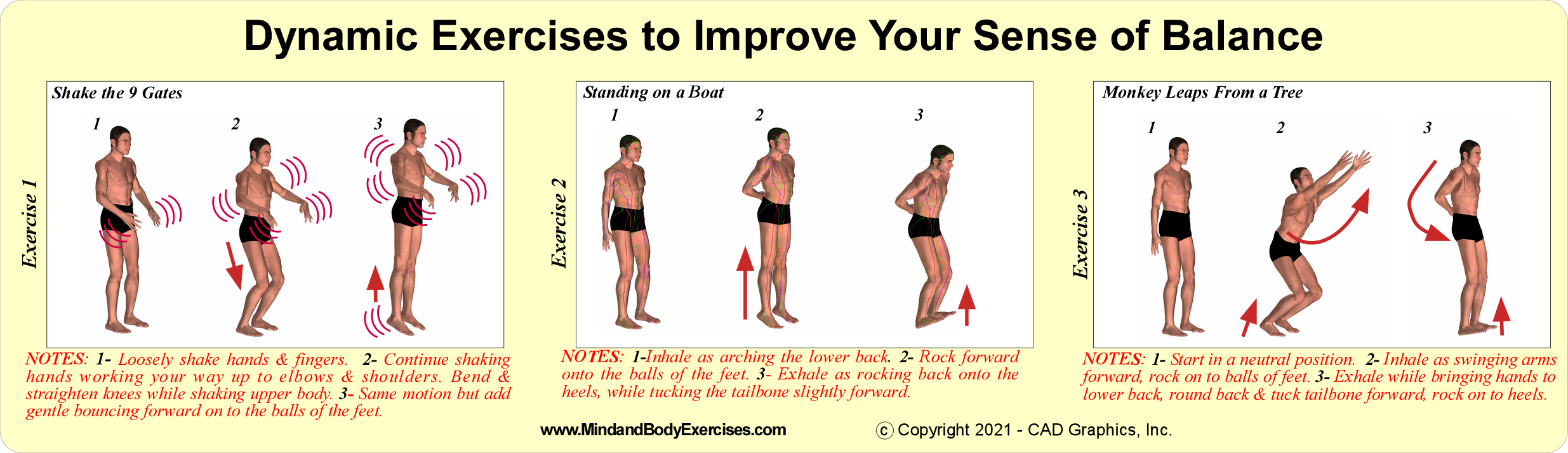
I have found and studied 2 types of balance exercises, being dynamic and static.
Dynamic Balance – maintaining stability with ones center of gravity situated outside an axis of vertical rotation, with body movement or the body in motion.
Static Balance – maintaining stability with ones center of gravity situated on an axis of vertical rotation, with little or no body movement.
Be well, stay healthy, be wise.
I can help. I have almost 40 years worth of experience in practicing and teaching others to take control of their health and well-being.
Wellness lectures, classes, study guides & booklets.For more information, contact Jim Moltzan at 407-234-0119 or www.MindAndBodyExercises.com
We really need to move beyond the thought that we can eat whatever the heck we care to, with no consequences. US Obesity is at 42% compared to 10% in 1960. What will the rate be in 2030, 50%? 100%?
What is the magic number that will wake us up that our diet, our sedentary lifestyle, our stress, our perspectives – are exactly what makes us healthy or sick?
Be well, stay healthy, be wise.
I can help. I have almost 40 years worth of experience in practicing and teaching others to take control of their health and well-being. Wellness lectures, classes, study guides & booklets.






 United Martial Arts Association