Feasibility and Legacy of Extensive Martial Arts Systems in the Modern Age

With nearly 45 years of continuous study, practice, and teaching in the internal martial arts, I offer this article as both a practitioner and researcher deeply immersed in the tradition of Baguazhang. My experience spans several influential branches of the art, including Sun, Cheng, Emei, and Chung styles. Each has contributed to my understanding of the circular, spiraling, and dynamic principles that make Baguazhang a unique and profound martial system.

While I have not personally trained in Qing Gong (known in some Korean traditions as Kyong Gong Sul Bope), I have invested considerable time researching its historical claims, theoretical foundations, and relationship to internal martial development. My aim is not to present mystical exaggerations, but to critically examine the structure, feasibility, and legacy of extensive martial systems—particularly those that claim hundreds of forms, internal skillsets, and unique training regimens.

This perspective is informed by decades of firsthand teaching experience, cross-style comparison, academic inquiry, and dialogue with both traditional lineage holders and modern researchers. The views presented here are grounded in practice, supported by analysis, and guided by a sincere respect for the martial arts as a lifelong path of cultivation.

Throughout the world’s martial traditions, extensive sequences of linked movements commonly referred to as forms, kata, hyung, taolu, or jurus, have been used as vehicles for transmitting fighting techniques, internal energy development, and philosophical insight. While some of these forms are brief and focused, others contain hundreds of techniques, and some practitioners claim that it may take 1 to 5 hours to complete in a single execution. This essay examines:

  • The global context of long-form martial arts
  • The feasibility of attaining proficiency in complex systems
  • The practical application of such training in today’s fast-paced world
  • Whether it is realistic or even possible for one or a few individuals to retain and transmit massive bodies of knowledge like 640 foundational sets and 108 BaguaZhang transitions
  • And whether this model can thrive in modern martial arts culture

Numerous systems around the world preserve extended forms or sequences. These practices vary in complexity, purpose, and duration, but share the intention of transmitting depth of method and cultivating physical and internal mastery.

Chinese Martial Arts

  • Yang-style Taijiquan: The traditional long form consists of 108 postures, often practiced in 30–60 minutes, or up to 2 hours with slow breathwork.
  • Chen-style Taiji Laojia Yilu: A spiral-based internal form with 74–83 postures, taking about 45–90 minutes.
  • Shaolin Luohanquan: Includes 18, 36, 72, or 108 movement forms, sometimes representing stages of internal/spiritual development.
  • Baguazhang: Features 64 or 108 palm changes, practiced with circle walking and flowing transitions, often extending practice well over 1–2 hours.

Japanese Martial Arts

  • Karate Kata: Systems like Shotokan include forms such as Kanku Dai, Unsu, or Suparinpei, each with dozens of transitions.
  • Koryu Bujutsu: Ancient samurai traditions preserve long weapon kata or omote, ura, and kumitachi, each embedded with strategy and timing.
  • Aikido: Though less formalized, Aikido includes long paired exercises with weapons like jo and bokken.

Korean Martial Arts

  • Taekwondo (Poomsae) / Tang Soo Do (Hyung): Structured sequences like Tae guk or Pyong Ahn, progressing in complexity and coordination.
  • Kuk Sool Won: Incorporates striking, joint locks, acrobatics, and traditional weapon forms.

Indian and Southeast Asian Systems

  • Kalaripayattu: Utilizes meypayattu (body flows) and kalari vaittari (commanded sequences) for strength and agility.
  • Silambam: Weapon forms with long rhythmic staff patterns.
  • Pencak Silat: Includes complex jurus and langkah systems.

Internal Cultivation & Daoist Systems

  • Yi Jin Jing / Xi Sui Jing: Monastic routines of 49–100+ stages, possibly performed over 3+ hours.
  • Neigong & Dao Yin: Breath-driven meditative movement sets that stretch across 1 to 2-hour daily sessions.
  • Baguazhang Switching Drills: 108 transitional palms (Top, Middle, Lower, with 36 each) used in continuous combat flow.

The following system components were provided from a particular lineage that I am quite familiar with. Each one has been analyzed based on estimated duration and modern feasibility.

Training Duration Feasibility

Training AspectDurationFeasibility Summary
Short Hyung (Dan Hyung)5–35 minutes✅ Very feasible with focused repetition. Excellent for limited-time sessions.
Middle Hyung (Joong Hyung)10–45 minutes✅ Highly feasible for modern practice. Allows depth, review, and memorization.
Long Hyung (Chang Hyung)1.5–5 hours⚠️ Feasible only in segments. Full-form execution is rare in modern life. Requires commitment and memory structuring.
Ship Pal Gae (18 Weapons)30–90 minutes each⚠️ Possible with rotation and yearly focus on 1–2 weapons at a time. Full mastery over a decade+ is realistic.
Wae Gong, Nae Gong, Kyong Gong Sul Bope (640 foundational sets)Variable⚠️ Theoretically possible but better approached modularly. Depth over breadth. Grouped by body type or principle.
Bagua Zhang Switching Drills (108)1 sec per transition✅ Very feasible. Develops into fluid combinations. Excellent daily integration into circle walking and form.

BaguaZhang Palm Changes & 108 Switching Techniques

  1. General Principles & Training Methods
    • The “Eight Mother Palms” form the basis of Bagua internal development, practiced typically during circle walking. Each palm emphasizes body alignment, spiraling technique, and transitional mechanics (Chu, 2019).
    • Expanded traditions (e.g., Yin or Gao styles) systematize palm changes into upper (top), middle, and lower transitions related to spiral alignment, kinetic linkages, and combat application.
  2. Historical Context & Lineage
    • Founder Dong Hai Chuan’s students (Yin, Cheng, Gao lines) diversified the core palms into extensive sequences (e.g., 64-, 108-, or even 192-palm sets) (Chu, 2019).
  3. Practical Execution & Spiral Mechanics
    • Palm change drills remain central to Bagua’s characteristic evasive and spiral movements. They are practiced either as stand-alone drills or integrated into walking the circular pattern.
  4. Overview of Switching Techniques
    • In BaguaZhang (8 trigram palm) “switching” refers to the palm change, which is the fundamental dynamic movement that allows a practitioner to alter direction, intent, angle, or application while walking the circle. These palm changes are typically modular, allowing them to be strung together like language.
    • Traditionally, Bagua styles such as Sun, Cheng, Yin, Gao, and Liang develop 8 core palm changes, which expand into multiple permutations and footwork variations. Advanced lineages (especially in Gao-style) systematize palm changes into top (Sung, middle (Jung), and lower (Ha) body initiations.
  5. Structure of 108 Switching Techniques
    • 36 Top Switching Techniques (Sung)
      • Initiated from the upper body:
        • shoulders, arms, hands, and upper spine
          • Often involve:
            • Overhead swings
            • Downward palms
            • Cloud hands
            • Strike deflections
            • Rotational arm/shoulder mechanics
            • Head-level entries or wraps
      • These are closely tied to Yang-like motion: expansive, expressive, outward
    • 36 Middle Switching Techniques (Jung)
      • Centered on the torso, hips, and waist
      • Focus:
        • Spiral rotations from Dantian
        • Mid-line redirections
        • Coiling waist motions to project energy
        • Interception and bridging techniques
    • 36 Lower Switching Techniques (Ha)
      • Originate from the legs, footwork, stances, and dropping mechanics
        • Include:
          • Sweeps, low kicks, stepping traps
          • Cross-stepping, deep pivots, root shifting
          • Defensive dodges from low angles
      • Tend to reflect Yin-like qualities: inward, sinking, re-directive
  6. Integration into Practice
    • Switching techniques may be performed as:
      • Standalone drills (e.g., 5 switching drills per session)
      • Embedded in circle walking routines
      • Linked into forms or paired drills
    • Many practitioners organize them seasonally (e.g., focusing on a layer for 3 months)
    • Some styles break 108 into 3 series of 36, which are further divided into 8-technique families, often linked to elements or trigrams.

These three terms of Wae Gong (external power), Nae Gong (internal cultivation) (Wikipedia contributors, 2024), and Kyong Gong Sul Bope (aerial or mystical skill), represent progressive layers of skill development. The inclusion of 640 foundational sets, divided by 8 hereditary types × 80 subsets, supports a detailed, modular training system.

Qing Gong translates literally to “light skill” or “lightness technique.” It refers to the ability to move the body lightly and rapidly, with agility and grace. While some Korean traditions refer to this as Kyong Gong Sul Bope, the broader and more recognized Chinese equivalent is Qing Gong, emphasizing aerial mobility, lightness, and rapid footwork to:

  • Evade attacks
  • Traverse difficult terrain
  • Jump long distances or scale walls
  • Appear to “float” or “glide”

Documented Components

ComponentFunctionModern Analog
Weighted step workBuilds leg power for jumping/landingPlyometric training
Low stance workImproves tendon recoil and gliding mobilityIsometric holds and tendon loading
Breath synchronizationMatches inhale/exhale to movement rhythmNeigong, internal energy pacing
Climbing drillsSimulates wall-scaling, aerial coordinationParkour, tactical wall-scaling drills

Each body type would ideally have 80 tailored micro-sets, designed to:

  • Compensation for biomechanical challenges
  • Enhance strengths
  • Reduce injury risk
  • Maximize fluidity and function for that build

Each 80-set group may include drills or sequences from multiple domains. A sample distribution might look like:

Categories of the 80 Sets per Type

Category# SetsExample Focus
Wae Gong (External Power)~30Striking forms, structural alignment, repetition drills
Nae Gong (Internal Cultivation)~20Breath-body integration, dantian rotation, meditative form
Kyong Gong Sul Bope (Aerial/Light Skill)~10Leaping drills, evasions, sudden weight shifts
Conditioning & Recovery~10Joint prep, tendon strength, recovery movement
Specialized Drills (Hybrid)~10Blending categories, such as explosive internal transitions

Format of Each Set

Each “set” may be:

  • A short form (30 sec to 2 minutes)
  • A paired drill
  • A static posture with breath regulation
  • A moving neigong routine for soft-tissue engagement
  • A dynamic jump/evasion/fall drill for Kyong Gong

These are not isolated movements but often sequential flows, comprising 5–12 linked actions, possibly with an internal theme or breathing rhythm.

Teaching and Rotation Strategy

Given the vast number of sets, a realistic teaching and retention method would require:

  • Rotational cycles, focusing on 10–15 sets per quarter
  • Tracking logbooks for both teacher and student
  • Core sets used for all types (e.g., the “seed drills”)
  • Some sets exclusive to a body type (e.g., “Overweight” sets avoid deep stances early on)

Ideal Scenario (1–2 hrs, 5–6 days/wk)

  • Entire system could be internalized over 20–30 years
  • Structured cycles (e.g., seasonally rotating weapon or form focus)
  • Internal cultivation and external technique blended over time

⚠️ Modern Constraints (1 hr, 3–4 days/wk)

  • Prioritize core sets over totality
  • Short and middle hyung are realistic anchors
  • Bagua transitions and foundation sets can be explored in small segments
  • Weapon work limited to 2–3 tools over 5–10 years

Best Practices

  • Modular training: Break long forms into repeatable segments
  • Cyclic review: Return to previously learned sets on a schedule
  • Specialization: Focus on the sets or weapons that resonate with your goals or body constitution
  • Documentation: Journaling and visual diagrams to reinforce memory
  • Teaching: Sharing builds retention and embodiment

Cognitive Feasibility

  • Human experts can recall and perform thousands of patterns over decades (Ericsson et al., 1993)
  • Long-term memory improves with emotional connection, repetition, and teaching
  • Martial knowledge is embodied, or stored not just mentally but within somatic muscle memory and rhythm

Cultural Challenge

  • Modern society favors speed, variety, and instant results
  • Systems requiring 20–50 years of investment are often devalued
  • Traditional transmission (oral, demonstrated, internalized) is at odds with certification-based or commercialized martial arts

Yes – Extraordinary but Not Fantastical

Many monastic, Daoist, orclassical lineage systems have survived due to one or two deeply committed masters per generation. This requires a lifestyle, not a hobby. It is not for the casual martial artist—but it is possible and historically supported.

Feasible if the practitioner:

  • Lives in immersion
  • Teaches regularly
  • Revisits the material cyclically
  • Structures forms by thematic grouping

However:

  • System survival depends on generational transmission
  • Modern students may need a modularized curriculum to digest the material
  • The original system may evolve, fragment, or reduce as common in many traditions

An important aspect of the system under discussion is its claim to include 640 foundational sets distributed across eight hereditary body types. This principle asserts that different forms, drills, or techniques are tailored to suit constitutional differences, physiological predispositions that affect movement mechanics, balance, and energy expression.

8 Different Hereditary Types:

  1. Tall
  2. Small
  3. Overweight
  4. Thin
  5. Tall and Overweight
  6. Small and Overweight
  7. Tall and Thin
  8. Small and Thin

This categorization may seem simplistic at first glance, but it reflects a long-standing tradition in systems such as:

  • Traditional Chinese Medicine (TCM): Uses somatotype constitution in diagnosis and qigong prescription.
  • Ayurveda: Categorizes body-mind types (e.g., Vata, Pitta, Kapha).
  • Martial Lineages: Where forms were adapted to suit a practitioner’s build, power-to-weight ratio, and flexibility.
  • Biomechanical profiling in sports science

The claim that each of these eight types has access to a specific family of foundational sets suggests a physiologically intelligent system. However, it requires rigorous documentation and consistent application to be credible.

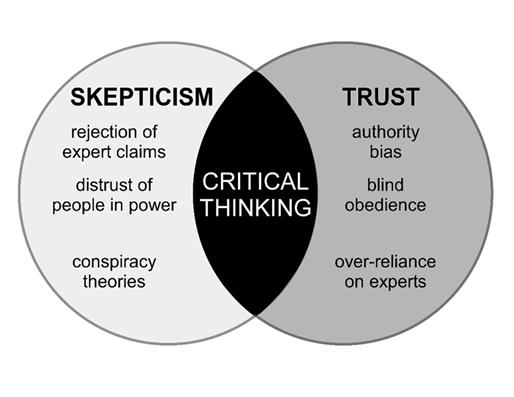
In martial arts and indeed any traditional system, the sheer number of levels, forms, sets, movements, and training layers may raise skepticism, especially when:

  • Not recognized by peers
  • Lacking written historical lineage
  • Missing corroborative physical proof (e.g., preserved manuals, photographic/video documentation, public demonstrations)

Principle of Skepticism:

“Extraordinary claims require extraordinary evidence.”
Popularized by Carl Sagan, this principle remains relevant when evaluating martial systems. If a school or master claims:

  • 640 unique foundational sets
  • 108 specialized Bagua transitions
  • Dozens of long forms taking hours to complete

Then, the burden of proof falls upon the claimant to:

  • Produce lineage records
  • Provide structured curriculum or teaching materials
  • Demonstrate practical proficiency in said material

This isn’t to challenge the sincerity of the tradition, but rather to reinforce credibility and transparency in a world where esoteric claims are often made without accountability.

There are, unfortunately, martial groups and individuals who leverage the allure of ancient, secret, or overly complex systems to:

  • Elevate their authority
  • Shield scrutiny through obscurity
  • Create dependence among students

⚠️ Red Flags in Questionable Systems:

  • Inability to demonstrate claimed techniques
  • Unverifiable lineage (or lineage constantly evolving to fit narrative)
  • Overuse of mysticism or secrecy to justify lack of transparency
  • Commercial exploitation (e.g., charging for levels with no meaningful advancement)

Student Guidelines for Due Diligence:

  • Ask for documentation (written, photographic, curriculum outlines)
  • Observe public demonstrations or request private proof of capacity
  • Cross-reference claims with outside martial scholars or historians
  • Follow your intuition. If something feels manipulative, it likely is

True mastery does not hide behind jargon or cult-like authority. It is revealed in clarity, function, humility, and the ability to teach and demonstrate.

While skepticism is essential, we must not lose sight of this:

Some traditional systems do legitimately carry vast knowledge, passed from generation to generation, often in difficult-to-document formats.

However, those systems tend to demonstrate:

  • Consistent internal logic
  • Observable results
  • Coherent pedagogy
  • Recognition from external peer groups, even across style lines

In today’s environment, a balance between open-mindedness and critical thinking is necessary. One must neither accept everything at face value nor reject ancient systems outright simply because they differ from modern expectations.

The legacy of massive martial systems, with hundreds of forms and transitional movements, is not a fantasy. A martial arts system that claims hundreds of techniques across hereditary types, multi-hour forms, and internal training deserves to be listened to, but not blindly believed. If it stands up to scrutiny, produces capable students, and provides reproducible results, then it should be valued as part of our shared martial legacy.

It is an extraordinary path, one that demands lifelong dedication, deep internalization, and cultural adaptation. While the complete memorization and performance of such a system is unlikely for the average modern student, it is feasible for a dedicated practitioner or lineage holder, particularly if approached intelligently and methodically.

In today’s world, success lies not in grasping everything at once, but in embodying a part of the system deeply enough to preserve its essence. If not, then as always: Caveat emptor: Buyer beware.

(Chow & Spangler, 1982)

References

Chinese martial arts training manuals : a historical survey : Kennedy, Brian, 1958- : Free Download, Borrow, and Streaming : Internet Archive. (2005). Internet Archive. https://archive.org/details/chinesemartialar0000kenn.

Chow, D., & Spangler, R. (1982). Kung Fu: History, Philosophy, and Technique.

Chu, F. (2019) Baguazhang — Overview. https://shaolin.org/general-3/research/baguazhang/all.html?utm_source=chatgpt.com

Comprehensive Asian fighting arts : Draeger, Donn F : Free Download, Borrow, and Streaming : Internet Archive. (1980). Internet Archive. https://archive.org/details/comprehensiveasi0000drae

Ericsson, Karl & Krampe, Ralf & Tesch-Roemer, Clemens. (1993). The Role of Deliberate Practice in the Acquisition of Expert Performance. Psychological Review. 100. 363-406. 10.1037//0033-295X.100.3.363.

Henning, S. E. (1999). Academia encounters the Chinese martial arts. DeepDyve. https://www.deepdyve.com/lp/university-of-hawai-i-press/academia-encounters-the-chinese-martial-arts-XdDBjABJdT

Sagan, C. (1996). The Demon-Haunted World: Science as a Candle in the Dark. New York: Random House.

Shahar, M. (2008). The Shaolin Monastery: History, Religion, and the Chinese Martial Arts. University of Hawaii Press.

Shing, T. C. (2020b). Xiantian Bagua Zhang: Gao Style Bagua Zhang – Circle Form. Singing Dragon.

Wikipedia contributors. (2025, June 26). Baguazhang. Wikipedia. https://en.wikipedia.org/wiki/Baguazhang?utm_source=chatgpt.com

Wikipedia contributors. (2024, July 8). Neigong. Wikipedia. https://en.wikipedia.org/wiki/Neigong?utm_source=chatgpt.com

Yang, Jwing-Ming. (1996).The Root of Chinese Qigong. YMAA Publications.

Mastery in the World of Form: Integrating Wealth, Health, and Spirit

In the pursuit of personal evolution, many traditions emphasize the renunciation of material wealth as a path to spiritual enlightenment. Yet this view may overlook an essential truth: the mastery of life requires full engagement with both the spiritual and material realms. Rather than rejecting worldly success, a more holistic path invites individuals to develop discipline, embrace responsibility, and integrate spiritual realization with material abundance.

A balanced life requires strength across physical, emotional, and spiritual dimensions. True power, especially in men, is not measured by dominance or accumulation alone, but by maturity and restraint. Without discipline, power can become dangerous, giving rise to instability and harm. Therefore, self-mastery begins with a commitment to personal responsibility, training the body, focusing the mind, and cultivating inner peace.

One foundational concept in this approach is the idea that wealth and health are not opposites of spiritual life but necessary stages in the ladder of awakening. Through conscious acquisition and enjoyment of material pleasures—followed by the ability to release attachment—one gains not only experience but freedom from the cycles of craving and aversion. This path requires mastering the “world of form,” learning to participate in it fully without being controlled by it. Those who avoid or bypass this stage may find themselves spiritually incomplete. If one believes in reincarnation, this situation may lead to further experiences in future lifetimes to fully integrate these unlearned lessons.

Conscious development can be mapped through the lens of energy centers or chakras, where each stage corresponds to an essential life lesson: from physical grounding and pleasure to peace, joy, love, compassion, and ultimately ecstatic or blissful states of awareness. These are not mere metaphors but practical tools for tracking one’s evolution. A person who cannot access joy or inner peace may need to revisit the foundations of health, safety, and stability before advancing into higher spiritual states.

Central to this journey is the rejection of victimhood. Blaming society, circumstances, or others for one’s failures hinders growth. Only by accepting full responsibility for one’s health, finances, relationships, and spiritual development can one initiate true transformation. This principle applies across life stages, which can be seen as cycles: childhood (0–8), adolescence and young adulthood (8–33), fruition (33–58), correction (58–83), and ultimately the sage or spirit phase (83–108). Each phase carries its own lessons and demands appropriate effort and reflection.

In later life, aging should not be viewed as decay, but as a biological and spiritual opportunity. With proper practice through breathwork, meditation, physical cultivation, and mental clarity, many signs of aging can be reversed or mitigated. The aim is to remain vibrant, focused, and spiritually prepared for death, which, when acknowledged consciously, becomes a motivator for authentic living.

The role of family, lineage, and tradition is also pivotal. Respect for one’s parents and ancestors does not require blind obedience or emotional entanglement but calls for honoring their place in one’s development. This maturity fosters generational healing and sets an example for those who follow.

Integration of spiritual wisdom with material responsibility is not unique to any one culture. Whether through Christian parables, Taoist discipline, or Buddhist insight, timeless truths emerge: the value of discipline, the importance of presence, the need for compassion, and the certainty of death. When viewed through this inclusive lens, spirituality becomes less about belief and more about the embodiment of universal principles.

The ideal individual, a strong, wise, and compassionate being, embodies the archetype of the strategist and warrior. Not through brute strength or spiritual aloofness, but through the unification of effort, enjoyment, reflection, and humility. Mastery is not found in a cave or an office alone, but in the weaving of both. When one lives fully, without excuses or illusions, the path reveals itself not above the world, but through it.

Exploring the Thin Line Between Martial Legend and Human Potential

Across cultures and centuries, legends of warriors moving so swiftly they appear to multiply or vanish, have captivated imaginations. In Korean and Chinese martial lore, tales of masters performing techniques like Kyung Gong Sul Bope (light body skill) or the enigmatic Sam Shim U Gye describe practitioners moving so quickly or unpredictably that they seem to split into several forms. Similarly, certain Australian Aboriginal traditions tell of “shadow walking” or “mist walking,” where skilled individuals could move in ways that made them appear as multiple figures or become nearly invisible to those pursuing them. These stories share a common thread: extraordinary mastery of timing, movement, and the environment, combined with a keen understanding of human perception.

Years back, I witnessed a live performance of Shaolin monks demonstrating extraordinary feats of physical strength as well as a level of self-discipline that I have never seen before. On another occasion, I attended a Bull’s basketball game where Michael Jordan on numerous plays demonstrated his seemingly unique ability to walk on the air beneath him. These are examples of real people demonstrating extraordinary abilities. The late Bill Moyers, a renowned and respected journalist, composed a five-part television series (Healing and the Mind, 1993) where he investigated and reported his findings on Traditional Chinese Medicine and the concept of qi. Moyers was quite surprised at the efficacy of TCM in spite of his initial skepticism (Moyers, 1993).

Martial Arts Legends of Walking on Air

Kyung Gong Sul Bope (Korean), equivalent to the Chinese Qing Gong, is more clearly represented in martial records. These techniques developed from agility training involving explosive jumping, low stances, and breath control, often practiced by monks or guards (Shahar, 2008). The goal was not supernatural flight but increased speed, evasiveness, and physical control. There are some interesting demonstrations available online at: https://www.youtube.com/watch?v=Obx6zXADsVQ, https://www.youtube.com/watch?v=1GKwlfVCD2M, https://www.youtube.com/watch?v=hGtrZKir7sY

Martial Arts Legends of Multiplicity

In Daoist literature and Chinese mythology, the concept of fenshen, meaning “dividing the body,” is found in classical texts. For example, Ge Hong’s Baopuzi (c. 320 CE) describes adepts capable of appearing in multiple places simultaneously. Similarly, Hui Jiao’s Memoirs of Eminent Monks recounts stories of Buddhist practitioners performing multilocation or form-division feats (Hui Jiao, 1976). These accounts reflect a symbolic, ritualistic interpretation of spiritual multiplicity, rather than physical duplication.

In East Asian martial arts, the idea of Sam Shim U Gye is poorly documented but sometimes passed along in oral tradition. It is described as a principle allowing a practitioner to move so fast they seem to be in more than one place. Though not part of recognized martial literature, it echoes legends of shadow-splitting (fen shen) in Chinese folklore (Wikipedia, 2025).

The illusion of multiplicity arises from:

  • Misdirection and broken rhythm
  • Diagonal and lateral footwork
  • Manipulation of the observer’s focus and peripheral vision
  • Exploitation of low-light conditions

While no martial artist has physically been proven to have multiplied themselves, highly trained practitioners can create confusion and overwhelm opponents through rapid, deceptive movements (Henning, 1999).

Aboriginal Shadow Walking

Among Australian Aboriginal groups, oral traditions describe “shadow walking” or “mist travel,” where an individual may disappear into the landscape or appear to be more than one person. These stories, often rooted in Dreamtime cosmology, reflect actual survival and tracking expertise (Rose, 1992). Aboriginal trackers are renowned for nearly supernatural ability to read signs invisible to outsiders and move through terrain undetected.

Shadow walking includes:

  • Mastery of terrain and environmental blending
  • Controlled, timed movement
  • Predictive awareness of pursuers’ behavior
  • Use of visual and auditory manipulation

These techniques are deeply practical, even if they appear mystical to outsiders (Chatwin, 1987).

Perception and Illusion: The Neuroscience

Human perception is imperfect, especially under stress. Several neurological and visual factors can explain illusions of multiplicity:

  • Persistence of vision: brief visual impressions can linger, making movement appear blurred or doubled
  • Attentional blindness: the brain struggles to register abrupt directional changes
  • Tunnel vision: high-stress or fight-or-flight responses narrow focus

Such phenomena mean that highly skilled martial artists can exploit these perceptual gaps, creating the illusion of multiple attackers or vanishing movement.

Dim Mak: Myth, Medicine, and Martial Mystery

Another layer of martial myth surrounds Dim Mak, often called the “death touch.” This practice, tied to dian xue (acupoint striking), claims that precise strikes to certain points can disable or kill. Stories extend to “delayed death,” pressure paralysis, or even non-contact knockouts.

While Dim Mak is thematically linked to Traditional Chinese Medicine (TCM), its more mystical claims lack scientific support:

  • Acupuncture points do not correspond with discrete anatomical structures (Langevin et al., 2001)
  • Striking vital areas (e.g., carotid sinus, liver, solar plexus) can incapacitate, but this is anatomical vulnerability, not energetic disruption
  • No-contact or delayed effects have failed empirical testing

Dim Mak demonstrations often rely on:

  • Suggestibility and peer expectation (nocebo effect)
  • Compliant students and dramatized reactions
  • The absence of controlled or blinded trials

Such claims are best understood as cultural mythology rather than proven combat methodology (McCarthy, 1995).

Wuxia Cinema: Martial Fantasy on Film

Crouching Tiger, Hidden Dragon (2000) exemplifies the cinematic portrayal of these legends. As part of the wuxia tradition, the film depicts martial heroes performing:

  • Light-body leaps and treetop duels, a visual extension of qing gong
  • Acupressure-induced paralysis during combat
  • Delayed death from poisoned needles

These elements, while fictional, reflect deeper cultural themes of spiritual cultivation and moral transcendence. Wuxia films stylize martial ability to express inner mastery and dramatic stakes (Shahar, 2008).

There are very talented and gifted people among us. However, if someone has been investing decades of their lives with the ambition of being able to jump from rooftop to rooftop, land safely from jumping off an eight-story building, or being able to project their inner vital force and have not achieved or come closer to obtaining these abilities, maybe it is time to reassess the difference between myth and reality. If your lineage or course of learning claims to teach extraordinary, supernatural or miraculous feats, it may be prudent to respectfully ask your teachers to demonstrate their claims. Proof in still photograph images from decades long past, do little to exude credibility in the here and now.

Modern Performance and Extraordinary Claims

In today’s digital era, video footage showcases athletes, martial artists, and performers achieving astonishing feats. From Bruce Lee’s lightning-fast punches to parkour practitioners scaling rooftops, we witness the real potential of human movement. These skills are remarkable but remain within the bounds of physics and biology.

As physicist Carl Sagan aptly stated, Extraordinary claims require extraordinary evidence (Deming, 2016). Martial arts traditions deserve respect for their transformative value, but supernatural interpretations must be held to the same standard of critical inquiry.

Conclusion

The legends of Kyung Gong Sul Bope, Sam Shim U Gye, Dim Mak, and Aboriginal shadow walking offer rich cultural insights into human potential, narrative tradition, and symbolic expression. While these phenomena are not supported by scientific evidence as literal realities, they reflect the enduring fascination with mastery, perception, and the boundaries of possibility.

Rather than diminishing these stories, understanding their metaphorical and psychological dimensions can deepen appreciation for the disciplines they arise from. In that light, they continue to inspire, challenge, and elevate the art of personal cultivation.

On a personal note, I have firsthand experience of various presentations of internal power (qi and/or neidan, nei gong) where I have felt an increase of warm vital energy through my own body. I have witnessed an individual (and not a grandmaster at that) be able to noticeably move internal energy and circulation to one arm, where their arm did become somewhat “puffy” compared to their other arm.  I have seen and myself applied acupressure on numerous occasions, in specific sequences on others to both revive and incapacitate another person; first-aid and self-defense.

References

Chatwin, B. (1987). The Songlines. Viking Press.

Chinese Myths 101. (2025, February 17). Does Chinese Lightness Skill really exist? Qing Gong – Supernormal Abilities in Kung Fu [Video]. YouTube. https://www.youtube.com/watch?v=1GKwlfVCD2M

Ge Hong. (trans. Ware, J. R.). (1966). Alchemy, Medicine and Religion in the China of A.D. 320: The Nei Pien of Ko Hung. Dover Publications.

Henning, S. E. (1999). Academia encounters the Chinese martial arts. China Review International, 6(2), 319–332. https://www.jstor.org/stable/23732172

Hui Jiao. (trans. Link, A.). (1976). Lives of Eminent Monks. Berkeley Buddhist Studies Series.

Langevin, H. M., Churchill, D. L., & Cipolla, M. J. (2001). Mechanical signaling through connective tissue: a mechanism for the therapeutic effect of acupuncture. The FASEB Journal, 15(12), 2275–2282. https://doi.org/10.1096/fj.01-0015hyp

Learn Chinese Now. (2024, July 22). Supernormal abilities in Kung Fu – Lightness skill (Qing gong) [Video]. YouTube. https://www.youtube.com/watch?v=Obx6zXADsVQ

McCarthy, P. (1995). Bubishi: The classic manual of combat. Tuttle Publishing.

Moyers, B. (1993). Healing and the mind [Television series]. Public Affairs Television.

Mr. Y Talks. (2023, July 22). Unveiling the mysteries of Qing gong: the Gravity-Defying skill of Chinese kung fu [Video]. YouTube. https://www.youtube.com/watch?v=hGtrZKir7sY

Rose, D. B. (1992). Dingo makes us human: Life and land in an Australian Aboriginal culture. Cambridge University Press.

Deming, David. (2016). Do Extraordinary Claims Require Extraordinary Evidence?. Philosophia. 44. 10.1007/s11406-016-9779-7.

Shahar, M. (2008). The Shaolin Monastery: History, religion, and the Chinese martial arts. University of Hawai’i Press.

Wikipedia contributors. (2025, June 9). Fenshen. Wikipedia. https://en.wikipedia.org/wiki/Fenshen

Degrees of Control: Psychological Lessons from a Closed Community

Humans often have short memories for uncomfortable truths we’d rather not acknowledge. When we fail to remember or record history, we invite it to repeat. Revisiting these experiences today helps us confront patterns that could otherwise recur unchallenged. While most people grow older, they do not necessarily grow wiser. Physical age and mental growth or wisdom do not always increase together. I want to believe that people and their behaviors can change and evolve for the better. A caterpillar eventually transforms into a butterfly. Yet we must also recognize that, as the saying goes, “a tiger cannot change its stripes.”

I am not sharing this to assign blame, demand accountability, or even to provide perfect clarity. Everyone who was involved knows, to some degree, what transpired. I do not see myself as a victim; I, too, was a willing participant for two decades, rationalizing along the way that the “ends would justify the means,” until I chose to stop being compliant. Today, it matters less to me whether others have changed or evolved, as that is their path, their journey, and their challenge to resolve within themselves. What matters most is what I have learned and earned. Inner transformation and self-mastery, ironically, can emerge in spite of, or perhaps because of, the very circumstances we experience firsthand.

What makes me qualified to speak on this topic?

I was deeply involved in a high-control closed martial arts group for 20 years, serving in positions of authority as a senior-level instructor, mid-to-upper management, and as an owner of multiple locations. Years later, after decades of research, conducting numerous interviews with individuals from diverse backgrounds both within and beyond the martial arts world, and pursuing higher education, I believe I am a credible resource to speak on this topic.

The Bait: Personal Desires and the Illusion of Fulfillment

High-control groups thrive by mirroring what potential members most deeply want: mastery, inner peace, community, etc. They craft an environment that reflects those desires, creating a powerful sense of destiny and belonging. As described in one firsthand account:

Different Experiences, Different Interpretations

It’s essential to recognize that not everyone in a high-control environment shares the same experience, even when standing in the same room. Individual memories and interpretations are shaped by personal histories, perceptions, and expectations, like siblings recalling the same childhood differently as adults. Many members gained meaningful benefits from training in this system, including friendships, exposure to Asian culture, and valuable traits such as cultivating a “can-do attitude.” Others, however, experienced harm and disillusionment. Ironically, one of my own most significant lessons was learning how not to treat or interact with other people, especially recognizing the importance of never taking advantage of others for personal gain. Both positive and negative perspectives are real, valid, and necessary to understand the full picture.

The Con: How Desire Enables Entrapment

The foundation of any effective con is mutual participation: it cannot succeed unless the “mark” wants what’s being offered. In high-control martial arts environments, the leadership uses students’ own goals to pull them deeper. It’s not that people don’t see the red flags; it’s that they rationalize them away because the group appears to offer what they crave most. This is why even highly educated professionals, trained to think critically, can fall prey. They are often convinced they’re fulfilling a noble or enlightened purpose.

High Achievers Are Not Immune
Doctors, lawyers, college professors, firefighters, law enforcement, and other accomplished and educated professionals are just as susceptible to immersion in high-control environments as anyone else. This group strived to bring these types of people into the fold, not only for their income but also their access to power, influence, and other resources. It is a mistake to assume that education or social status alone shields a person from manipulation. In fact, those with strong ambitions, high standards, or deep desires for excellence can be especially vulnerable when a group appears to promise fulfillment of those ideals.

Overconfidence and the Dunning-Kruger Effect

Another factor that can blind even intelligent, capable individuals to a high-control group’s manipulation is the Dunning-Kruger Effect, a cognitive bias in which people with limited knowledge or experience overestimate their competence (Dunning & Kruger, 1999). This misplaced confidence can lead new members, or even seasoned instructors who’ve gained some amount of knowledge, to believe they fully understand martial arts, philosophy, or personal development more deeply than they actually do, leaving them vulnerable to manipulation.

The Immersion by Degrees: Small Steps Toward Total Commitment

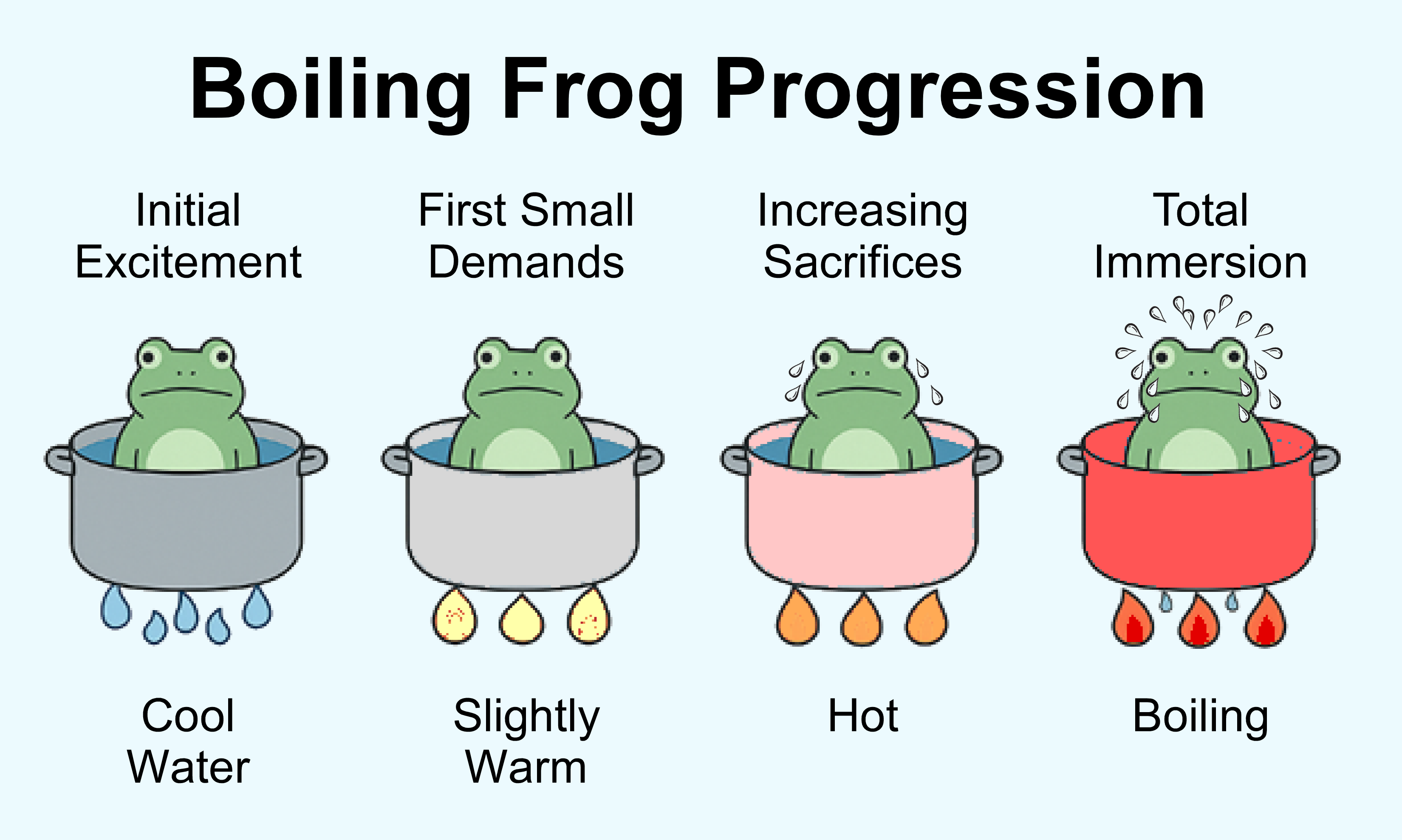
High-control groups rarely show their true face at first. They escalate demands gradually. Small favors become hours of service; a few classes become total life dedication. This mirrors the boiling frog metaphor: a frog placed in cool water that is slowly heated will fail to notice the danger until it is too late (Hoffer, 1951). In high-control groups, each incremental step normalizes the next, shifting members’ sense of what is acceptable and desirable. One signs up to become stronger, better, more confident. But in time, they find themselves painting houses, fixing cars, cutting lawns, and picking apples from trees. Others, even those considered high-level 7th- and 8th-degree martial arts practitioners, found themselves at the grandmaster’s beck and call, running errands, picking up his children from school, or maintaining homes late into the night for other members of the grandmaster’s family. And even others would come to find out that their wives were being violated by the grandmaster (as alleged by multiple high-level former members) while they were away handling other school business. But they all originally signed up because they just wanted to be better

The Demand: Conformity and Life Domination

A high-control environment crosses a critical line when it demands:

  • Adoption of the group’s beliefs as absolute truth.
  • Isolation from family, friends, and outside perspectives.
  • Complete control over finances, living arrangements, and time.

As one former member described:

The Tests: Can You Be Controlled?

Early tests appear benign: running errands, buying lunch/dinner, staying late, or accepting unusual requests. Compliance opens the door to greater demands such as:

Each act reinforces members’ willingness to surrender autonomy.

Indoctrination Through Exhaustion

After grueling physical sessions, mental and emotional defenses are lowered. Doctrinal messages “Only we know the truth,” “Others won’t understand,” are then delivered. This alternating pattern of exhaustion and indoctrination is a hallmark of high-control environments (Lifton, 1961). Intense physical exhaustion impairs critical thinking by depleting cognitive resources (Hockey, 2013), while acetylcholine enhances selective attention to salient stimuli, such as a leader’s directives (Sarter et al., 2006). Under fatigue, chaotic neural dynamics further disrupt prefrontal cortex function (Freeman, 1994), reducing skepticism and increasing reliance on group authority. This neurobiological triad (exhaustion + hyperfocus + disrupted judgment) creates fertile ground for compliance.

Financial Exploitation

High-control martial arts and self-help groups often sell an endless series of advanced courses, each promising unique secrets and requiring ever-larger payments. Promotions and rank tests become both a symbol of loyalty and a financial trap. Students believe they are climbing a ladder to mastery when in reality they are climbing deeper into dependence.

Shifts from Enthusiasm to Dependency

  • When training becomes the center of identity, eclipsing other relationships and interests.
  • When intuitive feelings of unease are rationalized away: “I’ve come too far to turn back now.”

Isolation from Outside Perspectives

  • Members are discouraged or forbidden from studying with other teachers or seeking alternative viewpoints.
  • Outsiders are framed as confused, ignorant, misguided, or even enemies.
  • This dynamic reflects classic groupthink theory, where pressure for conformity and insulation from dissenting voices fosters poor decision-making and blind loyalty (Janis, 1972).

Hierarchy and Absolute Authority

  • A central leader portrayed as infallible.
  • This reflects what sociologist Max Weber described as “charismatic authority,” where devotion to an individual perceived as extraordinary cements hierarchical control (Weber, 1947).
  • Senior members policing behavior and loyalty.

Total Lifestyle Control

  • Living with fellow members to ensure surveillance and group reinforcement.
  • Careers guided or manipulated to keep members financially tied to the group.

When the Most Loyal Turned Away

Fourteen upper-management instructors, including the master at the top of this organization, were incarcerated for federal crimes. Most served approximately 4.5 years in federal prison. Upon their release, only four members returned to the master’s tutelage. The other eight former managers broke with the organization entirely, with some going on to mentor others about the abuses they once participated in or witnessed. Some of those have seemingly fallen off the face of the earth and want no contact with anyone ever connected to this group.

This is significant because these individuals were among the most loyal to the founder and considered the most qualified high-level practitioners. Many who once enforced the system’s harshest controls were later speaking out against it or at least demonstrating their rejection by refusing to return to the “old school ways.”

I personally knew and learned from most of the top instructors who were later incarcerated. For some, I trained with them only occasionally, but with others, I studied under them extensively for many years. I benefited greatly from these individuals, as I genuinely liked them and deeply respected their martial arts abilities and knowledge. However, as I grew wiser and recognized that many of them lacked a moral compass or treated serious ethical matters flippantly, it became increasingly difficult to accept their guidance on life, direction, or any discussions of morality and ethics.

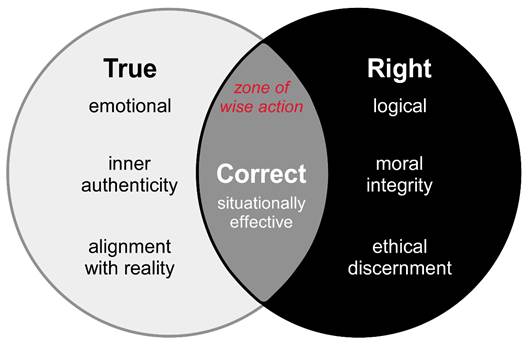
Over time, I came to respect those who left the group at this level, realizing they had developed a better ability to distinguish between what was true, right, and correct.

Addressing “That Was Then, This Is Now”
Some current leaders of this organization may claim, “That was then; this is now,” suggesting that the abuses of the past are no longer relevant because the individuals responsible are gone. Yet a closer look reveals a different reality: today’s upper management includes original managers who were themselves incarcerated for their roles in the organization’s wrongdoing, or others who, while not imprisoned, were fully aware of or complicit in the questionable practices that occurred.

There was an overwhelming degree of coercion, deception, and manipulation originating from the top members of this organization. Whether the grandmaster directly orchestrated this behavior, actively encouraged it, was complicit by turning a blind eye, or though least likely, was entirely oblivious to these actions, the result is deeply troubling. Regardless of the explanation, such widespread misconduct stands in stark contrast to the image of someone claiming to embody high moral character or serve as a spiritual leader.

This continuity of leadership raises important questions about whether the group has truly changed, or whether the same patterns of control, secrecy, and abuse remain embedded in its structure. If behaviors have truly changed, how sad that self-reflection only came about due to so many sincere, good-hearted and well-meaning people having left this organization.

A key insight from my experiences is the conflict between gut instinct and self-justification. Early in immersion, most members sense subtle discomfort. Something feels “off.” But instead of heeding this intuition, they explain it away:

This process of cognitive dissonance causes people to ignore warning signs and deepen their commitment (Festinger et al., 1956). The greater the investment, the harder it becomes to acknowledge the truth.

The vivid use of the boiling frog metaphor deserves emphasis:

This gradualism makes high-control groups especially dangerous: they do not demand total loyalty overnight, but cultivate it through subtle, cumulative steps. This pattern of gradual escalation aligns with the “foot-in-the-door” technique described in social psychology, where compliance with small requests increases the likelihood of agreeing to larger ones over time (Freedman & Fraser, 1966).

It’s important to recognize the significant difference between incremental indoctrination or grooming, where gradual exposure is used to normalize harmful or abusive dynamics and incremental training of the mind, body, and spirit, which is a deliberate progression designed to foster genuine improvement and self-mastery. True martial arts and self-mastery types of instruction should guide students through gradual challenges to build skills, confidence, and character, not to manipulate or erode their autonomy.

This saying captures how rituals, loyalty, and hierarchical structures can feel like supportive traditions to some, yet oppressive or manipulative to others. Recognizing these parallels helps us understand that intense commitment or exclusive practices are not inherently abusive, but can become dangerous when questioning is discouraged, outsiders are demonized, and absolute loyalty is demanded.

Reflections on sports and religion show similarly how rituals, specialized jargon, uniforms, and passionate loyalty exist in many groups that are not inherently harmful. Sports fans, military units, and religious communities often foster unity through shared traditions. Yet, as we can observe, these elements can be twisted when groups:

  • Discourage outside perspectives.
  • Frame dissenters as unworthy.
  • Require absolute loyalty.

This parallels research showing that when group dynamics become rigid, they can turn into echo chambers where questioning is stifled (Kottak, 2019; Peretz & Fox, 2021).

Seeing the Truth

Admitting a group’s true nature can be harder than enduring it. Even overwhelming external evidence (e.g., investigative exposés) may initially be rejected. As one former member recounted:

Reassessing the Dream

Leaving often requires reassessing the fantasy that drew one in. This is difficult, as these dreams shape identity. Letting go feels like losing oneself, but it is a necessary step toward recovery.

Rebuilding Identity

Breaking free means redefining oneself outside the group’s narratives:

  • Recognizing what skills and lessons can be retained without toxic elements.
  • Building new relationships.
  • Pursuing goals based on personal values, not imposed ideology.

Experiences in high-control groups can leave scars but also forge strength. Discipline, perseverance, and mental resilience gained through hardship can serve individuals well after they leave. As one survivor noted:

Post-Traumatic Growth: Transforming Adversity into Strength
While surviving a high-control environment can leave lasting scars, it can also create an opportunity for post-traumatic growth (PTG). PTG refers to positive psychological change experienced as a result of struggling with challenging circumstances (Tedeschi & Calhoun, 2004). For some, leaving an abusive or manipulative group can spur a newfound personal strength, deeper relationships, openness to new possibilities, and a greater appreciation for life. Recognizing these possibilities can empower survivors to move beyond their past, knowing their experiences do not define who they are, but can shape them into wiser, more resilient individuals.

Not every passionate or exclusive group is dangerous. Closed groups can preserve traditions and foster focused learning, but also exist within ethical communities:


✅ Encourage critical thinking and questions.
✅ Allow members to seek outside perspectives.
✅ Balance loyalty with autonomy.
✅ Maintain transparency about teachings and leadership.

Conclusion

Those that need to hear of this information will have read this far. Those unwilling to consider these facts may remain in denial, but this work is here for those ready to see. High-control dynamics can emerge in any setting, from martial arts schools to religious organizations or corporate cultures. Recognizing signs of manipulation, immersion by degrees, discouraging outside viewpoints, financial exploitation, etc. Authentic communities foster growth through openness, humility, and respect, not fear or blind loyalty. They seek to empower individuals to protect themselves and others.

If this article resonates with you, considering reading my book that elaborates on these topics but with more depth for personal growth and self-transformation. Find it at: https://a.co/d/hxPahVX

References

Dunning, D., & Kruger, J. (1999). Unskilled and unaware of it: How difficulties in recognizing one’s own incompetence lead to inflated self-assessments. Journal of Personality and Social Psychology, 77(6), 1121–1134. https://doi.org/10.1037/0022-3514.77.6.1121

Festinger, L., Riecken, H. W., & Schachter, S. (1956). When Prophecy Fails. Harper-Torchbooks.

Freeman W. J. (1994). Role of chaotic dynamics in neural plasticity. Progress in brain research, 102, 319–333. https://doi.org/10.1016/S0079-6123(08)60549-X

Freedman, J. L., & Fraser, S. C. (1966). Compliance without pressure: The foot-in-the-door technique. Journal of Personality and Social Psychology, 4(2), 195–202. https://doi.org/10.1037/h0023552

Hockey, R. (2013). The psychology of fatigue. Cambridge University Press.
DOI: 10.1017/CBO9781139015394

Hoffer, E. (1951). The True Believer: Thoughts on the Nature of Mass Movements. Harper.

Janis, I. L. (1972). Victims of groupthink: A psychological study of foreign-policy decisions and fiascoes. Houghton Mifflin.

Kottak, C. P. (2019). Mirror for Humanity: A Concise Introduction to Cultural Anthropology. McGraw-Hill.

Peretz, E., & Fox, J. A. (2021). Religious discrimination against groups perceived as cults in Europe and the West. Politics, Religion & Ideology, 22(3-4), 415–435. https://doi.org/10.1080/21567689.2021.1969921

Sarter, M., Gehring, W. J., & Kozak, R. (2006). More attention must be paid: the neurobiology of attentional effort. Brain research reviews, 51(2), 145–160. https://doi.org/10.1016/j.brainresrev.2005.11.002

Statista. (2023, May 4). Sports fans share in the U.S. 2023. https://www.statista.com/statistics/300148/interest-nfl-football-age-canada/

Tedeschi, R. G., & Calhoun, L. G. (2004). Posttraumatic growth: Conceptual foundations and empirical evidence. Psychological Inquiry, 15(1), 1–18. https://doi.org/10.1207/s15327965pli1501_01

YPulse. (2023, June 15). NA vs WE: Who Are the Bigger Sports Fans? https://www.ypulse.com/article/2022/05/19/we-na-vs-we-who-are-the-bigger-sports-fans/

Exploring Wei Dan, Qigong, and Nei Dan

A Detailed Summary to Daoist Alchemy from Chinese and Korean Internal Arts

Traditional Chinese internal arts offer a rich system of physical, energetic, and spiritual practices. Key concepts include Wei Dan (外丹), Qigong (气功), and Nei Dan (内丹). Understanding these three terms alongside their Korean martial arts parallels, clarifies important distinctions in the pursuit of health, self-mastery, and spiritual growth.

Definition: “Outer Elixir.” Wei Dan refers to ancient Daoist alchemical practices that sought to create physical elixirs for longevity or immortality by processing minerals and herbs externally (Pregadio, 2018).

Methods: Involves chemical experimentation with substances like mercury, arsenic, and cinnabar, (often highly toxic) which were ingested or used topically in pursuit of physical immortality.

Goals: Attain longevity or immortality by altering the body through external means.

Philosophy: Belief that the secrets of life and transformation can be discovered and harnessed in the material world outside the practitioner, reflecting an outward search for transcendence.

Definition: “Energy Work.” Qigong encompasses practices that combine breath control, movement, visualization, and meditation to regulate and cultivate qi, the vital energy believed to animate life (Jahnke, 2002).

Method: Includes dynamic routines (e.g., Ba Duan Jin), static postures (e.g., Zhan Zhuang), breath regulation, and mental focus to circulate qi along the body’s meridians.

Goals: Promote health, increase vitality, balance emotions, and prepare body and mind for advanced practices.

Philosophy: The human body is a microcosm of the universe, and by harmonizing breath, movement, and mind, practitioners align themselves with natural laws (Yang, 1997).

Definition: “Inner Elixir.” Nei Dan is the highest level of Daoist internal cultivation, dedicated to refining one’s essence (jing), energy (qi), and spirit (shen) through advanced meditative and energetic practices (Mitchell, 2011).

Method: Involves breath retention, microcosmic orbit meditation, sexual energy control, visualization of energy flows, and progressive transformation of jing → qi → shen → emptiness (xu).

Goals: Achieve spiritual immortality, realization of one’s true nature, and union with the Dao.

Philosophy: Transformation must occur internally; by purifying one’s own mind-body-spirit, practitioners embody the Daoist ideal of returning to original emptiness and harmony with the cosmos.

Comparing Chinese and Korean Terms

Korean martial arts use similar-sounding terms of Wae Gong, Gi Gong, and Nae Gong, which overlap but don’t always match the Chinese Daoist meanings:

Korean TermHangul / HanjaSimilar Chinese ConceptSame Practice?Notes
Wae Gong외공 / 外功Wei Dan (外丹)NoRefers to physical conditioning in martial arts, not Wei Dan’s alchemy
Gi Gong기공 / 氣功Qigong 气功YesPractices are nearly identical; focuses on breath, energy, and movement
Nae Gong내공 / 內功Nei Dan 内功PartiallyInternal energy work similar to Nei Gong; not necessarily advanced Nei Dan alchemy (Yang, 2007).

Etymological Breakdown of Chinese Characters

Understanding the roots of the Chinese characters deepens appreciation of these arts:

  • 外 (Wài): 6 strokes. Components 夕 (evening) + 卜 (divination) → symbolizes seeking knowledge outside oneself.
  • 气 (Qì): 4 strokes. Ancient forms depict swirling vapor → breath, vital energy.
  • 内 (Nèi): 4 strokes. 冂 (enclosure) + 人 (person) → shows a person inside boundaries → introspection.

These etymologies reflect core Daoist themes of balancing inside (内) and outside (外), and cultivating qi (气) to align with the Dao (Qiu, 2000).

Integrated Comparison Table

AspectWei Dan (外丹)Qigong (气功)Nei Dan (内丹)
MeaningExternal elixir/alchemyEnergy skill/cultivationInternal elixir/alchemy
MethodChemical concoctionsBreath, movement, meditationAdvanced meditative transformation
GoalPhysical immortalityHealth, vitality, stress reliefSpiritual immortality/enlightenment
Korean ParallelWae Gong (not equivalent)Gi Gong (equivalent)Nae Gong (partially equivalent)

Conclusion

Wei Dan, Qigong, and Nei Dan represent distinct layers of Daoist health and spiritual practices: Wei Dan’s external focus, Qigong’s energy cultivation, and Nei Dan’s profound internal alchemy. Meanwhile, Korean martial arts terms like Wae Gong, Gi Gong, and Nae Gong reflect overlapping ideas but emphasize martial conditioning, energy work, and internal strength, respectively.

Understanding these differences empowers practitioners to choose a path aligned with their goals, whether health, martial skill, or spiritual awakening.

References

Jahnke, R. (2002). The Healing Promise of Qi: Creating Extraordinary Wellness Through Qigong and Tai Chi. Contemporary Books.

Mitchell, D. (2011). Daoist Nei Gong: The Philosophical Art of Internal Alchemy. Singing Dragon

Pregadio, F. (2018). The Taoist Alchemy: Nei Dan and Wei Dan in Chinese Tradition. Golden Elixir Press.

Qiu, X. (2000). Chinese Writing. The Society for the Study of Early China & The Institute of East Asian Studies.

Yang, J. M. (2007). Qigong for Health & Martial Arts: Exercises & Meditation. YMAA Publication Center.

Note: I could find no single authoritative English-language source compiling the terminology of Wae Gong, Gi Gong, and Nae Gong. These terms are part of Korean martial arts oral traditions and school teachings, with meanings overlapping but not identical to the Chinese concepts discussed here.