Early Summer in Traditional Chinese Medicine

Fire Element, Circulation, and the Nervous System

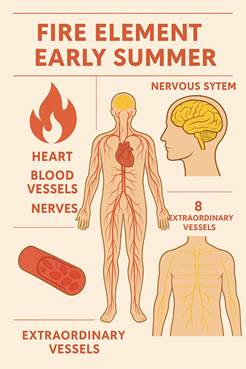
As nature enters early summer, Traditional Chinese Medicine (TCM) views this vibrant season through the lens of the Fire element, a phase of maximum Yang, warmth, expansion, and communication. Fire governs not only the Heart and blood vessels, but also the nervous system, emotions, and spiritual awareness. This inner fire fuels both our physical vitality and our mental clarity. In this unique seasonal phase, the flow of Qi, Blood, and Shen (spirit), especially through the veins, arteries, and the Eight Extraordinary Meridians takes center stage.
Understanding the dynamic between the Fire element, cardiovascular and neurological systems, and the deeper energetic channels allows us to harmonize body, mind, and spirit during this high-energy time of year.

🔥 Fire Element and Its Associations

In TCM’s Five Phase (Wu Xing) framework, Fire is associated with:

  • Season: Early Summer
  • Organs: Heart (Yin) and Small Intestine (Yang)
  • Emotions: Joy, enthusiasm, overexcitement, or mania
  • Body Tissue: Blood vessels and the nervous system
  • Sense Organ: Tongue
  • Color: Red
  • Climate: Heat
  • Direction: South
  • Taste: Bitter (Maciocia, 2005; Deadman et al., 2007)

Fire energy is expansive and expressive, symbolizing circulation, communication, and consciousness. When well-regulated, Fire fuels love, clarity, movement, and insight. When excessive, it can consume the mind and disturb the spirit.

❤️ Heart, Blood Vessels, and Nervous Regulation

The Heart (Xin) is considered the “Emperor” of the body, orchestrating the flow of Qi and Blood and serving as the seat of Shen (mind/spirit). TCM describes its functions as:

  • Governing the blood and blood vessels
  • Housing the Shen, which includes consciousness, thought, memory, and emotions
  • Regulating mental activity and sleep (Maciocia, 2005)

The blood vessels, seen as pathways of both Blood and Qi, rely on the Heart’s warmth and rhythm to remain supple and open. But TCM also suggests that nerve-like communication and coordination are part of the Heart’s governance.

In modern integrative interpretations:

  • The autonomic nervous system (ANS), particularly the parasympathetic “rest-and-digest” functions, mirrors the Heart’s role in maintaining emotional and physical balance.
  • Excess Fire may overstimulate the sympathetic nervous system, leading to agitation, insomnia, hypertension, palpitations, and anxiety.
  • Deficient Heart Fire may lead to neurovegetative fatigue, poor concentration, and low vitality (Kaptchuk, 2000).

Thus, the vascular and neurological systems are harmonized through Fire’s balance affecting everything from blood pressure to mood and mental performance.

🧠 Fire Element and the Nervous System

TCM may not anatomically label the nervous system as Western medicine does, but the concepts of Shen, Yi (intellect), and Zhi (willpower) reflect cognitive and neurological activity.

In early summer:

  • Shen becomes more active and outward, seeking expression, connection, and joy.
  • The Du Mai (Governing Vessel) linked with the brain and spine, rises in importance, guiding mental alertness and emotional regulation.
  • The Fire element’s influence supports neurotransmitter balance, sleep-wake cycles, and emotional processing.

From a modern neurobiological point of view, this aligns with the brain-heart connection:

  • Heart Rate Variability (HRV), a marker of nervous system resilience, increases with parasympathetic tone, a goal of Heart-focused qigong and meditation
  • Practices that balance Heart Fire can directly impact the vagus nerve, thereby stabilizing emotions and stress responses (Porges, 2011)

🩸 Extraordinary Meridians and Fire Circulation

The Eight Extraordinary Meridians function as deep energetic reservoirs, regulating circulation, constitutional energy, and emotional integration (Larre et al. (1996). In early summer, these vessels help modulate the Fire element’s rise and distribute Qi and Blood in ways that nourish the whole system.

1. Chong Mai (Penetrating Vessel)

  • Sea of Blood, linked to Heart and uterus
  • Balances hormonal and emotional rhythms
  • When Fire is excess: anxiety, chest oppression, uterine bleeding

2. Ren Mai (Conception Vessel)

  • Nourishes Yin; anchors the Heart through calming fluids
  • Connects deeply to Heart-Yin and Shen stabilization

3. Du Mai (Governing Vessel)

  • Axis of Yang energy; influences brain, spine, and nervous system
  • Becomes overactive when Fire flares upward, causing insomnia or hyperarousal

4. Dai Mai (Belt Vessel)

  • Regulates Qi flow around the waist, harmonizes rising Fire from middle and lower burners

By supporting these vessels through breathwork, meditation, herbs, and seasonal living, we can help regulate the Fire element’s effects on circulatory, emotional, and neurological functions.

🌿 Seasonal Strategies for Summer Balance

🔹 Qigong & Meditation

  • Heart-centered qigong and the Inner Smile meditation bring Shen home to the Heart
  • Breathing practices that lengthen the exhale can calm the nervous system and increase vagal tone
  • Include “Cooling the Fire” meditations to harmonize Du Mai and Shen

🔹 Lifestyle Adjustments

  • Avoid overstimulation, especially from social media, caffeine, or excess sun
  • Go to bed earlier, maintain emotional equanimity
  • Emphasize connection over excitement
  • Prioritize joyful stillness rather than external thrill-seeking

🌀 Summary: Fire’s Intelligence in the Body

Early summer is the season of Shen and circulation, a time when the Fire element stimulates outward movement, connection, and the full flowering of human potential. Yet this power must be anchored. Overexertion, excess heat, and emotional overload can disrupt the Heart, destabilize the nervous system, and drain the blood vessels and extraordinary meridians.

Through awareness, breath, and regulation, we can cultivate a sovereign Heart, a resilient mind, and an inner flame that warms but never burns.
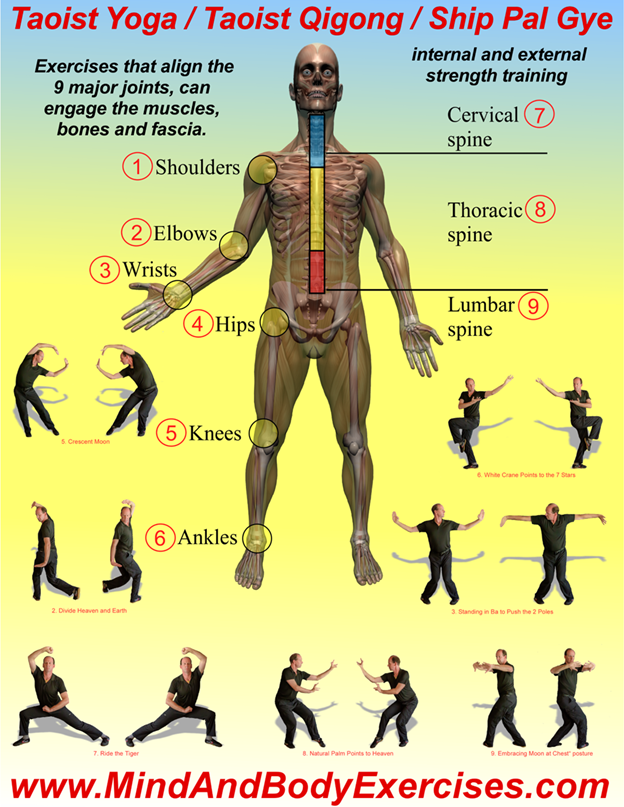
8 Vessels Qigong

References:

Deadman, P., Al-Khafaji, M., & Baker, K. (2007). A Manual of Acupuncture. Journal of Chinese Medicine Publications.

Kaptchuk, T. J. (2000). The Web That Has No Weaver: Understanding Chinese Medicine (2nd ed.). McGraw-Hill.

Larre, C., de la Vallée, E., & Rochat de la Vallée, E. (1996). The Eight Extraordinary Meridians: Spirit of the Vessels. Monkey Press.

Maciocia, G. (2005). The Foundations of Chinese Medicine: A Comprehensive Text for Acupuncturists and Herbalists (2nd ed.). Elsevier Churchill Livingstone.

Porges, S. W. (2011). The polyvagal theory: Neurophysiological foundations of emotions, attachment, communication, and self-regulation. W. W. Norton & Company.

From Wuji to Tai Chi

Understanding the Evolution of Supreme Principles in Daoist Cosmology

In the study of Daoist philosophy and traditional Chinese thought, the term “Tai Chi” (太極) is widely recognized as referring to the Supreme Ultimate, a foundational principle in the universe from which all dualities (yin and yang) arise (Liao,1990).

Practitioners of Tai Chi Chuan may know the term as associated with martial arts, yet its roots are far deeper, embedded in cosmology, metaphysics, and classical Daoist thought.

But what if we go one step earlier, or even further back? What came before Tai Chi? And what of other similarly constructed terms such as “Tai Su” (太素) and “Tai Yu” (太宇)? Are they simply linguistic variants, or do they represent unique philosophical concepts in the evolution of universal principles?

Wuji (無極): The Limitless Void

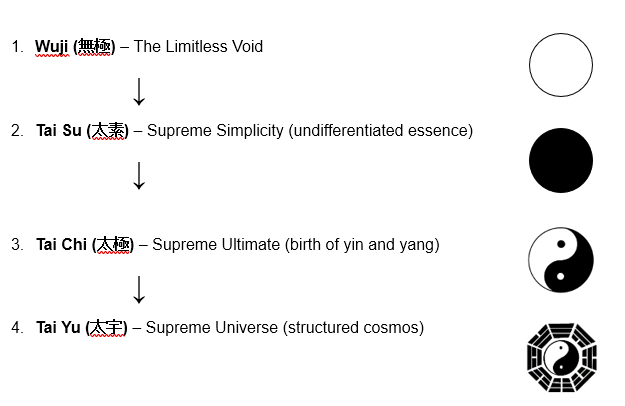
In the beginning was Wuji, often translated as “non-ultimate” or “limitless.” Wuji represents pure potential being formless, timeless, and undivided. It is the Dao before manifestation (Robinet, 1997). In diagrams, Wuji is usually shown as an empty circle or a vast blank space, signifying the absence of polarity.

Wuji

Tai Su (太素): The Supreme Simplicity

Emerging from Wuji is Tai Su, a term less commonly discussed but highly significant in classical Daoist texts.

  • Tai (太) = supreme or great
  • Su (素) = simple, elemental, unadorned, or fundamental substance

Tai Su is understood as the primordial essence or supreme simplicity. A state where differentiation is beginning to arise but not yet fully formed. It is the first stirring of substance, the bridge between the void and duality. In Huainanzi, Tai Su is mentioned as a precursor to cosmic formation (Le Blanc & Mathieu, 2008). In early Chinese alchemy and cosmology, it represents the primordial qi that has yet to divide into yin and yang (Pregadio, 2008).

Simplicity

Tai Chi (太極): The Supreme Ultimate

When differentiation occurs, Tai Chi comes into being. The term, often Romanized as Taiji, literally means Supreme Ultimate.” This is the phase where the one becomes two: yin and yang emerge as complementary polarities (Liao,1990).

Tai Chi is typically symbolized by the Taijitu, the black-and-white “yin-yang” symbol, expressing balance, transformation, and interdependence. In this state, movement and stillness alternate, giving rise to all forms in the universe (Kirkland, 2004).

Taijitu

Tai Yu (太宇): The Supreme Universe

Tai Yu introduces a more spatial or structural aspect to cosmology.

  • Yu (宇) refers to the universe, cosmic space, or even the eaves of a roof, or a poetic image of a sheltering order.
  • Thus, Tai Yu translates to “Supreme Universe” or “Great Cosmos.”

While Tai Chi marks the origin of dynamic duality, Tai Yu is more about manifested order, and the structured universe as it exists with stars, planets, natural laws, and cycles (Graham, 1989). It is not a transitional phase but the result of the Tai Chi mechanism unfolding through space and time.

Cosmological Sequence Diagram

To visualize this progression, the accompanying diagram illustrates the unfolding of the cosmos:

TermTranslationSymbolMeaning
WujiLimitless VoidEmpty circle (〇)Undifferentiated nothingness
Tai SuSupreme SimplicitySolid black circle (●)Primordial essence
Tai ChiSupreme UltimateYin-Yang (☯ / Taijitu)Birth of duality
Tai YuSupreme UniverseBagua or Heaven–Earth (八卦 / 天地)Manifest cosmos; structured reality

Cultural and Linguistic Notes: Korean Equivalents

In Korean, these terms are written in Hanja (Chinese characters used in Korean language):

  • Tai Chi (太極)Tae Guk (태극), as seen in the South Korean flag
  • Tai Su (太素)Tae So (태소) (rarely used in common language)
  • Tai Yu (太宇)Tae U (태우) (used in poetic or classical references)

While the philosophical usage remains mostly consistent with Chinese meanings, these terms are far less prevalent in Korean popular culture outside of Tae Guk.

Conclusion: A Philosophical Framework of Evolution

From non-being to primordial essence, and from dynamic polarity to cosmic order, this cosmological sequence illustrates how Daoist philosophy views the evolution of the universe not as a chaotic explosion, but as an elegant, cyclical, and ordered unfolding.

Whether you are a practitioner of martial arts, a student of Daoist metaphysics, or a philosopher of natural laws, understanding Wuji → Tai Su → Tai Chi → Tai Yu offers a powerful lens through which to view the origin of all things and your own place within the ever-unfolding Tao.

Important to note, in martial arts culture, Tai chi, Tai Su, Tai Yu, Tae Guk and Tai Chi Chung are all very different forms of mental, physical and spiritual practices. While some may share some similarities, anyone who has deeply studied and practiced these methods is aware of their varying nuances and complexities.

TermCharactersTranslationPhilosophical Meaning
Wuji無極Non-Ultimate / LimitlessThe primordial void; pure potential without polarity
Tai Su太素Supreme Simplicity / Primordial EssenceUndifferentiated, fundamental matter—precursor to form and duality
Tai Chi太極Supreme UltimateThe origin of duality (yin and yang); dynamic balance
Tai Yu太宇Supreme Universe / Great CosmosThe structured universe or cosmic order that emerges after duality

References:

Blanc, C. L., & Mathieu, R. (2008). Approches critiques de la mythologie chinoise. https://doi.org/10.4000/books.pum.19027

Graham, A. C. (1989). Disputers of the Tao: Philosophical Argument in Ancient China. Open Court.

Kirkland, R. (2004). Taoism: The Enduring Tradition. Routledge.

Pregadio, F. (2008). The Encyclopedia of Taoism. Routledge.

Robinet, I. (1997). Taoism: Growth of a Religion. Stanford University Press.

Liao, W. (n.d.). T’ai chi classics. Shambhala. https://www.shambhala.com/t-ai-chi-classics.html

Chronic Illness, Shrinking Circles, and the Crisis of Modern Aging

I’ve spent over 40 years teaching others how to live well, not just physically, but mentally, emotionally, and spiritually. I’ve taught classes, delivered lectures, produced hundreds of educational videos, and authored more than 30 books on health, martial arts, mindfulness, personal growth and self-mastery. My mission has always been clear: to help people avoid the slow decline into pain, isolation, and despair that so often accompanies aging.

And yet, here I am at 61 and asking the hard question:

The Uncomfortable Truth Few Want to Face

Over the years, I’ve watched countless people, friends, former students, co-workers, even family members, slide into chronic illness, mental stagnation, and deep loneliness. Their bodies give out. Their thoughts become incessant and negative. Their social circles shrink, often down to nothing. And worst of all, society tends to look away. People in pain make others uncomfortable. We don’t have to age this way, and we certainly don’t have to suffer in silence. Still, the outcomes I see around me are too often the same.

I have never claimed to have all the answers. Only the experience of walking this road with care, curiosity, and a deep respect for the process. I don’t sell miracle cures or promise instant transformation. I’ve simply chosen to live and teach what I know from having stayed on the path.

What’s most heartbreaking is that this pattern isn’t just anecdotal, it’s documented. One of the most important and longest-running psychological studies in history, the Harvard Grant Study, which began in the 1930s and followed hundreds of men (and later women) throughout their entire lives, revealed something striking:

Those who maintained close, supportive connections, with friends, family, or community, aged better, lived longer, and experienced less pain and decline than those who didn’t.

This truth has deeply influenced my understanding of health. It affirmed what I had already intuited through years of teaching: isolation and disconnection are just as deadly as any disease.

Why Is It So Hard to Reach People?

It’s not that people don’t know the truth. Many understand what’s coming, in that neglecting the body, ignoring the breath, resisting change, and isolating oneself will eventually take a toll. But very few choose to act while there’s still time.

I’ve given my best efforts. I’ve tried to be an example. And yes, some have been moved. Some have changed their lives. But the deeper truth is that reaching people at scale, truly reaching them, has always felt like swimming against the tide. There’s an exhaustion that comes with trying to offer healing in a world more interested in convenience than discipline, distraction over reflection, and quick fixes over lasting change.

And Yet… This Work Gives Me Meaning

Despite the fatigue, the frustration, the quiet disappointments, this work still gives me purpose. It is, in fact, the very thing that keeps me well. Without this mission, I might have drifted long ago into the same darkness I warn others about.

  • I teach because it keeps me whole.
  • I guide others because someone once guided me.
  • I keep going because I believe the message matters, even when the audience is small.

So Where Do I Go From Here?

I don’t know exactly. But I do know this. I am no longer chasing a mass audience. I don’t need viral videos or bestseller lists. What I need now is connection with those who truly get it, who are ready, who are willing to walk the path, not just read about it.

Maybe that means smaller, deeper circles of mentorship. Maybe it means fewer books, but more personal conversations. Maybe it means continuing to teach, not from a podium, but from a place of presence.

An Invitation to You, Reader

If you’re reading this, and something in your heart resonates, if you’ve seen the same patterns of decline and loneliness and want a different outcome, I’m here.

I’m still walking along the path. I’m still learning, adapting, evolving.

And I sincerely invite you to walk it with me.

Let’s not wait until the body breaks down or the mind turns sour before we act.

Let’s build strength now in the body, the mind and also in the spirit.

Let’s stay connected to others, to meaning and purpose, and to ourselves.

This is not just about growing older. It’s about growing wiser, deeper, and more alive, together.

_________

Resources & Further Reading

The reflections in this article are deeply informed by the Harvard Study of Adult Development, a landmark longitudinal study that began in the late 1930s and followed hundreds of individuals for over 75 years. Originally known as the Harvard Grant Study, it remains one of the longest and most detailed examinations of adult life and well-being ever conducted.

This research uncovered three essential contributors to long-term happiness and healthy aging:

  1. Warm, supportive relationships – The most consistent predictor of happiness, physical health, and mental clarity was the strength and quality of one’s close relationships. Loneliness and isolation, by contrast, were strongly linked to earlier decline.
  2. Emotional adaptability – Those who fared best over time weren’t those without hardship, but those who learned how to regulate emotions, rebound from setbacks, and find meaning through challenges.
  3. A sense of purpose and engagement – Having work, projects, or passions that felt meaningful — even in later life — was a powerful anchor for mental and emotional resilience.

“Good relationships keep us happier and healthier. Period.”
— Dr. Robert Waldinger, current director of the study

If you’re interested in learning more about these findings and their practical implications for your own life, consider the following resources:

Options for Managing Chronic Pain #2

Managing Chronic Pain Naturally: Integrating Traditional Wisdom with Modern Science

Chronic pain and stress affect millions of people today, often leading to dependency on pharmaceutical interventions that merely mask symptoms. But there are time-tested, natural ways to promote healing and resilience by working with the body’s innate intelligence.

In a recent lecture, I shared insights from over 40 years of practice in Traditional Chinese Medicine (TCM), holistic movement, breathwork, and energy therapies. This article summarizes key concepts and practical tools from that presentation, blending ancient wisdom with contemporary research to empower your self-care journey.

A Holistic Approach to Chronic Pain

TCM views chronic pain not as an isolated symptom but as the result of disharmony in the body’s energy systems. Through modalities such as acupuncture, cupping, herbal therapy, and breathwork, TCM helps restore balance, encourage circulation, and reduce inflammation.

Yet the modern view adds valuable understanding: chronic stress, shallow breathing, emotional suppression, and sedentary lifestyles all contribute to nervous system dysregulation and persistent pain. The solution lies in integrating breath, movement, awareness, and lifestyle shifts, all of which support long-term healing.

Breathing: The Foundation of Resilience

We often overlook the quality of our breath. Most adults default to shallow chest breathing, reducing oxygen intake and maintaining a low-level fight-or-flight state. In contrast, deep diaphragmatic (abdominal) breathing, as seen in babies and trained performers, nourishes the body and calms the nervous system.

By practicing techniques such as “box breathing” (inhaling, holding, exhaling, holding in equal segments), we can retrain our breathing patterns. Studies show this can lower the respiratory rate from 12–15 breaths per minute to as few as 4, promoting parasympathetic (“rest and digest”) activation and improving resilience (Jerath et al., 2006).


Autogenic training, which combines breath with mental imagery (e.g., sensations of lightness or warmth), offers another powerful tool to redirect the mind away from pain and tension (Fuster, 1959).

Emotions and Organ Health: The TCM Perspective

Traditional Chinese Medicine teaches that emotions are deeply connected to organ systems:

  • Grief affects the lungs
  • Fear affects the kidneys
  • Anger affects the liver
  • Joy affects the heart

Chronic emotional states can block energy (Qi) flow, weakening organ function and fostering illness. Western research supports this: stress hormones like cortisol impair digestion, immunity, and tissue repair (McEwen, 1998).

Mindfulness, breathwork, and emotional regulation are not optional — they are essential for maintaining health and preventing chronic disease.

Movement and Reflexology: Tools for Daily Practice

Pain often leads to inactivity, which worsens circulation and energy stagnation. Safe, enjoyable movement is key. Practices like Tai Chi, swimming, gentle yoga, and controlled resistance training engage respiratory and postural muscles without exacerbating pain.

In addition, reflexology offers a simple method for self-care. Using tools like a golf ball or spiky massage ball to stimulate reflex zones on the feet, hands, and ears enhances circulation and soothes nerve pathways. Reflexology aligns with both TCM meridian theory and Western understanding of dermatomes and nerve reflex arcs (Ernst, 2009).

Sensory Input: A Subtle Yet Powerful Factor

We are constantly influenced by sensory stimuli: sound, light, smell, touch, and temperature.

  • Soothing music and pleasant aromas can promote relaxation
  • Harsh noise and unnatural lighting can trigger stress responses

Creating an intentional sensory environment is a subtle but powerful lever for healing and nervous system regulation (Ulrich et al., 1991).

Integrating Traditional and Modern Tools

Lasting relief from chronic pain comes from addressing its root causes, not just numbing the symptoms. An integrated approach combines:

  • Traditional therapies: acupuncture, moxibustion, herbal remedies
  • Breath practices: box breathing, autogenic training
  • Movement: gentle, customized exercise
  • Emotional awareness: mindfulness, journaling, supportive community
  • Sensory care: cultivating nourishing environments
  • Self-care tools: reflexology, energy work

Quick pharmaceutical fixes may offer temporary relief but do not build long-term resilience. A holistic model supports healing from within, empowering you to become an active participant in your well-being.

Conclusion

Pain is a complex experience woven from physical, emotional, and energetic threads. By understanding this interconnectedness and by applying time-tested practices we can shift from passive suffering to empowered self-care.

Breath, movement, emotional balance, and sensory awareness are accessible to all. With consistent practice, these simple tools can transform not only how we experience pain but how we experience life itself.

References:

Ernst, E. (2009). Is reflexology an effective intervention? A systematic review of randomised controlled trials. The Medical Journal of Australia, 191(5), 263–266. https://doi.org/10.5694/j.1326-5377.2009.tb02780.x

Fuster, J. M. (1959, November 1). AUTOGENIC TRAINING: A psychophysiologic approach in psychotherapy. https://pmc.ncbi.nlm.nih.gov/articles/PMC1577930/

Jerath, R., Edry, J. W., Barnes, V. A., & Jerath, V. (2006). Physiology of long pranayamic breathing: Neural respiratory elements may provide a mechanism that explains how slow deep breathing shifts the autonomic nervous system. Medical Hypotheses, 67(3), 566–571. https://doi.org/10.1016/j.mehy.2006.02.042


McEwen, B. S. (1998). Protective and damaging effects of stress mediators. New England Journal of Medicine, 338(3), 171–179. https://doi.org/10.1056/nejm199801153380307

Ulrich, R. S., Simons, R. F., Losito, B. D., Fiorito, E., Miles, M. A., & Zelson, M. (1991). Stress recovery during exposure to natural and urban environments. Journal of Environmental Psychology, 11(3), 201–230. https://doi.org/10.1016/s0272-4944(05)80184-7

The Evolution of Luohan Qigong and Shaolin Martial Arts: Bodhidharma’s Legacy in Physical and Spiritual Cultivation

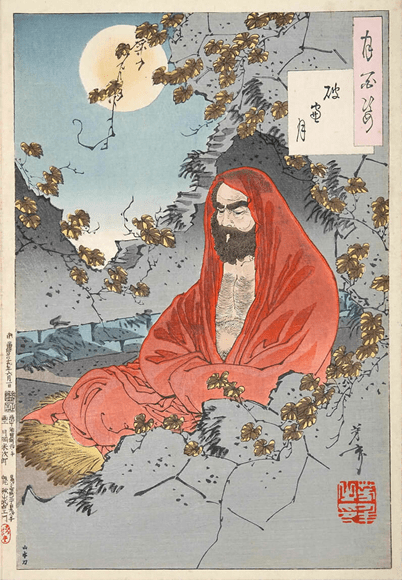
The historical narrative of martial arts in China is deeply interwoven with spiritual cultivation, particularly through the legendary influence of Bodhidharma (Damo), the Indian monk credited with introducing Chan (Zen) Buddhism to the Shaolin Temple. His teachings are widely regarded as the seed of Shaolin martial arts, combining meditative discipline with physical conditioning through systems such as the YiJin Jing (Muscle-Tendon Changing Classic) and the 18 Luohan Hands. These practices, over centuries, evolved into the sophisticated combat and wellness system now known as Shaolin Kung Fu.

Bodhidharma’s Contributions

Bodhidharma’s arrival at the Shaolin Monastery in roughly the 5th or 6th century CE introduced transformative practices focused on both internal and external cultivation. He is traditionally credited with teaching three major systems:

Chan meditation – promoted inner stillness and enlightenment through direct experience and introspection (Red Pine, 1987)

YiJin Jing (Muscle and Tendon Changing) and Xisui Jing (Marrow Cleansing Classic).  Which the two were physical regimens aimed at strengthening the body, improving Qi circulation, and preparing monks for long periods of seated meditation (Shahar, 2008).

YiJin Jing: Conditioning the Body for Higher Purpose

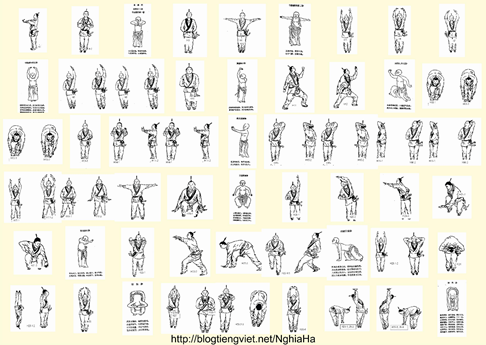
The YiJin Jing consists of dynamic tension exercises that train the musculature, tendons, and fascia, preparing the body not only for martial use but also for maintaining vitality and structural integrity. These exercises, according to tradition, were prescribed by Bodhidharma to enhance the monks’ endurance and resistance to fatigue and essential for rigorous spiritual practices (Henning, 1999). Movements from YiJin Jing later evolved into practical combat sequences, emphasizing controlled breathing, rooted stances, and explosive force, characteristics now central to Shaolin martial arts.

YiJin Jing (Muscle & Tendon Changing)

18 Luohan Hands: The Proto-Forms of Shaolin Kung Fu

The 18 Luohan Hands are a set of Qigong-like movements, traditionally considered the earliest structured exercises linking health cultivation and martial efficacy. These forms included basic palm strikes, circular motions, and integrated breath control. These elements would later become foundational for Shaolin fighting systems. Over time, they were elaborated into more complex forms such as Luohanquan (Arhat Fist), a style known for its precise, direct strikes and meditative underpinnings (Shahar, 2008).

13 Luohan Qigong: Bridging Internal and External

A related tradition, 13 Luohan Qigong, comprises a sequence of exercises that further integrates internal energy development with martial readiness. Each of the 13 movements targets specific energetic pathways and anatomical functions. For instance, “Luohan Draws the Bow” emphasizes lung expansion and Qi projection, while “Luohan Stands on One Leg” cultivates balance and stability. These movements not only reinforce martial mechanics but also nurture internal harmony, resonating with Taoist and Buddhist philosophies on health and enlightenment (Yang, 2010).

The Synthesis into Shaolin Martial Arts

The transition from static Qigong forms to combative martial art forms at Shaolin was catalyzed by the necessity of self-defense and discipline. The YiJin Jing provided the physiological robustness and tendon strength required for explosive movement, while the 18 Luohan Hands offered the basic motor patterns and coordination that could be adapted into fighting techniques. By combining these with Chan Buddhist principles and eventually incorporating external influences such as Chinese military tactics and folk styles, Shaolin monks developed a comprehensive martial system.

This system expanded into various forms and weapons styles, each integrating internal power (Nei Dan), structural integrity, and mental discipline. Notably, Luohanquan emerged as a canonical representation of these origins, continuing the legacy of the original Luohan exercises through its focus on both spirit and technique (Wong, 1996).

Conclusion

The legacy of Bodhidharma at Shaolin Temple is not only spiritual but deeply physical. Through systems such as YiJin Jing, 18 Luohan Hands, and 13 Luohan Qigong, he set in motion a lineage that would unite body, mind, and spirit into one of the world’s most enduring martial traditions. Today, practitioners of Shaolin arts continue to embody these principles, integrating ancient wisdom with modern discipline in the pursuit of balance, strength, and self-realization.

References:

Henning, S. E. (1999). Academia encounters the Chinese martial arts. China Review International, 6(2), 319–332. https://www.jstor.org/stable/23732172

Pine, R. (1987). THE ZEN TEACHING of Bodhidharma. In North Point Press (First). North Point Press. https://selfdefinition.org/zen/Zen-Teaching-of-Bodhidharma-trans-Red-Pine-clearscan.pdf

Shahar, M. (2008). The Shaolin Monastery: History, Religion, and the Chinese Martial Arts. University of Hawai‘i Press. http://www.jstor.org. https://www.jstor.org/stable/j.ctvvmxs5

Wong, Kiew Kit. (1996). The Art of Shaolin Kung Fu: The Secrets of Kung Fu for Self-Defense, Health, and Enlightenment. Tuttle Publishing.

Yang, Jwing-Ming. (2010). Qigong Meditation: Embryonic Breathing. YMAA Publication Center. https://ymaa.com/articles/qigong-meditation/embryonic-breathing