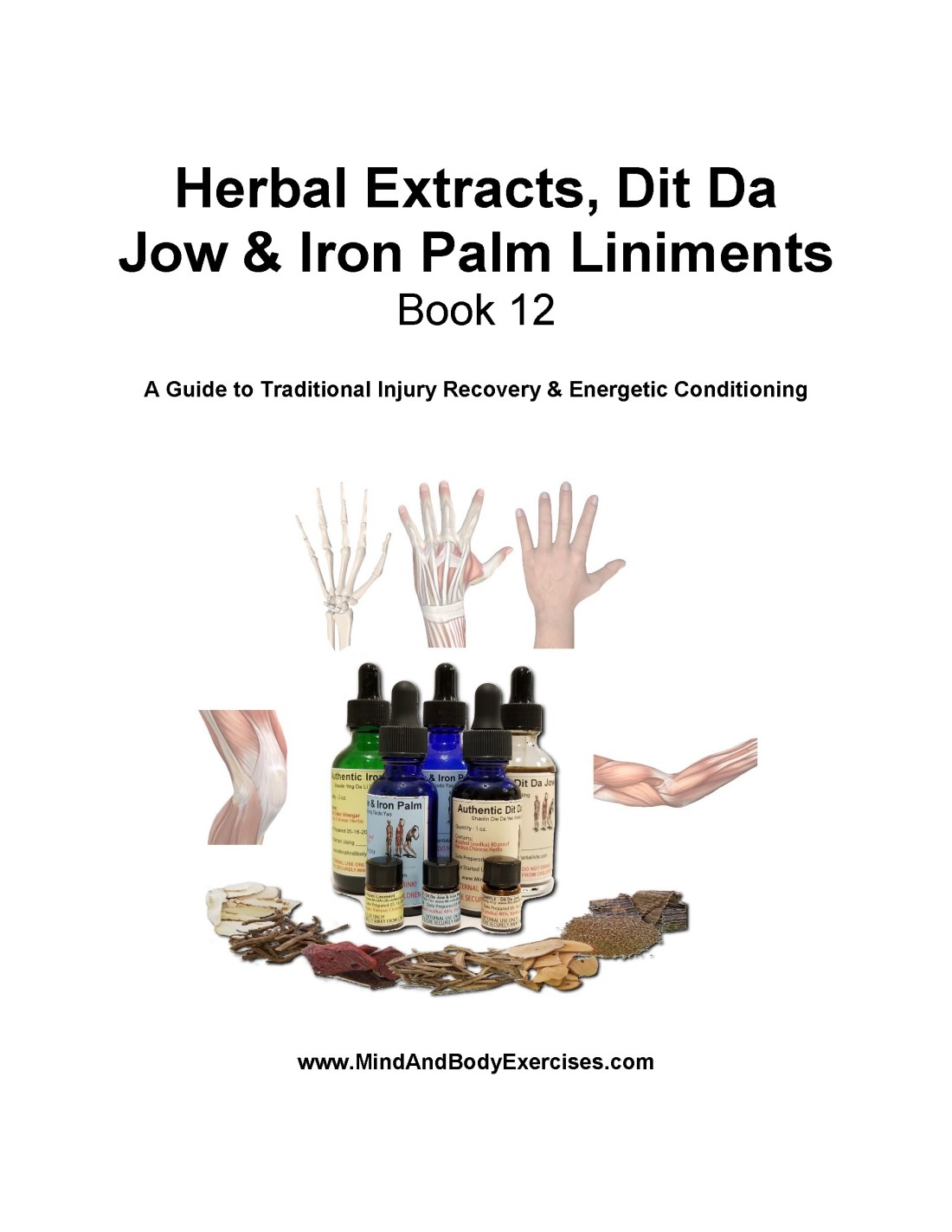
Herbal Extracts, Dit Da Jow & Iron Palm Liniments

Unlock the ancient wisdom of Traditional Chinese Medicine with Book 12-Herbal Extracts, Dit Da Jow & Iron Palm Liniments, a focused study guide on the use of Dit Da Jow and Iron Palm liniments for injury recovery, martial conditioning, and energy cultivation. Drawing from decades of hands-on training in martial arts, qigong, and Eastern wellness systems, this guide introduces the reader to external herbal applications designed to support healing, reduce inflammation, and stimulate the body’s natural energetic flow.

Explore the distinctions and complementary uses of these two potent liniments, Dit Da Jow for bruises, sore muscles, and soft tissue repair, and Iron Palm liniment for conditioning bones, tendons, and ligaments under stress from training or impact. Detailed charts, herb descriptions, and usage instructions offer insights into over 100 traditional herbs, including their Chinese names, botanical profiles, and therapeutic properties.

Ideal for martial artists, bodyworkers, holistic health seekers, and anyone pursuing non-invasive methods of physical recovery, this book also demystifies why chronic pain resists conventional treatments—and how natural remedies can play a key role in long-term wellness.

Key Features:

  • Practical applications of Chinese liniments for injury support and advanced conditioning
  • Explanation of Qi flow and energetic blockages in the context of pain and healing
  • Comparison charts between Dit Da Jow and Iron Palm formulas
  • Extensive list of herbs with their functions and energetic roles
  • Author insights drawn from 40+ years of study and teaching in martial and healing arts

Whether you’re a practitioner or a curious learner, Herbal Extracts offers timeless healing strategies rooted in tradition yet highly relevant to modern self-care.

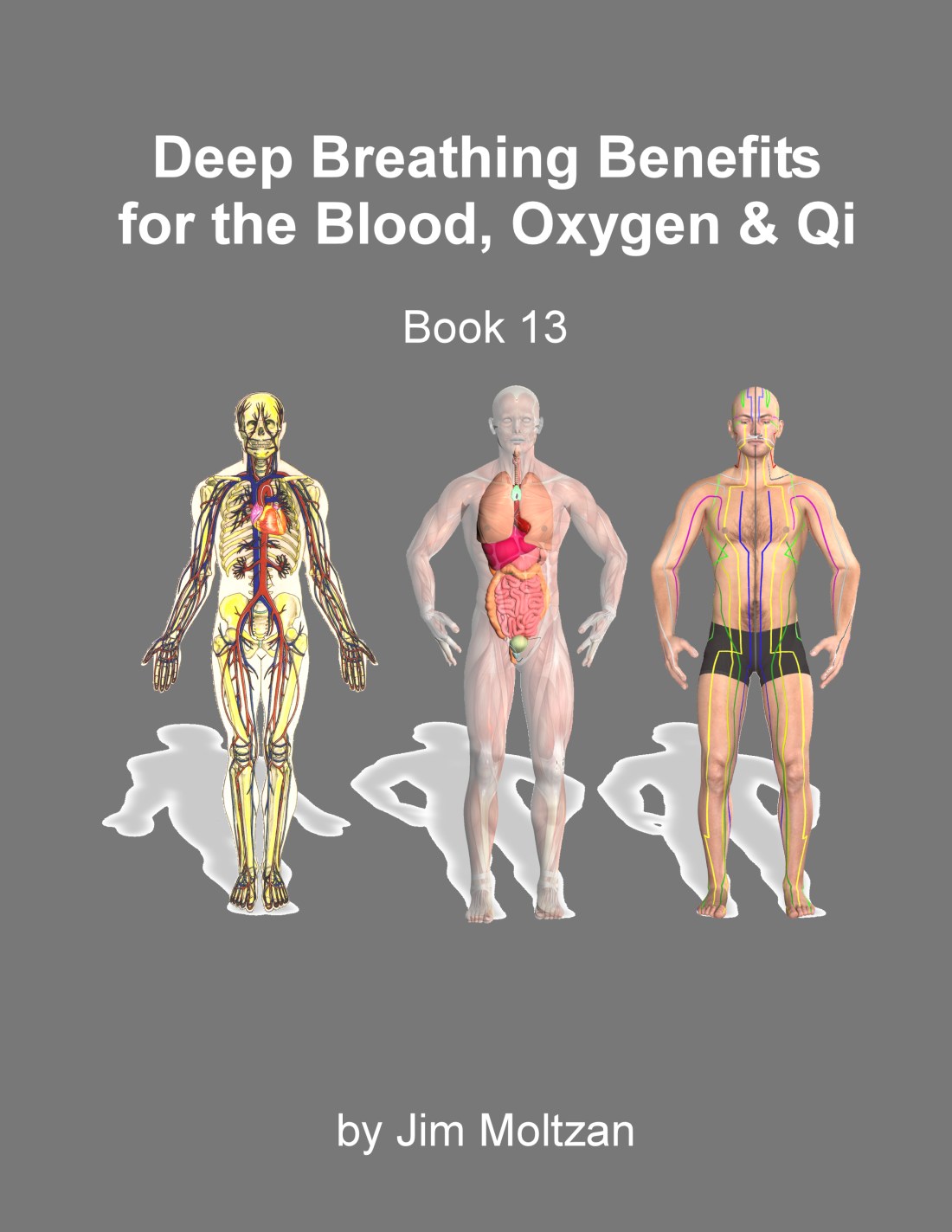
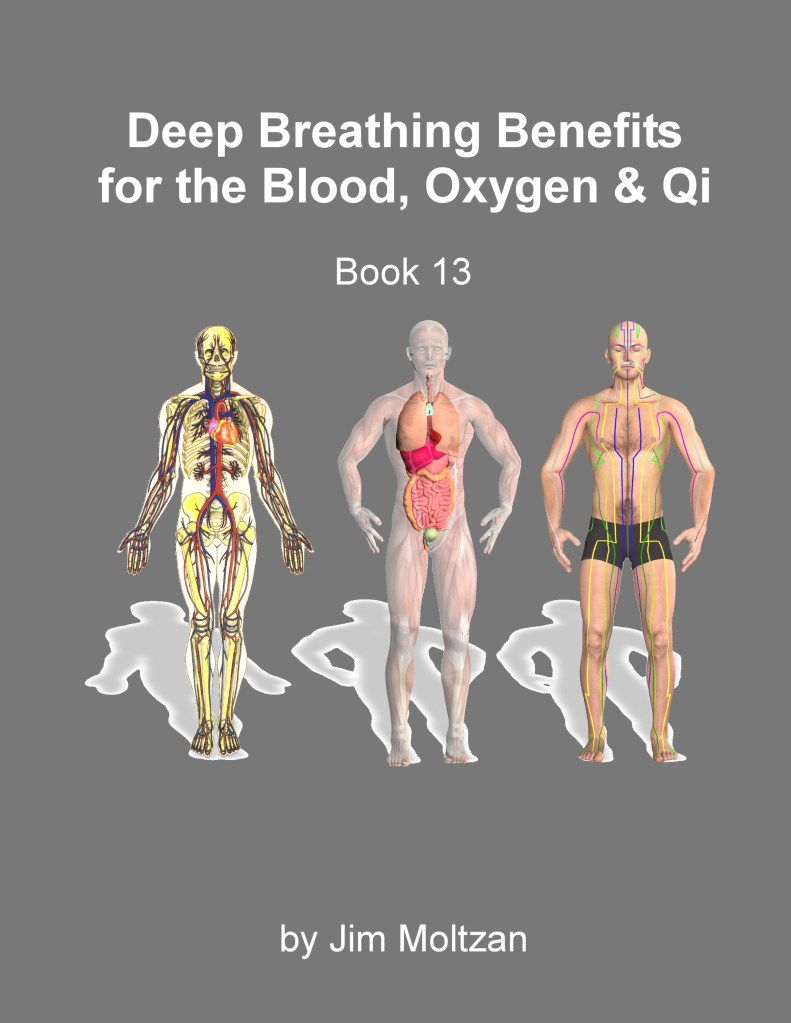
Deep Breathing Benefits for the Blood, Oxygen & Qi

My latest book is the result of more than four decades of study, practice, healing, teaching, and reflection. It has been shaped through a lifetime of learning, from the grind of physical training to the quiet revelations of stillness. I’ve experienced injury and recovery, frustration and discovery, disillusionment and renewal. I’ve worked with athletes and seniors, martial artists and skeptics, students in pain and seekers of peace. And in all of this, I’ve come to a clear and powerful truth: how we breathe determines how we live.

Breath is our most intimate connection to life. It is the first thing we do when we are born and the last act of the physical body before death. In between, we take tens of thousands of breaths each day yet few of us are ever taught how to breathe well. Breath is assumed, automatic, and too often ignored until it becomes impaired. But for those who learn to pay attention, the breath is also a teacher, a tool, and a gateway to better health, greater awareness, and inner strength.

Available on Aamzon

From physiology to philosophy, Eastern medicine to Western science, every tradition I’ve explored acknowledges the power of breath. What this book offers is a bridge between those worlds. It is not just a technical manual or a philosophical essay, it is a lived map. It charts what I’ve seen work, what I’ve tested, and what I’ve returned to again and again, both for myself and my students.

This book is also a response to a culture that too often seeks complex fixes while ignoring the fundamentals. We have machines that track every heartbeat, yet people feel exhausted. Medications suppress symptoms but rarely resolve the cause. In contrast, breathing with awareness costs nothing, requires no equipment, and is available to you at any moment. It can regulate blood pressure, balance hormones, release chronic tension, improve digestion, enhance mental clarity, and restore emotional balance. It can return you to yourself.

Whether you’re new to breathwork or a seasoned practitioner, this book is designed to meet you where you are. It begins with the body, your physiology and posture, then moves through traditional practices, energetic systems, and meditative tools. By the end, you’ll understand not just how to breathe better, but why doing so changes everything.

My hope in writing this is not just to inform, but to awaken, to stir in you a sense of curiosity, empowerment, and agency. You do not need to be a guru, athlete, or mystic to reclaim your breath. You only need to begin. Each chapter in this book is an invitation to return to that beginning again, more skillfully each time.

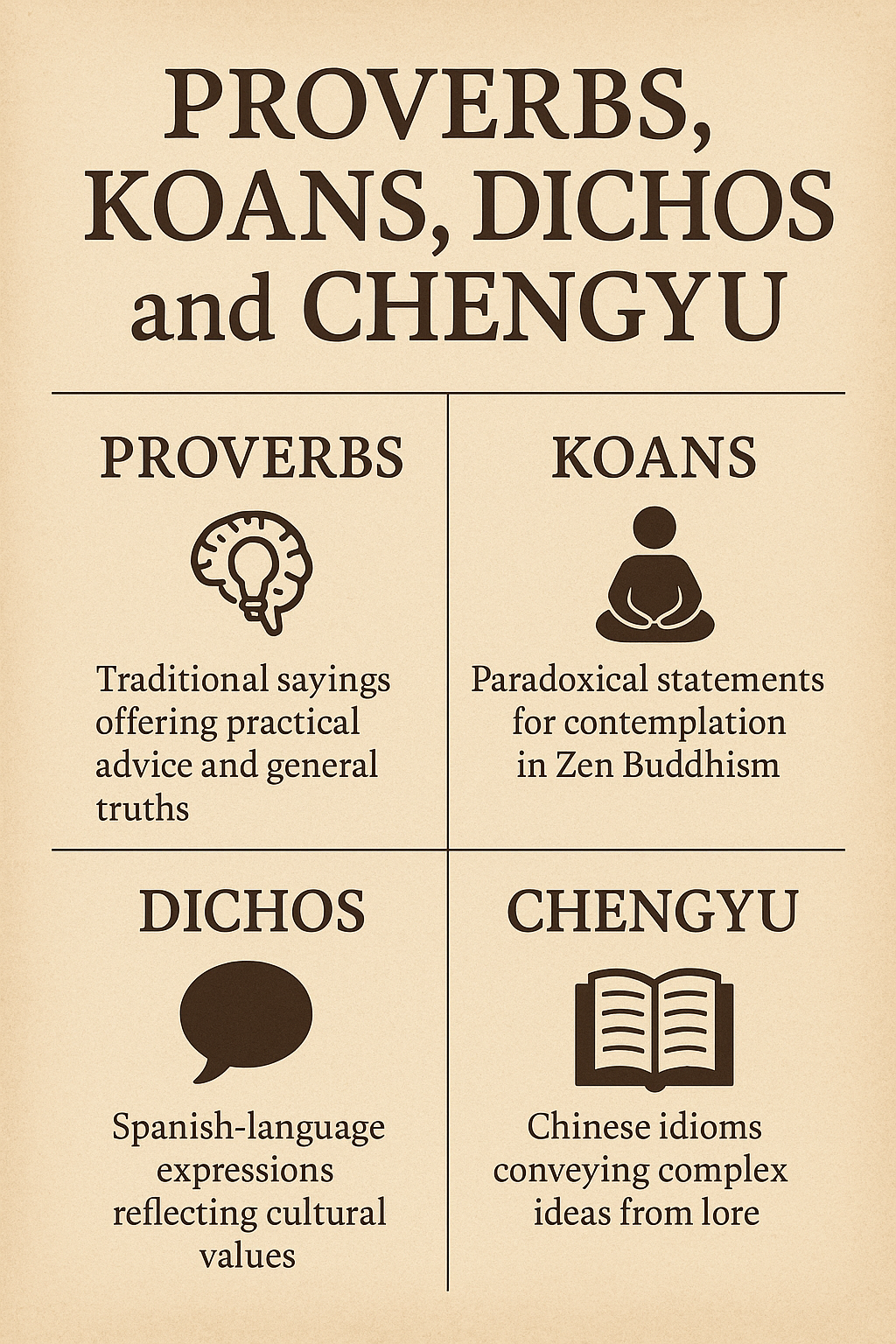
Proverbs, Koans, Dichos and Chengyus

Proverbs, koans, dichos, and chengyu are all concise expressions of cultural wisdom, yet they each emerge from unique linguistic and philosophical traditions. Though they may differ in form and function, they share the universal purpose of offering insight into human nature, behavior, and values. Below is a comparison that highlights their origins and distinctions.

  • Cultural Origin: Found in virtually every language and culture worldwide, proverbs are traditional sayings passed down through generations.
  • Purpose: Proverbs offer practical wisdom, moral lessons, or general truths about life. They are often metaphorical and easily remembered.
  • Examples:
    • “A stitch in time saves nine.”
    • “Actions speak louder than words.”
    • “Don’t count your chickens before they hatch.”
  • Cultural Origin: Originating in Chinese Chan Buddhism and further developed in Japanese Zen Buddhism, koans are used as a tool for spiritual training.
  • Purpose: Koans are not meant to be logically solved. Instead, they challenge conventional reasoning and are used in meditation to provoke deep introspection and insight into the nature of self and reality.
  • Examples:
    • “What is the sound of one hand clapping?”
    • “What was your original face before your parents were born?”
  • Cultural Origin: Common in the Spanish-speaking world, especially in Latin America and Spain, dichos are culturally rich sayings deeply embedded in Hispanic traditions.
  • Purpose: Like proverbs, dichos reflect cultural values and offer observations or advice about life, often with regional flavor or humor.
  • Examples:
    • “No hay mal que por bien no venga”
      (There’s no bad from which good doesn’t come.)
    • “El que mucho abarca, poco aprieta”
      (Jack of all trades, master of none.)
  • Cultural Origin: Chengyu (成语) are idiomatic expressions from classical Chinese literature. Most consist of four characters and are rooted in historical or mythological events.
  • Purpose: Chengyu condense complex narratives or moral lessons into brief, poetic form. They are often used in both written and spoken Chinese to convey layered meanings.
  • Examples:
    • 卧薪尝胆 (wò xīn cháng dǎn) – “To lie on firewood and taste gall.”
      Refers to enduring hardship and humiliation in pursuit of a goal or vengeance.
    • 画蛇添足 (huà shé tiān zú) – “To draw legs on a snake.”
      Means to ruin something by overdoing it.

In summary, proverbs are universal sayings found in many cultures. Koans are paradoxical statements used in Zen Buddhism for meditation and self-realization. Dichos are Spanish-language proverbs commonly used in Hispanic cultures. Chenyus are from Chinese culture and are idiomatic expressions or set phrases. While they all share common goal of conveying wisdom, they vary in their cultural origins and specific uses.

From a holistic health perspective, such wisdom serves not only the intellect but the mind-body-spirit connection. These expressions often guide emotional balance, mindful behavior, and personal growth, cornerstones of overall well-being. They offer reminders of resilience, compassion, humility, and inner strength, supporting wellness not just as a state of physical health, but as a dynamic, cultural, and spiritual journey.

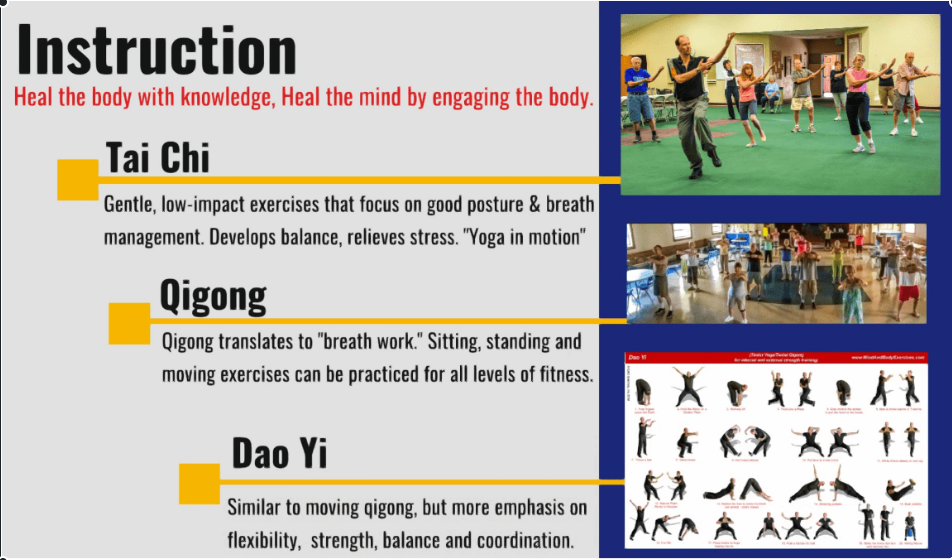
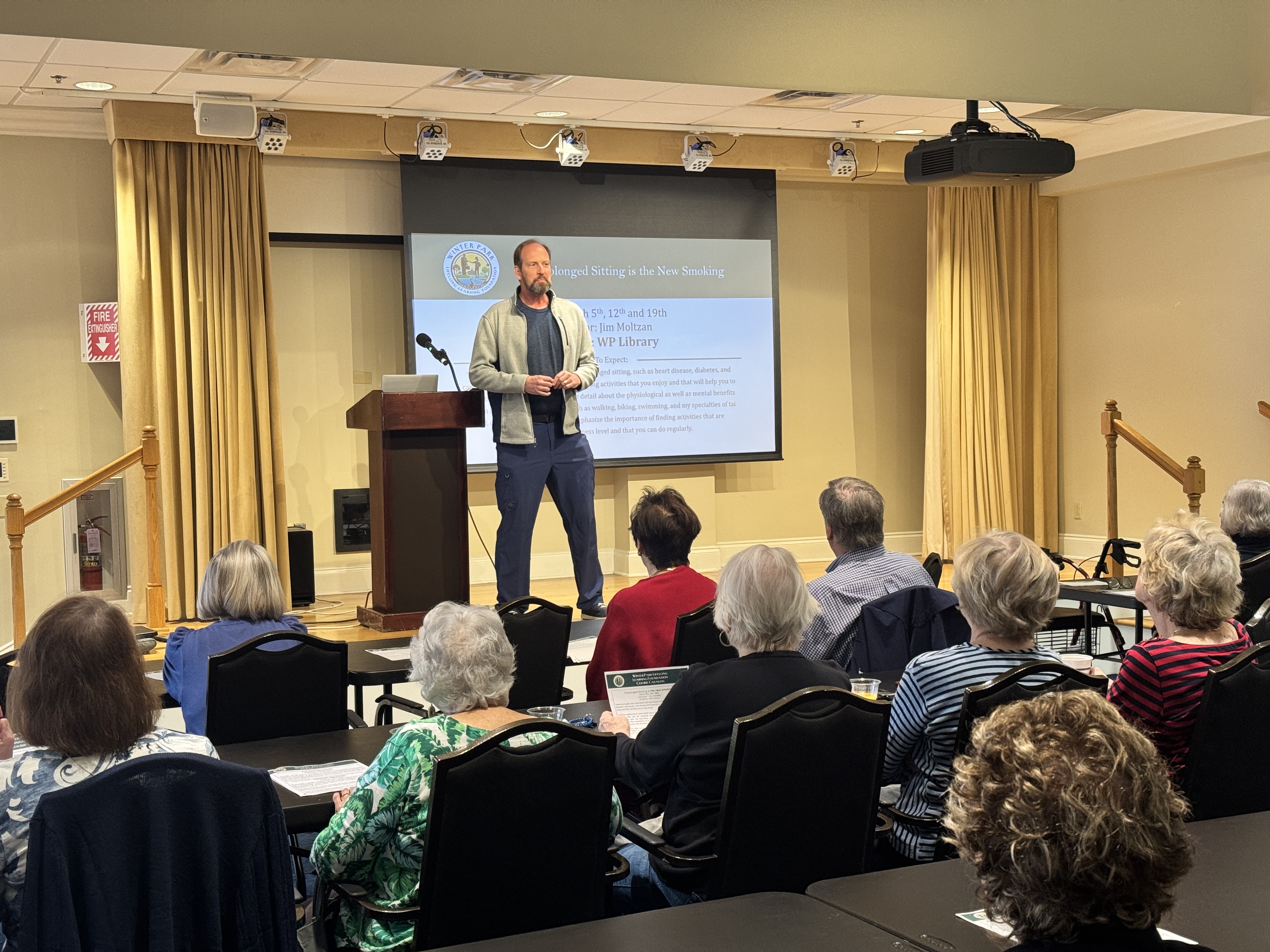
I teach and offer lectures about holistic health, physical fitness, stress management, human behavior, meditation, phytotherapy (herbs), music for healing, self-massage (acupressure), Daoyin (yoga), qigong, tai chi, and baguazhang.

Please contact me if you, your business, organization, or group, might be interested in hosting me to speak on a wide spectrum of topics relative to better health, fitness, and well-being.

I look forward to further sharing more of my message by partnering with hospitals, wellness centers, VA centers, schools on all levels, businesses, and individuals who see the value in building a stronger nation through building a healthier population.

I also have hundreds of FREE education video classes, lectures, and seminars available on my YouTube channel at:

https://www.youtube.com/c/MindandBodyExercises

Many of my publications can be found on Amazon at:

http://www.Amazon.com/author/jimmoltzan

My holistic health blog is available at:

https://mindandbodyexercises.wordpress.com/

http://www.MindAndBodyExercises.com

Mind and Body Exercises on Google: https://posts.gle/aD47Qo

Jim Moltzan

407-234-0119

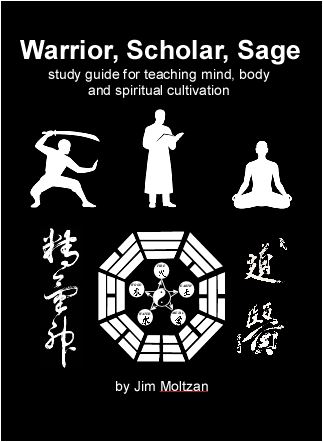
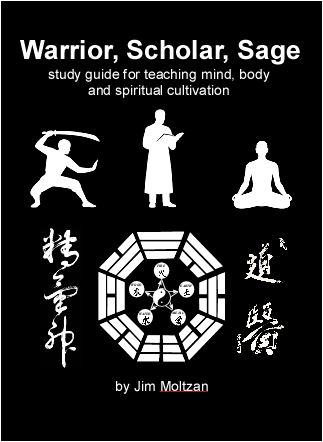
Announcing My New Book: Warrior, Scholar, Sage – A Guide for the Modern Seeker

In Warrior, Scholar, Sage, I invite you into a living tradition where martial arts, personal growth, and ancient philosophy merge to awaken the fullest human potential. Drawing from over 40 years of training, teaching, and holistic wellness practice, this book offers a unique blend of physical methodology, mental resilience, and spiritual reflection.

More than a manual of movements, this is a guide to living with awareness and integrity. You’ll explore Eastern martial traditions and Western psychological insights, from archetypes and ethical codes to energetic cultivation, posture work, and the moral responsibility of the modern-day warrior.

Through better understanding of dynamic tension exercises or stances (isometrics), proverbs, stories, and personal reflection, I equip readers to move with intention, teach with clarity, and live with purpose.

Whether you’re a martial artist, instructor, healer, or seeker of truth, Warrior, Scholar & Sage is your compass on the lifelong journey of strength, wisdom, and inner peace.

In a world flooded with noise, speed, and disconnection, this book offers a path back to equilibrium, through movement, breath, and discipline. It supports the development of the complete individual, what I have come to know as the integrated warrior-scholar-sage.

We’re not just training the body. We are refining the mind, expanding awareness, and aligning with higher values. The goal is not combat, but character. Not dominance, but discipline. Not conquest, but connection.

I invite you to read, reflect, and most importantly apply these teachings. Let this guide accompany you on your path to mastery not just in martial arts, but in life.

👉 Now available on Amazon.

I look forward to further sharing more of my message by partnering with hospitals, wellness centers, VA centers, schools on all levels, businesses, and individuals who see the value in building a stronger nation through building a healthier population.

I also have hundreds of FREE education video classes, lectures, and seminars available on my YouTube channel at:

https://www.youtube.com/c/MindandBodyExercises

Many of my publications can be found on Amazon at:

http://www.Amazon.com/author/jimmoltzan

My holistic health blog is available at:

http://www.mindandbodyexercises.wordpress.com

http://www.MindAndBodyExercises.com

Mind and Body Exercises on Google: https://posts.gle/aD47Qo

Jim Moltzan

407-234-0119

The Warrior, the Scholar, and the Sage: A Daoist View of Strength, Decline, and Human Destiny

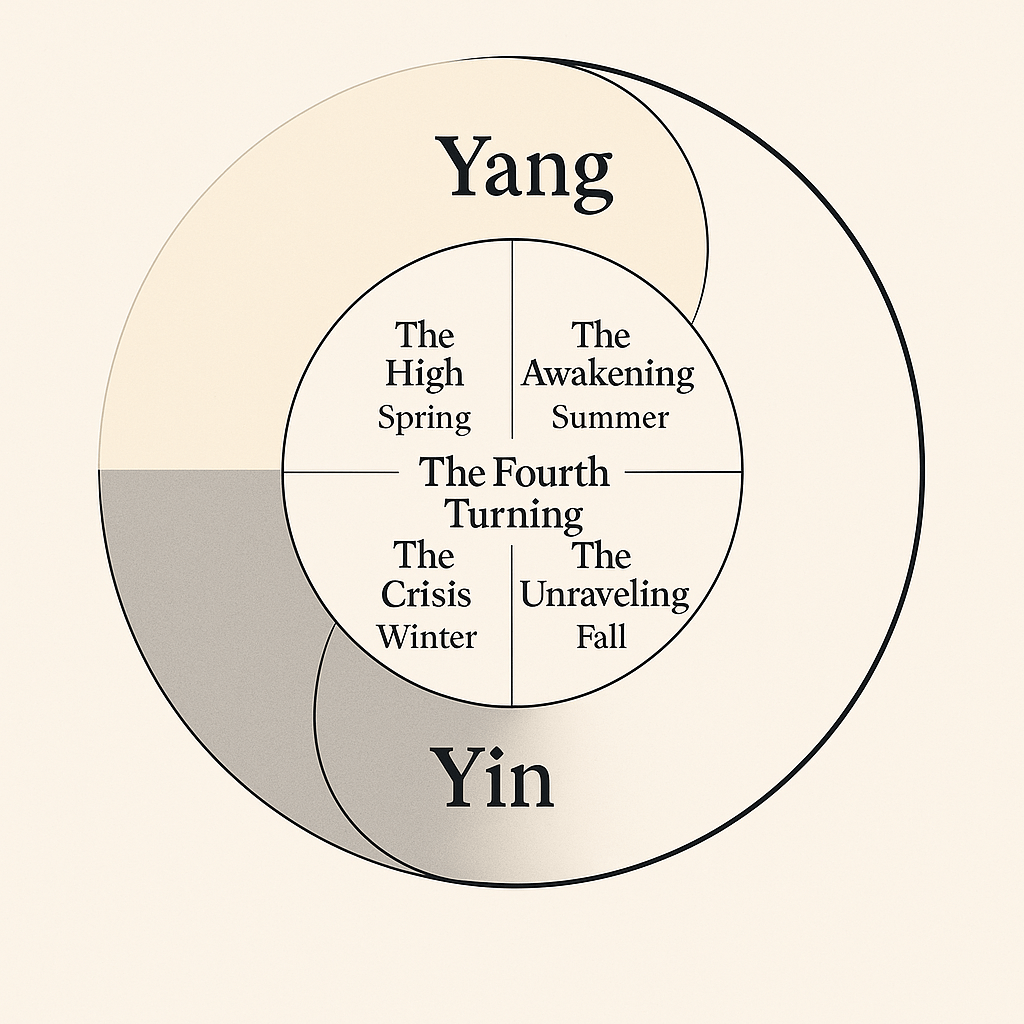
In every era, civilizations rise and fall, not by accident or coincidence, but by the rhythm of deeper patterns or cycles of virtue and decay, clarity and confusion. As someone connected to a centuries-old lineage of Korean and Chinese martial artists, shaped by the philosophies of Taoism, Buddhism, and Confucianism, I’ve come to see that the struggles we face today are not anomalies. They are symptoms of imbalance. They are signs of what the ancients understood as the “return to the Daoand what modern thinkers Neil Howe and the late William Strauss have come to call the Fourth Turning (Strauss & Howe, 1997).

They propose that society moves in four generational phases, roughly every 20 years:

  • The High (Spring): After crisis, a period of rebuilding and cohesion.
  • The Awakening (Summer): Spiritual upheaval and individualism grow.
  • The Unraveling (Fall): Institutions decay, and social trust erodes.
  • The Crisis (Winter): A pivotal upheaval requiring transformation or collapse.

We have witnessed this over many years of history, such as the Fourth Turning (crisis) of the Great Depression into World War II, followed by a post-WWII boom in the U.S. (the High), then the 1960s counterculture movement (the Awakening), followed by the 1980s-2000s in the U.S. (Unraveling) and now into another 20 years of crisis. According to this model, we are now in the Fourth Turning or the winter phase, marked by turbulence, institutional failure, and a call for redefinition. Taoism would simply say: the yang must return. The old forms have decayed; the new must be forged through effort and alignment with the Dao.

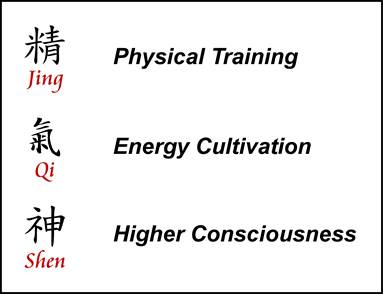
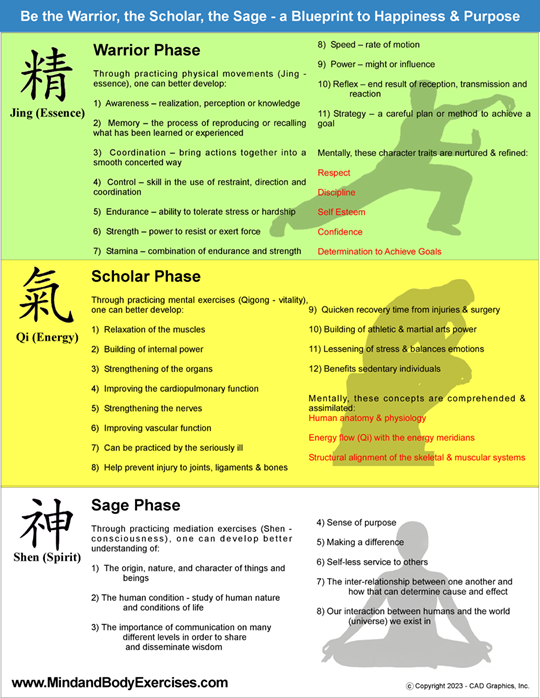
At the heart of this worldview is the triad of jing (essence), qi (energy), and shen (spirit). These internal forces are not just concepts from Taoist cultivation; they represent three powerful human archetypes:

  • The Warrior (Jing) – grounded in physical vitality, courage, and action.
  • The Scholar (Qi) – representing knowledge, refinement, and discernment.
  • The Sage (Shen) – embodying spiritual clarity, stillness, and alignment with the eternal.

This trinity mirrors the natural progression of human development and when lived out collectively, forms the foundation of a resilient, ethical, and awakened society. The warrior, the scholar, and the sage can all be found in various walks of life, regardless of age, race, gender or otherwise.

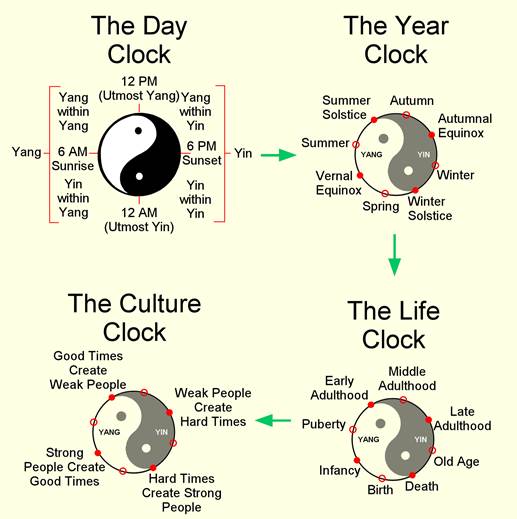
You’ve likely heard the saying:

This isn’t just a catchy aphorism, but a succinct summary of yin and yang, the core principle of Taoist cosmology. When yang (strength, discipline, clarity) reaches its peak, it gives way to yin (softness, comfort, passivity). When yin becomes excessive, yang reasserts itself through challenge, hardship, and the need for resilience.

The phrase:

In the comfort of past decades, the “good times” many laid down the tools of vigilance. Warriors stopped training. Scholars stopped questioning. Sages retreated into the background. This absence of cultivated moral men (and I emphasize cultivated, not simply physically strong or formally educated) created a vacuum where mediocrity, passivity, and manipulation took root.

The Dao doesn’t punish. It corrects. The correction is not emotional but rather structural, rhythmic, and natural. In a time of unraveling, those who choose to do nothing only deepen the descent. Those who act in alignment with virtue help midwife the rebirth.

In our tradition, we don’t look outward to blame, but rather we look inward to refine ourselves through:

  • Cultivating jing through martial discipline and physical integrity.
  • Building qi through breathwork, mindfulness, and mental refinement.
  • Elevating shen through spiritual practice, service, and contemplation.

This process isn’t merely for personal benefit, but hopefully to provide a model for society. In this Fourth Turning, we need a return of those who live as warriors of integrity, scholars of discernment, and sages of wisdom. Their presence creates coherence in chaos. The Dao teaches that when the inner is aligned, the outer begins to harmonize.

Throughout history, men have often occupied positions of leadership, warfare, and infrastructure in roles requiring strength, vision, and responsibility. When these roles are filled by individuals of weak moral character, or by those disconnected from the natural order of the Dao, decline does not merely begin but it accelerates.

In today’s world, we’re witnessing the fallout of this imbalance. Divine masculinity is rooted in strength, service, wisdom, and responsibility, but has been overshadowed by its distorted reflection of toxic masculinity, which is driven by ego, control, irresponsibility, and impulse. The difference between the two is not force, but character.

The danger does not lie in masculinity itself, but in its misdirection. When yang energy is active, outward, and forceful it becomes unmoored from purpose and virtue, it devolves into recklessness, violence, and domination. One doesn’t have to look far to see the consequences: our prisons are full, blue collar and white collar crime persists, and too many men choose instant gratification over disciplined action.

Morally weak men are the most dangerous to society. Not because of their gender, but because of their inability to withstand temptation, make principled choices, or lead by example. Without the internal refinement of jing, qi, and shen, there is no foundation for restraint or wisdom.

Yet in the same breath, we must acknowledge that society still deeply depends on strong men in body, mind, and spirit. It is mostly men (not entirely though) who fight in wars, build bridges, maintain power grids, work oil rigs, harvest timber, and risk their lives in roles essential to our survival and stability. These are not outdated relics of a bygone age. They are the backbone of civilization.

But physical strength alone is not enough. In a time like the Fourth Turning, we don’t just need capable men. We need cultivated men:

  • Men who have mastered their emotions and instincts.
  • Men who serve rather than dominate.
  • Men who fight when necessary but protect by nature.
  • Men who think, reflect, and align with something greater than themselves.

As the Dao teaches:

The cure is not to suppress masculine energy but to elevate it, refine it, and align it with the eternal flow of the Dao. In this age of unraveling, the world doesn’t need less masculinity. It needs truer masculinity. The kind forged in hardship, guided by virtue, and embodied by the Warrior, the Scholar, and the Sage.

If everything follows the Dao, then this present upheaval is not a mistake. It’s a call. A call to remember. To return. To rebuild.

The Fourth Turning is not a death sentence. It is an initiation. Just as in Taoist cultivation, decay gives way to rebirth. The yang returns only when yin has gone to its extreme.

We must ask ourselves:

  • Will we wait for others to restore balance?
  • Or will we embody the Warrior, the Scholar, and the Sage, and rise to meet the moment?

The Dao is not just a path. It is the pattern of life itself. To walk it now, consciously is to become part of the cure.

Reference:

Strauss, W., & Howe, N. (1997). The fourth turning. Broadway Books.