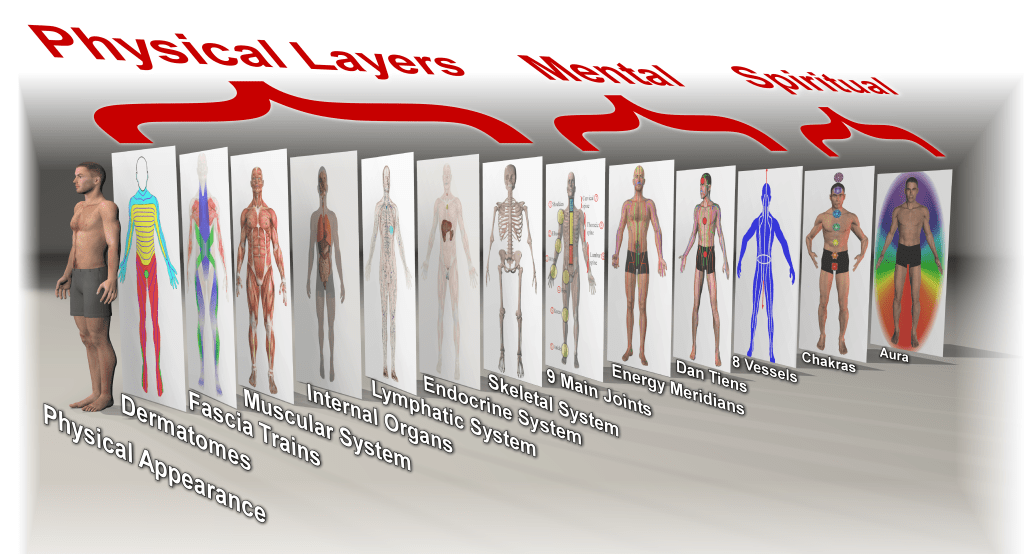
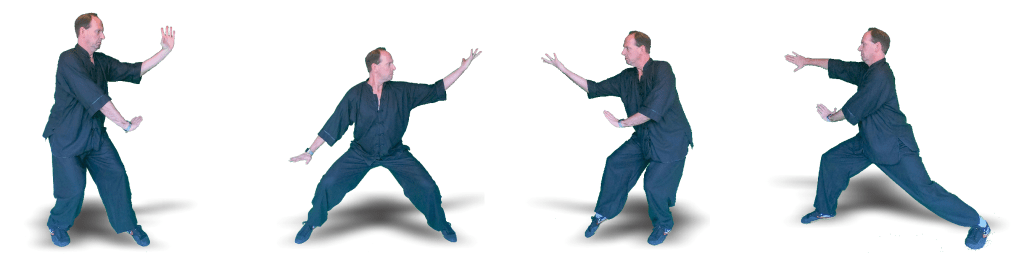
BaguaZhang (8 trigram palm)

Bagua, Baguazhang, Bagwa, Pakua, Walking Meditation or “walking of the circle” are all names for this style of Kung Fu training. Translated to English is “8 trigram palm”. Bagua is an internal developing style similar to Tai chi and Hsing Yi. Tai chi is often considered to be the softest, Bagua somewhat harder and Hsing Yi the hardest style of the three main internal styles. Hard and soft refer to the control applied to the various movements practiced. Bagua develops stability in motion amongst many other things. Cheng, Chung, Emei, Sun are all styles of Baguazhang.

Benefits include:

  • Calming of the mind
  • Focuses thought
  • Strengthens and relaxes muscles
  • Can be practices as “Moving Meditation”
  • Attention to body alignments
  • Cultivates internal energy (qi)
  • Develops the physical body from the inside out
  • Slow, medium & fast body motions
  • Static (isometric) as well as continuous (isotonic) movements

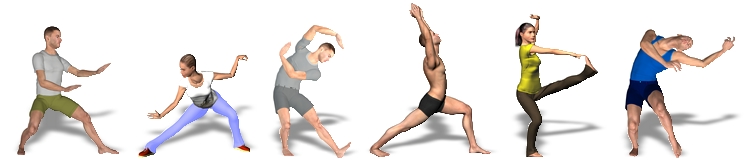
Deep mindful breathing, specific muscle stretching and deliberate walking techniques are the basis of BagauZhang exercises. Practicing BaguaZhang or Bagua, stepping positions, body postures and changes (transitional stretching movements) enables one to move your body like a spring, being flexible and light but having a lot of strength and power behind the movement. This would be similar to moving as light and smooth as a feather but having the strength and speed of a bear.

Attaining certain body alignments within postures, holding that position and moving from one to another is essential to develop overall strength, coordination, balance and increase of energy flow throughout the body. Proper breathing is important in the development of internal strength and has to be in tune with each movement. These postures can be practiced as static exercises for any length of time (typically 20 seconds to 5 minutes or more), or dynamically while performing the different stepping methods.

__________

Often we look to point the finger how others should be better. Another perspective would be to make ourselves better. Be the best version of ourselves that we can be. Set the example because this action alone can be contagious in a positive way.

Wisdom is a recipe of knowledge and experience obtained over time (age) allowing one to differentiate when is the correct timing to react or not to react. When to do, when not to do. Coming up to a stop sign, you really don’t care to stop your vehicle (your true feeling) but you do because it is the right action (the law) to stop. If a blaring fire engine were to suddenly appear in your rear view mirror, you might choose to move through the intersection and to a space clear of the oncoming 370,000 pounds of moving metal and water (correct action for this situation).

Learn how to maintain health, fitness and wellness with tai chi, gigong and other time-proven methods. Private, small or group instruction.

Take care of yourself because no one else should care more about you than you. Eat better, move more, stress less, be nicer. Be well!

.Jim Moltzan 407-234-0119

www.MindAndBodyExercises.com

https://www.facebook.comMindAndBodyExercises

https://www.youtube.com/c/MindandBodyExercises
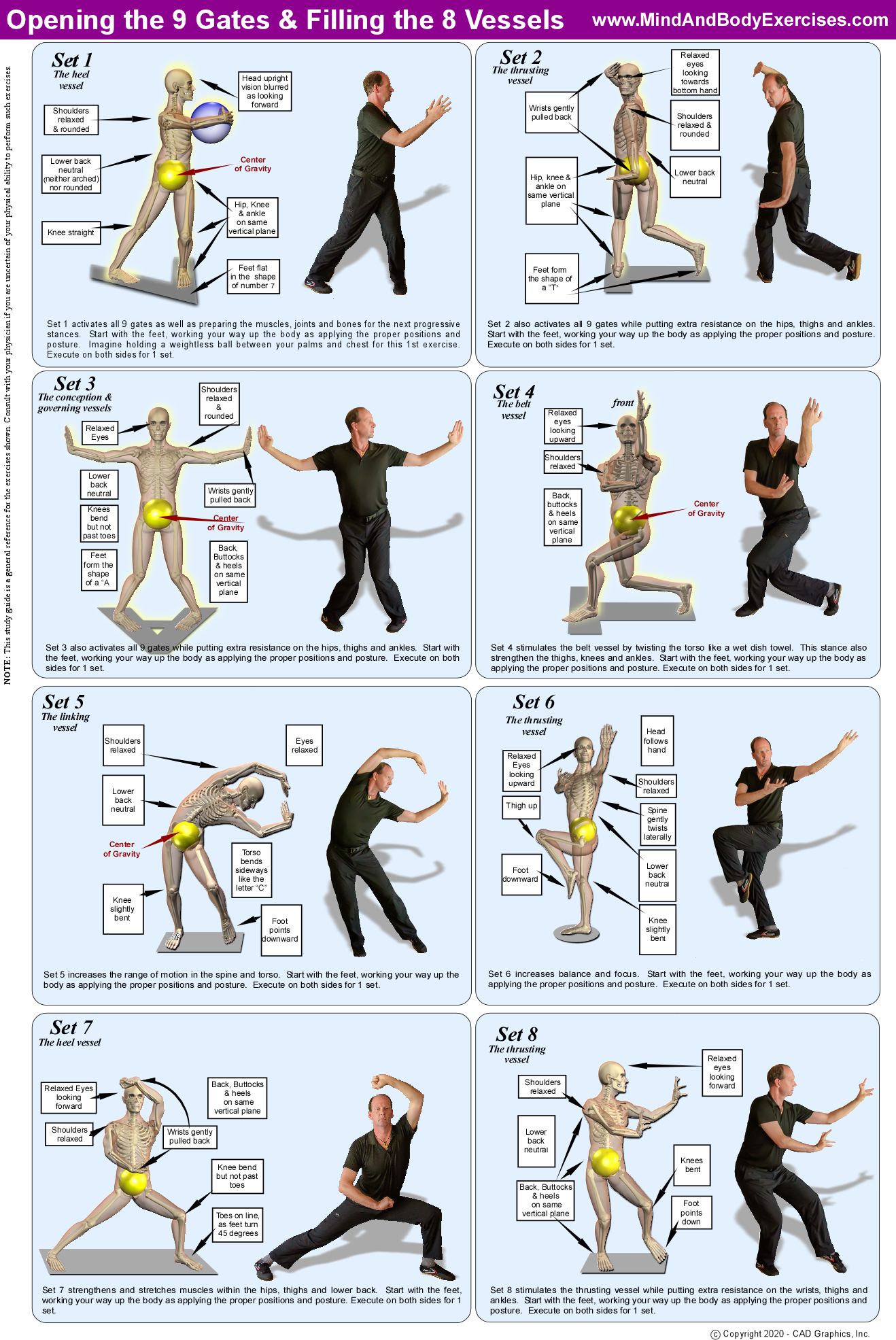
https://mindandbodyexercises.wordpress.com/

Masters Council

Key points for my classes

Eat healthier – less junk, salt and alcohol. More fruit & vegetables

Be more active – get off the couch, away from the PC, TV, smarphone, etc.

Sleep better – earn a good night’s rest by being active during the day.

Relieve stress – exercise, meditate, breathe deeper & deliberately, take a break from the news & social media.

Be nice to others -what you put out, you receive back.

Enjoy life, but know your limits (all in moderation)

These are the key components to being healthy.

To enjoy a balance between a healthy mind and body, one can practice exercises that truly engage the mind and body. Breathing control with specific body alignments are methods (very much like yoga) to achieve improve health & wellness. Learn how to maintain health, fitness and wellness with tai chi, gigong and other time-proven methods.

Private, small or group instruction.

Be well!

Jim Moltzan 407-234-0119www.MindAndBodyExercises.comhttps://www.facebook.comMindAndBodyExerciseshttps://www.youtube.com/c/MindandBodyExerciseshttps://mindandbodyexercises.wordpress.com/https://umareg.com/masters-council/

Osteoporosis and Osteopenia (bone porosity & bone loss)

Osteoporosis and Osteopenia (bone porosity & bone loss)

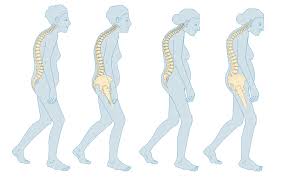
Are you age 40 or older? If so, you might want to make sure you stay active as you continue to age. After 40 or so, the average woman losses 8% of their bone mass; men loss about 3% per decade. So, by 70 a woman can lose 25%; a man 18%. Bones can become more porous and weaker, usually starting to increase after age 45.

Wow, not good!

Consistent (and appropriate) exercise puts strain on the muscles, joints and bones, causing the bones cells to stay active and continue to remodel, often until the end of life. (Wolff’s Law)Appropriate exercise as we all age depends upon the individual. However, Tai chi, yoga and qigong are all low-impact and can be practiced by most people regardless of age and health issues.

I offer private lessons in Wekiva and weekly group classes at Winter Park Presbyterian Church.

Jim Moltzan407-234-0119 www.MindAndBodyExercises.comhttps://www.facebook.com/MindAndBodyExercises/https://www.youtube.com/c/MindandBodyExerciseshttps://mindandbodyexercises.wordpress.com/https://umareg.com/masters-council/

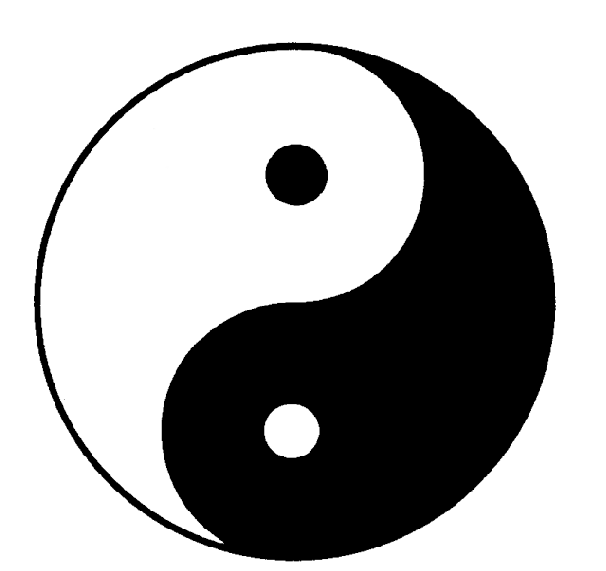
The Meaning of the Yin-Yang Symbol

The Meaning of the Yin-Yang Symbol

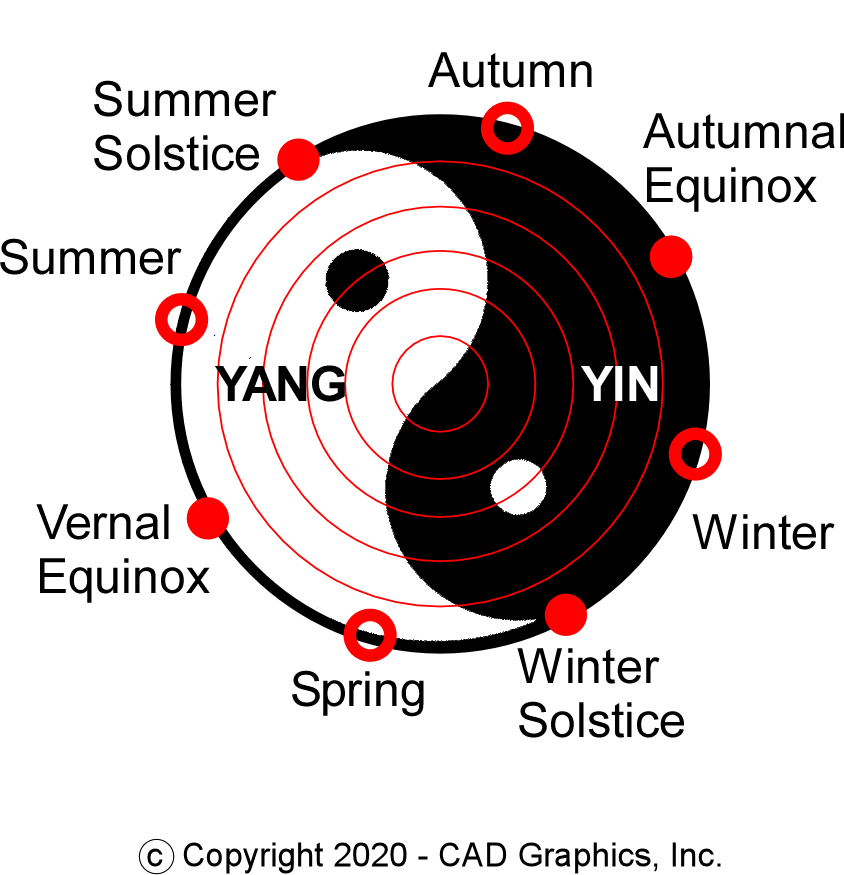
The yin and yang symbol or taijitu, relates to the day and night association of yin and yang. Supposedly the ancients plotted a graph made up of six concentrically larger rings. In the center was anchored an 8-foot high pole that measured the shadow cast by the sun throughout the seasons. Then they colored in where the shade landed and where there was none. When looked at from above, the graph showed a picture that resembles the yin and yang symbol but without the two dots on either side. From here the concept of balance and its relationship to the seasons and nature was conceived.

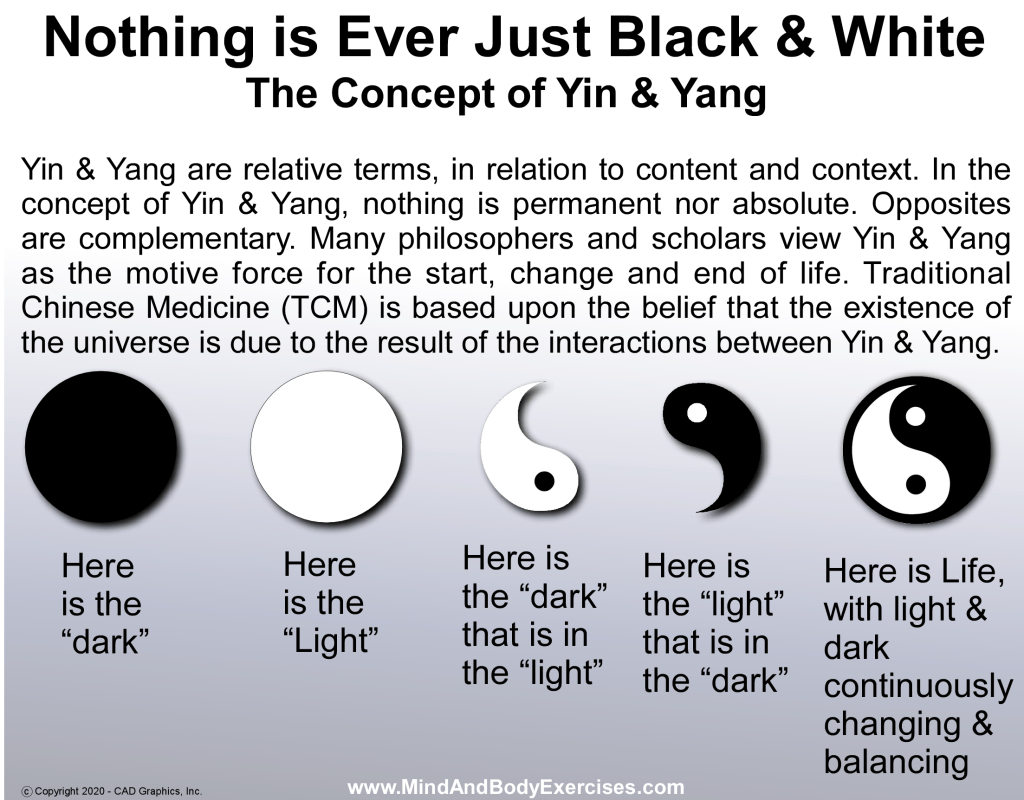
The yin-yang symbol has been long known to represent balance and harmony. However, some choose to label it as a religious symbol for Daoism which many consider more of a philosophy. The martial arts of tai chi uses this symbol and concept as a foundation to understanding of the flow of energy within the human body.

The 5 Aspects of yin and yang complement and balance each other via these aspects, which define the relationship between each.

Learn how to maintain health, fitness and wellness with tai chi, gigong and other time-proven methods. Private, small or group instruction.

Take care of yourself because no one else should care more about you than you. Eat better, move more, stress less, be nicer. Be well!

.Jim Moltzan 407-234-0119

www.MindAndBodyExercises.com

https://www.facebook.comMindAndBodyExercises

https://www.youtube.com/c/MindandBodyExercises

https://mindandbodyexercises.wordpress.com/

https://umareg.com/masters-council/

Why Exercise Your Whole Body?

Why Exercise Your Whole Body?

“I run everyday, but my knees and back always ache.”

“Stretching is great for my hamstrings and back, but I get winded walking up 2 flights of stairs”

“My muscles look strong and athletic but I can’t touch my toes and my stomach is always bloated or uncomfortable”

I workout at the gym everyday but still trip walking up or down stairs”

“Staying active is so important to me, but I don’t have time to learn about how my body works”

People walk, run, swim, stretch and many other methods to stay healthy. In the US Only 23.2% of U.S. adults 18 to 64 met the 2018 CDC guidelines for both aerobic and muscle-strengthening exercise. Most people that do exercise, do so with the intention that by increasing their heart rate, strengthening the main muscles groups and breaking a sweat, that they will maintain a greater level of overall fitness and/or wellness. These actions don’t always provide whole body wellness.

Does anybody really exercise with specific goals of maintaining joint strength, bone density, spinal flexibility, range of motion, balance, control, eye-hand coordination, lung capacity, stress relief or health of all of the internal organs? Maybe.

Those that are knowledgeable in their practices of yoga, qigong, Pilates, Tai Chi and other martial arts, often exercise specifically to engage the whole body and mind with every exercise. They don’t wait to have arthritis in their body to strengthen the joints. Or begin to stumble and lose balance to realize that vestibular balance diminishes as we age with muscles weakening and stiffening. These practices inherently provide benefits that most conventional exercises (walking, running, swimming, weight lifting, cycling, etc.) offer at limited amounts or are somewhat geared towards younger or more fit individuals.

For example, will running strengthen the joints, provide flexibility in the spine or improve digestion? Does weight training help prevent arthritis in the toes and fingers or strengthen the immune and lymphatic systems? Does swimming increase bone density or balance? Each method has its own set of pros and cons.

So if want to increase your lung capacity, practice exercises that can offer deliberate and deeper breathing. If you have a stiff or injured lower back, practice methods that stretch and strengthen the muscles, tendons and ligaments relative to the spine. If your bones are weak, weight bearing exercises are needed. Yoga, qigong and tai chi provide all of the the prior benefits and many more, all within their respective curriculums.

Learn how this all works from private, small or group instruction.

Be well!

Jim Moltzan 407-234-0119

www.MindAndBodyExercises.com

https://www.facebook.comMindAndBodyExercises

https://www.youtube.com/c/MindandBodyExercises
https://mindandbodyexercises.wordpress.com

/https://umareg.com/masters-council/