Understanding the Korean Lunisolar Calendar and Mystical Time Cycles

NumberStemElementPolarityDirection
1갑 (Gap)WoodYangEast
2을 (Eul)WoodYinEast
3병 (Byeong)FireYangSouth
4정 (Jeong)FireYinSouth
5무 (Mu)EarthYangCenter
6기 (Gi)EarthYinCenter
7경 (Gyeong)MetalYangWest
8신 (Sin)MetalYinWest
9임 (Im)WaterYangNorth
10계 (Gye)WaterYinNorth

BranchAnimalElementDirection
자 (Ja)RatWaterNorth
축 (Chuk)OxEarthNNE
인 (In)TigerWoodNE
묘 (Myo)RabbitWoodEast
진 (Jin)DragonEarthESE
사 (Sa)SnakeFireSE
오 (O)HorseFireSouth
미 (Mi)GoatEarthSSW
신 (Sin)MonkeyMetalSW
유 (Yu)RoosterMetalWest
술 (Sul)DogEarthWNW
해 (Hae)PigWaterNW

References

Heavenly stems and earthly branches. (n.d.). https://www.hko.gov.hk/en/gts/time/stemsandbranches.htm?utm_source=chatgpt.com

Kim, C. (2018). Korean shamanism. In Routledge eBooks. https://doi.org/10.4324/9781315198156

Lee, J. Y. (1981). Korean Shamanistic rituals. In Leo Laeyendecker & Jacques Waardenburg (Eds.), Religion and Society (Vol. 12). Mouton Publishers. https://api.pageplace.de/preview/DT0400.9783110811377_A33483020/preview-9783110811377_A33483020.pdf?utm_source=chatgpt.com

Yoon, H. (Ed.). (2017). P’ungsu: A Study of Geomancy in Korea. State University of New York Press. https://doi.org/10.2307/jj.18254509

Wu, S. (2005). Chinese Astrology: Exploring the Eastern Zodiac. Tuttle Publishing. https://archive.org/details/chineseastrology0000wush

The Student Becomes the Master, and the Master Becomes the Student

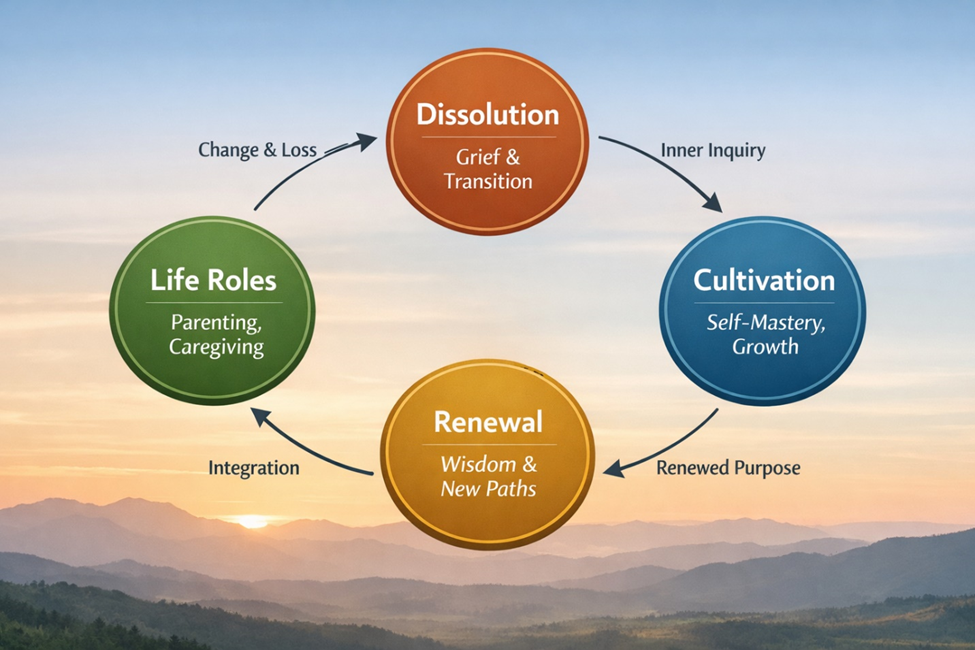
Across human history, the progression from student to master has symbolized growth, transformation, and the unfolding of wisdom. This dynamic relationship is not a simple ascent from ignorance to knowledge but a cyclical process of continual renewal. The journey encompasses humility, discipline, and self-realization, leading to a profound paradox: when the student attains mastery, the master must again become a student. This recursive pattern reflects the principles of Eastern philosophy, particularly Taoist and Confucian thought and aligns with modern educational theories emphasizing lifelong learning and self-reflection.

The Student’s Path Toward Mastery

The journey begins with a recognition of one’s limitations and a willingness to learn. Confucius emphasized humility and perseverance as the foundations of wisdom, observing that “to learn without thinking is labor lost; to think without learning is perilous” (Analects 2:15; Confucius, trans. 1997). In this early stage, the student relies on imitation and structured practice. The discipline of repetition is common to both martial and academic traditions, laying the groundwork for understanding.

According to Dreyfus and Dreyfus’s (1980) model of skill acquisition, learners progress through stages from novice to expert, eventually developing intuition born of experience. In martial arts or philosophy, this phase marks the transition from external technique (jing) to internal essence (shen). As the student refines skill through practice and reflection, understanding becomes embodied knowledge, not merely intellectual comprehension.

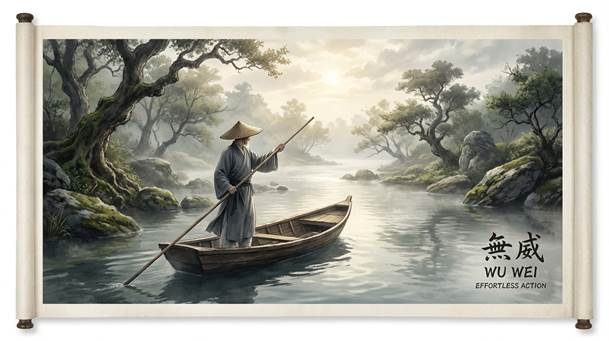
Taoist philosophy describes this evolution as harmony between wu wei (effortless action) and ziran (naturalness), where mastery manifests as unselfconscious expression (Laozi, trans. 1963). The master no longer performs from memory but from presence. This state of integration unites form and spirit, leading to authentic mastery.

The Master’s Return to Studenthood

True mastery dissolves the illusion of finality. As Zen teachings remind us, “In the beginner’s mind there are many possibilities, but in the expert’s there are few” (Suzuki, 1970, p. 21). The master who clings to certainty ceases to evolve. Thus, mastery demands a return to humility, with a willingness to once again become the student.

In this reversal, the teacher learns from experience, from new disciplines, and from students themselves. This concept parallels Schön’s (1992) model of reflective practice, wherein professionals continually re-examine their assumptions and adapt to changing circumstances. The act of teaching becomes itself a form of learning; the master refines understanding through articulating, demonstrating, and witnessing the struggles of learners.

Taoism and Zen Buddhism alike emphasize the cyclical nature of wisdom: knowledge transforms into unknowing, fullness returns to emptiness, and mastery flows back into inquiry (Watts, 1957). The wise master recognizes that wisdom is inexhaustible, and therefore, every conclusion opens new questions.

The Yin–Yang of Learning and Teaching

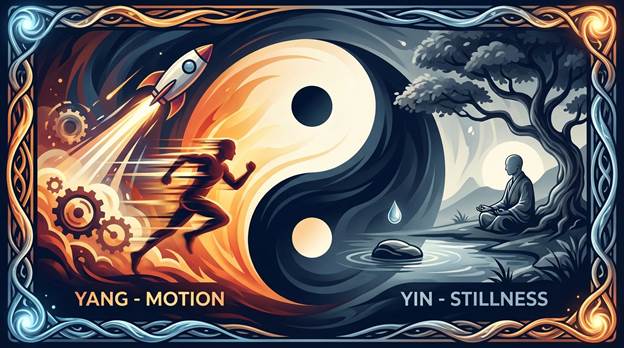
The relationship between student and master reflects the balance of yin and yang. The student, receptive and absorptive, represents yin, the principle of stillness and potential. The master, expressive and guiding, represents yang, the principle of activity and realization. Yet within each is the seed of the other. When yin and yang harmonize, growth continues.

In Confucian tradition, learning (xue) and reflection (si) are inseparable (Confucius, trans. 1997). Similarly, in martial philosophy, the practitioner cycles between discipline and spontaneity, form and formlessness. The process ensures that wisdom remains fluid rather than rigid, evolving with each generation. As the master learns anew from teaching, the lineage of knowledge remains living and dynamic in a continuous circle rather than a vertical hierarchy.

Conclusion

The transformation from student to master and back to student encapsulates the eternal rhythm of growth. Both roles coexist within the same individual, manifesting as phases in an endless cycle of becoming. Mastery is not the termination of learning but its most refined form. A state of perpetual openness and renewal.

As modern educators and ancient sages alike affirm, the essence of wisdom lies in humility. The student becomes the master by integrating knowledge into being. The master becomes the student by recognizing that learning never ends. Thus, the truest path of mastery is circular, infinite, and alive reflecting the natural flow of the Tao itself.

References:

Confucius. (1997). The Analects of Confucius (A. Waley, Trans.). Vintage Classics. https://archive.org/details/theanalectsconfucius

Dreyfus, S., & Dreyfus, H. L. (1980). A Five-Stage model of the mental activities involved in directed skill acquisition. ResearchGate. https://www.researchgate.net/publication/235125013_A_Five-Stage_Model_of_the_Mental_Activities_Involved_in_Directed_Skill_Acquisition

Laozi. (1963). Tao Te Ching (D. C. Lau, Trans.). Penguin Books. https://archive.org/details/taoteching0000laoz/page/n9/mode/2up

Schön, D.A. (1992). The Reflective Practitioner: How Professionals Think in Action (1st ed.). Routledge. https://doi.org/10.4324/9781315237473

Suzuki, S. (1970). Zen mind, beginner’s mind. Weatherhill. https://archive.org/details/ZenMindBeginnersMind-ShunruyuSuzuki

Watts, A. (1957). The way of Zen. Pantheon Books. https://archive.org/details/wayofzen0000alan/page/n5/mode/2up

Drinking from the Well, Denying the Source

The Conscious Exploiter: When Awareness Replaces Gratitude

In human relationships, it is natural to give and to hope that our giving is met with acknowledgment, respect, or at the very least basic appreciation. But what happens when someone receives generously, with full awareness of the giver’s effort or sacrifice, yet responds with silence, indifference, or calculated detachment?

This is the subtle, unsettling behavior of what we may call a conscious exploiter. A person who takes with mindfulness but withholds gratitude by choice.

Unlike the oblivious or socially inept, the conscious exploiter is often intellectually aware and emotionally capable but operates with an internal moral economy that excludes reciprocation. Their mindset resembles a form of calculated opportunism, wherein taking becomes justified through rationalizations, entitlements, or social positioning. As psychologist George Simon explains in In Sheep’s Clothing (2010), manipulative personalities often know what they’re doing but frame their actions to appear innocent or justified, making their ingratitude seem subtle or even acceptable (Simon, 2010).

Gratitude as a Marker of Moral Awareness

Gratitude is more than a polite gesture; it’s a sign of mutual recognition, emotional intelligence, and social maturity. Psychologist Robert Emmons, a leading researcher in gratitude science, describes it as “a relationship-strengthening emotion” that connects giver and receiver in a mutual bond of awareness (Emmons & McCullough, 2003). When someone consciously receives but fails to show appreciation, they break the cycle of relational reciprocity, often creating emotional imbalance and mistrust.

Yet in modern society, especially in competitive environments or hierarchical communities, this behavior can become normalized. When success or advantage is prioritized above virtue, even intelligent and aware individuals may suppress expressions of gratitude to maintain power, status, or detachment.

The Ethical Cost of Calculated Ingratitude

From a philosophical lens, this conduct undermines ethical living. The Stoics, such as Seneca, warned of taking without gratitude as a sign of moral decline, arguing that “he who receives a benefit with gratitude repays the first installment on his debt” (On Benefits, trans. Basore, 1935). In Taoist tradition, the natural flow of energy (or qi) depends on balance and reciprocity, not unilateral absorption. To receive while withholding thanks is to disrupt the harmonious flow that underpins healthy relationships.

Such individuals may outwardly maintain charm, social grace, or even spiritual language, but their inner posture remains self-serving. They are “courteous faces masking consuming hearts,” quietly draining emotional resources from those around them.

Recognizing the Pattern

The conscious exploiter is not always easy to identify. Their ingratitude is not loud; it is quiet, measured, and often cloaked in charisma or deflection. You may notice:

  • They accept help readily but never inquire about your well-being.
  • They benefit from your time, knowledge, or effort, yet leave without acknowledgment.
  • They strategically maintain relationships that serve their needs, but dissolve or ignore those that ask for emotional investment.

Unlike the unaware, these individuals choose not to give back. Not out of inability, but out of intention.

Healing the Pattern

For those affected by such dynamics, healing begins with clear boundaries, conscious awareness, and a return to self-honoring. Recognize the signs not with bitterness, but with clarity. You are not obliged to pour into vessels that give nothing in return. As spiritual teacher Gabor Maté emphasizes, boundaries are not walls, but necessary structures to protect your energy and values (Maté, 2022).

References:

  • Emmons, R. A., & McCullough, M. E. (2003). Counting blessings versus burdens: An experimental investigation of gratitude and subjective well-being in daily life. Journal of Personality and Social Psychology, 84(2), 377–389. https://doi.org/10.1037/0022-3514.84.2.377
  • Maté, G. (2022). The Myth of Normal: Trauma, Illness & Healing in a Toxic Culture. Avery.
  • Seneca L. (1935). On Benefits (trans. Aubrey Stewart & E.H. Warmington, Loeb Classical Library). Harvard University Press.
  • Simon, G. (2010). In Sheep’s Clothing: Understanding and Dealing with Manipulative People. Parkhurst Brothers Publishers.

Unseen Wounds: How Emotional Trauma Shapes Our Health

Despite living in an age of advanced medicine and rising health awareness, chronic illness, emotional suffering, and addiction continue to rise. This contradiction invites us to question not just our treatments but also the mindset and motivations behind them. Increasingly, research and lived experience point to unprocessed pain and trauma as the core drivers of both psychological and physiological illness.

Medicine’s Narrow Focus: Suppressing Symptoms Instead of Healing

Contemporary medical practices often focus on symptom suppression rather than root-cause healing. For example, elevated cortisol, a hormone associated with stress, is frequently managed with pharmaceuticals that reduce inflammation but fail to address the underlying source of distress (Sapolsky, 2004). In cases of chronic illness, especially cancer, mainstream interventions often fall back on drastic methods: cutting (surgery), poisoning (chemotherapy), or burning (radiation), with minimal inquiry into psychosomatic or emotional contributors.

The pharmaceutical industry has also come under scrutiny for prioritizing profit-driven solutions that treat stress biochemically without offering tools for actual emotional or relational healing (Gabor Maté, 2010).

A Society Obsessed with Health Yet Unwell

We live in a paradoxical society: obsessed with fitness, diet, and health optimization, yet disconnected from authentic well-being. Emotional pain is frequently seen as a personal failure, and expressions of vulnerability are often equated with weakness. Shame becomes a hidden driver of behavior, shaping identity through internalized messages like “I’m not enough” or “My needs don’t matter” (Brown, 2012).

The metaphor of the “monster” within, like the transformation of Bruce Banner into the Hulk, illustrates how repressed emotions can erupt when unacknowledged. We often assume that other people’s issues are about us, leading to further internal conflict and disconnection.

Trauma: The Root Cause of Addiction and Illness

Pain, especially unresolved emotional pain, is at the root of many afflictions. According to trauma expert Gabor Maté (2008), addiction is not a disease or choice but a response to deep suffering. Whether through substances, work, food, or achievement, people are often trying to soothe pain they may not even fully understand.

Social disconnection, abandonment, and lack of emotional education perpetuate trauma across generations. Society offers little support or guidance for managing grief, shame, or stress. Many turn to coping mechanisms without the tools to process their trauma, which is especially evident in marginalized communities where chronic stress is linked to disproportionately higher rates of illness (Williams & Mohammed, 2009).

The Cost of Disconnection and the Need for Authenticity

In professional fields like medicine, unresolved trauma is common. Some individuals pursue high-achieving careers not from passion but to compensate for feelings of inadequacy or unlovability. Emotional detachment, often a survival strategy in childhood, becomes normalized in adulthood. This disconnection between mind and body leads to chronic stress, illness, and burnout (Van der Kolk, 2014).

Authentic healing requires honoring two essential human needs: attachment and authenticity. When these needs are in conflict, as they often are in trauma survivors, authenticity is usually sacrificed for the sake of relational survival. Reconnecting with one’s truth, expressing anger constructively, and embracing emotional honesty are key steps toward transformation.

Healing the Generational Wounds

Trauma doesn’t disappear. It is often passed from one generation to the next, not just through genetics but through behavior, belief systems, and emotional suppression. Children absorb the stress of their caregivers. Without awareness and intervention, these patterns replicate over time (Yehuda & Lehrner, 2018).

What may appear as weakness, in hypervigilance, dissociation, emotional volatility, is often a response to longstanding unmet needs. Healing begins by naming these patterns and allowing space for expression and integration.

A Shift Toward Integration and Compassion

The healing path is not just clinical, it is relational, emotional, and spiritual. Psychedelic-assisted therapy, somatic practices, plant medicines like ayahuasca, and trauma-informed psychotherapy are gaining traction because they center empathy, connection, and emotional truth (Carhart-Harris & Goodwin, 2017).

As we reevaluate addiction, trauma, and illness through this lens, we begin to see that these challenges are not signs of brokenness. Rather, they are indicators of what needs acknowledgment, healing, and reintegration. Addiction, far from being a moral failure or inherited defect, can be seen as a solution to an emotional problem, a cry for help that must be understood before it can be addressed.

References

Brown, B. (2012). DARING GREATLY. In GOTHAM BOOKS. GOTHAM BOOKS. https://site.ieee.org/sb-nhce/files/2021/06/Brene-brown-book1.pdf

Carhart-Harris, R. L., & Goodwin, G. M. (2017). The therapeutic potential of psychedelic drugs: Past, present, and future. Neuropsychopharmacology, 42(11), 2105–2113. https://doi.org/10.1038/npp.2017.84

Maté, G. (2008). In the realm of hungry ghosts: Close encounters with addiction. Knopf Canada. https://drgabormate.com/book/in-the-realm-of-hungry-ghosts/

Maté, G. (2010). When the body says no: The cost of hidden stress. Wiley. When the Body Says No – Dr. Gabor Maté

Sapolsky, R. (2004). Why Zebras don’t get Ulcers: The acclaimed Guide to Stress, Stress-Related Diseases, and Coping. ResearchGate. https://www.researchgate.net/publication/272161275_Why_Zebras_Don’t_Get_Ulcers_The_Acclaimed_Guide_to_Stress_Stress-Related_Diseases_and_Coping

Van der Kolk, B. (2014). The body keeps the score: Brain, mind, and body in the healing of trauma. Viking. The body keeps the score: Brain, mind, and body in the healing of trauma.

Williams, D. R., & Mohammed, S. A. (2009). Discrimination and racial disparities in health: Evidence and needed research. Journal of Behavioral Medicine, 32(1), 20–47. https://doi.org/10.1007/s10865-008-9185-0

Yehuda, R., & Lehrner, A. (2018). Intergenerational transmission of trauma effects: Putative role of epigenetic mechanisms. World Psychiatry, 17(3), 243–257. https://doi.org/10.1002/wps.20568

Nei Dan (Inner Alchemy)

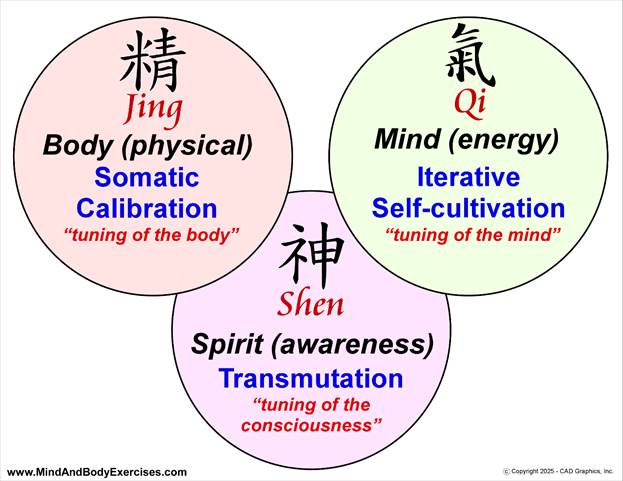
Nei Dan (nae gong, neigong) often translated as “Inner Alchemy,” is one of the most profound and esoteric branches of Daoist cultivation and traditional martial arts training. Unlike Wai Dan (or Wei Dan), or “external alchemy,” which historically referred to concocting elixirs from minerals and herbs, Nei Dan is an internal process of refining and transforming the body’s vital energies (jing, qi, and shen) into higher states of vitality, consciousness, and spiritual realization. This internal alchemical process forms the energetic and philosophical foundation of many advanced martial, meditative, and spiritual practices across Daoist, Chan Buddhist, and certain Confucian lineages.

Daoist Roots (circa 3rd–8th century CE):
Nei Dan emerged from early Daoist cosmology and longevity practices (yangsheng), evolving alongside classical texts such as the Dao De Jing, Zhuangzi, and later the Cantong Qi, (The Seal of the Unity of the Three), often considered the foundational text of internal alchemy (Pregadio, 2019). Early Daoist alchemists saw the human body as a microcosm of the cosmos, mirroring the same dynamic interplay of yin and yang, five elements (wuxing), and celestial cycles. The goal was to harmonize and refine these internal forces to return the practitioner to their original, undifferentiated state (yuan jing, yuan qi, yuan shen).

Tang–Song Dynasty Expansion (7th–13th century):
During the Tang and Song dynasties, Nei Dan was codified into systematic schools such as the Zhong-Lü and Nanzong lineages. These schools emphasized an internal “elixir” (neidan dan) formed through disciplined meditation, breath regulation, and energetic circulation, paralleling the external alchemical metaphor of refining base metals into gold. At this time, martial traditions, especially those influenced by Daoism and Chan Buddhism (e.g., Shaolin and Wudang), began incorporating these principles into their training as a means of enhancing internal power (nei jin), awareness, and longevity.

Integration into Martial Arts (Ming–Qing era onward):
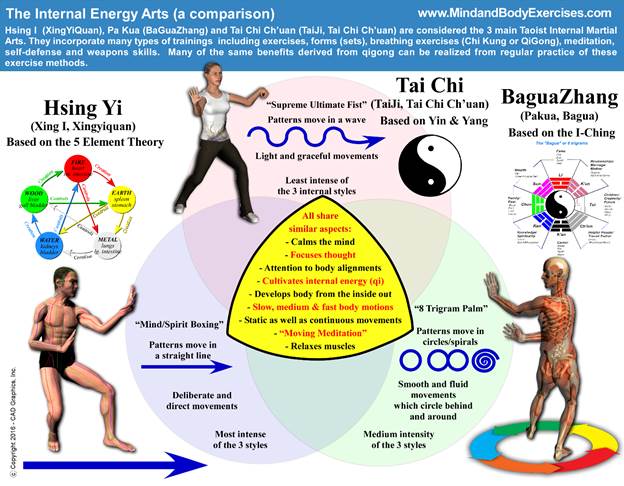
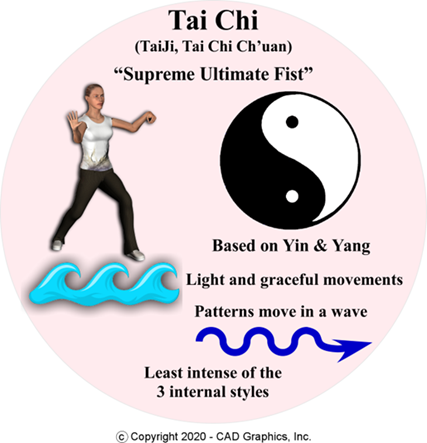
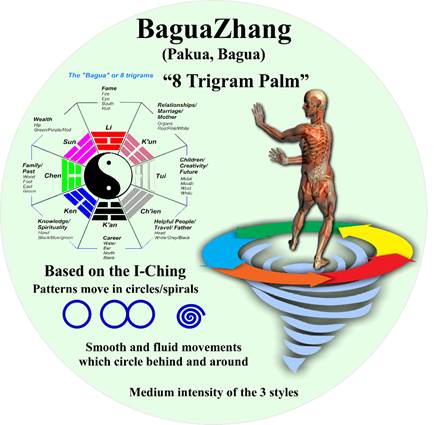
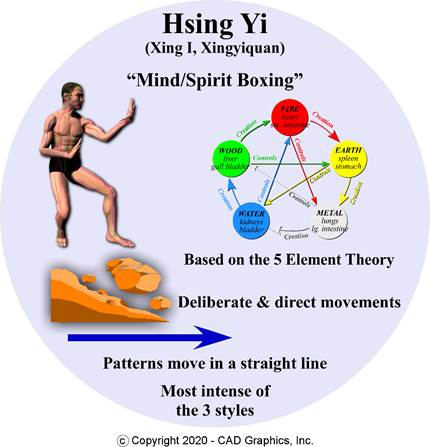
By the late imperial era, Nei Dan principles had become inseparable from Nei Jia Quan (“internal martial arts”) and most notably Taijiquan, Xingyiquan, and Baguazhang. These arts used the body as a vessel for alchemical transformation, with martial techniques functioning as vehicles for energetic refinement and spiritual cultivation. Masters such as Zhang Sanfeng (legendary founder of Taijiquan) and Dong Haichuan (founder of Baguazhang) are often described in Daoist alchemical terms, emphasizing internal stillness, energy transformation, and the unity of movement and spirit.

At its essence, Nei Dan is a lifelong path of internal transformation. The traditional Daoist saying — “Refine jing into qi, refine qi into shen, refine shen and return to emptiness” outlines the three fundamental stages:

  1. Refining Jing:
    • Jing refers to “essence” – the foundational life force associated with physical vitality, sexual energy, and genetic potential.
    • Practices in this stage focus on conserving and strengthening jing through lifestyle discipline, breath regulation, and daoyin exercises. This builds the “alchemical furnace” in the lower dantian, or the body’s energetic cauldron.
  2. Transforming Qi:
    • Once jing is stabilized, it is “cooked” into qi, which is the vital energy that flows through the body’s meridians.
    • Breathwork (tu-na), microcosmic orbit circulation (xiao zhoutian), and standing post practices (zhan zhuang) are common methods. Martial expressions of this phase include issuing power (fa jin) and unifying breath with intent (yi qi heyi).
  3. Refining Shen:
    • Shen, or “spirit,” is consciousness itself. At this level, practice aims at expanding awareness, cultivating emptiness (xu), and returning to the primordial source (dao).
    • Deep meditation, visualization, and contemplative stillness are central practices, often accompanied by subtle internal energetic processes described metaphorically as “the embryo of immortality” (shen ying).

– Breath and Energy Regulation (Tiao Qi):
Controlled breathing (tu-na) is fundamental, teaching practitioners to guide qi consciously through the meridians. The microcosmic orbit (circulating qi along the du and ren vessels) is one of the most well-known techniques.

– Posture and Structure (Tiao Shen):
Postural alignment, rooted stance work (zhan zhuang), and slow, continuous movement (e.g., Taiji or daoyin) build the vessel for qi cultivation. Internal martial arts often hide alchemical work within physical movement.

– Mental Focus and Intention (Tiao Xin):
Training the mind (yi) to direct energy (qi) is central. Practitioners cultivate stillness (jing), intention (yi), and awareness (shen ming), often through visualization of internal alchemical processes.

– Sexual Alchemy (Fangzhong Shu):
Though often misrepresented, sexual alchemy is a legitimate component in many Nei Dan systems. It involves the conservation and refinement of sexual energy (jing), transforming it into spiritual power rather than expending it.

– Meditative and Cosmological Practices:
Advanced practitioners engage in meditations synchronizing their internal rhythms with cosmic cycles (e.g., lunar, solar, and seasonal changes) reflecting the Daoist belief in harmonizing microcosm and macrocosm.

4. Nei Dan in Esoteric Martial Arts

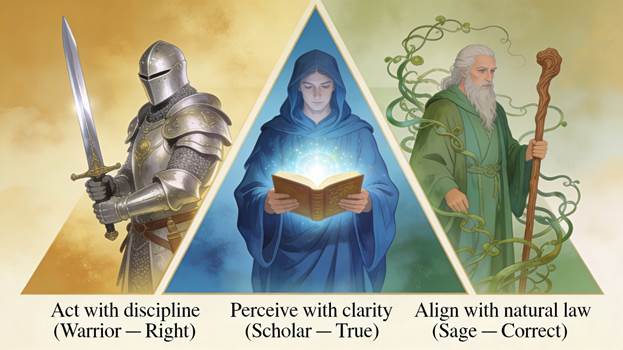
In the context of esoteric martial arts, Nei Dan is not simply health practice, but rather it is a method of refining the warrior’s spirit. The martial applications go far beyond fighting techniques:

  • Enhanced Internal Power: Cultivation of nei jin allows practitioners to issue force with minimal muscular effort.
  • Heightened Awareness: Refining shen deepens perception, intuition, and responsiveness, essential traits in high-level combat.
  • Transformation of Self: Martial practice becomes a vehicle for self-mastery, transcending ego and aligning the individual with the Dao.

Some lineages, such as certain Wudang Daoist sects, Xingyi Nei Gong, or the “Eight Immortal Methods” of Baguazhang, embed Nei Dan principles so deeply that combat forms double as alchemical formulas, guiding practitioners through progressive energetic transformations.

5. Legacy and Contemporary Practice

Today, Nei Dan is studied worldwide, both as a martial discipline and a spiritual science. In modern qigong, taiji, and neigong schools, the terminology may vary — yet the underlying process remains unchanged: the transformation of the human being from a coarse, ordinary state to one of luminous awareness and harmonious unity with the Dao.

It is said in the Daoist classics:

“The elixir is not found in mountains or seas. It is found within one’s own body.”

This aphorism encapsulates the essence of Nei Dan: the human being is the laboratory, the mind is the alchemist, and the Dao is the final elixir.

Nei Dan – Three-Stage Map with Methods, Physiology/Energetics, Goals, and Applications

Stage / TermCore Practice MethodsPhysiological / Energetic FocusAlchemical Goal / TransformationMartial & Spiritual Applications
Zhújī / Lìdǐng – Laying the Foundation / Setting the CauldronPostural regulation (tiao shen), alignment, pelvic “bowl” set; (zhàn zhuāng), (dǎoyǐn), soft tissue and fascial opening; diet/sleep/seasonal living; moral/intent regulation (de, yi)Stabilize lower dantian, pelvic floor, diaphragm; vagal tone; fascial tensegrity; Kidney–Spleen axis (TCM); normalize breath mechanics (nasal, low and wide)Build the “furnace” and “cauldron”; unify body–breath–mind; stop leaks of jing; establish stillness (jing) and attentional continuityConverts “health qigong” into true alchemical vessel; reliable rooting, joint decompression; baseline nervous-system regulation for higher stages
Liàn jīng huà qì – Refine Essence into Qi(breath work): natural to regulated; (tǔ nà), abdominal “bellows,” Dantian breathing; gentle (jing conservation), menstrual/sexual energy hygiene; light (Kidney tonification)Consolidate jing in lower dantian; Kidney–Adrenal/endocrine axis; marrow/essence; microcirculation to pelvis/abdomen; perineal lift–release coordinationTransform conserved jing → qi; ignite “furnace fire” without overheating; seal “three leaks” (body, breath, mind)Increased vitality, recovery, libido stability; root power for internal arts; fatigue resistance; stable base for nèi jìn
Xiǎo zhōutiān – Micro-cosmic OrbitAwareness-led circulation along (, Governing) & (Rèn, Conception) vessels; tongue-to-palate seal; breath–intent coupling; mild bandha/locks analogsOpen Dū/Rèn gates (tailbone, mingmen, jiaji, yintang); diaphragms (pelvic, respiratory, thoracic); cerebrospinal fluid rhythmSmooth, even qi circulation; harmonize anterior–posterior flow; pressure-equalize cavities; refine coarse sensations to subtleReliable whole-body connection; quiet, elastic spine; improved timing/issuing; emotional steadiness under stress
Liàn qì huà shén – Refine Qi into Shen(yì shǒu: guarding with intent), (inner illumination), reverse breathing (when appropriate), long-set, moving-stillness (Taiji, Xingyi, Bagua as vehicles)Stabilize middle dantian ; heart/pericardium field); regulate Heart–Lung axis; balance sympathetic/parasympathetic tonus; refine channel networkQi → Shen: transmute vitality into luminosity/clarity; unify (intent–energy–form); stabilize observer-stateHeightened ting jin (listening); anticipatory timing; effortless fa jin; creativity/flow; reduction of startle and fear reactivity
Dà zhōutiān – Great Orbit / Grand CirculationExtend orbit through limbs, twelve primaries, eight extraordinary vessels; seasonal/time-cycle practices; walking-circle meditation (Bagua), long-form Taiji as “moving elixir”Whole-network perfusion; limb-to-core elastic pathways; periphery–core pressure gradients; integrate Three JiaosGlobal conductivity; unify center–periphery; “breathes as one piece”; refine subtle heat/cool cyclesIssuing from any point/direction whole-body power; resilient gait and spiral force; durable calm under load
Liàn shén huán xū – Refine Shen, Return to EmptinessSilent sitting, formless absorption; (guarding mysterious pass), cessation–contemplation; sleep alchemy (dream/clear-light practice in some lines)Upper dantian; yintang/niwan field); brain–heart coherence; “spirit residence” clarified; minimize cortical overdriveShen → Xu: transparent awareness; stabilize non-dual witnessing; “embryo of immortality” metaphorsUnforced presence, economy of action; fearlessness with humility; “do less, achieve more” in martial timing; ethical clarity
 Fángzhōng shù – Sexual Alchemy / TemperanceModeration, timing, and conservation rather than depletion; couple-practice in specific lines; pelvic floor–breath–spine harmonizationProtect jing; endocrine stabilization; avoid sympathetic spikes from excess loss; integrate sensual energy into orbitRecycle sexual potential into tonic qi and lucid shen; avoid rebound agitationStable mood/drive; fewer boom-bust cycles; deep stamina; relational clarity and warmth without clinging
Yào huǒhòu – “Fire Phases” / Dosing & TimingAlternating (civil/martial fire): gentle vs. vigorous practice; periodization across day/season/age; recovery disciplinePrevent overheating/dryness of fluids; protect Heart–Kidney communication; maintain “sweet spot” arousalRight-dose transformation; steady progress without injury; “water and fire already harmonized”Sustainable training, fewer plateaus; long career longevity; adaptability across environments
Nèiguān jiàoduì – Inner Observation & CorrectionsSensation taxonomy; error recognition (straining, breath holds, scattered mind); teacher feedback, journalingDetect energy stagnation, “up-flaring,” cold/damp accumulation; posture-breath-mind driftKeep process safe, reversible, testable; iterate micro-adjustmentsReduces injury/overreach; repeatable skill acquisition; clearer pedagogy for students
Déxíng / Jièlǜ – Virtue & PreceptsEthical commitments, speech discipline, simplicity, gratitude; community of good companyCalms karmic winds; reduces inner conflict/leaks; supports Heart clarity“Leak-proof” vessel; clarity of intention; congruent life supports practiceStable leadership presence; conflict de-escalation; trustworthy teacher-student field

Notes & mini-glossary (for manuscript margin or endnotes)

  • Sānbǎo: Jing–Qi–Shen — essence, energy, spirit.
  • Three Dantians: lower (vital/structural), middle (affective/relational), upper (cognitive/awareness).
  • Micro/Great orbits – conduction along Conception/Governing vessels (small), then through full channel network (great).
  • Huǒhòu: “Fire timing” — dosage, intensity, and pacing of practice.
  • Nèi jìn: Internal (elastic) power arising from whole-body integration and refined fascia/pressure dynamics.
  • Safety: Over-forcing breath, heat, or sexual practices can destabilize mood, sleep, or blood pressure; increase gradually, emphasize recovery.

References:

Despeux, C. (1990). Taoism and Self Cultivation: Transformation and Immortality. In L. Kohn & M. LaFargue (Eds.), Lao-tzu and the Tao-te-ching (pp. 39–52). SUNY Press.

Eskildsen, S. (2008). Daoist Body Cultivation: Traditional Models and Contemporary Practices – Edited by Livia Kohn. Religious Studies Review, 34(3), 230–231. https://doi.org/10.1111/j.1748-0922.2008.00306_4.x

Pregadio, F. (2019). The Seal of the Unity of the Three: A Study and Translation of the Cantong Qi, the Source of the Daoist Way of the Golden Elixir. Golden Elixir Press.

Robinet, I. (1993). Taoist Meditation: The Mao-shan Tradition of Great Purity. State University of New York Press.

Yang, J. M. (2005). The Root of Chinese Qigong: Secrets of Health, Longevity, & Enlightenment. YMAA Publications. https://archive.org/details/rootofchineseqig0000yang