

A Cross-Cultural and Linguistic Analysis
Language encodes cultural experience, shaping the ways in which human emotion, perception, and cognition are described and interpreted. The Korean term do-chi or dochwi offers a compelling example of how metaphorical language conveys emotional states. Typically translated as “intoxication” or “to be drunk on,” the word describes a form of deep emotional or aesthetic absorption. In contrast, the English term delusion signifies a fixed, pathological belief that diverges from reality and resists correction (American Psychiatric Association [APA], 2013). Though both terms involve altered perception, they represent profoundly different cultural and psychological concepts. This essay explores the meaning of do-chi, contrasts it with the clinical construct of delusion, and considers their nuanced intersection in terms of distorted perception.

The Korean Concept of Do-chi
The term Do-chi derives from Sino-Korean roots: to, meaning pottery or transformation, and chwi, meaning intoxication. Its metaphorical sense emphasizes being “intoxicated” or “enraptured” by something positive, such as music, art, beauty, or triumph. In everyday Korean usage, one might hear “to be intoxicated by victory,” or “to be drunk on nature.” In both cases, the speaker describes an overwhelming emotional or sensory experience that elevates one’s state of being.
Importantly, do-chi is not regarded as pathological. Instead, it is often framed positively as immersion, joy, or aesthetic rapture. While the metaphor of intoxication implies a temporary loosening of rational control, the concept remains firmly grounded in human experience and emotional expression. Korean poetry and literature frequently employ do-chi to describe states of heightened awareness, creativity, or transcendence. Thus, the term embodies a culturally sanctioned and even celebrated condition of altered perception.
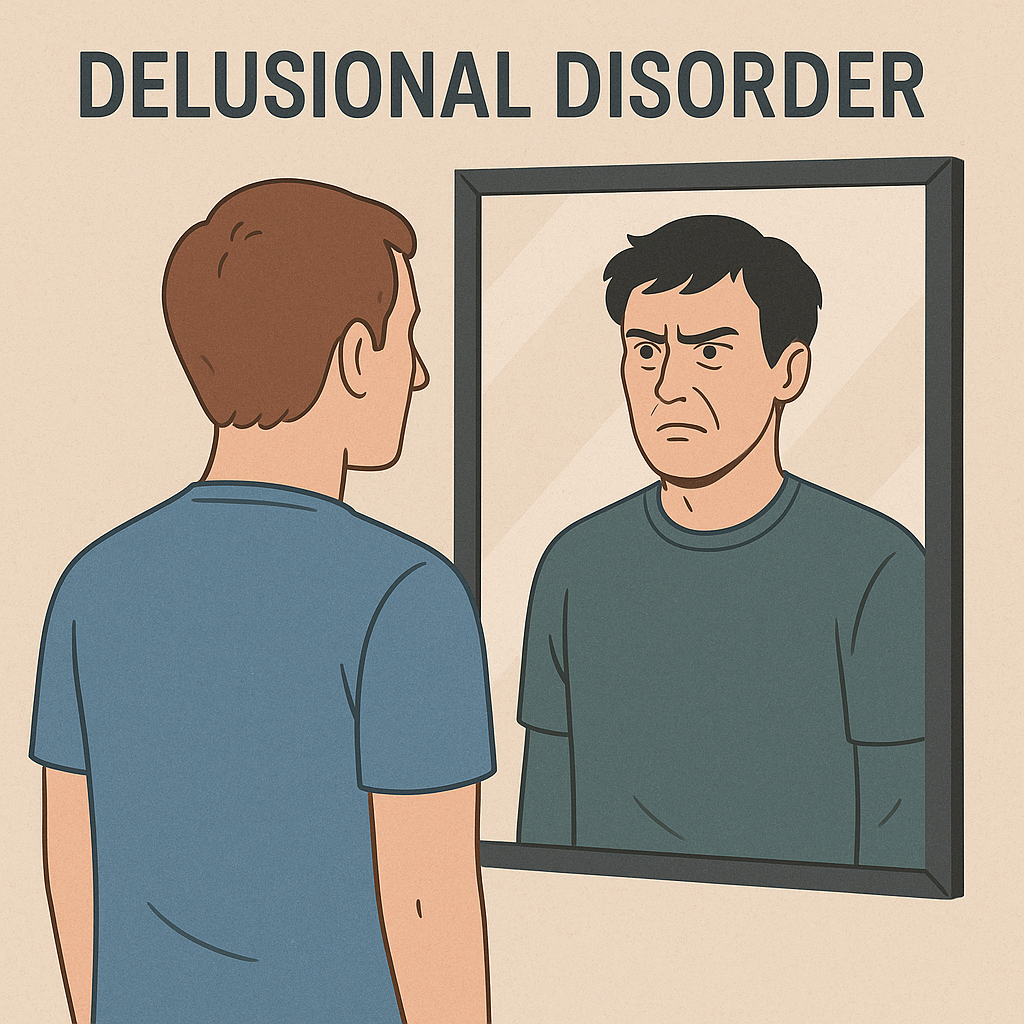
The English Concept of Delusion
By contrast, delusion is a term situated within psychiatry and clinical psychology. According to the Diagnostic and Statistical Manual of Mental Disorders (DSM-5), a delusion is defined as a “fixed belief that is not amenable to change in light of conflicting evidence” (2013, p. 87). Classical psychiatrist Karl Jaspers (1963) emphasized three criteria for delusions: (1) absolute certainty, (2) incorrigibility, and (3) falsity. Unlike do-chi, which describes temporary and often beneficial immersion, delusions are pathological, interfering with functioning and perception of reality.
Delusions occur across a spectrum of psychiatric disorders, including schizophrenia, delusional disorders, and mood disorders with psychotic features (Freeman, 2007). They can take many forms, such as persecutory delusions (“I am being watched”), grandiose delusions (“I am a prophet”), or somatic delusions (“My organs are rotting”). In every case, the defining element is a belief system disconnected from reality, impervious to logical refutation, and often impairing to social or occupational functioning.
Comparing Do-chi and Delusion
Although both do-chi and delusion involve altered states of perception, their similarities are superficial. Do-chi represents a metaphorical intoxication, a poetic description of being overwhelmed by positive effects. Delusion, in contrast, represents a clinical disorder of cognition, characterized by irrationality and resistance to evidence. The following table highlights these distinctions:
| Feature | Do-chi | Delusion |
| Nature | Metaphorical, emotional intoxication | Clinical, pathological false belief |
| Relation to reality | Grounded in heightened but real experiences | Detached from reality, impervious to logic |
| Duration | Temporary, situational | Persistent, often chronic |
| Valence | Positive, celebratory, aesthetic | Negative, impairing, or distressing |
| Cultural context | Poetic, every day, literary | Medical, psychiatric, diagnostic |
This comparison underscores the cultural gap between the terms. In Korean, do-chi enriches emotional vocabulary by describing states of absorption that bring joy and meaning. In English, delusion restricts the term to pathology, connoting impairment and danger.
Points of Convergence: Distorted Perception
Despite their differences, both terms share a loose thematic connection: the alteration of normal perception. To be do-chi is to lose oneself in joy, art, or triumph, such that ordinary reality fades into the background. Similarly, delusion involves the loss of alignment with consensual reality, though in a maladaptive way. Both reflect the human susceptibility to experiences that reshape perception and cognition. The divergence lies in whether this alteration is culturally celebrated (do-chi) or clinically condemned (delusion).

Conclusion
I have personally known and participated in groups that could be perceived as immersed in their own version of do-chi, intoxicated by their ideals to the point of losing touch with reality. Within such circles, members often became tone-deaf not only to the experiences of those inside the group but also to the perspectives of the wider public. In some cases, these groups even sought to rewrite history, clinging to their own narratives as though they were unassailable truths (Hobsbawm & Ranger, 1983; Janis, 1982). Yet, just because a group collectively sustains a belief does not require others to accept it as fact, especially when credible evidence proves otherwise.
The Korean term do-chi and the English concept of delusion illuminate how language and culture frame altered states of perception. Do-chi signifies a positive, aesthetic intoxication, celebrated in literature and daily speech as evidence of deep human feelings. Delusion, by contrast, describes a psychiatric symptom of false, fixed beliefs that resist correction and impairs functioning. While both terms capture the human capacity to move beyond ordinary perception, their meanings diverge sharply in cultural value and psychological consequence. Understanding these differences underscores the importance of cultural and linguistic nuance in interpreting states of mind across traditions.
References:
American Psychiatric Association, DSM-5 Task Force. (2013). Diagnostic and statistical manual of mental disorders: DSM-5™ (5th ed.). American Psychiatric Publishing, Inc.. https://doi.org/10.1176/appi.books.9780890425596
Freeman, D. (2007). Suspicious minds: The psychology of persecutory delusions. Clinical Psychology Review, 27(4), 425–457. https://doi.org/10.1016/j.cpr.2006.10.004
Hobsbawm E, Ranger T, eds. The Invention of Tradition. Cambridge University Press; 2012.
Janis, I. L. (1982). Groupthink Psychological Studies of Policy Decisions and Fiascos. Boston Houghton Mifflin. – References – Scientific Research Publishing. (n.d.). https://www.scirp.org/reference/referencespapers?referenceid=2122583
Jaspers, K. (1963). General psychopathology (J. Hoenig & M. W. Hamilton, Trans.). University of Chicago Press. (Original work published 1913). https://archive.org/details/generalpsychopat0000unse/page/n7/mode/2up
National Institute of Korean Language (국립국어원). (n.d.). Korean-English Learners’ Dictionary. Retrieved from https://krdict.korean.go.kr/eng/


 United Martial Arts Association