Reiki and its Acceptance in the US Healthcare System

American culture and society have greatly become more polarized on many issues. I see there is much more of a divide over the last 40 years between religions, spirituality, and secular practices. Reiki is a Japanese energy-based healing technique that uses an individual’s energy force to help reduce stress, and anxiety and encourage relaxation not only for themselves but also for others. The method uses gentle touch and placement for healing and tries to improve balance in the body. Reiki has become more accepted and understood in some regions in recent years and consequently, more hospitals in the US. I found a few sources that indicated that Reiki is more accepted and offered in more progressive areas of the US, such as New England (Miles, 2019) the West Coast, and New York (McKnight, 2023).  In other areas such as the Midwest, the Rust Belt, and the South, not so much. There is much more work and education that needs to transpire before Reiki will be truly accepted as mainstream by the US population.

However, Reiki practice for some that are religious, may make sense and coincide with their belief in the power of prayer. For those who are spiritual, Reiki offers a non-religious option to connect to the divine or something greater than the self. For the secular, the basic premise of self-regulation through meditation and modulation of the nervous system (Miles, 2008) through managed breath control makes sense when applied to the Reiki concepts. With more studies, exposure, and education all three of these groups may embrace Reiki more in years to come.

I live in Orlando, Florida which has been typically labeled as being in the so-called “Bible-belt.” This is a bit of an issue in that there are many people here, moving to or retiring here specifically to engage in the religious resources of many churches located throughout Florida. Not too much of a coincidence is that one of the largest healthcare providers in the US is Advent Health, which is a Seventh-day Adventist non-profit healthcare system headquartered in Central Florida. This particular religion does not support Eastern philosophy (Roman & Roman, 2022), making it extremely difficult to offer yoga, tai chi, qigong, Reiki, and other methods to its patients and the general public. I have tried hard over the last 30 years to work with their community outreach and senior wellness departments, where I have provided some lectures on bone health, balance, and stress management. I was instructed to keep my presentations on tai chi and qigong, within the guidelines of exercise and mindfulness breathing exercises. Administrators preferred for me not to get into spirituality, religion, or metaphysical concepts that may not coincide with the corporation’s Christian mission, shared vision, or common values. When these healthcare providers do offer yoga or tai chi classes, they are usually just teaching physical exercises. From what I have found, Reiki is not offered much in Orlando except through private practitioners. This may change in years to come as I plan to become more involved in teaching holistic health seminars, for which Reiki will be a topic of my discussions.

Most people are aware that allopathic medicine is a very powerful and profit-driven model that generates about 4.1 trillion dollars per year in products, services, and employment (American Medical Association & American Medical Association, 2024). Anything that is free to learn/practice or empowers the individual to take control of their own health, is often labeled as pseudo-science or alternative, regardless of if other cultures have seen the benefits as legitimate, safe, and effective for thousands of years. “Safe and effective” often has a different meaning in the US where politics and profits often determine safety and efficacy. As the US continues to be more diverse in its assimilation of other cultures, we will continue to see more traditional healthcare practices come to be accepted in the US. Look how long it has taken for acupuncture, yoga, massage, Pilates, and other methods to achieve acceptance in the US. True knowledge lives on regardless of the day-to-day, year-to-year flippancy of a nation’s viewpoints.  If Reiki continues to offer benefits, studies will continue forward and hopefully eventually align with allopathic medicine, which would greatly broaden the acceptance within the general population.

One area of my concern with the potential for healing through Reiki practices is the potential karmic implications that may come about while attempting to help others. If someone is trying to heal by serving as a conduit to the Reiki energy, this is somewhat different than attempting to heal as a source of energy instead. It is my understanding from my own practices and study of Eastern cultures that often peoples’ ailments, whether mental or physical, are manifestations of their own actions and circumstances.  As a healer, one needs to be aware that many life lessons are meant to be learned, experienced, solved, and mastered firsthand. If not for the individual’s own life lessons, but so as not to diminish the energy of other people. An example of this type of scenario is seen typically in the healthcare or first responder professions, where an individual may have good intent in helping another person, but that person often does not change their behavior or circumstances to avoid ailments or events, only to repeat them over and over again. The healer, helper, supporter, etc., often drains themselves physically, mentally, and spiritually while the patient, victim, or person in need becomes somewhat of an energy vampire consuming others’ energy and good intentions.

References:

Miles, P. (2019, September 16). Reiki in hospitals: An update by Pamela Miles, medical reiki master. https://reikiinmedicine.org/. https://reikiinmedicine.org/clinical-practice/reiki-in-hospitals-an-update/

McKnight, J. (2023, April 1). Full list of hospitals that use Reiki in the US. Planet Meditate. https://planetmeditate.com/full-list-hospitals-that-use-reiki-us/

Miles, (2008). (p.198) Reiki, A Comprehensive Guide, Penguin Publishing Group. Kindle Edition. Roman, A., & Roman, A. (2022, February 24). Yoga, Zumba, Les Mills, Te Fiti the Goddess of Creation, Disney Magic and the New 8 Laws of Health are all part of AdventHealth | Advent Messenger. Advent Messenger. http://adventmessenger.org/yoga-zumba-les-mills-te-fiti-the-goddess-of-creation-disney-magic-and-the-new-8-laws-of-health-are-all-part-of-adventhealth/

American Medical Association & American Medical Association. (2024, April 25). Trends in health care spending. American Medical Association. https://www.ama-assn.org/about/research/trends-health-care-spending

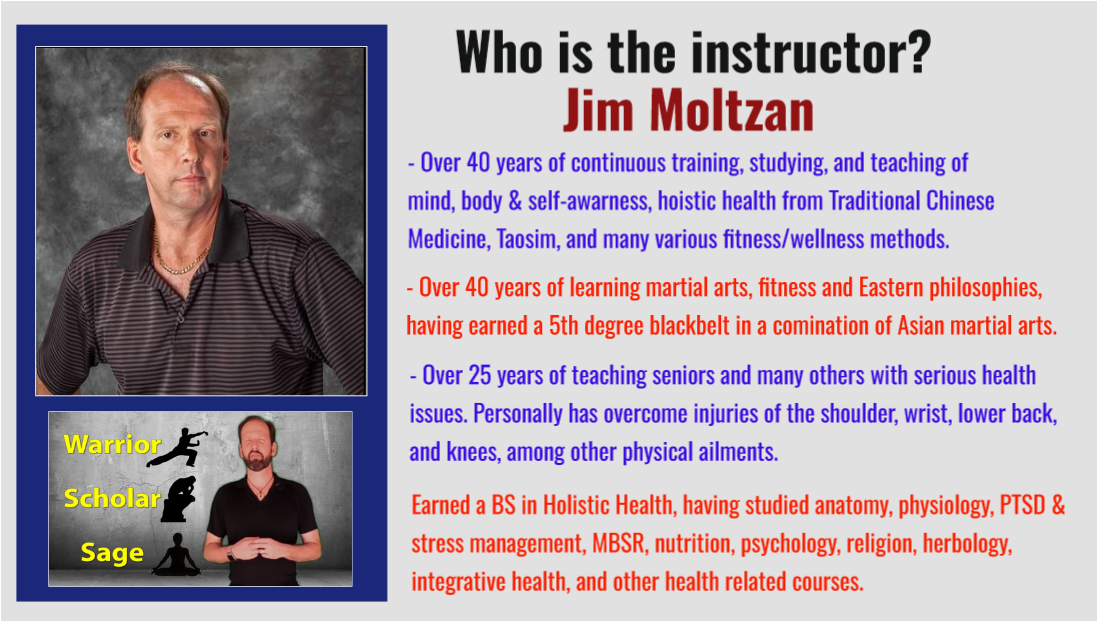
I teach and offer lectures about holistic health, physical fitness, stress management, human behavior, meditation, phytotherapy (herbs), music for healing, self-massage (acupressure), Daoyin (yoga), qigong, tai chi, and baguazhang.

Please contact me if you, your business, organization, or group, might be interested in hosting me to speak on a wide spectrum of topics relative to better health, fitness, and well-being.

I look forward to further sharing more of my message by partnering with hospitals, wellness centers, VA centers, schools on all levels, businesses, and individuals who see the value in building a stronger nation through building a healthier population.

I also have hundreds of FREE education video classes, lectures, and seminars available on my YouTube channel at:

https://www.youtube.com/c/MindandBodyExercises

Many of my publications can be found on Amazon at:

www.Amazon.com/author/jimmoltzan

My holistic health blog is available at:

https://mindandbodyexercises.wordpress.com/

www.MindAndBodyExercises.com

Mind and Body Exercises on Google: https://posts.gle/aD47Qo

Jim Moltzan
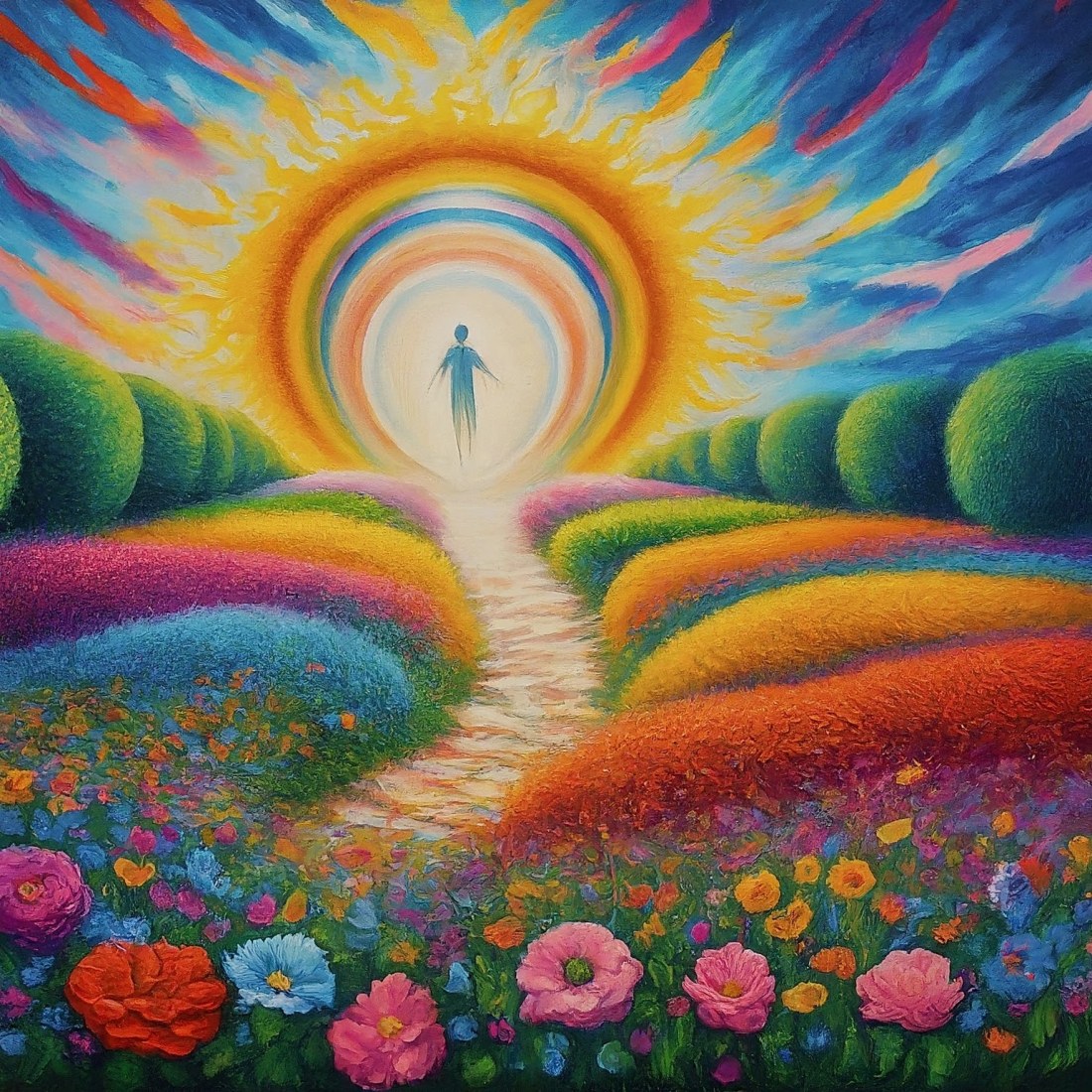
Dreams and Death, is There a Correlation?

Have you ever suddenly awoken from an intense dream where you questioned if it was just an abstract experience or one that may have a deeper and more profound meaning? Or maybe a repeat of another dream that seems to reoccur? Maybe even where deceased individuals close to you come to “visit” to offer words of support, closure, or invaluable insights?

The dream event is indicative of a momentary state of diminished faculties. It may be quite possible that dreams involving the deceased may be symptomatic of grief, however, this explanation may not hold true for all dream visitations. It is believed that the dream state allows a separation from our senses. Sleep can be viewed as a way of quieting the senses, so that nothing is conveyed to the heart, allowing the veil of the afterlife to be raised up (Kovelant, 2007).

Some may view a visitation dream as a component of the grieving process but diminishing the experience of the dreamer as possibly being temporarily not normal due to a tragedy. Religions such as Islam and more specifically Sufism, the esoteric form of Islam, have quite different viewpoints on dreams. Dreams come from a spiritual or mystical belief. Sufism sees that some dreams, specifically “visitation dreams” are where the dead seem to return or appear in dreams, to interact with us. Whether the perceived visitation of the deceased that appears in one’s dreams is produced by the dreamer, the deceased, both, or neither, remains yet to be determined (Kovelant, 2007).

In many various Indigenous cultures, dreams are seen as a bridge between the physical and spiritual worlds. Among some Native American tribes, dreams are perceived as a conduit through which the spirits of ancestors can communicate with the living. These dreams are not simply symbolic but are thought to carry messages and guidance from the deceased, who may still remain connected to the physical lives of their loved ones even after passing on to the next phase of spiritual existence.

Día de los Muertos (Day of the Dead), is a celebration that is believed in Mexican culture to be a time when the spirits of the deceased can return to the world of the living. The celebration itself can be seen as a conscious invitation for these spirits to visit. Dreams experienced during this period are often interpreted as actual interactions with the deceased. These dreams are often interpreted as guidance, blessings, support or comfort, and reassurance from those who have passed on.

Chinese culture believes that dreams including the deceased can offer other insights. Recurring dreams might highlight unresolved issues or a need to engage in specific rituals to help the deceased rest in peace. Their belief is that the deceased might appear to the living in dreams to help resolve unfinished tasks or to provide guidance to their living relatives.

Western cultures often seem to approach dreams with a more psychological perspective. Psychologists Sigmund Freud and Carl Jung offered insights into dreams in the early and mid-1900s, where the deceased are often seen as manifestations of an individual’s unconscious mind. From this perspective, dreams where the deceased comes to visit, might represent the dreamer’s inner thoughts and emotions as opposed to an actual spiritual encounter. Within this framework, many people may find meaning in these dreams. Some may see these types of dreams as a method to process grief and continue a connection with loved ones who have since passed away.

I have experienced visitation dreams a few times, where close family members or dear friends came to me in my dreams shortly after their passing. I might have attributed these events to coping mechanisms or coincidences in dealing with death and the grieving process. However, I don’t believe this to be the case due to my finding out that other living family or friends had experienced very similar dreams at almost the same time, from the same deceased individuals.

Reference:

Kovelant, K. (2007). Peering through the Veil: Death, Dreams and the Afterlife in Sufi Thought. Journal of Spirituality & Paranormal Studies30, 148–156.

I teach and offer lectures about holistic health, physical fitness, stress management, human behavior, meditation, phytotherapy (herbs), music for healing, self-massage (acupressure), Daoyin (yoga), qigong, tai chi, and baguazhang.

Please contact me if you, your business, organization, or group, might be interested in hosting me to speak on a wide spectrum of topics relative to better health, fitness, and well-being.

I look forward to further sharing more of my message by partnering with hospitals, wellness centers, VA centers, schools on all levels, businesses, and individuals who see the value in building a stronger nation through building a healthier population.

I also have hundreds of FREE education video classes, lectures, and seminars available on my YouTube channel at:

https://www.youtube.com/c/MindandBodyExercises

Many of my publications can be found on Amazon at:

http://www.Amazon.com/author/jimmoltzan

My holistic health blog is available at:

https://mindandbodyexercises.wordpress.com/

http://www.MindAndBodyExercises.com

Mind and Body Exercises on Google: https://posts.gle/aD47Qo

Jim Moltzan
407-234-0119

False Memories, the Power of Suggestion – Or Don’t You Think…

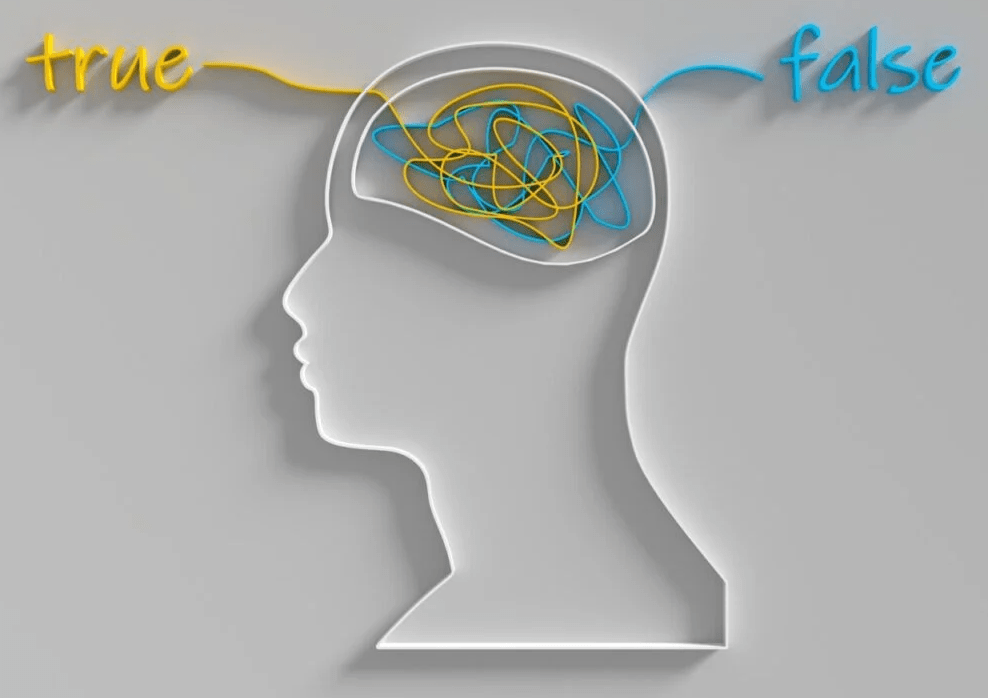
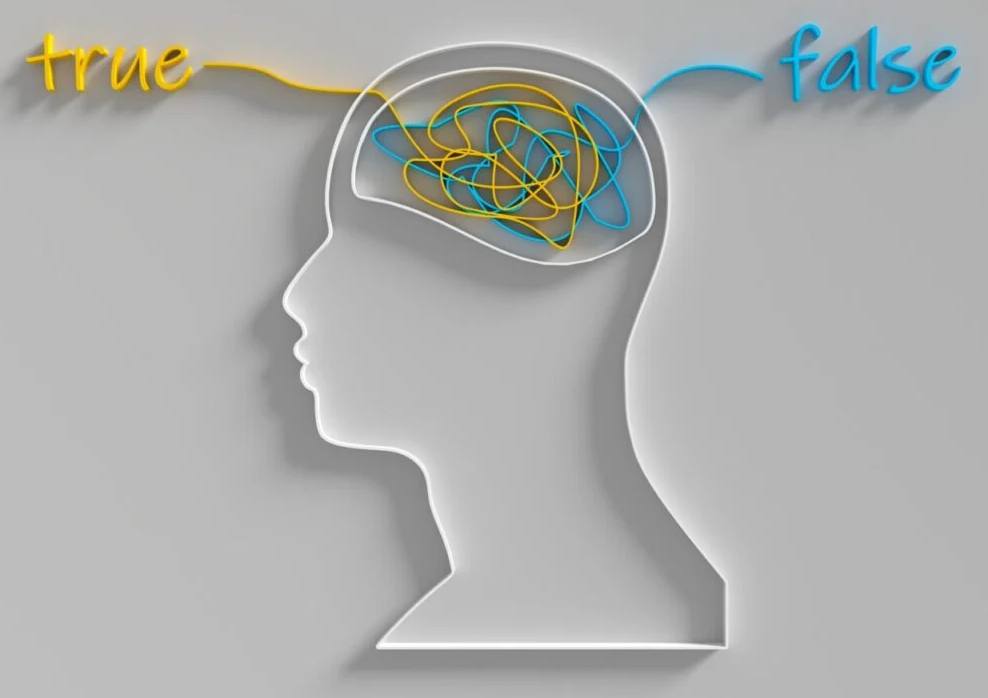
Suggestibility is where memory is distorted due to newer and/or misleading information (Ettinger, 2018). I think that this concept of implanting false memories through suggestion, might not be so recent of an idea despite the Ted Talk with psychologist Elizabeth Loftus speaking on seemingly modern events (Loftus, 2013). I am going to veer off onto a different perspective. People have been influencing others with the power of suggestion for at least the length of my life and probably much, much, longer before. I have seen parents, teachers, coaches, mentors, clergy, and others suggest and sway the thoughts and emotions of those who trust them. I have discussed this previously, specifically with the state of dependency and flashbulb memories, and how our thoughts and emotions can affect how we store our memories, whether perceived by us as being a good or a bad memory at any particular time (Ettinger, 2018).

(Walsh, 2017)

When a child is injured or sick, a parent or other adult might downplay the event by using wording such as “it’s not that bad”, “it could have been a lot worse” or “this is nothing” in order to not upset the child. However, these phrases might actually be causing the child to reprogram their thoughts to what an injury should feel like or even their tolerance to pain. Changing the perspective can change how the memories are encoded. These examples could be debated as good or bad depending upon the individual and their unique circumstances. For example, I broke my collarbone at a very young age, where I did not really remember the injury. When I was old enough to remember my parents told me how I was in pain and unable to grab with my right arm. This seemed somewhat traumatic to revisit when I was young, but years later my parents shared that due to my right arm being injured, I turned out to be left-handed. At this time, left-handedness was considered somewhat odd, or unique but also kind of special. Learning of this fact changed my memory of what my collarbone injury was in my mind, for the better.

(Perera, 2023)

My point here is that not only can others sway our thoughts and emotions, leading to our memories being considered as a favorable or unfavorable memory, but we can also change them ourselves. I have worked with many people over my years as a martial arts and self-defense instructor, that had suffered trauma from being injured or assaulted by others. Some of these people were able to not change their memory but rather change their perspective of the memory. This was accomplished by working with them through the memory of the event and how they dealt with the event at the time compared to how they might in the future. With gaining increased knowledge, awareness, and other strengths and skills, some people can change how memories affect them, whether for the better or for the worse.

References:

Ettinger, R. H. (2018). Psychology: The science of behavior (6th ed.). Redding, CA: BVT Publishing

Loftus, E. (2013, September 23). How reliable is your memory? TED Talks. Retrieved October 20, 2022, from https://www.ted.com/talks/elizabeth_loftus_how_reliable_is_your_memory?language=en

Walsh, C. (2017, December 12). CogBlog – a cognitive psychology blog » Pay attention! Divided attention impairs memory processes. https://web.colby.edu/cogblog/2017/12/12/pay-attention-divided-attention-impairs-memory-processes/

Perera, A. (2023). False Memory In Psychology: Examples & More. Simply Psychology. https://www.simplypsychology.org/false-memory.html

I teach and offer lectures about holistic health, physical fitness, stress management, human behavior, meditation, phytotherapy (herbs), music for healing, self-massage (acupressure), Daoyin (yoga), qigong, tai chi, and baguazhang.

Please contact me if you, your business, organization, or group, might be interested in hosting me to speak on a wide spectrum of topics relative to better health, fitness, and well-being.

I look forward to further sharing more of my message by partnering with hospitals, wellness centers, VA centers, schools on all levels, businesses, and individuals who see the value in building a stronger nation through building a healthier population.

I also have hundreds of FREE education video classes, lectures, and seminars available on my YouTube channel at:

https://www.youtube.com/c/MindandBodyExercises

Many of my publications can be found on Amazon at:

http://www.Amazon.com/author/jimmoltzan

My holistic health blog is available at:

https://mindandbodyexercises.wordpress.com/

http://www.MindAndBodyExercises.com

Mind and Body Exercises on Google: https://posts.gle/aD47Qo

Jim Moltzan

407-234-0119

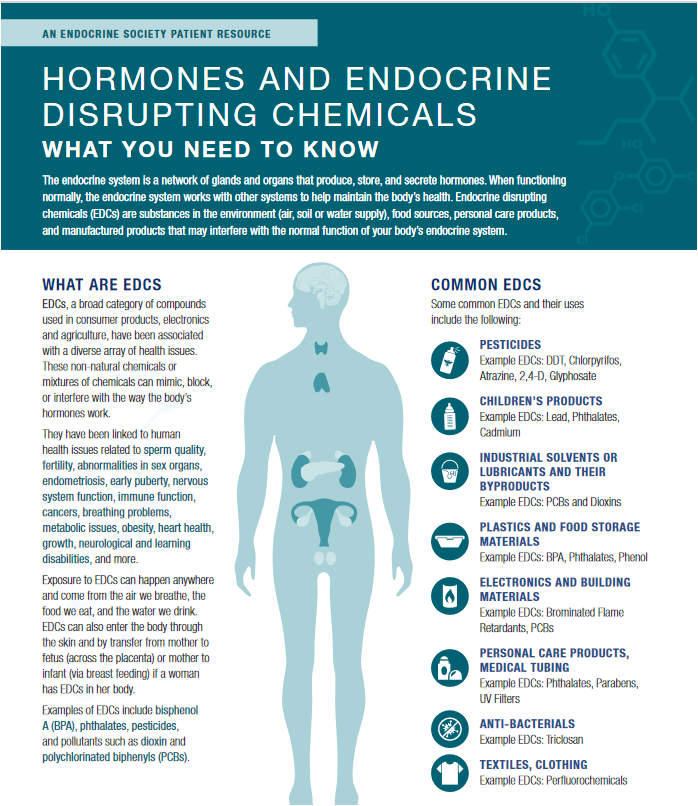
Metabolic Dysfunction and Concerns over Processed Food, Endocrine-Disrupting Chemicals (EDCs), and Toxins

People in the US are experiencing many mental and physical diseases, ailments, and chronic conditions that were not nearly as prominent in years past. Some experts believe there is a definite link between chemicals and the state of poor health in the US.

Metabolic Dysfunction Statistics: 93.2% of Americans have at least one marker of metabolic dysfunction according to a study published in the Journal of the American College of Cardiology. The study analyzed health data from over 55,000 Americans and found that only 6.8% were metabolically healthy. This alarming statistic highlights widespread issues like insulin resistance, high cholesterol, and high blood pressure, all linked to poor diet and lifestyle choices​. The study concluded that U.S. cardiometabolic health has been poor and worsening between 1999 and 2000 and 2017 and 2018, with only 6.8% of adults having optimal cardiometabolic health.

Processed Foods: Their concerns about the impact of ultra-processed foods are backed by extensive research in nutritional science. A 2019 study published in The BMJ found that higher consumption of ultra-processed foods was associated with an increased risk of all-cause mortality. Ultra-processed foods are often rich in refined sugars, unhealthy fats, and chemical additives, which have been linked to insulin resistance and chronic inflammation—key drivers of metabolic syndrome. The study concluded that “higher consumption of ultra-processed foods (>4 servings daily) was independently associated with a 62% relatively increased hazard for all-cause mortality. For each additional serving of ultra-processed food, all-cause mortality increased by 18%.”

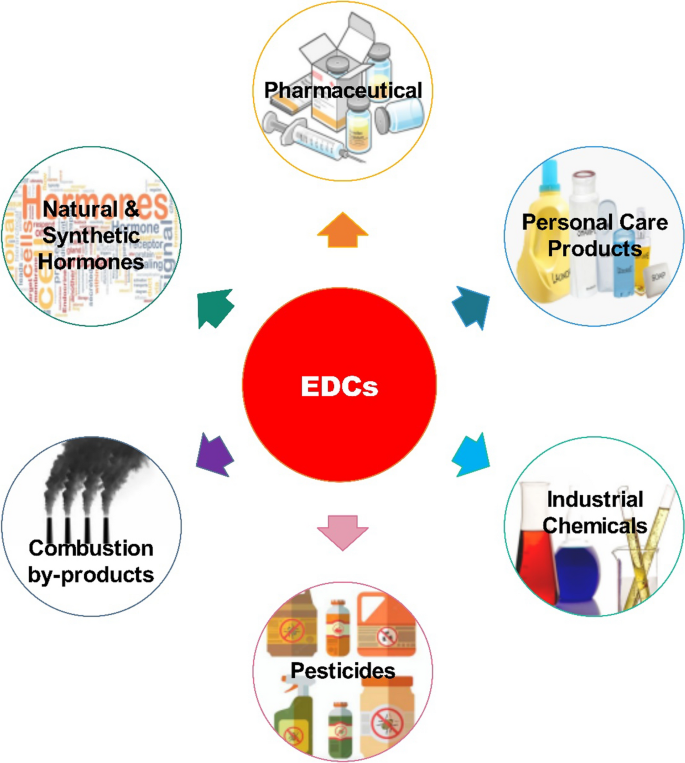
Endocrine-Disrupting Chemicals (EDCs): The risks associated with chemicals like BPA and phthalates are well-documented. The Endocrine Review has published multiple position papers discussing how EDCs interfere with the body’s hormonal systems, contributing to obesity, diabetes, and reproductive health issues. The thyroid’s hormone signaling plays a critical role in metabolism, growth, and development. EDCs impact endocrine disruptors, from chemicals like bisphenol A (BPA), phthalates, and industrial pollutants like polychlorinated biphenyls (PCBs) and polybrominated diphenyl ethers (PBDEs). These substances, along with herbicides and pesticides like atrazine and DDT, can interfere with thyroid function, leading to various health issues.

Environmental Toxins: Heavy metals, pesticides, and airborne pollutants have been linked to numerous health issues, including mitochondrial dysfunction. A 2014 review in Environmental Research connected chronic exposure to environmental toxins like arsenic, lead, mercury, cadmium, chromium, aluminum, iron, and pesticides to metabolic diseases through their detrimental effects on mitochondrial function and oxidative stress. Failure to better manage the exposure of heavy metals will ultimately result in severe complications in the future, due to the adverse effects imposed by these elements and relative substances.

(Society, 2022)

References:

Metabolic Dysfunction Statistics:

  • O’Hearn, M., Lauren, B. N., Wong, J. B., Kim, D. D., & Mozaffarian, D. (2022). Trends and Disparities in Cardiometabolic Health among U.S. adults, 1999-2018. Journal of the American College of Cardiology, 80(2), 138–151. https://doi.org/10.1016/j.jacc.2022.04.046

Processed Foods:

  • Rico-Campà, A., Martínez-González, M. A., Alvarez-Alvarez, I., De Deus Mendonça, R., De La Fuente-Arrillaga, C., Gómez-Donoso, C., & Bes-Rastrollo, M. (2019). Association between consumption of ultra-processed foods and all cause mortality: SUN prospective cohort study. BMJ, l1949. https://doi.org/10.1136/bmj.l1949

Endocrine-Disrupting Chemicals (EDCs):

Environmental Toxins:

  • Jaishankar, M., Tseten, T., Anbalagan, N., Mathew, B. B., & Beeregowda, K. N. (2014). Toxicity, mechanism and health effects of some heavy metals. Interdisciplinary Toxicology, 7(2), 60–72. https://doi.org/10.2478/intox-2014-0009

I teach and offer lectures about holistic health, physical fitness, stress management, human behavior, meditation, phytotherapy (herbs), music for healing, self-massage (acupressure), Daoyin (yoga), qigong, tai chi, and baguazhang.

Please contact me if you, your business, organization, or group might be interested in hosting me to speak on a wide range of topics related to better health, fitness, and well-being.

I look forward to further sharing my message by partnering with hospitals, wellness centers, VA centers, schools on all levels, businesses, and individuals who see the value in building a stronger nation through a healthier population.

I also have hundreds of FREE education video classes, lectures, and seminars available on my YouTube channel at:

https://www.youtube.com/c/MindandBodyExercises

Many of my publications can be found on Amazon at:

http://www.Amazon.com/author/jimmoltzan

My holistic health blog is available at:

https://mindandbodyexercises.wordpress.com/

http://www.MindAndBodyExercises.com

Mind and Body Exercises on Google: https://posts.gle/aD47Qo

Jim Moltzan
407-234-0119

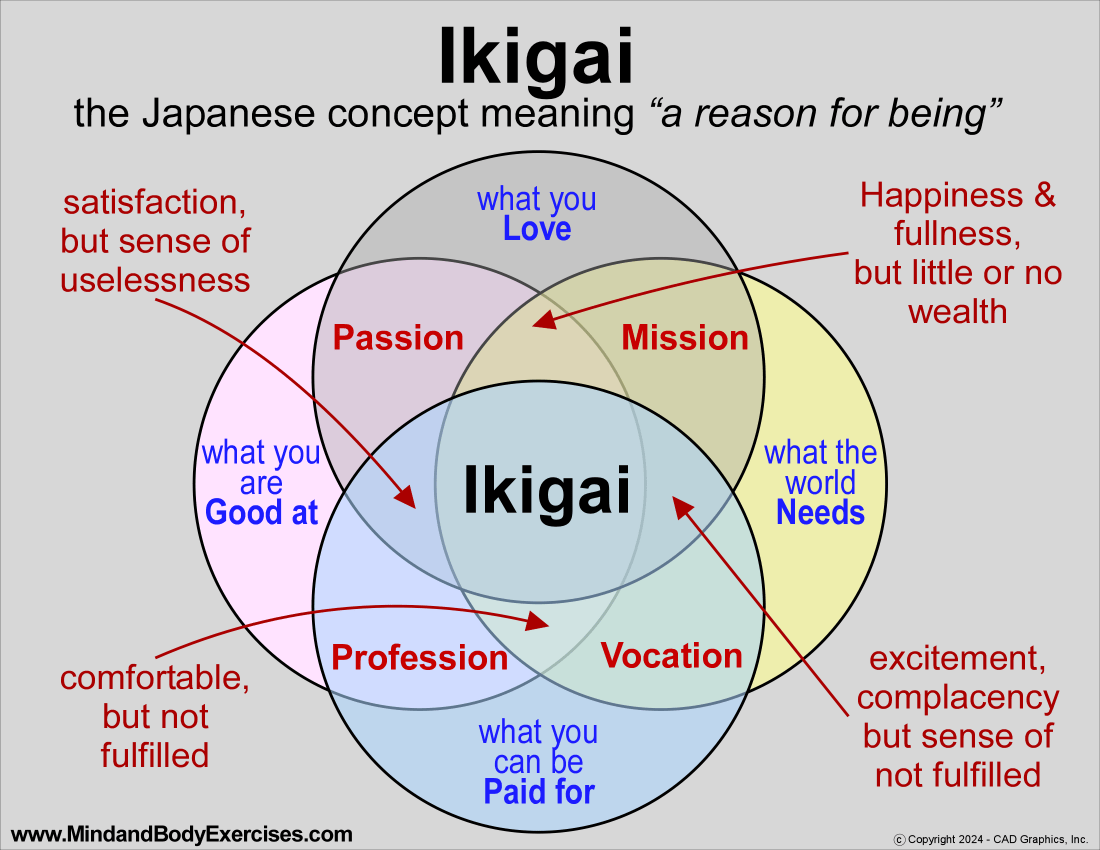
“Ikigai” – A Reason for Getting Out of Bed Each Day

Ikigai is a Japanese concept representing the pursuit of balance among purpose, meaning, self-awareness, and self-realization (PMSS). It’s the harmony of these elements that leads to a fulfilling life, especially when one’s work aligns with them. Often referred to as finding one’s bliss, calling, or “inner genius,” the four elements of PMSS are interrelated yet unique. Together, they give us a reason to get out of bed each day, guiding our lives and enriching our connections to others. Without these components, people often face a life of confusion, chaos, pain, and even a sense of emptiness and perhaps suffering.

Historically, career choice has often shaped a person’s identity, with individuals feeling invisible or inadequate when career titles are lost, changed, or remain unachieved. This pressure is intensified in American culture, where respect is frequently tied to socioeconomic status, adding to the struggle of those who may feel disconnected from their purpose. Many Americans experience a lack of purpose and meaning, often heightened in later life stages. Retirees, for instance, may struggle to redefine themselves when they leave careers that once framed their identities, impacting their sense of place at home and in family life. Similarly, losing a spouse or loved one can erode this sense of purpose. For some, volunteering or public service becomes a way to revive their meaning and direction.

I remember many of my martial arts mentors speaking of the importance of understanding that we “earn” our lives through service to others. Demanding respect through fear or gaining recognition without earning, does not produce true meaning or purpose. Participation trophies usually don’t help to pay the bills. We earn the life we till, seed, and harvest. What can be considered as a higher calling other than helping, teaching, and nurturing others to become better versions of themselves? To take this concept to another level of meaning and purpose in terms of spirituality, I have learned the term gong dao wei shen (功德为神) which is rooted in Chinese philosophical and spiritual traditions. However, the exact expression isn’t commonly cited. I can attempt to break it down:

  1. 功德 (gong de) — This translates to “merit” or “karmic merit” in the sense of virtue accumulated through good deeds and moral actions. In traditional Chinese thought and in Buddhism, gong de is the spiritual merit or positive karma gained through altruistic actions, spiritual practice, and moral conduct.
  2. 为 (wei) — This can mean “for” or “as” in this context, often used to imply that the merit serves or benefits something.
  3. 神 (shen) — This translates to “spirit” or “divine” and can imply a higher spiritual state or connection with the divine.

功德 为 神

Consequently, gong dao wei shen could be loosely interpreted as “acquiring karmic merit for spiritual elevation or connection to the divine.” This phrase might not appear in ancient texts directly but reflects the concept of dedicating good deeds or spiritual work to elevate one’s spiritual state, aligning with Chinese philosophies of moral virtue impacting one’s spiritual development.

Grasping these aspects of PMSS early on benefits not only individuals but also communities and society as a whole. However, finding this balance isn’t something that can be bought or easily read about; it takes time, life experiences, a genuine desire, and self-reflection to develop. In this way, one’s personal sense of ikigai or PMSS truly takes shape through a lifelong journey of discovery and growth.

I teach and offer lectures about holistic health, physical fitness, stress management, human behavior, meditation, phytotherapy (herbs), music for healing, self-massage (acupressure), Daoyin (yoga), qigong, tai chi, and baguazhang.

Please contact me if you, your business, organization, or group might be interested in hosting me to speak on a wide range of topics related to better health, fitness, and well-being.

I look forward to further sharing my message by partnering with hospitals, wellness centers, VA centers, schools on all levels, businesses, and individuals who see the value in building a stronger nation through a healthier population.

I also have hundreds of FREE education video classes, lectures, and seminars available on my YouTube channel at:

https://www.youtube.com/c/MindandBodyExercises

Many of my publications can be found on Amazon at:

http://www.Amazon.com/author/jimmoltzan

My holistic health blog is available at:

https://mindandbodyexercises.wordpress.com/

http://www.MindAndBodyExercises.com

Mind and Body Exercises on Google: https://posts.gle/aD47Qo

Jim Moltzan