The Illusion of Morality: Global Affairs and Personal Responsibility

In studying world events, we often discover that things are not always as they appear on the surface. A powerful example of this is found in John Perkins’ revealing book, Confessions of an Economic Hit Man (Perkins, 2004). Perkins shares his firsthand experiences of how the United States, through corporations, banks, and covert operations, orchestrated financial and political control over many developing nations, often in the name of “helping” them.

According to Perkins (2004), the system worked as follows: economic consultants would persuade leaders of developing nations to accept massive loans for infrastructure projects. These loans, however, rarely benefited the local population. Instead, they flowed to large U.S. corporations like Bechtel, Halliburton, and Stone & Webster to build projects that made countries dependent rather than independent. When nations inevitably struggled to repay their debts, the U.S. could then leverage their vulnerability, gaining access to natural resources, securing military bases, or influencing critical political decisions (Perkins, 2004).

(Lobe, 2024)

If leaders resisted, covert operations and sometimes violent regime changes would often follow. Historical cases such as the overthrow of Mohammad Mossadegh in Iran, the assassination of Omar Torrijos in Panama, and the toppling of Salvador Allende in Chile exemplify this pattern (Kinzer, 2007; Blum, 2003).

Institutions involved in this system included not just private corporations, but also public agencies like the World Bank, the International Monetary Fund (IMF), USAID, and even parts of the NSA and CIA (Perkins, 2004). While many Americans believed and still believe that their country acts as a global force for good, many people around the world have a very different perspective. For them, U.S. involvement often meant debt, exploitation, lost sovereignty, and prolonged suffering under authoritarian regimes supported by external powers (Blum, 2003).

What This Means for Our Own Lives

It’s easy to become deeply engaged, even consumed by the pursuit of truth when uncovering these hidden histories. Indeed, understanding the deeper truths about global affairs can be empowering and necessary for conscious living. However, there is an essential balance we must maintain:

Chronic anger, outrage, and obsession can cause significant damage:

  • Persistent stress weakens the immune system (Segerstrom & Miller, 2004).
  • Excessive media consumption contributes to mental exhaustion and emotional burnout
  • Neglect of physical well-being sleep, exercise, nutrition, etc. can diminish vitality and resilience.

In the end, truth-seeking should not come at the cost of self-care. When we are physically strong, mentally clear, and emotionally stable, we are in a far better position to discern information, resist manipulation, and lead by quiet example rather than reactive outrage.

A Healthier Path Forward

History will always be complex, layered with contradictions, hidden motives, and competing interests. Yet we do not serve ourselves or the greater good by burning out or losing our health in pursuit of endless investigation.

Instead, we can:

  • Practice daily mental hygiene: mindfulness, conscious breathing, time away from media noise.
  • Maintain physical vitality: nourishing the body through good food, movement, and rest.
  • Build emotional resilience: cultivating gratitude, perspective, and compassionate boundaries.

By doing so, we remain rooted and strong and able to perceive global injustices without being consumed by them. Global interventions and economic manipulations have been supported by leaders from both major U.S. political parties. Historical evidence shows that Democratic and Republican administrations alike have engaged in coups, economic coercion, military interventions, and covert operations , often justified as protecting “freedom” or “democracy,” but usually serving corporate and strategic interests.

In conclusion, understanding global systems of influence can awaken us. But maintaining personal sovereignty of our own body, mind, and spirit is what ultimately allows us to thrive, think clearly, and live freely.

References

Blum, W. (2003). Killing hope (By Zed Books London). Zed Books London. https://www.cia.gov/library/abbottabad-compound/13/130AEF1531746AAD6AC03EF59F91E1A1_Killing_Hope_Blum_William.pdf

Kinzer, S. (2007). Overthrow: America’s Century of Regime Change from Hawaii to Iraq. Macmillan.

Lobe, J. (2024, April 26). What are Americans’ biggest foreign policy priorities? Responsible Statecraft. https://responsiblestatecraft.org/us-foreign-policy-poll/

Perkins, J. (2004). Confessions of an economic hit man. Berrett-Koehler Publishers.

Segerstrom, S. C., & Miller, G. E. (2004). Psychological stress and the human immune system: A meta-analytic study of 30 years of inquiry. Psychological Bulletin, 130(4), 601–630. https://doi.org/10.1037/0033-2909.130.4.601

I look forward to further sharing more of my message by partnering with hospitals, wellness centers, VA centers, schools on all levels, businesses, and individuals who see the value in building a stronger nation through building a healthier population.

I also have hundreds of FREE education video classes, lectures, and seminars available on my YouTube channel at:

https://www.youtube.com/c/MindandBodyExercises

Many of my publications can be found on Amazon at:

http://www.Amazon.com/author/jimmoltzan

My holistic health blog is available at:

https://mindandbodyexercises.wordpress.com/

http://www.MindAndBodyExercises.com

Mind and Body Exercises on Google: https://posts.gle/aD47Qo

Jim Moltzan

407-234-0119

The Warrior, the Scholar, and the Sage: A Daoist View of Strength, Decline, and Human Destiny

In every era, civilizations rise and fall, not by accident or coincidence, but by the rhythm of deeper patterns or cycles of virtue and decay, clarity and confusion. As someone connected to a centuries-old lineage of Korean and Chinese martial artists, shaped by the philosophies of Taoism, Buddhism, and Confucianism, I’ve come to see that the struggles we face today are not anomalies. They are symptoms of imbalance. They are signs of what the ancients understood as the “return to the Daoand what modern thinkers Neil Howe and the late William Strauss have come to call the Fourth Turning (Strauss & Howe, 1997).

They propose that society moves in four generational phases, roughly every 20 years:

  • The High (Spring): After crisis, a period of rebuilding and cohesion.
  • The Awakening (Summer): Spiritual upheaval and individualism grow.
  • The Unraveling (Fall): Institutions decay, and social trust erodes.
  • The Crisis (Winter): A pivotal upheaval requiring transformation or collapse.

We have witnessed this over many years of history, such as the Fourth Turning (crisis) of the Great Depression into World War II, followed by a post-WWII boom in the U.S. (the High), then the 1960s counterculture movement (the Awakening), followed by the 1980s-2000s in the U.S. (Unraveling) and now into another 20 years of crisis. According to this model, we are now in the Fourth Turning or the winter phase, marked by turbulence, institutional failure, and a call for redefinition. Taoism would simply say: the yang must return. The old forms have decayed; the new must be forged through effort and alignment with the Dao.

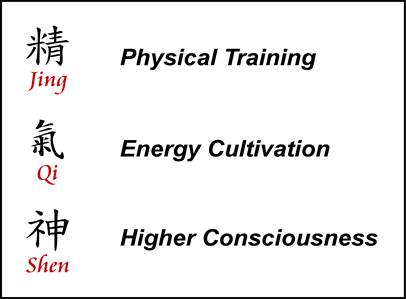
At the heart of this worldview is the triad of jing (essence), qi (energy), and shen (spirit). These internal forces are not just concepts from Taoist cultivation; they represent three powerful human archetypes:

  • The Warrior (Jing) – grounded in physical vitality, courage, and action.
  • The Scholar (Qi) – representing knowledge, refinement, and discernment.
  • The Sage (Shen) – embodying spiritual clarity, stillness, and alignment with the eternal.

This trinity mirrors the natural progression of human development and when lived out collectively, forms the foundation of a resilient, ethical, and awakened society. The warrior, the scholar, and the sage can all be found in various walks of life, regardless of age, race, gender or otherwise.

You’ve likely heard the saying:

This isn’t just a catchy aphorism, but a succinct summary of yin and yang, the core principle of Taoist cosmology. When yang (strength, discipline, clarity) reaches its peak, it gives way to yin (softness, comfort, passivity). When yin becomes excessive, yang reasserts itself through challenge, hardship, and the need for resilience.

The phrase:

In the comfort of past decades, the “good times” many laid down the tools of vigilance. Warriors stopped training. Scholars stopped questioning. Sages retreated into the background. This absence of cultivated moral men (and I emphasize cultivated, not simply physically strong or formally educated) created a vacuum where mediocrity, passivity, and manipulation took root.

The Dao doesn’t punish. It corrects. The correction is not emotional but rather structural, rhythmic, and natural. In a time of unraveling, those who choose to do nothing only deepen the descent. Those who act in alignment with virtue help midwife the rebirth.

In our tradition, we don’t look outward to blame, but rather we look inward to refine ourselves through:

  • Cultivating jing through martial discipline and physical integrity.
  • Building qi through breathwork, mindfulness, and mental refinement.
  • Elevating shen through spiritual practice, service, and contemplation.

This process isn’t merely for personal benefit, but hopefully to provide a model for society. In this Fourth Turning, we need a return of those who live as warriors of integrity, scholars of discernment, and sages of wisdom. Their presence creates coherence in chaos. The Dao teaches that when the inner is aligned, the outer begins to harmonize.

Throughout history, men have often occupied positions of leadership, warfare, and infrastructure in roles requiring strength, vision, and responsibility. When these roles are filled by individuals of weak moral character, or by those disconnected from the natural order of the Dao, decline does not merely begin but it accelerates.

In today’s world, we’re witnessing the fallout of this imbalance. Divine masculinity is rooted in strength, service, wisdom, and responsibility, but has been overshadowed by its distorted reflection of toxic masculinity, which is driven by ego, control, irresponsibility, and impulse. The difference between the two is not force, but character.

The danger does not lie in masculinity itself, but in its misdirection. When yang energy is active, outward, and forceful it becomes unmoored from purpose and virtue, it devolves into recklessness, violence, and domination. One doesn’t have to look far to see the consequences: our prisons are full, blue collar and white collar crime persists, and too many men choose instant gratification over disciplined action.

Morally weak men are the most dangerous to society. Not because of their gender, but because of their inability to withstand temptation, make principled choices, or lead by example. Without the internal refinement of jing, qi, and shen, there is no foundation for restraint or wisdom.

Yet in the same breath, we must acknowledge that society still deeply depends on strong men in body, mind, and spirit. It is mostly men (not entirely though) who fight in wars, build bridges, maintain power grids, work oil rigs, harvest timber, and risk their lives in roles essential to our survival and stability. These are not outdated relics of a bygone age. They are the backbone of civilization.

But physical strength alone is not enough. In a time like the Fourth Turning, we don’t just need capable men. We need cultivated men:

  • Men who have mastered their emotions and instincts.
  • Men who serve rather than dominate.
  • Men who fight when necessary but protect by nature.
  • Men who think, reflect, and align with something greater than themselves.

As the Dao teaches:

The cure is not to suppress masculine energy but to elevate it, refine it, and align it with the eternal flow of the Dao. In this age of unraveling, the world doesn’t need less masculinity. It needs truer masculinity. The kind forged in hardship, guided by virtue, and embodied by the Warrior, the Scholar, and the Sage.

If everything follows the Dao, then this present upheaval is not a mistake. It’s a call. A call to remember. To return. To rebuild.

The Fourth Turning is not a death sentence. It is an initiation. Just as in Taoist cultivation, decay gives way to rebirth. The yang returns only when yin has gone to its extreme.

We must ask ourselves:

  • Will we wait for others to restore balance?
  • Or will we embody the Warrior, the Scholar, and the Sage, and rise to meet the moment?

The Dao is not just a path. It is the pattern of life itself. To walk it now, consciously is to become part of the cure.

Reference:

Strauss, W., & Howe, N. (1997). The fourth turning. Broadway Books.

The Fabled History of the 108 Tai Chi Wudang Long Form

World Tai Chi Day 2025 will be celebrated on April 26th. It’s a global event aimed at promoting health, wellness, and mindfulness through Tai Chi practice. Note that not all qigong is tai chi. However, all tai chi is qigong. A distinction that is good to understand when an individual chooses to make the commitment of time, energy and resources to learn a time-proven and legitimate lineage of these practices.

In 1314, at the age of 71, Chen Wangting (or Chen Sheng Feng, as sometimes referenced in folklore) is said to have moved to Wudang Mountain. Inspired by an intense encounter between a snake and a bird, he observed how softness could overcome hardness and how yielding could neutralize force. Combining the deadly precision of their movements with his extensive knowledge of military Longfist (Changquan) techniques, he began to refine his martial practice.

To this foundation, he integrated:

  • The dynamic interplay of Yin and Yang, expresses the natural balance of opposing forces.
  • The Five Element (Wu Xing) energy movements of ancient Taoists.
  • Ancient Dao Yin exercises promote internal health and longevity.
  • The environmental harmony of the I Ching emphasizes adaptability and flow.
  • The philosophy of the Tao Te Ching guides the practitioner toward a path of spiritual harmony and natural wisdom.

This synthesis evolved into what became known as Tai Chi Chuan (Taijiquan or “supreme ultimate fist”), later branching into the Five Element Tai Chi system.

Tai Chi can be likened to:

  • A doctor, as it promotes healing and internal balance.
  • A soldier, as it is an effective method of self-defense.
  • Vitality for the elderly and a focus for the young.

It is an exercise that strengthens the body, a meditation that calms the mind, a combat system that trains awareness and control, and a path of personal development that leads to deeper understanding. Tai Chi is like yoga in its pursuit of flexibility and balance, like dance in its graceful movements, and like self-defense in its strategic applications.

Ultimately, Tai Chi seeks to cultivate harmony with nature, instill discipline through spirituality, foster health and resilience in the individual, and align one’s being with the heavens. It is hundreds of years old, a living expression of the Dao, or the Way of Tai Chi Chuan.

I look forward to further sharing more of my message by partnering with hospitals, wellness centers, VA centers, schools on all levels, businesses, and individuals who see the value in building a stronger nation through building a healthier population.

I also have hundreds of FREE education video classes, lectures, and seminars available on my YouTube channel at:

https://www.youtube.com/c/MindandBodyExercises

Many of my publications can be found on Amazon at:

http://www.Amazon.com/author/jimmoltzan

My holistic health blog is available at:

https://mindandbodyexercises.wordpress.com/

http://www.MindAndBodyExercises.com

Mind and Body Exercises on Google: https://posts.gle/aD47Qo

Jim Moltzan

407-234-0119

The Physiology of Breathing: Muscle Functions and Their Impact on Well-Being

The Mechanics of Breathing: An In-Depth Look at Respiratory Muscles

Breathing involves various muscles throughout the body, working together to facilitate the intake of oxygen and the expulsion of carbon dioxide. This process is orchestrated by different muscle groups that support both relaxed respiration and the increased demands of exercise or stress. This article examines the primary and accessory muscles involved in breathing, including the diaphragm, neck, and chest muscles, and analyzes their contribution to respiratory efficiency and posture.

Primary Muscles of Respiration

The diaphragm plays a crucial role in respiration, accounting for approximately 75% of the effort during relaxed or “tidal” breathing. Situated below the lungs and above the abdominal cavity, this dome-shaped muscle contracts and flattens downward with each inhalation, creating negative pressure within the thoracic cavity and allowing air to enter the lungs. Upon exhalation, the diaphragm relaxes and returns to its dome shape, gently pushing air out as the lungs recoil. Efficient diaphragmatic function is essential for relaxed breathing and overall respiratory health, particularly when breathing through the nose.

The intercostal muscles work in conjunction with the diaphragm to expand and contract the rib cage, supporting respiration. Located between the ribs, these muscles are divided into two groups:

  • External intercostals, which are primarily active during inhalation, lift the rib cage up and outward, expanding the chest cavity and allowing more air into the lungs.
  • Internal intercostals, which are mainly involved during forced exhalation, pull the rib cage down and inward, compressing the chest to expel air forcefully.

Together, the diaphragm and intercostals comprise the primary muscles of breathing, efficiently managing inhalation and exhalation during quiet respiration without requiring assistance from other muscles. The costovertebral joints and sternocostal joints are important for respiration by enabling the movement of the rib cage during breathing.

  • Costovertebral Joints: These are the articulations between the ribs and the thoracic vertebrae. Each rib connects to the vertebral column at two points—the costovertebral joint (where the rib meets the vertebral body) and the costotransverse joint (where the rib meets the transverse process of the vertebra). These joints allow the ribs to move in a pump-handle (expanding the chest upward) and bucket-handle (widening the chest laterally) motion, which increases the volume of the thoracic cavity during inhalation.
  • Sternocostal Joints: These are the connections between the ribs and the sternum. The first rib forms a direct synchondrosis (cartilaginous joint) with the sternum, while ribs 2–7 have synovial joints that allow for slight gliding movements. These joints enable the sternum to elevate and expand along with rib movement, assisting in lung expansion.

Together, these joints provide flexibility and stability to the rib cage, supporting efficient breathing by accommodating the expansion and contraction required for proper lung function. Issues or stiffness in these joints can restrict breathing efficiency and contribute to postural problems.

The Role of Accessory Muscles in Breathing

During labored breathing, such as physical exertion, illness, or stress, additional muscles assist the diaphragm and intercostals in expanding and contracting the rib cage and chest. These accessory muscles of respiration include:

  • Sternocleidomastoid (SCM) and scalene muscles in the neck are particularly important accessory muscles. The SCM connects the base of the skull to the sternum and clavicle, helping lift the sternum and clavicle during inhalation to expand the upper chest. Similarly, the scalenes (anterior, middle, and posterior) attach from the cervical vertebrae to the first two ribs, assisting in lifting the upper chest and creating additional space in the lungs. During high-effort breathing, these muscles help maximize airflow but can lead to neck tension if overused, especially in those with shallow breathing patterns.
  • The pectoralis minor, located beneath the larger pectoralis major in the upper chest, attaches from the ribs to the scapula (shoulder blade). During forced inhalation, it helps lift the upper ribs, expanding the chest cavity.
  • The serratus anterior also supports respiration, particularly during heavy breathing. Attached to the ribs and scapula, it stabilizes the upper chest, allowing greater lung expansion. While effective in aiding respiration, overuse of the pectoralis minor and serratus anterior can cause tightness in the chest and shoulders, contributing to poor posture and reduced respiratory efficiency.

Other accessory muscles include the levator scapulae and upper trapezius, which elevate and stabilize the shoulders and engage in upper chest breathing in response to stress or poor posture. Although not intended specifically for breathing, these muscles often become involved when the diaphragm is not fully engaged, potentially leading to chronic tension in the neck and upper back.

The Role of Abdominal Muscles and Core Stabilizers

The abdominal muscles, including the rectus abdominis, transversus abdominis, and obliques, play essential roles in forceful exhalation by increasing abdominal pressure and pushing the diaphragm up, expelling air during activities such as coughing, singing, or exercising. While these muscles do not contribute to inhalation during quiet breathing, strong abdominal muscles support core stability and posture, indirectly promoting efficient diaphragm function.

Smaller, deeper muscles like the multifidus and deep cervical flexors support posture and spinal alignment, ensuring that the rib cage can expand without restriction. These muscles indirectly contribute to breathing by maintaining good posture, reducing unnecessary tension, and keeping the airway open.

Implications of Respiratory Muscle Engagement on Health and Posture

Efficient breathing relies on primary respiratory muscles, with the diaphragm and intercostals as key players. When these muscles are effectively engaged, the body maintains a relaxed, steady respiratory rhythm, promoting effective oxygenation and minimizing muscle tension in the neck and shoulders. Nasal breathing encourages diaphragmatic engagement, stimulating the parasympathetic nervous system and promoting relaxation.

However, many individuals develop shallow, chest-driven breathing patterns due to stress, poor posture, or habits like mouth breathing, which lead to over-reliance on accessory muscles and result in chronic neck, shoulder, and upper chest tension. Shallow breathing also activates the sympathetic nervous system, exacerbating stress and creating a cycle of inefficient respiration and muscular strain.

The Influence of Breath-Centered Movement Practices

Exercise methods like yoga, tai chi, qigong, and martial arts use breathing techniques to optimize respiration and lung function. They focus on deep diaphragmatic breathing paired with slow, controlled movements, such as torso twists, to stretch the intercostal and oblique muscles, expand lung capacity, and fully engage the diaphragm. Practitioners often report increased energy or transformation, with physiological benefits including optimized oxygen intake, reduced tension, and improved respiratory efficiency. These practices promote nasal breathing, effective diaphragm engagement, and a balanced autonomic nervous system, leading to better respiratory health and less stress.

Conclusion

Breathing is supported by a complex system of muscles, with the diaphragm and intercostals playing primary roles in quiet, relaxed breathing, while accessory muscles like the SCM, scalenes, and pectoralis minor assist during times of physical exertion or respiratory distress. Maintaining balanced breathing patterns focused on diaphragmatic and nasal breathing minimizes tension in the neck, shoulders, and chest, promoting relaxation and better oxygenation. Understanding and nurturing this system can enhance respiratory health, reduce muscle tension, and improve overall well-being.

I teach and offer lectures about holistic health, physical fitness, stress management, human behavior, meditation, phytotherapy (herbs), music for healing, self-massage (acupressure), Daoyin (yoga), qigong, tai chi, and baguazhang.

Please contact me if you, your business, organization, or group, might be interested in hosting me to speak on a wide spectrum of topics relative to better health, fitness, and well-being.

I look forward to further sharing more of my message by partnering with hospitals, wellness centers, VA centers, schools on all levels, businesses, and individuals who see the value in building a stronger nation through building a healthier population.

I also have hundreds of FREE education video classes, lectures, and seminars available on my YouTube channel at:

https://www.youtube.com/c/MindandBodyExercises

Many of my publications can be found on Amazon at:

http://www.Amazon.com/author/jimmoltzan

My holistic health blog is available at:

https://mindandbodyexercises.wordpress.com/

http://www.MindAndBodyExercises.com

Mind and Body Exercises on Google: https://posts.gle/aD47Qo

Jim Moltzan

407-234-0119

If Jesus Returned Today: A Holistic Look at Faith, Skepticism, and the Human Response to the Divine

Written for seekers, skeptics, and believers alike, this article invites deeper reflection on the mystery of faith, the struggle of transformation, and the timeless power of the human spirit.

Easter is one of the most widely celebrated religious holidays across the globe, observed by billions of people through both spiritual and cultural traditions. For Christians, it commemorates the resurrection of Jesus Christ; an event central to the faith and steeped in mystery, reverence, and awe. Yet, when we peel back the layers of devotion and ritual, deeper questions arise:

  • What exactly happened leading up to the crucifixion?
  • Why did Jesus die?
  • If Jesus were alive today, would He be embraced or dismissed as a fraud?
  • Would He be celebrated or condemned all over again?

These questions may seem theological at first glance, but they also probe into human psychology, sociology, and the nature of our collective consciousness. Let’s explore this landscape more fully.

The Life and Death of Jesus: A Brief Chronology

The crucifixion of Jesus was not a random act of violence but the culmination of escalating tension. His teachings challenged the religious elite and threatened both Roman and Jewish political structures. Betrayed by Judas Iscariot, arrested in the Garden of Gethsemane, and denied three times by Peter, Jesus was ultimately condemned, scourged, and crucified under Roman law.

According to the Gospels, He died a slow, excruciating death, most likely from a combination of blood loss, asphyxiation, and shock. His body was placed in a tomb, and yet, three days later, reports of His resurrection spread. For the next 40 days, Jesus appeared to His disciples and followers in various places, teaching and preparing them before ascending into heaven.

But His post-resurrection appearances were not always public or easily verified, likely to avoid immediate conflict with His enemies. This subtle presence helped build the early Christian movement without triggering another wave of persecution, yet it also raises timeless questions.

Would Jesus Be Accepted Today?

Imagine Jesus walking the Earth today, preaching love, repentance, and divine truth. Would He be revered? Or ridiculed?

For many devout Christians, His return is not only expected but deeply hoped for. But it’s also possible that His reappearance would challenge modern religious institutions, political ideologies, and cultural norms. His radical message of loving enemies, renouncing materialism, forgiving unconditionally, and living humbly runs counter to consumer culture, tribalism, and vengeance-based systems of justice.

In a secular and scientific age, He might be dismissed as delusional, cult-like, or mentally unstable. Social media would amplify both the adoration and the condemnation. News outlets would scrutinize every word. Authorities might intervene. Even some who claim to follow Him might not recognize Him if He failed to fit their expectations.

Miracles, Demons, and the Modern Lens

Jesus’ time was filled with accounts of miracles such as healing the sick, calming storms, walking on water, and casting out demons. But how do we interpret those today?

It’s worth asking: were demon possessions more common in antiquity, or was there simply a lack of medical and psychological understanding? Conditions we now label as epilepsy, schizophrenia, or PTSD may have once been seen through a spiritual lens. That doesn’t necessarily disprove the spiritual dimension, it just reminds us that knowledge evolves, and perception is always shaped by context.

Many ancient cultures viewed health holistically, body, mind, and spirit as inseparable. In that light, Jesus’ healing work can still be seen as deeply integrative, restoring not just physical health, but emotional, mental, and spiritual balance.

Do People Still Celebrate Easter as a Religious Holiday?

In the United States, Easter remains a significant holiday, but often more as a cultural celebration than a sacred observance. About 81% of Americans celebrate Easter (Statista, 2025), but only around 30% attend religious services (Jones, 2025). For many, Easter involves candy, egg hunts, spring fashion, and family meals more than deep spiritual reflection.

Globally, however, Easter remains a central pillar for over two billion Christians, and even those who don’t consider themselves religious often participate in its communal and festive traditions.

The Pattern of Human Response to Visionaries

Jesus was not the only historical figure to be rejected in His time and revered later. In fact, history repeats itself with uncanny regularity:

FigureDuring Their LifeNow Remembered As
Jesus ChristExecuted as a criminal and hereticSavior, Son of God, Redeemer
SocratesSentenced to death for corrupting the youthFather of Western Philosophy
Martin Luther King Jr.Monitored and opposed; assassinatedCivil Rights Icon
Joan of ArcBurned at the stake for heresyCatholic Saint and French Heroine
Galileo GalileiPlaced under house arrest for scientific beliefsFather of Modern Science
Nelson MandelaImprisoned as a dissidentGlobal Symbol of Peace and Freedom
Mother TeresaCriticized and praisedCanonized Saint and Humanitarian

This pattern teaches us something vital: those who carry truth, challenge norms, or disrupt unjust systems are often rejected in their own time, only to be honored by future generations once the world has caught up.

Final Reflection

If Jesus Christ were to return today, not as a celebrity preacher or political figure, but as the humble, radical healer Jesus was, there’s a strong chance he would face the same resistance that he did 2,000 years ago.

Yet, the holistic view reminds us that truth transcends time. While forms change, principles remain. Whether we view Jesus through a spiritual, symbolic, or historical lens, His life challenges us to look inward, to seek compassion, and to live from the soul rather than the ego.

The deeper question isn’t whether the world would accept Jesus, but whether we would recognize Him in our own lives, our own thoughts, and the strangers we encounter daily.

References:

Statista. (2025, March 3). Share of Americans celebrating Easter from 2009-2023. https://www.statista.com/statistics/221108/share-of-americans-celebrating-easter-since-2007/

Jones, B. J. M. (2025, March 26). Church attendance has declined in most U.S. religious groups. Gallup.com. https://news.gallup.com/poll/642548/church-attendance-declined-religious-groups.aspx?utm_source=chatgpt.com
I teach and offer lectures about holistic health, physical fitness, stress management, human behavior, meditation, phytotherapy (herbs), music for healing, self-massage (acupressure), Daoyin (yoga), qigong, tai chi, and baguazhang.

Please contact me if you, your business, organization, or group, might be interested in hosting me to speak on a wide spectrum of topics relative to better health, fitness, and well-being.

I look forward to further sharing more of my message by partnering with hospitals, wellness centers, VA centers, schools on all levels, businesses, and individuals who see the value in building a stronger nation through building a healthier population.

I also have hundreds of FREE education video classes, lectures, and seminars available on my YouTube channel at:

https://www.youtube.com/c/MindandBodyExercises

Many of my publications can be found on Amazon at:

http://www.Amazon.com/author/jimmoltzan

My holistic health blog is available at:

https://mindandbodyexercises.wordpress.com/

http://www.MindAndBodyExercises.com

Mind and Body Exercises on Google: https://posts.gle/aD47Qo

Jim Moltzan

407-234-0119