The Teacher/Student Relationship

Seek the right teacher for you, because in time a student (you) can become similar to your teacher, sometimes absorbing good and bad traits alike.

“Learn to earn”
One must learn something and understand it effectively before teaching it to another. It is usually quite difficult to teach another what you yourself are not proficient with. Learn to understand – earn to have purpose and meaning. Jack of all trades, master of none – think about it, do you know something well enough to help another rather that hurting them with what you do or do not know? Not everyone who carries the title of teacher, is indeed a good teacher.

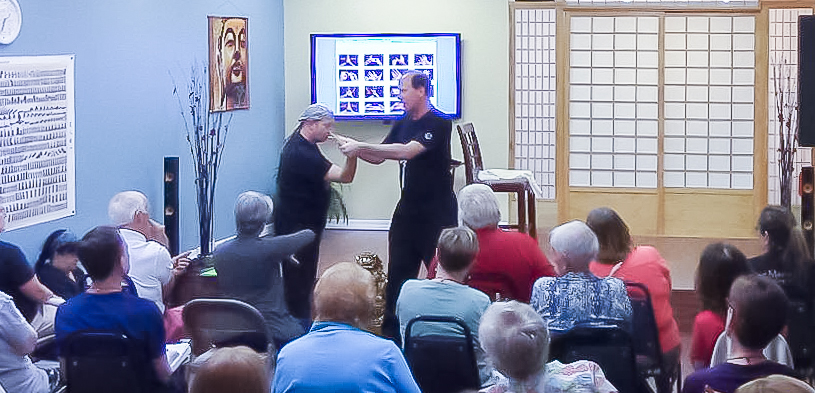
Teaching visually as well as audibly.

The Teacher/student relationship
In the teaching and learning environment, there has to be an even exchange of energy. The teacher shares their knowledge while the student listens, watches, absorbs and hopefully learns and applies. Gratitude is a reciprocating relationship between student and teacher, because if there is no teacher, there is no student. If there is no student, there is no teacher. Yin and yang in all things. Teachers too, benefit from this relationship. Teachers, first responders, armed forces members, public service workers and others don’t help others just for others to benefit. These types of individuals often find purpose and meaning through their service to others. At the very root of these endeavors is indeed a self-serving motivation that needs to be kept in check. Helping and teaching others to have purpose is one thing; indulging a god complex is another. A god complex is when an individual truly believes they have a greater power, influence, ability, etc., and see themselves as superior to others. A god complex behavior is often associated with having a narcissistic personality disorder. We all have much to offer and learn from one another, regardless of fame, wealth or social status.

A wise and experienced teacher realizes that not everyone learns the same way and adjusts accordingly. Some teachers are better at this than others as not all teachers are the same. Various students are better at grasping concepts through graphic or visual presentations, while others gravitate towards the sounds of words. Some may visualize the words in their mind’s eye. While still others learn best through touch and movement, where they need to be physically engaged in order to mentally comprehend concepts.

Teaching verbally, visually and tactilely.

Embrace the “beginner’s mind.”

Students and teachers alike can benefit from understanding that they cannot fill a full cup, without first emptying what they already have. Once a student’s ego lets go of what one thinks they already know, they can then be open to learn something new or see something from a different perspective. Teachers can often learn much from their students if they are open to it and not let their own ego get in the way of their own learning from a student.

Learn so that you can earn a living and hopefully a purpose!

Learning ability/environment later in life

It is never too late to learn something new. Those who were once a teacher, can be a student once again. We are only limited by our own boundaries. However, learning ability does change as we move through the various phases of life. Short term memory becomes just that, shorter. We may remember complex details from our youth but fail to remember someone’s name that we were just introduced to seconds prior. Memory is indeed a muscle that needs to be exercised continuously in order to keep it working effectively. Sitting in a classroom or behind a computer screen can have a toll on the physical body, so plan accordingly and find the format that works best for your circumstances.


Fees for instruction

Fees and/or tuition are almost always necessary, in order for the teacher/student relationship to flourish. Time, effort and monetary compensation are all forms or conduits of energy. Sometimes labor (physical as well as mental) in return for knowledge is a viable commodity and can offer many opportunities for personal growth. No fee, cost or sacrifice on some level = NO VALUE. No skin in the game most often leads to no commitment or investment of one’s time and effort. Give a young adult an automobile and often they don’t care about maintenance, dings or scratches. The spoiled or entitled individual sooner or later learns a whole different set of life lessons. The person that saves and buys their own vehicle, often takes more pride and care of their assets, as they realize and value the time, effort and sacrifice that they put on the line for their own personal gain. Most people know this in spite of looking for the best deal or “free any things”. We usually pay for what we get, good or bad quality. Teachers need to earn living and be rightfully compensated for their time, effort and sharing of their earned knowledge.

___________________

I teach and offer lectures about holistic health, stress management, qigong, tai chi, baguazhang, meditation, phytotherapy (herbs), music for healing, self-massage, and Daoyin (yoga).

I look forward to further sharing more of my message by partnering with hospitals, wellness centers, VA centers, schools on all levels, businesses and individuals that see the value in building a stronger nation through building a healthier population. I also have hundreds of FREE education video classes, lectures and seminars available on my YouTube channel at:

https://www.youtube.com/c/MindandBodyExercises

www.MindAndBodyExercises.com

www.Amazon.com/author/jimmoltzan

Mind and Body Exercises on Google: https://posts.gle/aD47Qo

Jim Moltzan

407-234-0119
Fracture Cascade – a domino effect of ailments

A “fracture cascade” refers to bones and ailments such as osteoporosis, where a person experiences multiple fractures in a sequence, often initiated by a single initial fracture. Falling is a major reason leading to such circumstances. When bones weaken due to poor nutrition, inactivity and age, osteopenia and osteoporosis can grow into serious medical conditions. Herein bones become less dense and more porous, which can make bones more prone to fractures. This “fracture cascade” highlights the possibility of a domino effect that can manifest in individuals with osteoporosis. Falling and landing on one’s hand, can cause fractures to the fingers, wrist, bones in the forearm (ulna and radius) and the bones that comprise the shoulder joint. Additionally, when someone falls, they may injure their knees, hip joints (head of the femur) as well as injuries to the spinal vertebrae. Having a physical exercise plan that not only increases bone strength, but helps to improve balance, and flexibility as well as strength of the muscles. Grip strength becomes more important as we age and sometimes need to grab on to solid structures to avoid falling. Weight training, yoga, tai chi and Pilates are all appropriate methods to achieve these goals.

Practicing exercises that challenge one’s balance is a key component to prevent falling, while increasing leg strength and flexibility to navigate falls.
These images show the various hand and wrist positioning that are common when people accidentally fall onto, while trying to mitigate falls.

A fracture cascade might occur from the following circumstances:

  1. Initial fracture – A person with osteoporosis experiences an initial fracture, often as a result of some level of impact, stress or trauma on particular weakened bone(s).
  2. Modified or influenced body mechanics – After the first fracture, body mechanics during physical movement may be influenced reducing mobility, pain and changes in gait.
  3. Increased risk of falling – Modified mechanics and reduced mobility leads to an increased risk of losing sense of balance, which is often elevated in individuals with osteoporosis.
  4. Future fractures – Minor physical trauma, stumbles or minor to major falls can lead to a ripple (cascade) effect of additional fractures in other bones throughout the body.
  5. Compromised Functionality: With each additional fracture, an individual’s freedom to move and function unimpaired can be at further jeopardy, making them even more prone to future falls and fractures.

This cycle of decline can contribute to compromised overall health and thereby quality of life for those with osteoporosis. Management strategies for osteoporosis should involve prevention through lifestyle modifications, dietary awareness (rich in calcium and vitamin D), weight-bearing exercises and activities. If necessary, there are pharmaceuticals intended to improve bone density and reduce fracture risk. However, almost all medications have side-effect that needed to be weighed against their benefits. It is highly important that individuals at risk with osteopenia/osteoporosis seek healthcare professionals as well as fitness and wellness advocates to pursue a comprehensive plan for bone health.

This graphic details various exercises to help increase strength, flexibility, and dexterity of the wrists, hands and fingers. One can practice these exercises as a form of preventive maintenance.

______________

I teach and offer lectures about holistic health, stress management, qigong, tai chi, baguazhang, meditation, phytotherapy (herbs), music for healing, self-massage, and Daoyin (yoga).

I look forward to further sharing more of my message by partnering with hospitals, wellness centers, VA centers, schools on all levels, businesses and individuals that see the value in building a stronger nation through building a healthier population. I also have hundreds of FREE education video classes, lectures and seminars available on my YouTube channel at:

https://www.youtube.com/c/MindandBodyExercises

www.MindAndBodyExercises.com

www.Amazon.com/author/jimmoltzan

Mind and Body Exercises on Google: https://posts.gle/aD47Qo

Jim Moltzan

407-234-0119

Seek Out the “Wounded Healers”


I have previously come across the concept of the “wounded healer.” There is no shortage of books and articles on this topic, where people that have first-hand experience with surviving trauma are often the best empaths for a particular issue. Psychologist Carl Jung may have been the first to use this term back in 1951, where he proposed that disease of the soul could be the most advantageous type of training for a healer. Jung was thought to believe that only a wounded physician could heal effectively. An empath that truly understands another’s circumstances may be of great benefit and perhaps provide a guiding path to post-traumatic growth (PTG). PTG is the term for what happens when someone who struggles psychologically from trauma and adversity, comes to experience positive, transformative changes in their mindset and behavior. “Finding the silver lining in all things, good or bad,” is a quote many of us are quite familiar with.

How can something “good” come from things that are seemingly “bad?” While I don’t think anyone truly looks forward to any personal loss and/or suffering on any level, there are sometimes good aspects that can come out of even the worst of circumstances. Losses or misfortunes can offer the possibility of life-enhancing “post-traumatic growth” as someone weaves the lessons of loss and resilience into their life moving forward. Personal growth following major experiences of loss is common (Hall, 2014). From my experiences in teaching fitness, wellness, and mindfulness, I have found most people do not have a deeper connection to their own health, well-being, or consciousness until some event of trauma as a life-threatening or life-changing situation enters into their life. Loss of life of a family member or close friend can be the spark that causes another to change their behaviors. Someone passing of a heart attack at an early age, might motivate others to watch their own health closer. Mental or physical trauma can sometimes lead to what some call “knowing one’s true self”, self-realization or enlightenment. Taoism and Buddhism has taught me decades ago, that trauma can be means to knowing one’s true self. Trauma can be very intense and life-changing experiences that an individual may become so affected, that they may appear to others to have evolved overnight into a different person. Many of us have encountered someone who while in dire straits, promises to change their ways if their circumstances where to play out in their favor. Changes of this sort can be viewed as positive or negative, as all things are relative. Change through motivation, stemming from trauma.

View public domain image source here

I have discussed alcoholism in some of my past posts here, as it is a topic that I am quite familiar with. We can see the wounded healer here, where survivors of alcoholism or those who have experienced alcohol abuse-related relationships often have firsthand experience with coping with alcohol related issues. Similarly, survivors of abusive relationships and varying levels of trauma have been wounded themselves but can also help others to heal by extending empathy and, if sought, advice. This same concept may hold validity for survivors of law enforcement related events, survivors of war trauma as soldiers and/or civilians, healthcare workers, firefighters and many others involved in service to others. However, in order to serve effectively as a wounded healer, this individual needs to be able to manage their own stress, suffering and other mental and physical ailments before extending their advice to others that are suffering. Otherwise, this individual, while having good intentions, may actually come off as being less understanding, less empathetical and perhaps hypocritical, and therefore causing more harm to a sufferer.

(1) Survivors of alcoholism or those who have experienced alcohol abuse-related relationships

(2) Survivors of abusive relationships on all levels of trauma

(3) Survivors of violence and/or law enforcement related events

(4) Survivors of war trauma as soldiers and/or civilians

(5) Survivors from cults and other particular groups

(6) Survivors of physical accidents or catastrophe

References:

Daneault S. The wounded healer: can this idea be of use to family physicians? Can Fam Physician. 2008 Sep;54(9):1218-9, 1223-5. PMID: 18791082; PMCID: PMC2553448.

https://www.azquotes.com/quote/1200463

Hall, C. (2014). Bereavement theory: recent developments in our understanding of grief and bereavement. Bereavement Care, 33(1), 7–12. https://doi.org/10.1080/02682621.2014.902610

__________________________

I teach and offer lectures about holistic health, stress management, qigong, tai chi, baguazhang, meditation, phytotherapy (herbs), music for healing, self-massage, and Daoyin (yoga).

I look forward to further sharing more of my message by partnering with hospitals, wellness centers, VA centers, schools on all levels, businesses and individuals that see the value in building a stronger nation through building a healthier population. I also have hundreds of FREE education video classes, lectures and seminars available on my YouTube channel at:

https://www.youtube.com/c/MindandBodyExercises

www.MindAndBodyExercises.com

www.Amazon.com/author/jimmoltzan

Mind and Body Exercises on Google: https://posts.gle/aD47Qo

Jim Moltzan

407-234-0119
The 12 Steps of the Hero’s Journey – Why is this relative to us?

The concept of the “Hero’s Journey” comes from Joseph Campbell who was a writer, mythologist, and lecturer. Campbell introduced this idea in his book “The Hero with a Thousand Faces,” which was published in 1949. The theme underlying in the Hero’s Journey is that many myths, stories and legends, from differing cultures throughout the world and throughout history follow a similar pattern or structure. Psychologist Carl Jung referred to this innate relationship as the collective unconscious. The Hero’s Journey consists of roughly 12 distinct stages for a “chosen one” to navigate. Specific details may vary from culture to culture, but the overall structure remains fairly consistent. Examples would be that of Gilgamesh (Sumerian/Babylonian Mythology), King Arthur (Arthurian Legends), The Odyssey and Jason and the Argonauts (Greek Mythology), The Ramayana (Hindu Mythology), Sun Wukong (Journey to the West – Chinese Mythology), Inanna’s Descent to the Underworld (Sumerian Mythology), and Siegfried, the dragon slayer (Germanic mythology).

This structure of storytelling has also been popularized by modern authors of books and movies such as Lord of the Rings, Harry Potter, The Hunger Games and maybe most widely known of “Star Wars“. George Lucas of Star Wars was inspired by Campbell’s writings, but the two did not meet until well after Lucas had already produced his famous movies. I think that if we look carefully and reflect inward, we may be able to also see the pattern of the hero’s journey in each of our own lives. Why is this important? Because seeing our lives from this perspective can help to add clarity and focus to the unique meaning and purpose that we all possess but are not always aware of.

I find Sam Keen and Anne Valley Fox’s Your Mythic Journey published in 1973, to be quite relevant to current cultural and societal issues. Specifically, that of myths being defined as lies or something opposite of being factual. I too used to think of myths as lies or mere stories to entertain us, until becoming educated otherwise to this stigma. Keen elaborates that myths are a strict set of interconnected stories, customs, rituals, and rites, that serve to inform us while providing a sense of meaning, purpose, and direction to an individual, a family, a community, or culture. Keen expresses that telling of myths, ancient as well as modern have fallen to the wayside due to advances in technologies and the evolution of cultures and societies. When particular things can be seen as “good,” there is always the other opposite or contrasting perspective of there existing some amount of “bad.” While technology might be a factor in people choosing to not write their stories down as much as in years ago or choose to commit them to memory, because they know that they can always just go look them up on the internet. The other side of this coin is that modern technology has opened up the ability for more people to access other nations’ information bases and various cultures’ stories, myths, and knowledge, literally from the comfort and convenience of their own homes. In years past if someone cared to pursue learning about a particular culture, they might very well be best informed if they were to travel across the oceans to find a source that was willing to share. Today we just pick up our smartphone to travel in our thoughts to the other side of the world.

I have been immersed in a Taoist lifestyle for over 40 years, both from my martial arts and Traditional Chinese Medicine (TCM) background and study of this philosophy. With this in mind, I am drawn to see the yin and yang or the balance and contrast, in all things. This concept of yin and yang dates back thousands of years where Taoism has its origins around 500 BCE. Perhaps Taoism came about from the passing of myths to one another, or some myths may have come about from those having studied Taoism. Or maybe both are true, a debate for another discussion. Keen’s words have yin and yang written deep throughout them, as he hints that the contrast between heroes and enemies, is what gives meaning to either side.

Keen later goes on to speak of the inner voices of our ancestors and those around us, that often run through our minds. I have come to know this as our inner dialogue, and when not in check, referred to as the “monkey mind” that is constantly and incessantly jumping from one thought or story to another. Organizing our stories and our myths in our own mind is the challenge. These stories can offer us purpose and meaning to each of us in our own individual and unique ways in spite of standing on the shoulders of those who came before us with their stories and myths. Current popular culture in the US seems somewhat focused upon people needing to come to some realization of “their truth” as opposed to what Keen speaks of as “their story.” Can various different people having the same experience have different truths? I think not, but they can definitely have different stories of their own unique experience. An underlying theme that Keen speaks of is the need for someone to stand in the shoes of another, if they are to truly understand another’s story, whether in their myths, culture, traditions, symbols, etc.

I find Keen’s comments about how few people really know the depth of their own thoughts and imaginations quite accurate. I see more people concerned with what is going on within the virtual computer-generated and online social worlds outside of themselves, rather than understanding what is happening within their own minds. Some people can claim to know about driving a race car in virtual reality when they actually only know how to drive a standard vehicle in the physical world. Learning to understand and differentiate our public and private selves or “discovering our many selves” as Keen states, is a bit of foreshadowing of what I read later as some strong Carl Jung influences of personas, and archetypes as well as Sigmund Freud’s concepts of the id and ego.

The 12 steps of the hero’s journey:

  1. The Ordinary World
    The hero, uneasy, uncomfortable or unaware, is introduced sympathetically so the audience can identify with the situation or dilemma. The hero is shown against a background of environment, heredity, and personal history. Some kind of polarity in the hero’s life is pulling in different directions and causing stress.
  2. The call to adventure
    Something shakes up the situation, either from external pressures or from something rising up from deep within, so the hero must face the beginnings of change.
  3. Refusal of the call
    The hero feels the fear of the unknown and tries to turn away from the adventure, however briefly. Alternately, another character may express the uncertainty and danger ahead.
  4. Meeting with the mentor
    The hero comes across a seasoned traveler of the worlds who gives him or her training, equipment, or advice that will help on the journey. Or the hero reaches within to a source of courage and wisdom.
  5. Crossing the threshold
    At the end of Act One, the hero commits to leaving the Ordinary World and entering a new region or condition with unfamiliar rules and values.
  6. Tests, allies, and enemies
    The hero is tested and sorts out allegiances in the Special World.
  7. Approach
    The hero and newfound allies prepare for the major challenge in the Special world.
  8. The ordeal
    Near the middle of the story, the hero enters a central space in the Special World and confronts death or faces his or her greatest fear. Out of the moment of death comes a new life.
  9. The reward
    The hero takes possession of the treasure won by facing death. There may be celebration, but there is also danger of losing the treasure again.
  10. The road back
    About three-fourths of the way through the story, the hero is driven to complete the adventure, leaving the Special World to be sure the treasure is brought home. Often a chase scene signals the urgency and danger of the mission.
  11. The resurrection
    At the climax, the hero is severely tested once more on the threshold of home. He or she is purified by a last sacrifice, another moment of death and rebirth, but on a higher and more complete level. By the hero’s action, the polarities that were in conflict at the beginning are finally resolved.
  12. Return with the elixir
    The hero returns home or continues the journey, bearing some element of the treasure that has the power to transform the world as the hero has been transformed.

I feel that we are all pursuing a hero’s journey on some level as we all manage and cope with our daily trials and tribulations. However, it is up to the individual to reach some inner clarity and cultivation of character to better understand how this concept applies to their story.

References:

Campbell, J. (1949). The hero with a thousand faces. Pantheon Books.

Keen, S. (1989). Your Mythic Journey: Finding Meaning in Your Life Through Writing and Storytelling. TarcherPerigee.

____________________________

I teach and offer lectures about holistic health, stress management, qigong, tai chi, baguazhang, meditation, phytotherapy (herbs), music for healing, self-massage, and Daoyin (yoga).

I look forward to further sharing more of my message by partnering with hospitals, wellness centers, VA centers, schools on all levels, businesses and individuals that see the value in building a stronger nation through building a healthier population. I also have hundreds of FREE education video classes, lectures and seminars available on my YouTube channel at:

https://www.youtube.com/c/MindandBodyExercises

www.MindAndBodyExercises.com

www.Amazon.com/author/jimmoltzan

Mind and Body Exercises on Google: https://posts.gle/aD47Qo

Jim Moltzan

407-234-0119
Purpose and Meaning – From Chaos to Calling, Discovering Your Reason for Being

Ikigai is the Japanese term for striving to achieve a balance of differing concepts of purpose, meaning, self-awareness and self-realization (I will use the acronym of PMSS), while also being able to earn a living from occupations that are rooted in these concepts. Other names for this concept may be finding one’s bliss, calling or inner genius. These four concepts of PMSS are similar, albeit different in their definitions. When we have these components within are psyche, we have a reason to be, a reason to get up out of bed each day, a direction that we can see will benefit our lives and those around us. Without these components, we see chaos, confusion, pain and suffering. Some do know and realize their purpose early in life, although most do not. Many Americans seem to have lost their sense of purpose and meaning. Some may never have known their purpose in the first place, let alone later in their lives. We often see retirees having a loss of purpose once they step away from careers that mostly defined who they were in the workplace, at their homes and within the family hierarchy. Some lose their purpose when a spouse or loved one passes away. Some people in these latter categories, look to volunteering and public service as ways to revive their meaning and purpose. Gaining as understanding of these concepts sooner than later is better not just for the individual, but communities and society as a whole. This sense of PMSS is not something that one can purchase at a store or read about and determine from first thoughts or insights on this topic, as time, life experiences, desire and self-reflection all help to shape one’s PMSS.

Each of the elements of PMSS can offer philosophical and psychological aspects. Here are some summaries of each:

  1. Purpose:
    • Purpose refers to the reason why something exists or is done, the desired outcome or the intention behind an action.
    • In the context of having a purpose, personal purpose involves a person having an understanding of their reason for being, and what gives their life a sense of drive and direction.
  2. Meaning:
    • Meaning is the worth, value or significance that a particular thing holds, often determined from the influence, connection or impact that it has on other things in its surroundings.
    • In the context of having a personal meaning, this concept is the relative awareness, understanding and interpretation of one’s own experiences, actions, and relationships, that influence an individual’s sense of usefulness, satisfaction and fulfillment.
  3. Self-Awareness:
    • Self-awareness is the conscious knowledge of an individual’s own being, which may includes one’s own character, emotions, desires and intents, usually involving one’s ability to reflect upon oneself in order to better understand one’s own thoughts and behaviors.
    • In the Context of having a personal self-awareness, this concept would involve recognizing and acknowledging personal strengths, weaknesses, values, desires, and aspirations.
  4. Self-Realization:
    • Self-realization is the process of pursuing one’s full potential by becoming the best version of oneself, while also achieving a state of personal actualization and fulfillment.
    • In the context of pursuing self-realization, this is closely related to finding and living in harmony with one’s purpose and meaning through one’s life experiences, often including cultivation of personal growth, self-discovery, and the pursuit of authenticity.

In summary, purpose and meaning are key components to achieving self-awareness and self-realization. Developing a better sense of self-awareness can lead to a better understanding of one’s purpose. Self-realization involves the continuous process of living in harmony with that purpose, while finding meaning in one’s life journey. These four different concepts are interconnected and deeply individual, often shaped by one’s own individual experiences, values, and beliefs. Practices such as meditation, yoga, qigong, tai chi and others can often help serve as a conduit to a better understanding of how one’s mind, body and self-awareness are interconnected.

__________________

I teach and offer lectures about holistic health, stress management, qigong, tai chi, baguazhang, meditation, phytotherapy (herbs), music for healing, self-massage, and Daoyin (yoga).

I look forward to further sharing more of my message by partnering with hospitals, wellness centers, VA centers, schools on all levels, businesses and individuals that see the value in building a stronger nation through building a healthier population. I also have hundreds of FREE education video classes, lectures and seminars available on my YouTube channel at:

https://www.youtube.com/c/MindandBodyExercises

www.MindAndBodyExercises.com

www.Amazon.com/author/jimmoltzan

Mind and Body Exercises on Google: https://posts.gle/aD47Qo

Jim Moltzan

407-234-0119