Somatic Calibration

Turning Bodily Awareness into Conscious Regulation

Across disciplines of psychology, physiology, and embodied practice, there is growing recognition that the body is not merely a vessel for the mind. The physical body is an active participant in perception, emotion, and cognition. The emerging concept of somatic calibration describes the process by which a person develops refined awareness of internal bodily states (interoception), interprets them accurately, and adjusts posture, movement, or breath to maintain physical and psychological balance. This calibration is literally, “bringing the body into tune” and is essential for resilience, emotional regulation, and well-being (Fogel, as cited in Taylor, 2023). It can be deliberately trained and strengthened through mind–body disciplines such as yoga, qigong, tai chi, and baguazhang, as well as through musical and kinesthetic arts that require fine motor control, proprioceptive precision, and mindful attention.
Understanding Somatic Calibration

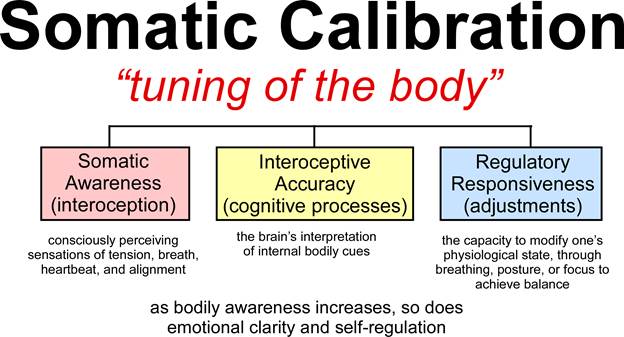
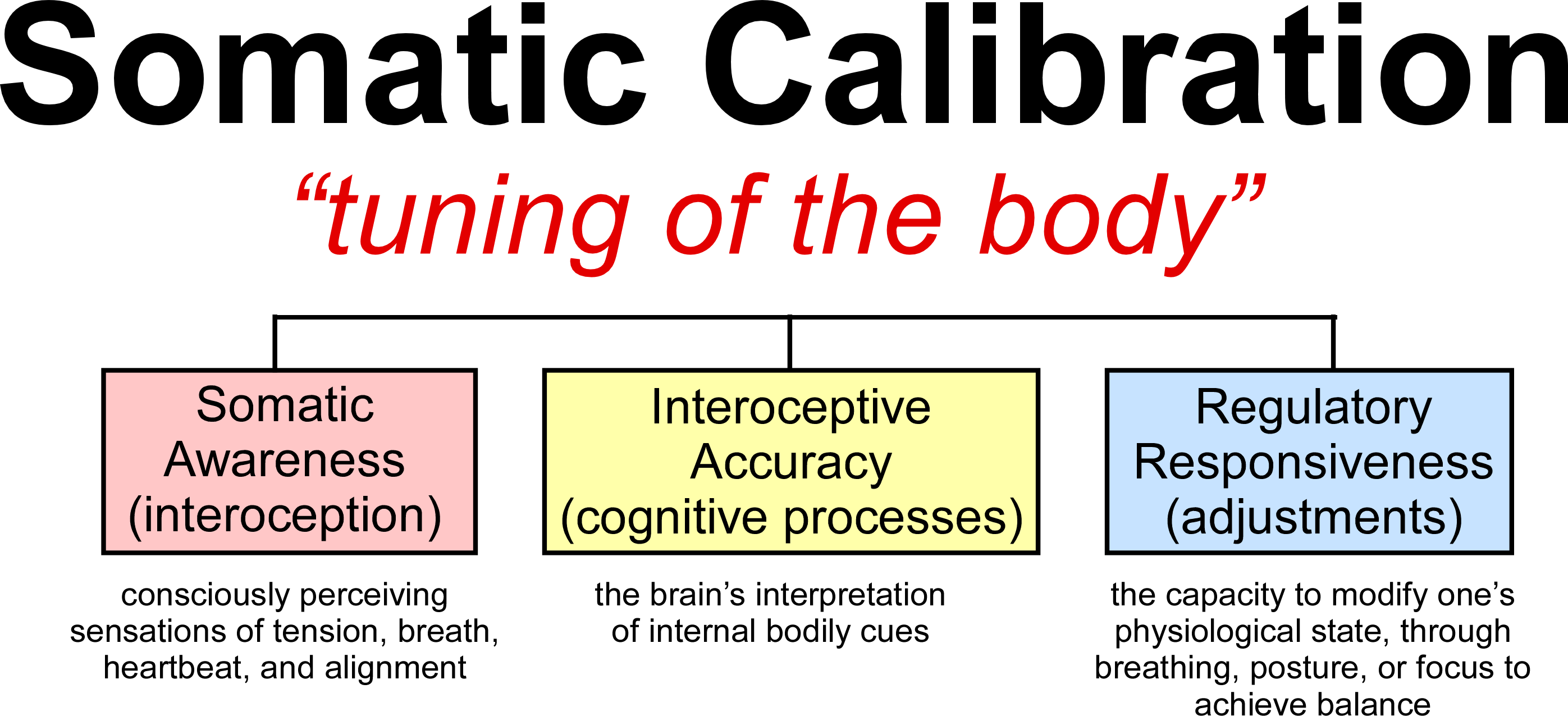
Somatic calibration merges three interdependent processes: somatic awareness, interoceptive accuracy, and regulatory responsiveness. Somatic awareness involves consciously perceiving sensations of tension, breath, heartbeat, and alignment. Interoception represents the brain’s interpretation of internal bodily cues, mediated largely by the insula and anterior cingulate cortex (Khalsa et al., 2018). Regulatory responsiveness describes the capacity to modify one’s physiological state—through breathing, posture, or focus to achieve balance.

When an individual becomes proficient in these domains, they can effectively tune their body like an instrument, sensing when they are “out of tune” (stressed, fatigued, tense) and adjusting accordingly. Somatic calibration thus serves as a biofeedback loop connecting the physical and psychological realms: as bodily awareness increases, so does emotional clarity and self-regulation (Mehling et al., 2011).

Yoga and Interoceptive Refinement

Yoga has long been recognized as a powerful practice for enhancing somatic awareness. Through sustained postures (āsanas), controlled breathing (prāṇāyāma), and meditative attention (dhyāna), practitioners learn to inhabit the body more fully, developing both interoceptive sensitivity and cognitive calm. Research shows that yoga increases vagal tone and improves regulation of the autonomic nervous system, thereby enhancing both physiological and emotional stability (Streeter et al., 2012). In the context of somatic calibration, yoga acts as a systematic alignment practice, and a method of perceiving subtle internal feedback from muscles, joints, and breath to fine-tune both movement and mind.
Qigong, Tai Chi, and the Subtle Body

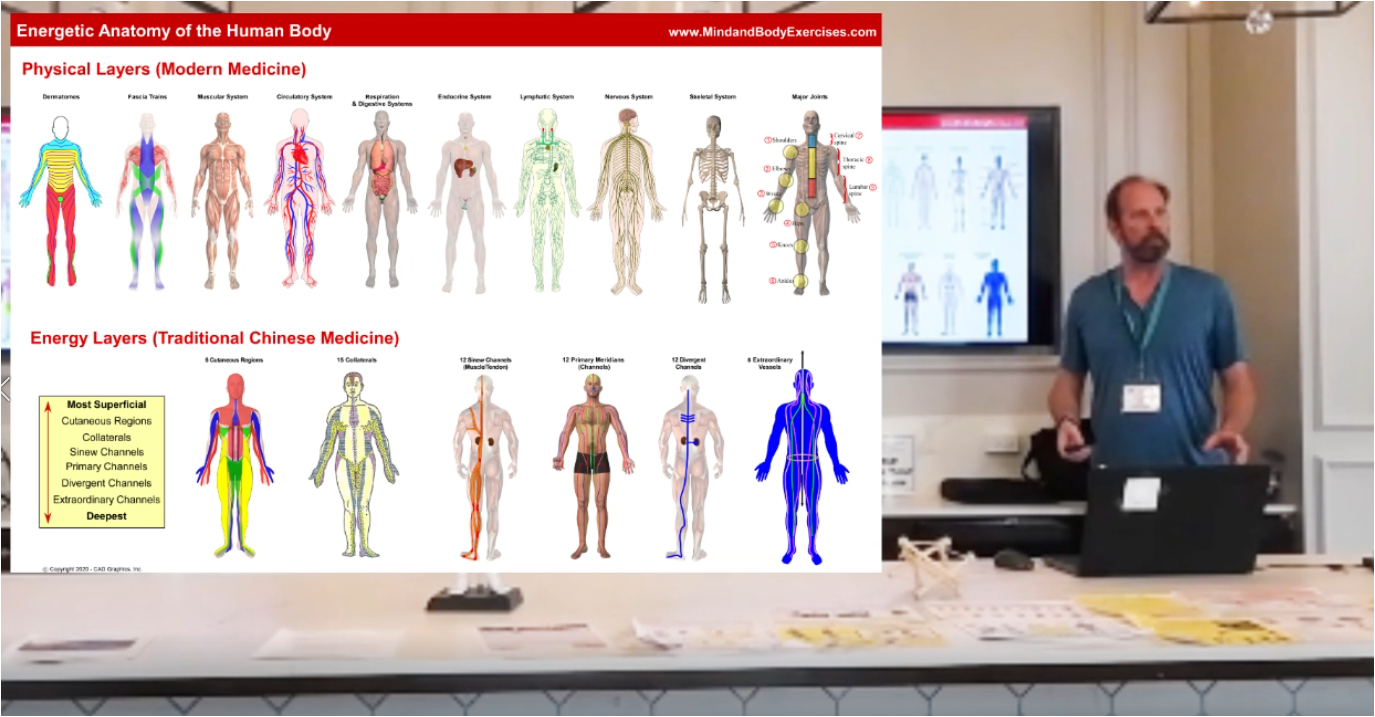
Qigong and tai chi, rooted in Traditional Chinese Medicine, emphasize the coordinated movement of qi (vital energy) through the body’s meridian pathways. These practices require precise synchronization of breath, posture, and intention (yi), creating a cyclical feedback between proprioceptive and interoceptive systems (Jahnke et al., 2010). Tai chi and qigong improve kinesthetic sensitivity and help practitioners perceive micro-adjustments in balance, muscular tension, and internal energy flow, all core aspects of somatic calibration. A meta-analysis by Wayne et al. (2014) found that tai chi enhances balance, proprioception, and body awareness in older adults, while also reducing anxiety and depression, demonstrating how refining body mechanics concurrently refines emotional and mental regulation.

Baguazhang and Dynamic Calibration

Among the Chinese internal martial arts, BaguaZhang (Eight Trigram Palm) represents a dynamic, circular system of continuous transformation. Its spiraling steps, shifting weight, and changing palm positions require constant micro-adjustment of the spine, hips, and limbs. This active calibration of movement with breath and intention cultivates adaptive interoceptive intelligence, or the ability to sense and modulate physiological responses during complex motion. Internal martial arts like baguazhang promote “somatic intelligence,” where awareness, movement, and perception operate as one. Each turning step becomes a moment of recalibration strives to balance yin and yang, tension and release, stillness and motion.

Martial Arts as Applied Somatic Discipline

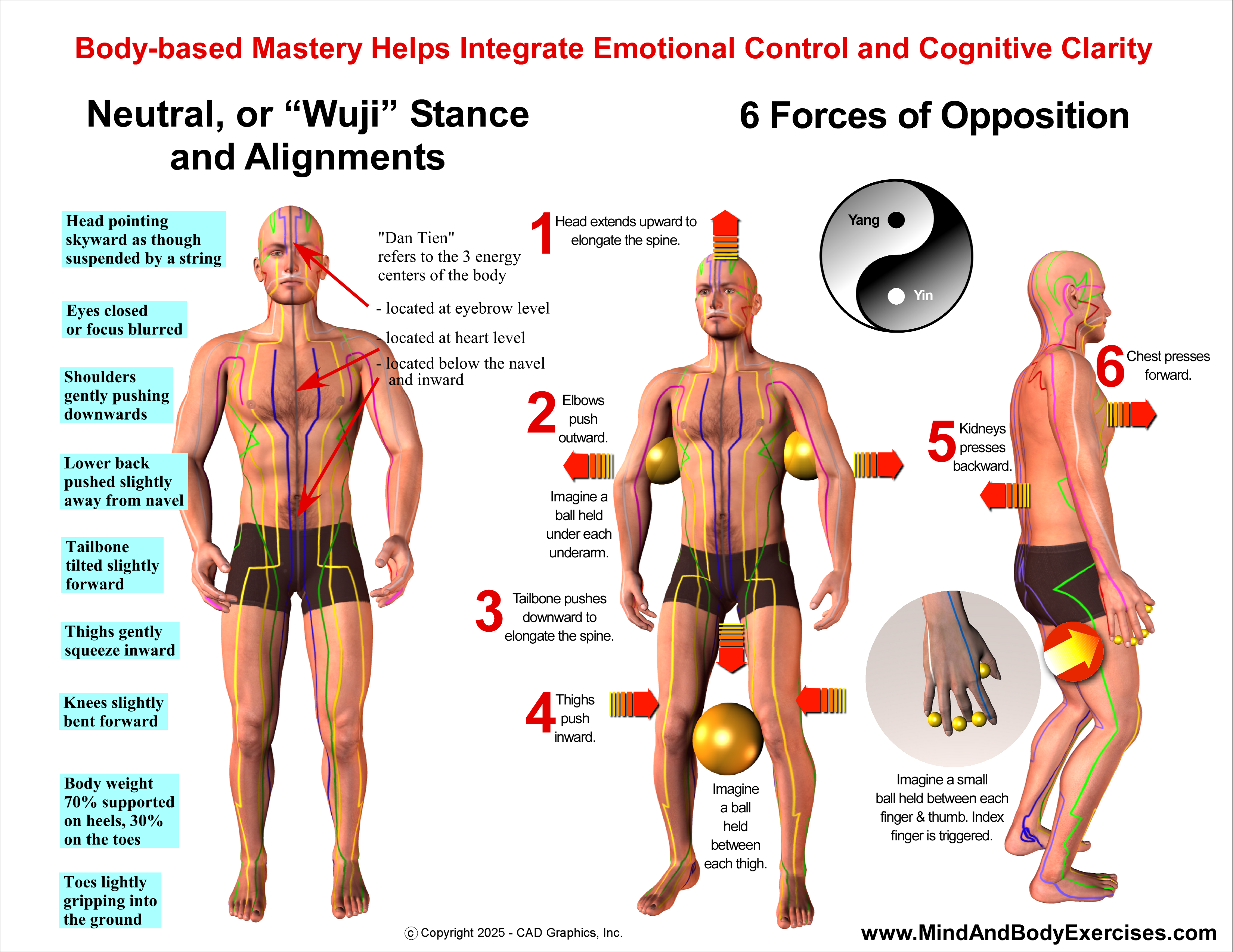
Beyond the meditative aspects, martial arts more broadly embody somatic calibration through functional stress-testing. The practitioner learns to manage fear, aggression, and arousal through breath and structure, while maintaining equilibrium under pressure. Studies show that martial arts training enhances proprioceptive acuity, sensorimotor coordination, and self-regulation (Lakes & Hoyt, 2004). This aligns with modern somatic psychology’s premise that body-based mastery helps integrate emotional control and cognitive clarity. Each strike, stance, or transition offers an opportunity to refine how the nervous system responds to stress, literally training the body-mind to self-regulate in motion.

Playing Musical Instruments and Fine Motor Calibration

Somatic calibration extends beyond movement disciplines into musicianship and performance arts, which demand acute proprioceptive and interoceptive tuning. Professional musicians display higher sensorimotor awareness, cortical plasticity, and fine-motor coordination than non-musicians (Herholz & Zatorre, 2012). Learning an instrument requires sensing pressure, breath, timing, and resonance, developing a nuanced relationship between internal cues and external feedback. In this way, musical practice mirrors somatic calibration: constant attunement between perception and output, between inner signal and outer sound.

Mechanisms of Mind–Body Calibration

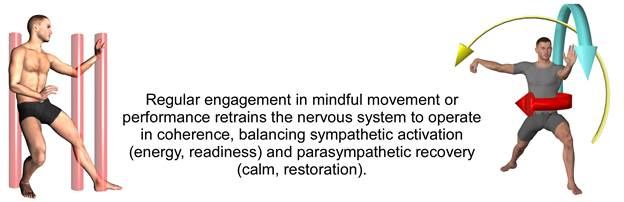
The unifying mechanism underlying all these disciplines lies in sensorimotor feedback loops that strengthen awareness and adaptability. Regular engagement in mindful movement or performance retrains the nervous system to operate in coherence, balancing sympathetic activation (energy, readiness) and parasympathetic recovery (calm, restoration). Slow, deliberate movement is characteristic of tai chi or yoga and allows the practitioner to perceive otherwise subtle cues such as joint angle, muscle tone, or internal vibration. As these perceptions sharpen, the practitioner gains conscious influence over states that were once automatic, such as tension, breath rate, or postural asymmetry (Mehling et al., 2011).

Through repeated practice, this refined self-perception translates into emotional and cognitive domains. For instance, noticing a tightening diaphragm before anxiety arises offers a chance to intervene somatically to slow the breath and prevent escalation. This is the essence of somatic calibration: turning bodily awareness into conscious regulation.
Somatic calibration represents a modern articulation of ancient principles: that self-mastery begins with bodily awareness. By refining perception and control of internal processes, one cultivates a harmonious relationship between the body and mind. Practices such as yoga, qigong, tai chi, and baguazhang, as well as musical training and other precise movement arts, can act as living laboratories for this process. They transform awareness into action, and action into alignment.

Ultimately, somatic calibration is not limited to therapy or training, but rather it is a lifelong practice of attuning to the ever-changing signals of one’s internal and external environment. In a world that often prioritizes cognition over embodiment, somatic calibration restores equilibrium, offering a path toward resilience, integration, and inner harmony.

References:

Herholz, S. C., & Zatorre, R. J. (2012). Musical training as a framework for brain plasticity: Behavior, function, and structure. Neuron, 76(3), 486–502. https://doi.org/10.1016/j.neuron.2012.10.011

Jahnke, R., Larkey, L., Rogers, C., Etnier, J., & Lin, F. (2010). A comprehensive review of health benefits of qigong and tai chi. American journal of health promotion : AJHP24(6), e1–e25. https://doi.org/10.4278/ajhp.081013-LIT-248

Khalsa, S. S., Adolphs, R., Cameron, O. G., Critchley, H. D., Davenport, P. W., Feinstein, J. S., … Paulus, M. P. (2018). Interoception and mental health: A roadmap. Biological Psychiatry: Cognitive Neuroscience and Neuroimaging, 3(6), 501–513. https://doi.org/10.1016/j.bpsc.2017.12.004

Lakes, K. D., & Hoyt, W. T. (2004). Promoting self-regulation through school-based martial arts training. Journal of Applied Developmental Psychology, 25(3), 283–302. https://doi.org/10.1016/j.appdev.2004.04.002

Mehling, W. E., Price, C., Daubenmier, J., Acree, M., Bartmess, E., & Stewart, A. (2011). The Multidimensional Assessment of Interoceptive Awareness (MAIA). PLoS ONE, 7(11), e48230. https://doi.org/10.1371/journal.pone.0048230

Streeter, C. C., Gerbarg, P. L., Saper, R. B., Ciraulo, D. A., & Brown, R. P. (2012). Effects of yoga on the autonomic nervous system, gamma-aminobutyric-acid, and allostasis in epilepsy, depression, and post-traumatic stress disorder. Medical Hypotheses, 78(5), 571–579. https://doi.org/10.1016/j.mehy.2012.01.021

Taylor, J. (2023). What is somatic awareness? Retrieved from https://janetaylor.net/what-is-somatic-awareness/

Wayne, P. M., & Yeh, G. Y. (2014). Effect of Tai Chi on cognitive performance in older adults: A systematic review. Journal of the American Geriatrics Society, 62(1), 25–39. https://pubmed.ncbi.nlm.nih.gov/24383523/

Still Looking for Gifts for Others?

Maybe consider giving a gift of knowledge.

Remember the Indiana Jones films, when Indiana discovers his father’s diary containing clues to the Holy Grail? The book itself was knowledge. Wisdom came from applying that knowledge through experience. Without knowledge and lived practice, wisdom is difficult to cultivate.

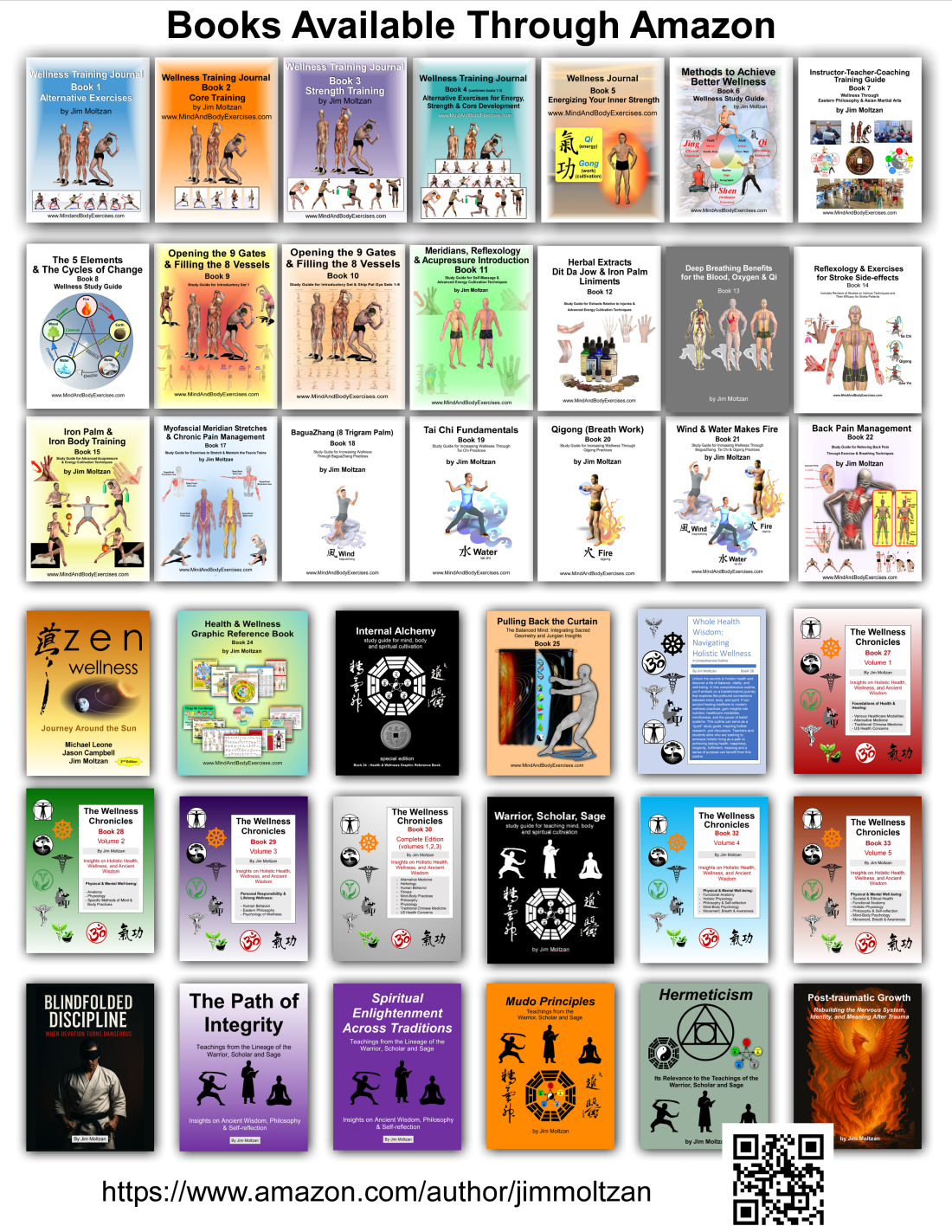
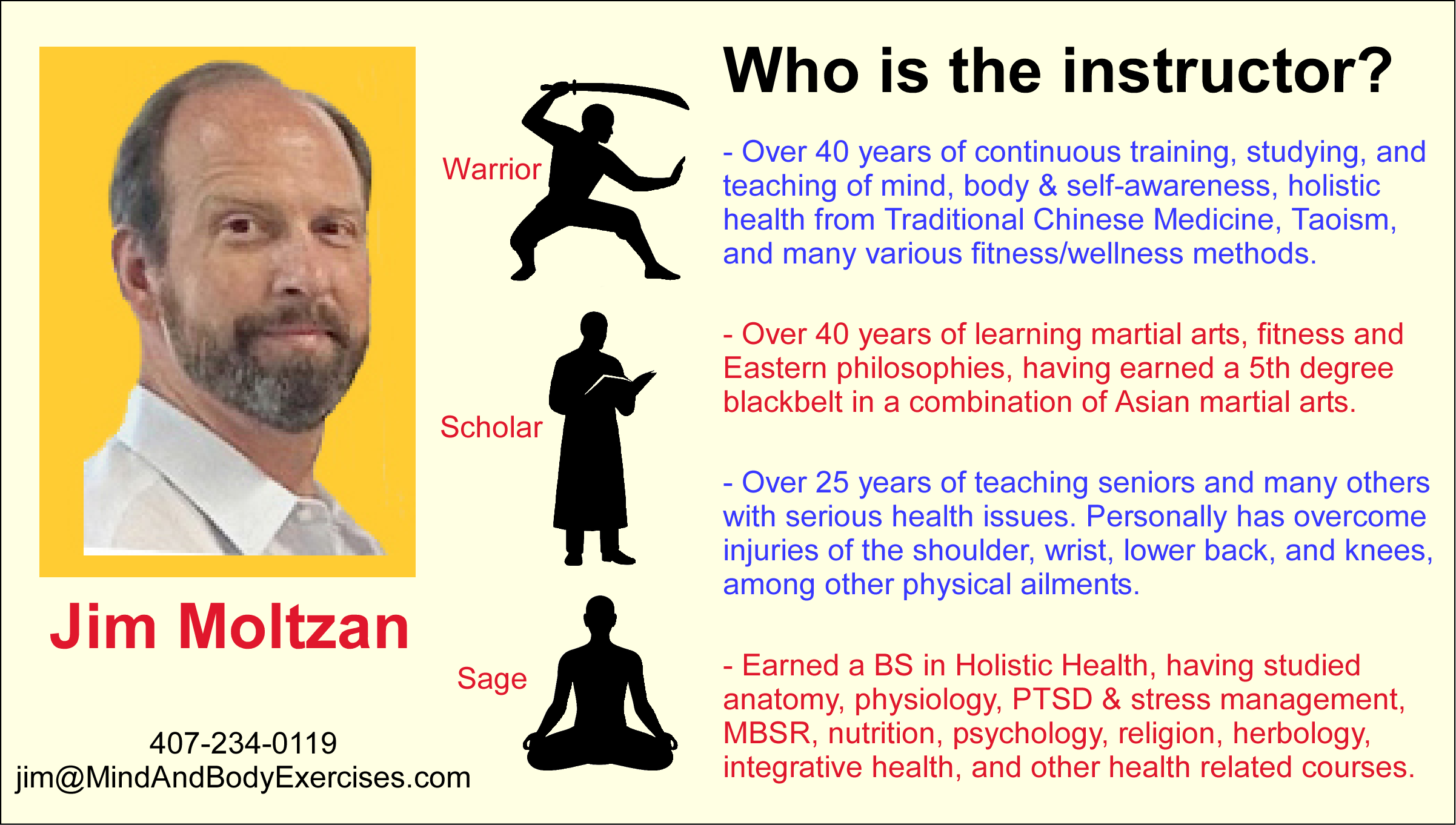
For over 40 years, I have been on my own search for a “Holy Grail” of health, wellness, fitness, and self-awareness. Along that journey, I have created a series of books and study guides that visually and conceptually map what I believe to be the essential components of a healthy, balanced, and meaningful life.

My books are comprehensive, deeply researched, and feature original, full-color illustrations designed to make complex ideas clear and accessible. Each volume reflects decades of firsthand learning, practice, teaching, and illustration across disciplines including holistic health, fitness, psychology, Traditional Chinese Medicine, qigong, martial arts, and yoga philosophy. These are not mass-market publications. They are intentionally crafted for thoughtful readers, practitioners, and lifelong learners who value depth, clarity, and authenticity.

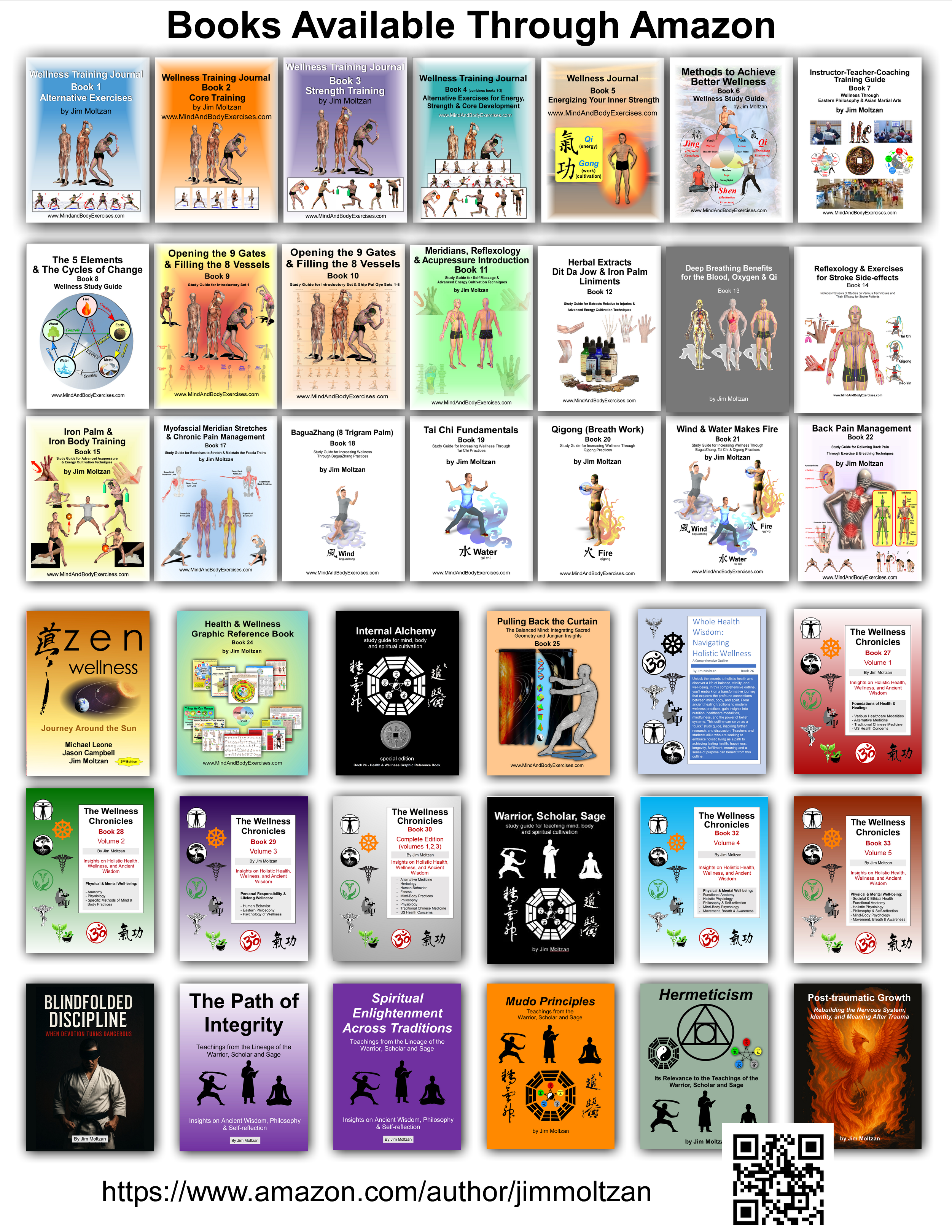
To date, I have published 39 books and study guides on Amazon. Some are primarily visual references that distill complex systems into clear graphic formats. Others explore theories of human development, psychology, movement, breathwork, rehabilitation, longevity, and overall quality of life. Many include practical exercise sets designed to support recovery, resilience, and long-term well-being.

These works represent the summation of more than four decades of training, education, teaching, and public speaking. Much of the qigong and breathing work draws from Chinese Kung Fu and Korean Dong Han medical qigong lineages, alongside extensive study with Traditional Chinese Medicine practitioners and martial arts masters. My background also includes acupressure, acupuncture principles, moxibustion, herbal preparation, and medical qigong, as well as formal academic training culminating in a Bachelor of Science degree in Holistic Health.

Similar in concept to Quick Study or PermaCharts, these guides are designed to “cut to the chase,” minimizing the time spent searching through dense textbooks while preserving the essential root knowledge of each subject. This format serves both beginners seeking a solid foundation and experienced practitioners looking for concise, high-quality reference materials.

If you are looking for a meaningful gift, one that supports health, awareness, and lifelong learning, these books are intended to be resources that grow with the reader over time.

My titles are available on Amazon at: https://www.amazon.com/author/jimmoltzan

My titles are available on Amazon at: https://www.amazon.com/author/jimmoltzan

Book 1 – Alternative Exercises

Book 2 – Core Training

Book 3 – Strength Training

Book 4 – Combo of 1-3

Book 5 – Energizing Your Inner Strength

Book 6 – Methods to Achieve Better Wellness

Book 7 – Coaching & Instructor Training Guide

Book 8 – The 5 Elements & the Cycles of Change

Book 9 – Opening the 9 Gates & Filling 8 Vessels-Intro Set 1

Book 10 – Opening the 9 Gates & Filling 8 Vessels-sets 1 to 8

Book 11 – Meridians, Reflexology & Acupressure

Book 12 – Herbal Extracts, Dit Da Jow & Iron Palm Liniments

Book 13 – Deep Breathing Benefits for the Blood, Oxygen & Qi

Book 14 – Reflexology for Stroke Side Effects:

Book 15 – Iron Body & Iron Palm

Book 17 – Fascial Train Stretches & Chronic Pain Management

Book 18 – BaguaZhang

Book 19 – Tai Chi Fundamentals

Book 20 – Qigong (breath-work)

Book 21 – Wind & Water Make Fire

Book 22 – Back Pain Management

Book 23 – Journey Around the Sun-2nd Edition

Book 24 – Graphic Reference Book

Book 25 – Pulling Back the Curtain

Book 26 – Whole Health Wisdom: Navigating Holistic Wellness

Book 27 – The Wellness Chronicles (volume 1) 

Book 28 – The Wellness Chronicles (volume 2)

Book 29 – The Wellness Chronicles (volume 3)

Book 30 – The Wellness Chronicles (complete edition, volumes 1-3)

Book 31 – Warrior, Scholar, Sage

Book 32 – The Wellness Chronicles (volume 4)

Book 33 – The Wellness Chronicles (volume 5)

Book 34 – Blindfolded Discipline

Book 35 – The Path of Integrity

Book 36 – Spiritual Enlightenment Across Traditions

Book 37 – Mudo Principles: Teachings from the Warrior, Scholar, and Sage

Book 38 – Hermeticism: Its Relevance to the Teachings of the Warrior, Scholar and Sage

Book 39 – Post-traumatic Growth


Distance Between Words, Space Between Thoughts

The phrase “distance between words, space between thoughts” invites contemplation of both communication and consciousness. It suggests that meaning and wisdom arise not merely from the words or thoughts themselves but from the intervals between them, in the pauses, silences, and moments of reflection that allow comprehension to deepen. Just as music depends on silence to shape melody, awareness depends on mental stillness to reveal insight.

Silence Within Speech

Philosophically, language is a double-edged instrument. It enables expression but also confines it. Ludwig Wittgenstein (2013) argued that the limits of our language are the limits of our world; yet within those limits, silence holds a special power, where it points to what words cannot capture. The distance between words represents this silent gap where meaning crystallizes. In conversation, it is the pause that allows listening; in poetry, it is the rhythm that gives emotion room to breathe.

In mindfulness traditions, similar emphasis is placed on the pause between breaths or thoughts. The Yoga Sutras of Patanjali describe mental control not as suppression but as recognition of the stillness between modifications of the mind (citta-vṛtti nirodha). This stillness parallels the spaces between words: both act as boundaries that define expression while inviting contemplation beyond it (Feuerstein, 1989).

The Space Between Thoughts

The space between thoughts is where consciousness reclaims its sovereignty. Neuroscientific studies on meditation suggest that when the brain transitions from active thinking to a resting state, networks associated with self-referential processing, such as the default mode network (DMN), quiet down and allowing awareness to expand beyond habitual mental chatter (Brewer et al., 2011). In this spacious awareness, thoughts can be observed rather than obeyed.

From a Taoist perspective, this reflects the concept of wu wei, oreffortless action” that arises from harmony with the natural flow of existence. When thought pauses, intuition and spontaneous wisdom emerge. Lao Tzu’s Tao Te Ching reminds us that “the usefulness of a pot lies in its emptiness” (Mitchell, 2006). The space is not absence but potential as it allows all forms to exist.

Communication, Presence, and Mindful Dialogue

Applied practically, the distance between words cultivates mindfulness in communication. Modern life is saturated with noise. Such as digital, emotional, and informational, leaving little room for genuine listening. Yet, when one learns to pause before responding, the conversation gains depth. Marshall Rosenberg (2015) emphasized that nonviolent communication begins with awareness of one’s inner state before speaking; silence becomes an ally rather than an awkward void.

Similarly, in contemplative psychology, the space between thoughts allows the practitioner to discern reaction from response. Viktor Frankl (1959) famously wrote, “Between stimulus and response there is a space. In that space lies our power to choose our response.” This power to pause, to inhabit the space between thoughts, grants freedom from reflexive conditioning and opens the door to wisdom.

The Aesthetic of Intervals

Artists, writers, and martial artists alike understand that mastery lies not in constant motion but in timing and the intervals that define rhythm and flow. In calligraphy, the beauty of each stroke depends on the proportion of blank space around it; in tai chi or qigong, the pauses between movements express the continuity of energy rather than its cessation (Shahar, (2008). In both language and life, pacing and silence create balance.

__________

__________

The Presence Beyond Thought

Ultimately, distance between words and space between thoughts converge in the practice of presence. When we learn to honor the intervals, whether in speech, thought, or action, we align with a deeper rhythm of consciousness that underlies all form. The wisdom of silence is not emptiness but awareness itself. In those spaces, the mind becomes clear, the heart receptive, and communication authentic.

To live with awareness of the spaces between words, between breaths, between thoughts, is to step into the fullness of being. In that quiet expanse, truth is not spoken but known.

References:

Brewer, J. A., Worhunsky, P. D., Gray, J. R., Tang, Y.-Y., Weber, J., & Kober, H. (2011). Meditation experience is associated with differences in default mode network activity and connectivity. Proceedings of the National Academy of Sciences, 108(50), 20254–20259. https://doi.org/10.1073/pnas.1112029108

Feuerstein, G. (1989). The Yoga-Sūtra of Patañjali: A New Translation and Commentary. Shambhala Publications. https://archive.org/details/yogasutraofpatan00pata

Frankl, V. E. (1959). Man’s Search for Meaning. Beacon Press.

Mitchell, S. (Trans.). (2006). Tao Te Ching. Harper Perennial.

Rosenberg, M. B. (2015). Nonviolent Communication: A Language of Life (3rd ed.). PuddleDancer Press.

Shahar, M. (2008). The Shaolin Monastery: History, Religion, and the Chinese Martial Arts. University of Hawai‘i Press. https://archive.org/details/shaolinmonastery0000shah

Wittgenstein, L. (2013). Tractatus Logico-Philosophicus (1st ed.). Taylor and Francis. Retrieved from https://www.perlego.com/book/1557526/tractatus-logicophilosophicus-pdf

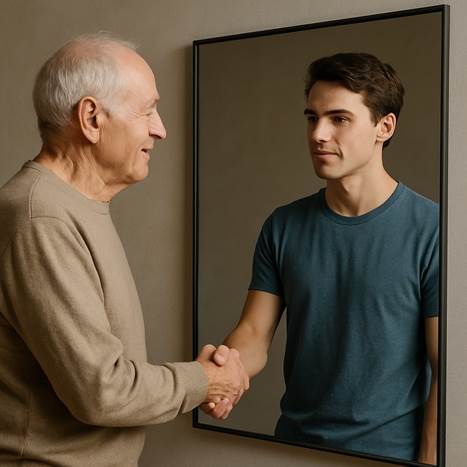
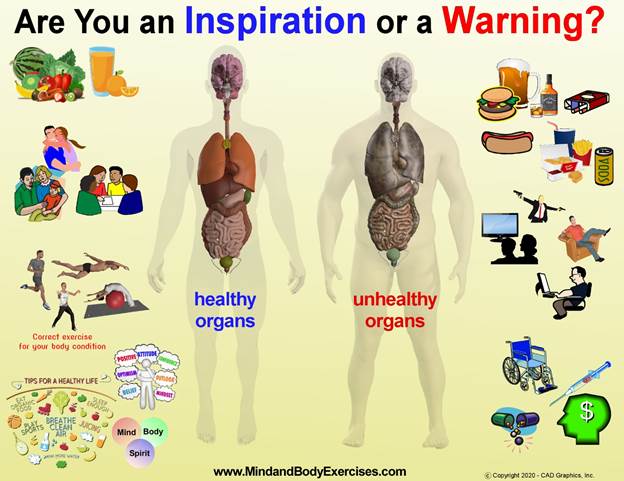
An Inner Dialogue Across Time – Warning or Inspiration?

A Holistic Reflection on Inspiration, Warning, and the Evolving Self

Human beings often imagine what it would be like to travel back and speak to a younger version of themselves. This idea appears in philosophy, psychology, and narrative storytelling because it symbolizes the universal desire to reflect, correct, and integrate one’s life experiences. Beyond the fantasy of time travel lies a powerful metaphor for holistic health: the encounter between the “older self” and the “younger self” represents an inner dialogue between potential and maturity, between innocence and insight, and between raw possibility and lived wisdom.

A central question arises: if the older self could appear before the younger, would they be seen as an inspiration or a warning? In reality, a person is always both. The meeting highlights the continuity of human development and the opportunity for conscious self-direction at every age.

The Younger Self: A Vessel of Possible Selves

Developmental psychology emphasizes that adolescents and young adults form “possible selves,” internal images of who they might become, who they hope to be, and who they fear becoming (Markus & Nurius, 1986). These imagined futures strongly influence motivation, health behaviors, coping strategies, and identity formation.

The younger self typically carries:

  • Curiosity
  • Imagination
  • Flexibility
  • A broad horizon of potential
  • Sensitivity to validation and guidance

From a holistic perspective, this early stage corresponds to Jing, the foundational essence and latent potential a person enters life with. The younger self is fertile ground for direction. If an older version appeared, the younger self might interpret them as evidence of what is achievable or as a signal of what must be avoided to preserve well-being.

The emotional impact would depend largely on how well the older self embodies the younger self’s hoped-for qualities (Oyserman & James, 2011).

The Older Self: Integration, Insight, and Embodied Lessons

With age comes the accumulation of experiences, patterns, consequences, and lessons. While aging itself does not guarantee wisdom, reflective integration does. We all grow older, however we do not all grow up. Research in adult development shows that meaning-making, emotional regulation, and resilience tend to strengthen across the lifespan—particularly through processes of cognitive appraisal and narrative reconstruction (Charles, 2010; Park, 2010).

The older self represents:

  • Lived consequences of habits
  • Emotional intelligence gained through adversity
  • Patterns of health, self-care, and neglect
  • Wisdom derived from integrating experiences
  • Clarity about purpose and personal truth

In holistic terms, this corresponds to Qi and Shen: the active life force shaped by choices (Qi) and the clarity, awareness, and purpose that emerge through integration (Shen).

Depending on the life lived, the younger self might see the older one as:

  • Inspiration if they embody calm, vitality, meaning, and self-possession
  • Warning if they carry bitterness, physical decline from neglect, or unhealed patterns
  • A realistic combination of both, which is the most human and psychologically accurate view

The Dual Truth: We Are Always Inspiration and Warning

Self-reflection research shows that individuals learn most effectively when they can hold both positive and negative self-assessments simultaneously, a process known as integrative self-reflection (Morin, 2017). The older self naturally embodies this duality:

1. A Lighthouse

Showing what is possible when discipline, compassion, and health practices accumulate over time.

2. A Signpost

Revealing which choices, habits, or relationships lead to stagnation or suffering.

3. A Mirror

Reflecting truths the younger self could not yet see but might have recognized earlier if guidance were available.

4. A Bridge

Demonstrating that healing, resilience, and transformation remain possible even decades later. Research on post-traumatic growth shows that meaning-making and growth often occur long after adversity has passed (Tedeschi & Calhoun, 2004).

In Taoist terms, this mirrors the dynamic interplay of yin and yang, where apparent opposites coexist, complement one another, and create a fuller picture of the truth.

Holistic Health and the Self Across Time

Holistic health recognizes the interdependence of body, mind, and spirit. The meeting of younger and older selves highlights how long-term well-being is shaped through consistent, incremental choices.

Body / Jing

Long-term research in public health demonstrates that consistent health behaviors such as sleep quality, physical activity, balanced nutrition, stress management, and avoiding harmful habits, predict well-being and longevity across the lifespan. These lifestyle factors, when adopted earlier, form a stable foundation for later-life physical vitality and resilience (Belloc & Breslow, 1972).

Mind / Qi

Emotional regulation, coping strategies, and thought patterns evolve through practice. Individuals who learn adaptive regulation earlier show greater life satisfaction and resilience in adulthood (Gross, 2015).

Spirit / Shen

Meaning, alignment, and ethical coherence develop through reflection. Life review processes help individuals construct narratives that support psychological well-being (Westerhof & Bohlmeijer, 2014).

Thus, the older self is the embodied outcome of how Jing was preserved, how Qi was cultivated, and how Shen was refined.

A Practical Thought Experiment for Personal Growth

Imagine your future self walking into the room today. Would they thank you or warn you? Would they:

  • Ask you to slow down?
  • Encourage you to keep going?
  • Remind you to take better care of your body?
  • Urge you to set boundaries?
  • Suggest that your purpose needs revisiting?
  • Praise your discipline, courage, or compassion?

Research shows that visualizing one’s future self increases motivation, improves decision-making, and strengthens long-term thinking (Hershfield, 2011). The time-travel metaphor becomes a tool for conscious alignment.

Your younger self is gone, but your older self is still being shaped now, through today’s decisions. Holistic health is the conversation between past potential, present choice, and future embodiment. The point is not to change the past but to ensure that the future becomes a version of yourself you would be proud to meet.

References:

Belloc, N. B., & Breslow, L. (1972). Relationship of physical health status and health practices. Preventive Medicine, 1(3), 409–421. https://doi.org/10.1016/0091-7435(72)90014-x

Charles, S. T. (2010). Strength and vulnerability integration: A model of emotional well-being across adulthood. Psychological Bulletin, 136(6), 1068–1091. https://doi.org/10.1037/a0021232

Gross, J. J. (2015). Emotion regulation: Current status and future prospects. Psychological Inquiry, 26(1), 1–26. https://doi.org/10.1080/1047840X.2014.940781

Hershfield, H. E. (2011). Future self-continuity: How conceptions of the future self transform intertemporal choice. Annals of the New York Academy of Sciences, 1235(1), 30–43. https://doi.org/10.1111/j.1749-6632.2011.06201.x

Markus, H., & Nurius, P. (1986). Possible selves. American Psychologist, 41(9), 954–969. https://doi.org/10.1037/0003-066X.41.9.954

Morin, A. (2017). Toward a glossary of self-related terms. Frontiers in Psychology, 8, 280. https://doi.org/10.3389/fpsyg.2017.00280

Oyserman, D., & James, L. (2011). Possible identities. In S. J. Schwartz, K. Luyckx, & V. L. Vignoles (Eds.), Handbook of identity theory and research (pp. 117–145). Springer Science + Business Media. https://doi.org/10.1007/978-1-4419-7988-9_6

Park, C. L. (2010). Making sense of the meaning literature: An integrative review. Psychological Bulletin, 136(2), 257–301. https://doi.org/10.1037/a0018301

Tedeschi, R. G., & Calhoun, L. G. (2004). Posttraumatic growth: Conceptual foundations and empirical evidence. Psychological Inquiry, 15(1), 1–18. https://doi.org/10.1207/s15327965pli1501_01

Westerhof, G. J., & Bohlmeijer, E. T. (2014). Celebrating fifty years of research and applications in reminiscence and life review: state of the art and new directions. Journal of aging studies29, 107–114. https://doi.org/10.1016/j.jaging.2014.02.003

The Eternal Now – Consciousness Momentarily Residing in Form

The Paradox of Presence

The statement above points to one of the most profound realizations of human existence, that time, identity, and consciousness are not separate phenomena but reflections of a single continuum of awareness. Philosophically, this view resonates with both Eastern metaphysics and Western phenomenology: that reality unfolds perpetually in the now, and that what we call “self” is consciousness temporarily clothed in matter. The phrase invites a dismantling of the illusion of separation between past and future, self and other, body and spirit. What remains when all temporal and spatial distinctions dissolve is pure presence where consciousness experiencing itself through form (Tolle, 1999; Advaita Vedānta, as cited in Deutsch, 1980).

The Illusion of Time and the Continuum of Now

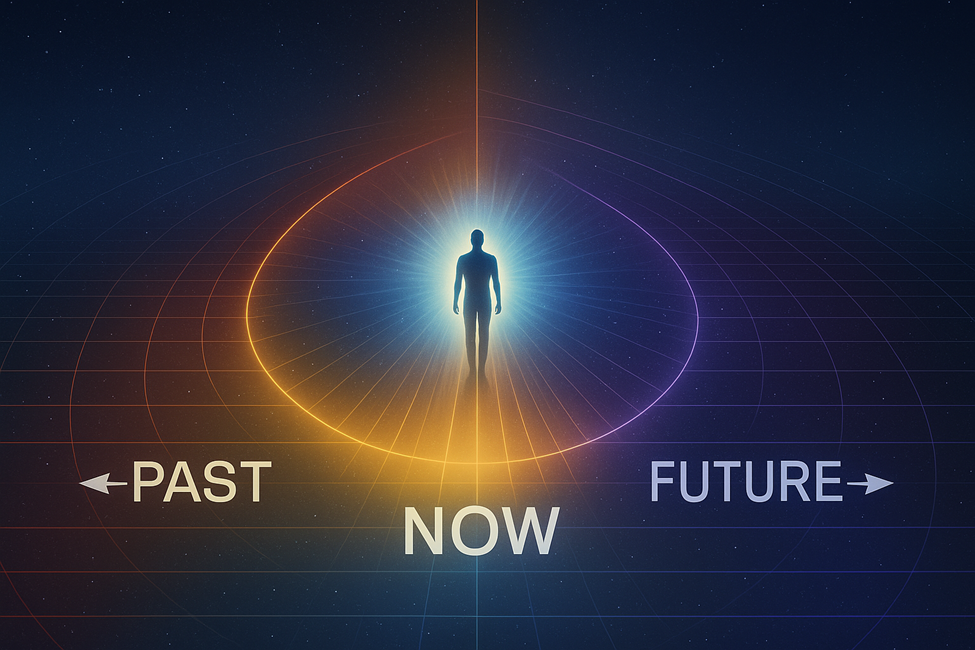
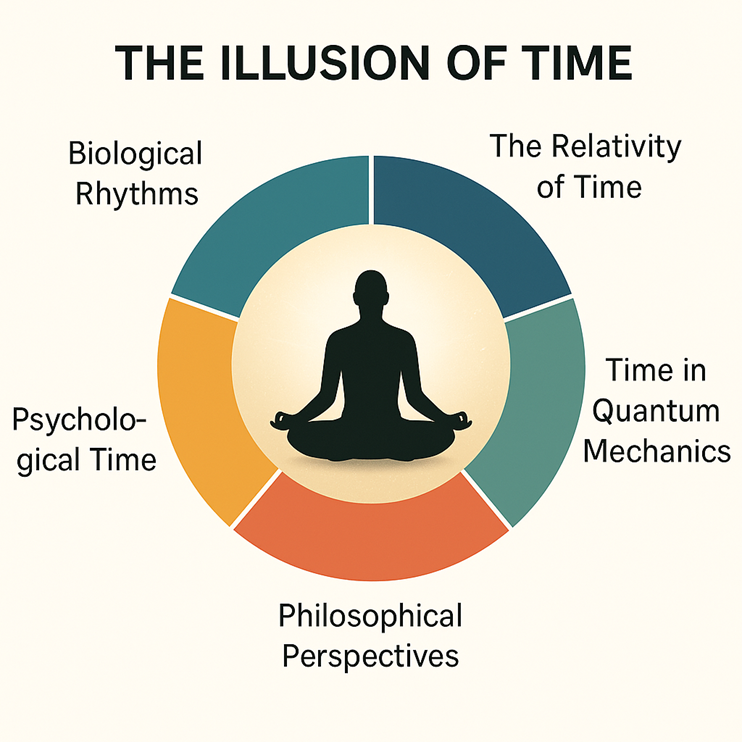
Human cognition evolved to perceive time linearly: a succession of moments divided into past, present, and future. Yet, physics and mysticism alike challenge this perception. Einstein (1955) remarked that the distinction between past, present, and future is a “stubbornly persistent illusion.” From a quantum or relativistic standpoint, all events exist simultaneously in a spacetime continuum. Similarly, Buddhist philosophy teaches that impermanence does not imply temporal fragmentation but the constant flux of a timeless now where each moment birthing the next without true separation (Nagarjuna, as translated in Garfield, 1995).

To say “it has always been now” is to step outside the psychological construct of time and into the living awareness that precedes it. In this state, “now” is not a fleeting instant but an eternal dimension as the background of all experience. Every thought, sensation, and memory arises within this unbroken field of presence. Awareness never departs; only the forms within it shift and fade like clouds across an unchanging sky.

The Self as Eternal Witness

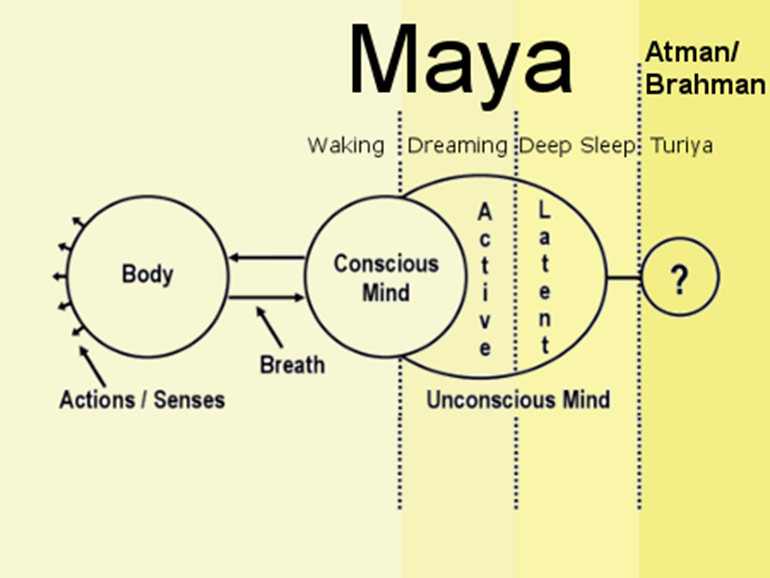
“It has always been you” is not a statement of personal identity but of essential consciousness where we are the observer behind all experiences. In Advaita and Taoist traditions, the self is not the personality but the awareness that perceives both body and mind. This is the “Atman” that is identical with “Brahman,” or the “original face before you were born,” as Zen expresses it (Suzuki, 1956). The conscious witness is silent, unbounded, and ever-present and is the same essence that animates all beings.

 (Van Es, 2019)

In Western phenomenology, Husserl and later Sartre described consciousness as “intentionality”: a self-revealing light in which objects appear (Husserl, 1931). That same light is the “you” in the aphorism and not the egoic self but the perceiving essence. When the individual realizes this, the boundary between “me” and “world” dissolves, revealing that both are movements within the same consciousness. As Alan Watts (1966) observed, “You are an aperture through which the universe is looking at and exploring itself.”

The Eternal Return of Being

“You have always been here” expresses the nonlocal and non-temporal quality of consciousness. While the body appears and vanishes in linear time, awareness, as the ground of all perception and has no beginning or end. In Taoist cosmology, the Tao is “formless yet ever-generative,” present before the birth of heaven and earth (Lao Tzu, trans. Mitchell, 1988). Similarly, Christian mysticism speaks of the “Kingdom of Heaven within,” pointing toward an eternal reality accessible through direct awareness rather than belief.

From the standpoint of experiential practices such as meditation, qigong, or contemplative stillness, one discovers that consciousness is not in the body; rather, the body is in consciousness. This reversal reveals that the witness has never left the moment or the universe it perceives. The “here” of consciousness is not a coordinate but a state of being.

Form as Temporary Expression of the Infinite

The final phrase, “the eternal consciousness momentarily residing in form,” brings the insight full circle. It affirms embodiment without attachment in that awareness chooses, or perhaps naturally manifests, as form to know itself. Matter, from this view, is crystallized consciousness; each organism is a unique configuration through which the universal intelligence experiences itself. The Tao manifests as “the ten thousand things,” yet remains unchanged in essence.

From a scientific lens, the body is a temporary aggregation of atoms forged in stars, recycled endlessly through the cosmos. The same elements that compose the body once burned in ancient suns and will again form new worlds (Greene, 2004). To realize this is to understand that life and death are merely transitions in the ongoing dance of energy where consciousness momentarily taking shape to perceive its own reflection.

The Practice of Remembering the Eternal

Philosophical insight becomes transformation only through direct realization. Meditation, breathwork, and mindful presence are methods of reuniting awareness with its source. When the mind ceases its incessant narrative of past and future, one awakens to what has never moved or the now. This awakening does not erase individuality but illuminates it with depth and humility. To live from this awareness is to act without resistance, to see oneself as both participant and witness in the cosmic unfolding.

Conclusion: The Still Point of Being

“It has always been now, it has always been you, you have always been here” points to the truth that existence is not a journey toward some future awakening but the continuous revelation of what already is. Consciousness is eternal, form is transient, and the realization of this unity is liberation. In this recognition, all striving dissolves, not into nihilism, but into reverence. The eternal consciousness does not seek permanence in form; it celebrates the impermanence through which it comes to know itself.

To awaken to this is to stand still at the center of the ever-turning wheel of time and recognize: you were never elsewhere, and you have never been anyone else.

References:

Deutsch, E. (1980). Advaita Vedānta: A Philosophical Reconstruction. University of Hawaii Press.

Einstein, A. (1955). Letter to Michele Besso. In The Born–Einstein Letters. Macmillan. https://archive.org/details/5760562-Einstein-letter-to-Besso-1951

Garfield, J. L. (1995). The Fundamental Wisdom of the Middle Way: Nāgārjuna’s Mūlamadhyamakakārikā. Oxford University Press. https://doi.org/10.1093/oso/9780195103175.001.0001

Greene, B. (2004). The Fabric of the Cosmos: Space, Time, and the Texture of Reality. Alfred A. Knopf. https://archive.org/details/fabricofcosmossp0000gree

Husserl, E. (1931). Ideas: General Introduction to Pure Phenomenology (W. R. Boyce Gibson, Trans.). Allen & Unwin.

Lao Tzu. (1988). Tao Te Ching (S. Mitchell, Trans.). Harper & Row. https://ia600209.us.archive.org/16/items/taoteching-Stephen-Mitchell-translation-v9deoq/taoteching-Stephen-Mitchell-translation-v9deoq_text.pdf

Suzuki, D. T. (1956). Zen Buddhism: Selected Writings. Doubleday. https://archive.org/details/zenbuddhism0000dtsu

Tolle, E. (1999). The Power of Now: A Guide to Spiritual Enlightenment. New World Library.

Van Es, D. (2019, November 14). One Yoga — TripuraShakti. Tripurashakti. https://www.tripurashakti.com/one-yoga/one-yoga

Watts, A. (1966). The Book: On the Taboo Against Knowing Who You Are. Pantheon Books. https://archive.org/details/bookontabooagain00watt