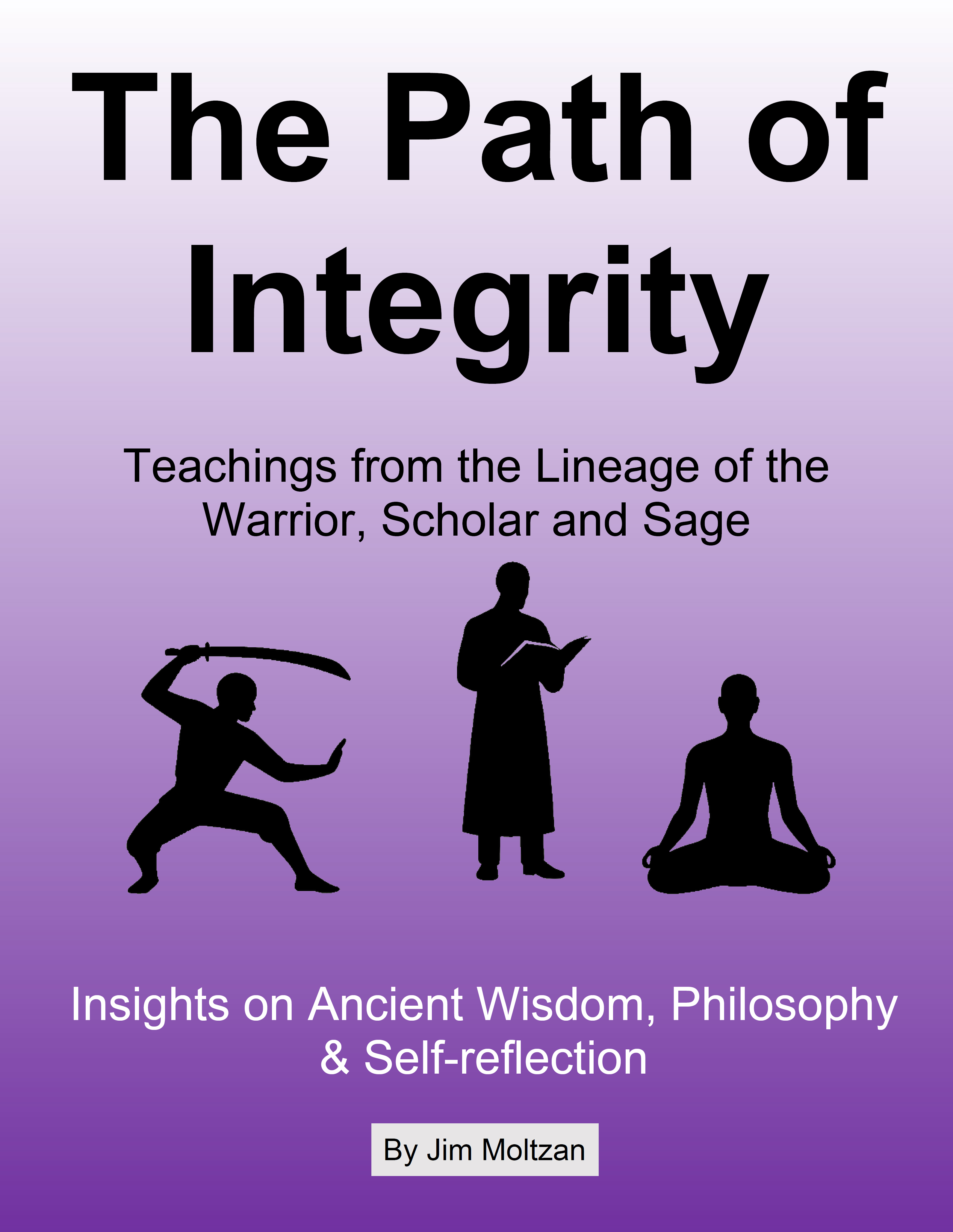
At its heart, The Path of Integrity is both a philosophical treatise and a psychological guide. A rare combination that bridges ancient wisdom traditions with contemporary understandings of human growth, resilience, and meaning-making.
From a psychological perspective, the manuscript reflects a humanistic foundation, echoing thinkers like Carl Rogers and Abraham Maslow in its focus on authenticity, self-knowledge, and the pursuit of a life aligned with core values. The text moves beyond prescriptive “self-help” to address the deeper internal architecture of the self in the mind, body, spirit, and relational being and how each must be cultivated in balance.
The book also engages with existential psychology, confronting questions of purpose, mortality, and moral responsibility. By drawing parallels between the “Path of Integrity” and the “Way of Dissonance,” it frames life as a series of choices that either bring us into alignment with our highest potential or lead us away from it. This dichotomy functions as a form of cognitive re-framing, helping readers see their daily decisions in a broader, values-driven context.
Importantly, the manuscript explores post-traumatic growth, not as an abstract theory but as a lived reality. It acknowledges that adversity, when met with awareness and intention, can deepen resilience, empathy, and wisdom. This theme is woven throughout personal reflections, martial philosophy, and spiritual principles to create a layered and authentic approach to transformation.
The emphasis on discipline, self-awareness, and service aligns closely with self-determination theory, which holds that autonomy, competence, and relatedness are essential to psychological well-being. The book’s integration of martial arts principles, such as inner guarding, patience, and strategic action, translates these abstract needs into concrete practices.
The style is psycho-educational, offering not only insight but also practical steps, from developing mental clarity and setting energetic boundaries to cultivating stillness as a tool for decision-making. This pedagogical approach makes it equally relevant to martial artists, spiritual seekers, and those navigating the complexities of modern life.
Psychologically, The Path of Integrity stands out because it addresses both the inner terrain (belief systems, emotional regulation, moral reasoning) and the outer application (relationships, teaching, leadership, legacy). This dual focus ensures that readers do not merely reflect but act, integrating new perspectives into daily living.
Ultimately, the book’s psychological message is clear. Integrity is not an abstract ideal. It is a lived state of alignment that requires ongoing attention, honest self-evaluation, and the courage to choose what is right over what is easy. By walking this path, we move beyond survival into a life of grounded purpose, resilience, and contribution.
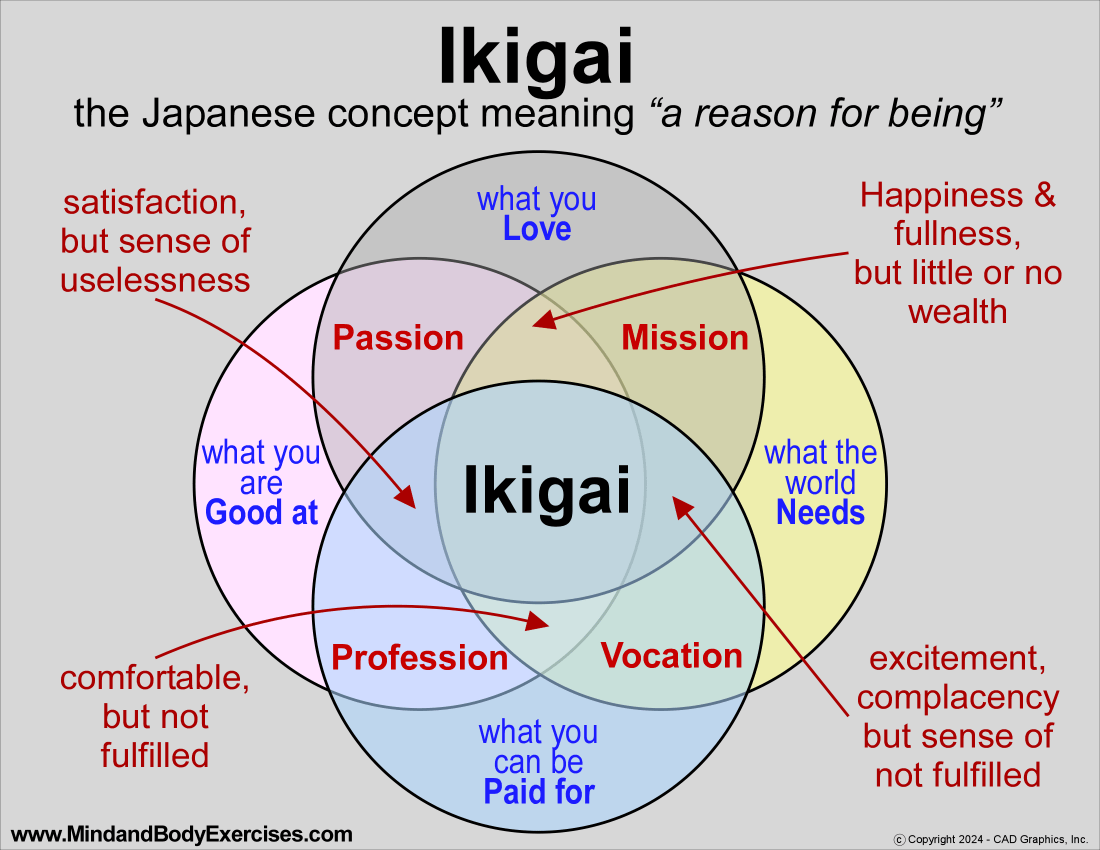
Ikigai is a Japanese concept representing the pursuit of balance among purpose, meaning, self-awareness, and self-realization (PMSS). It’s the harmony of these elements that leads to a fulfilling life, especially when one’s work aligns with them. Often referred to as finding one’s bliss, calling, or “inner genius,” the four elements of PMSS are interrelated yet unique. Together, they give us a reason to get out of bed each day, guiding our lives and enriching our connections to others. Without these components, people often face a life of confusion, chaos, pain, and even a sense of emptiness and perhaps suffering.
Historically, career choice has often shaped a person’s identity, with individuals feeling invisible or inadequate when career titles are lost, changed, or remain unachieved. This pressure is intensified in American culture, where respect is frequently tied to socioeconomic status, adding to the struggle of those who may feel disconnected from their purpose. Many Americans experience a lack of purpose and meaning, often heightened in later life stages. Retirees, for instance, may struggle to redefine themselves when they leave careers that once framed their identities, impacting their sense of place at home and in family life. Similarly, losing a spouse or loved one can erode this sense of purpose. For some, volunteering or public service becomes a way to revive their meaning and direction.
I remember many of my martial arts mentors speaking of the importance of understanding that we “earn” our lives through service to others. Demanding respect through fear or gaining recognition without earning, does not produce true meaning or purpose. Participation trophies usually don’t help to pay the bills. We earn the life we till, seed, and harvest. What can be considered as a higher calling other than helping, teaching, and nurturing others to become better versions of themselves? To take this concept to another level of meaning and purpose in terms of spirituality, I have learned the term gong dao wei shen (功德为神) which is rooted in Chinese philosophical and spiritual traditions. However, the exact expression isn’t commonly cited. I can attempt to break it down:
功德 (gong de) — This translates to “merit” or “karmic merit” in the sense of virtue accumulated through good deeds and moral actions. In traditional Chinese thought and in Buddhism, gong de is the spiritual merit or positive karma gained through altruistic actions, spiritual practice, and moral conduct.
为 (wei) — This can mean “for” or “as” in this context, often used to imply that the merit serves or benefits something.
神 (shen) — This translates to “spirit” or “divine” and can imply a higher spiritual state or connection with the divine.
功德 为 神
Consequently, gong dao wei shen could be loosely interpreted as “acquiring karmic merit for spiritual elevation or connection to the divine.” This phrase might not appear in ancient texts directly but reflects the concept of dedicating good deeds or spiritual work to elevate one’s spiritual state, aligning with Chinese philosophies of moral virtue impacting one’s spiritual development.
Grasping these aspects of PMSS early on benefits not only individuals but also communities and society as a whole. However, finding this balance isn’t something that can be bought or easily read about; it takes time, life experiences, a genuine desire, and self-reflection to develop. In this way, one’s personal sense of ikigai or PMSS truly takes shape through a lifelong journey of discovery and growth.
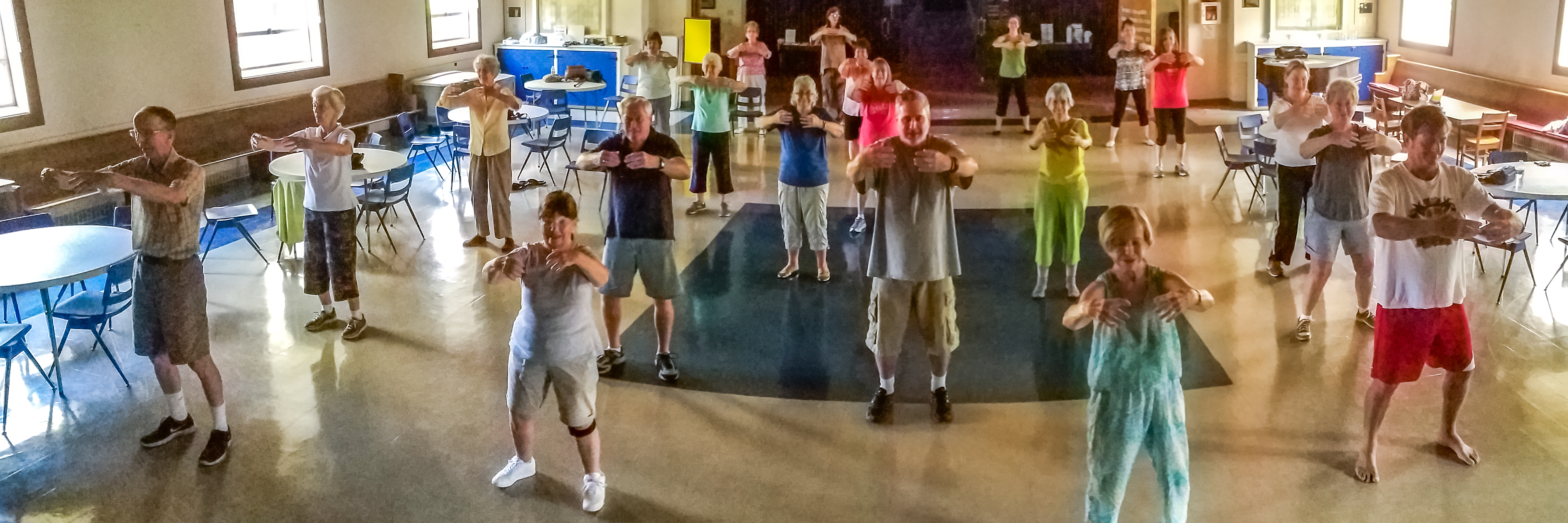
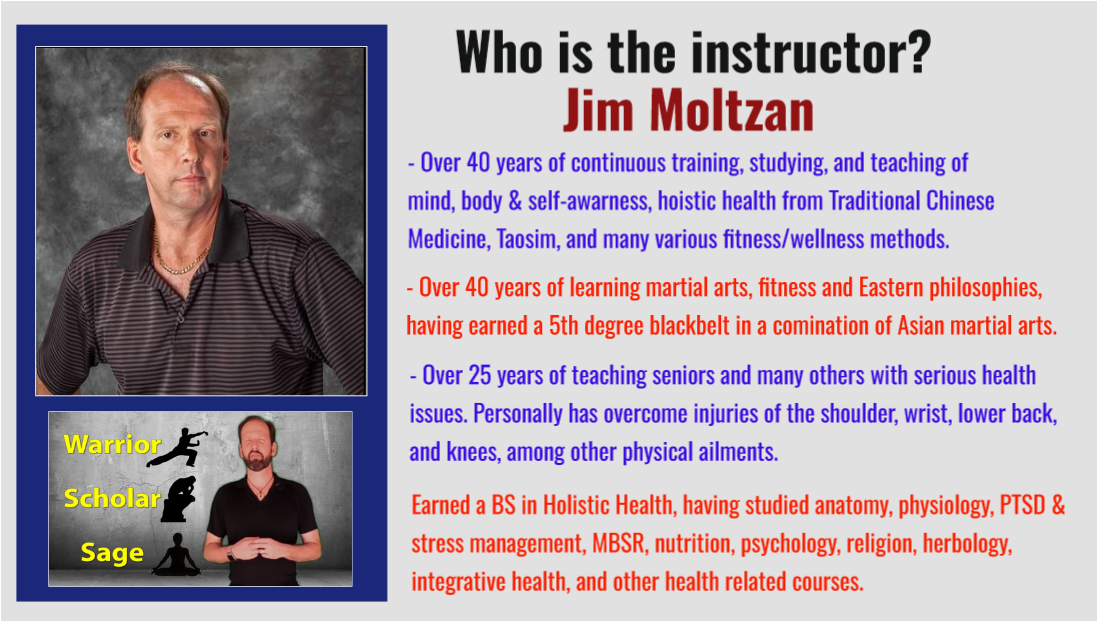
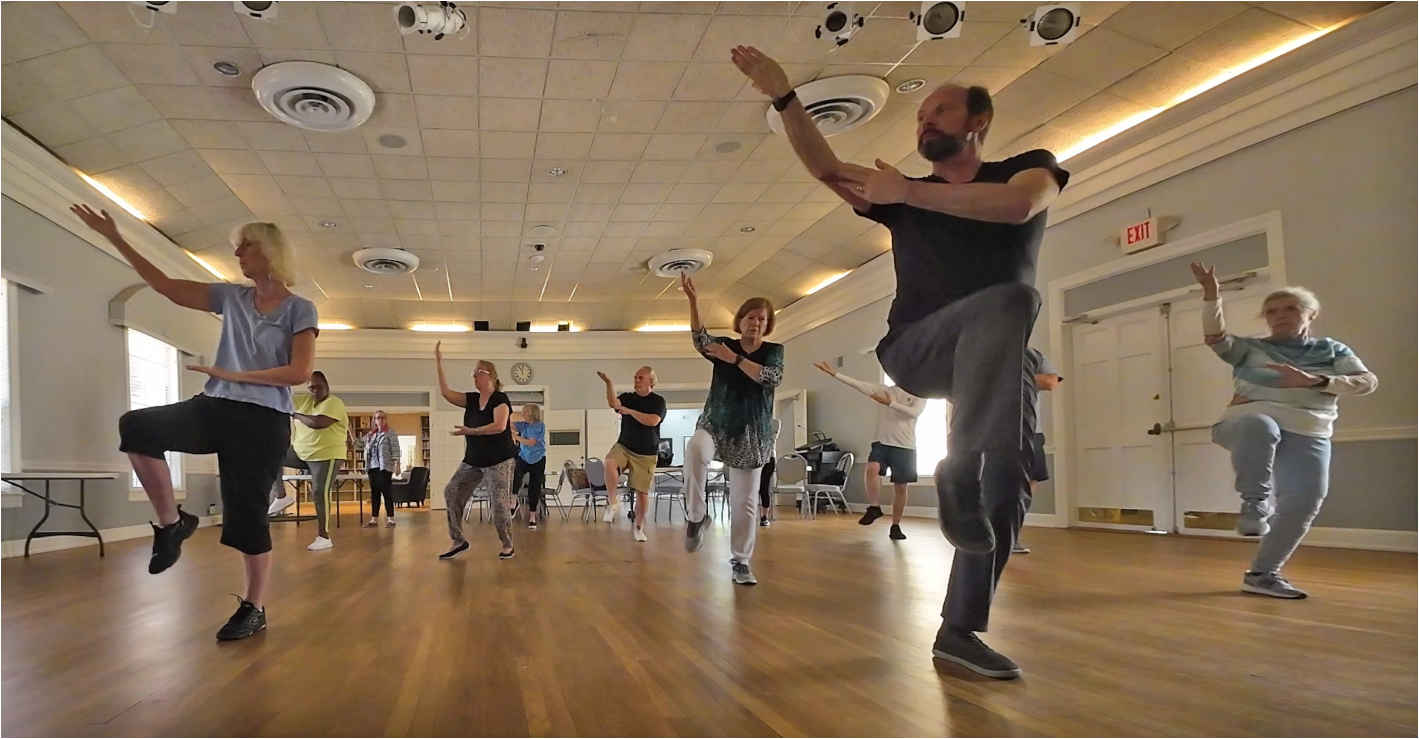
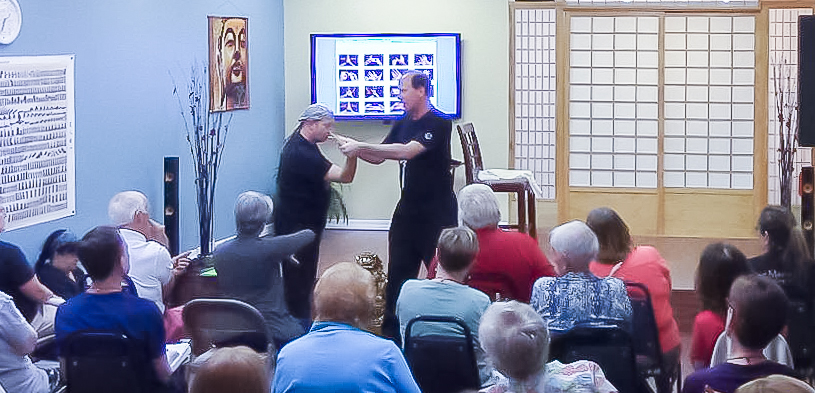
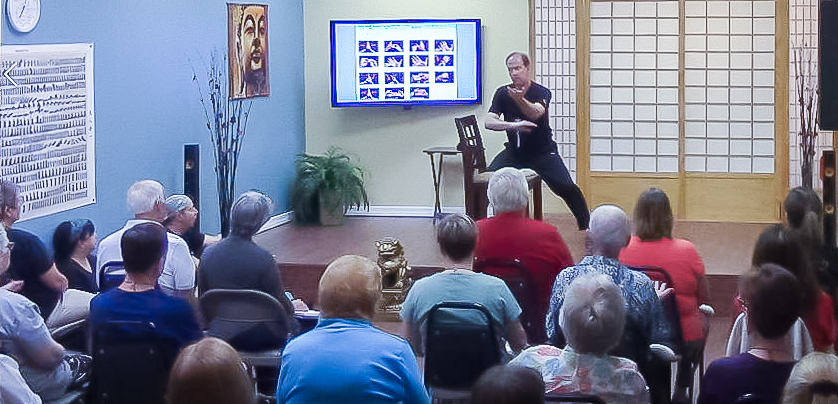
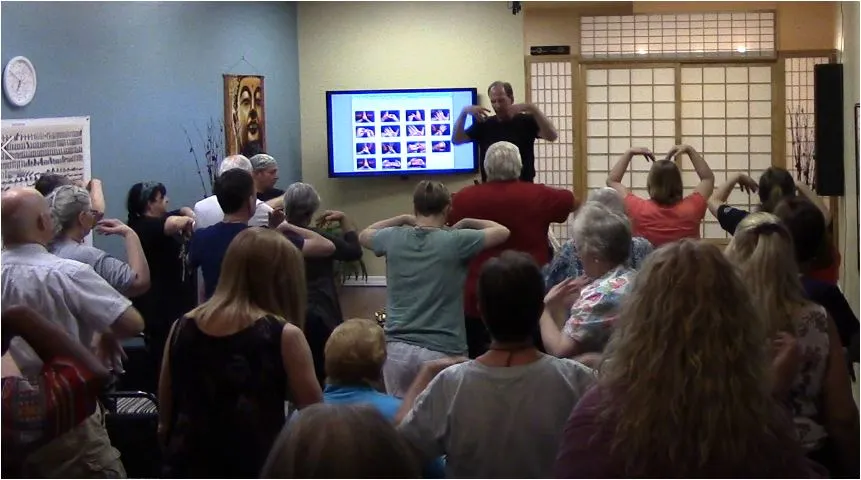
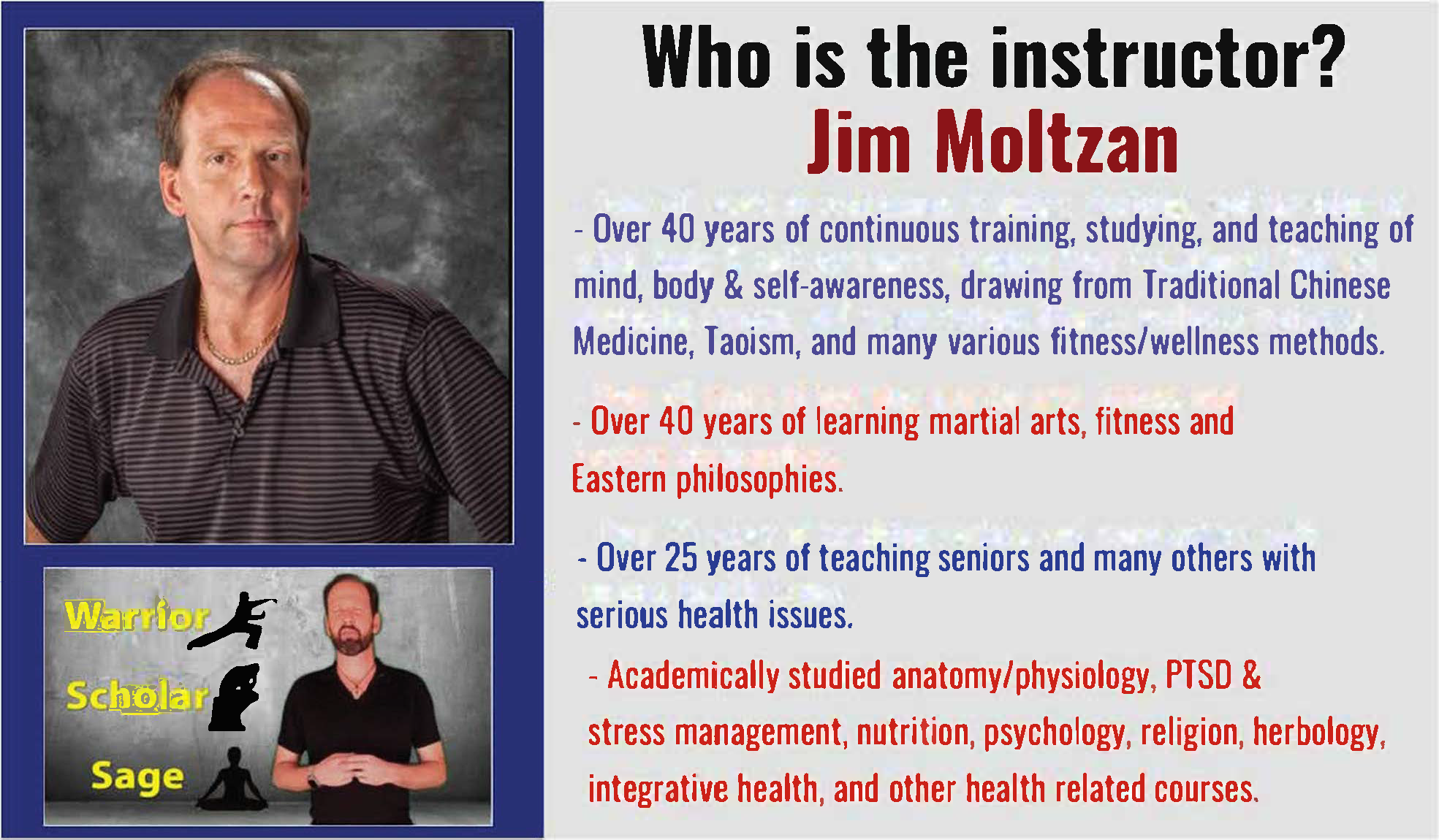
I teach and offer lectures about holistic health, physical fitness, stress management, human behavior, meditation, phytotherapy (herbs), music for healing, self-massage (acupressure), Daoyin (yoga), qigong, tai chi, and baguazhang.
Please contact me if you, your business, organization, or group might be interested in hosting me to speak on a wide range of topics related to better health, fitness, and well-being.
I look forward to further sharing my message by partnering with hospitals, wellness centers, VA centers, schools on all levels, businesses, and individuals who see the value in building a stronger nation through a healthier population.
I also have hundreds of FREE education video classes, lectures, and seminars available on my YouTube channel at:
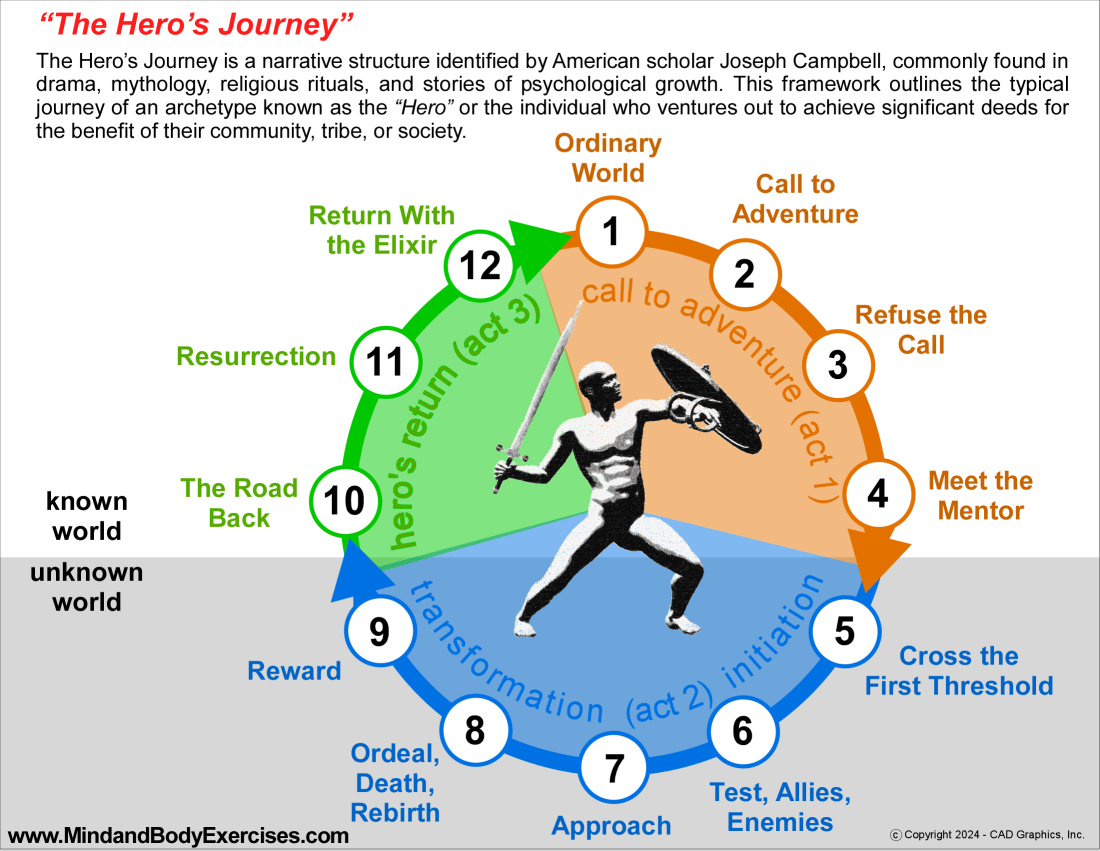
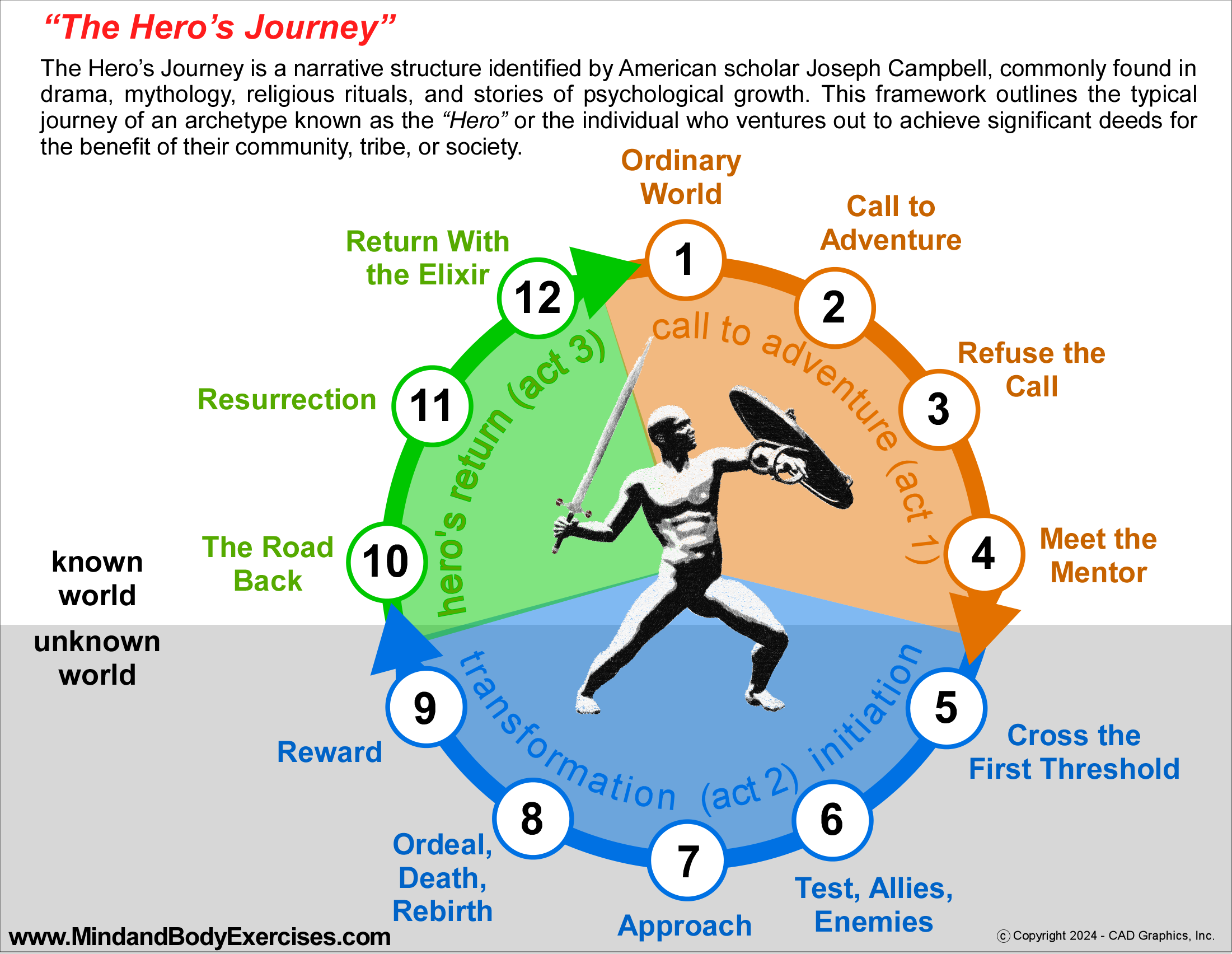
The Hero’s Journey outline can apply to the average person’s life by representing the various stages of growth and transformation that almost everyone experiences. In our own personal journeys, we may all experience different circumstances or perceptions. There is only one truth, but infinite perceptions for any particular event. In real life, this journey could look like facing major life changes, pursuing personal goals, or overcoming significant mental, physical, and even spiritual challenges.
Here’s how it might play out in the life of an everyday person:
The steps of the “Hero’s Journey” include:
1- THE ORDINARY WORLD: The hero is often unaware, uneasy, or facing internal conflict, is introduced in a relatable way, allowing the audience to connect with their personal situation or struggle. The hero’s background of environment, family, and personal history, is established, revealing a feeling of opposing forces that pull the hero in different directions, creating mental and physical tension. (REAL WORLD APPLICATION: We might feel dissatisfied or unsure about something but aren’t yet driven to make a change)
2 – THE CALL TO ADVENTURE: A change is introduced to the not-yet hero, either through external forces or an internal realization, which compels the hero to confront an initial shift in their life. Something happens that urges us to change—a new job offer, a health issue, a relationship shift, or simply a sense of restlessness pushing us to grow. (REAL WORLD APPLICATION: Something happens that urges us to change such as a new job offer, a health issue, a relationship shift, or simply a sense of restlessness pushing us to grow.)
3 – REFUSAL OF THE CALL: The hero initially resists the journey, feeling uncertainty, fear of the unknown or a desire to turn away. In some cases, another 3rd party character may voice these fears and the risks involved. (REAL WORLD APPLICATION:Most often, our first reaction is resistance. We might feel afraid, overwhelmed, or doubt if we’re capable of taking on the new challenge.)
4 – MEETING WITH THE MENTOR: The hero encounters an experienced guide who provides knowledge, wisdom, training, resources, or crucial advice for the journey ahead. The hero is forced or accepts to look inward to find courage and inner wisdom. (REAL WORLD APPLICATION: In real life, mentors come in many forms like family members, friends, a teacher, a therapist, or even an inspiring book or experience that gives us insight or guidance.)
5 – CROSSING THE THRESHOLD: At the end of the first act, the hero commits to leaving behind the “ordinary world” and stepping into a new realm, filled with unknown rules and values. (REAL WORLD APPLICATION: This is the moment we commit to the journey, stepping out of our comfort zone. It could be moving to somewhere else, leaving a job, or simply deciding to make a big life change.)
6 – TESTS, ALLIES, AND ENEMIES: The hero faces various challenges, cultivates alliances, and identifies challenges and adversaries in the new world. (REAL WORLD APPLICATION: On our journey forward, we may encounter challenges and discover who supports or hinders us. We might face setbacks, doubts or obstacles while finding allies who encourage us.)
7 – APPROACH: With newly forged alliances, the hero prepares for a major trial or challenge within this unfamiliar world. (REAL WORLD APPLICATION:As we get closer to our goal, we prepare for a major challenge. This could mean making a big presentation, taking a final exam, or confronting an important fear.)
8 – THE ORDEAL: Near the story’s midpoint, the hero reaches a pivotal moment in the “unknown world,” confronting injury, death or their deepest fear. This moment of confrontation brings about a form of transformation, rebirth or renewal. (REAL WORLD APPLICATION:This is the peak moment where we face a major hurdle, fear or obstacle, like overcoming a health crisis, finally letting go of a limiting belief, or facing a major confrontation. It feels like a personal “death and rebirth,” as we emerge stronger and changed.)
9 – THE REWARD: The hero claims the reward or treasure that results from facing their challenges. There may be a celebration, though there is often still a risk of losing the reward. (REAL WORLD APPLICATION: Having faced our ordeal, we gain something valuable like greater confidence, resilience, insight, or a concrete achievement that represents our growth.)
10 – THE ROAD BACK: Around two-thirds into the story, the hero is driven to finish the adventure, returning from the unknown world to ensure the reward makes it home. Sometimes a chase scene highlights the mission’s urgency and very possibly danger. (REAL WORLD APPLICATION:With new insight or skills, we may be driven to bring our growth back to our everyday lives, sometimes facing new challenges as we try to integrate our journey’s rewards.)
11 – THE RESURRECTION: At the story’s climax, the hero undergoes a final, intense test as they approach home. They are transformed by a last act of defying death, embracing rebirth, or a sacrifice of some major merit, reaching a higher state of completion. Through the hero’s actions, the initial conflicts find resolution. (REAL WORLD APPLICATION: Before fully returning to our “normal” life, we’re often tested again, reinforcing our inner transformation. This could mean facing a problem like the one we just faced before but responding differently due to our growth.)
12 – RETURN WITH THE ELIXIR: The hero returns or continues the journey, now possessing a reward, treasure (or elixir) with transformative power, both for the hero and for the world they return to. (REAL WORLD APPLICATION: Finally, we bring valuable aspects to our daily life, whether it’s wisdom, resilience, or a new perspective. Our journey may not only transform us, but often positively impacts those around us.)
In our real life, these stages might be less dramatic and more cohesive, and maybe even more blended together. The Hero’s Journey reminds us that life is a series of growth cycles, and each challenge we face can lead to transformation, making us more resilient, self-aware, and capable.
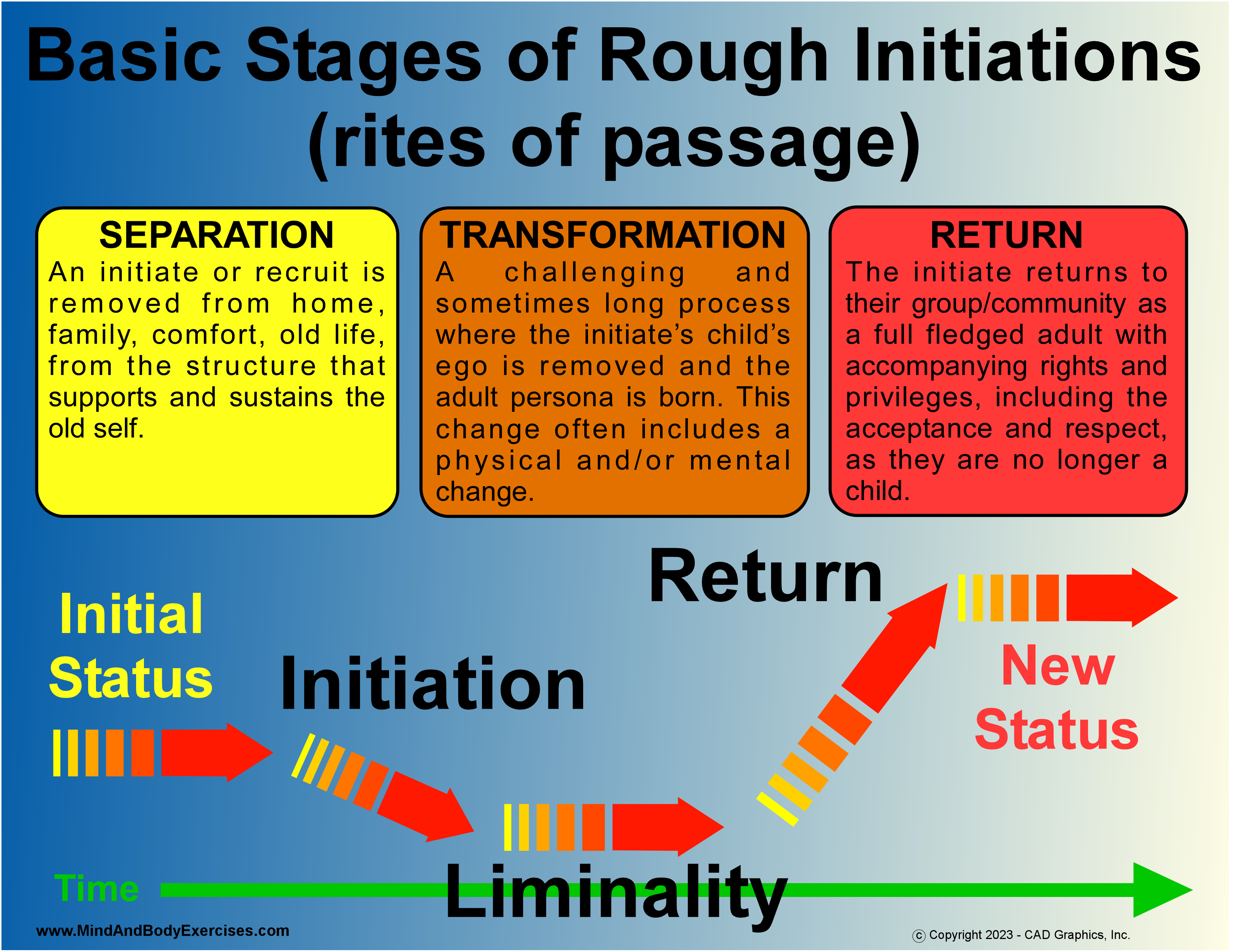
Rough initiations is another term for rites of passage, which can be ceremonial events that mark important transitions in an individual’s life. A rough initiation refers to the challenging aspects of an initiation process or symbolic ritual. These events often involve the change of one’s social status, roles, or responsibilities within a family, group or community. Initiations are a common element within rites of passage, taking various forms or presentations. Challenges may involve physical and/or psychological challenges of endurance, meant to push an individual to achieve their full potential, capacity or limits. By overcoming these challenges, the individual can demonstrate their willingness and qualifications to accept new roles or responsibilities within a particular group or community. Rough initiations are integral to various cultures and traditions around the world, where they are often designed specifically to assess an individual’s strength, fortitude, courage, resilience, and loyalty to a group or community. Details and particulars for rough initiations vary widely, but most have the underlying purpose of facilitating personal growth, strengthening of social bonds, and promoting a sense of identity and worth within the group.
I don’t think that our current American culture offers much in the way of positive reinforcement of any real “coming of age” initiations or rites of passage. Common American initiations over the years have typically been the introductions of smoking cigarettes, drinking of alcohol, driving our first automobile, graduation from high school, and religious ceremonies of confirmation, bar/bat mitzvahs and other initiations that usher the individual into adulthood. Some of these previous examples other than the religious ones, can on some level be loosely interpreted as Francis Weller defined initiation, as “a contained encounter with death.” Upon further reading of Francis Weller’s Rough Initiations, what first started to catch my attention is that not everyone experiences things quite the same way. For what may be traumatic for one individual might be trivial or an inconvenience for another. My understanding of trauma beyond the actual definition of events that our done to someone mentally and physically that manifest suffering to the individual, is that trauma most often comes at us unwelcomed, unannounced and usually free of a monetary charge. Initiations (rough or otherwise) on the other hand, are often welcomed, announced well ahead of time, seen as acceptance into adulthood, and for some there may be a monetary reward or financial fee in order for the initiation to be held. Trauma is firsthand experiences or witnessing of physical injury/violence, abusive/toxic environments, death of a loved one, etc. Modern day rough initiations might be seen in religious ceremonies, the first hunt/fishing, cold/hot plunge, an intense mountain hike, college all-nighter, fasting, isolation, sleep deprivation and other tests that may challenge someone to perform at higher levels of physical activity and mental discipline. Basically, trauma comes to us, whereas we may pursue rough initiations, or so I have come to understand. We are all quite literally wired differently in regard to our own physiological nervous system, that often helps us to interpret stimuli as either positive or negative to mental, physical, and spiritual well-being. I do think that other cultures, may still hold their initiations of upmost importance, as I have come to learn more about that of indigenous peoples throughout the world.
This is not a new concept as we can see examples from ancient times, where groups such as the Spartans, Romans, Vikings, Samurai, Mongols, the Knights Templar, Benedictines, Franciscans, Native Indigenous people worldwide, secret societies, and perhaps many others have had their own particular initiations and rites of passage. In more modern times, rough initiations can still be found in various presentations, although they may not be as common or standardized as some traditional cultural practices. Here are some examples:
Cultural or Social Initiations: Cultures, subcultures or social groups can have initiation rituals that require symbolic actions or engaging in challenging tasks that can range from endurance challenges to symbolic acts designed to demonstrate loyalty to the values of a group.
Fraternity/Sorority Hazing: Many organizations discourage, restrict and even ban hazing, however some fraternities and sororities still include initiation rituals that can be physically or emotionally challenging.
Sports Initiations: College and professional sports may have initiation rituals that involve rookies undergoing tasks or challenges, or participation in team-building events in order to demonstrate their commitment or loyalty to their team.
Military Training: Military basic training involves physically and mentally challenging tasks needed to prepare recruits for the demanding risks they may encounter in their roles as soldiers. Initiation activities may include intense physical fitness routines, such as “hell week,” and other psychological stress events that help to build discipline, resilience and camaraderie.
Specialized Training Programs: Elite military units, law enforcement agencies, first responder emergency teams and others may require their members to participate in stressful training which may be considered as extremely rough initiations, to ensure they are prepared for life and death situations.
Authors in the book and movie industry have played an enormous role in promoting this whole concept of rough initiations as can be seen in a seemingly endless stream of titles such as Star Wars, Harry Potter, Narnia, The Matrix and many, many others. Challenging initiations can help to cultivate a sense of belonging, camaraderie and commitment, however there is a nuanced relationship between beneficial rites of passage and detrimental hazing practices. Many organizations now deliberately discourage or restrict activities that can potentially put individuals at physical or mental risk, compromising their overall well-being. Most would agree that responsible and respectable initiation processes should focus on the individual’s personal growth, social connections, and instilling a positive sense of belonging.
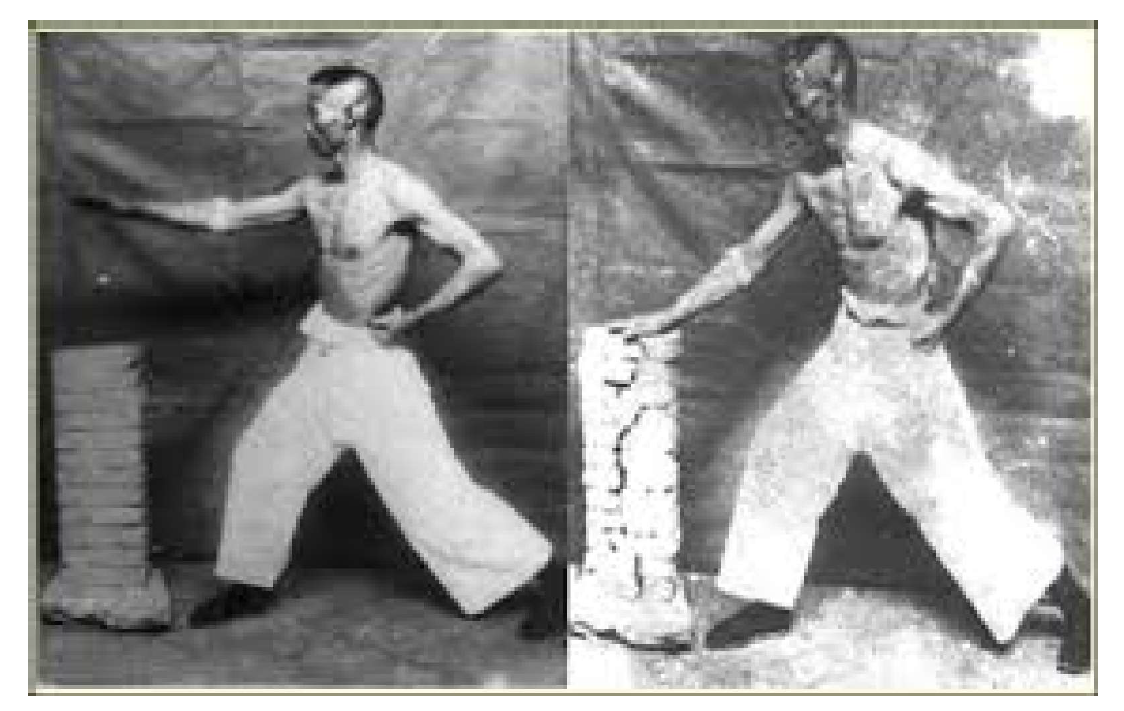
Iron Palm training (strategic trauma or rough initiations)
Reading Rough Initiations brought some memories back from my first years in my martial arts (cult)ure and having experienced many initiations. I refer to it as such because at this time of the early 1980’s, American and Eastern cultures from China and Korea did not exactly assimilate well with each other in the conservative Midwest. One person’s culture can very well be seen as another’s cult. This can be quite apparent as seen today regarding one’s religious, philosophical, and sometimes political beliefs. Even facets in pop culture, social issues and sports can reflect this divide between perspectives of what trends seem to have their own culture. With the former being said, the martial arts community of years past was often viewed as having its own unique culture as demonstrated in its traditions, rituals, and ceremonies. My lineage did indeed focus beyond the basic goal of self-defense, due to the deep Taoist and Buddhist roots of my teachers. I was not quite aware of this before my first introductions, but I would soon learn that most martial arts systems are indeed rooted in having a series of initiations or tests, designed to bring an individual at least from being physically and mentally weak to that of enhanced physical and mental strength, and for those interested in cultivating higher spiritual awareness. I too have sought out rough initiations or “voluntary suffering” in what I would later learn to be called strategic trauma. Intense exercise, meditation, fasting, sensory deprivation, isolation and other methods of self-cultivation can be considered types of self-induced strategic trauma. “Iron palm” training is one such method of self-induced trauma that I did willfully partake in. Mental, physical and self-awareness benefits can be achieved from skillfully hitting bags of dried beans, and then applying medicinal herbs and acupressure techniques thereafter to promote healing. I think when others recognize an individual for having accepted these challenges either on their own volition or with the guidance, encouragement, and assistance from others, these events are now transformed into initiations. We as a group, consisting of my teachers, peers, and later my students under my guidance, did heavily invest in Weller’s five variables of initiations that are the same used to heal individual trauma. These variables are community, ritual, the sacred, time and place. These components can help stabilize and anchor our inner dialogue, when either coping with traumatic life-changing events or self-cultivation.
I teach and offer lectures about holistic health, stress management, qigong, tai chi, baguazhang, meditation, phytotherapy (herbs), music for healing, self-massage, and Daoyin (yoga).
I look forward to further sharing more of my message by partnering with hospitals, wellness centers, VA centers, schools on all levels, businesses and individuals that see the value in building a stronger nation through building a healthier population. I also have hundreds of FREE education video classes, lectures and seminars available on my YouTube channel at:







 United Martial Arts Association