Sciatic Pain -What are Some Options?
This is very similar to my recent post on knee pain. Back, knee, shoulder, neck – it really is the same basic issue. What is your plan?
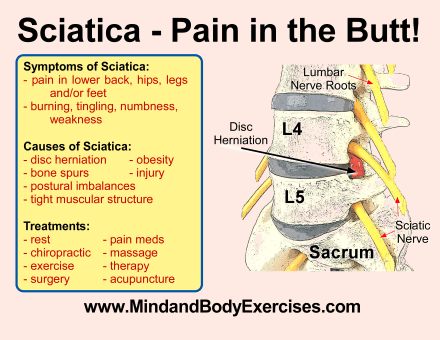
Become educated should be number 1, no?
- Give it a rest? Sit, stand or lie down?
- Ice or heat? When is one more beneficial?
- Keep active? When do you decide to get moving again?
- Go to your doctor? Chiropractor, physical therapist? Alternative exercise coach?
- Get an x-ray? MRI?
- Medicate? Anti-inflammatories (nsaids), opioids?
- Surgery? Microdiscectomy, spinal fusion, epideral?
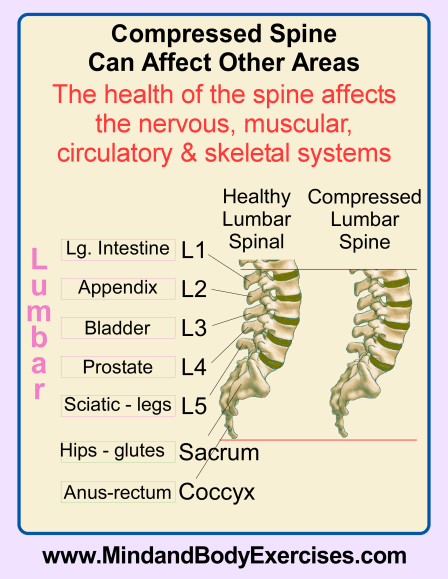
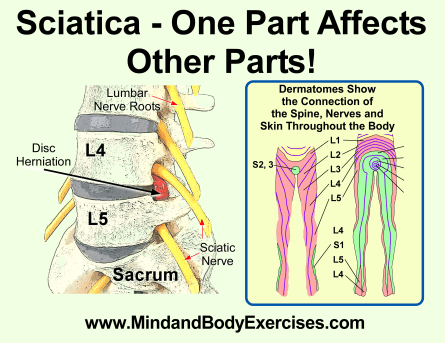
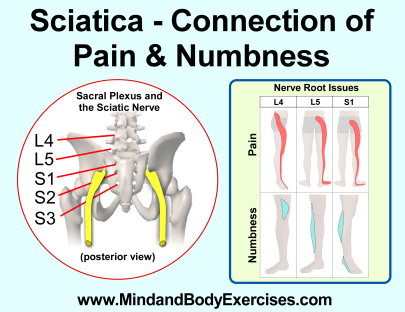
Depending upon your issues, maybe yes to all of the above. Without knowing how serious your injury is, it can be difficult to plot a course to relieve the pain and gain back confidence in your activities. You need to do the homework and research to become educated as to what injuries are typical and what the options are to move forward.
I am not a doctor nor claim to be. However, I have a different health, fitness and well-being background spanning almost 40 years. Starting martial training at the age of 16, I have continued training, studying and teaching ever since. Traditional Chinese medicine and qigong can also be studied within some martial arts lineages, which I have pursued. Martial arts is deeply connected to fitness and health, aside from the obvious self-defense benefits. My fellow instructors (and students) and I were taught that it was easier but not ethical to injure someone unless justified. More honorable was to heal injuries or train and teach to not become injured.
The point of this article is not to dissuade anyone from gaining medical treatment. But rather to encourage the acquiring of information and learning what ones options are before committing to a surgical procedure that may or might not improve your current situation. There is always a risk of having a worse set of circumstances after the procedure. There is not much lost nor risk of trying non-impact exercises, other than ones time and effort. If the exercises don’t produce the desired results of pain reduction and back stability, one can always elect to have the surgical procedure afterwards, which will undoubtedly require pain meds, physically therapy and exercises after surgery anyway. Pay now or pay later – another term often used in the healthcare industry.
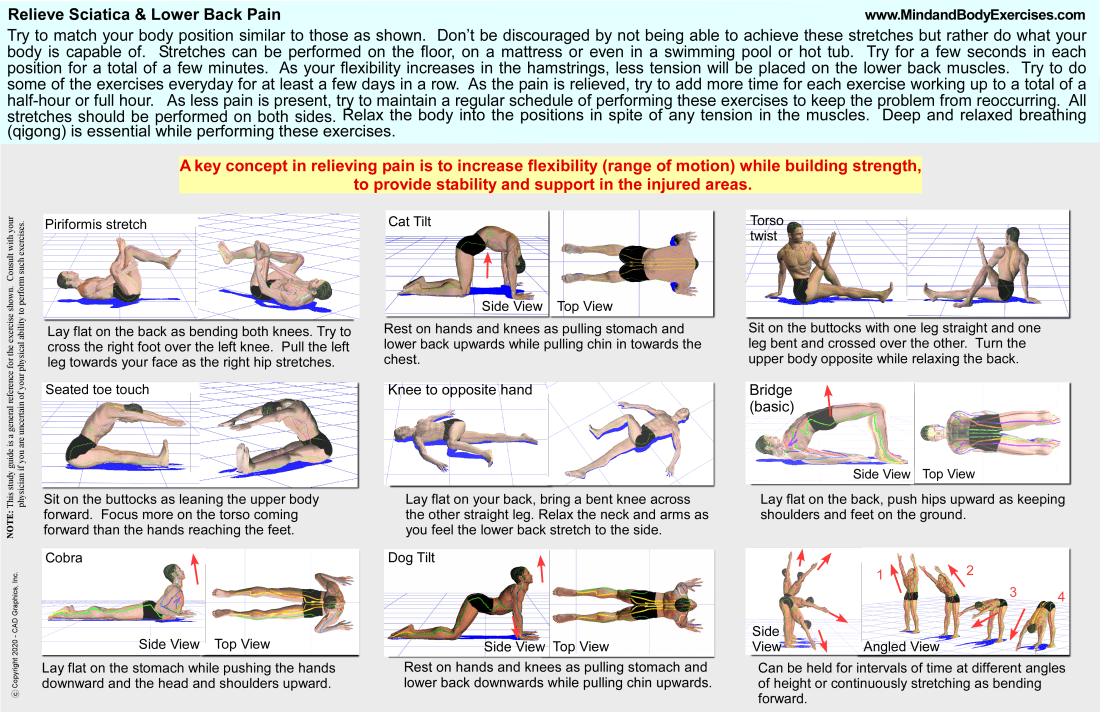
The above exercises are a sample of various yoga and qigong type of movements that can offer relief of pain for some individuals. Again, it is imperative that the individual becomes educated and aware of their particular situation is and what movements will help or hinder their body.
Be well, stay health, be wise.
Jim Moltzan
www.MindAndBodyExercises.com
https://www.facebook.com/MindAndBodyExercises/
https://www.youtube.com/c/MindandBodyExercises
https://mindandbodyexercises.wordpress.com/





 United Martial Arts Association