Quantum Consciousness and Healing

Bridging Science, Mind–Body Practices, and Universal Law

Quantum physics, once confined to subatomic phenomena, has gradually reshaped how we understand life, health, and consciousness. Its principles of nonlocality, superposition, and the observer effect are beginning to inform research in medicine, psychology, and ancient healing systems such as Traditional Chinese Medicine (TCM) and Ayurveda. These traditions, long grounded in concepts of subtle energy and consciousness, align remarkably with emerging scientific insights into mind–body interaction and the creative role of awareness in shaping reality.
Consciousness and the Quantum Field

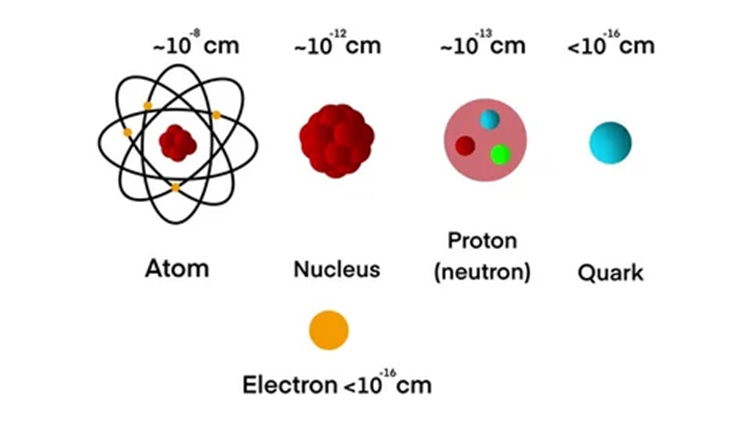
Quantum theory proposes that all matter arises from a field of potential, or an underlying energetic continuum known as the quantum field. This mirrors spiritual concepts of Qi, Prana, and universal consciousness, which describe an intelligent energy animating and interconnecting all life. Just as the brain functions as a receiver of consciousness, the body is a conductor of subtle energies flowing through energy meridians or nadis. In both frameworks, reality manifests when consciousness interacts with potential, giving form to experience.

This synthesis challenges materialism’s assumption that consciousness is a mere by-product of brain activity. Instead, consciousness is the primary reality, a view increasingly supported by researchers like Amit Goswami (1995) and Rupert Sheldrake (2012), whose theories of morphic resonance suggest that patterns of thought and emotion can influence both biology and behavior across space and time.

The Placebo Effect and Quantum Observation

The placebo effect, where healing occurs through belief and expectation rather than pharmacological action, serves as a measurable example of consciousness influencing physical outcomes. Neuroimaging studies show that patients receiving inert treatments can trigger endorphin release, alter brain activity, and even induce measurable physiological change (Benedetti, 2014). From a quantum perspective, the placebo effect exemplifies the observer effect: belief and attention collapse probabilistic potentials into tangible results.

In this context, healing becomes less about external substances and more about the alignment of perception, belief, and intention. When the mind focuses coherently, whether through faith, meditation, or energy practice, it organizes biological systems toward balance. This parallels Traditional Chinese Medicine’s (TCM) notion that mental states influence Qi circulation and Ayurveda’s understanding that consciousness imbalance is the root of disease (Chopra, 2015).

Qigong and Tai Chi are living laboratories of quantum coherence in action. Both disciplines train practitioners to harmonize body, breath, and mind, cultivating a state of flow or resonance that optimizes internal energy fields. Research has shown that these practices improve heart rate variability, reduce inflammation, and regulate brainwave synchrony, evidence of the body entering a quantum-coherent state (Jahnke et al., 2010).

In quantum terms, Qigong and Tai Chi operate as biological resonance systems. When practitioners focus attention on energy flow (Qi), they create measurable electromagnetic fields detectable around the body. These biofields, according to biophysicist Fritz-Albert Popp, may represent coherent light emissions or biophotons, quantum particles that facilitate communication between cells (Popp & Beloussov, 2003). Thus, ancient energy practices may function as methods for tuning the human organism into harmony with the quantum field.

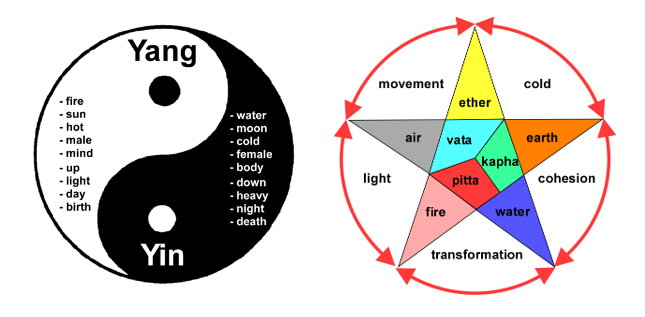
Traditional Chinese Medicine (TCM) views the universe and body as reflections of a dynamic balance between yin and yang, two complementary forces governing all existence. Similarly, Ayurveda describes health as a balance of the three doshas of Vata, Pitta, and Kapha, energetic principles derived from consciousness manifesting through the five elements. Both systems recognize that disease begins as a disruption in the flow or coherence of subtle energies before physical symptoms appear.

Quantum physics validates these insights by demonstrating that physical reality is not solid but vibrational. Just as Qi or Prana represent life energy, subatomic particles are not objects but energy waves interacting within fields. Healing, therefore, involves restoring resonance by realigning vibrational frequencies between the body’s systems and the larger universal field (Capra, 1999). Meditation, herbal medicine, sound, and mindful movement all serve to reestablish this resonance.
Conscious Mind, Subconscious Patterns, and Healing

There exist dual levels of mind, where the conscious and subconscious and their interplay shape experience. Modern psychoneuroimmunology confirms that subconscious beliefs influence immune function and cellular activity. Placebo and nocebo studies illustrate how deep-seated emotions can either heal or harm, reinforcing TCM’s emphasis on emotional balance and Ayurveda’s stress on sattvic (pure) consciousness as the foundation of well-being.

Meditation and Qigong act as tools for reprogramming the subconscious, quieting habitual thought patterns, and entraining the nervous system to a coherent rhythm. Through neuroplasticity, repeated focus on compassion, gratitude, or peace rewires neural circuits, embodying the principle that mind precedes matter (Doidge, 2007).

Ethical Integrity and Vibrational Clarity

Quantum and spiritual traditions agree that coherence requires ethical and emotional alignment. Dishonesty, anger, or greed introduce vibrational noise that distorts the clarity of consciousness. Conversely, gratitude, service, and moral integrity raise vibrational resonance, enabling access to higher frequencies of the universal field. This explains why moral cultivation is central in Confucian, Taoist, and Vedic systems, and is considered essential to effective healing and manifestation.
Toward an Integrated Science of Consciousness and Health

As science evolves, the boundaries between physics, medicine, and spirituality continue to blur. Quantum biology now examines how wave interference, entanglement, and energy coherence operate within living cells, suggesting that consciousness may be an organizing force behind biological order (Al-Khalili & McFadden, 2014). The same laws governing particles in superposition may govern energy in meridians or chakras.

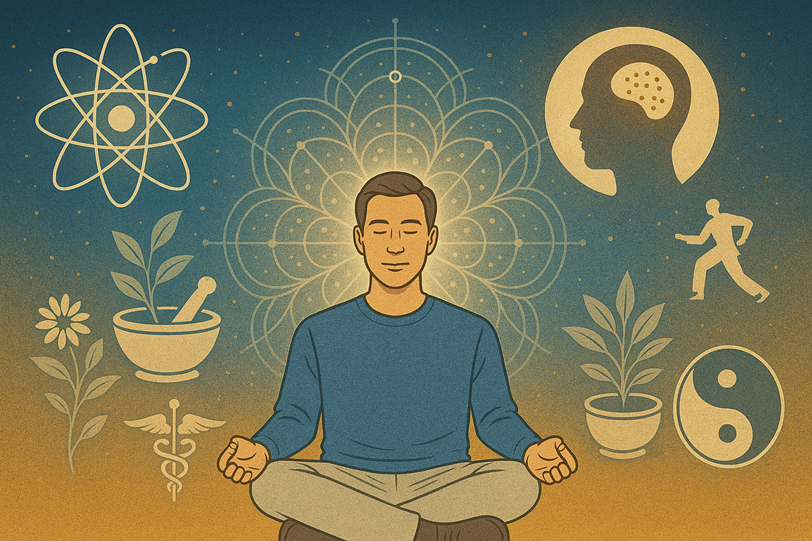
The integration of quantum principles with TCM, Ayurveda, Qigong, and Tai Chi offer a profound framework for whole-person healing.  One that honors both physical mechanisms and the metaphysical dimensions of consciousness. These traditions, long dismissed as mystical, now gain empirical support as science rediscovers what sages have taught for millennia: that consciousness, energy, and matter are inseparably one.

Quantum physics invites humanity to reconsider its role in creation not as passive observers, but as conscious participants in the unfolding of reality. Practices like meditation, Qigong, and Tai Chi exemplify how coherent intention can modulate physiology and align with universal laws. The placebo effect further affirms that belief, emotion, and attention are powerful instruments of healing. Integrating ancient wisdom with modern physics reveals a unified vision of human potential where health, consciousness, and the cosmos resonate in a single quantum symphony.

References:

Al-Khalili, J., & McFadden, J. (2014). Life on the edge: The coming of age of quantum biology. Crown. https://djvu.online/file/L7pTHgmdok2kx

Benedetti, F. (2014). Placebo effects. https://doi.org/10.1093/acprof:oso/9780198705086.001.0001

Capra, F. (1999). The Tao of physics: An exploration of the parallels between modern physics and Eastern mysticism. Shambhala. https://archive.org/details/fritjof-capra-tao-of-physics-ocr

Chopra, D. (2015). Quantum healing: Exploring the frontiers of mind/body medicine. Harmony.

Doidge, N. (2007). The brain that changes itself. Viking

Goswami, A., Reed, R. E., & Goswami, M. (1993). The Self-Aware Universe: How consciousness creates the material world. https://www.thejungletimes.com/page/downloads/files/Amit%20Goswami-The%20Self-Aware%20Universe-Tarcher%20(1995).pdf

Jahnke, R., Larkey, L., Rogers, C., Etnier, J., & Lin, F. (2010). A comprehensive review of health benefits of qigong and tai chi. American journal of health promotion : AJHP24(6), e1–e25. https://doi.org/10.4278/ajhp.081013-LIT-248

Popp, F. A., & Beloussov, L. (Eds.). (2003). Integrative biophysics: Biophotonics. Springer.

Sheldrake, R. (2012). The Scientific Creed. The Science Delusion: Freeing the Spirit of Enquiry. Coronet Publications.
http://blogspersonals.ara.cat/desdelparadis/2018/11/15/the-scientific-creed/

The Future of Human Development  – Homo Sanctus or Homo Technologicus?

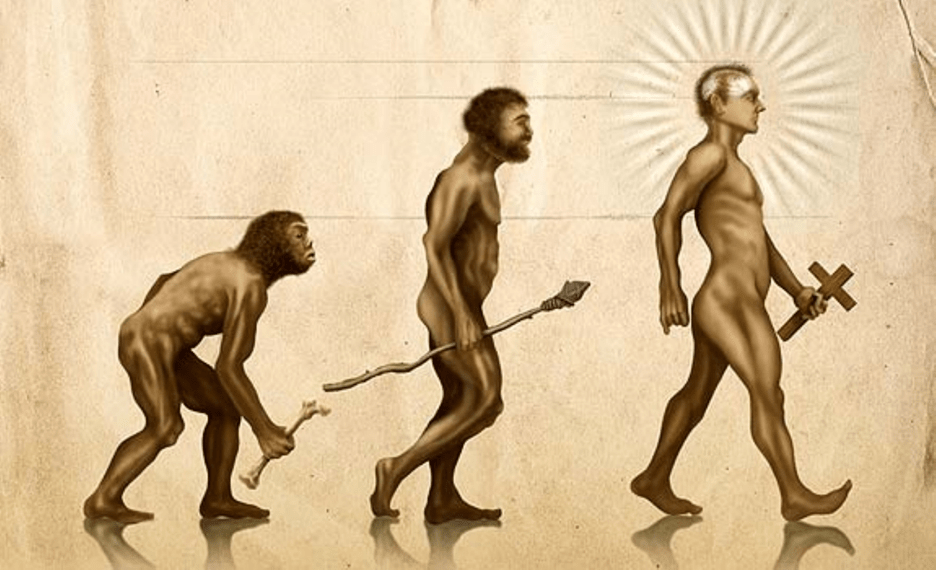
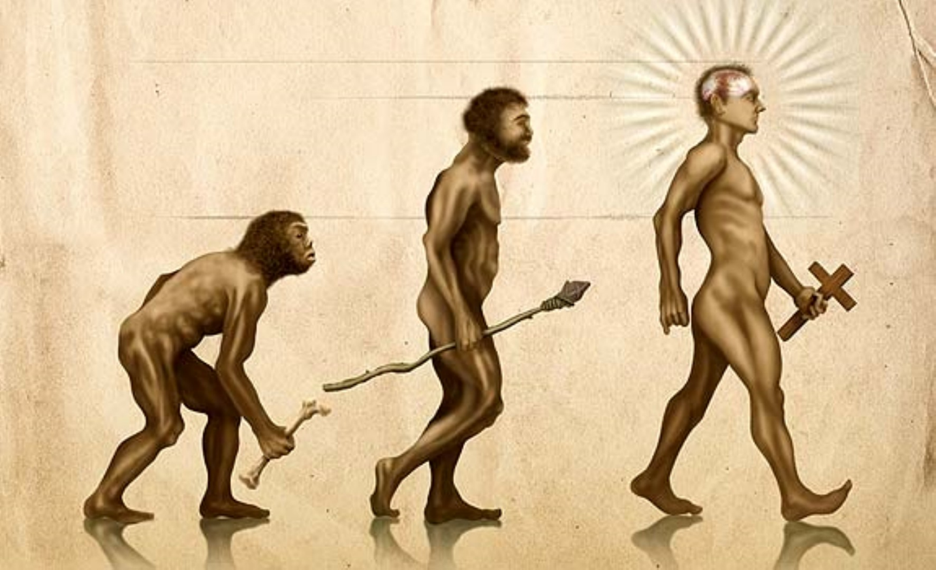
Human evolution has traditionally been described through biological shifts, evolving from Homo habilis, Homo erectus, and Homo sapiens. Yet in the 21st century, the forces shaping human development are increasingly cultural, technological, and behavioral, not solely genetic. Two contrasting models have emerged in scholarly, philosophical, and sociocultural discourse: the spiritually and ethically “evolved” Homo Sanctus, and the digitally dependent, socially attenuated Homo Technologicus.

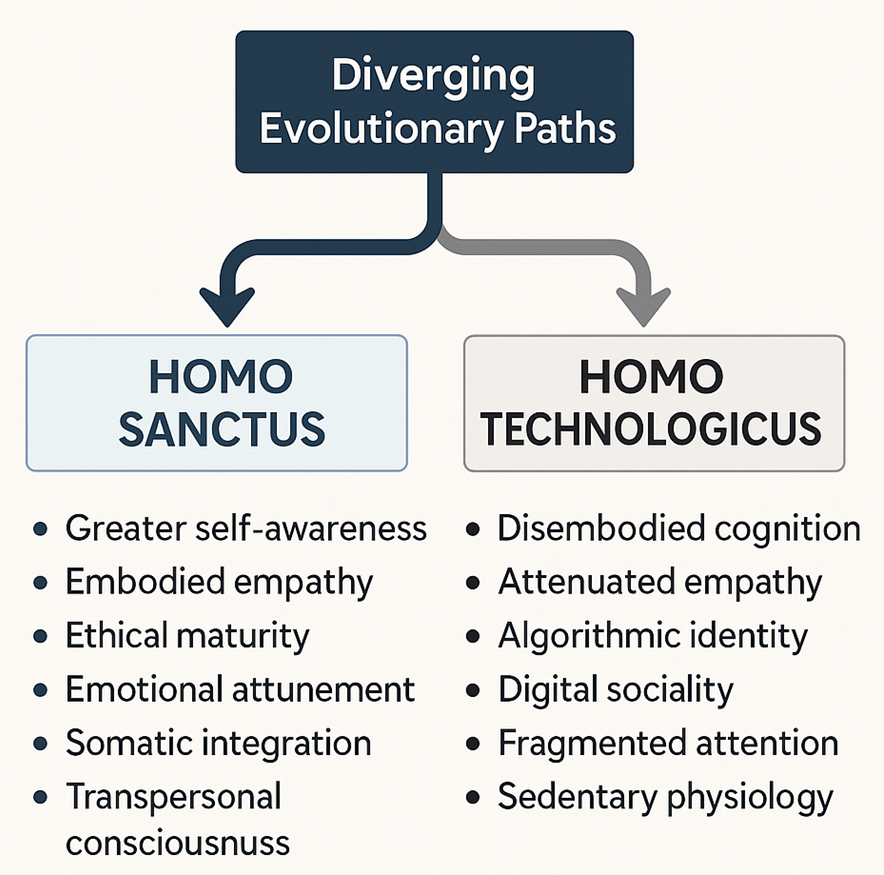
These models represent divergent paths of human adaptation to radically new environments. One emphasizes deeper consciousness, embodied awareness, and integrated development; the other reflects disembodied cognition, algorithmic identity, and diminishing interpersonal fluency. When viewed through the lenses of psychology, epigenetics, neuroscience, and social evolution, these models are not merely metaphors, but they reflect distinct adaptive pressures shaping tomorrow’s humans.

This essay synthesizes both trajectories, integrates current scientific literature, and positions them within a holistic, mind–body–spirit framework aligned with martial arts, qigong, and embodied wisdom traditions.

(Redazione & Redazione, 2025)

The term Homo Sanctus appears in spiritual psychology, evolutionary theology, and transpersonal philosophy to describe a “next-stage human” characterized by higher ethical consciousness, embodied awareness, and profound relational intelligence (Mukhopadhyay, 2021). Rather than a biological species, Homo Sanctus is a developmental ideal, where a human who transcends ego-fragmentation and embodies unity between body, mind, society, and spirit.

Core characteristics of Homo Sanctus include:

  • Embodied presence: deep interoception, somatic awareness, and emotional regulation
  • Ethical maturity: compassion, integrity, service
  • Integration of opposites: harmonizing rationality and intuition, self and other
  • Transpersonal consciousness: connectedness to something larger than the self
  • Cohesive identity: clarity of values, meaning, and purpose

This ideal parallels traditions such as the Taoist zhenren (“true person”), Confucian junzi (“noble person”), the Buddhist bodhisattva, and Christian spiritual maturity (Wilber, 2000). From an Eastern-martial perspective, this represents the Warrior–Scholar–Sage archetype: strong in body, disciplined in mind, and aligned in spirit.

Importantly, Homo Sanctus evolves through cultivation, not accident. Practices such as tai chi, qigong, meditation, dao yin, and martial mastery refine the nervous system, harmonize the meridian networks, and deepen interoception (Wayne & Kaptchuk, 2008). Such individuals become more resilient, socially attuned, and less susceptible to technological fragmentation.

In contrast, emerging research indicates that modern humans, especially younger generations, are undergoing a decline in face-to-face relational skills, empathy, and social nuance. This pattern reflects a different adaptive pathway: Homo Technologicus, a human shaped primarily by digital environments.

Key drivers include:

  • heavy reliance on text-based communication
  • diminished exposure to real-time social cues
  • algorithmic reinforcement loops
  • parasocial relationships and AI companions
  • chronic sedentary behavior
  • online identity construction
  • declining sexual activity and pair bonding

This developmental pattern is supported by evidence showing measurable declines in empathy over the past 30 years (Konrath et al., 2011), reductions in attention span associated with digital multitasking (Loh & Kanai, 2016), and decreased interpersonal resilience due to avoidance of embodied conflict (Kross et al., 2013).

Human communication is 70–93% nonverbal (Burgoon et al., 2016). Digital communication removes:

  • microexpressions
  • tone, cadence, prosody
  • posture and gesture
  • physiological co-regulation

The brain circuits responsible for reading these cues, including the mirror neuron system, the insula, and the temporoparietal junction, atrophy with disuse (Iacoboni, 2009). Adolescents who use screens more than three hours daily show impairments in social brain network integration (Twenge & Campbell, 2018). This is evolutionary pressure in real time.

Sexual activity among young adults has plummeted, with many reporting no sexual activity for months or years, often replaced by digital substitutes (Ueda et al., 2020). Chronic screen exposure, pornography addiction, disrupted circadian rhythms, and social anxiety all reduce libido and mating motivation via hormonal pathways, especially dopamine and testosterone regulation (Prause & Pfaus, 2015).

From an evolutionary lens, those who do not reproduce are naturally selected out. This creates behavioral selection pressure for traits that preserve reproductive drive and embodied bonding.

Sedentary lifestyles, disrupted sleep patterns, virtual emotional engagement, and constant digital stimulation contribute to:

  • metabolic dysfunction
  • chronic low-grade inflammation
  • decreased fertility
  • hormonal disruption
  • accelerated aging

Sedentary behavior reduces mitochondrial efficiency and alters hormonal pathways related to stress, libido, and mood (Booth et al., 2012). Chronic stress, sleep disruption, and social deprivation produce epigenetic changes that can pass to offspring (Nestler, 2014).

Examples include:

  • altered DNA methylation affecting stress response genes
  • sperm epigenetic damage from obesity and inactivity
  • maternal circadian disruption impairing offspring metabolic regulation

Thus, today’s lifestyle patterns may literally reshape the biological baseline of future generations, even without genetic mutation.

Taken together, contemporary conditions create a bifurcated evolutionary trajectory:

Path A: Homo Technologicus / Homo Fragmentus

Characterized by:

  • reduced interpersonal intelligence
  • emotional outsourcing to AI
  • fragmented identity
  • dopamine dysregulation
  • decreased libido and reproduction
  • digital tribalism
  • low distress tolerance
  • sedentary physiology
  • weakened mind–body integration

Over generations, this pathway selects for:

  • reduced mating drive
  • increased digital dependency
  • lower embodied cognition

This is not dystopian fiction, this is ongoing.

Path B: Homo Sanctus / Homo Integralis

Characterized by:

  • strong somatic awareness
  • embodied empathy
  • resilience to stress
  • integrated spiritual-ethical development
  • intentional cultivation (qigong, tai chi, martial arts)
  • disciplined nervous system
  • strong social bonds
  • meaningful service
  • stable identity

This pathway reflects the continuation of human strengths that enabled our survival for 300,000 years, community, embodiment, adaptability, and consciousness.

My life’s work of martial arts, qigong, Taoist philosophy, and holistic health, directly counters the fragmentation of Homo Technologicus.

Embodied practices strengthen:

  • vagal tone
  • emotional regulation
  • stress resilience
  • interoception
  • empathy
  • ethical clarity
  • community cohesion
  • nervous system balance

Tai Chi, for example, enhances functional connectivity in brain regions related to attention, emotion, and social cognition (Tao et al., 2016). Meditation thickens areas of the brain involved in compassion and self-regulation (Lazar et al., 2005). Qigong improves heart rate variability, endocrine balance, and neuroimmune communication (Jahnke et al., 2010).

In this context, the true “next stage” of human evolution may not be technological augmentation but re-embodiment, integration, and cultivation, aligning with the ancient ideal of Homo Sanctus.

Conclusion

Humanity stands at a developmental crossroads. One path leads toward disembodied cognition, digital dependence, diminished interpersonal capacities, and biological decline, with perhaps the emergence of Homo Technologicus and Homo Fragmentus. The other leads toward embodied presence, ethical wholeness, social coherence, and heightened consciousness, or the pathway of Homo Sanctus and Homo Integralis.

This evolutionary divergence is not predetermined. It is shaped by choices, practices, environments, and values. Through holistic training, martial arts, breathwork, qigong, and the cultivation of meaning, humans can choose to evolve toward greater integration rather than fragmentation.

My work of writings, and teachings sit firmly within this integrative lineage. In a world moving toward digital disembodiment, the embodied path has never been more necessary or more evolutionary.

Comparison Table: Emerging Human Trajectories

DimensionHomo SanctusHomo Integralis  (holistic path)Homo TechnologicusHomo Fragmentus
Core IdentitySpiritually evolved, ethically matured humanFully embodied, integrated mind–body–spirit developmentHuman identity shaped by technology, algorithms, digital environmentsFragmented sense of self shaped by dopamine loops, isolation, and virtual life
ConsciousnessTranspersonal, expansive, meaning-drivenHigh interoception, self-awareness, balanced cognitionExternally directed, attention hijacked by devicesScattered, reactive, overstimulated consciousness
Social IntelligenceDeep empathy, compassion, relational wisdomStrong interpersonal presence, face-to-face fluencyDigital sociality replacing real interactionLoss of nuance, reduced empathy, decreased communication skills
Emotion RegulationStable, grounded, ethically alignedPractices that strengthen vagal tone, breath, resilienceOutsourced to technology (apps, AI)Dysregulated, impulsive, avoidance-based
EmbodimentHarmonized body–mind–spirit; somatic integrationTai chi, qigong, breathwork, martial arts cultivate coherenceSedentary lifestyle, physical disengagementPhysically weakened; poor posture, low vitality
Motivational DrivePurpose, service, meaningDiscipline, intentional cultivation, self-developmentDopamine-driven novelty-seekingAnhedonia, apathy, low libido
Reproductive BehaviorStrong bonding, stable relationshipsHealthy sexual energy and emotional intimacyDeclining libido; digital substitutesSexual avoidance, collapse of long-term pair bonding
Health TrajectoryBalanced hormones, strong immunityHigh resilience, longevity potentialMetabolic dysfunction, circadian disruptionChronic stress, inflammatory burden, poor biological function
Connection to RealityEmbodied presence, clear perceptionIntegration of physical, mental, and higher awarenessSimulation-based worldviewDetachment from reality, dissociation, escapism
Developmental PathwaySelf-cultivation → ethical maturation → consciousness expansionSomatic calibration → iterative self-cultivation → transmutationConvenience → dependence → cognitive offloadingInterruption → fragmentation → decline
Long-Term Evolutionary OutcomeHomo Sanctus (ideal human maturity)Homo Integralis (embodied evolutionary lineage)Homo Technologicus (digitally adapted)Homo Fragmentus (socially diminished)

References:

Booth, F. W., Roberts, C. K., & Laye, M. J. (2012). Lack of exercise is a major cause of chronic diseases. Comprehensive Physiology, 2(2), 1143–1211. https://doi.org/10.1002/cphy.c110025

Burgoon, J.K., Guerrero, L.K., & Manusov, V. (2021). Nonverbal Communication (2nd ed.). Routledge. https://doi.org/10.4324/9781003095552

Iacoboni, M. (2009). Mirroring people: The new science of how we connect with others. Picador.

Jahnke, R., Larkey, L., Rogers, C., Etnier, J., & Lin, F. (2010). A comprehensive review of health benefits of qigong and tai chi. American journal of health promotion : AJHP, 24(6), e1–e25. https://doi.org/10.4278/ajhp.081013-LIT-248

Konrath, S., O’Brien, E., & Hsing, C. (2011). Changes in dispositional empathy in American college students over time. Personality and Social Psychology Review, 15(2), 180–198. https://doi.org/10.1177/1088868310377395

Kross, E., Verduyn, P., Demiralp, E., et al. (2013). Facebook use predicts declines in subjective well-being. PLoS ONE, 8(8), e69841. https://doi.org/10.1371/journal.pone.0069841

Lazar, S. W., Kerr, C. E., Wasserman, R. H., et al. (2005). Meditation experience is associated with increased cortical thickness. NeuroReport, 16(17), 1893–1897. https://doi.org/10.1097/01.wnr.0000186598.66243.19

Loh, K. K., & Kanai, R. (2016). How has the Internet reshaped human cognition? The Neuroscientist, 22(5), 506–520. https://doi.org/10.1177/1073858415595005

Mukhopadhyay, A. K. (2021). Science of information. ResearchGate. https://www.researchgate.net/publication/350948703_Science_of_Information

Nestler E. J. (2014). Epigenetic mechanisms of depression. JAMA psychiatry, 71(4), 454–456. https://doi.org/10.1001/jamapsychiatry.2013.4291

Prause, N., & Pfaus, J. (2015). Viewing Sexual Stimuli Associated with Greater Sexual Responsiveness, Not Erectile Dysfunction. Sexual medicine, 3(2), 90–98. https://doi.org/10.1002/sm2.58

Redazione, & Redazione. (2025, January 17). Homo technologicus, homo spiritualis. Trascendente Digitale. https://www.trascendentedigitale.it/primaria/metafisica/homo-technologicus-homo-spiritualis/

Tao, J., Liu, J., Egorova, N., Chen, X., Sun, S., Xue, X., Huang, J., Zheng, G., Wang, Q., Chen, L., & Kong, J. (2016). Increased Hippocampus-Medial Prefrontal Cortex Resting-State Functional Connectivity and Memory Function after Tai Chi Chuan Practice in Elder Adults. Frontiers in aging neuroscience, 8, 25. https://doi.org/10.3389/fnagi.2016.00025

Twenge, J. M., & Campbell, W. K. (2018). Associations between screen time and lower psychological well-being among children and adolescents. Preventive Medicine Reports, 12, 271–283. https://doi.org/10.1016/j.pmedr.2018.10.003

Ueda, P., Mercer, C. H., Ghaznavi, C., & Herbenick, D. (2020). Trends in frequency of sexual activity and number of sexual partners among adults aged 18 to 44 years in the US, 2000-2018. JAMA Network Open, 3(6), e203833. https://doi.org/10.1001/jamanetworkopen.2020.3833

Wayne, P. M., & Kaptchuk, T. J. (2008). Challenges inherent to t’ai chi research: part I–t’ai chi as a complex multicomponent intervention. Journal of alternative and complementary medicine (New York, N.Y.), 14(1), 95–102. https://doi.org/10.1089/acm.2007.7170a

Wilber, K. (2000). Integral psychology: Consciousness, spirit, psychology, therapy. Shambhala.

Understanding the Korean Lunisolar Calendar and Mystical Time Cycles

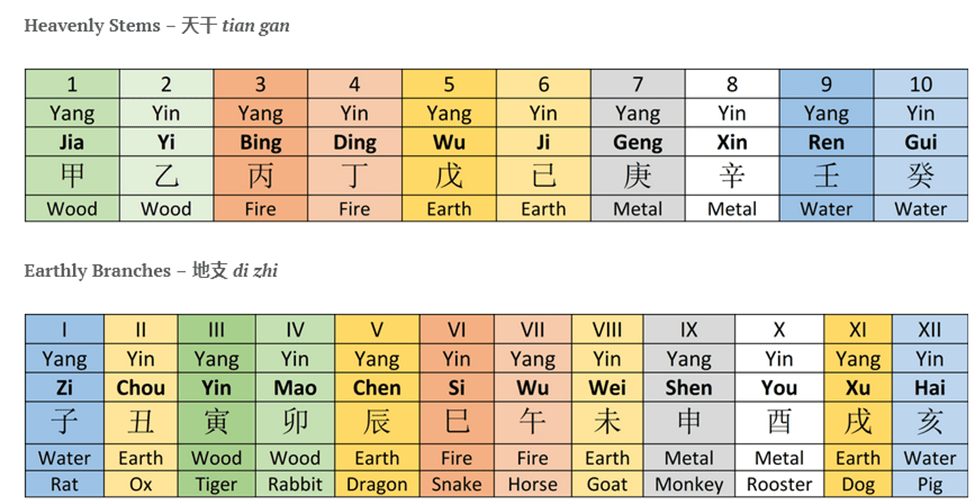
NumberStemElementPolarityDirection
1갑 (Gap)WoodYangEast
2을 (Eul)WoodYinEast
3병 (Byeong)FireYangSouth
4정 (Jeong)FireYinSouth
5무 (Mu)EarthYangCenter
6기 (Gi)EarthYinCenter
7경 (Gyeong)MetalYangWest
8신 (Sin)MetalYinWest
9임 (Im)WaterYangNorth
10계 (Gye)WaterYinNorth

BranchAnimalElementDirection
자 (Ja)RatWaterNorth
축 (Chuk)OxEarthNNE
인 (In)TigerWoodNE
묘 (Myo)RabbitWoodEast
진 (Jin)DragonEarthESE
사 (Sa)SnakeFireSE
오 (O)HorseFireSouth
미 (Mi)GoatEarthSSW
신 (Sin)MonkeyMetalSW
유 (Yu)RoosterMetalWest
술 (Sul)DogEarthWNW
해 (Hae)PigWaterNW

References

Heavenly stems and earthly branches. (n.d.). https://www.hko.gov.hk/en/gts/time/stemsandbranches.htm?utm_source=chatgpt.com

Kim, C. (2018). Korean shamanism. In Routledge eBooks. https://doi.org/10.4324/9781315198156

Lee, J. Y. (1981). Korean Shamanistic rituals. In Leo Laeyendecker & Jacques Waardenburg (Eds.), Religion and Society (Vol. 12). Mouton Publishers. https://api.pageplace.de/preview/DT0400.9783110811377_A33483020/preview-9783110811377_A33483020.pdf?utm_source=chatgpt.com

Yoon, H. (Ed.). (2017). P’ungsu: A Study of Geomancy in Korea. State University of New York Press. https://doi.org/10.2307/jj.18254509

Wu, S. (2005). Chinese Astrology: Exploring the Eastern Zodiac. Tuttle Publishing. https://archive.org/details/chineseastrology0000wush

The Student Becomes the Master, and the Master Becomes the Student

Across human history, the progression from student to master has symbolized growth, transformation, and the unfolding of wisdom. This dynamic relationship is not a simple ascent from ignorance to knowledge but a cyclical process of continual renewal. The journey encompasses humility, discipline, and self-realization, leading to a profound paradox: when the student attains mastery, the master must again become a student. This recursive pattern reflects the principles of Eastern philosophy, particularly Taoist and Confucian thought and aligns with modern educational theories emphasizing lifelong learning and self-reflection.

The Student’s Path Toward Mastery

The journey begins with a recognition of one’s limitations and a willingness to learn. Confucius emphasized humility and perseverance as the foundations of wisdom, observing that “to learn without thinking is labor lost; to think without learning is perilous” (Analects 2:15; Confucius, trans. 1997). In this early stage, the student relies on imitation and structured practice. The discipline of repetition is common to both martial and academic traditions, laying the groundwork for understanding.

According to Dreyfus and Dreyfus’s (1980) model of skill acquisition, learners progress through stages from novice to expert, eventually developing intuition born of experience. In martial arts or philosophy, this phase marks the transition from external technique (jing) to internal essence (shen). As the student refines skill through practice and reflection, understanding becomes embodied knowledge, not merely intellectual comprehension.

Taoist philosophy describes this evolution as harmony between wu wei (effortless action) and ziran (naturalness), where mastery manifests as unselfconscious expression (Laozi, trans. 1963). The master no longer performs from memory but from presence. This state of integration unites form and spirit, leading to authentic mastery.

The Master’s Return to Studenthood

True mastery dissolves the illusion of finality. As Zen teachings remind us, “In the beginner’s mind there are many possibilities, but in the expert’s there are few” (Suzuki, 1970, p. 21). The master who clings to certainty ceases to evolve. Thus, mastery demands a return to humility, with a willingness to once again become the student.

In this reversal, the teacher learns from experience, from new disciplines, and from students themselves. This concept parallels Schön’s (1992) model of reflective practice, wherein professionals continually re-examine their assumptions and adapt to changing circumstances. The act of teaching becomes itself a form of learning; the master refines understanding through articulating, demonstrating, and witnessing the struggles of learners.

Taoism and Zen Buddhism alike emphasize the cyclical nature of wisdom: knowledge transforms into unknowing, fullness returns to emptiness, and mastery flows back into inquiry (Watts, 1957). The wise master recognizes that wisdom is inexhaustible, and therefore, every conclusion opens new questions.

The Yin–Yang of Learning and Teaching

The relationship between student and master reflects the balance of yin and yang. The student, receptive and absorptive, represents yin, the principle of stillness and potential. The master, expressive and guiding, represents yang, the principle of activity and realization. Yet within each is the seed of the other. When yin and yang harmonize, growth continues.

In Confucian tradition, learning (xue) and reflection (si) are inseparable (Confucius, trans. 1997). Similarly, in martial philosophy, the practitioner cycles between discipline and spontaneity, form and formlessness. The process ensures that wisdom remains fluid rather than rigid, evolving with each generation. As the master learns anew from teaching, the lineage of knowledge remains living and dynamic in a continuous circle rather than a vertical hierarchy.

Conclusion

The transformation from student to master and back to student encapsulates the eternal rhythm of growth. Both roles coexist within the same individual, manifesting as phases in an endless cycle of becoming. Mastery is not the termination of learning but its most refined form. A state of perpetual openness and renewal.

As modern educators and ancient sages alike affirm, the essence of wisdom lies in humility. The student becomes the master by integrating knowledge into being. The master becomes the student by recognizing that learning never ends. Thus, the truest path of mastery is circular, infinite, and alive reflecting the natural flow of the Tao itself.

References:

Confucius. (1997). The Analects of Confucius (A. Waley, Trans.). Vintage Classics. https://archive.org/details/theanalectsconfucius

Dreyfus, S., & Dreyfus, H. L. (1980). A Five-Stage model of the mental activities involved in directed skill acquisition. ResearchGate. https://www.researchgate.net/publication/235125013_A_Five-Stage_Model_of_the_Mental_Activities_Involved_in_Directed_Skill_Acquisition

Laozi. (1963). Tao Te Ching (D. C. Lau, Trans.). Penguin Books. https://archive.org/details/taoteching0000laoz/page/n9/mode/2up

Schön, D.A. (1992). The Reflective Practitioner: How Professionals Think in Action (1st ed.). Routledge. https://doi.org/10.4324/9781315237473

Suzuki, S. (1970). Zen mind, beginner’s mind. Weatherhill. https://archive.org/details/ZenMindBeginnersMind-ShunruyuSuzuki

Watts, A. (1957). The way of Zen. Pantheon Books. https://archive.org/details/wayofzen0000alan/page/n5/mode/2up

Unseen Wounds: How Emotional Trauma Shapes Our Health

Despite living in an age of advanced medicine and rising health awareness, chronic illness, emotional suffering, and addiction continue to rise. This contradiction invites us to question not just our treatments but also the mindset and motivations behind them. Increasingly, research and lived experience point to unprocessed pain and trauma as the core drivers of both psychological and physiological illness.

Medicine’s Narrow Focus: Suppressing Symptoms Instead of Healing

Contemporary medical practices often focus on symptom suppression rather than root-cause healing. For example, elevated cortisol, a hormone associated with stress, is frequently managed with pharmaceuticals that reduce inflammation but fail to address the underlying source of distress (Sapolsky, 2004). In cases of chronic illness, especially cancer, mainstream interventions often fall back on drastic methods: cutting (surgery), poisoning (chemotherapy), or burning (radiation), with minimal inquiry into psychosomatic or emotional contributors.

The pharmaceutical industry has also come under scrutiny for prioritizing profit-driven solutions that treat stress biochemically without offering tools for actual emotional or relational healing (Gabor Maté, 2010).

A Society Obsessed with Health Yet Unwell

We live in a paradoxical society: obsessed with fitness, diet, and health optimization, yet disconnected from authentic well-being. Emotional pain is frequently seen as a personal failure, and expressions of vulnerability are often equated with weakness. Shame becomes a hidden driver of behavior, shaping identity through internalized messages like “I’m not enough” or “My needs don’t matter” (Brown, 2012).

The metaphor of the “monster” within, like the transformation of Bruce Banner into the Hulk, illustrates how repressed emotions can erupt when unacknowledged. We often assume that other people’s issues are about us, leading to further internal conflict and disconnection.

Trauma: The Root Cause of Addiction and Illness

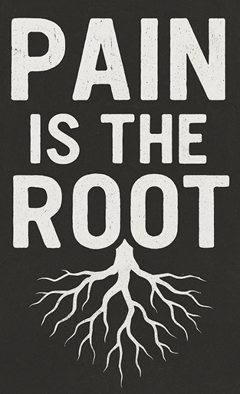
Pain, especially unresolved emotional pain, is at the root of many afflictions. According to trauma expert Gabor Maté (2008), addiction is not a disease or choice but a response to deep suffering. Whether through substances, work, food, or achievement, people are often trying to soothe pain they may not even fully understand.

Social disconnection, abandonment, and lack of emotional education perpetuate trauma across generations. Society offers little support or guidance for managing grief, shame, or stress. Many turn to coping mechanisms without the tools to process their trauma, which is especially evident in marginalized communities where chronic stress is linked to disproportionately higher rates of illness (Williams & Mohammed, 2009).

The Cost of Disconnection and the Need for Authenticity

In professional fields like medicine, unresolved trauma is common. Some individuals pursue high-achieving careers not from passion but to compensate for feelings of inadequacy or unlovability. Emotional detachment, often a survival strategy in childhood, becomes normalized in adulthood. This disconnection between mind and body leads to chronic stress, illness, and burnout (Van der Kolk, 2014).

Authentic healing requires honoring two essential human needs: attachment and authenticity. When these needs are in conflict, as they often are in trauma survivors, authenticity is usually sacrificed for the sake of relational survival. Reconnecting with one’s truth, expressing anger constructively, and embracing emotional honesty are key steps toward transformation.

Healing the Generational Wounds

Trauma doesn’t disappear. It is often passed from one generation to the next, not just through genetics but through behavior, belief systems, and emotional suppression. Children absorb the stress of their caregivers. Without awareness and intervention, these patterns replicate over time (Yehuda & Lehrner, 2018).

What may appear as weakness, in hypervigilance, dissociation, emotional volatility, is often a response to longstanding unmet needs. Healing begins by naming these patterns and allowing space for expression and integration.

A Shift Toward Integration and Compassion

The healing path is not just clinical, it is relational, emotional, and spiritual. Psychedelic-assisted therapy, somatic practices, plant medicines like ayahuasca, and trauma-informed psychotherapy are gaining traction because they center empathy, connection, and emotional truth (Carhart-Harris & Goodwin, 2017).

As we reevaluate addiction, trauma, and illness through this lens, we begin to see that these challenges are not signs of brokenness. Rather, they are indicators of what needs acknowledgment, healing, and reintegration. Addiction, far from being a moral failure or inherited defect, can be seen as a solution to an emotional problem, a cry for help that must be understood before it can be addressed.

References

Brown, B. (2012). DARING GREATLY. In GOTHAM BOOKS. GOTHAM BOOKS. https://site.ieee.org/sb-nhce/files/2021/06/Brene-brown-book1.pdf

Carhart-Harris, R. L., & Goodwin, G. M. (2017). The therapeutic potential of psychedelic drugs: Past, present, and future. Neuropsychopharmacology, 42(11), 2105–2113. https://doi.org/10.1038/npp.2017.84

Maté, G. (2008). In the realm of hungry ghosts: Close encounters with addiction. Knopf Canada. https://drgabormate.com/book/in-the-realm-of-hungry-ghosts/

Maté, G. (2010). When the body says no: The cost of hidden stress. Wiley. When the Body Says No – Dr. Gabor Maté

Sapolsky, R. (2004). Why Zebras don’t get Ulcers: The acclaimed Guide to Stress, Stress-Related Diseases, and Coping. ResearchGate. https://www.researchgate.net/publication/272161275_Why_Zebras_Don’t_Get_Ulcers_The_Acclaimed_Guide_to_Stress_Stress-Related_Diseases_and_Coping

Van der Kolk, B. (2014). The body keeps the score: Brain, mind, and body in the healing of trauma. Viking. The body keeps the score: Brain, mind, and body in the healing of trauma.

Williams, D. R., & Mohammed, S. A. (2009). Discrimination and racial disparities in health: Evidence and needed research. Journal of Behavioral Medicine, 32(1), 20–47. https://doi.org/10.1007/s10865-008-9185-0

Yehuda, R., & Lehrner, A. (2018). Intergenerational transmission of trauma effects: Putative role of epigenetic mechanisms. World Psychiatry, 17(3), 243–257. https://doi.org/10.1002/wps.20568