
“A pill for every ill.” How did we get here?
Western allopathic medicine with its use of pharmaceuticals, surgery and other invasive treatments are truly technological amazing feats. Especially for treatments for traumatic injuries, genetic disorders and other specific he ailments. But are pharmaceuticals and surgery necessary or the best option for every cough, sneeze, wheeze, ache or pain? There are other options available such as diet and lifestyle choices, exercise, herbs and other seemingly “alternative” methods. Some of these options have been used for thousands of years, standing the test of time. However, many in the US favor Western allopathic (biomedicine) and often have never heard of, been informed or educated to specific alternative or traditional healthcare (self-care) treatments and methods. This is not by mere happenstance but more likely from a carefully orchestrated marketing plan initiated around the early 1900’s by extremely wealthy businessmen John D. Rockerfeller and Andrew Carnegie.
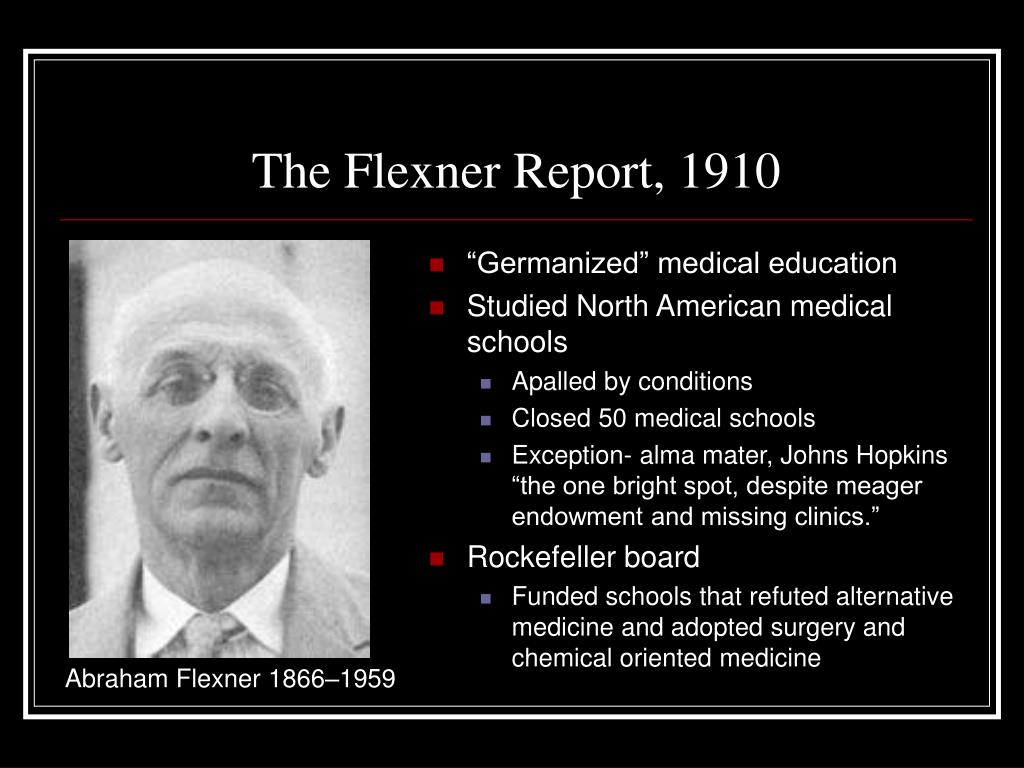
The influence of Carnegie and Rockefeller on Western medicine played a large role in shifting the focus away from traditional medical practices toward more scientific, evidence-based medicine. Carnegie and Rockefeller, two of America’s most prominent industrialists, wielded significant influence over the development and implementation of Western allopathic or biomedicine medicine. Their impact, while enormous, was a complex relationship of positive and negative consequences. The Flexner Report was funded in 1910 by the Rockefeller Foundation and authored by Abraham Flexner which helped to reform medical education and care in the United States, thereby leading to higher standards and a more rigorous, scientifically based medical curriculum.

Positive Impacts:
Standardization of Medical Education: Both Carnegie and Rockefeller were greatly involved in funding the Flexner Report, a revolutionary study that led to the standardization of medical education in the United States. This resulted in a consequential improvement in the quality of medical training and relative patient care. The reforms that came about from this report helped to reduce the prevalence of unproven or harmful treatments.
Advancement of Medical Research: Their philanthropic support established research institutions and funded new methods of medical research. This support influenced many medical advancements.
Improved Public Health: Rockefeller’s philanthropy impacted treatments for diseases through The Rockefeller Foundation, founded in 1913, such as yellow fever and hookworm, greatly improving public health and reducing mortality rates. Also, the foundation supported the development of public health schools, including the Harvard School of Public Health and the Johns Hopkins Bloomberg School of Public Health.
Scientific Rigor: The increased focus on scientific research and evidence-based practices led to major advancements in medical knowledge and treatment efficacy.
Public Health Improvements: Public health initiatives and medical research helped to eradicate and manage many infectious diseases.
Negative Impacts:
Suppression of Alternative Medicine: The standardization of medical education under the Flexner Report, while helping to improve overall medical treatment and relative quality, also led to much stifling of alternative medical practices. This consequently impacted the exploration of diverse healing modalities and potential benefits from such treatments.
Marginalization of Traditional Practices: Many traditional and holistic practices that were deeply embedded in various cultures, were disregarded or labeled as quackery or ineffective. Practices that lacked scientific validation, despite potentially being effective, were often dismissed, as Western medicine became more dominant.
Closure of Alternative Medical Schools: Schools that did not meet the new rigorous standards were closed. This included institutions that taught naturopathy, homeopathy, and other alternative medical practices.
Focus on Profit: Critics believe that the intimate relationship between the pharmaceutical industry and Rockefeller’s philanthropy created a system that prioritizes profit over patient well-being. This profit-based healthcare system is thought to have influenced the direction of medical research and drug development since its inception over one hundred years ago.
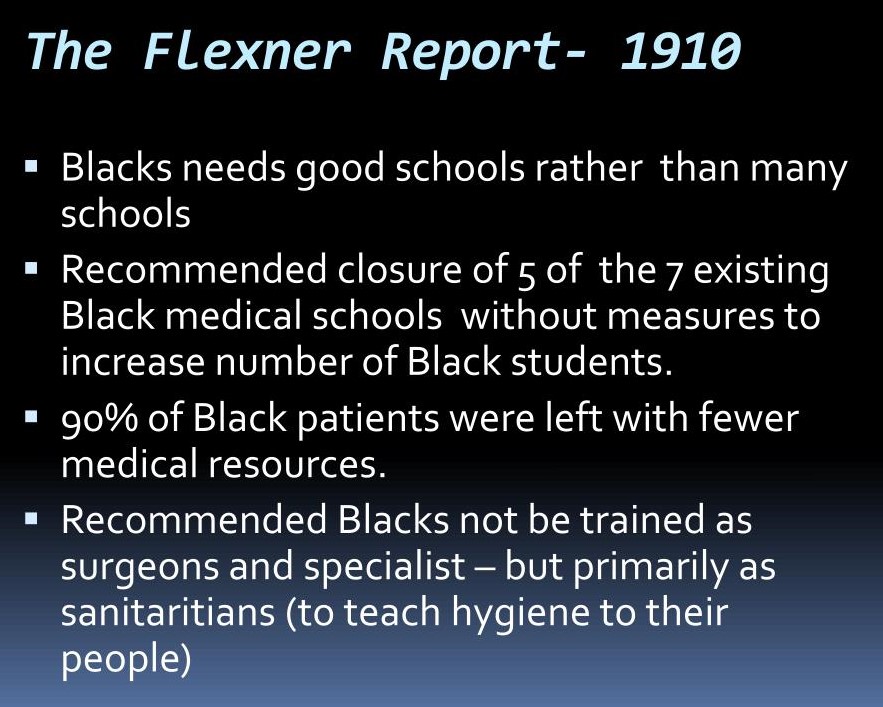
Disparities in Healthcare: While Rockefeller and Carnegie’s philanthropic efforts are notable, some are more critical in seeing their roles as having purposely or inadvertently contributed to healthcare disparities. Critics focus on the closure of many African American medical schools following the Flexner Report, which led to limiting opportunities for Black physicians and impacting healthcare access within Black communities.
Medical Monopolies: The rise of a more standardized medical system led to the formation of medical monopolies, reducing the diversity of medical treatments and approaches.
Pharmaceutical Focus: The focus on pharmaceutical treatment solutions and surgical interventions often takes precedence over other potentially effective traditional therapies, such as herbal medicine and other holistic approaches.
Schools Closed After the Flexner Report
The Flexner Report led to the closure of a wide variety of medical schools, in particular those that focused on alternative medical practices, for-profit proprietary schools, and Black medical schools. The long-term ramifications included the consolidation of medical education under a more scientifically rigorous, allopathic (biomedicine) model, but it also contributed to the gradual erosion of medical diversity, helping to bring about more racial and gender disparities in medical training. Out of approximately 155 medical schools in existence at the time, over 50% (more than 80 schools) were closed within the decade following the report’s publication. The schools affected can be categorized into different types based on their fields of study and student populations:
Alternative Medical Schools:
Homeopathic and Alternative Medicine: These schools were specifically targeted by the Flexner Report because they did not align with the allopathic or conventional medicine model, which the report strongly favored. Homeopathic and alternative schools either converted to follow allopathic principles or ceased to remain open.
Naturopathic and Osteopathic Schools: Some osteopathic schools remained operating by aligning their curricula more closely with the scientific, evidence-based model that the Flexner Report promoted. Naturopathic schools faced an eventual decline.
Proprietary Schools (For-Profit Schools):
A large amount of the schools closed were proprietary, also referred to as “for-profit institutions.” These schools often required less rigorous admissions standards, less equiped laboratory facilities, and less access to teaching hospitals. These would include some medical schools that taught natural remedies, herbal medicine, homeopathy and other alternative practices. Many alternative or non-allopathic medical schools were shut down after being deemed insufficiently scientific by the Flexner standards.
Black Medical Schools:
Access to Medical Education: With the onset of fewer medical schools accessible to Black students, opportunities to pursue medical education and careers in medicine were more severely reduced within the Black demographic at the time. This in turn, increased healthcare disparities within Black communities, both in the immediate aftermath and in the years that followed the report.
Long-Term Impact: The ripple effect of these closures continues today to affect the diversity within the medical profession and the quality of healthcare in underserved communities. Out of the seven Black medical schools that existed at the time, only two survived after the report. Those would have been Howard University College of Medicine (Washington, D.C.) and Meharry Medical College (Nashville, Tennessee).
Five Black medical schools that were closed included:
- Leonard Medical School at Shaw University (Raleigh, NC)
- Flint Medical College at New Orleans University (New Orleans, LA)
- Knoxville College Medical Department (Knoxville, TN)
- Louisville National Medical College (Louisville, KY)
- University of West Tennessee College of Medicine and Surgery (Memphis, TN)
The Flexner report quite heavily criticized these schools for lacking adequate faculty, funding, and facilities, leading to the closure of most Black medical schools. This consequently had a damaging impact on the number of Black physicians, increasing racial disparities in healthcare.
Women’s Medical Schools:
Many medical schools for women also endured closure after the Flexner Report. Women’s schools had already been facing discrimination, but the report further limited their operations by requiring them to have the same scientific standards as the other male institutions, while not taking into account the limited support, resources and funding available to them. Smaller women’s medical colleges either closed or merged with coeducational institutions in order to survive. The Woman’s Medical College of Pennsylvania would go on to survive due to eventual reforms.
Introduction of Petroleum Products into Healthcare:
Petroleum products have had a major impact on pharmaceutical production and implementation. The rise of the petroleum industry, in which figures like John D. Rockefeller played a central role, facilitated the development of various synthetic chemicals and pharmaceuticals. Here are several significant ways in which petroleum products influenced the pharmaceutical industry:
Development of Synthetic Drugs
- Raw Materials: Petroleum products provide raw materials for the production of many drugs. Petrochemicals, refined from petroleum, have become essential building blocks in pharmaceutical chemistry.
- Cost and Efficiency: The ease and availability of petroleum-based raw materials made the production of synthetic drugs more cost-effective and efficient, enabling the manufacturing of pharmaceuticals on a large scale.
- Innovation: The ability to create synthetic chemical compounds has led to the discovery and development of new pharmaceutical drugs that were previously impossible to produce utilizing natural sources alone.
Expansion of the Pharmaceutical Industry
- Growth of Big Pharma: The development of synthetic drugs and the ability to mass-produce them has greatly aided the growth of major pharmaceutical companies. These companies have often invested in research and development, thereby further advancing the field of medicine.
- Increased Accessibility: The grand-scale production of pharmaceuticals has made drugs more accessible to a broader population, sometimes enhancing public health improvements. Other times, not so much as when particular drugs are recalled or banned due to lack of efficacy and/or discovery of detrimental longterm side effects.
Impact on Drug Manufacturing
- Solvents and Excipients: Petroleum-derived solvents and excipients are crucial in the production of many pharmaceuticals. These substances play a major role in the processing and stabilization of active pharmaceutical ingredients (APIs).
- Packaging Materials: Petroleum products are used to make plastics and other materials for pharmaceutical packaging. This has helped to improve the transportation, storage, transportation, and shelf-life of medications.
Examples of Petroleum-Influenced Pharmaceuticals
- Antibiotics: Penicillin, an antibiotic, has benefited from petrochemical solvents and various industrial processes developed through the petroleum industry.
- Aspirin: The large-scale synthesis of aspirin was due to advances in chemical engineering and the availability of petrochemical raw materials.
Conclusion
The impact of Andrew Carnegie and John D. Rockefeller on Western allopathic medicine is multifaceted. While their contributions to medical research, education, and public health are undeniable, their influence also shaped the direction of medicine in ways that had both positive and negative consequences. It is important to recognize that, although Carnegie and Rockefeller advanced Western allopathic medicine by promoting scientific rigor and public health initiatives, they also contributed to the decline of many traditional medical practices. The shift toward a more scientific approach brought numerous benefits but also led to the marginalization of traditional and holistic methods once considered effective and safe. Moreover, the Flexner Report backed by their funding, had long-lasting detrimental effects on Black medical schools, which in turn affected the training of Black physicians and healthcare in Black communities. This dual influence critically shaped their legacies within the medical field.
References:
Andrew Carnegie and John D. Rockefeller’s Influence on Medicine:
- Brown, E. R. (1979). Rockefeller Medicine Men: Medicine and Capitalism in America. This book discusses the influence of the Rockefeller Foundation on American medicine, including its role in the establishment of medical research institutions and public health initiatives.
- Flexner, A. (1910). Medical Education in the United States and Canada: A Report to the Carnegie Foundation for the Advancement of Teaching. The original Flexner Report, commissioned by the Carnegie Foundation, played a central role in the reform of medical education, including the closure of many medical schools.
- Marks, H. M. (1997). The Progress of Experiment: Science and Therapeutic Reform in the United States, 1900-1990. This book explores how the philanthropic efforts of individuals like Rockefeller shaped the modernization of medicine through scientific research and public health reforms.
Impact of the Flexner Report on Black Medical Schools:
- Savitt, T. L. (2002). “Abraham Flexner and the Black Medical Schools.” Journal of the National Medical Association, 94(3), 246-257. This article specifically addresses the impact of the Flexner Report on Black medical schools and how it led to the closure of most Black medical institutions, exacerbating racial disparities in medical education.
- Byrd, W. M., & Clayton, L. A. (2000). An American Health Dilemma: A Medical History of African Americans and the Problem of Race (Vol. 1). Routledge. This book provides an in-depth history of the challenges faced by Black medical professionals and institutions, including the long-term effects of the Flexner Report.
Marginalization of Traditional Medical Practices:
- Hirschkorn, K. A. (2006). “Exclusive Versus Everyday Forms of Professional Medical Knowledge: Legitimacy Claims in Conventional and Alternative Medicine.” Sociology of Health & Illness, 28(5), 533-557. This article discusses how the rise of evidence-based medicine marginalized alternative and traditional medical practices in favor of standardized scientific approaches.
- Whorton, J. C. (2002). Nature Cures: The History of Alternative Medicine in America. This book provides historical context for how alternative and traditional medical practices, such as homeopathy and naturopathy, were sidelined by the rise of scientific medicine promoted by figures like Carnegie and Rockefeller.
Petroleum’s Role in Pharmaceutical Development:
- Torrance, A. W. (1998). “From Coal to Oil: The Role of the Petrochemical Industry in Medicine.” Chemical Heritage Magazine. This article explores how the rise of the petroleum industry contributed to advancements in synthetic chemistry, which was crucial for pharmaceutical development.
- Hounshell, D. A., & Smith, J. K. (1988). Science and Corporate Strategy: DuPont R&D, 1902-1980. This book examines how major chemical companies like DuPont, using petroleum products, played a crucial role in developing synthetic chemicals for pharmaceuticals.
- Sneader, W. (2005). Drug Discovery: A History. This comprehensive history of pharmaceuticals includes details on how the availability of petrochemical raw materials revolutionized drug manufacturing.
I teach and offer lectures about holistic health, physical fitness, stress management, human behavior, meditation, phytotherapy (herbs), music for healing, self-massage (acupressure), Daoyin (yoga), qigong, tai chi, and baguazhang.
Please contact me if you, your business, organization, or group, might be interested in hosting me to speak on a wide spectrum of topics relative to better health, fitness, and well-being.
I look forward to further sharing more of my message by partnering with hospitals, wellness centers, VA centers, schools on all levels, businesses, and individuals who see the value in building a stronger nation through building a healthier population.
I also have hundreds of FREE education video classes, lectures, and seminars available on my YouTube channel at:
https://www.youtube.com/c/MindandBodyExercises
Many of my publications can be found on Amazon at:
http://www.Amazon.com/author/jimmoltzan
My holistic health blog is available at:
https://mindandbodyexercises.wordpress.com/
http://www.MindAndBodyExercises.com
Mind and Body Exercises on Google: https://posts.gle/aD47Qo
Jim Moltzan
407-234-0119






















 United Martial Arts Association