“They Don’t Know, What They Don’t Know” – The Dunning-Kruger Effect

The Dunning-Kruger effect was theorized by psychologists David Dunning and Justin Kruger in a 1999 study. They proposed that there is a cognitive bias where individuals with knowledge or ability within a specific area have a propensity to overestimate their own competence in a particular field. This overestimation may come about due to a lack of the necessary metacognitive skills to accurately determine their own competence. A common phrase used to summarize this phenomenon is that of “they don’t know, what they don’t know.” This effect may be seen in examples of recent high school or college graduates who sometimes express a type of hubris, where they believe that they are intellectually superior to others. Expecting parents sometimes experience this effect where before their child is born, they have delusions of what type of parents they will be. “My kids won’t get away with that,” “I won’t be doing that with my children,” or maybe prejudging other parents in how they choose to raise their kids. Once their children are born, new parents might soon realize that parenting is much more complex and difficult than what they first believed.

Conversely, those individuals who are highly knowledgeable or skilled in a particular field often underestimate their own competence. This underestimation may manifest because some individuals assume that challenges or projects that are easy for them, may also be easy for most others. Well-seasoned individuals in any particular field of knowledge, skill, or ability often gain much wisdom from experience, adaptation, and application of their specific skill set. For some people, this is also highly humbling as the individual realizes that the more someone knows, they ironically recognize that there is so much more to learn.

The Dunning-Kruger effect can be summarized into four key stages:

  1. Incompetence and Confidence: Individuals possessing low skill levels or knowledge may fail to acknowledge their lack of skill, leading to inflated self-assessments and high confidence.
  2. Awareness of Incompetence: Once an individual acquires more knowledge and experience, they may start to become more aware of their own incompetence, which in turn leads to a further decrease in confidence.
  3. Competence along with Cautious Confidence: With further experience, practice, and learning, individuals begin to develop true competence. As their confidence begins to increase again, they can more accurately showcase their abilities.
  4. Mastery with Modesty: More highly skilled individuals will often acknowledge the complexities of a particular domain and realize how much they still don’t know. This awareness can lead to modesty or humbleness about their abilities, despite the individual being highly competent in their specific field.

The Dunning-Kruger effect highlights the importance of seeking self-awareness and striving to continue to learn new things. It proposes that improving one’s metacognitive skills, such as the ability to self-assess one’s own knowledge and performance accurately can help minimize the effect. In summary, the Dunning-Kruger effect is a cognitive bias where individuals with low knowledge, ability, or competence in a specific area may overestimate their own skill level. On the other hand, people with a high competency in a particular field often underestimate their relative ability. This may occur due to the same skills that contribute to competence are also needed to recognize competence, leading to a disconnect between self-assessment and actual ability.

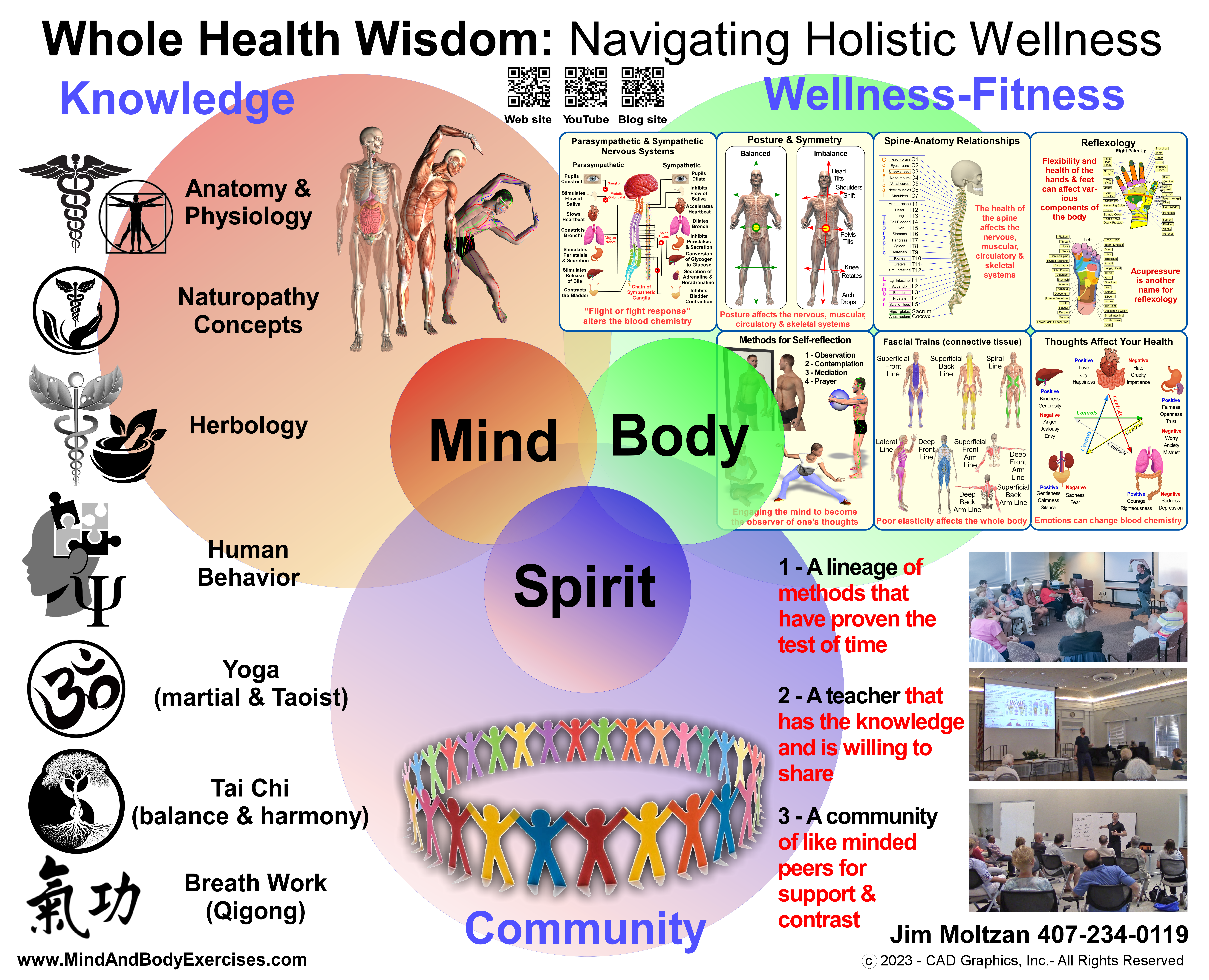
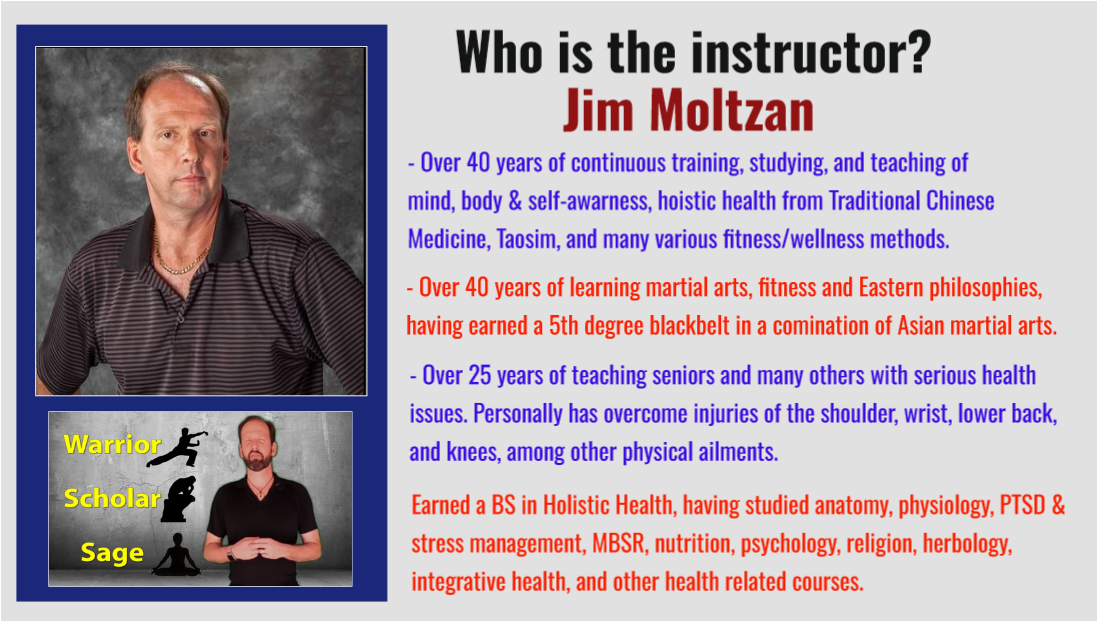
I teach and offer lectures about holistic health, stress management, qigong, tai chi, baguazhang, meditation, phytotherapy (herbs), music for healing, self-massage, and Daoyin (yoga).

I look forward to further sharing more of my message by partnering with hospitals, wellness centers, VA centers, schools on all levels, businesses and individuals that see the value in building a stronger nation through building a healthier population. I also have hundreds of FREE education video classes, lectures, and seminars available on my YouTube channel at:

https://www.youtube.com/c/MindandBodyExercises

www.MindAndBodyExercises.com

www.Amazon.com/author/jimmoltzan

Mind and Body Exercises on Google: https://posts.gle/aD47Qo

Jim Moltzan

407-234-0119

Why People Have Lost Faith in the CDC, FDA & the US Healthcare System

I rely on a diverse array of reliable sources for my research, including peer-reviewed studies, medical journals, and databases like PubMed and BMJ. I choose Google Scholar and other sites as a means to finding other sources of information knowing that information needs to be quantified. As far as the CDC and the FDA websites are concerned, my skepticism is that they will not post their own shortcomings on their own websites. Instead, we need to look towards more reputable and non-biased news or research sources that are not connected financially to these government agencies. For example, the American Medical Association has recognized the public’s lack of trust in the CDC, highlighting the need for greater transparency (American Medical Association, 2020) where it will carry more weight if the CDC actually acknowledges what many have already felt was a lack of transparency of information during the recent COVID-19 pandemic. Similarly, I believe that The Washington Post is considered a legitimate and reliable news source. The Post reported that the CDC experienced “technical blunders and botched messaging” that were brought to public attention by friends, supporters, and even some professionals within the CDC’s own Atlanta headquarters (Sun & Achenbach, 2020).

Evidence-based Medicine? 

Dr. Jon Jureidini, a child psychiatrist in Australia and a member of the Critical and Ethical Mental Health (CEMH) research group, authored ‘The Illusion of Evidence-based Medicine’ (2022). The CEMH conducts critical appraisal, meta-research, teaching, and advocacy, with the goal of promoting safer, more effective, and more ethical research and practice in the field of mental health (Staff Directory | Dr Jon Jureidini, n.d.).

Dr. Jon Jureidini reports that medicine is mostly dominated by a few very large and competing pharmaceutical companies, that are quite aligned in their methods to expand their profits. He reports on the issues of evidence-based medicine being compromised by the commercialization of academia, failed regulation, and other corporate influences. This doctor sees the scientific progress being abused by the medical industry and its relationship with academic researchers, as they often do not share raw data, suppress negative trial results, and fail to report adverse events. Because of this, there is a greater potential for patient death, due to commercial interests’ influence upon regulators, research agenda, and universities. He strongly suggests that reforms need to be made in all of these areas, in order to bring trust and legitimacy back to evidence-based medicine. Jureidini calls for a separation of regulators from drug company funding, due to regulators often accepting funding and industry-funded trials to approve drugs that a particular company is trying to market (Jureidini, 2022).

Why Drug Marketing Rules America 

Lydia Green, a pharmacist, and former pharmaceutical advertising copywriter speaks about her goals of decreasing the sway of influence of pharmaceutical marketing and misinformation on the American healthcare industry. America contributes only 5% to the population of the world yet spends 1/3 of the world’s $1.4 trillion pharmaceutical healthcare marketplace. In spite of spending the most, the US often ranks low on the overall health of its population. Medicine often prioritizes profit over patient well-being. These pharmaceutical companies are businesses that at their root, just like all businesses, operate to make a profit. Again, it is all about the money. When healthcare and its relative components of pharmaceuticals, doctors, and the profits that both can gain from promoting their products, despite actual need – this whole system is severely corrupt and broken and in need of drastic reform. Green proposes a need for a 3rd party agency to help return trust, regarding the pharmaceutical industry. This alliance would be made up of communicators, marketers, former pharma-ad writers, medical and pharmacy schools, and doctors who have no influence from companies with profits as their sole motivation. However, Green suggests that such an organization could be funded through payments, but once again from fees attached to monies that pharmaceutical and medical device companies make to doctors (TEDx Talks, 2020b).

DTC Pharmaceuticals

In 2015, the US pharmaceutical industry spent $5.4 billion on direct-to-consumer (DTC) advertisements. The U.S. is one of only 2 countries that legally allow DTC for drug companies. New Zealand is the other. Not coincidently, Americans pay more for drugs and medical devices than any other country in the world (Drugwatch, 2022).

Michelle Llamas, a Board Certified Patient Advocate (BCPA) has a long list of experience, but what makes her credible to this article is her almost a decade of medical writing and research experience. She is a trusted source for information on high-risk prescriptions, health conditions, drugs, and medical devices (Drugwatch, 2023).

Drug companies often invest billions of dollars in their attempts to promote off-labeling of their drugs and/or devices that are not approved for other uses by the Food and Drug Administration (FDA). Companies try to convince doctors to prescribe their brand-name drugs or devices, for uses other than their original approval. Additionally, drug companies sometimes create clinical trials focused on swaying doctors and educational courses to highlight expensive drugs for non-FDA-approved uses, despite having no scientific evidence of efficacy or safety. Drug and device companies spent in 2015, about $4 billion on television ads, and about $1.5 billion in magazine advertising. Radio, theaters, newspapers, billboards, and some other types of marketing took up an additional few million dollars. It paid off for these companies to advertise, as every dollar spent on advertising generated increased sales of prescription drugs by $4.40. Big pharmaceutical companies are willing to gamble on being fined for a few hundred million dollars, despite their product being found to cause adverse effects if they know that they can market a product that may generate billions of dollars in profit (Drugwatch, 2022). From a business perspective, this is a good business model. From an ethical perspective, this is downright criminal and inhumane.

Another area of concern is that the CDC often receives funding from the exact same pharmaceutical companies that it is tasked with regulating. The ASH Clinical News, a magazine for the American Society of Hematology, reported that the CDC Foundation received $79.6 million from companies like Pfizer, Biogen, and Merck between 2014 and 2018. The CDC responded that the agency doesn’t accept commercial support, but its own media office has stated that “the CDC claims its public-private partnerships are synergistic and beneficial” (CDC Pressed to Acknowledge Industry Funding, 2021).

FDA Allows Toxic Ingredients in the US, But Other Countries Ban Them

“The FDA has once again failed the public by ignoring the harmful effects of phthalates on our health,” said Kristina Sinclair, associate attorney at the Center for Food Safety. “The agency’s refusal to pay attention to scientific evidence will have detrimental health effects for years to come” (Earthjustice: FDA Approves Use of Toxic Chemicals Leaping Into Food and Beverages, (2023).

“Despite its nearly $7 billion annual operating budget, the U.S. Food and Drug Administration (FDA) isn’t analyzing every shampoo or supplement on sale at your local drugstore. In fact, the FDA does not approve most cosmetics before they hit shelves—let alone assess how they’ll affect human health after years of regular use. This information vacuum has given rise to a network of nonprofits, consumer-protection groups, and independent scientists dedicated to informing the public about potential hazards lurking in their products.” (Ducharme, 2024).

Red Dye No. 3, brominated vegetable oil, potassium bromate, propylparaben, titanium dioxide, and other chemicals are banned in other countries, where the FDA allows these to be added to food products in the US (Worthington, 2024).

Don’t Burn Bridges With Your Future Employer

Lastly, I find it disturbing that there is a merry-go-round of employment where high-level pharmaceutical executives and directors of the FDA go to work for one another, whereas in other types of business, these interactions would be considered conflicts of interest. For this issue, I found that NPR, National Public Radio (considered a reputable news source) reported that from 2001 through 2010 about 27% of its FDA employees who approved cancer and hematology drugs, went on to work for the pharmaceutical companies. The potential conflict of interest here is that FDA employees may have a career goal of later working in the public sector at pharmaceutical companies that they are in charge of regulating. Will these FDA regulators give pharma companies the benefit of the doubt for their products or be more critical of them by using poor comparisons in drug studies?  The article did bring up the idea that having former FDA officials on the pharmaceutical industry payroll can offer some benefits to the general public. Former FDA employees having knowledge of the drug approval process can help facilitate the processes and relevant research that needs to be completed, and where the most current pathways to approval are followed (Lupkin, 2016). Another more recent peer-reviewed article from the Stanford Law School addressed this exact issue in further detail (Karas, 2023). We all know these issues are wrong and continue to go along with the societal cognitive dissonance, hoping that it will all work out and the general population will be fine.

Be well, become healthier, and be wise. Do your research.

References:

American Medical Association & American Medical Association. (2020, September 15). Words and actions that erode trust in the CDC hurt us all. American Medical Association. https://www.ama-assn.org/about/leadership/words-and-actions-erode-trust-cdc-hurt-us-all

Sun, L. H., & Achenbach, J. (2020, September 28). CDC’s credibility is eroded by internal blunders and external attacks as coronavirus vaccine campaigns loom. Washington Post. https://link.gale.com/apps/doc/A636718930/HWRC?u=vol_vsc&sid=bookmark-HWRC&xid=505e0540

CDC pressed to acknowledge industry funding. (2021, December 30). ASH Clinical News | American Society of Hematology. https://ashpublications.org/ashclinicalnews/news/4797/CDC-Pressed-to-Acknowledge-Industry-Funding

Lupkin, S. (2016, September 28). A look at how the revolving door spins from FDA to industry. NPR. https://www.npr.org/sections/health-shots/2016/09/28/495694559/a-look-at-how-the-revolving-door-spins-from-fda-to-industry

Karas, L. (2023). Fda’s Revolving Door: Reckoning and Reform. Stanford Law & Policy Review, 34(1), 1.

Drugwatch. (2022, November 21). Selling Side Effects – Big Pharma’s Marketing Machine. Drugwatch.com. https://www.drugwatch.com/featured/big-pharma-marketing/

Drugwatch. (2023, February 23). Michelle Llamas – Drugwatch Senior Writer. Drugwatch.com. https://www.drugwatch.com/authors/mllamas/

Jureidini, J. (2022, March 16). The illusion of evidence based medicine. The BMJ. https://www.bmj.com/content/376/bmj.o702

Staff Directory | Dr Jon Jureidini. (n.d.). https://www.adelaide.edu.au/directory/jon.jureidini

TEDx Talks. (2020b, November 23). Why Drug Marketing Rules American Healthcare and What We Can Do About it | Lydia Green | TEDxMcphs. YouTube. https://www.youtube.com/watch?v=Jh7rQbknPyE

Earthjustice: FDA Approves Use of Toxic Chemicals Leaping Into Food and Beverages. (2023, July 23). Targeted News Service, NA. https://link.gale.com/apps/doc/A758209943/STND?u=vol_vsc&sid=ebsco&xid=6ec0ba16

Ducharme, J. (2024). Scientists Are Finding Out Just How Toxic Your Stuff Is. Time.Com, N.PAG

Worthington, L. (2024, April 3). These common U.S. snack ingredients are banned or restricted abroad. Science. https://www.nationalgeographic.com/science/article/additives-artificial-flavors-us-snacks-banned

I teach and offer lectures about holistic health, stress management, qigong, tai chi, baguazhang, meditation, phytotherapy (herbs), music for healing, self-massage, and Daoyin (yoga).

Please contact me if you, your business, organization, or group, might be interested in hosting me to speak on a wide spectrum of topics relative to better health, wellness, and fitness.

I look forward to further sharing more of my message by partnering with hospitals, wellness centers, VA centers, schools on all levels, businesses and individuals that see the value in building a stronger nation through building a healthier population. I also have hundreds of FREE education video classes, lectures and seminars available on my YouTube channel at:

https://www.youtube.com/c/MindandBodyExercises

www.MindAndBodyExercises.com

www.Amazon.com/author/jimmoltzan

Mind and Body Exercises on Google: https://posts.gle/aD47Qo

Jim Moltzan

407-234-0119
Walking is Great Exercise, and it’s Free!

Having difficulty getting started on a fitness routine? No local gyms? No money in the budget for managing your health, fitness, and overall wellness?

How about adding more walking into your day? Walk your neighborhood. Hike in the woods or local parks, or try “nature bathing,” a topic for another post. Climb stairs in your home, apartment, or at nearby malls, offices, and other businesses. The options are abundant if one is motivated. Other types of exercise might offer more benefits than walking and are perhaps more appropriate for specific body types and issues. However, walking is the most available form of exercise that most people are already doing daily, to some degree. Walking can be therapeutic for some as a way to manage stress and anxiety, a much-needed tool in our current hectic society.

Here is a step-by-step method that offers some of the psychological mechanisms that can help someone to become motivated to get started with a fitness routine. By implementing the Self-Efficacy Theory (SET) I encourage any individual’s belief in their ability to perform specific behaviors relative to personal fitness and well-being. With the goal of increasing an individual’s health (young and old alike) through physical activities, I suggest expounding upon this goal by using appropriate, safe, and effective methods, such as walking. Why not implement more walking into your day? Consistent walking has many potential health benefits. Walking can help to increase overall physical health and mental well-being, as can be seen in adults of all ages who walk regularly. Some communities offer organized group walks where people can join and see others in similar health being able to engage in regular physical activity.

Once an individual becomes engaged in more simple and easily obtainable goals of walking activities, they can begin tracking and recording walking sessions on a daily basis. As the person increases their consistency of walking, they can gradually increase the distance and/or amount of time walking. As the individual sees their own progress increase through self-recording, they can further increase their own goals and consequently begin to achieve mastery in their own ability to maintain their health. Later they may invest in a fitness tracker, which could encourage more self-mastery of the individual’s health goals. Fitness trackers like Fitbit or Apple Watch can offer the person other ways to track not only their walking but also heart rate and calories burned in the process of walking. By acknowledging and celebrating their own achievements of specific goals, the individual again is receiving a feeling of mastery in their own achievements helping to instill their confidence and determination to continue further with their program of walking.

After some amount of time walking regularly, an individual will most likely begin to feel and experience somatic or emotional responses as they may feel less emotional stress after walking. They may even begin to feel the “runners’ high” where endorphins are released into their bloodstream, thus giving them a sense of temporary euphoria. By adding in some additional activities such as gentle stretching or warmup exercises at the beginning and/or end of each walking session, an individual may be able to better manage physical soreness, muscle tightness, or even emotional stress. As a person improves their own health, loved ones may offer emotional and maybe physical support if needed. An individual then may also begin to feel that others do indeed care about their health and well-being. This can further help them to become more intrinsically motivated to continue their exercise program knowing and believing that they can do it on their own but have more support if necessary. I think that all of the constructs that I discussed from SET and also with the self-determination theory (SDT), will give an individual over a short amount of time, the tools that they need to have more self-control, agency, and autonomy over their own health and well-being.

The Physiology of Walking for Fitness

Walking and other weight-bearing activities that engage the muscles in the feet, calves, and thighs illicit a pumping effect that aids in moving blood back to the heart. Rhythmic patterns of relaxation and contraction of these muscles, in addition to the movement of the ankle and toe joints, help to increase venous return and help prevent blood pooling in the lower extremities. Lack of physical movement such as walking and an increase in sitting within our modern American sedentary lifestyle, are major factors that are contributing to the drastic decline in physical and mental wellness of our population within the last decades. More sitting for hours on end at work, behind computer screens, playing video games, and engaging with social media are the norm now. In past years physical activity was more prevalent whether from occupations, recreation, social interactions, or other reasons. A return to a more active lifestyle is what is necessary to get our nation back on track for better health and wellness, instead of harsh pharmaceuticals for all that ails us (a pill for every ill), and pursuing living a life without consequences. We are the architects of our own well-being and relative health and happiness.

The venous plantar plexus of the foot, the venous pump of the calf, and the thigh muscle pump all work together as part of the venous return mechanism, which sends blood back to the heart. The venous pump of the calf, also referred to as the calf muscle pump, is a very important component of this whole mechanism involving the relaxation and contraction of the calf and foot muscles during specific activities such as walking, climbing, exercising, and others. The primary muscles of the calf muscle pump are the gastrocnemius and soleus. This engagement of the calf muscles compresses the veins and pushes blood upwards against gravity. The venous plantar plexus is a bundle of veins found in the sole of the foot, having a primary function of collecting deoxygenated blood from tissues within the foot and moving it back upwards towards the heart. Other muscles in the foot, such as the flexor hallucis brevis, flexor digitorum brevis, and lumbrical muscles, influence toe flexion and extension and consequently help with increasing blood circulation. Both of these mechanisms within the calves and feet contribute to providing efficient blood circulation back up to the heart, as well as preventing blood pooling (edema) in the lower extremities.

Nose-breathing while walking also helps the body to produce nitric oxide (NO) a now well-known messenger molecule that is produced in the nasal cavity and other tissues throughout the body and more specifically in the veins as arteries. NO increases blood flow through dilation of the veins and arteries.

References:

Parts of the figure were drawn by using pictures from Servier Medical Art. Servier Medical Art by Servier is licensed under a Creative Commons Attribution 3.0 Unported License (https://creativecommons.org/licenses/by/3.0/).

___________

I teach and offer lectures about holistic health, stress management, qigong, tai chi, baguazhang, meditation, phytotherapy (herbs), music for healing, self-massage, and Daoyin (yoga).

I look forward to further sharing more of my message by partnering with hospitals, wellness centers, VA centers, schools on all levels, businesses and individuals that see the value in building a stronger nation through building a healthier population. I also have hundreds of FREE education video classes, lectures and seminars available on my YouTube channel at:

https://www.youtube.com/c/MindandBodyExercises

www.MindAndBodyExercises.com

www.Amazon.com/author/jimmoltzan

Mind and Body Exercises on Google: https://posts.gle/aD47Qo

Jim Moltzan

407-234-0119
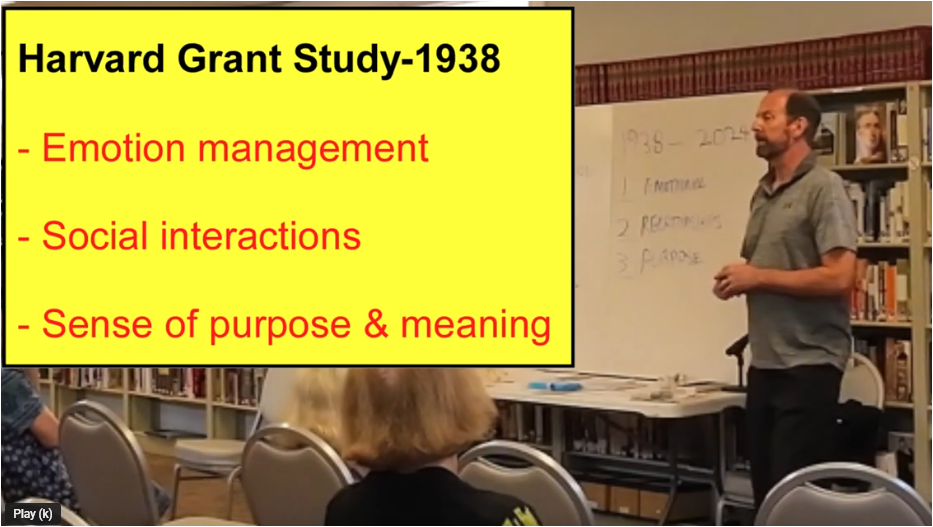
“Wisdom in Holistic Wellness: Exploring the Intersection of Fitness, Well-being and Behavior”

This video discussion covers many topics, such as:

  • whole vs holistic health
  • fitness vs. health vs. wellness
  • the tensegrity model
  • the Three Treasures (jing, qi & shen)
  • 3, 5, 7 pillars of health
  • the Harvard Grant Study of 1938-present
  • resting heart rate vs. heart rate variability
  • how breathing rate (BPM) affects the parasympathetic nervous system
  • DOSE – dopamine, oxytocin, serotonin, endorphins
  • abdominal or diaphragm breathing
  • “Box breathing”
  • energy suns vs. energy vampires
  • restoration, longevity & cultivation
  • yin & yang
  • TCM, the 5 elements, and Ayurveda’s doshas or constitutions
  • living with a sense of purpose & meaning (ikigai)
  • motivation vs. desire

My goal is to present an education for holistic health to increase longevity and quality of life (heathspan), that brings awareness to these time-proven methods. With an intent to de-mystify and simplify explanations, hopefully, more people can come to realize that we are all accountable for our own well-being. Contact me at info@mindandbodyexercises.com if you’re interested in hosting me for speaking events for fitness, holistic health and wellness.

More video clips, books, posters & resources at:
http://www.mindandbodyexercises.com
https://mindandbodyexercises.wordpres…
https://www.facebook.com/MindAndBodyE…
http://www.Amazon.com/author/jimmoltzan

Journey Through Utah’s Mighty Five: A Transformative Experience

Motivation: The Key to Transformation

Motivation played a critical role in my recent journey to hike Utah’s “Mighty Five” national parks. With the right motivation, one can literally achieve new heights in mental, physical, and spiritual development. The desire to explore these majestic parks and push my limits fueled my determination. This motivation helped me overcome physical challenges, stay mentally focused, and experience profound spiritual moments. When properly motivated, the potential for personal growth is limitless. Visiting Utah’s renowned “Mighty Five” national parks—Arches, Bryce Canyon, Canyonlands, Capitol Reef, and Zion—was an adventure that profoundly impacted me on mental, physical, and spiritual levels. Each park offered unique landscapes and challenges that pushed my limits and transformed my perspective on life. Additionally, a hike to the Lower Calf Creek Falls in Grand Staircase-Escalante added a refreshing and memorable experience to our journey.

Preparation and Training

Before embarking on this journey, I increased the intensity of my physical training three months prior. Although I have been practicing and teaching martial arts, tai chi, and qigong for over 40 years, I knew that I needed further mental and physical strength. Consequently, I added in 1-1/2 hour weight training, treadmill, and stairmaster routines 5-6 days per week for 12 weeks. This preparation was crucial for building more stamina, and endurance, and aiding the rehab of an old injured ACL on one knee and a torn meniscus on the other. The rigorous training paid off immensely, allowing me to tackle the demanding hikes with confidence and resilience. Additionally, some other minor chronic aches and pains resolved themselves after a few weeks of this increased schedule. My martial arts training greatly helped me with my self-discipline, overall flexibility, and core strength.

Mental Renewal

  1. Arches National Park: Home to over 2,000 natural stone arches, this park sparked a sense of wonder and creativity. The iconic Delicate Arch, standing alone against a backdrop of fiery sunsets, inspired introspection and clarity. The surreal landscapes made me reflect on the passage of time and the enduring beauty of nature’s creations.
  2. Bryce Canyon National Park: The vibrant hoodoos—tall, thin spires of rock—stood like sentinels in the amphitheater. Hiking among these geological formations felt like stepping into another world. The silence and majesty of Bryce Canyon offered a space for meditation, helping me to clear my mind of everyday clutter and focus on the present moment.
  3. Lower Calf Creek Falls: The hike to Lower Calf Creek Falls was a refreshing mental escape. The sound of cascading water and the lush, green surroundings contrasted sharply with the arid landscapes of the other parks. This serene oasis provided a perfect spot for contemplation and mental rejuvenation.

Physical Challenges

  1. Canyonlands National Park: This vast park, divided into four districts, tested my endurance and resilience. The Island in the Sky region, known for its challenging terrain, pushed me to my physical limits. Navigating the rugged paths and towering mesas required strength and determination, reinforcing the importance of perseverance and preparation.
  2. Capitol Reef National Park: Hiking the Waterpocket Fold, a 100-mile-long wrinkle in the Earth’s crust, was a physical feat. The diverse trails, ranging from easy walks to strenuous climbs, improved my fitness and coordination. The sense of accomplishment after conquering these trails boosted my confidence and physical well-being.

Spiritual Awakening

  1. Zion National Park: The soaring cliffs and deep canyons of Zion are awe-inspiring. We hiked the Narrows, wading through the Virgin River with towering canyon walls on either side, which was both a physically and spiritually invigorating experience. Additionally, the hike to Scout’s Landing, with its panoramic views, invoked a sense of humility and connection to something greater than myself. These trails offered a profound sense of peace and spiritual renewal.

Conclusion

The “Mighty Five” national parks of Utah, along with the Lower Calf Creek Falls, are not just destinations for outdoor enthusiasts; they are sanctuaries for personal growth and transformation. The mental clarity gained from Arches and Bryce Canyon, the physical challenges met in Canyonlands and Capitol Reef, and the spiritual awakening experienced in Zion have left an indelible mark on my life. These parks reminded me of the beauty, strength, and resilience inherent in nature—and within myself.

I encourage everyone to explore these natural wonders, not just to witness their breathtaking beauty but to embark on a journey of self-discovery and transformation.

Tips for Future Visitors

  • Preparation is Key: Ensure you have the right gear and physical conditioning for the hikes.
  • Respect Nature: Stay on designated trails, pack out all trash, and respect wildlife.
  • Take Your Time: Allow yourself to fully experience the beauty and serenity of each park.
  • Reflect and Journal: Take notes or journal your thoughts and feelings during your visit to capture the transformative moments.

Embarking on this journey through Utah’s Mighty Five is more than just a travel experience; it’s an opportunity to reconnect with yourself and the natural world in a deeply meaningful way. Feel free to reach out to me if you have more questions about this adventure or how to prepare to undertake the challenge.

I teach and offer lectures about holistic health, stress management, qigong, tai chi, baguazhang, meditation, phytotherapy (herbs), music for healing, self-massage, and Daoyin (yoga).

Please contact me if you, your business, organization, or group, might be interested in hosting me to speak on a wide spectrum of topics relative to better health, wellness, and fitness.

I look forward to further sharing more of my message by partnering with hospitals, wellness centers, VA centers, schools on all levels, businesses and individuals that see the value in building a stronger nation through building a healthier population. I also have hundreds of FREE education video classes, lectures and seminars available on my YouTube channel at:

https://www.youtube.com/c/MindandBodyExercises

www.MindAndBodyExercises.com

www.Amazon.com/author/jimmoltzan

Mind and Body Exercises on Google: https://posts.gle/aD47Qo

Jim Moltzan

407-234-0119