- Physical exercise can help to produce anti-inflammatory responses from the central nervous system.
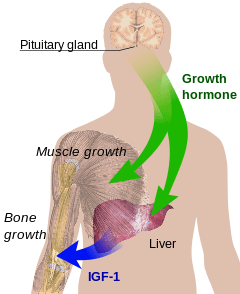
- Physical exercise can help to stimulate human growth hormone production.
- Physical exercise can help to increase blood flow and oxygenation to the prefrontal cortex and hippocampus areas of the brain.
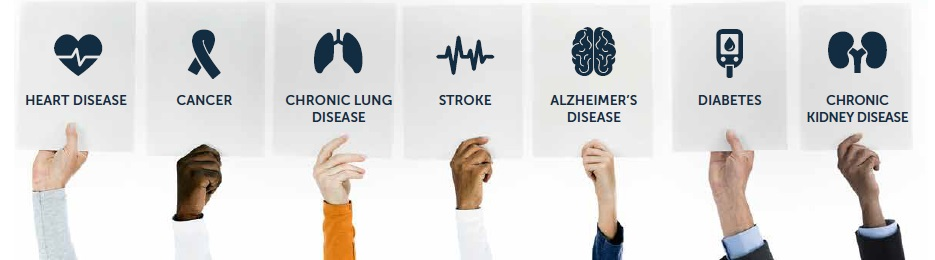
Only 25% of the US population exercises regularly. We could see a much greater reduction in serious illnesses and related comorbidities if more people exercised on a regular basis. Children especially need to get off the couch, get off the phone, PC or video game, get outside, move their bodies. We all know this, but don’t want to do what it takes to change our own habits, let alone that of our kids. About 20% of US kids are obese. 80% of these will go on to be obese adults. Obesity is not the main issue but rather the illnesses that come along with it. Plant good seeds if you want good crops, right?
Interleukin-6 (IL-6) and interleukin-10 (IL-10) are both cytokines involved in the immune response and inflammation regulation
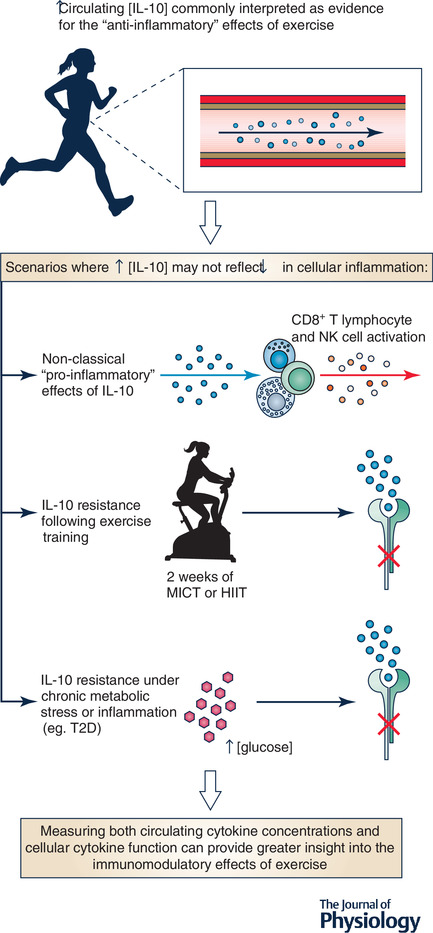
IL-6 & IL-10 are stimulated during exercise. They play important roles in modulating the body’s response to exercise. Here’s an overview of the physiology of this mechanism during exercise:
- Interleukin-6 (IL-6): During exercise, IL-6 is released from various sources, including skeletal muscle, immune cells, and adipose tissue. Several factors contribute to the stimulation of IL-6 production:
a. Muscle contraction: The mechanical stress placed on muscles during exercise triggers the release of IL-6 from the working muscles themselves. This release is mediated by intramuscular signaling pathways, such as calcium influx and the activation of adenosine monophosphate-activated protein kinase (AMPK) and mitogen-activated protein kinase (MAPK) pathways.
b. Sympathetic nervous system activation: Exercise leads to the activation of the sympathetic nervous system, which releases catecholamines (epinephrine and norepinephrine). These catecholamines promote IL-6 production in skeletal muscle and immune cells.
c. Tissue damage and inflammation: Intense or prolonged exercise can cause tissue damage and inflammation. This triggers the activation of immune cells, such as macrophages, which release IL-6 as part of the inflammatory response.
- Interleukin-10 (IL-10): IL-10 is an anti-inflammatory cytokine that helps regulate the immune response and control excessive inflammation. Its production during exercise is influenced by various factors:
a. IL-6-induced IL-10 production: IL-6, as mentioned earlier, is stimulated during exercise. Interestingly, IL-6 can also induce the production of IL-10. IL-6 acts as a signaling molecule, promoting the release of IL-10 from immune cells. This IL-6-induced IL-10 production helps regulate the immune response and minimize excessive inflammation.
b. Anti-inflammatory feedback: IL-10 acts as a negative feedback mechanism to downregulate pro-inflammatory cytokines, including IL-6 itself. By promoting the release of IL-10, exercise helps to maintain a balance between pro-inflammatory and anti-inflammatory factors, preventing an excessive immune response.
Both IL-6 and IL-10 have diverse effects on the body during exercise. IL-6, despite being pro-inflammatory, also has beneficial effects, such as promoting glucose uptake in muscles and stimulating lipolysis (breakdown of fats). IL-10, on the other hand, helps limit inflammation and contributes to tissue repair and recovery.
It’s important to note that the regulation of IL-6 and IL-10 during exercise is complex, and their levels can vary based on various factors, such as exercise intensity, duration, and individual fitness levels. Additionally, the exact mechanisms underlying their release and interaction during exercise are still an active area of research.
Strategic Trauma
The mechanism I am referring to, where interleukin-6 (IL-6) and interleukin-10 (IL-10) are stimulated during exercise, is often described as exercise-induced cytokine production, exercise-induced cytokine response or what I have come to know as strategic trauma. It highlights the fact that exercise can trigger the release and modulation of various cytokines, including IL-6 and IL-10.
The term “exercise-induced cytokine response” encompasses the broader concept of how exercise influences the production and release of cytokines, which are signaling molecules involved in immune regulation and inflammation. During exercise, various factors such as muscle contraction, sympathetic nervous system activation, and tissue damage contribute to the stimulation of cytokine production, including IL-6 and IL-10.
This term acknowledges that cytokine responses can vary depending on the type, intensity, and duration of exercise, as well as individual factors. It also reflects the dynamic nature of cytokine production during exercise, as the levels of different cytokines can change in response to the specific physiological demands of the exercise bout.
Strategic Trauma Effects Production of Human Growth Hormone
Exercise-induced cytokine production, particularly the release of interleukin-6 (IL-6), is related to the secretion of growth hormone (GH). GH is an important hormone involved in growth, metabolism, and tissue repair. The relationship between cytokines, especially IL-6, and GH is complex and interconnected. Here’s an overview of their connection:
- IL-6 and GH Release: During exercise, IL-6 can stimulate the release of GH. IL-6 acts on the hypothalamus and pituitary gland to enhance the secretion of GH from the anterior pituitary. This IL-6-induced GH release is mediated through a complex signaling cascade involving the hypothalamic-pituitary axis.
- Synergy with Other Factors: The exercise-induced release of GH is influenced by multiple factors, and IL-6 is one of the contributing elements. Other factors, such as increased neural stimulation, lactate production, and metabolic stress, also play a role in stimulating GH release during exercise. The combined effect of IL-6, along with these other factors, leads to an overall increase in GH secretion.
- Anabolic Effects and Tissue Repair: GH exerts anabolic effects on various tissues, promoting protein synthesis, muscle growth, and tissue repair. It enhances the uptake of amino acids and stimulates protein synthesis in muscles, contributing to muscle growth and repair after exercise-induced damage. The increased GH secretion during exercise, partly mediated by IL-6, helps facilitate these anabolic processes.
- Metabolism and Fat Utilization: GH also affects metabolism and the utilization of fats during exercise. It promotes lipolysis, the breakdown of fats, which serves as an energy source during prolonged exercise. This can help spare glycogen stores and improve endurance. IL-6, as mentioned earlier, can stimulate lipolysis as well, and the interplay between IL-6 and GH contributes to the regulation of energy metabolism during exercise.
It’s important to note that the relationship between cytokines, GH, and exercise is multifaceted and influenced by various factors. The exact mechanisms and interactions involved are still an active area of research, and further studies are needed to fully understand the intricate connections between cytokines and GH in the context of exercise.
Effects of Exercise on the Prefrontal Cortex and Hippocampus
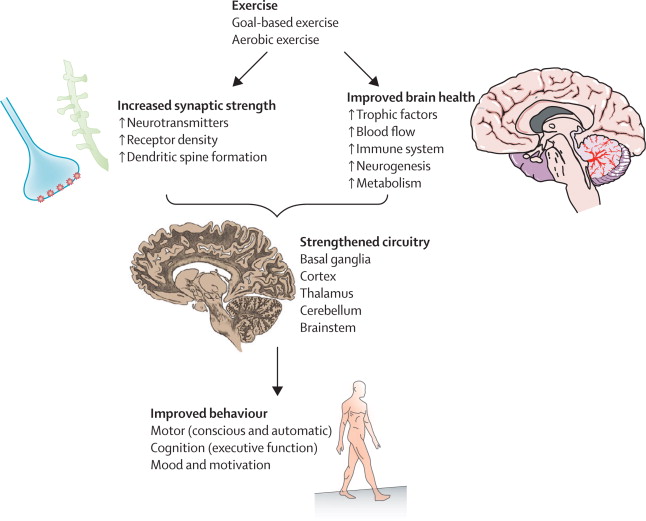
Exercise has significant effects on both the prefrontal cortex and the hippocampus, two key regions of the brain involved in cognition, learning, memory, and mood regulation. Regular exercise has been found to positively impact the structure and function of these brain areas. Here are some of the effects:
- Prefrontal Cortex: The prefrontal cortex (PFC) is responsible for higher cognitive functions, such as decision-making, attention, working memory, and executive control. Exercise has been shown to have several positive effects on the PFC:
a. Increased Blood Flow and Oxygenation: Exercise enhances blood flow and oxygen delivery to the brain, including the PFC. This improved cerebral blood flow helps nourish brain cells and supports optimal PFC function.
b. Neuroplasticity and Synaptic Growth: Exercise promotes neuroplasticity, the brain’s ability to change and adapt. It stimulates the growth and branching of dendrites, the communication pathways between neurons. This synaptic growth in the PFC improves neural connectivity and strengthens cognitive abilities.
c. Enhanced Executive Functions: Regular exercise has been associated with improvements in executive functions, including attention, working memory, cognitive flexibility, and inhibitory control. These enhancements are thought to be related to the positive effects of exercise on the PFC.
- Hippocampus: The hippocampus is a region crucial for learning, memory formation, and spatial navigation. Exercise has profound effects on the hippocampus, including:
a. Neurogenesis: Exercise promotes the generation of new neurons in the hippocampus, a process known as neurogenesis. These newly formed neurons are believed to contribute to improved learning and memory.
b. Enhanced Memory and Learning: Exercise has been linked to enhanced spatial memory, declarative memory (facts and events), and associative learning, all of which rely on the hippocampus. Regular physical activity can improve the encoding, consolidation, and retrieval of memories.
c. Mood Regulation: The hippocampus is involved in mood regulation, and exercise has been shown to have antidepressant effects. Regular exercise increases neurotrophic factors and neurotransmitters, such as brain-derived neurotrophic factor (BDNF) and serotonin, which positively influence mood and emotional well-being.
It’s worth noting that the effects of exercise on the prefrontal cortex and hippocampus can vary depending on various factors, such as the type, intensity, and duration of exercise, as well as an individual’s fitness level and genetic factors. Nonetheless, consistent evidence suggests that exercise plays a significant role in promoting brain health and optimizing cognitive functions in these critical brain regions.
References:
Chronic Disease Infographics | CDC. (n.d.). https://www.cdc.gov/chronicdisease/tools/infographics.htm
Islam, H., Neudorf, H., Mui, A.L. and Little, J.P. (2021), Interpreting ‘anti-inflammatory’ cytokine responses to exercise: focus on interleukin-10. J Physiol, 599: 5163-5177. https://doi.org/10.1113/JP281356
Petzinger, G. M., Fisher, B. E., McEwen, S., Beeler, J. A., Walsh, J. P., & Jakowec, M. W. (2013). Exercise-enhanced neuroplasticity targeting motor and cognitive circuitry in Parkinson’s disease. Lancet Neurology, 12(7), 716–726. https://doi-org.northernvermont.idm.oclc.org/10.1016/S1474-4422(13)70123-6
Erickson, K. I., & Kramer, A. F. (2009). Aerobic exercise effects on cognitive and neural plasticity in older adults. British Journal of Sports Medicine, 43(1), 22-24.
Hillman, C. H., Erickson, K. I., & Kramer, A. F. (2008). Be smart, exercise your heart: exercise effects on brain and cognition. Nature Reviews Neuroscience, 9(1), 58-65.
Cotman, C. W., & Berchtold, N. C. (2002). Exercise: a behavioral intervention to enhance brain health and plasticity. Trends in Neurosciences, 25(6), 295-301.
Kramer, A. F., Erickson, K. I., & Colcombe, S. J. (2006). Exercise, cognition, and the aging brain. Journal of Applied Physiology, 101(4), 1237-1242.
I write often about topics that affect our health and well-being. Additionally, I teach and offer lecture about qigong, tai chi, baguazhang, and yoga. I also have hundreds of FREE education video classes, lectures and seminars available on my YouTube channel at:
https://www.youtube.com/c/MindandBodyExercises
Mind and Body Exercises on Google: https://posts.gle/aD47Qo
Jim Moltzan
407-234-0119
www.MindAndBodyExercises.com
www.Amazon.com/author/jimmoltzan










 United Martial Arts Association