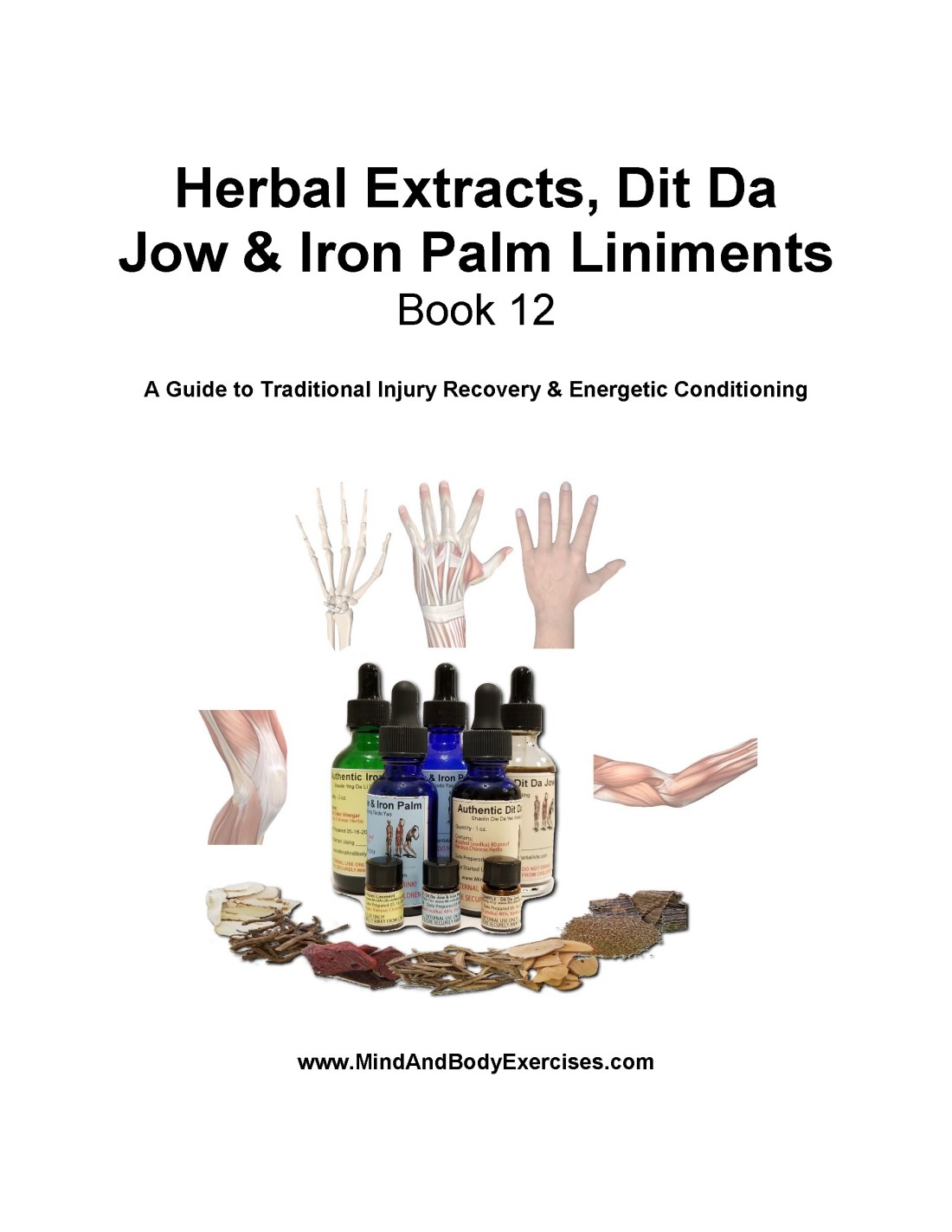
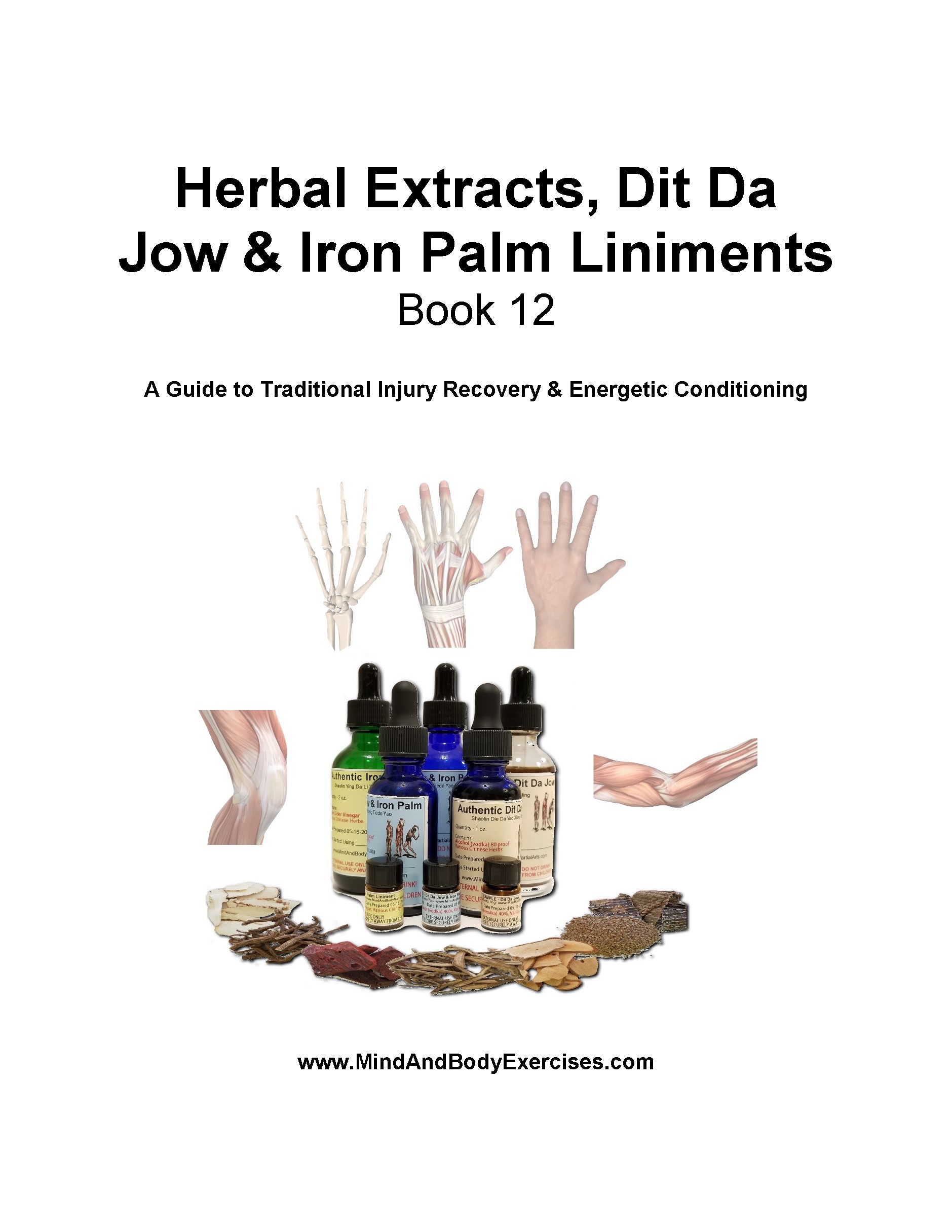
Unlock the ancient wisdom of Traditional Chinese Medicine with Book 12-Herbal Extracts, Dit Da Jow & Iron Palm Liniments, a focused study guide on the use of Dit Da Jow and Iron Palm liniments for injury recovery, martial conditioning, and energy cultivation. Drawing from decades of hands-on training in martial arts, qigong, and Eastern wellness systems, this guide introduces the reader to external herbal applications designed to support healing, reduce inflammation, and stimulate the body’s natural energetic flow.
Explore the distinctions and complementary uses of these two potent liniments, Dit Da Jow for bruises, sore muscles, and soft tissue repair, and Iron Palm liniment for conditioning bones, tendons, and ligaments under stress from training or impact. Detailed charts, herb descriptions, and usage instructions offer insights into over 100 traditional herbs, including their Chinese names, botanical profiles, and therapeutic properties.
Ideal for martial artists, bodyworkers, holistic health seekers, and anyone pursuing non-invasive methods of physical recovery, this book also demystifies why chronic pain resists conventional treatments—and how natural remedies can play a key role in long-term wellness.
Key Features:
Practical applications of Chinese liniments for injury support and advanced conditioning
Explanation of Qi flow and energetic blockages in the context of pain and healing
Comparison charts between Dit Da Jow and Iron Palm formulas
Extensive list of herbs with their functions and energetic roles
Author insights drawn from 40+ years of study and teaching in martial and healing arts
Whether you’re a practitioner or a curious learner, Herbal Extracts offers timeless healing strategies rooted in tradition yet highly relevant to modern self-care.
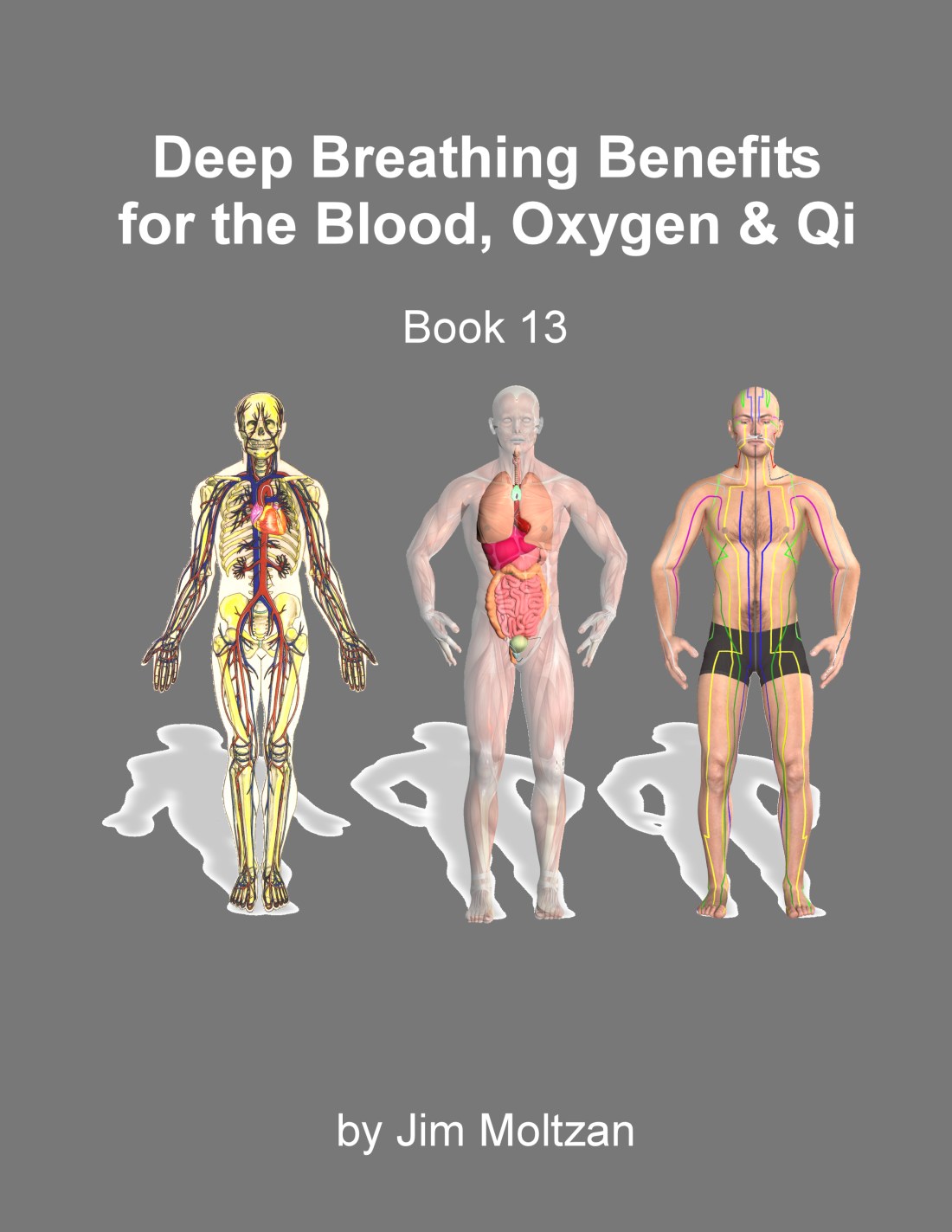
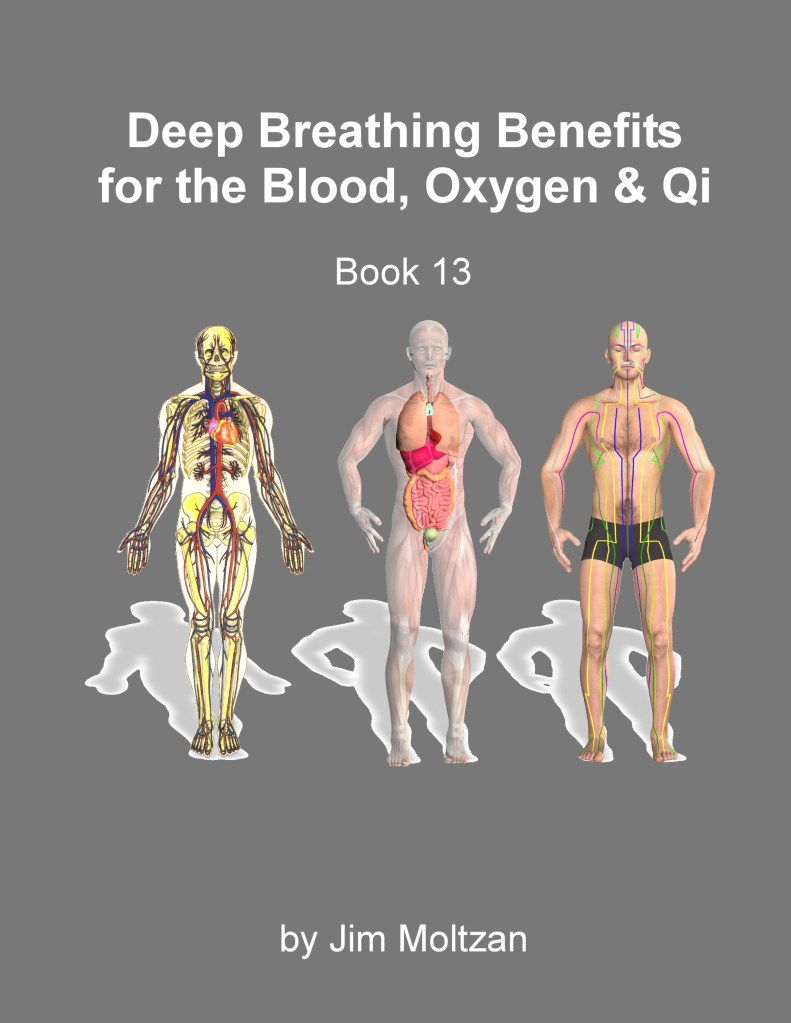
My latest book is the result of more than four decades of study, practice, healing, teaching, and reflection. It has been shaped through a lifetime of learning, from the grind of physical training to the quiet revelations of stillness. I’ve experienced injury and recovery, frustration and discovery, disillusionment and renewal. I’ve worked with athletes and seniors, martial artists and skeptics, students in pain and seekers of peace. And in all of this, I’ve come to a clear and powerful truth: how we breathe determines how we live.
Breath is our most intimate connection to life. It is the first thing we do when we are born and the last act of the physical body before death. In between, we take tens of thousands of breaths each day yet few of us are ever taught how to breathe well. Breath is assumed, automatic, and too often ignored until it becomes impaired. But for those who learn to pay attention, the breath is also a teacher, a tool, and a gateway to better health, greater awareness, and inner strength.
Available on Aamzon
From physiology to philosophy, Eastern medicine to Western science, every tradition I’ve explored acknowledges the power of breath. What this book offers is a bridge between those worlds. It is not just a technical manual or a philosophical essay, it is a lived map. It charts what I’ve seen work, what I’ve tested, and what I’ve returned to again and again, both for myself and my students.
This book is also a response to a culture that too often seeks complex fixes while ignoring the fundamentals. We have machines that track every heartbeat, yet people feel exhausted. Medications suppress symptoms but rarely resolve the cause. In contrast, breathing with awareness costs nothing, requires no equipment, and is available to you at any moment. It can regulate blood pressure, balance hormones, release chronic tension, improve digestion, enhance mental clarity, and restore emotional balance. It can return you to yourself.
Whether you’re new to breathwork or a seasoned practitioner, this book is designed to meet you where you are. It begins with the body, your physiology and posture, then moves through traditional practices, energetic systems, and meditative tools. By the end, you’ll understand not just how to breathe better, but why doing so changes everything.
My hope in writing this is not just to inform, but to awaken, to stir in you a sense of curiosity, empowerment, and agency. You do not need to be a guru, athlete, or mystic to reclaim your breath. You only need to begin. Each chapter in this book is an invitation to return to that beginning again, more skillfully each time.
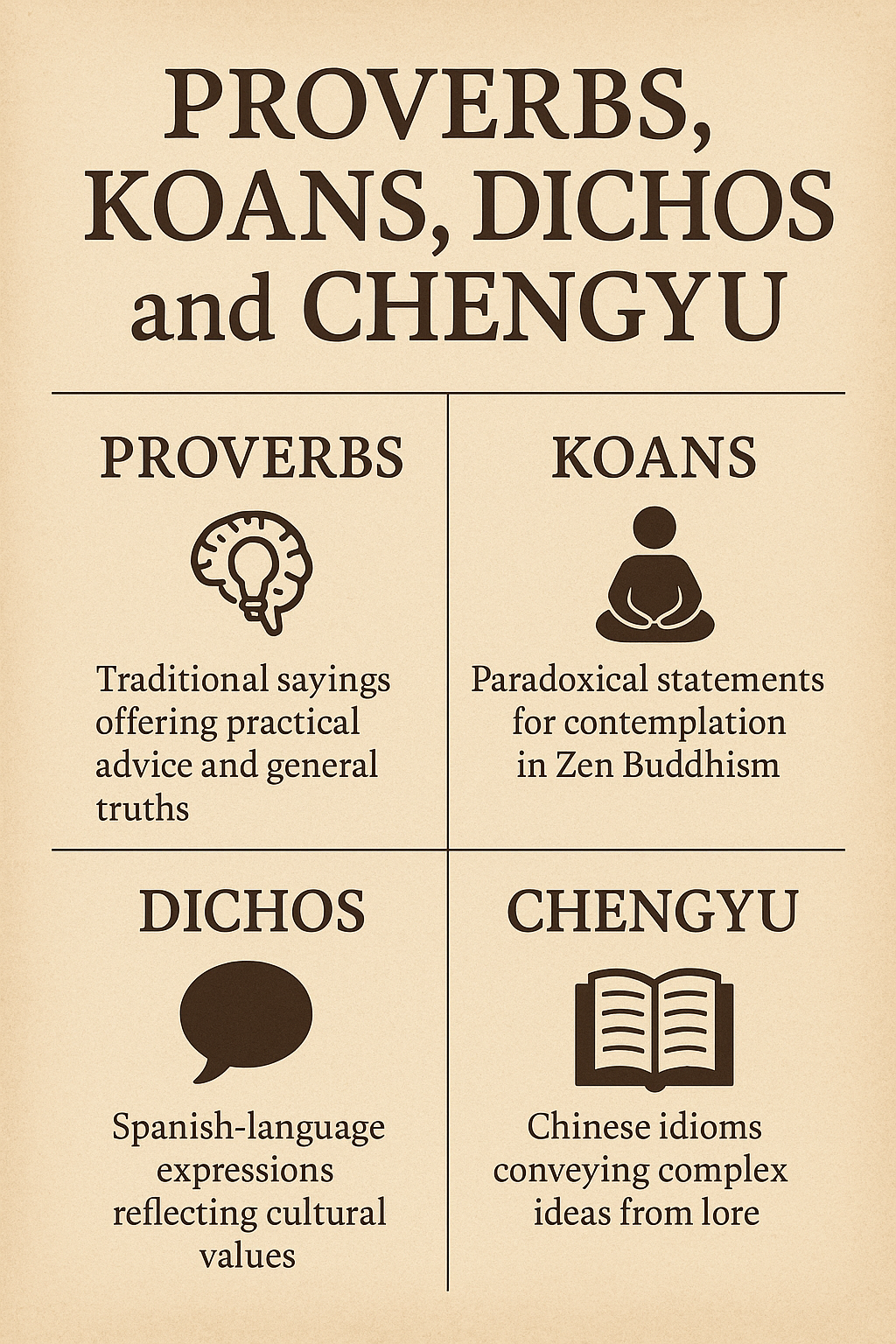
Proverbs, koans, dichos, and chengyu are all concise expressions of cultural wisdom, yet they each emerge from unique linguistic and philosophical traditions. Though they may differ in form and function, they share the universal purpose of offering insight into human nature, behavior, and values. Below is a comparison that highlights their origins and distinctions.
Proverbs
Cultural Origin: Found in virtually every language and culture worldwide, proverbs are traditional sayings passed down through generations.
Purpose: Proverbs offer practical wisdom, moral lessons, or general truths about life. They are often metaphorical and easily remembered.
Examples:
“A stitch in time saves nine.”
“Actions speak louder than words.”
“Don’t count your chickens before they hatch.”
Koans
Cultural Origin: Originating in Chinese Chan Buddhism and further developed in Japanese Zen Buddhism, koans are used as a tool for spiritual training.
Purpose: Koans are not meant to be logically solved. Instead, they challenge conventional reasoning and are used in meditation to provoke deep introspection and insight into the nature of self and reality.
Examples:
“What is the sound of one hand clapping?”
“What was your original face before your parents were born?”
Dichos
Cultural Origin: Common in the Spanish-speaking world, especially in Latin America and Spain, dichos are culturally rich sayings deeply embedded in Hispanic traditions.
Purpose: Like proverbs, dichos reflect cultural values and offer observations or advice about life, often with regional flavor or humor.
Examples:
“No hay mal que por bien no venga” (There’s no bad from which good doesn’t come.)
“El que mucho abarca, poco aprieta” (Jack of all trades, master of none.)
Chengyu
Cultural Origin: Chengyu (成语) are idiomatic expressions from classical Chinese literature. Most consist of four characters and are rooted in historical or mythological events.
Purpose: Chengyu condense complex narratives or moral lessons into brief, poetic form. They are often used in both written and spoken Chinese to convey layered meanings.
Examples:
卧薪尝胆 (wò xīn cháng dǎn) – “To lie on firewood and taste gall.” Refers to enduring hardship and humiliation in pursuit of a goal or vengeance.
画蛇添足 (huà shé tiān zú) – “To draw legs on a snake.” Means to ruin something by overdoing it.
In summary, proverbs are universal sayings found in many cultures. Koans are paradoxical statements used in Zen Buddhism for meditation and self-realization. Dichos are Spanish-language proverbs commonly used in Hispanic cultures. Chenyus are from Chinese culture and are idiomatic expressions or set phrases. While they all share common goal of conveying wisdom, they vary in their cultural origins and specific uses.
From a holistic health perspective, such wisdom serves not only the intellect but the mind-body-spirit connection. These expressions often guide emotional balance, mindful behavior, and personal growth, cornerstones of overall well-being. They offer reminders of resilience, compassion, humility, and inner strength, supporting wellness not just as a state of physical health, but as a dynamic, cultural, and spiritual journey.
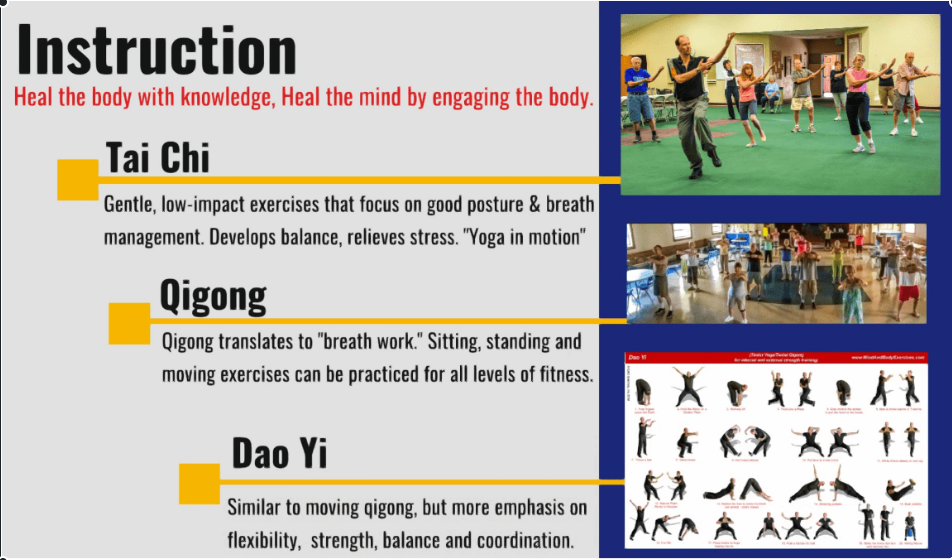
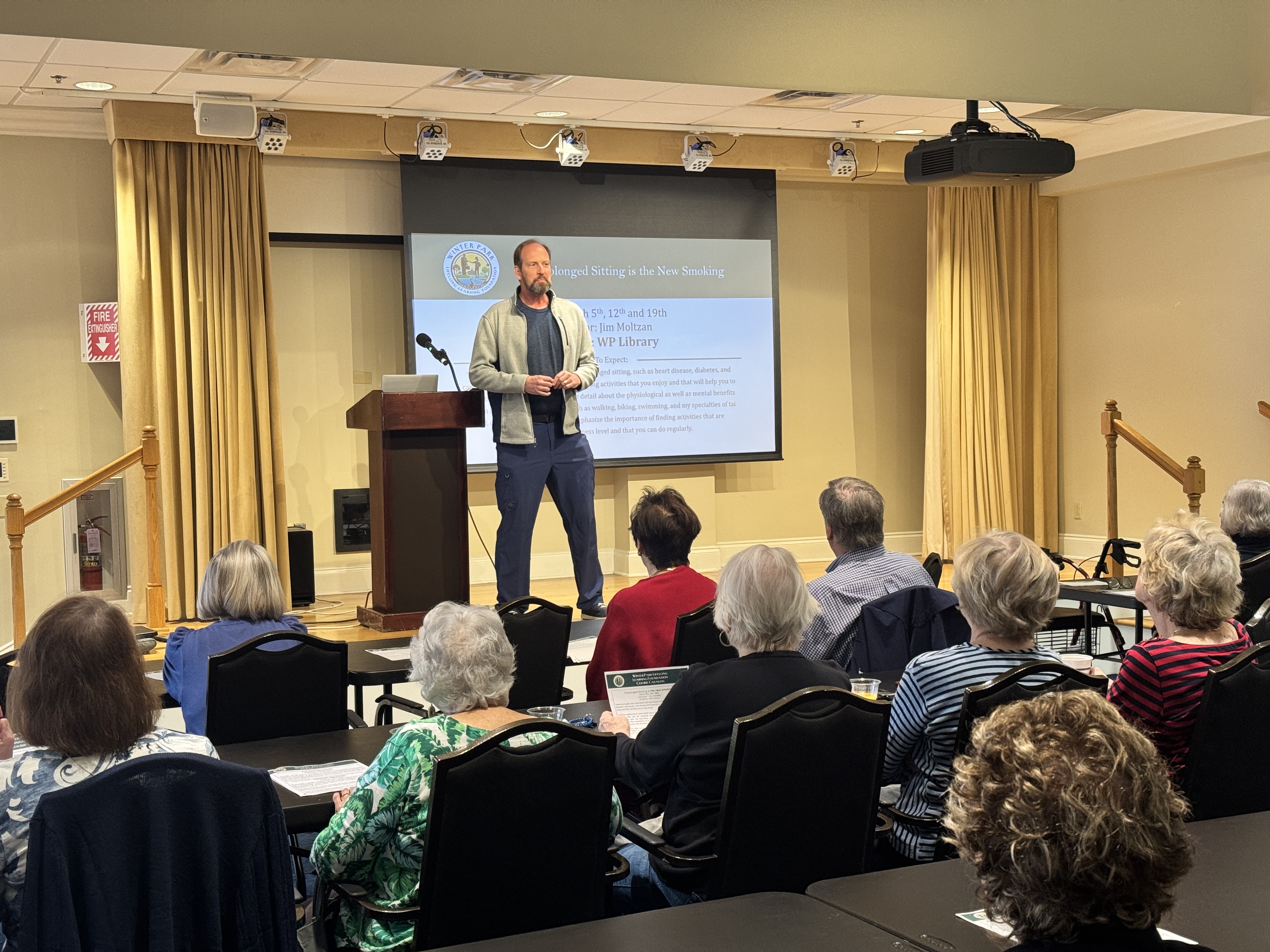
I teach and offer lectures about holistic health, physical fitness, stress management, human behavior, meditation, phytotherapy (herbs), music for healing, self-massage (acupressure), Daoyin (yoga), qigong, tai chi, and baguazhang.
Please contact me if you, your business, organization, or group, might be interested in hosting me to speak on a wide spectrum of topics relative to better health, fitness, and well-being.
I look forward to further sharing more of my message by partnering with hospitals, wellness centers, VA centers, schools on all levels, businesses, and individuals who see the value in building a stronger nation through building a healthier population.
I also have hundreds of FREE education video classes, lectures, and seminars available on my YouTube channel at:
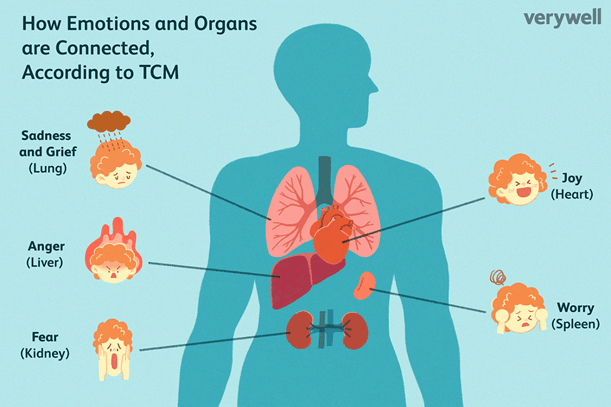
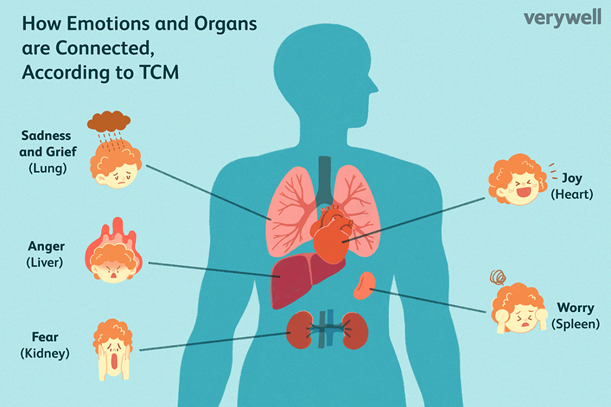
In Traditional Chinese Medicine (TCM), the human body is seen not merely as a collection of parts but as an interconnected system of energy, spirit, emotion, and function. One of the most profound concepts in TCM is that each major organ system is linked to a particular emotion. Among these, the Heart is associated with the season of summer and the emotion of Joy, a connection that is both beautiful and cautionary.
(Vanbuskirk, 2024)
The Heart: Emperor of the Organ Systems
According to classical TCM, the Heart is not just a mechanical pump. It is the “Emperor” of the body’s organ systems. It governs the blood and blood vessels, controls the tongue, and most significantly, houses theShen the mind or spirit.
Heart Correspondences:
Element: Fire
Season: Summer
Color: Red
Flavor: Bitter
Tissue: Blood vessels
Sense Organ: Tongue
Emotion: Joy
Spirit: Shen (Mind/Spirit)
When the Heart is balanced, we experience mental clarity, restful sleep, appropriate excitement, and the capacity for deep connection with others.
Joy: The Nourishing Emotion
In appropriate doses, joy is a deeply nourishing force. Joy:
Soothes the nervous system and eases emotional tension
Promotes circulatory warmth and a sense of connection
Lifts the Shen, resulting in laughter, optimism, and creativity
It is vital to a healthy spiritual life
Joy reflects the expansive nature of the Fire element. Like the sun in summer, it radiates outward, illuminating relationships and animating the spirit.
When Joy Becomes Excessive
Paradoxically, the very emotion that nourishes the Heart can also harm it when excessive or poorly regulated. In TCM, “excess joy” includes:
Overexcitement, mania, or hysteria
Hyperactivity, constant stimulation
Overindulgence in pleasure or celebration
Physiological Consequences of Excess Joy:
Scattering of the Shen: The mind becomes ungrounded or erratic.
Heart Qi disruption: Can result in palpitations, insomnia, anxiety.
In modern terms, this may resemble bipolar mania, panic disorder, or emotional exhaustion. Prolonged joy without rest can overheat the system, especially in individuals already constitutionally “hot” or deficient in Yin.
The Importance of Emotional Balance in TCM
TCM recognizes no emotion as inherently negative. Emotions are considered physiological energies that must move freely, but in balance.
Emotion
Organ System
In Balance
In Excess
Joy
Heart
Warmth, clarity, connection
Scattered mind, insomnia, palpitations
Anger
Liver
Motivation, assertiveness
Irritability, tension, high blood pressure
Worry
Spleen
Compassion, thoughtfulness
Obsession, overthinking, fatigue
Grief
Lung
Reverence, release
Depression, breathlessness
Fear
Kidney
Caution, intuition
Panic, low back pain, adrenal fatigue
All five emotions (and their corresponding organ systems) influence one another. For example, chronic over-stimulation (excess joy) may weaken the Heart and eventually impact on the Kidneys (fear) or the Spleen (overthinking), leading to broader emotional and physical disharmony.
Recognizing Heart-Shen Imbalance
Signs that joy has turned from nourishing to disruptive may include:
Insomnia or difficulty falling asleep
Restlessness or excessive chatter
Palpitations or fluttering heartbeat
Red tip of the tongue (Heart Fire sign)
Vivid or disturbing dreams
Uncontrollable laughter or emotional outbursts
Practitioners aim to calm the Shen, clear Heart Fire, and nourish Heart Yin with techniques such as:
Acupuncture (e.g., Heart 7, Pericardium 6)
Herbal formulas (e.g., Tian Wang Bu Xin Dan)
Meditation and breathwork
Avoidance of overstimulation, especially in summer
A Holistic Reflection
In the West, joy is often pursued as a goal in itself. But TCM offers a subtle reminder: true wellness lies not in constant happiness but in dynamic balance. Joy, like fire, is beautiful but unchecked, it can burn.
Instead of constant excitement, TCM encourages us to cultivate:
Contentment
Presence
Inner peace
By anchoring our joy in stillness, we allow the Shen to rest peacefully in the Heart, just as the sun sets each day to allow the body to restore.
References
Kaptchuk, T. J. (2000). The Web That Has No Weaver: Understanding Chinese Medicine. McGraw-Hill.
I look forward to further sharing more of my message by partnering with hospitals, wellness centers, VA centers, schools on all levels, businesses, and individuals who see the value in building a stronger nation through building a healthier population.
I also have hundreds of FREE education video classes, lectures, and seminars available on my YouTube channel at:
In Warrior, Scholar, Sage, I invite you into a living tradition where martial arts, personal growth, and ancient philosophy merge to awaken the fullest human potential. Drawing from over 40 years of training, teaching, and holistic wellness practice, this book offers a unique blend of physical methodology, mental resilience, and spiritual reflection.
More than a manual of movements, this is a guide to living with awareness and integrity. You’ll explore Eastern martial traditions and Western psychological insights, from archetypes and ethical codes to energetic cultivation, posture work, and the moral responsibility of the modern-day warrior.
Through better understanding of dynamic tension exercises or stances (isometrics), proverbs, stories, and personal reflection, I equip readers to move with intention, teach with clarity, and live with purpose.
Whether you’re a martial artist, instructor, healer, or seeker of truth, Warrior, Scholar & Sage is your compass on the lifelong journey of strength, wisdom, and inner peace.
In a world flooded with noise, speed, and disconnection, this book offers a path back to equilibrium, through movement, breath, and discipline. It supports the development of the complete individual, what I have come to know as the integrated warrior-scholar-sage.
We’re not just training the body. We are refining the mind, expanding awareness, and aligning with higher values. The goal is not combat, but character. Not dominance, but discipline. Not conquest, but connection.
I invite you to read, reflect, and most importantly apply these teachings. Let this guide accompany you on your path to mastery not just in martial arts, but in life.
I look forward to further sharing more of my message by partnering with hospitals, wellness centers, VA centers, schools on all levels, businesses, and individuals who see the value in building a stronger nation through building a healthier population.
I also have hundreds of FREE education video classes, lectures, and seminars available on my YouTube channel at:







 United Martial Arts Association