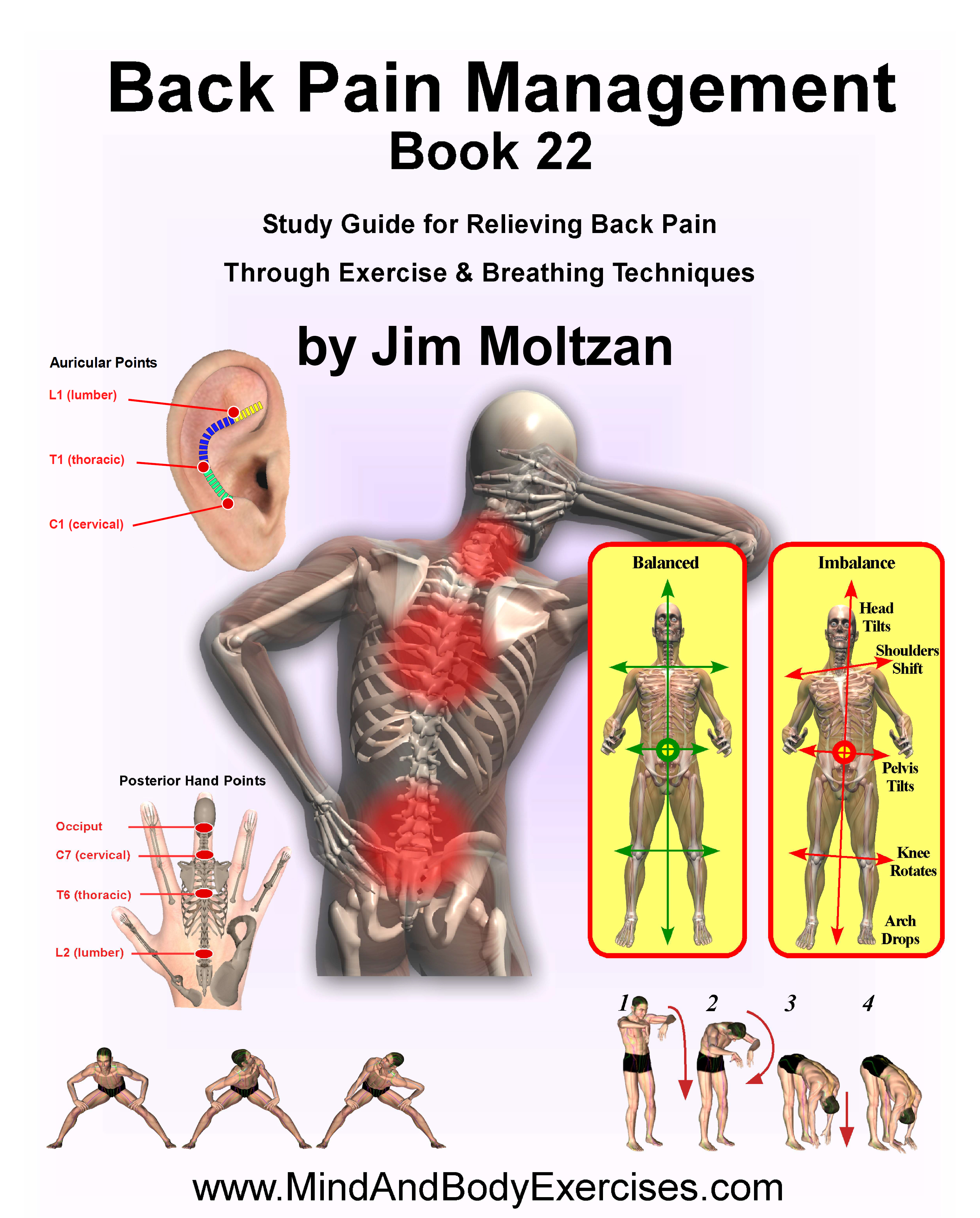
I am finally self-published on Amazon! I call this my legacy project. I am trying to document with text and graphics, much of what I have learned about health, wellness and fitness over many years. I have about 20 booklets up and plan on more as I am able.
These booklets are the summation of over 40 years of my training, education, teaching and public speaking of martial arts, qigong, fitness, wellness, TCM and other facets of self-improvement. Similar to popular study guides such as Quick Study or PermaCharts, these graphic and text guides cut to the chase in order to minimize precious time spent muddling through extensive textbooks seeking understanding of specific concepts. Each guide is packed with the root knowledge regarding specific topics. This format is highly beneficial for the novice as well as experts in the fields of health, wellness and self-improvement.
Be well, be healthy, be wise!
_______________
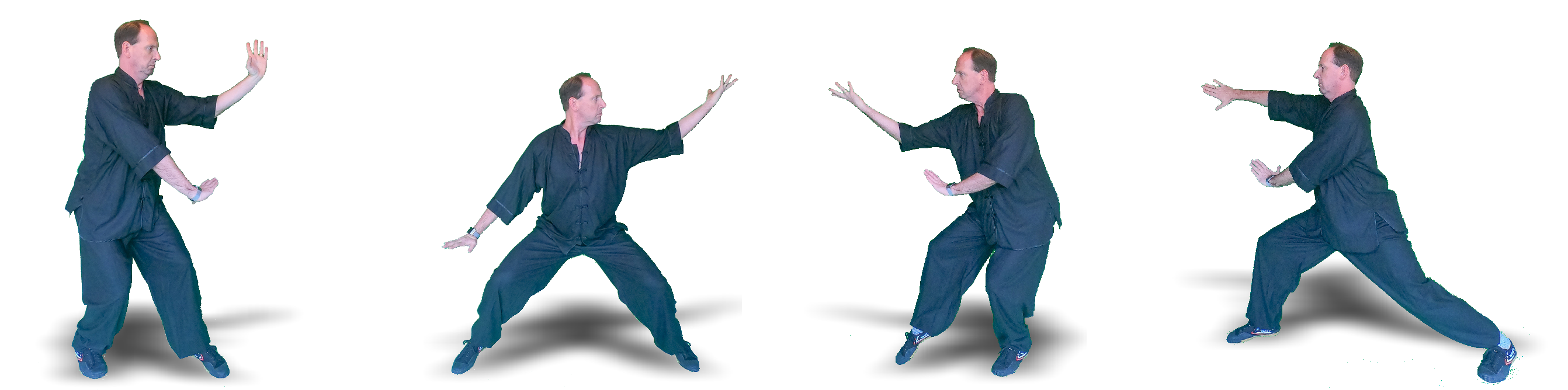
Qigong, tai chi, baguazhang, and yoga are not the only methods that can be used within this formula but have proven the test of time as methods to cultivate harmony of the mind, body and spirit. These exercise practices offer a wide spectrum of physical wellness benefits, stress relief as well as means of self-awareness. Not all teachers nor students practice these for the same goals.
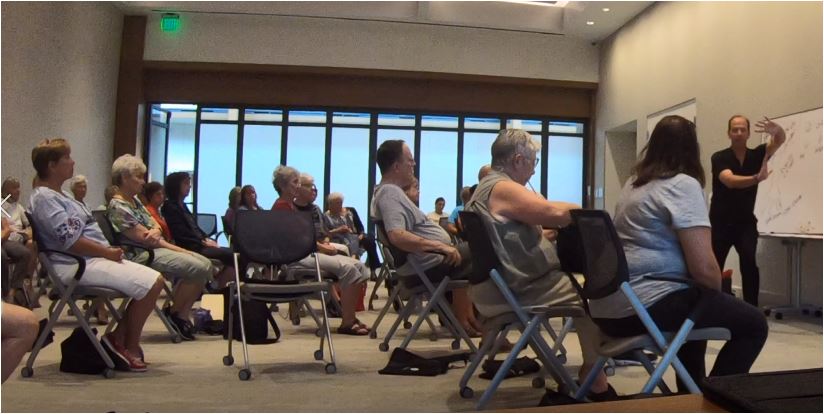
I am currently offering wellness lectures and classes for group, small group & private instruction in Wekiva, Longwood and Winter Park.
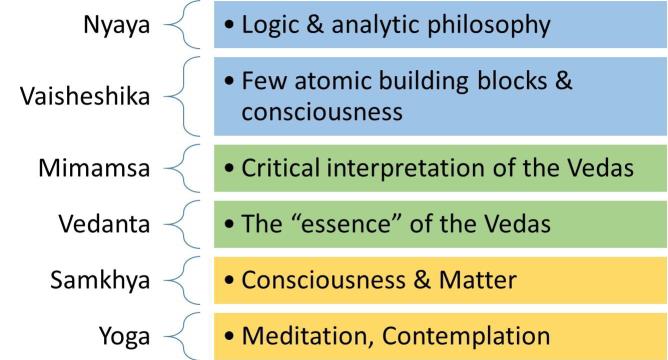
Sankhya is one of the six Shad Darshans in Indian philosophy which seeks to understand the Truth of life. Sankhya, comes from “san” meaning truth and “khya” meaning to realize. Sankhya is also a Sanskrit word meaning enumeration.The founder of this philosophy was Kapila, an enlightened rishis or seer. Samkhya is composed of a consistent dualism between Prakruti (matter) and Purusha (pure consciousness). Prakruti is responsible for creation of all manifestation of form and diversity within the Universe. Whereas Purusha is the witness to this creation. Prakruti (matter) cannot exist without Purusha (pure consciousness), but conversely there can be Purusha without Prakruti. Obtaining Right knowledge allows one to distinguish between Purusha from Prakruti. Furthermore, Sankhya is comprised of 24 principles that evolve out of each other, that are thought to have brought about other aspects of the Universe. These categories begin to breakdown further into another branch of the Tamas, where the 5 elements of ether, air, fire, water, and earth manifest into being. From another branch known as Sattva, the Five Sense Faculties and Five Faculties of Action come into existence (Lad, 2001).
These balances can be seen as somewhat similar to Taoist Cosmology where the balance of Yin and Yang manifested from the Wuji to create the Dao or Tao (loosely translated as “the way”), which also has theories and beliefs regarding the origin of the universe.
Mimamsa is another of the six Shad Darhan from Indian philosophy and incorporated within Ayureveda. The philosopher Jaimini is known to be the founder of Mimamsa, whose meaning is to thoroughly understand the truth. God is seen in the here and now as a universal being, that is reflected in nature as well as in every human. In order to truly know and understand oneself, one needs to know God.
Mimamsa focuses on the teaching of the Vedas which are the most ancient Hindu scriptures. Mimamsa is further divided into Purva Mimamsa and Uttara Mimamsa. Purva Mimamsa focuses upon the initial teachings within the Vedas pertaining to rituals and actions. Uttara Mimamsa focuses on the higher teachings of the Vedanta. Mimamsa believes that there are many deities that each have significant blessings to benefit mankind.
Another aspect of Mimamsa is Dharma, where one strives to achieve spiritual freedom through the performance of duty. Dharma teaches of a path for people to conduct and live their lives with purpose. Teachings include ceremonies, rituals and fasting. Ayurveda draws upon Mimamsa for healing purposes using rituals such as burning incense and candles, flower offerings and sprinkling of holy water, all which are thought to have healing powers (Lad, 2002).
I can relate very much to this concept of Dharma. Through my years of learning qigong, Chinese and Korean martial arts, we were taught to strive to live a path of self-discipline to manage health as well as our moral compass. Part of our martial arts Dharma was to learn and apply as much of the philosophy as possible to ourselves, with the eventual goal of teaching and helping others to do the same. Teaching of others is regarded as a very high level of self-sacrifice of time, effort, energy and thought, which earns good karma (spiritual credit or debt). Learn so that you earn.
I am now realizing that many of these philosophies did not originate from just these practices of martial arts or qigong alone, or even from yoga but often having a deeper root in the Indian Shad Darshans.
References:
Lad, V. (2001). Textbook of Ayurveda, Vol. 1: Fundamental Principles of Ayurveda (1st ed., Vol. 1). Ayurvedic Press.
Many of the posts here have discussed some of the mental or spiritual benefits of Tibetan Meditations. If appears as there is quite a bit of research on the physical benefits as well. Advanced methods of meditation, such as Tummo, may open up options that will help to better treat stress-related illnesses.
There are events reported where Tibetan monks have demonstrated some very high levels of meditation where they can perform seemingly miraculous feats of the human body. For instance, at a Buddhist monastery in Northern India, a group of monks were lightly dressed and unaffected by the temperature of their surroundings of 40 degrees Fahrenheit. They were then covered with ice-cold, wet sheets of fabric. An average person would be shivering uncontrollably to try to stay warm, however the monks remain unfazed. The wet sheets began to steam after about 1 hour, eventually becoming completely dry. The monks had used a yoga technique known as Tummo, which literally means ‘inner fire‘. This is an ancient meditation technique practiced by monks in Tibetan Buddhism. where a combination of breathing and visualization techniques are used to enter into a deep state of meditation. This method enabled them to significantly raise their body heat, as much as 17 degrees Fahrenheit in their fingers and toes.
Components of Tummo meditation that can lead to temperature increases are Vase breath and concentrative visualization. Vase breath is a particular breathing technique which causes thermogenesis, a process of heat production. Concentrative visualization is where the practitioner focuses on a mental image of flames along the spinal cord in order to prevent heat loss. Reports from scientists at Harvard University see this phenomenon as an amazing example of the mind’s ability to influence the body.
Qigong, tai chi, baguazhang, and yoga are not the only methods that can be used within this formula but have proven the test of time as methods to cultivate harmony of the mind, body and spirit. These exercise practices offer a wide spectrum of physical wellness benefits, stress relief as well as means of self-awareness. Not all teachers nor students practice these for the same goals.
I am currently offering wellness lectures and classes for group, small group & private instruction in Wekiva, Longwood and Winter Park.
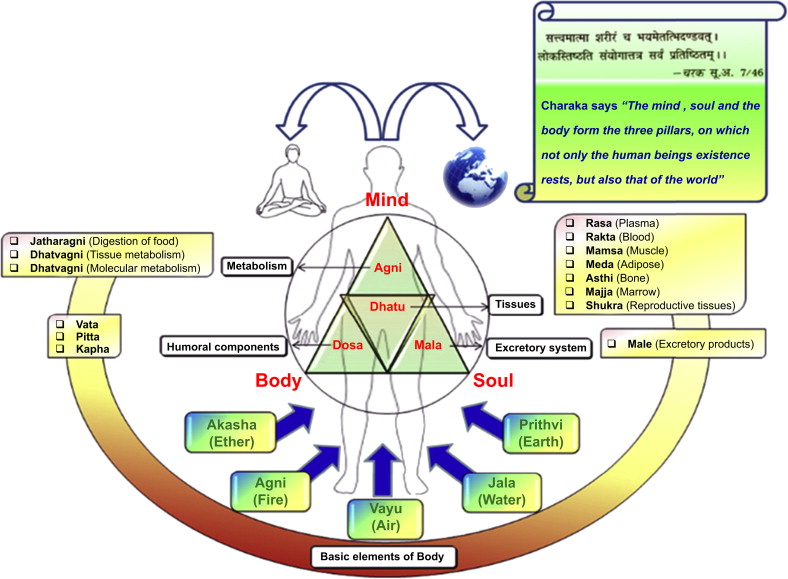
Ayurveda, meaning the “knowledge of life”, has been practiced for over 3000 years. Perhaps modern society and culture can learn something about health and wellness from the ancients. Many of the basic concepts deal with balance of one’s mind, body and spirit in relation to an individual’s specific constitution. Just because something is considered healthy for one, doesn’t necessarily mean it is healthy for all. Open your mind to other perspectives that maybe there exist other options beyond pharmaceuticals, surgery and other invasive healthcare protocols.
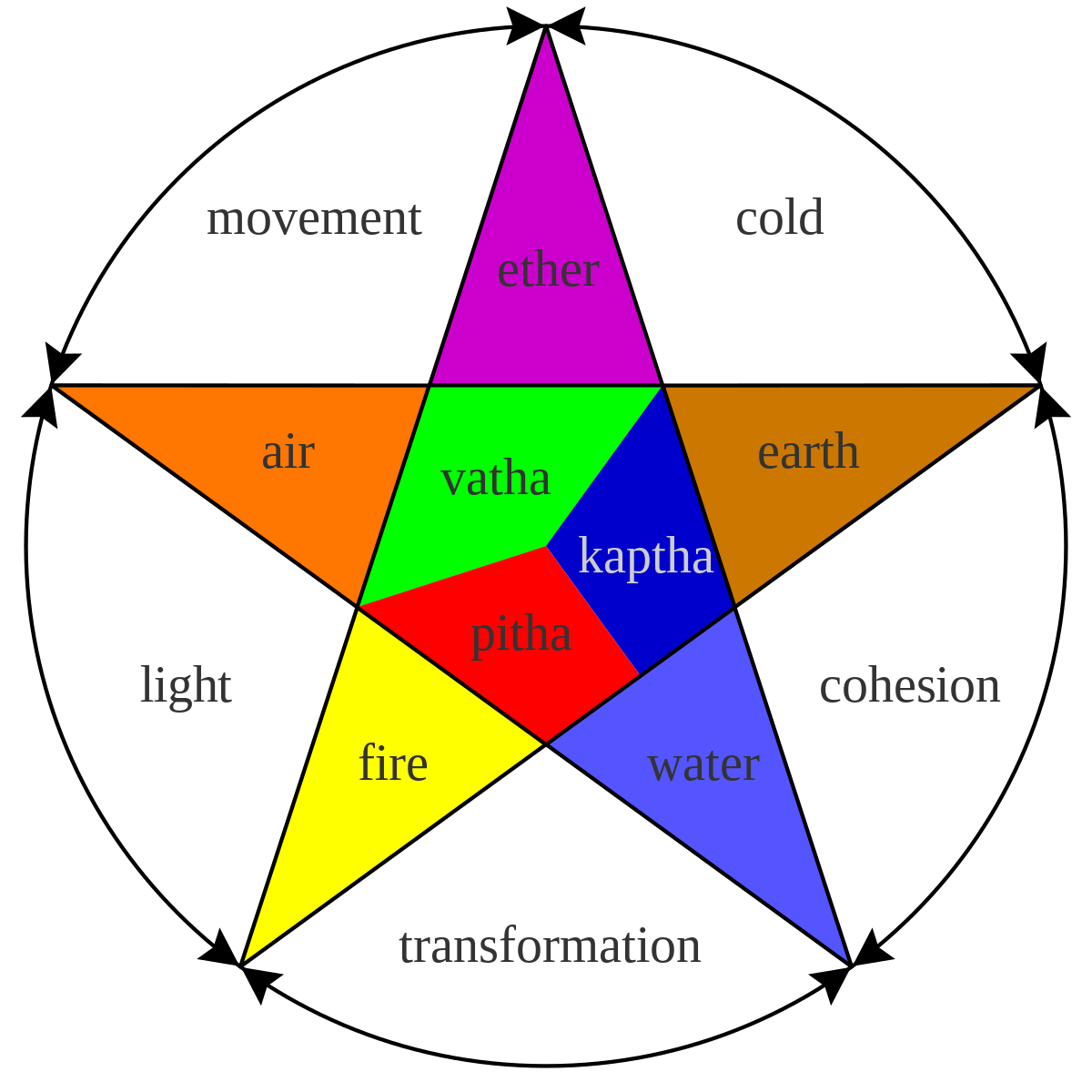
The 5 elements of ether, air, fire, water, earth manifesting from a state of nothingness consciousness or avyakta, to produce the universe and consequently establishing the basic principles behind Ayurveda science. The ancient rishis (sages or seers) believe that each element has its own unique properties, but maybe more important is the inner relationships of harmony that exist within each. The 5 elements consist of:
Ether – came about from the subtle vibration o the soundless sound of Aum
Air – came about from the ether moving
Fire – the movement of air produced friction to generate heat producing fire
Water – came about from the heat of fire dissolving elements to produce water
Earth – water solidified to form the molecules of earth
Each of the elements have corresponding traits or features such as senses, actions, organs and tastes, that again are unique to that element.
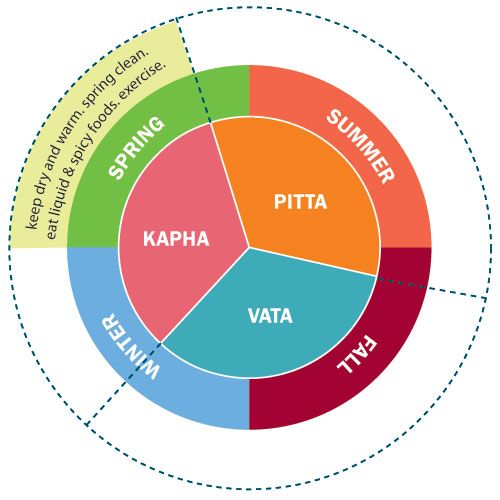
From the 5 elements, the Tridoshas or body type constitutions of Vata, Pitta and Kapha are manifested. Dosha means “impurity” or “mistake” but in this context refer more to organization of psychophysiological responses and physical changes within the human body. Each Dosha are comprised of all 5 of the elements and have interrelationships. However, two elements are dominant in each. The three Doshas and their elemental relationships are:
Vata is associated with air and ether
Pitta is associated with fire and water
Kapha is water and earth
Within Ayurveda therapeutics, pharmacology and food preparation are 20 attributes or “Gunas” such as Guru (heavy), Laghu,(light), Shita (cold), Ushna (hot), etc. Ayurveda philosophy uses these 20 attributes as a therapeutic guide or diagnostic tool, in order to evaluate which quality is out of harmony within Vata, Pitta, or Kapha. These gunas are further categorized into 10 opposite pairs.
There are also various states within the combinations of Doshas, as no one is just comprised of one Dosha, but rather a balance of proportions of the three. This is referred to as one’s Prakruti, or the psychophysical makeup as well as functional habits of an individual. There are four categories that describe Prakruti:
Janma Prakruti – also referred to as Karma Prakruti, is genetic so it does not change until the end.
Deha Prakruti – can change by way of the actions of the mother’s lifestyle, diet, and environment. It is the current Prakruti.
Dosha Prakruti – represents the ratio of each Dosha at the time of birth.
Manas Prakruti.- defines the mental constitution and is subject to change. Manas Prakruti is further described in the three Gunas of sattva, rajas and tamas.
Manas Prakruti further breaks down and described in terms of the three gunas of sattva, rajas, and tamas where:
Sattva – expresses qualities of the mind such as alertness, love, clarity, compassion, attentiveness
Rajas – expresses qualities of selfishness, restlessness, and self-centeredness
Tamas – qualities expressed are gloominess, sadness, dullness, laziness
The 3 Doshas can each be further elaborated upon to determine a more concise profile or constitution of the individual. All Doshas have personality and physical traits that can be perceived as positive as well as negative.
Vata comes from the Sanskrit word of “vah” with the meaning of carrying or moving. Vata reflects mobility that regulates bodily activities such as movement of food through the body and thoughts over a particular time. Vata is the commander of our life force or prana. When the vata exits the body, physical life ends. Vata individuals are often alert, quick to act and easily excited. There are many other attributes that can define the vata individual, but this is a very basic and general description.
Pitta comes from the Sanskrit word “tap” meaning heat and represents the fire element within the body. Pitta plays a role in metabolism, digestion, and body temperature. The Pitta individual has a strong capacity to concentrate, learn and understand. Consequently, they become very disciplined and great leaders.
Kapha’s meaning comes from the Sanskrit words of ka (water) and pha (flourish) or that which is flourished by water. Kapha’s elements are water and earth, composing the cells, tissues and organs of the human body. A Kapha type individual harbors a deep and stable faith, a calm and steady mind. This strong constitution possesses strength, love, knowledge, and longevity.
This is just a basic overview of some of the many aspects of Ayurveda philosophy.
References:
Lad,. (2001). Textbook of Ayurveda, Vol. 1: Fundamental Principles of Ayurveda (1st ed., Vol. 1). Ayurvedic Press.
_______________
Qigong, tai chi, baguazhang, and yoga are not the only methods that can be used within this formula but have proven the test of time as methods to cultivate harmony of the mind, body and spirit. These exercise practices offer a wide spectrum of physical wellness benefits, stress relief as well as means of self-awareness. Not all teachers nor students practice these for the same goals.
I am currently offering wellness lectures and classes for group, small group & private instruction in Wekiva, Longwood and Winter Park.
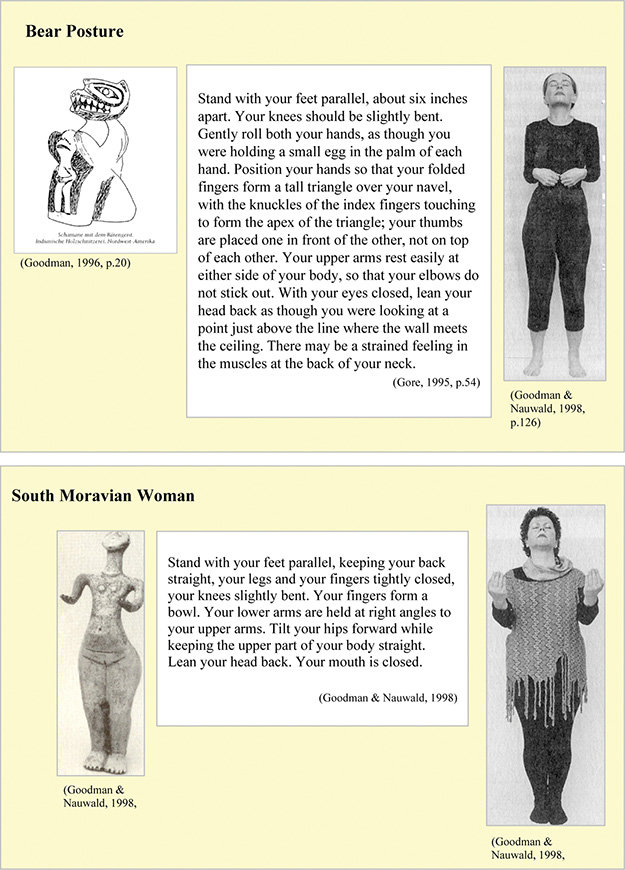
I saw many similarities with the ritual body postures from Felicitas Goodman and my own practices of qigong and daoyin (martial arts yoga). Consequently, I decided to purchase her book, Where the Spirits Ride the Wind, to do more research on these methods. Goodman writes about how a specific posture; the “bear posture” can help heal not only the practitioner but for others in the group setting who were not able to hold the posture (Goodman,1990, pg. 33). This goes beyond the thought that we practice healing methods not just for ourselves, but for others in our group or community, quite similar to why people pray for themselves and/or others.
Goodman has named another posture the “Mayan Empowerment posture” and describes it as being able to help generate healing energies (Monaghan, 1999, pg.41). I have again learned and practiced similar exercises in my qigong training. I think as other cultures, such as Eastern Asian, Native American, South American and others merge into Western and US culture there may be more of a need for scientific research. Documented research may help some of these practices to become more acceptable and mainstream instead of being considered alternative, metaphysical, or even a bit far-fetched for some. Unfortunately, many of these practices do not translate well into the standard of randomized double-blind studies.
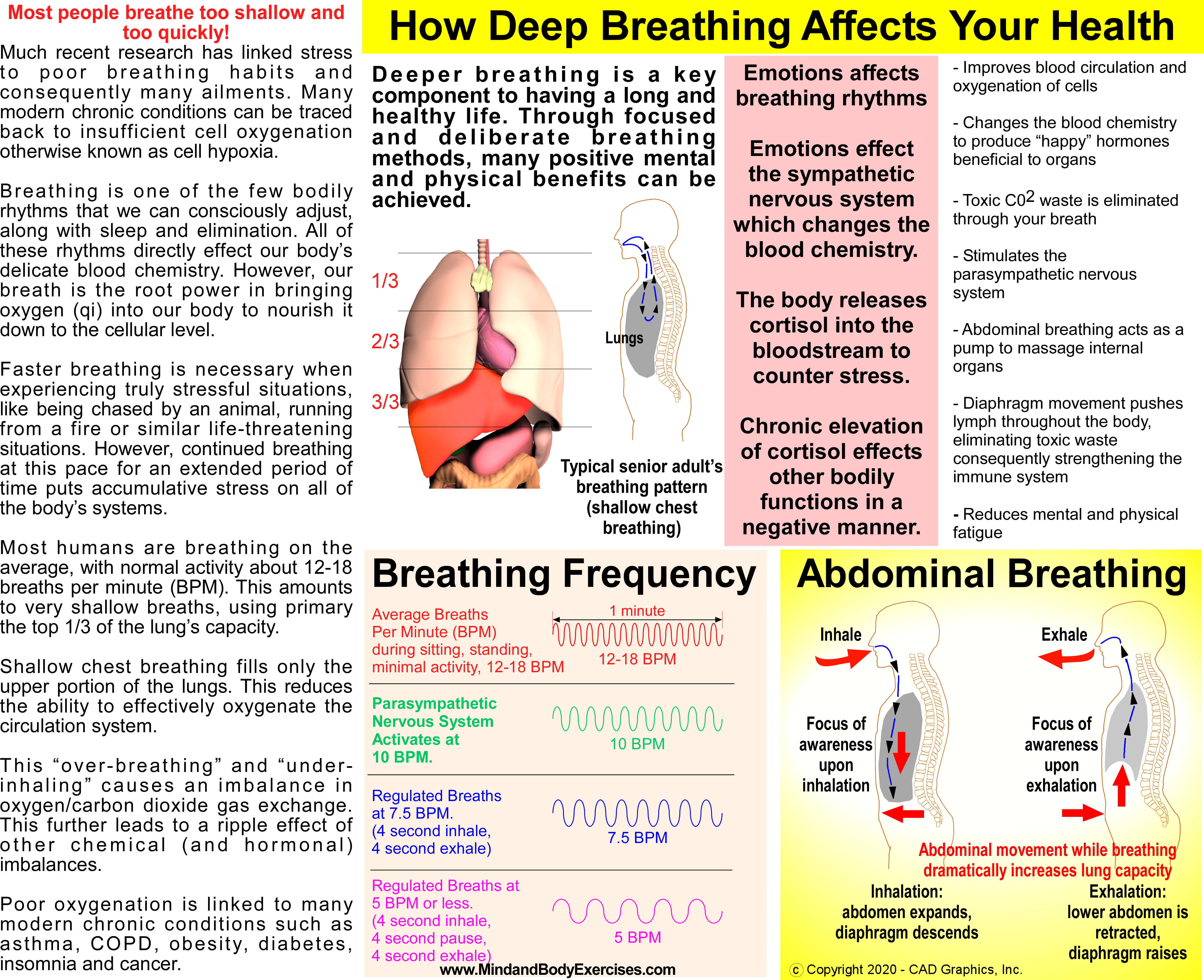
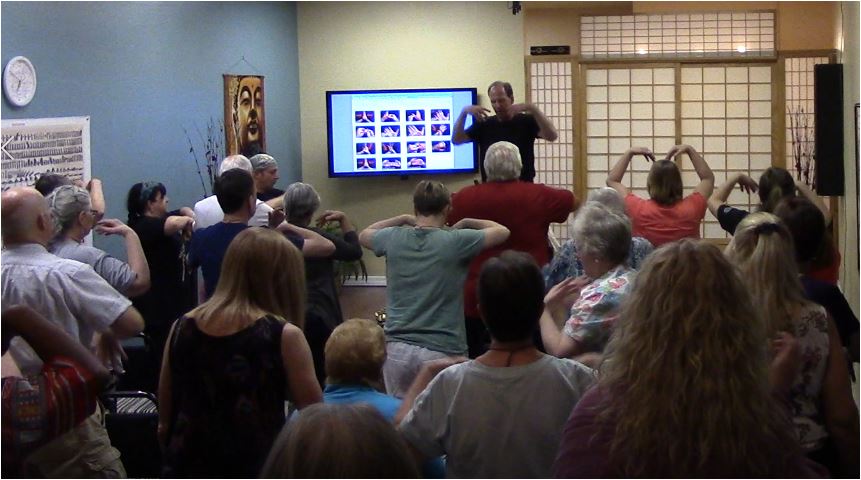
In spite of this factor, I learned that the holding of physical postures engages specific muscles group while simultaneously engaging the nervous systems. Either the parasympathetic nervous system (rest and digest response) is engaged with the slow rhythmic breathing or the sympathetic nervous system (fight or flight response) with a rapid rhythmic breathing cadence. Either of these processes can change the blood chemistry to promote healing on different levels. This physiological process can be seen in the other moving meditations practices of yoga, and its offspring of qigong and further spawn of tai chi. I have found (and personally practiced) all of these methods with either slow or fast breathing patterns can put the practitioner in either the meditative or trance state, depending upon background music/sounds, the individual and their intent. This is very much in line with Monaghan’s description of entrainment, where the practitioner’s heartbeat synchronizes with the beat of a drum or other percussion sound (Monaghan, 1999, pg.33). I have learned to practice qigong, tai chi and other martial arts exercises with music consisting of bells, chimes and other percussion instruments with this exact purpose of slowing (or increasing) the heart and breathing rate in order to enter into the meditative state of being.
Some of the postures explained seem simple enough, until one tries to hold the posture for 1 minute, 5 minutes, 15 minutes and maybe even longer. Often times people try a posture the first time for say, 15 minutes or so. But their body and more specifically their muscles and nervous system have not been conditioned much to hold the positions. So their body may begin to fatigue and tremble. Then the blood begins to shunt or pool in the muscles under tension and duress, which draws the blood and oxygen away from the brain which is farthest from the legs, where the blood is pooling. Then the person becomes a little light-headed or faint which leads them to believe they are having some type of weird or spiritual experience, where they probably are not but rather at the beginning steps of trial and error.
So my advice is to stay relaxed (especially in the neck, face and shoulders) in spite of the tension that will accompany the holding of the posture. Additionally, take the time to build up the length of holding the stationary positions or postures.
References:
Monaghan, Patricia; Viereck, Eleanor G. (1999) Meditation: The Complete Guide (pg. 33- 41). New World Library. Kindle Edition.
Goodman, Felicitas D. (1990) Where the Spirits Ride the Wind (p. 108). Indiana University Press. Kindle Edition.






 United Martial Arts Association