Wind and Water, Makes Fire

The human mind and body are integral parts of nature, constantly interacting with its energies. There is a direct correlation between the systems of nature and those of the body, with three key elements of wind, fire, and water, serving as points of connection.

  • Wind corresponds to the respiratory system, as the air we breathe sustains life.
  • Fire represents body temperature, which plays a vital role in all physiological functions.
  • Water relates to the circulatory system, essential for vitality and well-being.

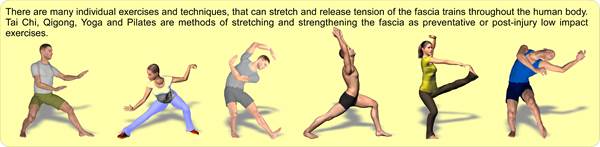
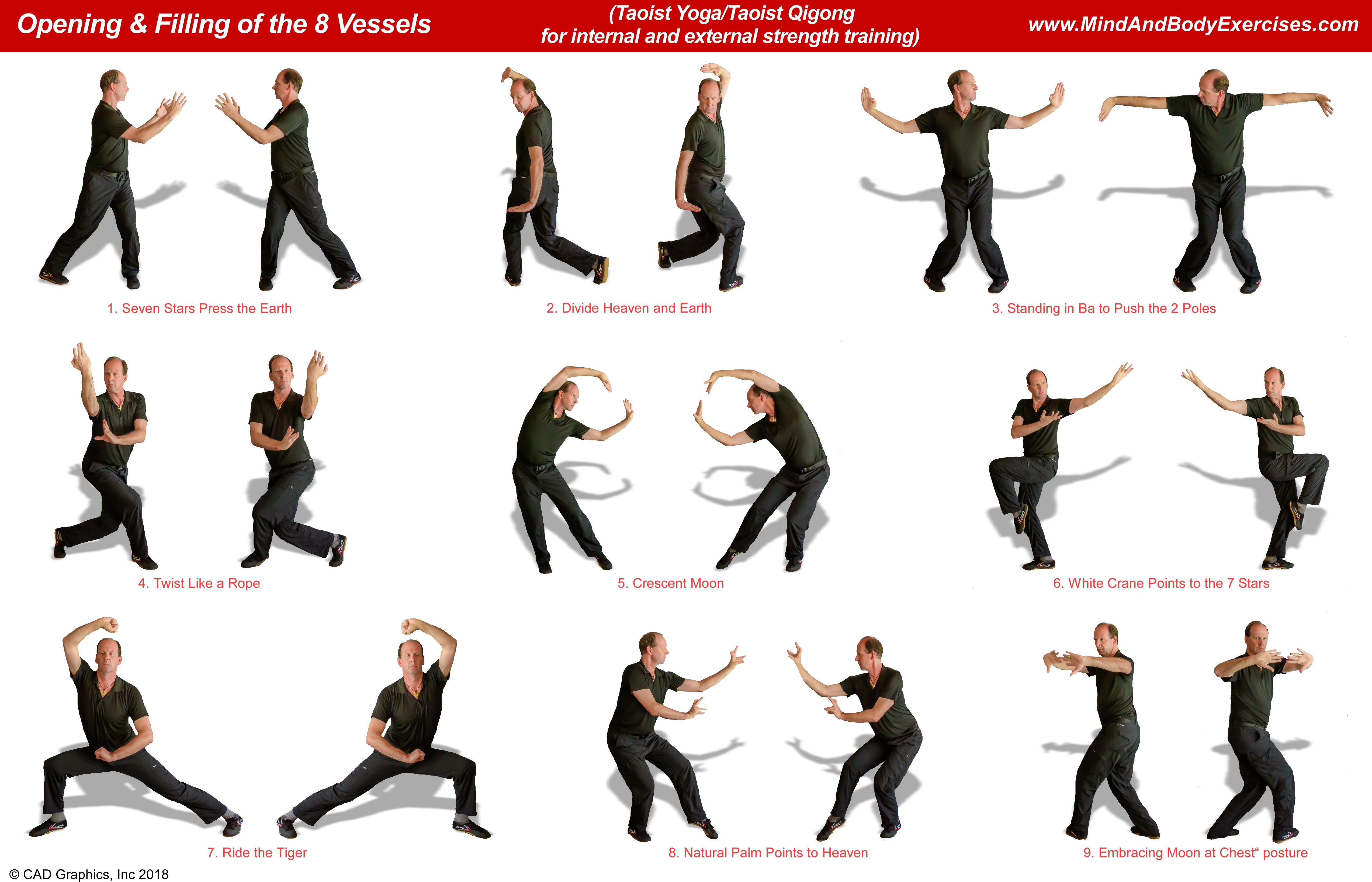
Practices such as Tai Chi, Qigong, and Bagua Zhang profoundly influence the body, impacting the organs, joints, and muscles at a deep level. In Taoist alchemy, the philosophical phrase “wind and water make fire” metaphorically represents the dynamic interactions of the Five Elements (Wu Xing) and the internal processes of self-cultivation.

Here’s a breakdown of how this concept fits into Taoist thought:

  1. Five Elements Correspondence:
    • Wind (Feng, 风) is often associated with Wood (Mu, 木), which represents growth, movement, and expansion.
    • Water (Shui, 水) corresponds to the Kidneys and the essence (Jing), which serves as the foundation for transformation.
    • Fire (Huo, 火) corresponds to Yang energy, warmth, and spirit (Shen).
    • The idea is that the interaction of movement (Wind/Wood) and nourishment (Water) can generate Fire (Yang energy, transformation).
  2. Neidan (Internal Alchemy) Interpretation:
    • Wind (Wood) and Water represent Qi and Jing, respectively.
    • Their controlled interaction through breathwork, meditation, and energy circulation can generate the internal “alchemy fire” needed to refine essence into Qi and Qi into Shen.
    • This fire is not literal but the internal warmth and energetic transformation that happens in deep meditation or Qigong.
  3. Martial & Qigong Perspective:
    • In advanced Qigong and martial arts, regulated breath (Wind) and internal fluid movement (Water) manifest into internal heat (Fire), leading to refined power and vitality.
    • This aligns with practices of Tai Chi, Qigong and BaguaZhang, where breath, body movement, and mind-intent cultivate the internal fire for vitality and martial efficiency.

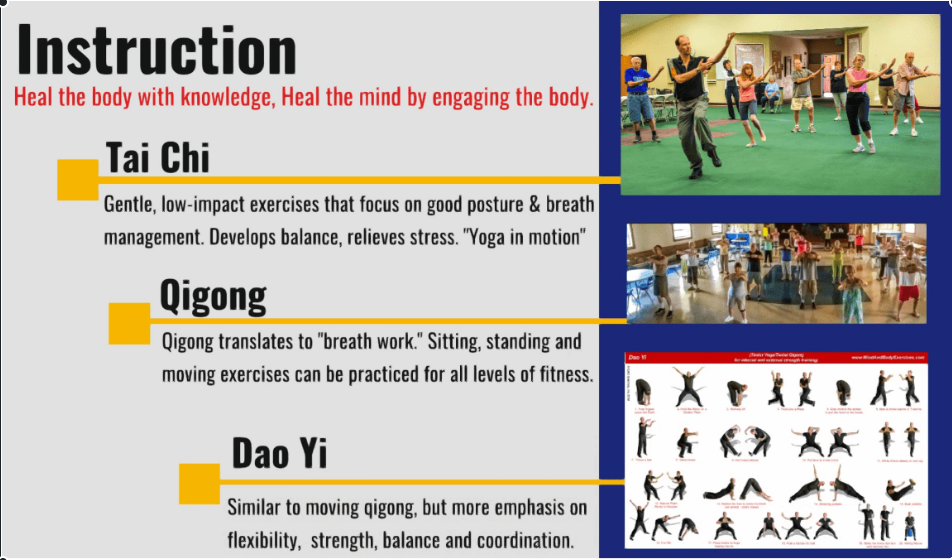
I teach and offer lectures about holistic health, physical fitness, stress management, human behavior, meditation, phytotherapy (herbs), music for healing, self-massage (acupressure), Daoyin (yoga), qigong, tai chi, and baguazhang.

Please contact me if you, your business, organization, or group, might be interested in hosting me to speak on a wide spectrum of topics relative to better health, fitness, and well-being.

I look forward to further sharing more of my message by partnering with hospitals, wellness centers, VA centers, schools on all levels, businesses, and individuals who see the value in building a stronger nation through building a healthier population.

I also have hundreds of FREE education video classes, lectures, and seminars available on my YouTube channel at:

https://www.youtube.com/c/MindandBodyExercises

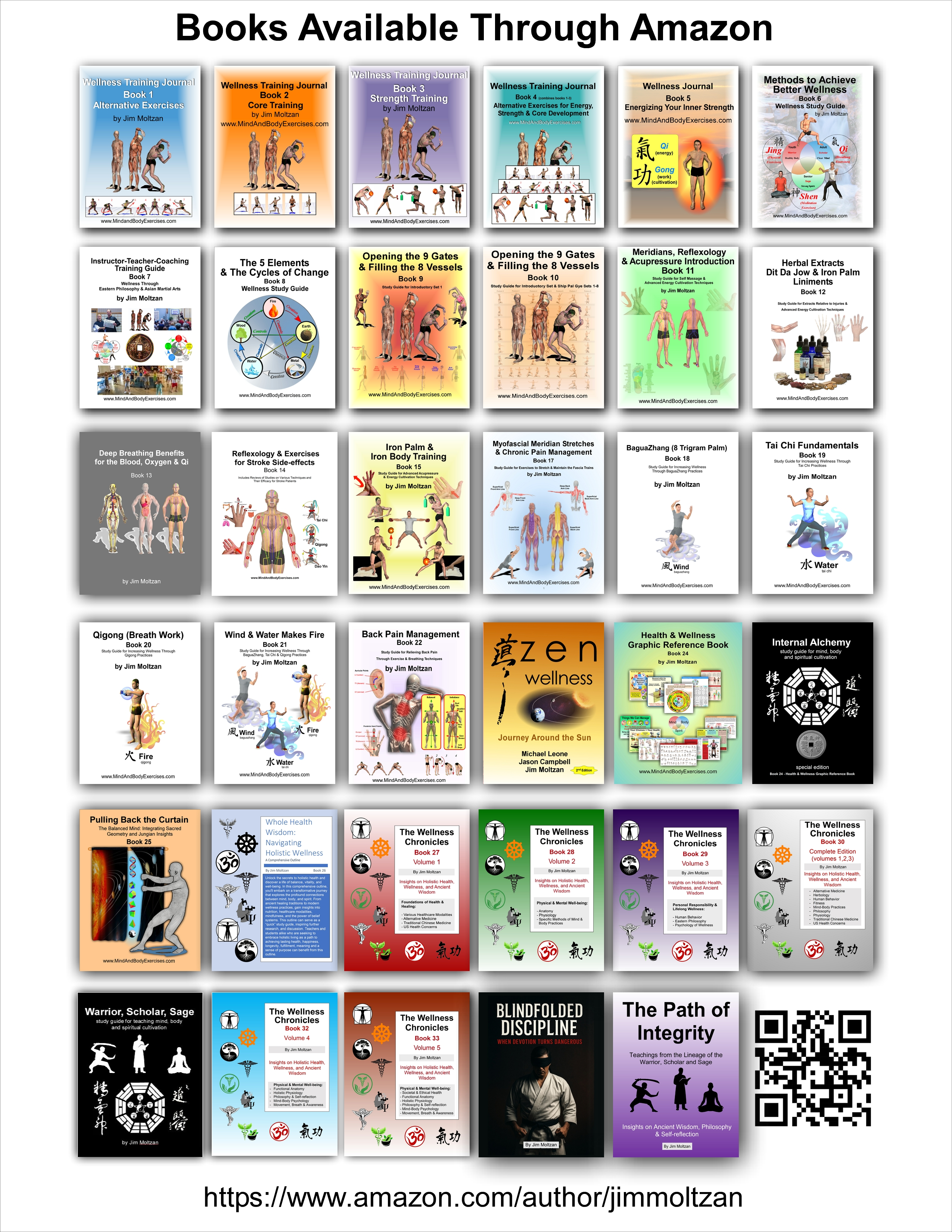
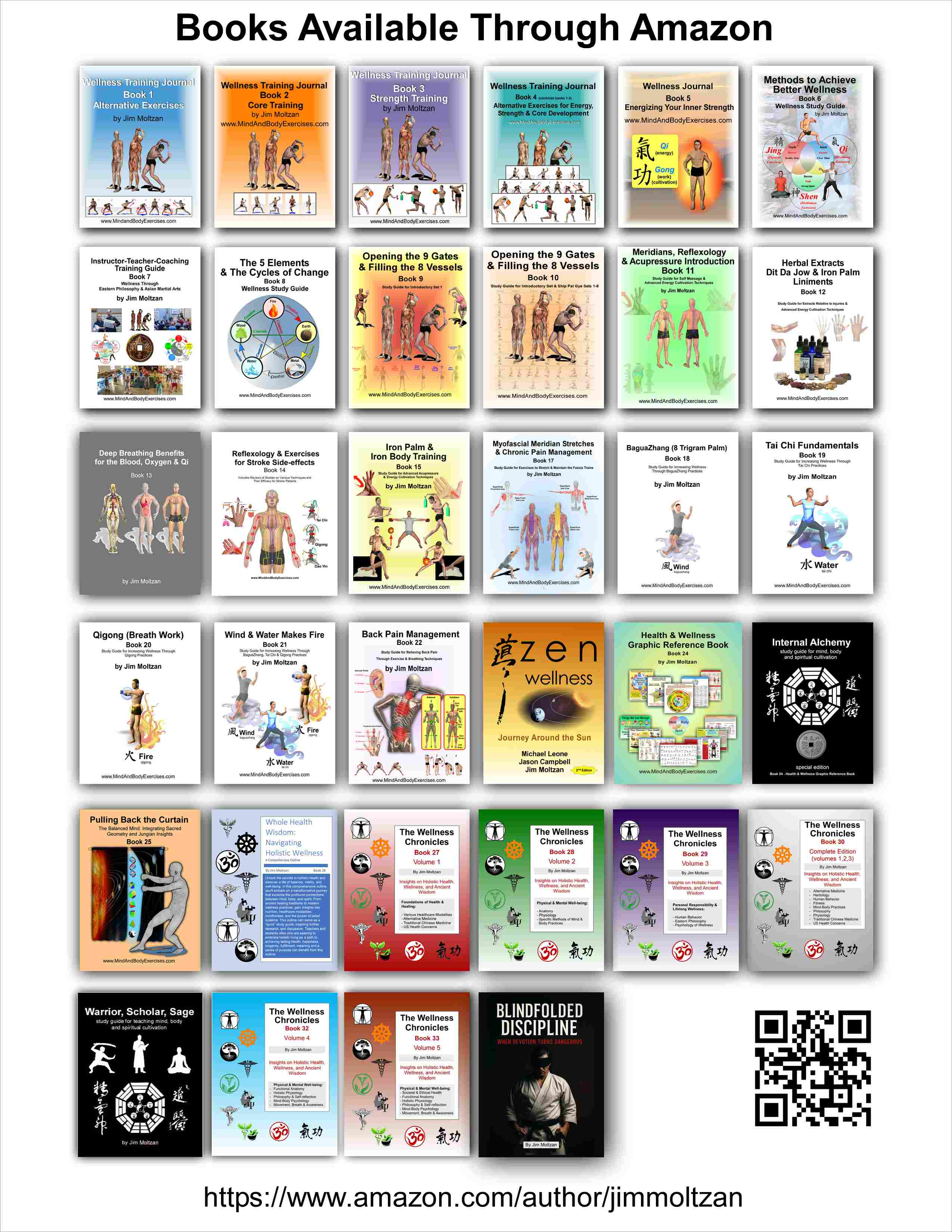
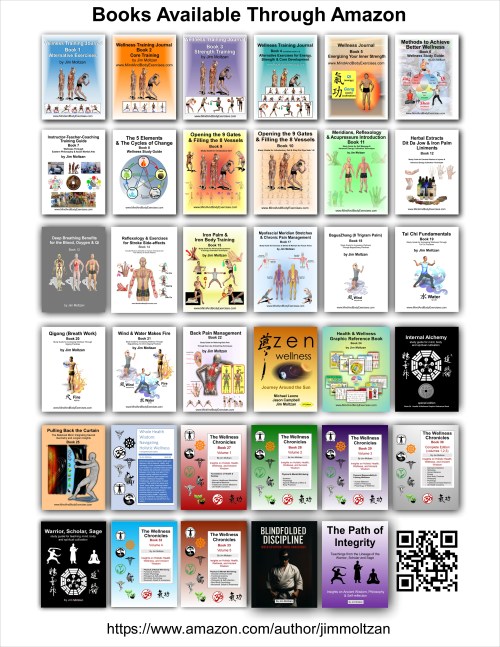
Many of my publications can be found on Amazon at:

http://www.Amazon.com/author/jimmoltzan

My holistic health blog is available at:

https://mindandbodyexercises.wordpress.com/

http://www.MindAndBodyExercises.com

Mind and Body Exercises on Google: https://posts.gle/aD47Qo

Jim Moltzan

407-234-0119

Pulling Back the Curtain

My new book Pulling Back the Curtain is now available through Amazon (https://a.co/d/09malCv). I offer a color reference guide for Sacred Geometry, Carl Jung’s theories, and their relevance to human behavior and symbolism. If you practice yoga, tai chi, qigong, BaguaZhang, other mind-body methods or are just looking to expand your understanding of our reality, my new book will help you organize all seemingly complex concepts.


Throughout human history, profound truths about the universe and our place within it have been explored and expressed through archetypes, geometry, psychology and philosophy. From the earliest cave drawings to the intricate mandalas of Eastern traditions, humanity has sought to map the intangible forces that shape our existence. These universal patterns reveal not only the structures of the cosmos but also the dynamics of our own inner worlds. It is this interplay between the external and internal, the visible and invisible, that this book illuminates. My intent for this book is to provide a graphical study guide that summarizes complex concepts for those already familiar with these topics, while offering an introduction for those just beginning to pursue this type of information.


The Taoist concept of yin and yang further underscores the dynamic dualities that shape our world: light and shadow, masculine and feminine, chaos and order. This dance of opposites, echoed in Jung’s theories, reminds us that life’s challenges and joys are part of a larger, harmonious whole. At the heart of these inquiries lies the work of Carl Jung, whose pioneering insights into the collective unconscious provide a framework for understanding the interconnectedness of all things. Jung’s exploration of archetypes and opposites, including the balance of yin and yang, offers profound guidance for navigating the complexities of modern life. His fascination with symbols, geometry, and universal patterns serves as a bridge between ancient wisdom and contemporary thought.


Similarly, the Platonic solids – those perfect, symmetrical forms revered by both philosophers and mystics, stand as metaphors for the foundational elements of existence. These shapes, deeply intertwined with sacred geometry, reflect the harmony and order inherent in nature. Their significance transcends mere mathematics, inviting us to ponder the deeper truths they represent. Sacred geometry ties these threads together, offering a visual language of the divine. Found in the spirals of galaxies, the structure of DNA, and the design of ancient temples, sacred geometry is both a scientific marvel and a spiritual guide. It reminds us that beauty and meaning exist not only in grand cosmic designs but also in the smallest details of our daily lives. Furthermore, sacred geometry finds profound expression in the realm of mind-body practices such as yoga, tai chi, qigong and even martial arts. These disciplines incorporate geometric principles in their movements and postures, fostering harmony within the body and between the individual and the universe. The exploration of these practices and their connection to sacred geometry will reveal how these ancient systems of movement and mindfulness embody universal truths.

This book invites you to journey into these interconnected realms, where the principles of psychology, philosophy, geometry, and physical movement converge. It explores how these timeless ideas remain relevant, offering practical insights for finding balance, purpose, and connection in a world that often feels fragmented. As you delve into these pages, may you uncover the patterns that shape your own existence. May you find not only knowledge but also inspiration to integrate these timeless truths into your everyday life, creating harmony within and around you.

My books are comprehensive, deeply researched, and feature original, high-quality illustrations. I have invested over 40 years of learning, practicing, and illustrating these topics myself. providing full-color printing, detailed graphics, and specialized knowledge require premium pricing. Most of my publications offer rare insights not found elsewhere, justifying their premium nature. I have specifically designed my books for serious practitioners and scholars, while also offering information for beginners to get acquainted with complex topics and concepts. Each book contains a lifetime of experience condensed into each volume. These books are for those who seek authentic, high-quality study materials rather than mass-market books.

I teach and offer lectures about holistic health, physical fitness, stress management, human behavior, meditation, phytotherapy (herbs), music for healing, self-massage (acupressure), Daoyin (yoga), qigong, tai chi, and baguazhang.

Please contact me if you, your business, organization, or group, might be interested in hosting me to speak on a wide spectrum of topics relative to better health, fitness, and well-being.

I look forward to further sharing more of my message by partnering with hospitals, wellness centers, VA centers, schools on all levels, businesses, and individuals who see the value in building a stronger nation through building a healthier population.

I also have hundreds of FREE education video classes, lectures, and seminars available on my YouTube channel at:

https://www.youtube.com/c/MindandBodyExercises

Many of my publications can be found on Amazon at:

http://www.Amazon.com/author/jimmoltzan

My holistic health blog is available at:

https://mindandbodyexercises.wordpress.com/

http://www.MindAndBodyExercises.com

Mind and Body Exercises on Google: https://posts.gle/aD47Qo

Jim Moltzan

407-234-0119

Inside the Circle: The Power and Peril of Closed Groups

The Role and Risks of Closed Social Groups in Martial Arts, Yoga, Clubs, and Other Exclusive Communities

Closed social groups, such as private yoga or martial arts schools, serve a unique purpose within their respective disciplines. Depending on the intent behind their structure, their exclusivity can have advantages and drawbacks. Similar dynamics can be found in other exclusive communities, such as religious orders, secret societies, and elite academic circles.

  1. Focused Learning Environment
    • By restricting access, students or members can focus on their objectives without outside distractions or feeling self-conscious under public scrutiny. This is particularly important for traditional martial arts, esoteric yoga practices, or spiritual communities that require deep practices of observation, contemplation, and meditation as their main focus.
  2. Preservation of Tradition
    • Many closed schools and societies follow lineages that prioritize secrecy or direct transmission from teacher to student. This can help to maintain authenticity, ensuring knowledge isn’t diluted or misrepresented.
  3. Community and Trust
    • A closed structured system can encourage a strong sense of belonging, loyalty, and trust among members. This is very important for practices that involve partner training, deep introspection, or energy work, as well as in religious and esoteric orders.
  4. Safety and Progression
    • Some disciplines involve physical conditioning or internal energy cultivation such as with advanced qigong, martial techniques, or breath control methods. Restricting access ensures students have proper guidance and do not attempt techniques without foundational preparation.

  1. Exclusivity Can Limit Growth
    • While privacy may support depth, it may also prevent potential new students from finding and benefiting from these practices. A highly restricted group may unintentionally create an echo chamber.
  2. Loss of Cultural Exchange
    • Martial arts, yoga, and many esoteric traditions have deep historical roots but have evolved through cultural exchange. Over-restricting access could hinder the natural development of these traditions.
  3. Risk of Elitism or Dogmatism
    • If not managed well, closed groups can sometimes lead to rigid, authoritarian-type hierarchies, where senior members become resistant to new ideas or outsiders. This can lead to stagnation rather than growth.
  4. Barrier to Understanding
    • In some cases, secrecy can lead to stigma, misinformation, or misinterpretation from outsiders of the group who speculate about what happens within the group.

Closed groups, whether in martial arts, yoga, religious sects, secret societies, or elite academic circles, can sometimes encourage an “us vs. them” mentality, especially if they become overly insular. Various terms refer to these types of groups such as, but not limited to:

  • Dogmatic Communities
  • Ideological Isolation
  • Rigid Group Mentality
  • Sectarian Influence
  • Closed-System Thinking
  • Insulated Hierarchies
  • Excessive Group Loyalty
  • Echo Chamber Environments
  • Insular Traditions
  • Cult-like

Groupthink & Echo Chambers

  • Critical or objective thinking can diminish in highly insular groups as members conform to a singular worldview.
  • If a martial arts school, spiritual order, or elite academic group never questions its methods, or principles or refuses outside perspectives, it risks stagnation, stigma, and dogma.
  • Some groups discourage members from engaging with alternative viewpoints, reinforcing a “this is the only way” mindset.

Isolationism & “Us vs. Them” Mentality

  • If those outside of the group are viewed with hesitation, suspicion, or unworthiness, the group can become exclusionary rather than welcoming.
  • Some esoteric circles, religious sects, or martial arts schools forbid interactions with non-members, creating psychological dependence.
  • Over time, this can erode personal autonomy and discourage critical reflection.

Loaded Language & Indoctrination

  • Exclusive terminology or redefined words, such as “true knowledge,” “higher-level students,” “the only,” the original,” etc., can create a psychological barrier between insiders and outsiders.
  • Language may be used to elevate the in-group while dismissing external knowledge as inferior, dangerous or subversive.
  • In more extreme cases, dissenting members may be labeled as “unenlightened,” “not loyal,” “not ready,” “not qualified,” or “not clear” to justify exclusion.

Leader Worship & Hierarchical Control

  • Some martial arts or yoga masters, religious leaders, or academic figures present themselves as the sole gatekeeper of knowledge, discouraging students or disciples from questioning authority.
  • Strict obedience without space for personal growth can create an authoritarian dynamic, where members fear questioning the instructor, leader or those in authority.
  • This is especially risky in some of the internal arts and esoteric traditions, where progress is subjective and can be manipulated through metaphysical, mystical or vague claims.

How to Avoid or Become Aware of Insular Dynamics in Closed Groups

  • Encourage Critical Thinking: Healthy groups welcome questions and debate rather than discouraging independent thought.
  • Allow Cross-Training and Exchange: Exposure to other traditions, teachers, perspectives and resources keeps members from falling into dogma.
  • Maintain Ethical Boundaries: If the group expects extreme devotion, secrecy, or control over members’ lives, it’s a huge red flag.
  • Avoid Fear-Based Loyalty: No legitimate school or organization should use fear, guilt, or manipulation to keep members from leaving.
  • Foster Openness Without Dilution: A “semi-closed model,” where serious training is protected but knowledge is not hoarded, may be able to better balance tradition with accessibility.

Are Closed Groups Always Bad?

Not necessarily. Some amount of exclusivity can be beneficial for:

✅ Protecting advanced knowledge from misuse
✅ Maintaining depth and focus while training
✅ Creating a dedicated, distraction-free environment

However, if a group starts demanding absolute loyalty, rejecting all outsiders, or discouraging independent thinking, then it risks cult-like tendencies. Striking a balance between exclusivity and openness is key to ensuring that these groups remain places of learning, growth, and genuine tradition rather than echo chambers of control and manipulation.

With over 20 years of firsthand experience training, studying, and teaching in various closed groups across different settings, I have observed both their strengths and challenges. I then dedicated an additional 25 years to studying the underlying dynamics that shape these environments, recognizing both their positive and negative consequences. To deepen my understanding, I further invested four years into the study of psychology, religion, Eastern philosophy, sociology, psychophysiology, and other related fields, allowing me to analyze closed group behavior with a broader and more informed perspective.

I teach and offer lectures about holistic health, physical fitness, stress management, human behavior, meditation, phytotherapy (herbs), music for healing, self-massage (acupressure), Daoyin (yoga), qigong, tai chi, and baguazhang.

Please contact me if you, your business, organization, or group, might be interested in hosting me to speak on a wide spectrum of topics relative to better health, fitness, and well-being.

I look forward to further sharing more of my message by partnering with hospitals, wellness centers, VA centers, schools on all levels, businesses, and individuals who see the value in building a stronger nation through building a healthier population.

I also have hundreds of FREE education video classes, lectures, and seminars available on my YouTube channel at:

https://www.youtube.com/c/MindandBodyExercises

Many of my publications can be found on Amazon at:

http://www.Amazon.com/author/jimmoltzan

My holistic health blog is available at:

https://mindandbodyexercises.wordpress.com/

http://www.MindAndBodyExercises.com

Mind and Body Exercises on Google: https://posts.gle/aD47Qo

Jim Moltzan

407-234-0119

“Prolonged Sitting is the New Smoking”

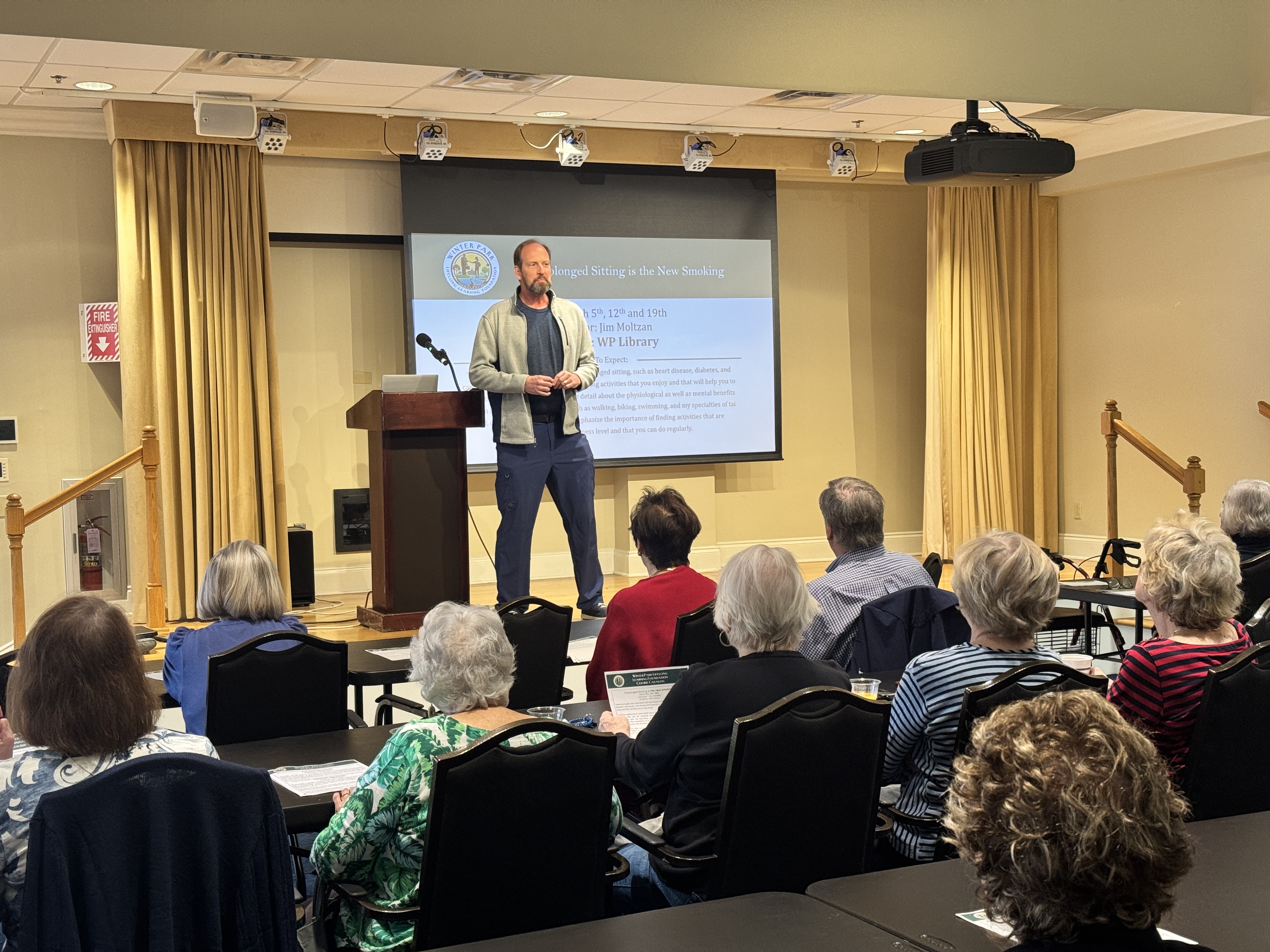
I spoke this week for a few minutes at The Mayflower at Winter Park, along with The Winter Park Lifelong Learning Foundation, regarding my upcoming course in March on:

“Prolonged Sitting is the New Smoking”

Three sessions that build upon the first, starting on March 5th, 12th, 19th (10:30-11:45am)

Instructor – Jim Moltzan, BS degree in holistic health

Location – WP Library near the Winter Park Village on 17-92.

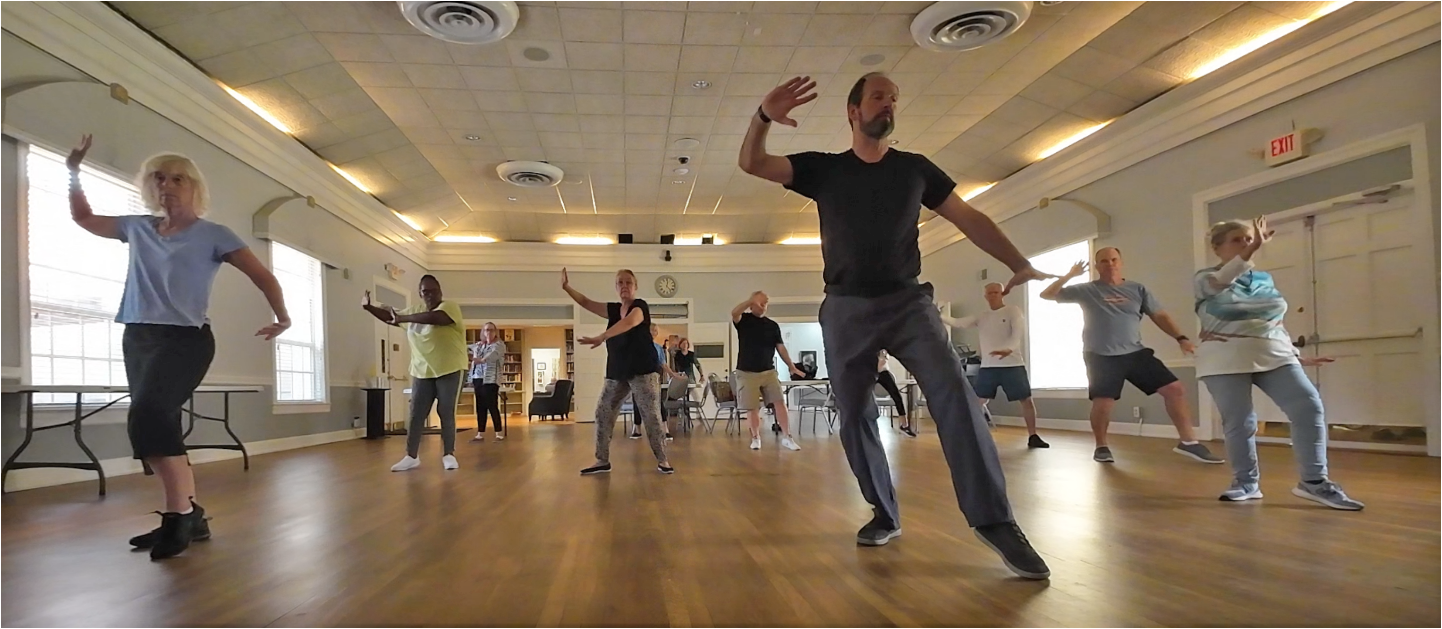
At each session, I will discuss the physical, mental, and spiritual (self-awareness) aspects of remaining in a seated position for extended periods. Each session will also include about a 1/2-hour of instruction in qigong, tai chi, or other methods that can help to get the body moving, engage one’s mind, and offer for some, meaning and purpose to get out of that chair on a daily basis.

__________

A $35.00 registration is required to attend all three sessions, which goes toward supporting college scholarships through the Lifelong Learning Foundation: https://winterparklifelong.org/register-courses

I teach and offer lectures about holistic health, physical fitness, stress management, human behavior, meditation, phytotherapy (herbs), music for healing, self-massage (acupressure), Daoyin (yoga), qigong, tai chi, and baguazhang.

Please contact me if you, your business, organization, or group, might be interested in hosting me to speak on a wide spectrum of topics relative to better health, fitness, and well-being.

I look forward to further sharing more of my message by partnering with hospitals, wellness centers, VA centers, schools on all levels, businesses, and individuals who see the value in building a stronger nation through building a healthier population.

I also have hundreds of FREE education video classes, lectures, and seminars available on my YouTube channel at:

https://www.youtube.com/c/MindandBodyExercises

Many of my publications can be found on Amazon at:

http://www.Amazon.com/author/jimmoltzan

My holistic health blog is available at:

https://mindandbodyexercises.wordpress.com/

http://www.MindAndBodyExercises.com

Mind and Body Exercises on Google: https://posts.gle/aD47Qo

Jim Moltzan

407-234-0119

Is Gratitude and Appreciation Outdated?

The Good Book says it’s better to give than to receive
I do my best to do my part
Nothin’ in my pockets, I got nothin’ up my sleeve
I keep my magic in my heart
Keep up your spirit, keep up your faith, baby
I am counting on you
You know what you’ve got to do

(Triumph – 80’s rock band)

What is up with more recent generations, who often don’t say thank you or express appreciation for others’ paying bills, buying groceries, preparing meals, dining out, creating education opportunities, and many other instances where in the past, people did so? Has this been the new norm for a while now and I just missed the memo? Maybe the email got lost in my AOL spam folder. Perhaps I am behind the times.

I think that my observation touches on a fascinating dynamic: gratitude as a social and cultural norm seems to have diluted over generations, influenced by shifts in our values, communication styles, and societal structures. In the past, gratitude wasn’t just a taught virtue. Expression of gratitude often had real tangible stakes, such as maintaining social connections, securing resources, or avoiding ostracization. A lack of a call thanking an older relative for a birthday or graduation gift would consequently cease future generosities. The pendulum now seems to have swung, with younger generations often less in sync with older generations as to the importance of explicit expressions of gratitude, especially in personal and financial matters.

For example, take the following scenario with a person choosing to treat a small group to an expensive fine dining experience. The younger participants freely order appetizers, entrees, and alcohol without regard for cost or acknowledgment that there may be a budget. At the end of the meal, all comment on how good the meal was, and then go on their separate ways. Another instance may be where an aging grandparent distributes their wealth before their passing but receives little appreciation nor thanks for the efforts that might greatly influence the beneficiaries’ futures. This behavior might stem from several interconnected factors:

Why This Happens

  1. Changing Norms and Expectations
    • In the past, gratitude was tied to survival and societal belonging. Today, individualism and a sense of entitlement may inadvertently reduce the perceived need to express thanks.
    • Younger generations might see expressions of generosity as routine, expected or transactional, especially if they’ve grown up with parents or elders providing without clear expectations of acknowledgment.
  2. Generational Blind Spots
    • Many in their young adulthood haven’t had to manage substantial expenses themselves. Without the firsthand experience of the time and effort required to afford luxuries, they might not fully grasp the significance of such gestures.
    • Digital communication norms have shifted the way gratitude is expressed, with younger people often favoring indirect methods over explicit verbal thanks, such as via texting emojis or likes.
  3. Social and Economic Pressures
    • With stressors like social issues, economic uncertainty, college costs, and other debt, younger people may unconsciously prioritize their immediate pleasure over reflecting on the bigger picture of generosity and sacrifice.

Addressing the Issue

If someone cares to bridge this gap constructively, here are some strategies:

  1. Be the Example and Model by Discussing Gratitude
    • Share how you learned the value of expressing thanks and why it’s meaningful. For example, one might say, “When I was younger, I eventually realized how important it was to show my appreciation, not just out of politeness, but because it helps to build and strengthen relationships.”
    • Express your own gratitude openly, as this sets an example for others. For example, one could acknowledge the chef or server during the dining experience, demonstrating the power of recognition.
  2. Gently Raise Awareness
    • Reflect on the experience with them afterward. For instance: “I really enjoyed treating everyone to dinner, it was quite a special occasion for me. I hope you all felt the same way.”
    • If you can find it appropriate, bring up the idea of cost in a non-confrontational way, such as: “Fine dining is a real treat. It made me think about how much time and effort goes into making something like that possible and memorable.”
  3. Set Expectations Going Forward
    • For similar future outings, one could propose some light boundaries or discussions about the value of shared experiences. For example, “Let’s keep it simple and focus on enjoying the moment. Feel free to order what you’d like, but keep in mind that we’re here to share a meaningful time together.”

Big Picture

While it might feel disheartening in the moment, remember that younger generations often do appreciate acts of kindness but might lack the social tools or awareness to express it in a way that others may recognize. By modeling, discussing, and gently guiding, you can help foster an understanding of gratitude that feels authentic to both parties, ensuring these experiences are both enjoyable and meaningful.

I teach and offer lectures about holistic health, physical fitness, stress management, human behavior, meditation, phytotherapy (herbs), music for healing, self-massage (acupressure), Daoyin (yoga), qigong, tai chi, and baguazhang.

Please contact me if you, your business, organization, or group, might be interested in hosting me to speak on a wide spectrum of topics relative to better health, fitness, and well-being.

I look forward to further sharing more of my message by partnering with hospitals, wellness centers, VA centers, schools on all levels, businesses, and individuals who see the value in building a stronger nation through building a healthier population.

I also have hundreds of FREE education video classes, lectures, and seminars available on my YouTube channel at:

https://www.youtube.com/c/MindandBodyExercises

Many of my publications can be found on Amazon at:

http://www.Amazon.com/author/jimmoltzan

My holistic health blog is available at:

https://mindandbodyexercises.wordpress.com/

http://www.MindAndBodyExercises.com

Mind and Body Exercises on Google: https://posts.gle/aD47Qo

Jim Moltzan

407-234-0119