Self-awareness Can be Developed

Self-awareness Can be Developed!

How aware are you, of seeing yourself for who your truly are? Can you see every line, mark or feature on your face in your thoughts without looking in the mirror? If no one is around to see your actions, do you still keep your morals and values in check? Seeing yourself as others see you, and not caring what others think of you are two entirely different discussions. This post is about the ongoing cultivation of trying to become the best version of yourself and not about how to justify our poor behavior or actions towards those we interact with. Now then, how can we become more self-aware to be the best we can be?

I have found from my almost 40 years of studying, practicing and teaching of martial arts and other Eastern wellness methods, that it is much easier to become aware of our physical body than to know how our mind works. Therefore, the body is the key into the mind. The mind controls the body. Our body protects our mind. We are not our thoughts, but rather the observer of our thoughts or consciousness. Our body doesn’t move on its own, other than for reflexes and autonomic functions. Our body doesn’t make the decisions to get up, open the refrigerator, and put something to eat in our mouth. Junk food or healthy snack? You as the observer makes these choices. Our thoughts do not make these decisions either, but rather our consciousness. Once one becomes self-aware of their consciousness, now they can observe their thoughts and choose to direct them with our without emotion. For example, after opening the refrigerator and accidentally dropping a glass container that shatters, we choose how to react to this maybe by experiencing regret, anger, frustration, sadness, etc. Or maybe you really didn’t like that container to begin with and now you are happy, relieved or indifferent after all it was only a glass container and not your house catching on fire or someone being seriously injured.

You are not your thoughts!

For most people, it is very difficult to train or discipline their mind and consequently, their body. People often say or do things they regret only to realize later that they lacked the self control and self awareness to make good decisions to begin with. By gaining control of the physical anatomy, a relationship with the physical body is developed. Attention to the details of your body positioning, is what trains the mind to become more self-aware. When aligning the limbs and joints to stretch and strengthen them, while also maintaining deep and deliberate breathing rhythms, an individual can cultivate a more harmonious link between the mind, body and spirit (self-awareness). Practice of exercises that truly engage the mind and body, (very much like yoga, tai chi, isometrics) to improve health & wellness. The mind directs the body, while the body protects the mind.

Ship Pal Gye, Taoist yoga or the “Filling the 8 Vessels”

Ship Pal Gye, Taoist yoga or the “Filling the 8 Vessels” are methods to increase the capacity of your nervous system. By holding the body in specific alignments, the nervous system is strengthened to endure more pain, stress and discomfort. Think of tempering steel in fire to strengthen the metal. Building self-discipline of the mind and body simultaneously!

When engaging the muscles, tendons, bones and fascia, the 12 regular energy meridians are engaged plus the 8 extraordinary meridians are opened and filled as reservoirs to adjust the ebb and flow of energy throughout the body and thereby strengthening the immune system among other bodily functions.

Exercise methods like these have been known for centuries, but are considered new or “alternative” to modern western culture.

Often times people will ask me, “where did you learn this?” Well…almost 40 years ago I began studying Korean kung fu, then Traditional Chinese Medicine, medical qigong, fitness, wellness and anatomy. It didn’t happen overnight or from a weekend seminar. It took me decades of learning, studying and teaching from and with high level masters and teachers. And I’m not done learning yet, are you?

Learn how this all works from private, small or group instruction.

Be well!

Jim Moltzan

407-234-0119

http://www.MindAndBodyExercises.com

https://www.facebook.com/MindAndBodyExercises/

https://www.youtube.com/c/MindandBodyExercises

https://mindandbodyexercises.wordpress.com/

Masters Council

Discipline the Mind to Discipline the Body

Self-discipline Can be Developed.

Anything of value is always going to require some amount of sacrifice of time, effort and resources.

For most people, it is very difficult to train or discipline their mind and consequently, their body. People often say or do things they regret only to realize later that they lacked the self control and self awareness to make good decisions to begin with.

By gaining control of the physical anatomy, a relationship with the physical body is developed. When aligning the limbs and joints to stretch and strengthen them, while also maintaining deep and deliberate breathing rhythms, an individual can cultivate a more harmonious link between the mind, body and spirit (self awareness). Practice of exercises that truly engage the mind and body, (very much like yoga) to improve health & wellness. The mind directs the body, while the body protects the mind.

Discipline the mind in order to discipline the body!

Ship Pal Gye, Taoist yoga or the “Filling the 8 Vessels” are methods to increase the capacity of your nervous system. By holding the body in specific alignments, the nervous system is strengthened to endure more pain, stress and discomfort. Think of tempering steel in fire to strengthen the metal. Building self-discipline of the mind and body simultaneously!

When engaging the muscles, tendons, bones and fascia, the 12 regular energy meridians are engaged plus the 8 extraordinary meridians are opened and filled as reservoirs to adjust the ebb and flow of energy throughout the body and thereby strengthening the immune system among other bodily functions.

Exercise methods like these have been known for centuries, but are considered new or “alternative” to modern western culture.

Watch the video to get a sample of what this type of instruction entails. Often times people will ask me, “where did you learn this?” Well…almost 40 years ago I began studying Korean kung fu, then Traditional Chinese Medicine, medical qigong, fitness, wellness and anatomy. It didn’t happen overnight or from a weekend seminar. It took me decades of learning, studying and teaching from and with high level masters and teachers. And I’m not done learning yet, are you?

Learn how this all works from private, small or group instruction.

Be well!

Jim Moltzan

407-234-0119

http://www.MindAndBodyExercises.com

https://www.facebook.com/MindAndBodyExercises/

https://www.youtube.com/c/MindandBodyExercises

https://mindandbodyexercises.wordpress.com/

Masters Council

Cause & Effects of Sleep Quality

Here is another post digging deeper into:

The Importance of a Good Night’s Rest

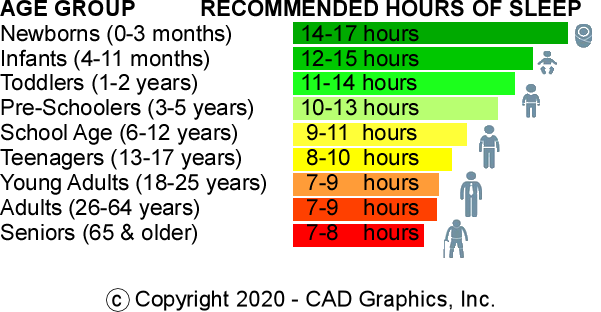
What we do during the waking hours, often determines how well we sleep at night. How well we sleep and how much determines how the quality of our waking hours is utilized. By practicing stress relieving exercises and habits during the day, the mind and body can more easily process information and rejuvenate during the sleep stages. Sleep requirements vary depending upon age, mental and physical conditions.

Recommended Hours of Sleep

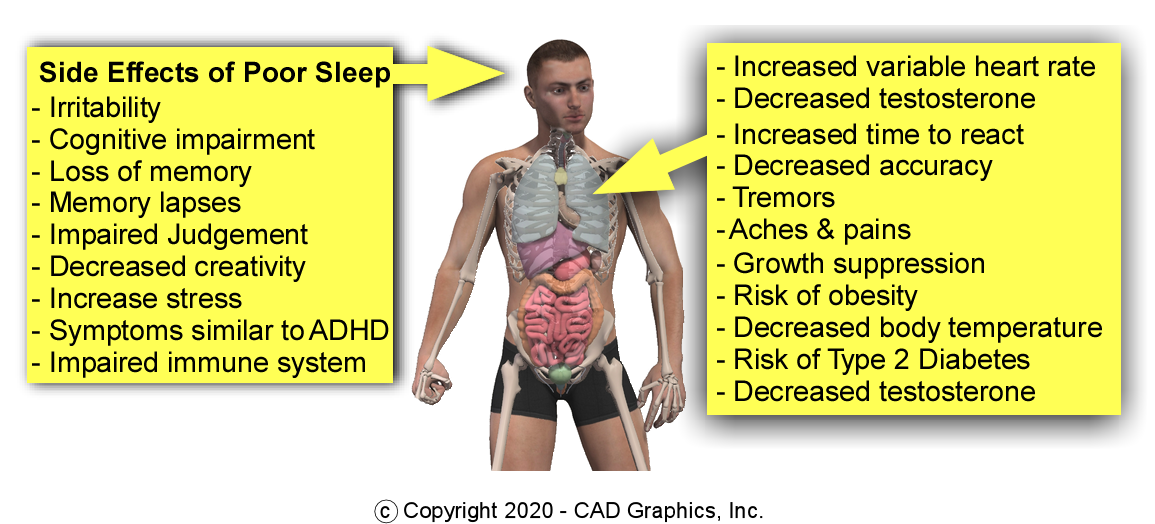
Are you low on energy? Hard to focus throughout the day? Many chronic illnesses can be attributed to poor sleep. More serious diseases such as diabetes, obesity, heart disease, Alzheimer’s disease, are thought to be directly related to not achieving sufficient recovery during the sleep cycle.

STRESS affects REST!

Side Effects of Poor Sleep

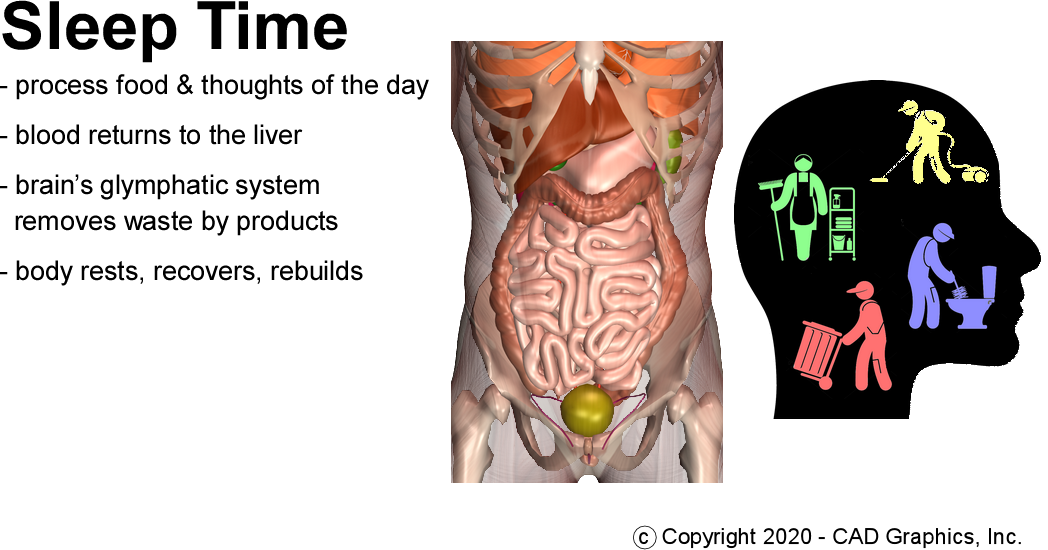
Sleep Time Graphic

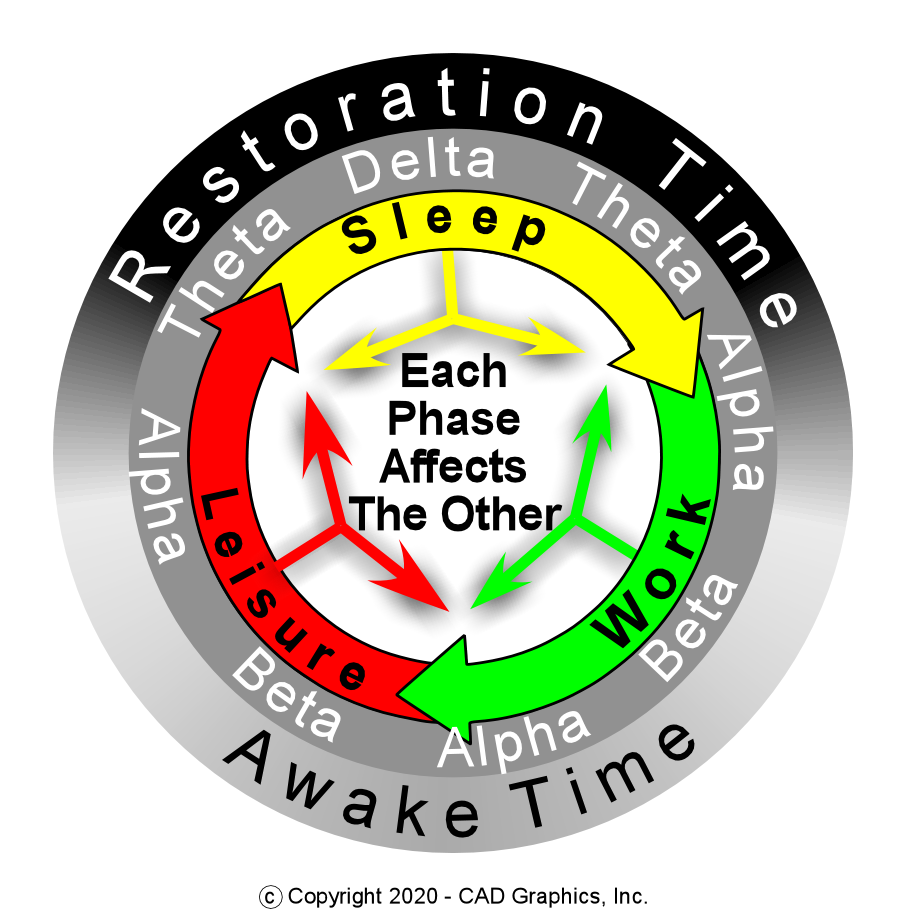
Each phase of our day is intimately interconnected with the others. What you do or don’t do during the waking hours will definitely affect the quality of the sleep time. Then the quality of the sleep affects your energy and outlook going into the next day. This can make a never ending cycle that continues until you decide to make it change.

Sleep Cycles graphic2

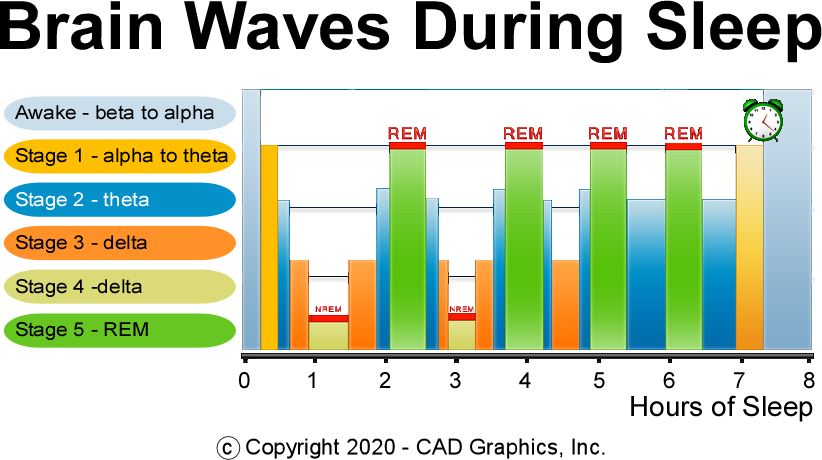
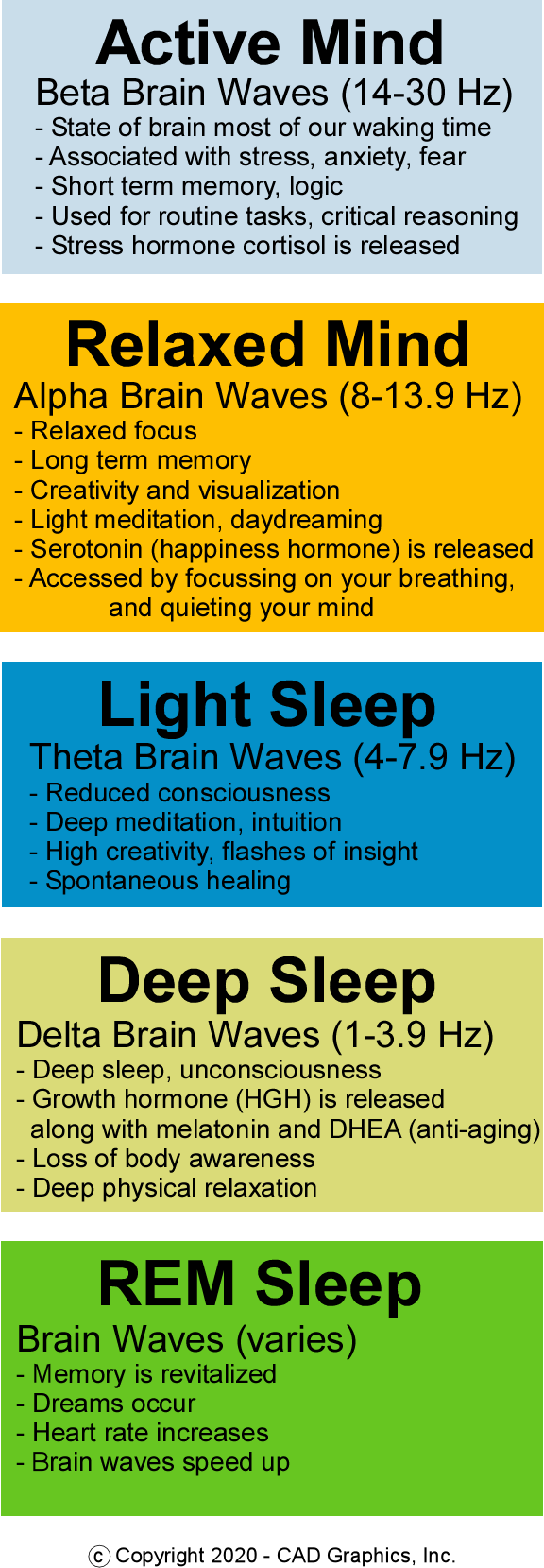
During the sleep cycle our body needs adequate time and quality rest to perform daily maintenance and restoration. Additionally, the brain waves need to change and slow in order for this restoration to take place.

_
Brain Waves During Sleep
_
Brain Wave graphic

Mental activity can become stressful when trying to work, solve problems, manage a family, finances and juggling hundreds of other daily tasks. Physical activity, relaxing and enjoyable activities are key components to balancing this daily stress. A good night’s rest is earned, by what eat, what you think about and what types of physical activity is executed throughout the day.

_
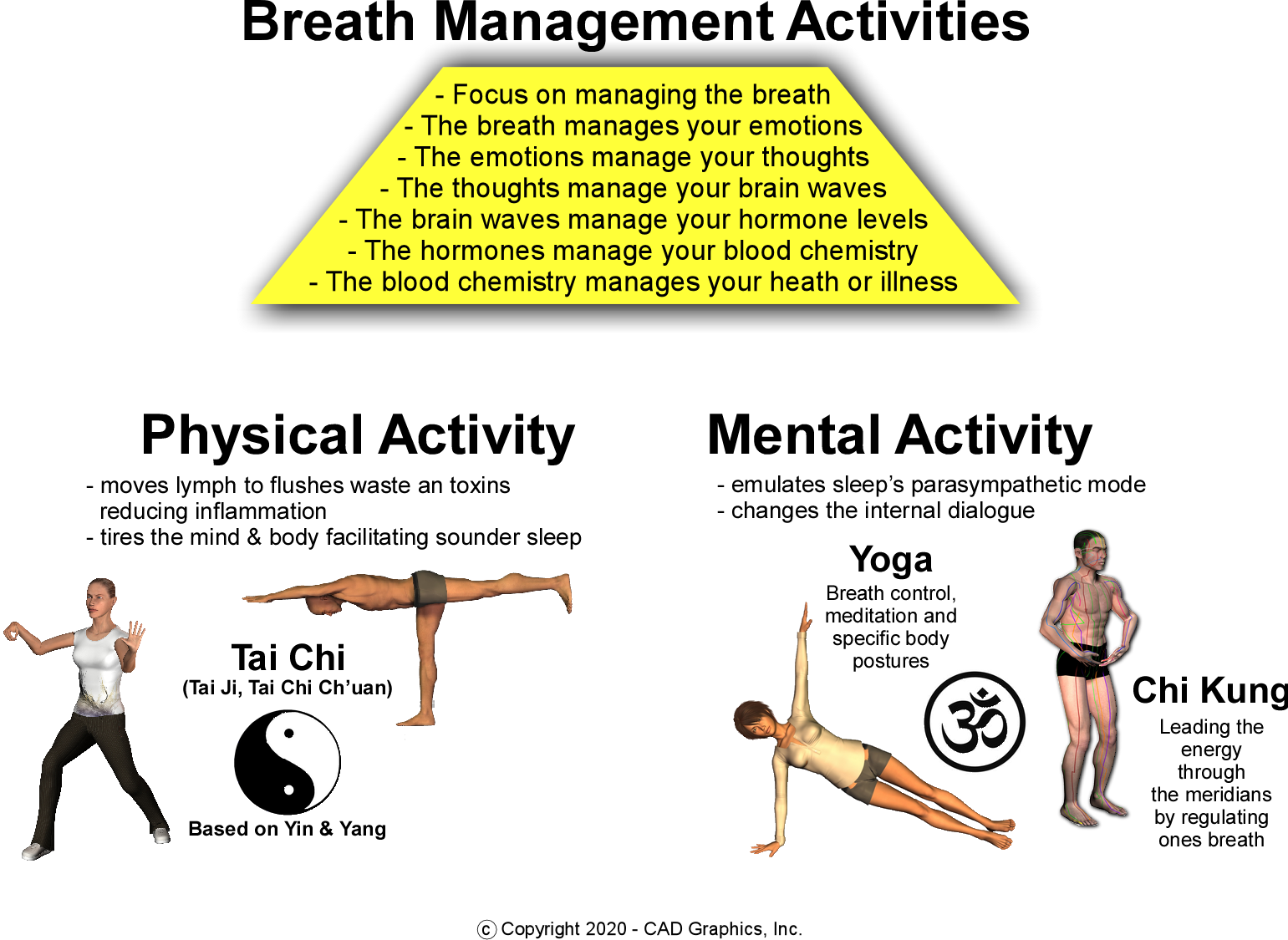
Breath Management Activities

Tai Chi, bagauzhang and qigong are all methods of exercise that also embody the philosophy balancing physical exercise with mental engagement to relieve stress and tension, while also increasing the flow of energy ( and blood flow) within the body improving health and well-being.

_

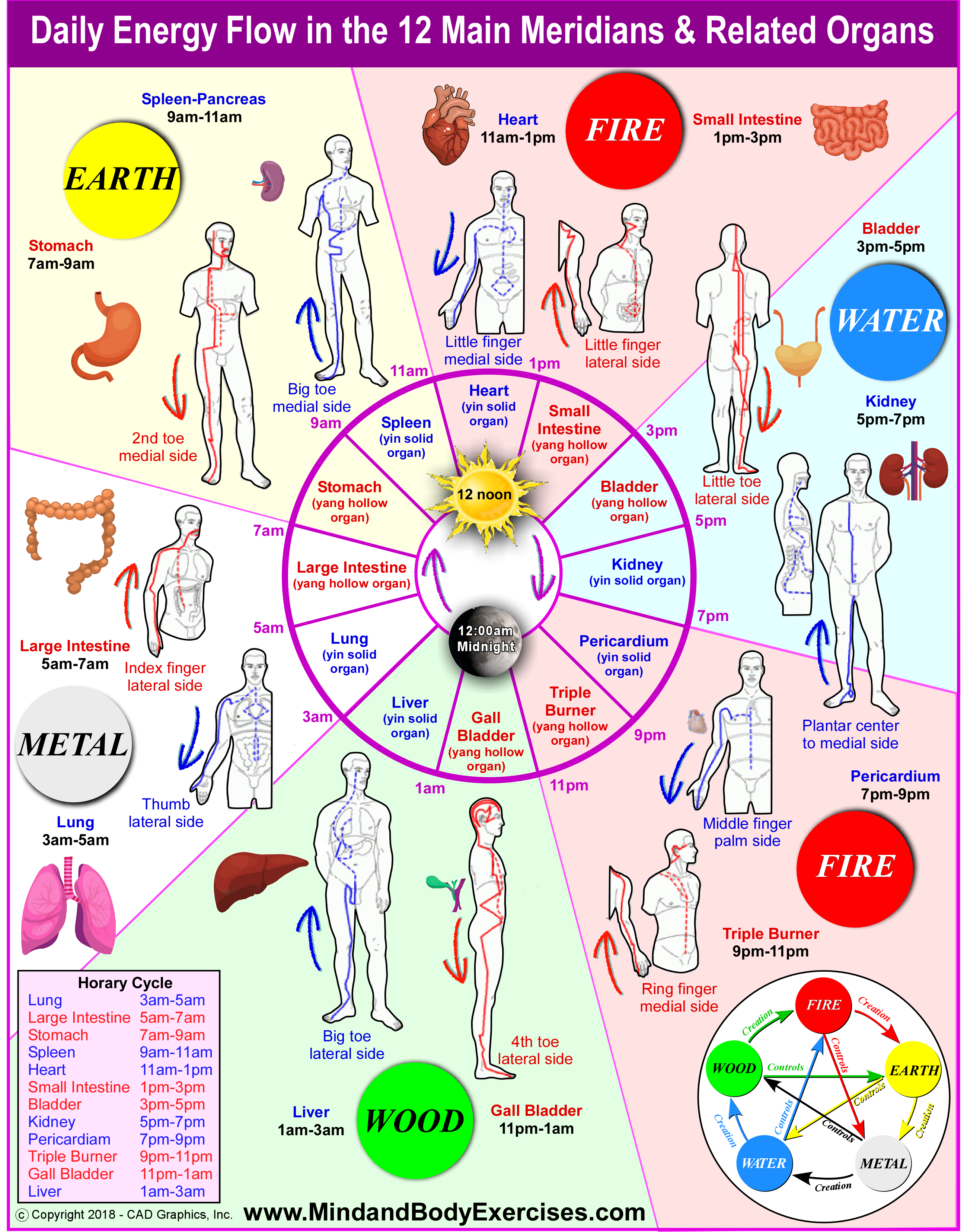
Daily Energy Flow in the 12 Main Meridians

The Horary Clock (Circadian Rhythm) – 24 Hour Qi Flow Though the Meridians
Here is another graphic presentation of the Horary Clock or Circadian Rhythm showing more of the relationship to the 5 Element Theory.
.
Understanding how the human body works and interacts within nature, along with self-awareness are the basis of Traditional Chinese medicine.
.
The graphic shows what is known as the Horary cycle or the Circadian Clock. As Qi (energy) makes its way through the meridians, each meridian in turn with its associated organ, has a two-hour period during which it is at maximum energy. The Horary Effect is recognizable by measurable increases of Qi within an organ system and meridian during its time of maximum energy.
.
Daily Energy FLow-Meridians
.
Some activities are better to execute in accordance with the energy being more present in a particular organ at the specific time of day.
Harmonizing Habits:
5-7am – Wake Up, Move Bowels, Meditate
7-9am – Sex, Breakfast, Walk, Digest
9-11am – Work, Best Concentration
11am-1pm – Eat Main Meal of Day, Walk
1-3pm – Absorb Food, Short Nap, Work
3-5pm – Work or Study
5-7pm – Exercise, Light Dinner
7-9pm – Light Reading, Massage Feet
9-11pm – Calm Socializing, Flirting, Sex
11pm-1am – Go to Sleep, Cellular Repair
1-3am – Deep Sleep, Detox Liver & Blood
3-5am – Deep Sleep, Detox Lungs
.
Tai Chi, yoga and qigong are all methods that increase the flow of energy within the body improving health and well-being.
.
Be well, stay healthy, be wise!
.

How Well Do You Sleep?

How Well Do You Sleep?

Are you low on energy?  Hard to focus throughout the day? Many chronic illnesses can be attributed to poor sleep. More serious diseases such as diabetes, heart disease, Alzheimer’s disease, are thought to be directly related to not achieving sufficient recovery during the sleep cycle. Each phase of our day is intimately interconnected with the others. What you do or don’t do during the waking hours will definitely affect the quality of the sleep time. Then the quality of the sleep affects your energy and outlook going into the next day.  This can make a never ending cycle that continues until you decide to make it change.

STRESS affects REST!

Mental activity can become stressful when trying to work, solve problems, manage a family, finances and juggling hundreds of other daily tasks.  Physical activity, relaxing and enjoyable activities are key components to balancing this daily stress.

A good night’s rest is earned, by what eat, what you think about and what types of physical activity is executed throughout the day.

Study the below graphic to gain a better understanding of the delicate balance between sleep, work and leisure.

How well do you sleep

Tai Chi, bagauzhang and qigong are all methods of exercise that also embody the philosophy balancing physical exercise with mental engagement to relieve stress and tension, while also increasing the flow of energy ( and blood flow) within the body improving health and well-being.
Be well, stay healthy, be wise!