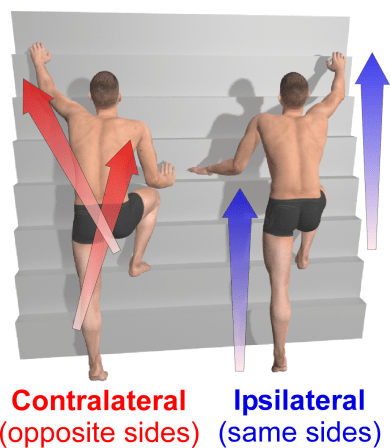
Opposition or contralateral, in regards to body movement or mechanics, means that opposite sides of the body work together to coordinate the right arm and left leg, and then the left arm and right leg. Ipsilateral refers to same side coordination.
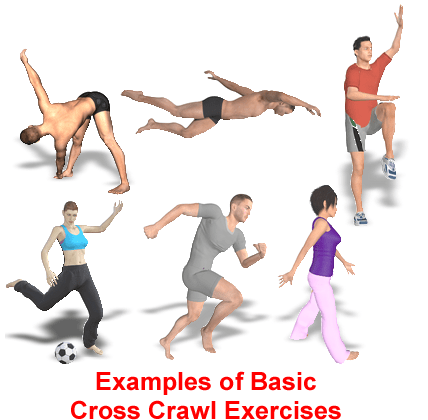
Cross crawlrefers to movements in which we use opposition such as walking, climbing, crawling, walking, running, and swimming. These are intentional cross-lateral activities, which you cross the mid-line of the body. Touching the hand to the opposite knee or foot.
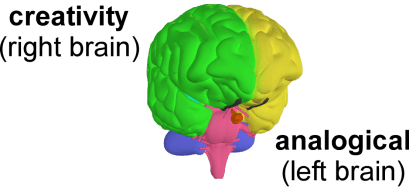
This type of movement builds the connection between the right and left hemispheres of the brain. This allows for the electrical impulses and information to pass freely between the two hemispheres. This is essential for physical coordination as well as cerebral activities, such as reading, listening, teaching or learning a skill, and hand-eye coordination.
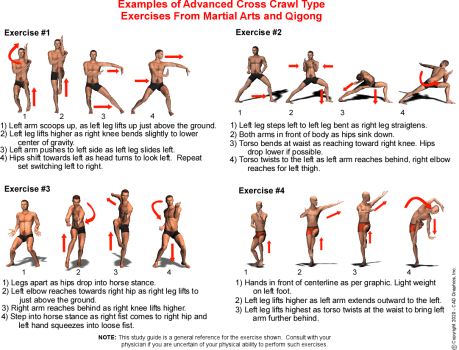
The cross crawl technique is an easy way to activate brain development and the nervous system. It gives motor and sensory stimuli needed to take control of bodily functions, thereby preventing or rehabilitating health problems. Exercises from martial arts such as Tai Chi (kung fu), qigong and yoga focus greatly on contralateral and ipsilateral movements throughout their curriculum.
Exercise methods like these have been known for centuries, but are considered new or “alternative” to modern western culture.
Learn how this all works from private, small or group instruction.
So many ways to strengthen the whole body, with low-impact and safe exercises for the mind, body & spirit. No equipment, no mat, no special clothes, no excuses! Contact me to get moving.
A method to increase the capacity of your nervous system!
Watch the video to get a sample of what this type of instruction entails. Often times people will ask me, “where did you learn this?” Well…almost 40 years ago I began studying Korean kung fu, then Traditional Chinese Medicine, medical qigong, fitness, wellness and anatomy. It didn’t happen overnight or from a weekend seminar. It took me decades of learning, studying and teaching from and with high level masters and teachers. And I’m not done learning yet, are you?
By holding the body in specific alignments, the nervous system is strengthened to endure more pain, stress and discomfort. Think of tempering steel in fire to strengthen the metal.
When engaging the muscles, tendons, bones and fascia, the 12 regular energy meridians are engaged plus the 8 extraordinary meridians are opened and filled as reservoirs to adjust the ebb and flow of energy throughout the body and thereby strengthening the immune system among other bodily functions.
Exercise methods like these have been known for centuries, but are considered new or “alternative” to modern western culture.
Learn how this all works from private, small or group instruction.
Depending upon your issues, maybe yes to all of the above. Without knowing how serious your injury is, it can be difficult to plot a course to relieve the pain and gain back confidence in your activities. You need to do the homework and research to become educated as to what injuries are typical and what the options are to move forward.
I am not a doctor nor claim to be. However, I have a different health, fitness and well-being background spanning almost 40 years. Starting martial training at the age of 16, I have continued training, studying and teaching ever since. Traditional Chinese medicine and qigong can also be studied within some martial arts lineages, which I have pursued greatly. Martial arts is deeply connected to fitness and health, aside from the obvious self-defense benefits. My fellow students and I were taught that it was easier but not ethical to injure someone unless justified. More honorable was to heal injuries or train and teach to not become injured.
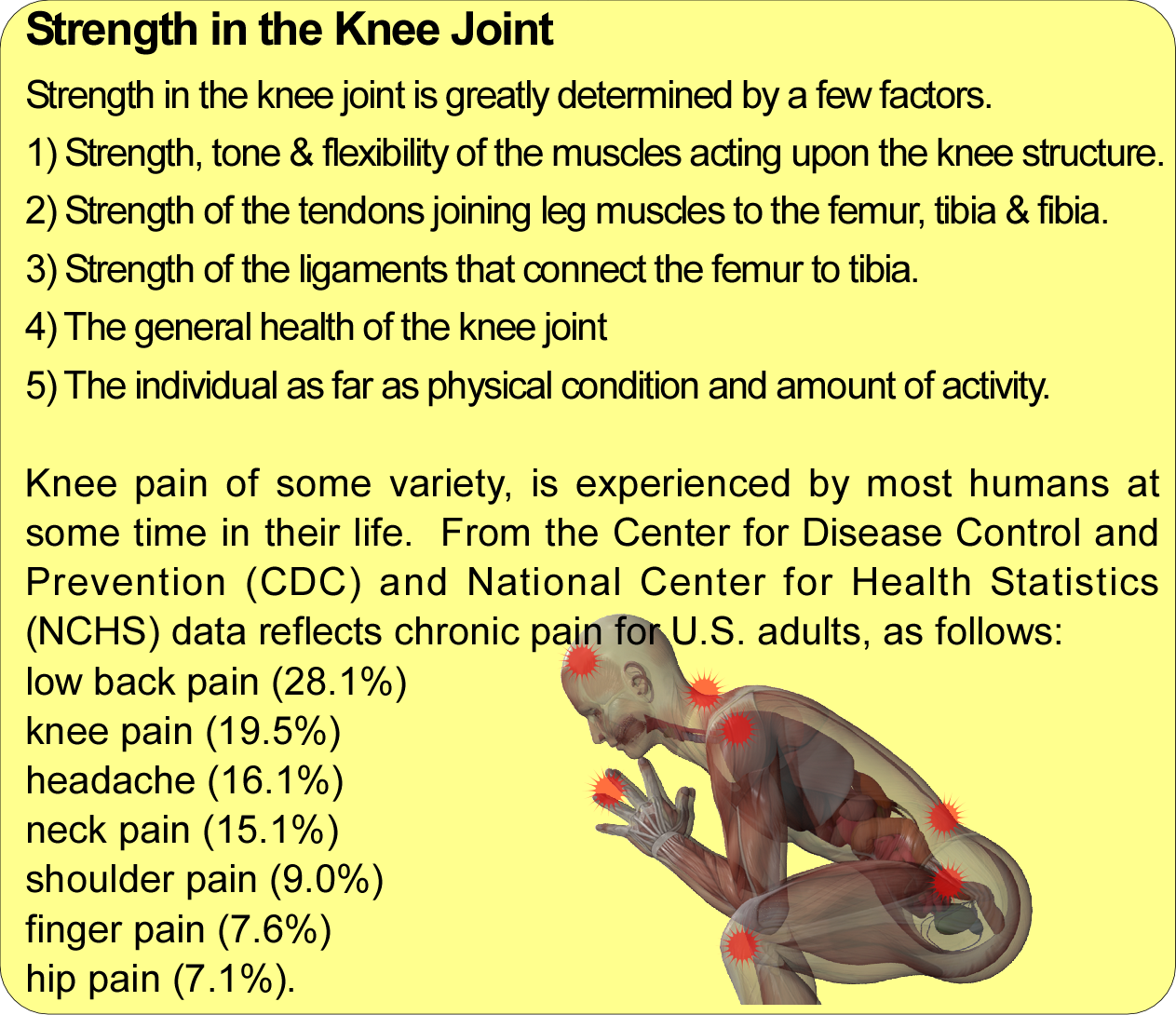
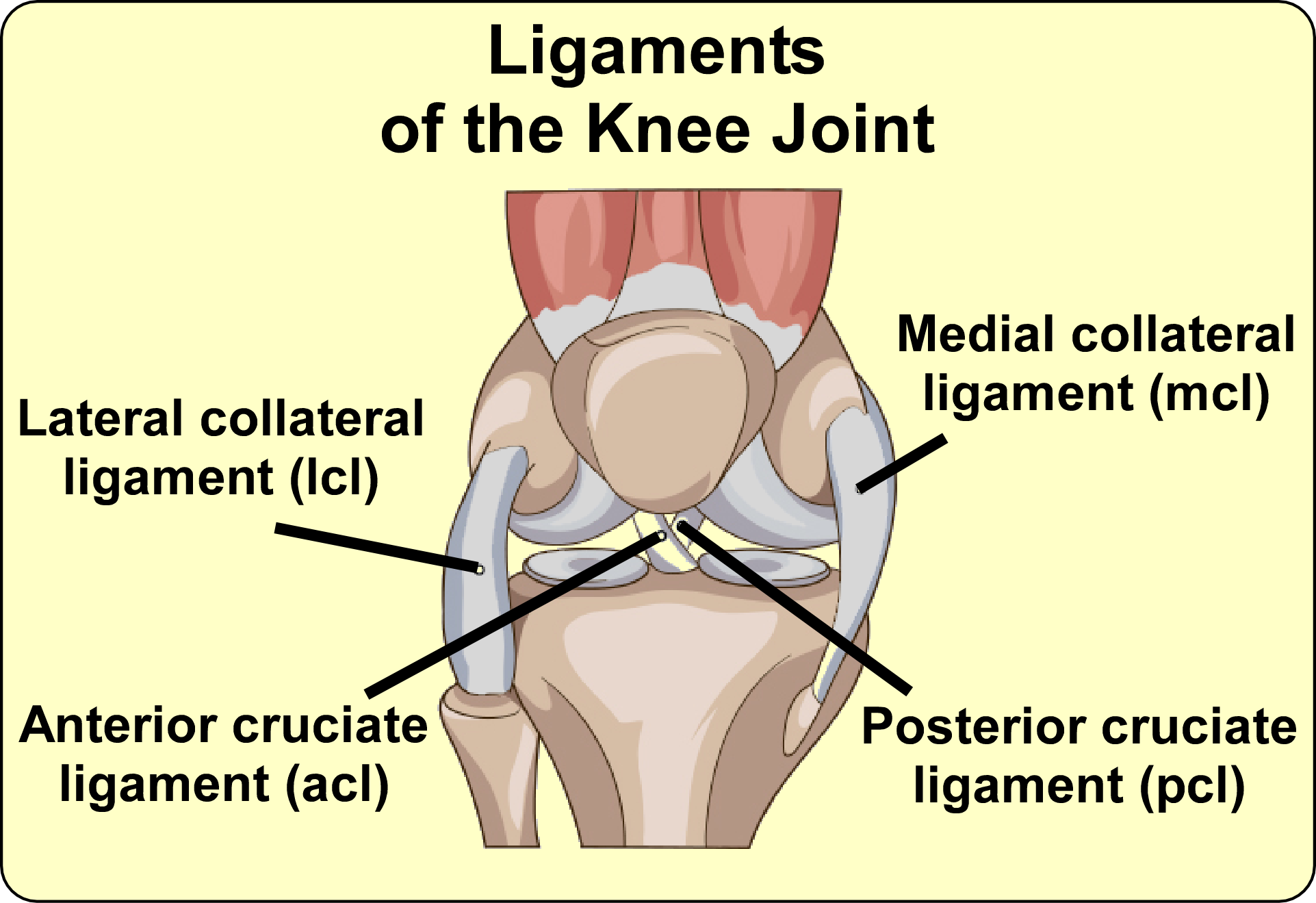
A knee injury when I was 21 woke me up to what the term “torn ACL” meant. So I tore my anterior cruciate ligament (ACL) and learned quickly how painful this type of injury could be. I decided not to go to a doctor but rather go the the “ice, rest and then exercise” route. Using martial arts exercises and qigong (deep breathing exercises as well as yoga-type postures) I was able to rehabilitate my injured knee to 100%. It took about 4-6 months of diligent daily training. Pretty much three exercises, performed 500 repetitions, twice daily. Also, holding a few stationary yoga-type stances for 5 minutes at a time. This is known as medical qigong or qigong therapy. These methods have been used for thousands of years for various injuries and ailments. Anyone can learn and exercise like this, but not everyone cares to put in the work or can make the time to exercise. Surgery is out-patient and physical therapy afterward is about 8-12 weeks. Many choose this route over the time and effort to do the disciplined exercises. Regardless, the individual will end up doing exercises anyway, if they want to resume pre-injury activities.
I have seen and worked with probably hundreds of students over the years that have improved the health of their knees (and other issues) through these specific exercises.
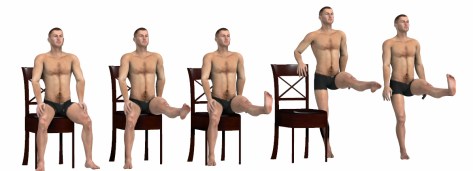
Series of exercises to strengthen the knee joint and surrounding muscles
It was not until years later, that I re-injured the knee and decided to get an MRI just to know what was really injured and how badly. It was with this visit to an orthopedic surgeon that I learned that I had torn my ACL some 25 years earlier. He suggested that whatever I had been doing to strengthen and rehab my knee joint, I should continue because it had given me the much needed muscular stability in the lateral side to side movements. This surgeon also advised me against surgery that might or might not give me better knee stability at the risk of aggravating other issues performing the surgery. If it is not broken, don’t fix it – made perfect sense to me.
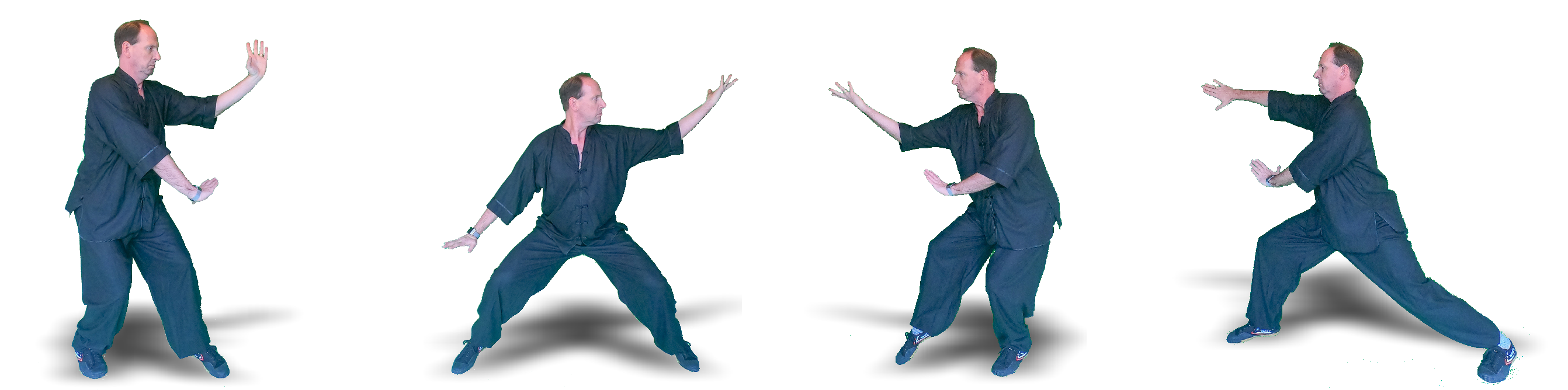
Stationary “yoga-type” qigong exercises for strength and stability
In 2002 there was a study by J. Bruce Moseley of the Houston Veterans Affairs Medical Center and his colleagues. They randomly placed 180 osteoarthritis patients into three treatment groups: debridement, lavage, or sham surgery, in which a surgeon would make incisions to the knee, but not cut or remove any cartilage. The patients nor their health care providers knew which group the researchers had placed them in. For two years the patients continued to evaluated their knee pain, while the doctors examined their regular walking and stair-climbing abilities. The results showed that at every point in the investigation, all three groups reported an equal degree of reduction in pain and increase in activity level. Mr. Moseley and his collaborators concluded that the placebo effect can account for the observed improvements; the surgeries did not appear to have any significant effect on the actual physiology of the knee ailment.
The point of this article is not to dissuade anyone from gaining medical treatment. But rather to encourage the acquiring of information and learning what ones options are before committing to a surgical procedure that may or might not improve your current situation. There is always a risk of having a worse set of circumstances after the procedure. There is not much lost nor risk of trying non-impact exercises, other than ones time and effort. If the exercises don’t produce the desired results of pain reduction and knee stability, one can always elect to have the surgical procedure afterwards, which will undoubtedly require pain meds, physically therapy and exercises after surgery anyway. Pay now or pay later – another term often used in the healthcare industry.
Jim Moltzan started his martial arts training at the age of 16, starting with Korean martial arts and evolving into BaguaZhang, Tai Chi, and Qigong. Jim has been training, studying and teaching for almost 40 years effectively educating hundreds of students.
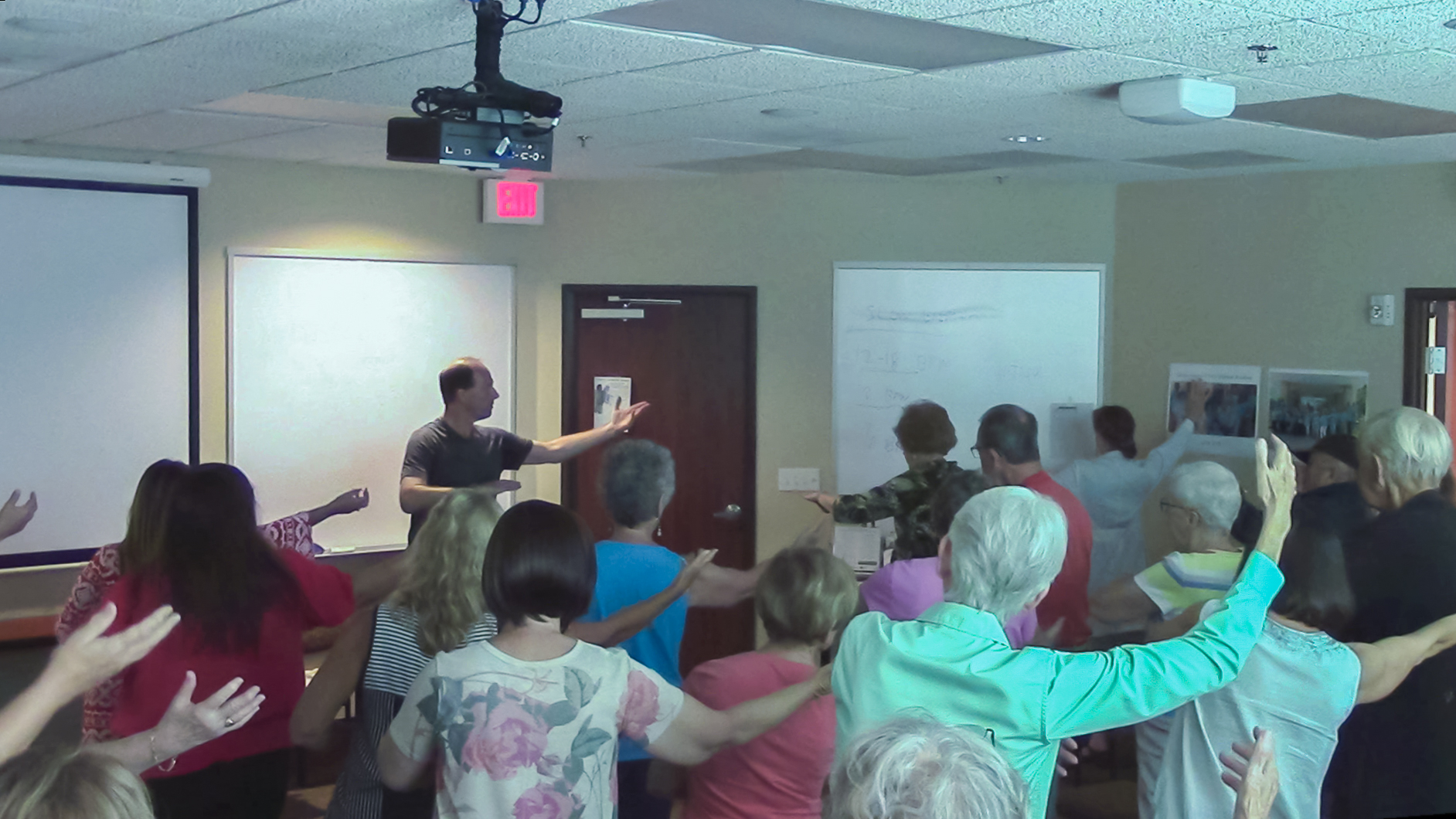
Master Instructor Jim Moltzan has trained with a diverse group of masters and high-level martial arts teachers of many different disciplines. Jim’s specialty is teaching exercises to improve chronic conditions, working with people of all ages, especially senior adults. Offering guidance and instruction, Jim has also worked with Parkinson Disease patients through Florida Hospital. Jim gives regular lectures as requested by AdventHealth (Florida Hospital) regarding the benefits of Eastern practices.
He is the author and graphic artist of numerous journals, graphic charts and study guides relative to the mind and body connection and how it relates to martial arts, fitness and self-improvement.
Jim continues his training and teaching in the Orlando, Florida area conducting classes, seminars and lectures as his schedule allows. He balances his teachings and businesses with his own personal cultivation and time spent with his wife and two college-age kids.




 United Martial Arts Association