The 8 Dimensions of Wellbeing (3 of 3)

(part 3 in a series of 3 posts)

Post 1 – The 3 Treasures: Mind, Body & Spirit

Post 2 – The 5 Pillars of Health

Post 3 – The 8 Dimensions of Wellbeing

This is my third post on this topic of the most important facets of our lives. Here I illustrate and briefly describe the next manifestation of the concept of the 3 Treasures of the mind, body, and spirit to the “8 Dimensions of Wellbeing.” With this realization, we can see from the graphic below how the many sub-categories of the 5 Pillars and 8 Dimensions, are rooted in the original concepts of mind (qi) , body (jing), and spirit (Shen). Without the 3 Treasures, there are no 5 Pillars nor 8 Dimensions of Wellbeing. Without the roots, there are no trunks, branches or leaves on a tree.
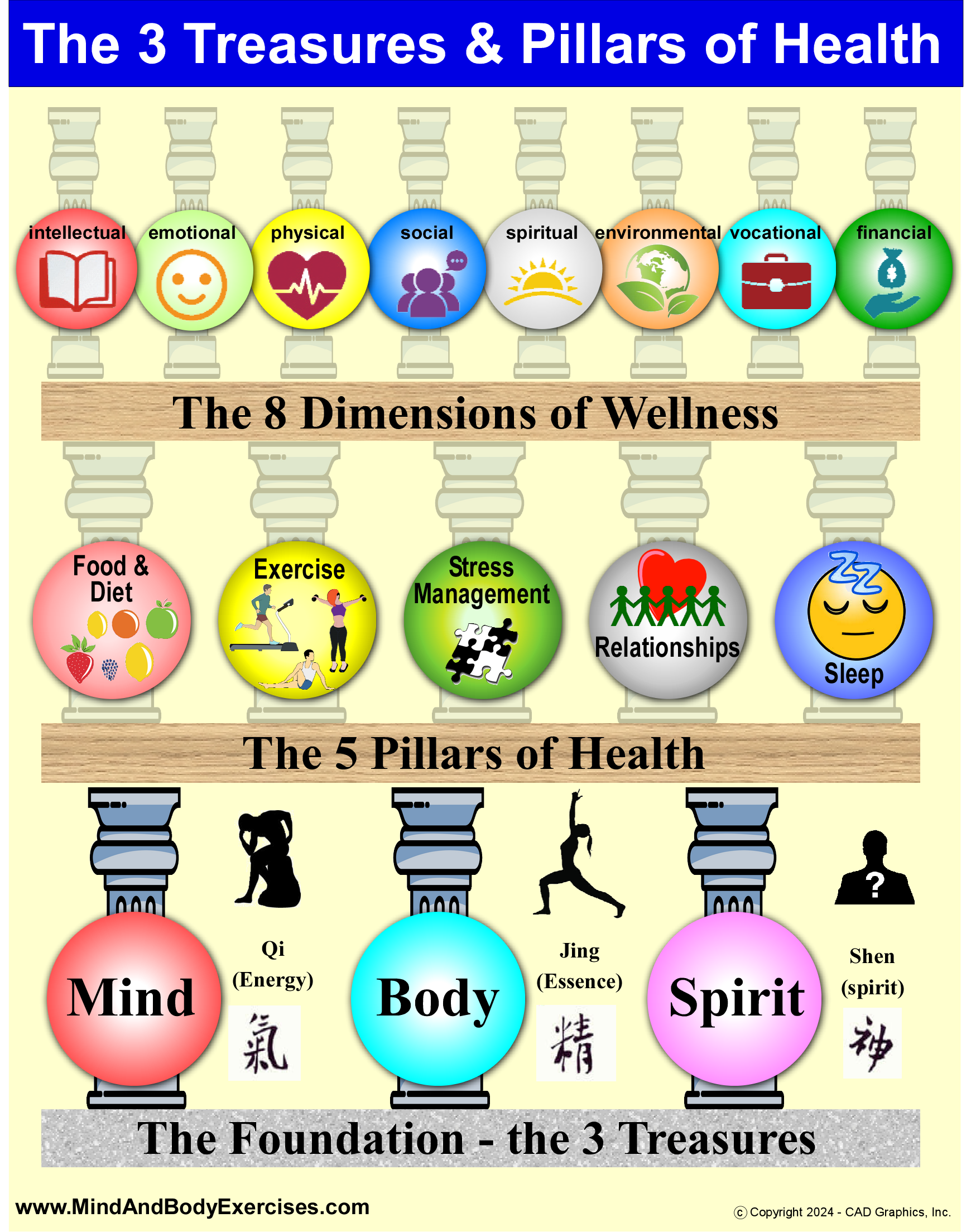
Here are some brief descriptions of the 8 dimensions of well-being:

  1. Physical Wellbeing – The ability to maintain a healthy physical body through regular and consistent exercise, appropriate nutrition, adequate sleep, and striving to avoid harmful habits such as tobacco use and excessive alcohol consumption.
  2. Emotional Wellbeing – Recognizing and managing one’s emotions, coping mechanisms for minimalizing mental stress, and developing resilience, while pursuing a positive outlook on life.
  3. Intellectual Wellbeing – The ability to engage in lifelong learning that can stimulate cognitive mental activities, while also pursuing opportunities for problem-solving and creativity.
  4. Social Wellbeing – Having the ability to foster and maintain healthy relationships, cultivating a sense of belonging, and also being able to contribute to a community.
  5. Spiritual Wellbeing – Pursuing finding purpose and meaning in one’s life, having personal morals and values, while engaging in practices that can promote inner peace and harmony.
  6. Occupational Wellbeing: The pursuit of achieving satisfaction and enrichment through a career or job, while balancing work and leisure, along with aligning career goals with personal goals, skills, and values.
  7. Financial Wellbeing: Being able to manage financial resources effectively, while also planning for the future, and maintaining financial security and stability.
  8. Environmental Wellbeing: Pursuing achieving harmony with the environment, by promoting sustainability, and creating healthy and safe areas at home and in one’s community.

Each and every dimension can affect another as they are all interconnected and can contribute to overall health, well-being, and relative happiness. Balance and harmony in these dimensions can help individuals to achieve a more fulfilling and well-rounded life.

I teach and offer lectures about holistic health, stress management, qigong, tai chi, baguazhang, meditation, phytotherapy (herbs), music for healing, self-massage, and Daoyin (yoga).

Please contact me if you, your business, organization, or group, might be interested in hosting me to speak on a wide spectrum of topics relative to better health, wellness, and fitness.

I look forward to further sharing more of my message by partnering with hospitals, wellness centers, VA centers, schools on all levels, businesses, and individuals that see the value in building a stronger nation through building a healthier population. I also have hundreds of FREE education video classes, lectures, and seminars available on my YouTube channel at:

www.MindAndBodyExercises.com
https://www.facebook.com/MindAndBodyExercises/
https://www.youtube.com/c/MindandBodyExercises
https://mindandbodyexercises.wordpress.com/
https://umareg.com/masters-council/

www.Amazon.com/author/jimmoltzan

Mind and Body Exercises on Google: https://posts.gle/aD47Qo

Jim Moltzan

407-234-0119
The 5 Pillars of Health (2 of 3)

(part 2 in a series of 3 posts)

Post 1 – The 3 Treasures: Mind, Body & Spirit

Post 2 – The 5 Pillars of Health

Post 3 – The 8 Dimensions of Wellbeing

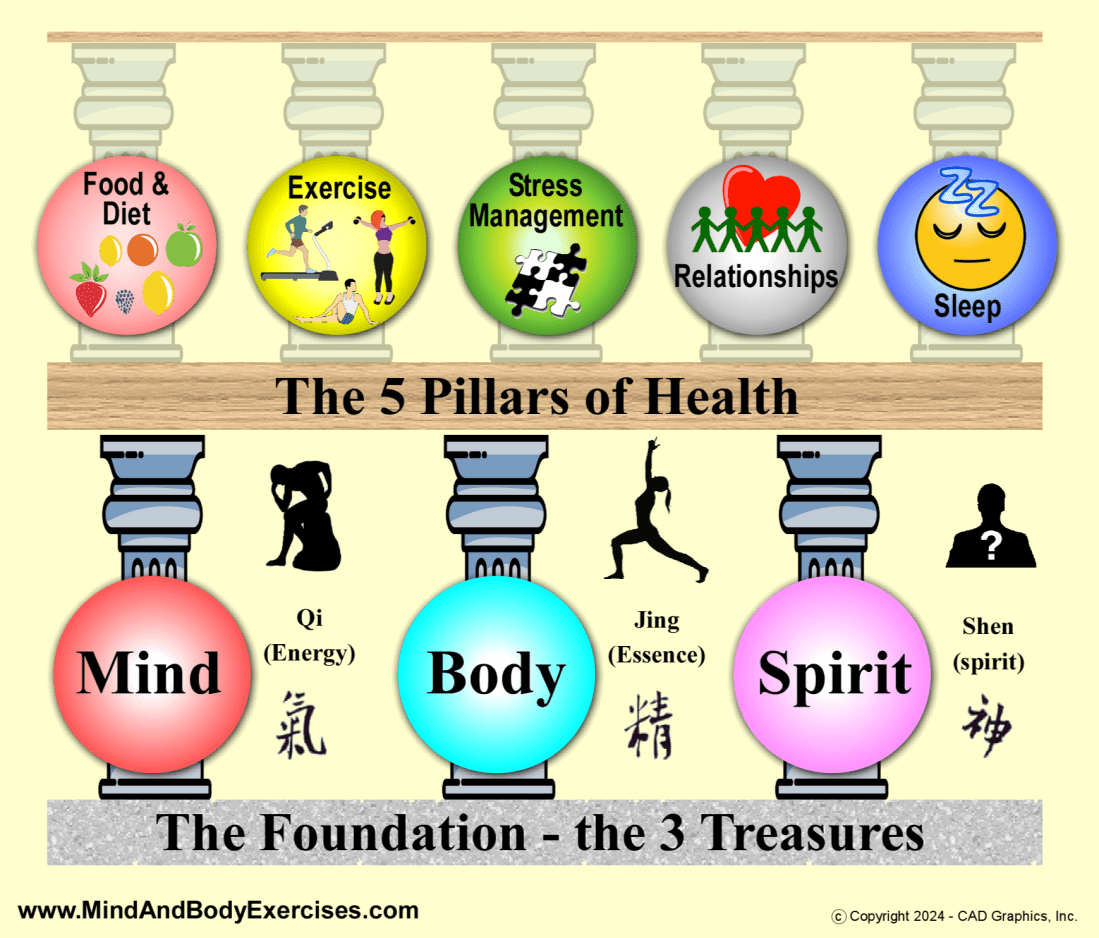
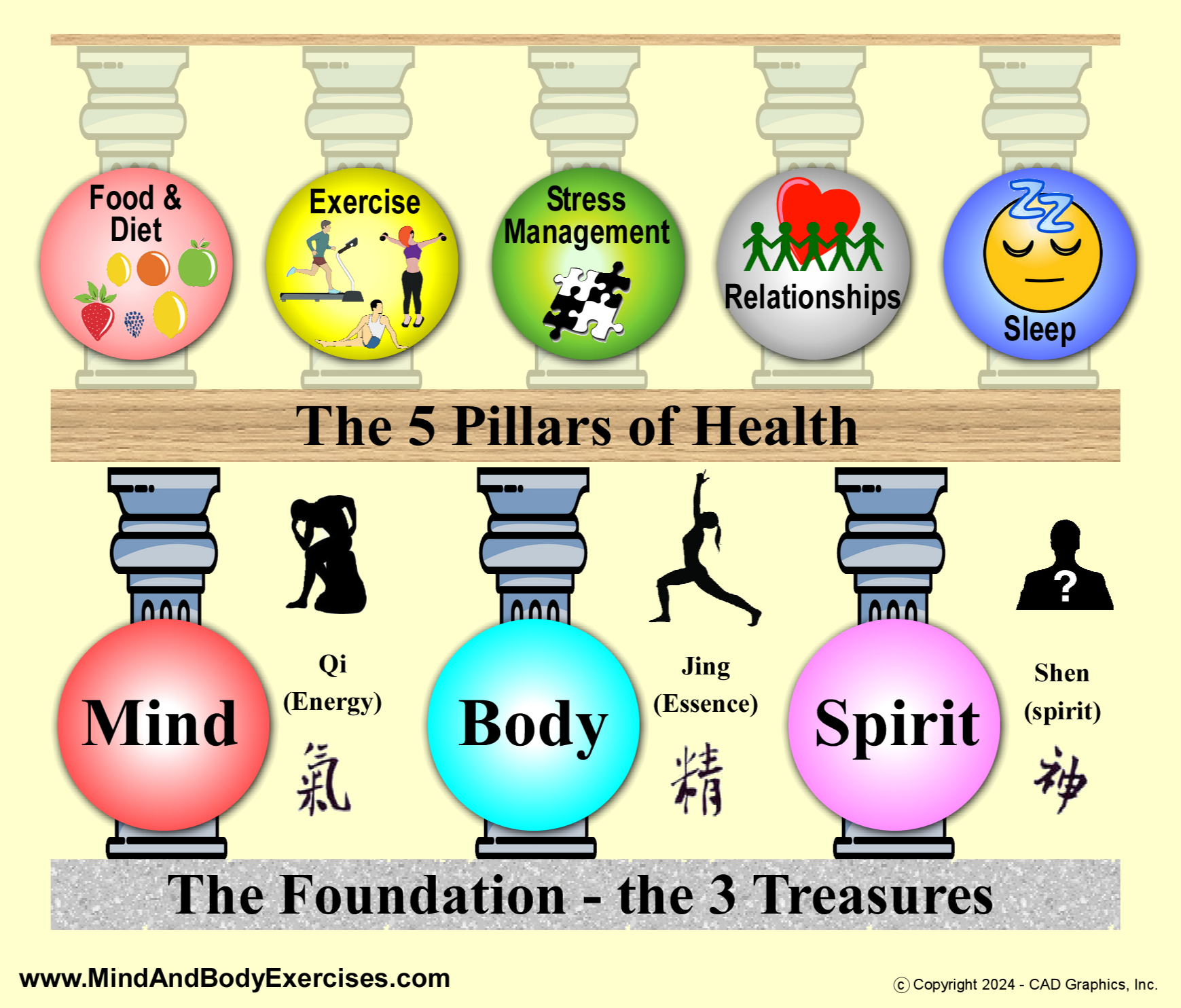
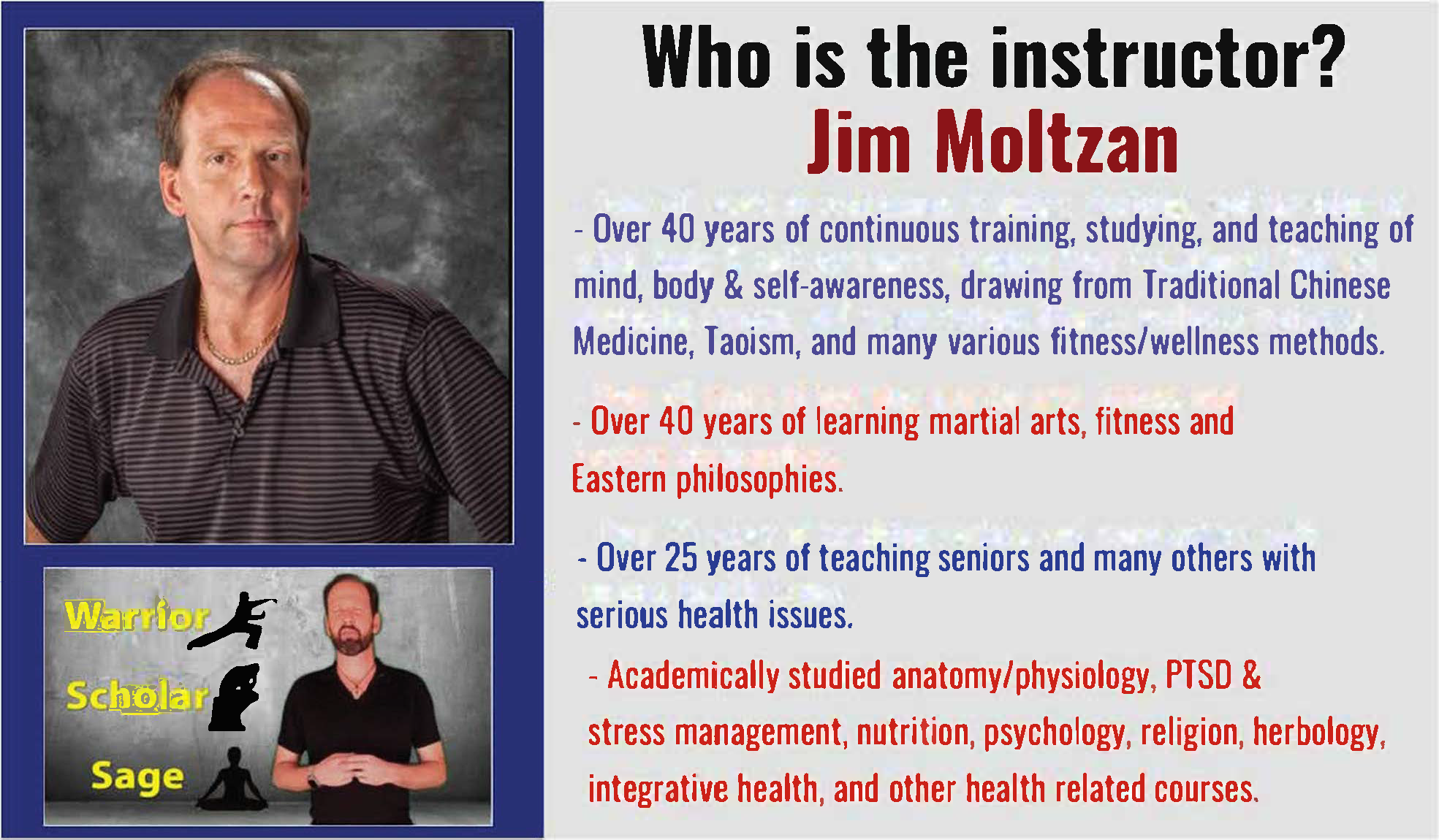
In recent years, more hospitals, wellness centers businesses, and other groups have begun to acknowledge that there is some relationship between the food we consume, exercise, management of stress, social relationships, and sleep hygiene, collectively referred to as the “5 Pillars of Health.” These components can exist in harmony to play parts in overall health and well-being. With this realization, we can see from the graphic below how the many sub-categories that are now thought to be parts of wellness build upon the original concept of mind, body, and spirit.

The 5 Pillars of Health are a great segway from the 3 Treasures of the mind, body, and spirit. All aspects of society and culture evolve over time. It only makes sense that some ancient philosophical concepts will also continue to evolve over time. Thousands of years ago, nutrition might not have been viewed as good or bad, but rather as great to just have enough food to survive. Exercise may have not been so trendy, whereas again survival might have dictated the types of activities that people engaged with (ie. hunting, running, swimming, lifting dragging, etc.). While people have been coping with stress for as long as humans have existed, we have not diagnosed it as such up until recent decades. Social connections and sleep are again areas that had not really been considered to affect health that much, until more recently.

Food and Diet:

  • Importance: Food provides the essential nutrients that the body requires to function properly.
  • Key Aspects: A balanced intake of macronutrients (fats, carbohydrates, proteins,) and micronutrients (vitamins and minerals), appropriate hydration, and mindful eating.
  • Tips: Focus on consuming whole foods like fruits, vegetables, lean proteins, whole grains, and healthy fats. Reduce intake of processed foods, sugar, alcohol, and excessive salt.

Exercise:

  • Importance: 2nd only to not smoking, exercise is the best activity for maintaining physical health, improving mental well-being, and enhancing overall quality of life.
  • Key Aspects: Includes cardiovascular (aerobic) exercise, strength/resistance training, flexibility exercises, coordination, control, and balance activities.
  • Tips: Strive to exercise for at least 150 minutes of moderate-intensity or 75 minutes of high-intensity aerobic activity per week, while also engaging in muscle-strengthening activities for two or more days per week.

Stress Management:

  • Importance: Studies and relative research support that chronic stress can definitely have negative impacts on physical and mental health.
  • Key Aspects: Coping and managing techniques can help to reduce stress, such as deep breathing exercises (qigong), mindfulness, meditation, and better time management.
  • Tips: Try to implement relaxation techniques into daily activities and routines, engage in hobbies, and pursue support from friends, family, and/or professionals when needed.

Relationships:

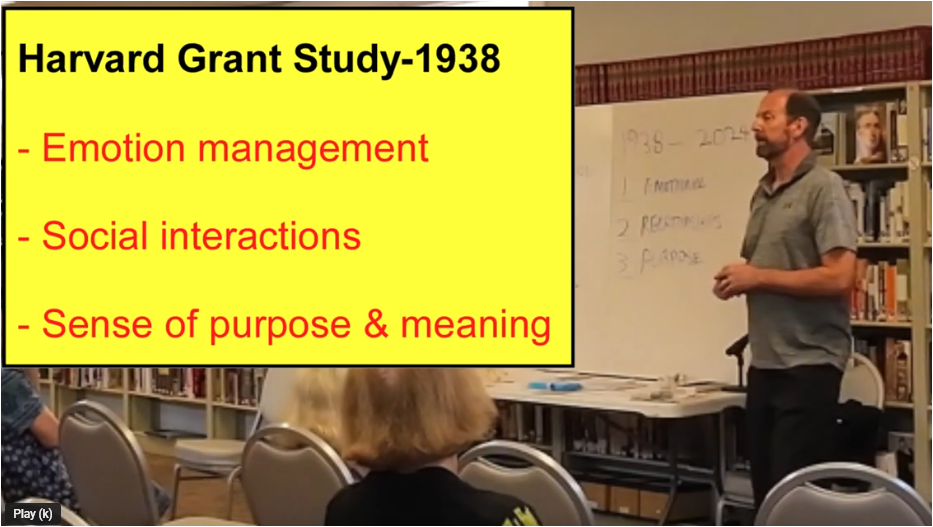
  • Importance: The ongoing 80-year-old Harvard Grant Study on Adult Development supports that ongoing healthy social relationships can impact emotional well-being and also can provide support during tough times.
  • Key Aspects: Connections to family, friends, local communities, and other social support networks can affect well-being on many levels.
  • Tips: Seek open communication, show empathy, set boundaries, and make quality time for loved ones.

Sleep or Sleep Hygiene:

  • Importance: Quality as well as quantity of sleep is important for physical rest and recovery, emotional balance, and cognitive functions.
  • Key Aspects: Good sleep hygiene involves consistent sleep patterns, appropriate duration (7-9 hours for most adults), and an environment that promotes sound and uninterrupted sleep.
  • Tips: Strive to maintain a consistent sleep schedule, in a restful environment, reduce caffeine and electronics intake well before bed, and practice a bedtime routine.

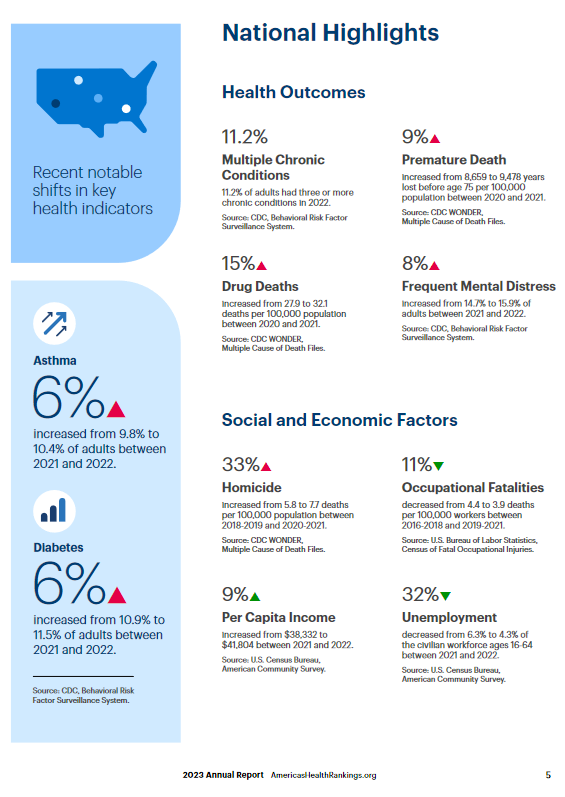
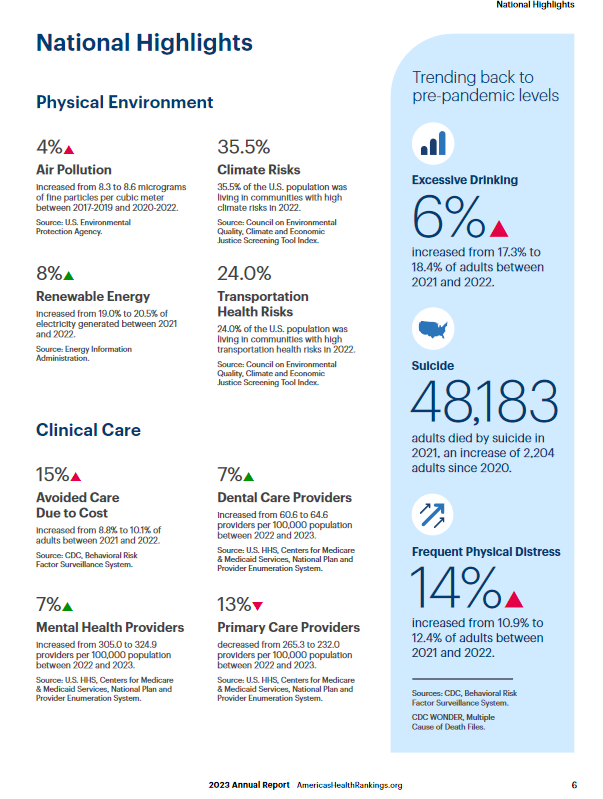
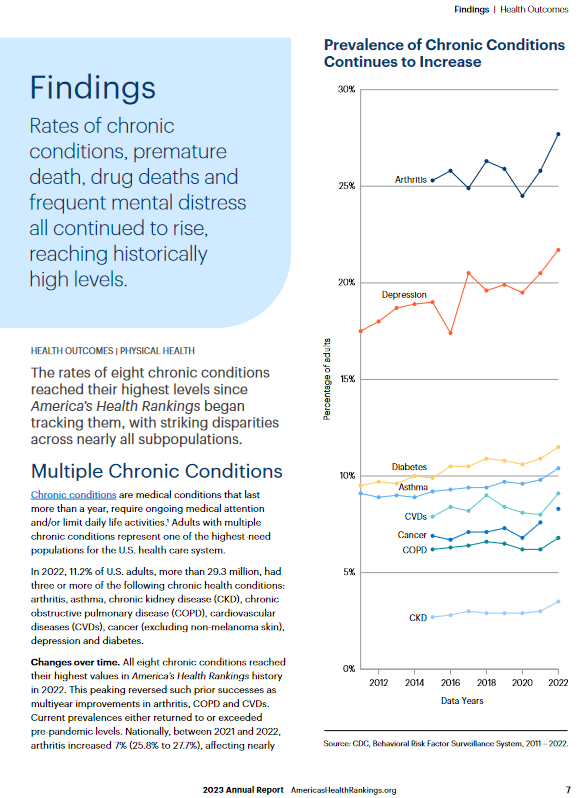
The 5 Pillars of Health may seem like common sense to many. However, many people of all ages do not understand these pillars to be fundamentally important to overall better health and well-being. More than in other periods in the US, more Americans are suffering from disease and illness that can be managed through implementing these concepts of the 3 Treasures and the 5 Pillars of Health.

Reference:

2023 Annual report. (2023). In American Public Health Association, America’s Health Rankings. https://assets.americashealthrankings.org/app/uploads/ahr_2023annual_comprehensivereport_final2-web.pdf

I teach and offer lectures about holistic health, stress management, qigong, tai chi, baguazhang, meditation, phytotherapy (herbs), music for healing, self-massage, and Daoyin (yoga).

Please contact me if you, your business, organization, or group, might be interested in hosting me to speak on a wide spectrum of topics relative to better health, wellness, and fitness.

I look forward to further sharing more of my message by partnering with hospitals, wellness centers, VA centers, schools on all levels, businesses and individuals that see the value in building a stronger nation through building a healthier population. I also have hundreds of FREE education video classes, lectures and seminars available on my YouTube channel at:

www.MindAndBodyExercises.com
https://www.facebook.com/MindAndBodyExercises/
https://www.youtube.com/c/MindandBodyExercises
https://mindandbodyexercises.wordpress.com/
https://umareg.com/masters-council/

www.Amazon.com/author/jimmoltzan

Mind and Body Exercises on Google: https://posts.gle/aD47Qo

Jim Moltzan

407-234-0119

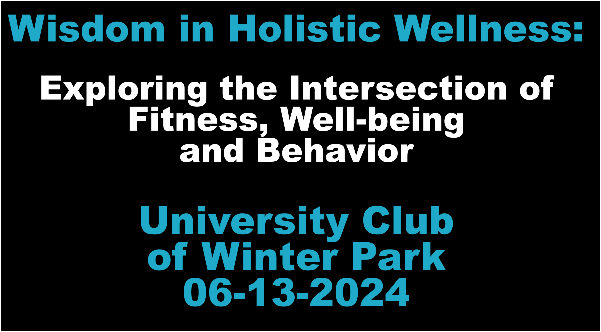
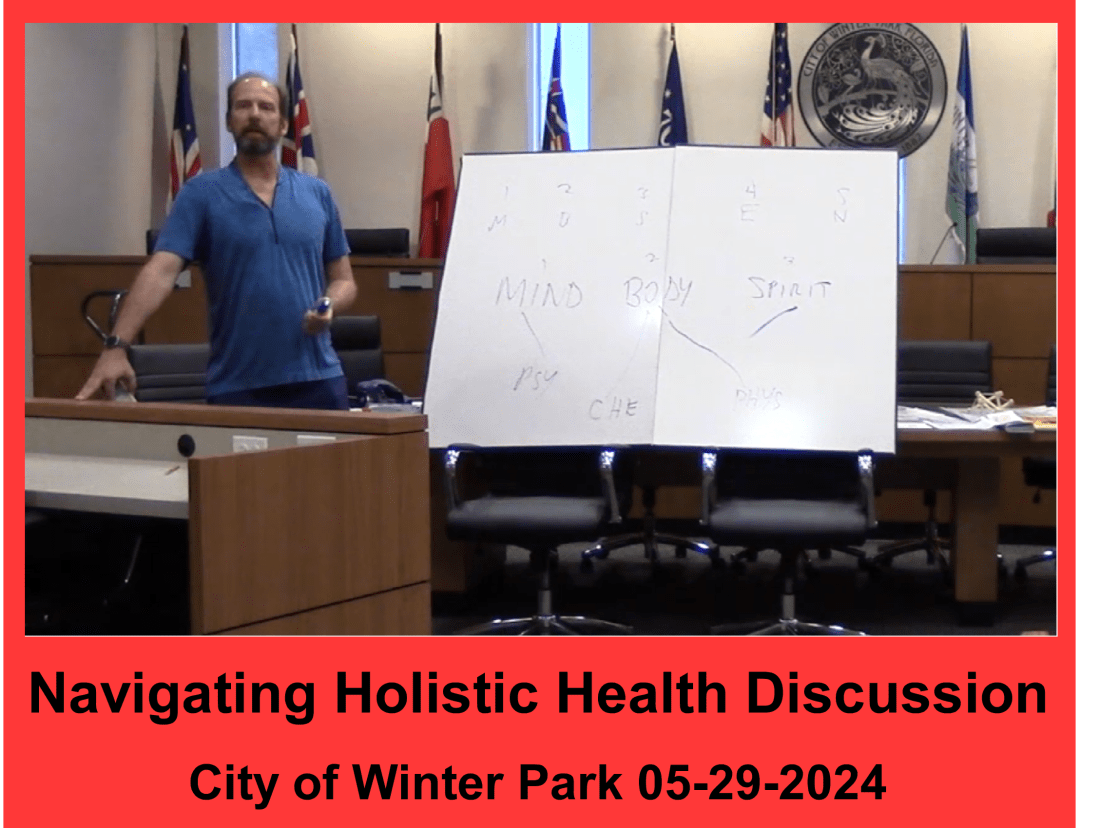
“Wisdom in Holistic Wellness: Exploring the Intersection of Fitness, Well-being and Behavior”

This video discussion covers many topics, such as:

  • whole vs holistic health
  • fitness vs. health vs. wellness
  • the tensegrity model
  • the Three Treasures (jing, qi & shen)
  • 3, 5, 7 pillars of health
  • the Harvard Grant Study of 1938-present
  • resting heart rate vs. heart rate variability
  • how breathing rate (BPM) affects the parasympathetic nervous system
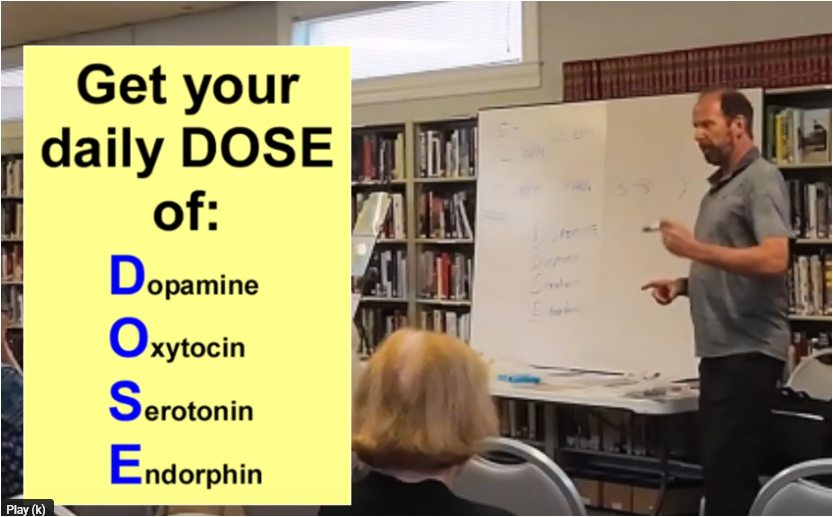
  • DOSE – dopamine, oxytocin, serotonin, endorphins
  • abdominal or diaphragm breathing
  • “Box breathing”
  • energy suns vs. energy vampires
  • restoration, longevity & cultivation
  • yin & yang
  • TCM, the 5 elements, and Ayurveda’s doshas or constitutions
  • living with a sense of purpose & meaning (ikigai)
  • motivation vs. desire

My goal is to present an education for holistic health to increase longevity and quality of life (heathspan), that brings awareness to these time-proven methods. With an intent to de-mystify and simplify explanations, hopefully, more people can come to realize that we are all accountable for our own well-being. Contact me at info@mindandbodyexercises.com if you’re interested in hosting me for speaking events for fitness, holistic health and wellness.

More video clips, books, posters & resources at:
http://www.mindandbodyexercises.com
https://mindandbodyexercises.wordpres…
https://www.facebook.com/MindAndBodyE…
http://www.Amazon.com/author/jimmoltzan

Navigating Holistic Health

51-minute discussion on holistic health

I teach and offer lectures about holistic health, stress management, qigong, tai chi, baguazhang, meditation, phytotherapy (herbs), music for healing, self-massage, and Daoyin (yoga).

Please contact me if you, your business, organization, or group, might be interested in hosting me to speak on a wide spectrum of topics relative to better health, wellness, and fitness.

I look forward to further sharing more of my message by partnering with hospitals, wellness centers, VA centers, schools on all levels, businesses and individuals that see the value in building a stronger nation through building a healthier population. I also have hundreds of FREE education video classes, lectures and seminars available on my YouTube channel at:

https://www.youtube.com/c/MindandBodyExercises

www.MindAndBodyExercises.com

www.Amazon.com/author/jimmoltzan

Mind and Body Exercises on Google: https://posts.gle/aD47Qo

Jim Moltzan

407-234-0119
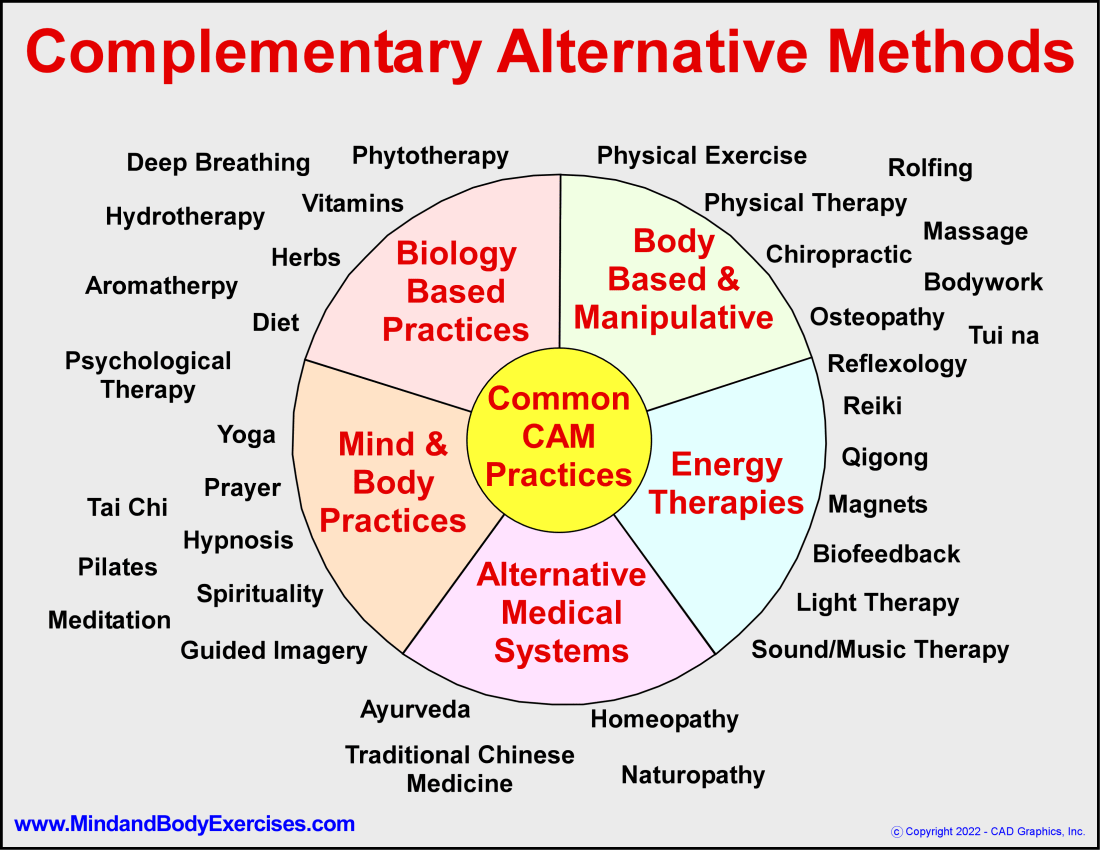
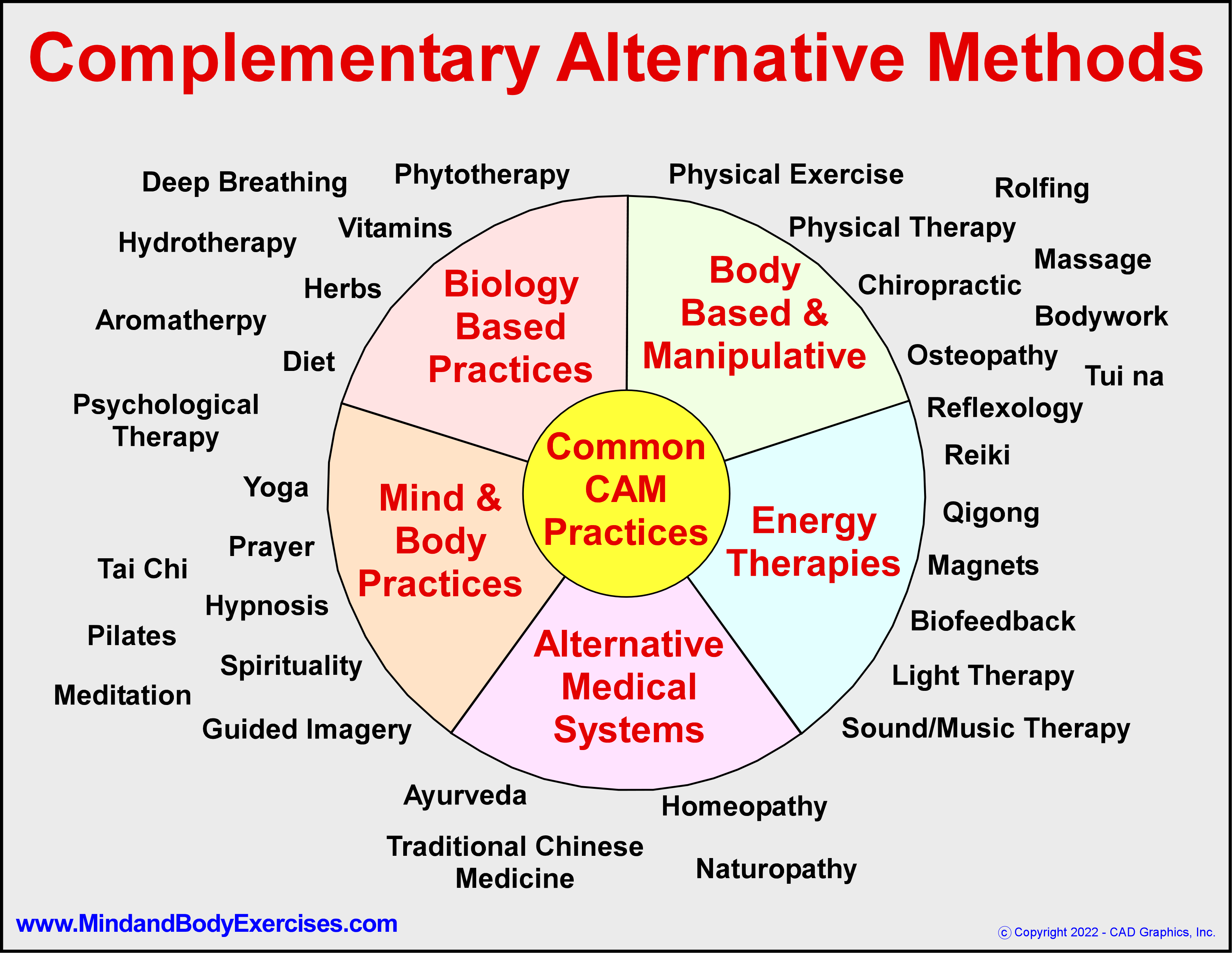
Complimentary, Alternative, or Integrative Health?

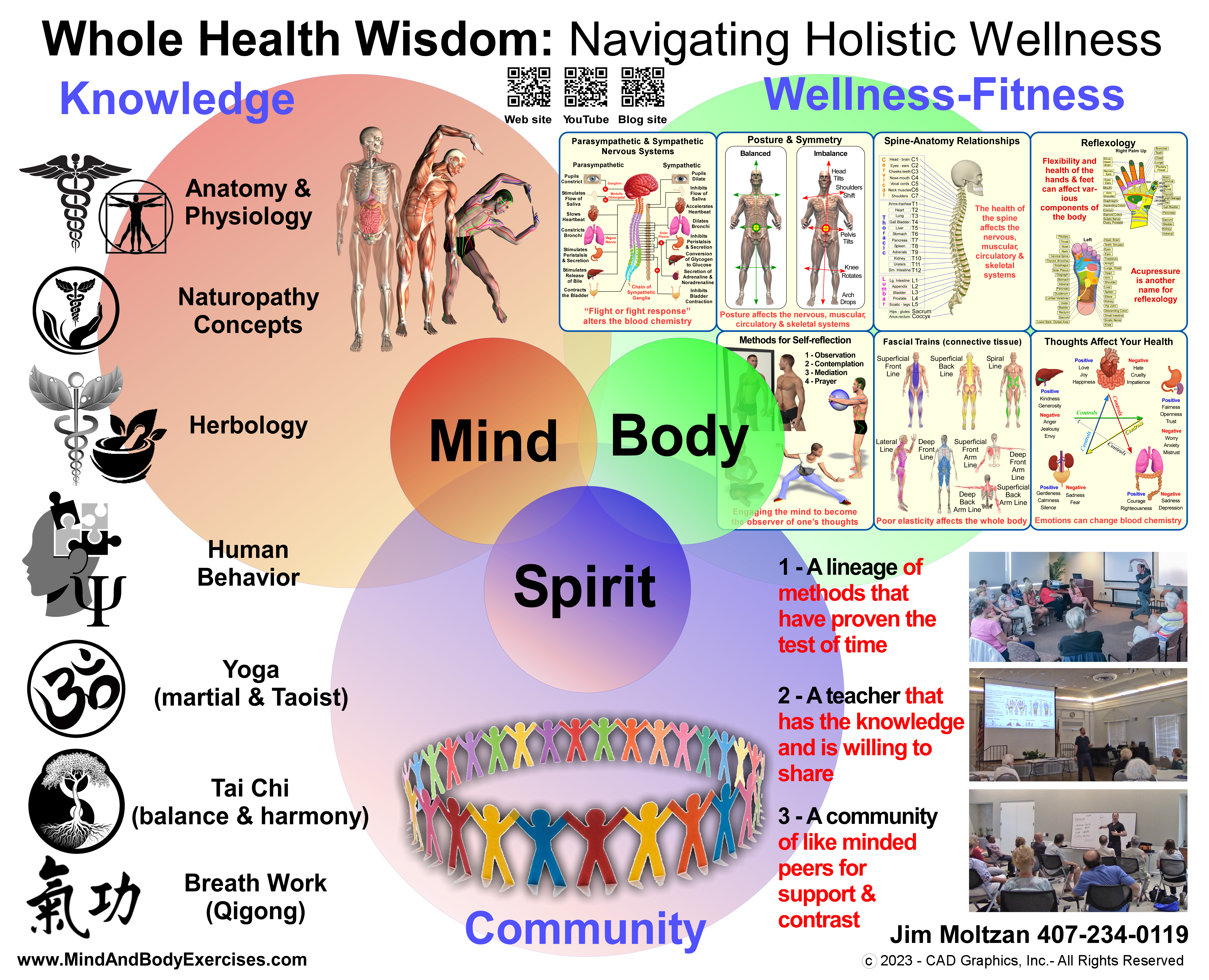
I think a root component of science is to define, label, and categorize all things that may or may not exist. Hence, the more we learn and discover, the more we label and divide. With this being said, I think that the terms complementary, alternative, and integrative are perfect terms to offset those of allopathic, biomedical, modern, or Western practice. Traditional healers, Ayurvedic Medicine, Traditional Chinese Medicine (TCM), homeopathy, and naturopathy, all of which, while debatable have been proven over the test of time to be safe and effective for many ailments and health issues. Perhaps these modalities are deserving of a more appropriate label as “traditional effective non-pharmaceutical medical care” or something similar. 

I do take issue with the often-used terms of “Western” and “modern,” as these are somewhat self-serving. Western to what? Modern compared to what? Both of the latter are using insects and calling it something new as entomotherapy (Siddiqui et al., 2023) despite it being a method used for thousands of years. My point is that the lines between all of these medical modalities have become somewhat blurred over time and when used in particular circumstances. For traumatic physical injuries, such as those from vehicle or industrial accidents, injuries from gunshots, or other physical violence, Western allopathic medicine is the superior modality. For chronic issues and preventative interventions, I think not so much. Sometimes strong pharmaceuticals are necessary to manage the pain from an injury and/or lifesaving surgery. However, a patient could be weaned off strong meds and even replaced with non-pharmaceutical or less invasive follow-up therapies, depending upon the patient’s unique circumstances. Overall, I think that the US medical healthcare system is more of a “sick-care” program that is profit-driven and focuses on treating symptoms or after-the-fact conditions. Complimentary, Alternative or Integrative Health treatments often focus on preventative or less-invasive methods that often do not generate much profit to be more fully utilized by allopathic healthcare providers.

Very few insurances provide coverage for treatments outside of the biomedical modality. I have been personally impacted by this issue with family members and myself, all regarding having suffered from lower back and knee pain. Surgical procedures may be covered if are seen as necessary, while chiropractic or physical therapy coverage varies based on upon perceived effectiveness of the specific condition being treated. The cost for a microdiscectomy on a herniated disc can range between $20,000 and $50,000 which would be covered, but rest for a few weeks followed by chiropractic treatments at about $100 per session – 5 total, were not. Yoga sessions at $20 a class for about 20 classes, are not covered. Eventually, both chiropractic and yoga worked for my family members. For my injured knee, an osteopathic surgeon looked at me and shook his head in bewilderment when I declined to have a covered knee surgery procedure ($5000-$30000). I was able to manage the repair of my issue through appropriate exercise, free of cost other than time and effort on my part. Some sufferers have no option but to have surgery or use pharmaceuticals, especially if they have suffered some type of traumatic injury. For others, it is worth looking into non-invasive treatments first before committing to a surgery that may or not offer long-term positive results.

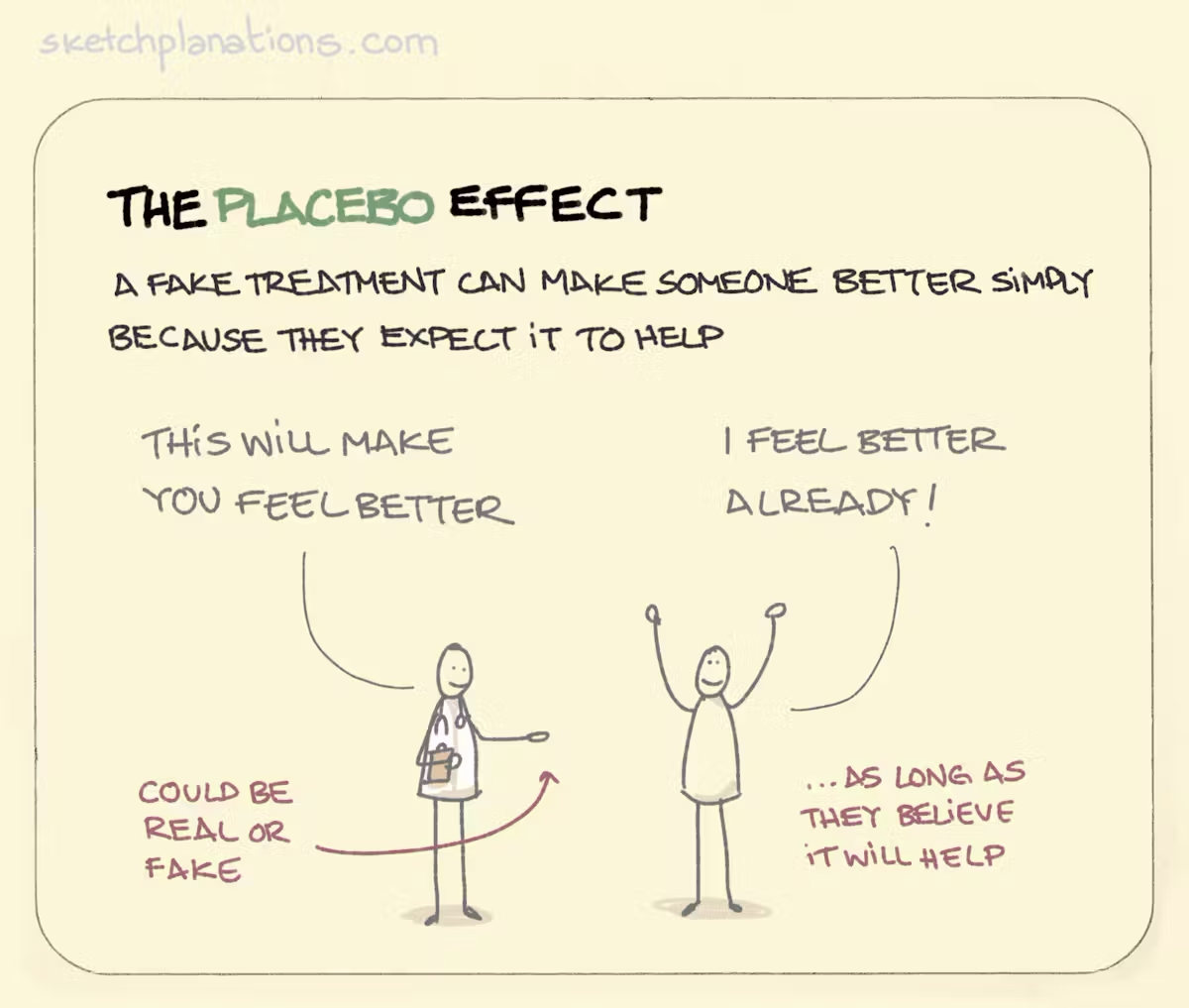
Some Western healthcare professionals will defer to why complementary, alternative, or integrative health methods sometimes are quite effective due to the placebo effect. However, I have found that the placebo effect is quite relative to allopathic medicine as well as other methods of alternative medicine. I have found that many allopathic medical professionals often look down upon alternative medicine and/or traditional methods as offering effectiveness by relying mostly upon the placebo effect. Ironically, the US healthcare system relies quite heavily on this perception that medical pharmaceuticals can fix many ailments. The power of suggestion plays a major part in alleviating pain and suffering. Roughly, between 10-90% of the efficacy of prescriptions comes down to the placebo effect. Factors such as trust in the doctor that prescribes the medication, and specific details regarding the medicine, such as its brand, price, name, and place of origin can all affect a patient’s potential belief in the medicine helping to improve their aliment (Meissner et al., 2011). While we keep hearing “follow the science”, science seems to show that the placebo effect is truly a real component of the US healthcare system.

References:

Complementary, alternative, or integrative health: what’s in a name? (n.d.). NCCIH. https://www.nccih.nih.gov/health/complementary-alternative-or-integrative-health-whats-in-a-name

Meissner, K., Kohls, N., & Colloca, L. (2011). Introduction to placebo effects in medicine: mechanisms and clinical implications. Philosophical transactions of the Royal Society of London. Series B, Biological sciences, 366(1572), 1783–1789. https://doi.org/10.1098/rstb.2010.0414

I teach and offer lectures about holistic health, stress management, qigong, tai chi, baguazhang, meditation, phytotherapy (herbs), music for healing, self-massage, and Daoyin (yoga).

I look forward to further sharing more of my message by partnering with hospitals, wellness centers, VA centers, schools on all levels, businesses and individuals that see the value in building a stronger nation through building a healthier population. I also have hundreds of FREE education video classes, lectures and seminars available on my YouTube channel at:

https://www.youtube.com/c/MindandBodyExercises

www.MindAndBodyExercises.com

www.Amazon.com/author/jimmoltzan

Mind and Body Exercises on Google: https://posts.gle/aD47Qo

Jim Moltzan

407-234-0119