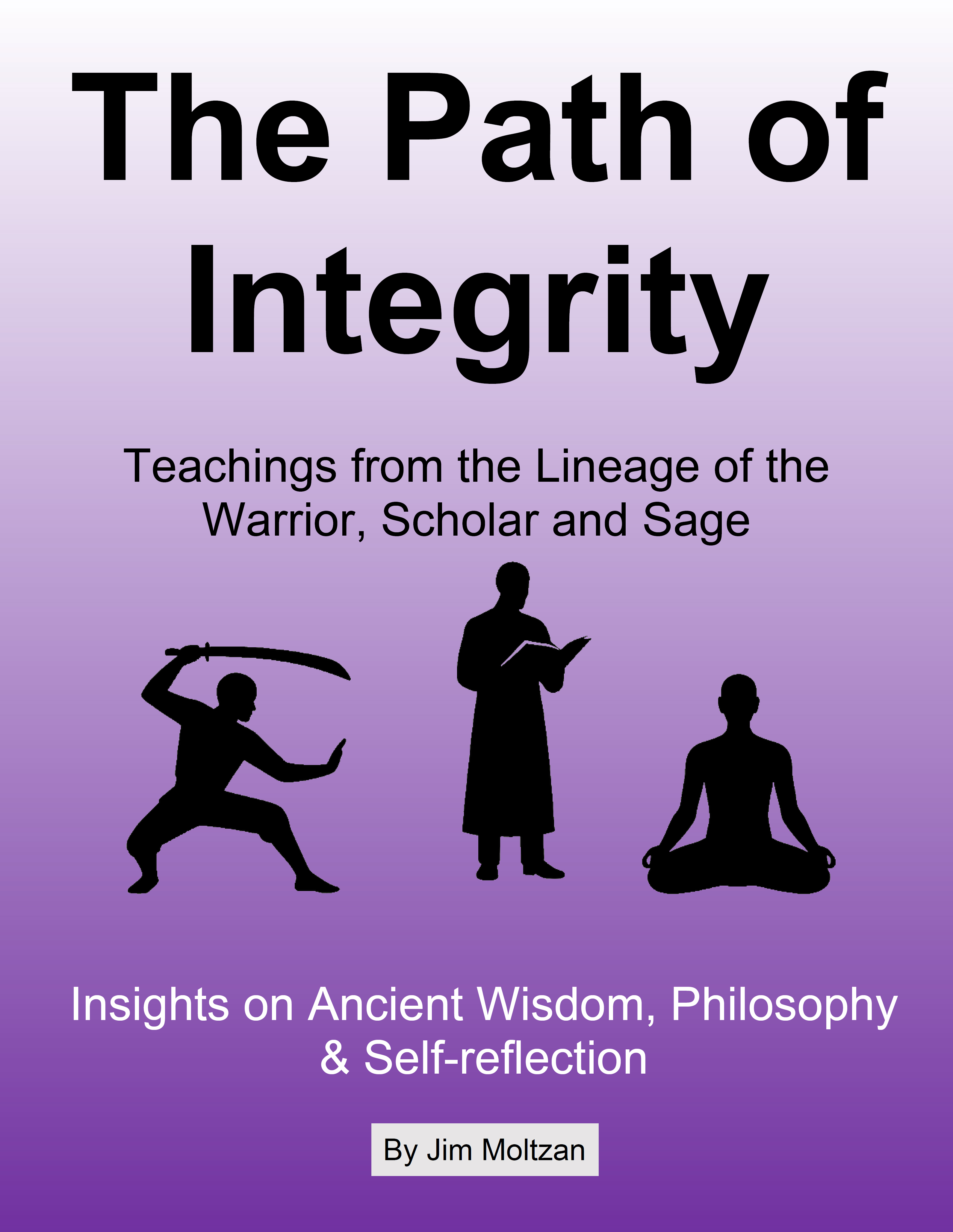
The Path of Integrity

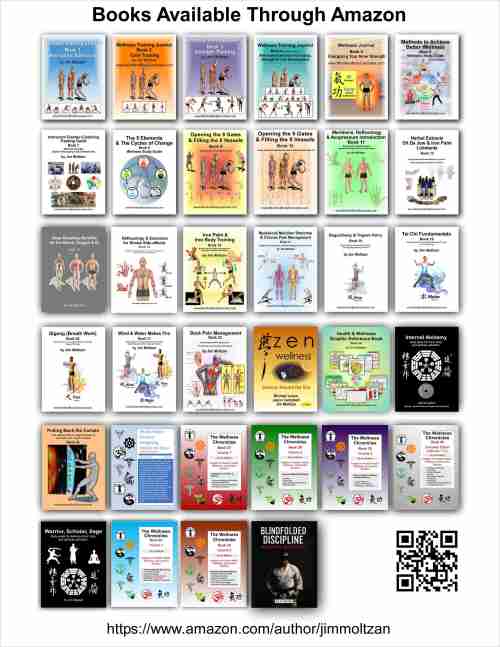
Introducing a new book by Jim Moltzan

At its heart, The Path of Integrity is both a philosophical treatise and a psychological guide. A rare combination that bridges ancient wisdom traditions with contemporary understandings of human growth, resilience, and meaning-making.
From a psychological perspective, the manuscript reflects a humanistic foundation, echoing thinkers like Carl Rogers and Abraham Maslow in its focus on authenticity, self-knowledge, and the pursuit of a life aligned with core values. The text moves beyond prescriptive “self-help” to address the deeper internal architecture of the self in the mind, body, spirit, and relational being and how each must be cultivated in balance.

The book also engages with existential psychology, confronting questions of purpose, mortality, and moral responsibility. By drawing parallels between the “Path of Integrity” and the “Way of Dissonance,” it frames life as a series of choices that either bring us into alignment with our highest potential or lead us away from it. This dichotomy functions as a form of cognitive re-framing, helping readers see their daily decisions in a broader, values-driven context.

Importantly, the manuscript explores post-traumatic growth, not as an abstract theory but as a lived reality. It acknowledges that adversity, when met with awareness and intention, can deepen resilience, empathy, and wisdom. This theme is woven throughout personal reflections, martial philosophy, and spiritual principles to create a layered and authentic approach to transformation.

The emphasis on discipline, self-awareness, and service aligns closely with self-determination theory, which holds that autonomy, competence, and relatedness are essential to psychological well-being. The book’s integration of martial arts principles, such as inner guarding, patience, and strategic action, translates these abstract needs into concrete practices.

The style is psycho-educational, offering not only insight but also practical steps, from developing mental clarity and setting energetic boundaries to cultivating stillness as a tool for decision-making. This pedagogical approach makes it equally relevant to martial artists, spiritual seekers, and those navigating the complexities of modern life.
Psychologically, The Path of Integrity stands out because it addresses both the inner terrain (belief systems, emotional regulation, moral reasoning) and the outer application (relationships, teaching, leadership, legacy). This dual focus ensures that readers do not merely reflect but act, integrating new perspectives into daily living.

Ultimately, the book’s psychological message is clear. Integrity is not an abstract ideal. It is a lived state of alignment that requires ongoing attention, honest self-evaluation, and the courage to choose what is right over what is easy. By walking this path, we move beyond survival into a life of grounded purpose, resilience, and contribution.

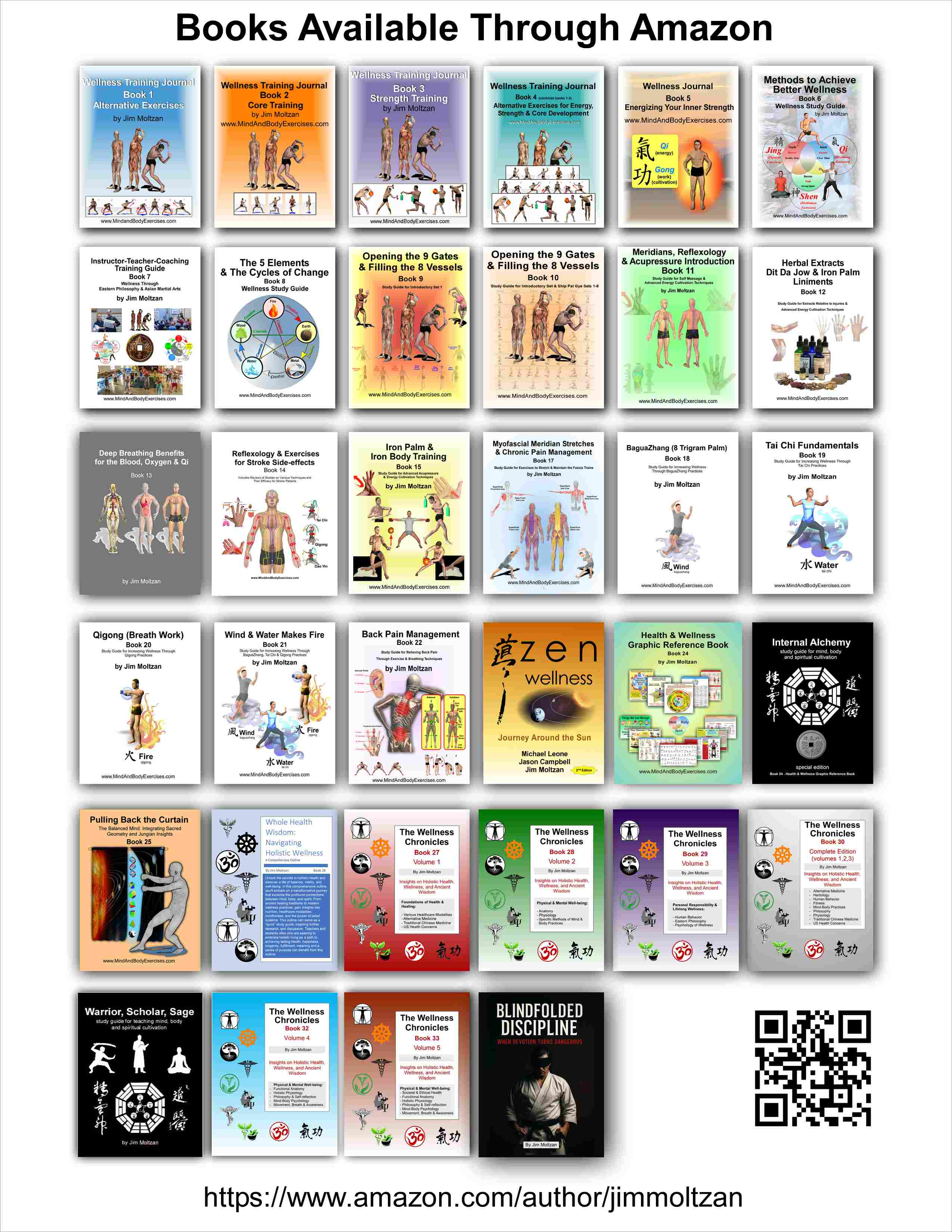
The Path to Integrity is available at Amazon at: https://a.co/d/bgm7U2t
Dunbar’s Number and the Limits of the Human Mind

In a world of overflowing inboxes, closets packed with clothes, and hundreds of digital “friends,” we’re constantly inundated with choices and connections. Yet, nature may have already set a quiet boundary, or a cognitive threshold that defines just how much we can meaningfully manage. This idea is known as Dunbar’s Number.

Originally developed to explain the limit of human relationships, Dunbar’s Number now resonates far beyond sociology. It hints at a broader pattern of mental ecology, a natural balance point between meaningful engagement and cognitive overload.

What Is Dunbar’s Number?

British anthropologist Robin Dunbar proposed that humans can maintain stable, meaningful social relationships with about 150 people. This number is based on research into primate brain size and social group complexity, specifically linking the size of the neocortex to the number of relationships a species can manage (Dunbar, 1992).

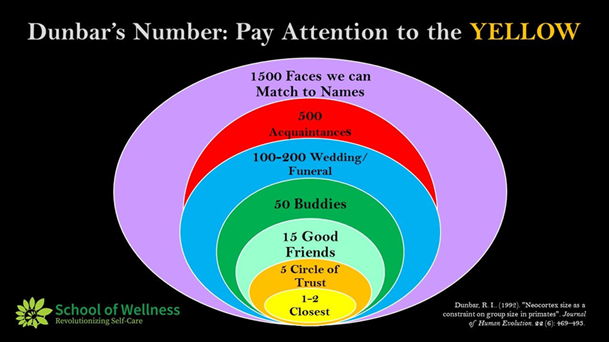
But the “150” isn’t a flat figure, but it represents the outer ring of a series of concentric social layers, each one decreasing in emotional intensity and time investment.

Dunbar’s Social Circles

  • 5 Close Confidants (e.g., family, best friends)
  • 15 Good Friends
  • 50 Close Acquaintances
  • 150 Meaningful Contacts
  • 500 Acquaintances
  • 1500 Recognizable Faces/Names

This layered model reflects the time and emotional energy required to maintain different levels of connection. And it turns out, it’s not just friendships that have limits.

(O’Grady, 2019)

The Broader Pattern: Where Else Does “150” Show Up?

Though Dunbar’s Number is specific to social cognition, the underlying idea that the brain can only handle so much complexity before performance drops, can be seen in many areas of life. Here are some real-world examples where a “Dunbar-like” limit seems to apply:

Short-Term Memory

Classic psychology research (Miller, 1956) suggests that we can hold 7±2 items in our short-term memory at once. While this number is much smaller than Dunbar’s 150, it reflects the same principle: our mental bandwidth is limited. Just as we can’t juggle endless thoughts, we also can’t nurture unlimited relationships.

Clothing and Possessions

Ever feel like you can’t find anything to wear, even with a full closet? That may be your cognitive load talking. While not exact science, many people report that having around 100–150 clothing items is the sweet spot where they still remember what they own, how to pair items, and what each piece is for.

Beyond that, possessions blur into mental background noise, ust like Facebook “friends” you haven’t spoken to in years.

Workplace Cohesion

Studies suggest that corporate teams function best when kept to 150 people or fewer. Beyond that, communication suffers, silos form, and social trust deteriorates. This principle has influenced everything from military units to organizational design (Hill & Dunbar, 2003).

Personal Library or Interests

You might own thousands of books or have tabs open on dozens of topics. But chances are, you can only actively track and revisit around 100–150 meaningful subjects, books, or areas of ongoing interest. This is where attention, memory, and emotional investment overlap.

Digital Files and Faces

Just like your closet, your desktop or phone storage may hold thousands of files. But in practice, people report that only a few hundred are accessed regularly, and even fewer are remembered without searching. Similarly, the number of recognizable faces we can recall is around, you guessed it is about 1500.

From Brain to Behavior: A Holistic View

So, what does all this mean for those of us pursuing a more mindful, intentional life?

Dunbar’s Number reminds us that less is often more. Whether it’s relationships, wardrobe items, digital clutter, or intellectual pursuits, our well-being depends not on volume, but on depth and manageability. We are not machines for connections. We are human beings wired for meaningful engagement.

From a holistic health perspective, this understanding is vital. Emotional burnout, digital fatigue, and decision paralysis are symptoms of cognitive overload. By curating our social circles, reducing unnecessary possessions, and aligning our mental inputs with our natural limits, we create room for clarity, creativity, and calm.

Just as Taoist teachings advise finding balance in the flow of yin and yang, Dunbar’s insights offer a secular mirror: balance in our connections, in our commitments, and in our consumption.

Final Reflection: Mental Ecology in a Noisy World

We live in a culture that celebrates more. More contacts, more options, more everything. But Dunbar’s Number challenges that notion, whispering a quieter wisdom:

“You are not meant to carry the weight of the world. Just the weight of what matters.”

Knowing your personal thresholds, whether it’s 5 close friends or 150 articles you truly care about, allows you to reclaim agency over your attention and emotional energy. In a way, this is not just science. It’s spiritual clarity.

References:

Dunbar, R. I. M. (1992). Neocortex size as a constraint on group size in primates. Journal of Human Evolution, 22(6), 469–493. https://doi.org/10.1016/0047-2484(92)90081-J

Dunbar, R. I. M. (2018). The anatomy of friendship. Trends in Cognitive Sciences, 22(1), 32–51. https://doi.org/10.1016/j.tics.2017.10.004

Hill, R. A., & Dunbar, R. I. M. (2003). Social network size in humans. Human Nature, 14(1), 53–72. https://doi.org/10.1007/s12110-003-1016-y

Miller, G. A., Jr. & Harvard University. (1956). The Magical Number Seven, Plus or Minus Two: Some Limits on our Capacity for Processing Information. In Psychological Review (Vols. 63–97) [Journal-article]. https://labs.la.utexas.edu/gilden/files/2016/04/MagicNumberSeven-Miller1956.pdf

O’Grady, E. (2019, September 5). Who are the 5 People you Spend the Most Time With? Revolutionizing Self-Care. https://eileenogrady.com/who-are-the-5-people-you-spend-the-most-time-with/

The Misogi Challenge

A Modern Rite of Passage for Mind, Body, and Spirit

In today’s comfort-saturated world, we often forget what we’re capable of. We live behind screens, within routines, and beneath our potential. But what if, once a year, you did something so challenging, so outrageous that it forced you to face your limits and break through them? That’s the spirit of “Misogi.”

What Is Misogi?

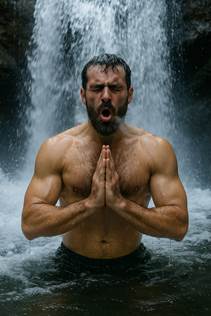
Misogi is an ancient Shinto purification ritual originating in Japan. Traditionally performed under icy waterfalls or in natural bodies of water, it involves cold-water immersion, breath control, and chanting to wash away impurities, not just physical dirt, but emotional, mental, and spiritual stagnation. It’s about cleansing the soul, aligning with nature, and stepping into renewed awareness.

“Misogi is not about strength; it’s about sincerity.” – Japanese proverb

From Ritual to Challenge: The Modern Misogi

In recent years, Misogi has evolved beyond religious rituals into a deliberate act of voluntary hardship. Misogi is a physical and mental challenge that reclaims the spirit of transformation. Spearheaded by thinkers like Dr. Marcus Elliott, the modern Misogi is a once-a-year event so difficult that there’s a 50% chance of failure.

The Rules of Modern Misogi:

  1. It should be physically and/or mentally extreme.
  2. There should be a real risk of not finishing.
  3. No audience. This is not for social media likes.
  4. It should change one’s perspective on the way you see the rest of their life.

Holistic Health Benefits of Misogi

From a holistic wellness standpoint, the Misogi Challenge is more than a test of will, it’s a full-spectrum recalibration:

Mental Fortitude

Pushing beyond perceived limits activates the prefrontal cortex, engages deep concentration, and can restructure your relationship with fear and discomfort (Tse et al., 2007).

Physical Resilience

Strenuous, unfamiliar tasks force the body to adapt, strengthen, and detoxify, stimulating lymphatic flow, cardiovascular function, and musculoskeletal balance (Nieman, 2003).

Energetic Alignment

Like cold plunges in Taoist and Ayurvedic cleansing rituals, Misogi resets energetic flow (Qi or prana), breaking through stagnation that can lead to disease (Larre et al., 1996).

Spiritual Renewal

Letting go of the ego, expectations, and habitual comforts creates space for inner clarity and reconnection to purpose. It becomes a form of sacred self-inquiry.

Designing a Misogi Challenge for Different Wellness Levels

Seniors or Holistic Wellness Groups

  • Challenge: 12-hour digital fast with 6-hour silent walking meditation
  • Why: Encourages mindfulness, self-awareness, and reconnection with breath and body
  • Modify with: Journaling and gentle breathwork (e.g., qigong or walking tai chi)

Moderate Fitness Level

  • Challenge: 20-mile nature hike with water-only fasting
  • Why: Combines physical exertion, solitude, and environmental reconnection
  • Modify with: Breaks for seated meditation or breath practice every 5 miles

Advanced Practitioners or Athletes

  • Challenge: Carrying a heavy object (rock, sandbag) across natural terrain for 2–3 hours in silence
  • Why: Deeply tests body and mind under primal conditions
  • Modify with: Incorporate chants, breath pacing, or visualization

Integration Is Key

A true Misogi doesn’t end when the task is complete. The reflection period is just as important:

  • Journal about what arose emotionally and physically
  • Meditate on what you let go of and what you discovered
  • Ask yourself: Who was I before this, and who am I now?

Misogi in the Modern World

While Misogi may sound extreme, it addresses a modern spiritual hunger or the need for voluntary adversity (strategic trauma) that leads to inner growth. We lack rites of passage in our society, and so our transformation remains stunted. Misogi reclaims this space and offers a framework for regeneration, not just resilience.

In the end, Misogi isn’t about conquest. It’s about coming clean with your body, your breath, your fears, and your forgotten strength. Misogi is less about proving you can finish and more about remembering what’s possible when you try.

Even once a year, stepping into something so bold, uncomfortable, and transformative can reset your relationship with fear, complacency, and the stories you tell yourself. Misogi is a sacred dare to become fully alive.

Last year, I committed to a 3-month rigorous physical training regimen to prepare for a 10-day hiking expedition across Utah’s Mighty Five national parks. A journey that demanded not only endurance but also mental clarity and emotional resilience. In many ways, it became my own version of a Misogi Challenge.

Drawing from decades of experience in Tai Chi, Qigong, and other time-tested fitness and wellness systems, I developed a holistic training protocol that addressed balance, breath, posture, flexibility, and mindset. This integrative approach not only strengthened my body for the miles ahead but also deepened my presence and appreciation for the journey itself.

I now help others design their own Misogi-style challenges, whether it’s a hiking goal, a fitness milestone, or a personal rite of passage, using adaptable practices rooted in Eastern movement arts and modern wellness science. You don’t need to be an elite athlete; you only need the willingness to step beyond comfort and toward transformation.

References

Larre, C., de la Vallée, E., & Rochat de la Vallée, E. (1996). The Eight Extraordinary Meridians: Spirit of the Vessels. Monkey Press.

Nieman, D. C. (2003). Current perspective on exercise immunology. Current Sports Medicine Reports, 2(5), 239–242. https://doi.org/10.1249/00149619-200310000-00001

Tse, D., Langston, R. F., Kakeyama, M., Bethus, I., Spooner, P. A., Wood, E. R., … & Morris, R. G. (2007). Schemas and memory consolidation. Science, 316(5821), 76-82. https://doi.org/10.1126/science.1135935

A Wake-Up Call to Modern Comfort

Review and Reflections on Huberman Lab’s Interview with Michael Easter

I recently watched a deeply insightful episode of the Huberman Lab podcast featuring Michael Easter, author of The Comfort Crisis, and I found myself nodding along with many of the points raised, especially given my own decades-long work in health, wellness, and personal growth.

What stood out immediately was the central premise: modern comfort is making us weaker, mentally and physically. Easter explains, and Andrew Huberman underscores, how we humans evolved in environments defined by discomfort, unpredictability, and physical effort. Those stressors shaped not only our physiology but our brain’s ability to focus, regulate emotion, and build resilience. In contrast, today’s frictionless, temperature-controlled, screen-dominated world removes nearly every challenge we once faced.

Easter offers the concept of “evolutionary mismatch”, a term that deserves more attention in wellness circles. Simply put, our bodies and brains are wired for adversity, such as movement, cold, hunger, boredom, and effort. Without these, we lose our edge. Chronic illness, obesity, depression, and anxiety may be symptoms of comfort, not just bad luck or bad genes. This echoes themes I’ve taught for years: growth comes through effort, not ease.

One of Easter’s personal anecdotes involves his month-long expedition to the Arctic, an experience that reconnected him to the primal challenge of survival and the small joys of modern life (like a hot shower or warm food). While not everyone can take such a dramatic journey, he proposes smaller, more accessible methods of reintroducing challenge, like his “2% rule”: in any given moment, maybe only 2% of people choose the harder but better path (e.g., stairs over the escalator). That idea resonated. How often do we bypass growth opportunities in the name of ease?

A major thread in the discussion is neurotransmitter dopamine, which Huberman expertly frames as a currency of motivation. Easter emphasizes that we’re increasingly “spending” our dopamine on empty, passive rewards like social media, sports betting, and slot-machine-style apps, rather than “investing” it in meaningful activities that require effort and yield long-term satisfaction, like exercise, creative pursuits, deep conversation, and reflection. This is a critical insight I believe we should all sit with. Our collective dopamine habits are shaping not just our behavior, but our baseline mental health and resilience.

One term Easter introduces is “misogi” which is a powerful idea for personal transformation. Derived from ancient purification rituals, misogi in this context refers to undertaking a yearly challenge so difficult it has only a 50/50 chance of success. The point isn’t to show off but to dig deep, confront limits, and emerge changed. As someone who has practiced and taught martial arts and internal training for over four decades, I see misogi as a contemporary form of rite of passage, which seems to be something sorely missing in modern American life. It’s not about ego; it’s about emergence.

Easter also champions “rucking” or walking with a weighted backpack, as a primal and functional form of exercise that builds both endurance and strength. It mimics what our ancestors did daily: carrying tools, food, and children across rough terrain. Rucking, when done correctly, is accessible, scalable, and deeply human. For those seeking a simple yet powerful shift in physical health, it’s worth trying.

Another key moment in the conversation was the validation of boredom as a tool for creativity and self-regulation. In our overstimulated culture, we’ve lost our tolerance for stillness. But Easter reminds us that boredom isn’t a problem to escape, it’s a message: a prompt to seek novelty, reflection, or meaning. I often teach this in the context of meditation and tai chi, where mental stillness is the foundation of insight. Allowing the brain space to wander without digital interruption can lead to greater emotional regulation and problem-solving capacity.

The episode closes with a discussion on community and connection. Digital interaction, while convenient, often lacks depth. Easter advocates for real, in-person experiences with shared purpose, whether through hobbies, group recovery, martial practice, or service. In my own work with seniors, fitness groups, and spiritual circles, I’ve witnessed the profound healing power of face-to-face presence. We are social creatures, and isolation, often masked as “independence” is a silent killer of well-being.

Takeaways Worth Reflecting On:

  • Discomfort is not the enemy – it’s the catalyst for growth. Modern life has insulated us from it, and we’re paying the price.
  • Dopamine needs to be earned, not stolen. Mindless scrolling and easy rewards burn us out. Meaningful effort renews us.
  • Functional movement like rucking connects us to our ancestral roots and trains strength and stamina in one practice.
  • Boredom is a gift – a doorway to creativity and presence if we stop running from it.
  • Misogi reminds us what we’re made of. Once a year, challenge yourself to something that might break you and remake you.
  • True connection heals. Community, shared struggle, and meaningful interaction will always outperform virtual validation.

This episode is well worth your time. It affirms much of what holistic health teaches: that well-being is earned through challenge, presence, and connection. Easter and Huberman deliver a grounded, research-informed, and deeply human message. I’ll be recommending it widely.

Reference

Andrew Huberman. (2025, June 16). How to grow from doing hard things | Michael Easter [Video]. YouTube. https://www.youtube.com/watch?v=SsKkZTjUJEk

12 Meridians vs. 8 Extraordinary Vessels

Traditional Chinese Medicine (TCM) views the human body as an intricate network of energy channels that govern physical, emotional, and spiritual health. Two key components of this system are the 12 Primary Meridians and the 8 Extraordinary Vessels. Though they are interconnected, they serve distinctly different roles in maintaining balance and vitality. Understanding this distinction provides deeper insight into how TCM approaches healing, longevity, and self-cultivation (Maciocia, 2005).

The 12 Primary Meridians: The Body’s Main Rivers of Life

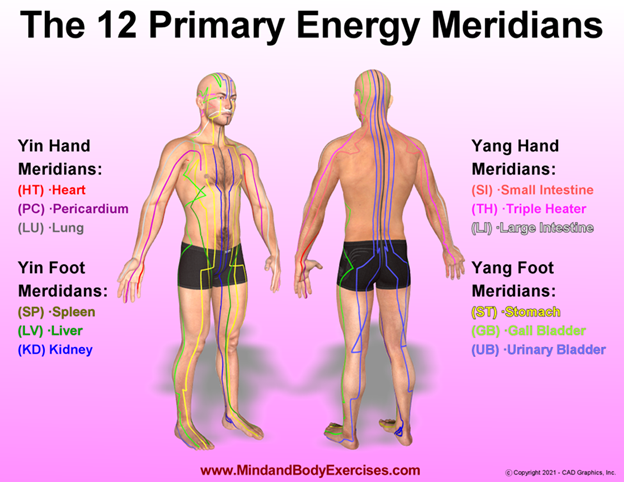
The 12 Primary Meridians are the foundational pathways through which Qi (vital energy) and blood flow to nourish the entire body (Deadman et al., 2007). These channels are intimately linked to the Zang-Fu organs of the five Yin organs (Lung, Heart, Spleen, Liver, Kidney) and six Yang organs (Large Intestine, Small Intestine, Stomach, Gallbladder, Urinary Bladder, and San Jiao/Triple Burner) (Maciocia, 2005).

Each meridian runs a defined, bilateral path along the body, connecting exterior regions (skin, muscles) with interior organs. This ensures that nutritive Qi (Ying Qi) and protective Qi (Wei Qi) are continuously circulated, supporting physiological functions such as immunity, metabolism, digestion, and mental clarity (Kaptchuk, 2000).

Because they regulate the daily functional balance of the body, the Primary Meridians are often the primary focus in acupuncture treatments and other therapeutic practices like acupressure and Tuina massage(Deadman et al., 2007). When these channels are blocked or imbalanced, symptoms such as pain, fatigue, or organ dysfunction can arise.

The 8 Extraordinary Vessels: The Deeper Reservoirs of Vital Energy

In contrast to the Primary Meridians, the 8 Extraordinary Vessels operate at a deeper energetic level. They are not directly tied to the Zang-Fu organs, nor do they participate in the body’s regular organ-based circulation (Maciocia, 2005). Instead, they act as reservoirs and regulators of Qi and Blood, particularly Yuan Qi (Original or Prenatal Qi), which governs growth, development, and constitutional strength (Hsu, 1999).

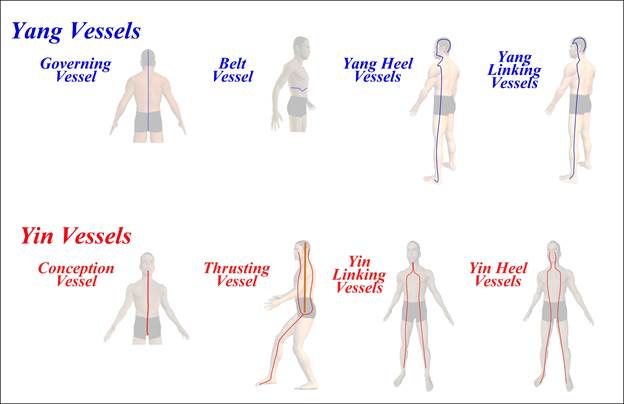
While the Primary Meridians are paired and bilateral, several Extraordinary Vessels run along the midline of the body (such as the Du Mai or Governing Vessel and the Ren Mai or Conception Vessel), forming the body’s central energetic axis. Others, such as the Chong Mai (Penetrating Vessel) and Dai Mai (Belt Vessel), regulate more specialized functions like reproductive health and structural integration (Deadman et al., 2007).

The Extraordinary Vessels become especially important during times of:

  • Life transitions (puberty, pregnancy, menopause)
  • Chronic illness
  • Emotional trauma
  • Deep constitutional imbalance (Birch & Felt, 1999)

In such cases, they provide a reservoir of Qi and Blood that can be mobilized to restore balance and support healing. Advanced acupuncture treatments often target these vessels to address long-standing patterns of disease or to promote profound transformation (Birch & Felt, 1999).

Comparing the Two Systems: A Summary Table

Feature12 Primary Meridians8 Extraordinary Vessels
Number128
Connection to OrgansDirectly connected to major Zang-Fu organsNot directly connected to Zang-Fu; deeper level
Flow of QiCirculates protective and nutritive Qi (Wei & Ying)Regulates and stores Yuan Qi (Original Qi)
PathwayRelatively superficial, follows defined body pathsDeep, more latent or reservoir-like pathways
Main FunctionMaintains daily physiological function and organ balanceActs as reservoirs of Qi and Blood; regulate overflow; integrate all meridians
SymmetryPaired and bilateral (left and right sides)Some are midline (single), others bilateral
Origin and CirculationContinuous circulation in a closed loopOriginate from the Kidney/Yuan Qi level; flow in special patterns
Activation in PracticeCommonly used in acupuncture and daily therapiesUsed in advanced, constitutional, or chronic condition treatments
ExamplesLung, Heart, Kidney, Spleen, Stomach meridians, etc.Du Mai, Ren Mai, Chong Mai, Dai Mai, and others

The Dynamic Dance of Qi: Rivers and Reservoirs

One way to visualize this relationship is to think of the 12 Primary Meridians as the body’s main rivers of energy flow (Kaptchuk, 2000). They nourish the landscape (organs and tissues) with a steady stream of Qi and Blood. In contrast, the 8 Extraordinary Vessels serve as reservoirs and aqueducts that hold, regulate, and distribute this energy as needed during times of surplus or deficiency (Hsu, 1999).

This layered system allows TCM to address health at multiple levels, from acute, surface-level imbalances to deep constitutional healing that shapes one’s vitality, longevity, and adaptability (Birch & Felt, 1999).

Practical Implications for Wellness

For modern practitioners and wellness seekers, understanding this distinction helps guide personal practices:

  • Daily self-care and lifestyle habits (nutrition, breathwork, basic movement practices) primarily support the flow of the 12 Primary Meridians.
  • Deeper practices such as Qi Gong, Nei Gong, and meditative breathwork can engage the Extraordinary Vessels to cultivate life force and restore balance at a core level (Deadman et al., 2007).
  • Clinical interventions (like specialized acupuncture protocols) can be designed to activate specific Extraordinary Vessels to address chronic or deeply rooted issues (Birch & Felt, 1999).

Conclusion

Both the 12 Primary Meridians and the 8 Extraordinary Vessels are essential components of the TCM energy system, working together to maintain health, resilience, and harmony throughout life (Maciocia, 2005). By appreciating their complementary roles, we gain a richer understanding of how traditional practices can support modern well-being in a profound and holistic way.

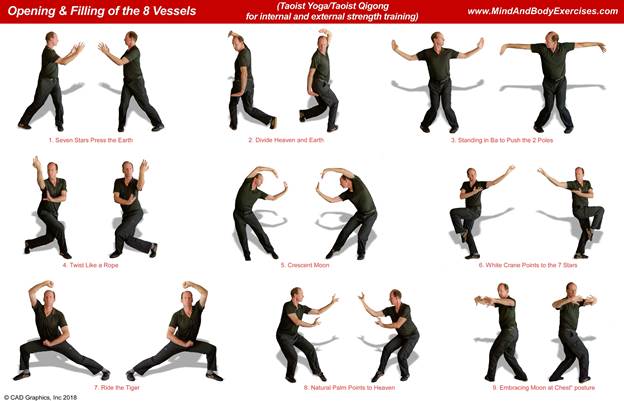
8 Vessels Qigong (ship pal gye)

References:

Birch, S., & Felt, R. L. (1999). Understanding acupuncture. Churchill Livingstone.

Deadman, P., Al-Khafaji, M., & Baker, K. (2007). A manual of acupuncture. Journal of Chinese Medicine Publications.

Hsu, E. (1999). The transmission of Chinese medicine. https://doi.org/10.1017/cbo9780511612459

Kaptchuk, T. J. (2000). The web that has no weaver: Understanding Chinese medicine (2nd ed.). Contemporary Books.

Maciocia, G. (2005). The foundations of Chinese medicine: A comprehensive text for acupuncturists and herbalists (2nd ed.). Churchill Livingstone.