Exercise Affects: Anti-inflammatory Response, Growth Hormone Production & Cerebral Circulation

  • Physical exercise can help to produce anti-inflammatory responses from the central nervous system.
  • Physical exercise can help to stimulate human growth hormone production.
  • Physical exercise can help to increase blood flow and oxygenation to the prefrontal cortex and hippocampus areas of the brain.

Only 25% of the US population exercises regularly. We could see a much greater reduction in serious illnesses and related comorbidities if more people exercised on a regular basis. Children especially need to get off the couch, get off the phone, PC or video game, get outside, move their bodies. We all know this, but don’t want to do what it takes to change our own habits, let alone that of our kids. About 20% of US kids are obese. 80% of these will go on to be obese adults. Obesity is not the main issue but rather the illnesses that come along with it. Plant good seeds if you want good crops, right?

Interleukin-6 (IL-6) and interleukin-10 (IL-10) are both cytokines involved in the immune response and inflammation regulation

IL-6 & IL-10 are stimulated during exercise. They play important roles in modulating the body’s response to exercise. Here’s an overview of the physiology of this mechanism during exercise:

  1. Interleukin-6 (IL-6): During exercise, IL-6 is released from various sources, including skeletal muscle, immune cells, and adipose tissue. Several factors contribute to the stimulation of IL-6 production:

a. Muscle contraction: The mechanical stress placed on muscles during exercise triggers the release of IL-6 from the working muscles themselves. This release is mediated by intramuscular signaling pathways, such as calcium influx and the activation of adenosine monophosphate-activated protein kinase (AMPK) and mitogen-activated protein kinase (MAPK) pathways.

b. Sympathetic nervous system activation: Exercise leads to the activation of the sympathetic nervous system, which releases catecholamines (epinephrine and norepinephrine). These catecholamines promote IL-6 production in skeletal muscle and immune cells.

c. Tissue damage and inflammation: Intense or prolonged exercise can cause tissue damage and inflammation. This triggers the activation of immune cells, such as macrophages, which release IL-6 as part of the inflammatory response.

  1. Interleukin-10 (IL-10): IL-10 is an anti-inflammatory cytokine that helps regulate the immune response and control excessive inflammation. Its production during exercise is influenced by various factors:

a. IL-6-induced IL-10 production: IL-6, as mentioned earlier, is stimulated during exercise. Interestingly, IL-6 can also induce the production of IL-10. IL-6 acts as a signaling molecule, promoting the release of IL-10 from immune cells. This IL-6-induced IL-10 production helps regulate the immune response and minimize excessive inflammation.

b. Anti-inflammatory feedback: IL-10 acts as a negative feedback mechanism to downregulate pro-inflammatory cytokines, including IL-6 itself. By promoting the release of IL-10, exercise helps to maintain a balance between pro-inflammatory and anti-inflammatory factors, preventing an excessive immune response.

Both IL-6 and IL-10 have diverse effects on the body during exercise. IL-6, despite being pro-inflammatory, also has beneficial effects, such as promoting glucose uptake in muscles and stimulating lipolysis (breakdown of fats). IL-10, on the other hand, helps limit inflammation and contributes to tissue repair and recovery.

It’s important to note that the regulation of IL-6 and IL-10 during exercise is complex, and their levels can vary based on various factors, such as exercise intensity, duration, and individual fitness levels. Additionally, the exact mechanisms underlying their release and interaction during exercise are still an active area of research.

Strategic Trauma

The mechanism I am referring to, where interleukin-6 (IL-6) and interleukin-10 (IL-10) are stimulated during exercise, is often described as exercise-induced cytokine production, exercise-induced cytokine response or what I have come to know as strategic trauma. It highlights the fact that exercise can trigger the release and modulation of various cytokines, including IL-6 and IL-10.

The term “exercise-induced cytokine response” encompasses the broader concept of how exercise influences the production and release of cytokines, which are signaling molecules involved in immune regulation and inflammation. During exercise, various factors such as muscle contraction, sympathetic nervous system activation, and tissue damage contribute to the stimulation of cytokine production, including IL-6 and IL-10.

This term acknowledges that cytokine responses can vary depending on the type, intensity, and duration of exercise, as well as individual factors. It also reflects the dynamic nature of cytokine production during exercise, as the levels of different cytokines can change in response to the specific physiological demands of the exercise bout.

Strategic Trauma Effects Production of Human Growth Hormone

Exercise-induced cytokine production, particularly the release of interleukin-6 (IL-6), is related to the secretion of growth hormone (GH). GH is an important hormone involved in growth, metabolism, and tissue repair. The relationship between cytokines, especially IL-6, and GH is complex and interconnected. Here’s an overview of their connection:

  1. IL-6 and GH Release: During exercise, IL-6 can stimulate the release of GH. IL-6 acts on the hypothalamus and pituitary gland to enhance the secretion of GH from the anterior pituitary. This IL-6-induced GH release is mediated through a complex signaling cascade involving the hypothalamic-pituitary axis.
  2. Synergy with Other Factors: The exercise-induced release of GH is influenced by multiple factors, and IL-6 is one of the contributing elements. Other factors, such as increased neural stimulation, lactate production, and metabolic stress, also play a role in stimulating GH release during exercise. The combined effect of IL-6, along with these other factors, leads to an overall increase in GH secretion.
  3. Anabolic Effects and Tissue Repair: GH exerts anabolic effects on various tissues, promoting protein synthesis, muscle growth, and tissue repair. It enhances the uptake of amino acids and stimulates protein synthesis in muscles, contributing to muscle growth and repair after exercise-induced damage. The increased GH secretion during exercise, partly mediated by IL-6, helps facilitate these anabolic processes.
  4. Metabolism and Fat Utilization: GH also affects metabolism and the utilization of fats during exercise. It promotes lipolysis, the breakdown of fats, which serves as an energy source during prolonged exercise. This can help spare glycogen stores and improve endurance. IL-6, as mentioned earlier, can stimulate lipolysis as well, and the interplay between IL-6 and GH contributes to the regulation of energy metabolism during exercise.

It’s important to note that the relationship between cytokines, GH, and exercise is multifaceted and influenced by various factors. The exact mechanisms and interactions involved are still an active area of research, and further studies are needed to fully understand the intricate connections between cytokines and GH in the context of exercise.

Effects of Exercise on the Prefrontal Cortex and Hippocampus

Exercise has significant effects on both the prefrontal cortex and the hippocampus, two key regions of the brain involved in cognition, learning, memory, and mood regulation. Regular exercise has been found to positively impact the structure and function of these brain areas. Here are some of the effects:

  1. Prefrontal Cortex: The prefrontal cortex (PFC) is responsible for higher cognitive functions, such as decision-making, attention, working memory, and executive control. Exercise has been shown to have several positive effects on the PFC:

a. Increased Blood Flow and Oxygenation: Exercise enhances blood flow and oxygen delivery to the brain, including the PFC. This improved cerebral blood flow helps nourish brain cells and supports optimal PFC function.

b. Neuroplasticity and Synaptic Growth: Exercise promotes neuroplasticity, the brain’s ability to change and adapt. It stimulates the growth and branching of dendrites, the communication pathways between neurons. This synaptic growth in the PFC improves neural connectivity and strengthens cognitive abilities.

c. Enhanced Executive Functions: Regular exercise has been associated with improvements in executive functions, including attention, working memory, cognitive flexibility, and inhibitory control. These enhancements are thought to be related to the positive effects of exercise on the PFC.

  1. Hippocampus: The hippocampus is a region crucial for learning, memory formation, and spatial navigation. Exercise has profound effects on the hippocampus, including:

a. Neurogenesis: Exercise promotes the generation of new neurons in the hippocampus, a process known as neurogenesis. These newly formed neurons are believed to contribute to improved learning and memory.

b. Enhanced Memory and Learning: Exercise has been linked to enhanced spatial memory, declarative memory (facts and events), and associative learning, all of which rely on the hippocampus. Regular physical activity can improve the encoding, consolidation, and retrieval of memories.

c. Mood Regulation: The hippocampus is involved in mood regulation, and exercise has been shown to have antidepressant effects. Regular exercise increases neurotrophic factors and neurotransmitters, such as brain-derived neurotrophic factor (BDNF) and serotonin, which positively influence mood and emotional well-being.

It’s worth noting that the effects of exercise on the prefrontal cortex and hippocampus can vary depending on various factors, such as the type, intensity, and duration of exercise, as well as an individual’s fitness level and genetic factors. Nonetheless, consistent evidence suggests that exercise plays a significant role in promoting brain health and optimizing cognitive functions in these critical brain regions.

References:

Chronic Disease Infographics | CDC. (n.d.). https://www.cdc.gov/chronicdisease/tools/infographics.htm

Islam, H., Neudorf, H., Mui, A.L. and Little, J.P. (2021), Interpreting ‘anti-inflammatory’ cytokine responses to exercise: focus on interleukin-10. J Physiol, 599: 5163-5177. https://doi.org/10.1113/JP281356

Petzinger, G. M., Fisher, B. E., McEwen, S., Beeler, J. A., Walsh, J. P., & Jakowec, M. W. (2013). Exercise-enhanced neuroplasticity targeting motor and cognitive circuitry in Parkinson’s disease. Lancet Neurology12(7), 716–726. https://doi-org.northernvermont.idm.oclc.org/10.1016/S1474-4422(13)70123-6

 Erickson, K. I., & Kramer, A. F. (2009). Aerobic exercise effects on cognitive and neural plasticity in older adults. British Journal of Sports Medicine, 43(1), 22-24.

 Hillman, C. H., Erickson, K. I., & Kramer, A. F. (2008). Be smart, exercise your heart: exercise effects on brain and cognition. Nature Reviews Neuroscience, 9(1), 58-65.

 Cotman, C. W., & Berchtold, N. C. (2002). Exercise: a behavioral intervention to enhance brain health and plasticity. Trends in Neurosciences, 25(6), 295-301.

 Kramer, A. F., Erickson, K. I., & Colcombe, S. J. (2006). Exercise, cognition, and the aging brain. Journal of Applied Physiology, 101(4), 1237-1242.

I write often about topics that affect our health and well-being. Additionally, I teach and offer lecture about qigong, tai chi, baguazhang, and yoga. I also have hundreds of FREE education video classes, lectures and seminars available on my YouTube channel at:

https://www.youtube.com/c/MindandBodyExercises

Mind and Body Exercises on Google: https://posts.gle/aD47Qo

Jim Moltzan

407-234-0119

www.MindAndBodyExercises.com

www.Amazon.com/author/jimmoltzan

The Weakest Hand & Wrist Positions

These graphic below images show the various hand and wrist positioning that aside form self-defense applications, are common positions that people accidentally fall onto while trying to mitigate falls. Further down, this page details various exercises to help increase strength, flexibility, and dexterity of the wrists, hands and fingers. One can practice these exercises as a form of preventive maintenance.

At the root of all physical conditioning exercises is some level of self-induced or “strategic trauma.” While practice these exercises there maybe some pain and discomfort, which as a positive attribute stimulates the nervous system.

I write often about topics that affect our health and well-being. Additionally, I teach and offer lecture about qigong, tai chi, baguazhang, and yoga. I also have hundreds of FREE education video classes, lectures and seminars available on my YouTube channel at:https://www.youtube.com/c/MindandBodyExercises

Mind and Body Exercises on Google: https://posts.gle/aD47Qo

Jim Moltzan407-234-0119

www.MindAndBodyExercises.comwww.Amazon.com/author/jimmoltzan

Grip Strength Affects Overall Health & Wellness

Weight-bearing exercises can help prevent osteoporosis by stimulating bone growth and increasing bone density. This is because weight-bearing exercises put stress on your bones, which signals your body to build more bone tissue to handle the stress.

When you perform weight-bearing exercises like walking, running, and weightlifting, the weight and impact of these exercises on your bones stimulate the bone-forming cells called osteoblasts. These cells create new bone tissue, which can help increase bone density and prevent osteoporosis.

Additionally, weight-bearing exercises help to maintain muscle mass and strength, which is also important for preventing osteoporosis. Strong muscles help to support your bones and reduce the risk of falls and fractures.

It’s important to note that not all exercises are weight-bearing. Non-weight-bearing exercises like swimming and cycling, for example, don’t provide the same impact on your bones as weight-bearing exercises. Therefore, incorporating weight-bearing exercises into your exercise routine can be an effective way to prevent osteoporosis. However, it’s always a good idea to talk to your doctor or a qualified fitness professional before starting any new exercise program.

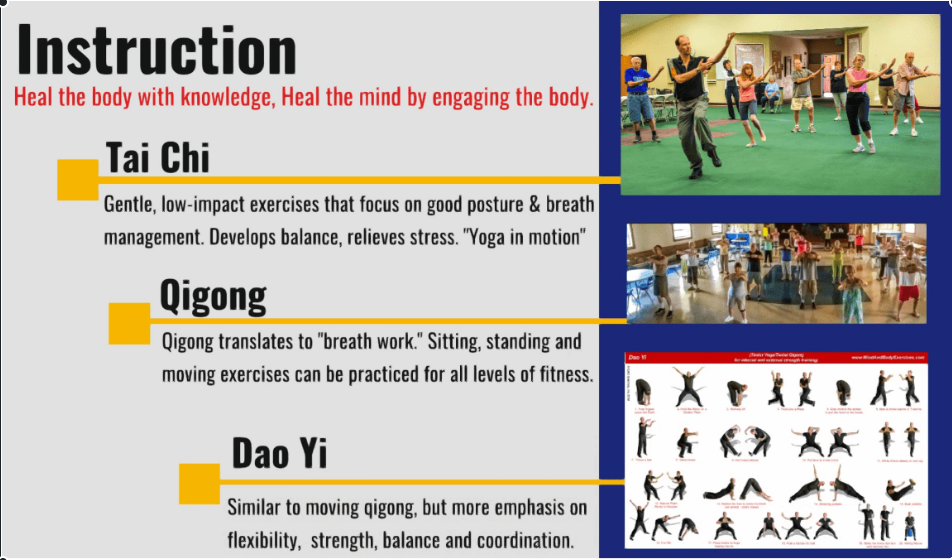
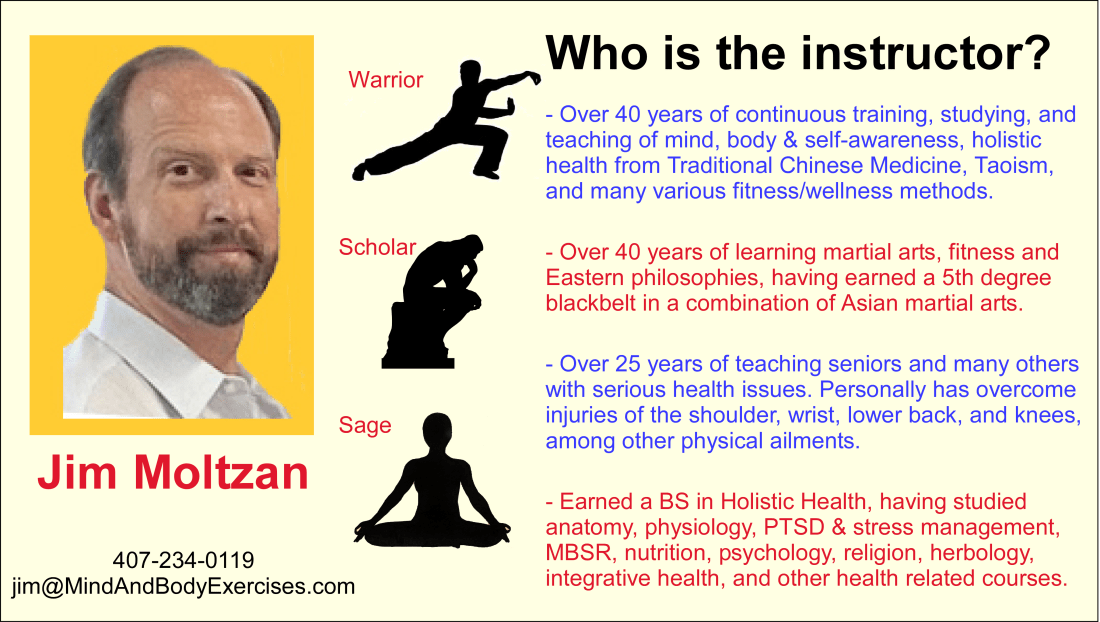
Tai chi, qigong, yoga and various other exercises from martial arts offer weight-bearing, and often low impact exercises. These systems have a wide spectrum of these types of exercise within their respective curriculum, for which I have been studying, practicing and teaching for almost 40 years, with truly amazing results.

I write often about topics that affect our health and well-being. Additionally, I teach and offer lecture about qigong, tai chi, baguazhang, and yoga. I also have hundreds of FREE education video classes, lectures and seminars available on my YouTube channel at:https://www.youtube.com/c/MindandBodyExercisesMind and Body Exercises on Google: https://posts.gle/aD47Qo

Jim Moltzan

407-234-0119

www.MindAndBodyExercises.comwww.Amazon.com/author/jimmoltzan

Seasons Change, People Get Sick – Connect the Dots

More people have been staying inside for much of the last 3 years, to avoid Covid19. As a consequence, people may now be suffering more from vitamin D3 deficiency (metabolism & bone issues), seasonal affective disorder (SAD) (depression), drug & alcohol overuse and overdoses, and many other issues relative to sitting far more than previously. These issues were already at record high levels before the pandemic, and now have continued to rise and will continue to contribute to the US’s losing rank of being a healthy nation, trailing many other industrialized nations.

Vitamin D Deficiency at Epidemic Levels

The US, and many of the world, have been facing an epidemic of vitamin D deficiency for many years, especially in areas lacking consistent daily sunlight such as the northern states of US. This trend is also seen in areas with much sunlight where people cover up their whole bodies from sun exposure. Now exacerbated by pandemic lock-downs and less outside physical activity over the last few years. Most people are unaware or care to ignore how vital vitamin D is to the immune system and overall health.

Dr Steven Lin - Sunlight absorbed through the skin is boosting your immune  system a number of critical ways. All light on earth, plants, bacteria, and  mammals primarily depend on the sun

What can you do to prevent vitamin D deficiency – become educated, be more aware of your own health, get outside during the morning or late afternoon when sunlight is less intense, and get your body moving to engage your muscles and bones to tell your nervous system that you are still alive and need your body to maintain homeostasis through good health and lifestyle practices.

Get started with these three simple steps:

  1. Consult with your doctor to manage your vitamin D levels twice a year — at the end of winter and again at the end of summer. Ask for a simple blood test called the 25(OH)D (25-hydroxy vitamin D) test. (Optimal blood levels are between 50 and 75 nanomoles/Liter.)
  2. Commit to being in the sun 15 minutes a day without sunscreen. When planning on being outside longer, add some protective clothing, a hat, and sunglasses.
  3. Consume foods high in vitamin D and/or supplement with 10,000 IU of vitamin D3 daily. This dose in a convenient, highly-absorbable liquid form together with the potent marine carotenoid, astaxanthin, for added benefits (Micozzi, 2018).

References:

Lin, S. (2018b, September 22). Vitamin D Deficiency Symptoms. Dr Steven Lin. https://www.drstevenlin.com/vitamin-d-deficiency-symptoms/

Lopez, M. A. (2018, August 23). UV RADIATION: The Importance of the Forecast That We Ignore. https://www.2020mag.com/article/uv-radiation-the-importance-of-the-forecast-that-we-ignore

Micozzi. (2018a, June 21). Six reasons why you’re still vitamin D deficient. Dr. Marc Micozzi. https://drmicozzi.com/six-reasons-why-youre-still-vitamin-d-deficient

He, C. S., Aw Yong, X. H., Walsh, N. P., & Gleeson, M. (2016). Is there an optimal vitamin D status for immunity in athletes and military personnel?. Exercise immunology review22, 42–64.

Sun Safety Monthly Average UV Index. (2022, February 23). US EPA. https://www.epa.gov/sunsafety/sun-safety-monthly-average-uv-index

____________

Type your email…

Be more active, eat healthier, sleep better, stress less these are the key components to maintaining a strong immune system.

I am currently offering lectures and classes for group, small group & private instruction in Wekiva, Longwood and Winter Park.Mind and Body Exercises on Google: https://posts.gle/aD47Qo

I also have hundreds of FREE education video classes, lectures and seminars available on my YouTube channel at: https://www.youtube.com/c/MindandBodyExercises

Mind and Body Exercises on Google: https://posts.gle/aD47Qo

Jim Moltzan

407-234-0119

www.MindAndBodyExercises.com

www.Amazon.com/author/jimmoltzan

Challenges that are Currently Facing Complementary and Alternative Medicine

I have commented on this topic in former discussions, specifically big pharmaceutical companies hindering expansion of the herbal market, where they either buy out the smaller herbal companies or use their vast resources to lobby against or stifle growth of alternative natural medicinal options. I really don’t think it is wise to take a ‘let’s wait and see where this goes” approach as opposed to a “be self-reliant in pursuing natural options through due diligence” type of attitude. I feel people need to be more accountable to themselves and their loved ones, for managing their own healthcare or more appropriately “self-care” program. Herbs and other natural remedies will continue to see more re-acceptance and growth as people increasingly become weary of the high costs, side-effects and politics associated with pharmaceuticals. This is evident from a past article on the global herbal medicine market is predicted to possibly become a $550 billion industry by 2030 (insightSLICE, 2021).

From my own experience, Western medical professionals are not going to offer or steer a patient towards herbs when the whole healthcare industry is based upon mostly quick-fix pharmaceuticals and most often at exorbitantly higher costs to the consumer. For example, my allopathic doctor prescribing Nasacort, Flonase and eventually Claritin for seasonal allergies, when I was able to replace these with a combination of ginger, turmeric and black pepper with great success. Another orthopedic doctor was intent upon me having surgery for a torn meniscus in my knee. I declined and practiced more qigong and applied herbs topically to my injured knee for 6 months, again with much success.

My botanical medicine history started when my mother gave me warm milk with honey for a sore throat when I was probably 4 or 5 years old. My mother’s family came from what was formerly known as Bohemia and now named the Czech Republic, and my father’s ancestors came from Germany, where decades back traditional medicines and herbal remedies were quite common. Around this same time, I was introduced to Jägermeister (probably considered child abuse these days), the alcoholic beverage that actually has medicinal properties from its herbal ingredients of cinnamon, ginger root, licorice root and rose hips (Arifin, 2017).

Years later when I was 16, I began martial arts training with Korean and Chinese kung fu.  My teachers were very much Taoists and Traditional Chinese Medicine was inherently bound within our curriculum and knowledge base. I was quite naïve and impressionable at the time, having had little true-life experience. Fortunately for me, this was a very good education to have been introduced to at such an early age, as it gave me a firm foundation in health, fitness, wellness and nutrition for years to come.

I was taught (along with my peers and fellow students) that the body can innately maintain and cure itself if given the right balance of physical exercise, proper diet and nutrition (including herbs) and appropriate self-management of our thoughts and emotions. Our go to beverage and preventative, was ginger root tea, to aid in good digestion and overall reduction of inflammation relative to physical training. If overly sore or injured, we would use curcumin poultices or store-bought plaster patches with cayenne. We would use herbal extracts called Dit Da Jow, to apply to our hands, arms and other parts of our bodies for what is referred to as Iron Body training. These Jows are somewhat unique in that they reduce inflammation while at the same time increase blood circulation and promote natural healing. We ate kimchi, a known probiotic and were encouraged to eat and cook with garlic, ginger, turmeric, cayenne and onion as much as possible.

Years later, the training and knowledge increased to even more Traditional Chinese Medicine methods of moxibustion. This is a method, where herbs smolder on acupuncture needles or sometimes directly on the skin (direct moxibustion) or indirect where the herbs burn on a layer of ginger, garlic or salt which cover specific acupuncture points and meridians.

Additionally, we were prescribed or instructed on how to use particular Chinese herbal tea recipes for various physical imbalances. These teas were incredibly strong in flavor and potency, and were to help cure whatever issues of cough, allergies, tinnitus, irritable bowel syndrome, headache, and many other ailments. These teas looked like tar by the time they decocted down to a cup size serving and tasted pretty much the same, but they all worked amazingly well. Even more recently, I have been introduced to Ayurveda through my martial arts lineage as well as with my NVU degree program. Ayurveda seems to be the parent of TCM in many aspects, as I have found many of the same herbs and principles of treatment and prevention from using specific recipes.

I have been fully into the whole concept of phytotherapy for almost 50 years, for all of the reasons I have discussed over previous posts, distilling it down to less side effects, less toxins, less cost, more individual control over my own health and well-being. I see herbalism/botanical addressing the root causes of illness and disease as well as symptoms, versus conventional allopathic medicine treating of the symptoms with little or no expectation of addressing root issues. Herbalism seems to have its greatest benefits as a preventative for chronic and long-term ailments, however having benefits for some acute issues also. Conventional allopathic medicine’s greatest strength is in immediate treatment for trauma and acute illnesses.

Best wishes and be well!

References:

Arifin, E. (2017, December 23). 7 Health Benefits of Drinking Jagermeister #1 Unexpected. DrHealthBenefits.com. https://drhealthbenefits.com/food-bevarages/beverages/health-benefits-drinking-jagermeister

insightSLICE. (2021, February 16). Herbal Medicine Market Global Sales Are Expected To Reach US$ 550 Billion by 2030, as stated by insightSLICE. GlobeNewswire News Room. https://www.globenewswire.com/news-release/2021/02/16/2176036/0/en/Herbal-Medicine-Market-Global-Sales-Are-Expected-To-Reach-US-550-Billion-by-2030-as-stated-by-insightSLICE.html

_____________

Be more active, eat healthier, sleep better, stress less these are the key components to maintaining a strong immune system.

I am currently offering lectures and classes for group, small group & private instruction in Wekiva, Longwood and Winter Park.Mind and Body Exercises on Google: https://posts.gle/aD47Qo

I also have hundreds of FREE education video classes, lectures and seminars available on my YouTube channel at: https://www.youtube.com/c/MindandBodyExercises

Mind and Body Exercises on Google: https://posts.gle/aD47Qo

Jim Moltzan

407-234-0119

www.MindAndBodyExercises.com

www.Amazon.com/author/jimmoltzan