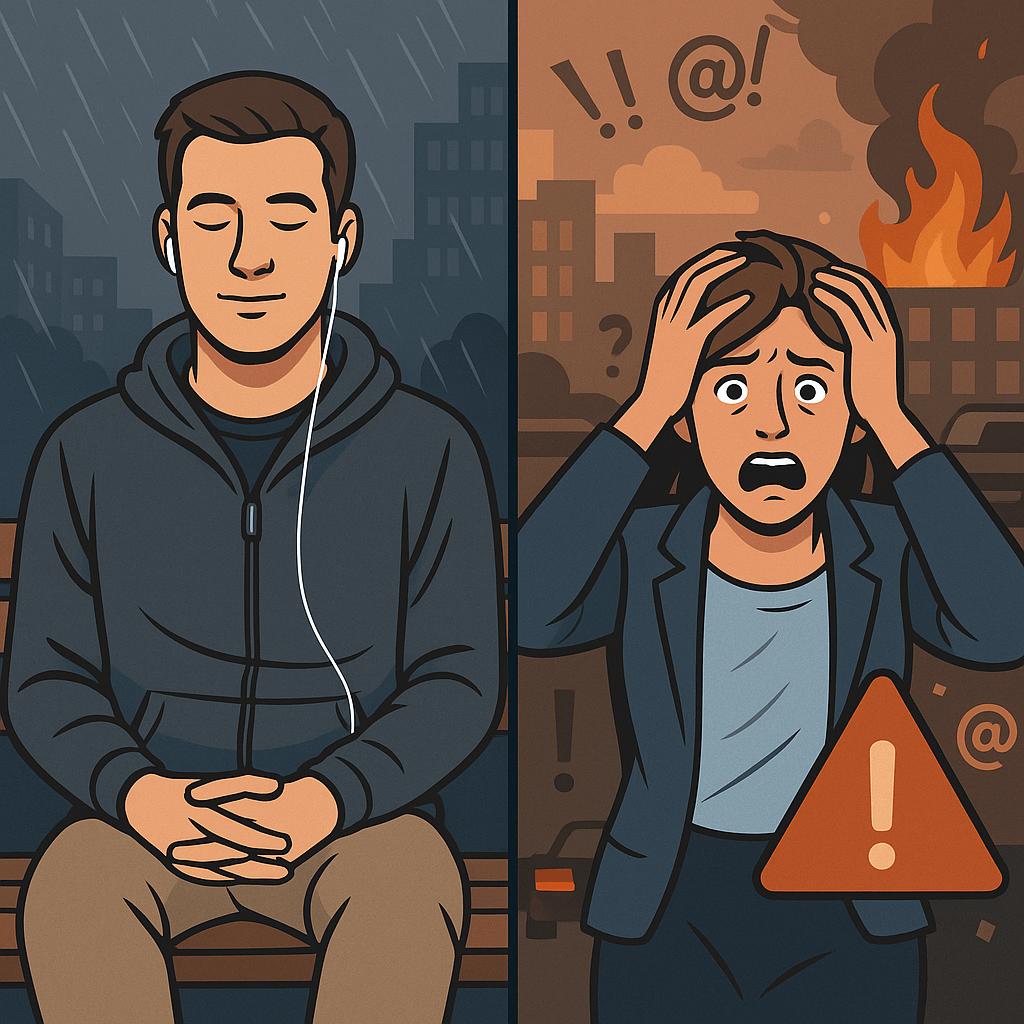
All In or All Out

The Power of Full Commitment and Deliberate Presence

Human potential is rarely limited by talent or intelligence; more often, it is diminished by half-hearted effort and a lack of deliberate engagement with the present moment. In every aspect of life, from work and relationships to self-cultivation and spiritual growth, the quality of our actions is determined by the depth of our commitment. Choosing to invest ourselves wholly in what we do, rather than adopting a “renter’s attitude” or performing tasks “half-heartedly,” is one of the most profound determinants of meaning, achievement, and personal integrity. To live fully is to act with intention, awareness, and total presence, to put 100% of oneself into a chosen path or consciously refrain from it altogether.

Half-Effort and the Illusion of Action

Modern society often rewards activity over substance. People multitask, chase productivity, and take pride in “being busy,” yet much of that activity is shallow and unfocused. This is what might be called the “half-effort mentality” where one does just enough to get by, but not enough to grow. Like a renter who avoids investing in a property because they do not truly own it, individuals with a renter’s mindset approach life without deep commitment, leaving their full potential unrealized. This approach is not harmless; it is corrosive. It breeds mediocrity, erodes self-respect, and dulls one’s inner drive for excellence.

The philosopher Aristotle wrote that virtue is a habit cultivated through intentional action (Aristotle, trans. 2014). Excellence, therefore, is not an act but a consistent practice. Every time we choose to give less than our best, we reinforce a pattern of mediocrity. Conversely, when we decide to give our full energy and focus to a task, we cultivate habits of discipline, character, and integrity. In psychological terms, this mirrors the concept of “flow,” a state described by Mihály Csíkszentmihályi (1990) as one in which total immersion in a meaningful activity leads to heightened creativity, satisfaction, and performance. Flow cannot occur in a state of partial attention. It demands complete commitment.

Consequences: The Natural Law of Choice

Human life is structured by choices, and choices inevitably lead to consequences. When we give only partial effort, the consequences reflect that choice: diminished outcomes, missed opportunities, and an ongoing sense of unfulfilled potential. Psychologist Albert Bandura (1997) emphasized the role of self-efficacy, the belief in one’s capacity to act effectively, as a cornerstone of human motivation. Self-efficacy is built through repeated acts of intentional effort. When effort is inconsistent, self-efficacy weakens, and we begin to doubt our own capabilities.

This principle aligns with Eastern philosophical traditions as well. In the Taoist classic Tao Te Ching, Laozi advises, “Do your work, then step back. The only path to serenity” (Laozi, trans. 2009). This teaching implies that one must give themselves wholly to the work, not clinging to the outcome, but ensure the process itself is authentic and complete. The Buddhist concept of right effort (samyak vyayama) similarly teaches that effort is a moral and spiritual imperative: it is through disciplined, wholehearted engagement that we align our actions with our deeper purpose (Rahula, 1974).

Attention, Awareness, and Intent: The Mind as a Tool

Commitment is not merely physical effort. It is also mental presence. To put one’s “mind into” a task is to bring attention, awareness, and intention fully to the present moment. In a culture saturated with distraction, this skill is increasingly rare. Yet neuroscience confirms that focused attention changes the brain: it strengthens neural pathways, enhances memory, and improves cognitive control (Cásedas, 2021). In other words, presence is a form of power.

Deliberate awareness also deepens the meaning of our actions. When we are fully present, whether cooking a meal, engaging in conversation, or practicing a martial art, we transform the mundane into the sacred. Zen teachings often emphasize the phrase ichigyo zammai, meaning “concentration on one action.” This state of single-mindedness turns each moment into a vehicle for awakening and self-transformation. Similarly, Confucius taught that the cultivation of yi (righteous intention) requires conscious attention to one’s conduct in even the smallest acts (Confucius, trans. 1997). The lesson is timeless: how we do anything is how we do everything.

Integrity and the Binary of Commitment

There is a profound simplicity in adopting a binary approach to action: either commit fully or do not commit at all. This approach eliminates the murky middle ground where excuses thrive. It demands clarity of intention before taking action, which in turn strengthens integrity, the alignment of one’s words, values, and behaviors. When we act with half-effort, we often rationalize our lack of results. When we commit fully, we accept responsibility for the outcome, whatever it may be.

Moreover, wholehearted action builds trust, both in ourselves and in others. People who consistently give their best become reliable, respected, and influential. They embody authenticity, a quality philosopher Charles Taylor (1991) argues is essential for a meaningful life in the modern world. Authentic living arises when one’s external actions faithfully express internal values and such alignment is only possible through deliberate, full-hearted engagement.

A Call to Presence and Purpose

To live “all in” is not about perfection. It is about intention. It is the daily practice of showing up fully in body, mind, and spirit, in every endeavor. It is refusing the temptation of mediocrity and the comfort of minimal effort. It is about inhabiting each moment with awareness, committing wholeheartedly to chosen paths, and accepting the consequences of those choices with humility and courage.

Life will always present us with opportunities to do things halfway. The harder, but infinitely more rewarding, path is to give ourselves completely to the work before us. To act as owners, not renters, of our time and energy. When we do, we not only elevate the quality of our actions but also the quality of our character. In the end, it is not the number of tasks we complete that defines our lives, but the depth of presence and commitment we bring to them.

References:

Aristotle. (2014). Aristotle: Nicomachean Ethics. (R. Crisp, Ed.) (2nd ed.). Cambridge: Cambridge University Press.

Bandura, A. (1997). Self-efficacy: The exercise of control. W.H. Freeman. https://archive.org/details/selfefficacyexer0000band/page/n5/mode/2up

Confucius. (1997). The analects (D. C. Lau, Trans.). Penguin Classics. https://archive.org/details/theanalectsconfucius

Csikszentmihalyi, M. (1990). Flow: the psychology of optimal experience. ResearchGate. https://www.researchgate.net/publication/224927532_Flow_The_Psychology_of_Optimal_Experience

Cásedas, L. (2021). Daniel Goleman and Richard J. Davidson: Altered Traits: Science Reveals How Meditation Changes Your Mind, Brain, and Body. Avery, New York, NY, 2017, 336 pp. Mindfulness, 12(9), 2355–2356. https://doi.org/10.1007/s12671-021-01650-4

Laozi. (2009). Tao Te Ching (J. Minford, Trans.). Penguin Books.

Rahula, W. (1974). What the Buddha taught. Grove Press. https://archive.org/details/whatbuddhataught00walp

Taylor, C. (1991). The ethics of authenticity. Harvard University Press.

Dissolving of the Ego

An Integrative Psychological, Spiritual, and Neuroscientific Perspective

This article examines the concept of ego dissolution from psychological, spiritual, and neuroscientific perspectives. It discusses Carl Jung’s theory of individuation and the ego-Self axis, Eastern spiritual traditions’ critique of ego as separateness, and recent empirical studies that illuminate what happens in the brain and consciousness when the ego dissolves. I argue that ego dissolution is not destruction of self but transformation of self-construal, leading to greater integration, well-being, and freedom from suffering.

The ego is often construed as the individual’s sense of “I,” the center of identity that distinguishes self from others and external reality. While necessary for functioning, ego overidentification can lead to distress, separation, and suffering. The idea of ego dissolution, with its roots in spiritual traditions, refers to loosening this overidentification so that a person experiences a broader, more integrated, or nondual self-awareness. This essay draws on analytic psychology, Buddhist and Vedantic conceptualizations of self and no-self, and recent empirical work in neuroscience and psychology to explicate ego dissolution: what it is, how it is cultivated, and what effects it produces.

Jungian Psychology and Ego Dissolution

Carl Gustav Jung (1968/2014) distinguished between the ego, the conscious identity and the Self, which encompasses both conscious and unconscious aspects of the psyche. For Jung, psychological growth involves individuation, a process of integrating unconscious material (shadow, anima/animus, archetypes) into consciousness, thereby reducing rigid ego boundaries. Ego dissolution, in this framework, does not mean erasing identity but transforming it, allowing the ego to serve rather than dominate the psyche (Jung, 1968/2014).

Eastern Traditions: Ego, No-Self, and Liberation

Eastern spiritual traditions have long emphasized the illusory nature of the ego. In Buddhism, the doctrine of anatta (no-self) asserts that what is typically called the “self” is actually a collection of impermanent processes in the body, perception, sensation, volition, and consciousness, without enduring essence (Rahula, 1974). Similarly, Advaita Vedānta critiques ahamkara (ego-construct) as a distortion that veils realization of the true Self, or Atman, which is identical with Brahman (Deutsch, 1969). Practices such as meditation, chanting, and selfless service are designed to loosen egoic identification and reveal unity with all life.

Meditation and Neural Correlates of Ego Reduction

Neuroimaging studies show that meditation can attenuate activity in the default mode network (DMN), a brain system linked to self-referential processing (Brewer et al., 2011). Trautwein et al. (2024) demonstrated that suspension of self-experience in meditation is associated with reductions in beta-band power in the posterior medial cortex, indicating diminished self-related cognition. A meta-analysis of 78 neuroimaging studies similarly found overlapping brain regions, including the insula, anterior cingulate cortex, and frontopolar cortex, activated during various meditative states that reduce self-focus (Fox et al., 2016).

Psychedelics and Ego Dissolution

Psychedelics such as psilocybin and LSD also induce ego dissolution. Letheby and Gerrans (2017) argue that these substances temporarily disrupt the “self-model,” the brain’s predictive process of binding sensory, autobiographical, and emotional information into a coherent sense of self. Empirical studies confirm that ego dissolution under psychedelics correlates with decreased DMN connectivity and heightened subjective feelings of unity (Carhart-Harris et al., 2014). To quantify this phenomenon, Sleight et al. (2023) developed an Ego Dissolution Scale, validating it as a reliable measure for trait-like alterations of self-experience.

Comparing Meditation and Psychedelic States

While both meditation and psychedelics can reduce egoic self-construal, their phenomenology differs. Millière et al. (2018) note that meditation typically involves gradual training and control, whereas psychedelics often create abrupt, intense shifts. Both, however, highlight the malleability of self-experience and its neurobiological underpinnings.

Transformation, Effects, and Potential Benefits

Ego dissolution produces several psychological and existential benefits. Studies report decreases in anxiety, depression, and rumination, alongside increases in well-being, resilience, and emotional regulation (Griffiths et al., 2018). On the ethical level, reduced ego identification fosters empathy and compassion by dissolving boundaries between self and other (Lutz et al., 2008). Spiritually, ego dissolution facilitates experiences of interconnectedness and meaning beyond personal striving (Rahula, 1974).

However, challenges remain. Intense ego dissolution can provoke fear, disorientation, or existential anxiety. Furthermore, the risk of “spiritual ego” where one clings to superiority based on perceived enlightenment, demonstrates that ego can reassert itself even within spiritual practice (Wilber, 2000). Proper guidance and integration are essential for healthy outcomes.

The dissolving of the ego, whether framed through Jungian psychology, Buddhist philosophy, or contemporary neuroscience, is best understood not as annihilation but as transformation. It involves loosening rigid identifications, reducing self-referential dominance, and cultivating awareness of interconnectedness. While difficult and sometimes destabilizing, ego dissolution can lead to profound psychological healing, ethical growth, and spiritual insight.

References:

Brewer, J. A., Worhunsky, P. D., Gray, J. R., Tang, Y.-Y., Weber, J., & Kober, H. (2011). Meditation experience is associated with differences in default mode network activity and connectivity. Proceedings of the National Academy of Sciences, 108(50), 20254–20259. https://doi.org/10.1073/pnas.1112029108

Carhart-Harris, R. L., Leech, R., Hellyer, P. J., Shanahan, M., Feilding, A., Tagliazucchi, E., Chialvo, D. R., & Nutt, D. (2014). The entropic brain: A theory of conscious states informed by neuroimaging research with psychedelic drugs. Frontiers in Human Neuroscience, 8, 20. https://doi.org/10.3389/fnhum.2014.00020

Deutsch, E. (1969). Advaita Vedānta: A philosophical reconstruction. University of Hawaii Press. https://archive.org/details/advaitavedantaph0000deut/page/n5/mode/2up

Fox, K. C., Dixon, M. L., Nijeboer, S., Girn, M., Floman, J. L., Lifshitz, M., Ellamil, M., Sedlmeier, P., & Christoff, K. (2016). Functional neuroanatomy of meditation: A review and meta-analysis of 78 functional neuroimaging investigations. Neuroscience & Biobehavioral Reviews, 65, 208–228. https://doi.org/10.1016/j.neubiorev.2016.03.021

Griffiths, R. R., Johnson, M. W., Carducci, M. A., Umbricht, A., Richards, W. A., Richards, B. D., Cosimano, M. P., & Klinedinst, M. A. (2018). Psilocybin produces substantial and sustained decreases in depression and anxiety in patients with life-threatening cancer: A randomized double-blind trial. Journal of Psychopharmacology, 32(1), 49–69. https://doi.org/10.1177/0269881116675513

Jung, C.G. (1968). The Archetypes and the Collective Unconscious (R.F.C. Hull, Trans.; 2nd ed.). Routledge. https://doi.org/10.4324/9781315725642

Jung, C. G. (2014). Man and his symbols. Dell. (Original work published 1960). https://archive.org/details/B-001-004-443-ALL

Letheby, C., & Gerrans, P. (2017). Self unbound: Ego dissolution in psychedelic experience. Neuroscience of Consciousness, 2017(1), nix016. https://doi.org/10.1093/nc/nix016

Lutz, A., Brefczynski-Lewis, J., Johnstone, T., & Davidson, R. J. (2008). Regulation of the neural circuitry of emotion by compassion meditation: Effects of meditative expertise. PLoS ONE, 3(3), e1897. https://doi.org/10.1371/journal.pone.0001897

Millière, R., Carhart-Harris, R. L., Roseman, L., Trautwein, F.-M., & Berkovich-Ohana, A. (2018). Psychedelics, meditation, and self-consciousness. Frontiers in Psychology, 9, 1475. https://doi.org/10.3389/fpsyg.2018.01475

Rahula, W. (1974). What the Buddha taught (Rev. ed.). Grove Press. https://archive.org/details/whatbuddhataught00walp

Sleight, F. G., Lynn, S. J., Mattson, R. E., & McDonald, C. W. (2023). A novel ego dissolution scale: A construct validation study. Consciousness and Cognition, 109, 103474. https://doi.org/10.1016/j.concog.2023.103474

Trautwein, F.-M., Kettner, H., Giegling, I., Moosmann, M., Roseman, L., & Berkovich-Ohana, A. (2024). Neural correlates of suspended self-experience in meditation. Journal of Neuroscience, 44(26), e118223. https://doi.org/10.1523/JNEUROSCI.1182-23.2024

Wilber, K. (2000). Integral psychology: Consciousness, spirit, psychology, therapy. Shambhala. https://archive.org/details/integralpsycholo00wilb

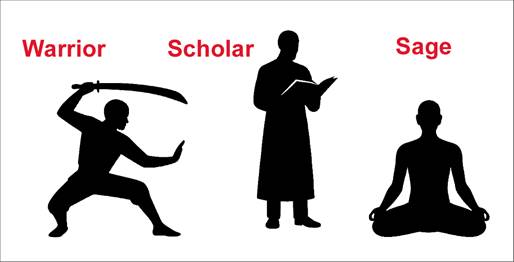
Mudo Principles: Teachings from the Warrior, Scholar, and Sage

My latest book: Mudo Principles: Teachings from the Warrior, Scholar, and Sage

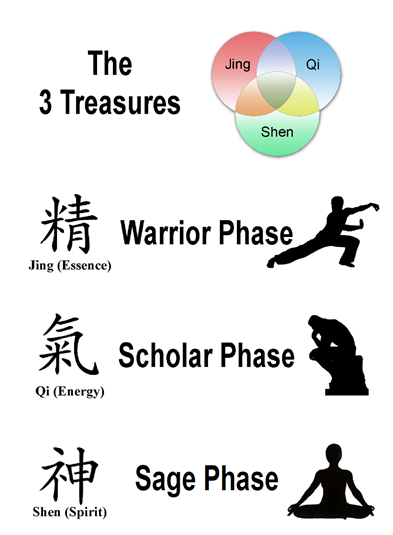
For over forty years, I have devoted my life to the study and practice of martial arts, qigong, Daoist yoga, psychology, philosophy, and holistic health. In Mudo Principles, my 37th book distills a lifetime of exploration into one transformative reference guide that unites the paths of the Warrior, the Scholar, and the Sage, three archetypes that together form the foundation of the human journey toward strength, wisdom, and inner peace.

Drawing upon classical martial traditions and modern science, Mudo Principles bridges the physical, mental, and spiritual dimensions of self-cultivation. It is more than a martial arts manual. It is a blueprint for living with purpose, integrity, and harmony in a world that demands balance between body, mind, and spirit.

(This book is large with over 500 pages containing many color graphics; however, it does contain some of the information from Books 31-Warrior-Scholar-Sage, Book 35-The Path of Integrity and Book 36-Spritual Enlightenment Across Traditions)

Part I – Terminology & Foundations
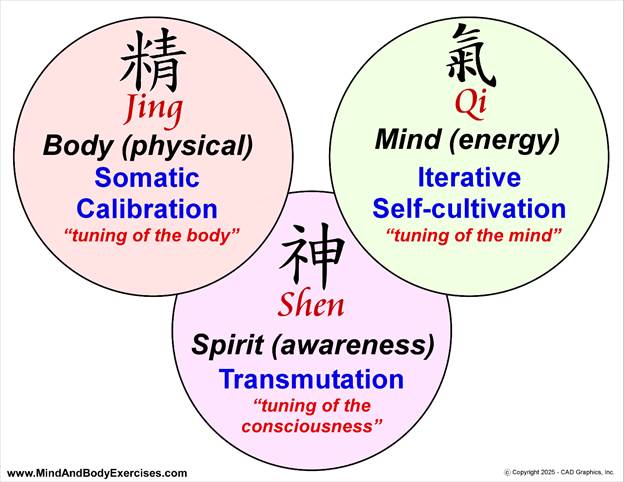
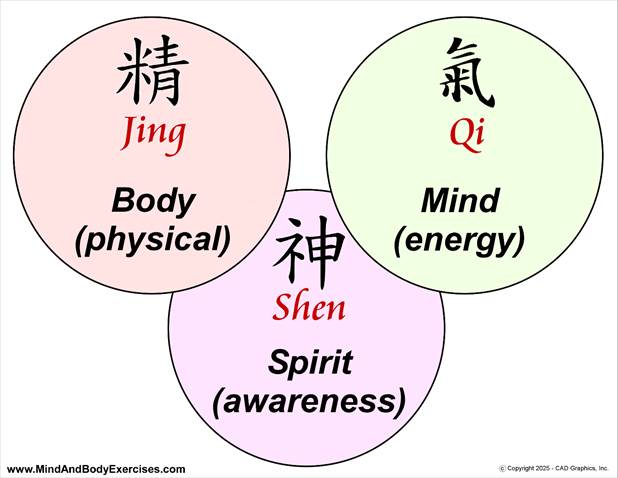
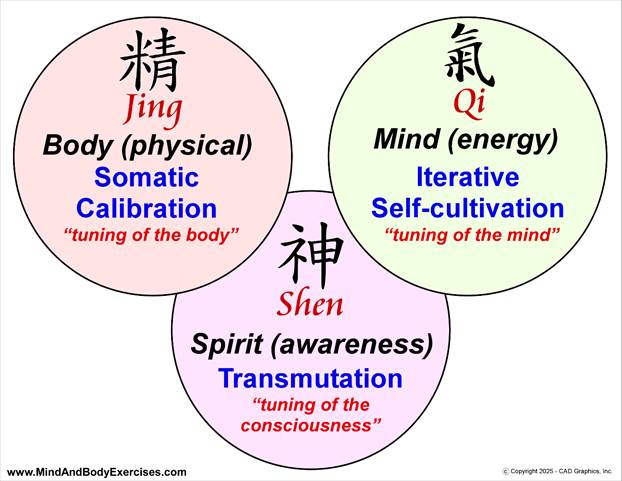
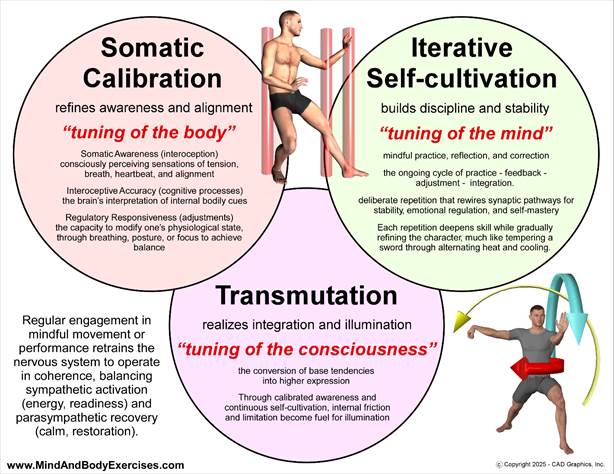
Establishes the essential language and structure of training. Includes comprehensive glossaries, practical instruction on discipline, energy cultivation, the Three Treasures (Jing–Qi–Shen), and the neurological science behind resilience. These foundational essays ground readers in both the external and internal dimensions of martial cultivation.

Part II – The Way of the Warrior
Explores the moral, physical, and spiritual foundations of the martial path. Essays examine the indomitable spirit, stance training, Shaolin symbolism at its 72 Arts, “burning the Chong Mai,” humility, and camaraderie. Here, martial discipline becomes a metaphor for moral strength and self-mastery.

Part III – The Way of the Scholar
Turns inward to the world of thought and inquiry. Topics include metacognition, the Dunning–Kruger effect, authenticity, mass psychology, myth versus legitimacy in martial traditions, and the ethics of teaching. This section trains the intellect to discern truth from illusion, linking ancient wisdom with modern psychology and scientific reasoning.

Part IV – The Way of the Sage
Leads beyond intellect to spiritual realization. Essays bridge faith, philosophy, and science, exploring quantum consciousness, Daoist inner alchemy, meditation, compassion, trauma healing, and the universal search for meaning.

Part V – Integration and the Path Forward
Synthesizes the lessons of the Warrior, Scholar, and Sage into a living philosophy for modern life and how to balance health, success, and purpose without losing one’s center.

Part VI – Appendices

A Pathway for the Modern Seeker
Mudo Principles serves martial artists, teachers, healers, philosophers, and all who seek to integrate physical strength, mental clarity, and spiritual understanding. It honors ancient traditions while addressing the unique challenges of contemporary life in stress, distraction, and disconnection from self and nature.

Through clear organization, over a hundred essays, and decades of lived wisdom, I invite the reader to:

  • Build discipline and resilience through mind–body training
  • Reclaim balance through ancient and modern methods of cultivation
  • Transform adversity into clarity, and confusion into purpose
  • Awaken the integrated self in the Warrior’s strength, the Scholar’s discernment, and the Sage’s compassion

This is a book for those who believe mastery begins within. Whether you are a lifelong martial artist or a modern seeker pursuing wholeness, Mudo Principles offers a map to transformation rooted in integrity, refined through discipline, and illuminated by wisdom.

Available on Amazon at: https://a.co/d/55dqOjh

The Myth of the Ninety-Pound Katana: Fact, Folklore, and Fantasy

Sword Weights Across Cultures

In popular imagination, the Japanese katana has often been shrouded in mystery and myth. Some exaggerated claims suggest that katanas could weigh upwards of ninety pounds, evoking an image of superhuman warriors wielding massive blades. In reality, there is no credible evidence to support this notion. Historical records and surviving artifacts reveal that katanas were relatively lightweight, agile weapons designed for practical use in combat. The persistence of such myths underscores how martial traditions are often romanticized, distorting their true history.

The Katana: Function Over Fantasy

The standard katana, typically featuring a blade length of around 60-70 centimeters, weighed between 0.9–1.4 kilograms (2–3 pounds) (Katana Sword, n.d.; Minikatana, n.d.). Even longer examples rarely exceeded 1.6 kilograms (3.5 pounds). When mounted with fittings and scabbard, the total weight might approach 2.3 kilograms (5 pounds), but these were still highly functional weapons optimized for speed, precision, and cutting efficiency (Romance of Men, n.d.). Such weights align with the general purpose of the katana: a balance between sharpness, maneuverability, and endurance during prolonged use.

Oversized Japanese Blades: The Ōdachi

While katanas themselves were not massive, Japan did produce ōdachi (“great swords”), some of which reached extreme sizes. The famed Ōdachi Norimitsu, forged around 1446, measures over 3.7 meters in length and weighs approximately 14.5 kilograms (32 pounds) (Ōdachi, n.d.). Another ceremonial example, the Haja-no-Ontachi (“Great Evil-Crushing Blade”), tips the scale at around 75 kilograms (165 pounds). These were not battlefield weapons but symbolic or ritualistic creations, demonstrating the craftsmanship of swordsmiths and serving as offerings at shrines. The existence of such oversized blades may partly explain the confusion surrounding exaggerated katana weights.

Heavy Weapons in Other Cultures

Japan was not alone in producing impressive, heavy swords. Across cultures, larger ceremonial or specialized weapons also emerged:

  • European zweihänder (two-hander): Used in the 16th century, these great swords could exceed 1.8 meters in length and weigh between 3–6 kilograms (7–14 pounds). They were sometimes wielded by elite mercenaries (Landsknechts) to disrupt pike formations (Oakeshott, 1997).
  • Indian khanda: A broad, straight sword traditionally used in ritual and martial contexts. While typical examples were manageable in weight, some ceremonial versions were significantly heavier, designed for display rather than combat effectiveness (Rawson, 1968).
  • Chinese zhanmadao: Literally “horse-cutting saber,” this large anti-cavalry weapon could measure over 1.5 meters and weigh several kilograms. Its purpose was more practical than ceremonial, meant to disable horses and cavalry charges (Collections Online, n.d.)

These examples reveal a recurring pattern: while functional swords remained within a reasonable weight range for human use, cultures occasionally produced oversized, impractical blades for ritual, ceremonial, or symbolic reasons.

Myths, Legends, and Wartime Folklore

The mystique surrounding legendary swords extends far beyond Japan. Myths often exaggerate both the physical properties of weapons and the feats supposedly accomplished with them, and few examples illustrate this better than those associated with World War II. One persistent rumor claim that Adolf Hitler once possessed a Japanese katana, said to have been a diplomatic gift forged by renowned swordsmiths in the 1930s. Some collectors even allege that such a sword surfaced decades later in private hands. However, no verifiable museum records, military inventories, or historical documents confirm the existence of a katana linked to Hitler, and surviving examples of his ceremonial weapons are all of European design (Military Trader, n.d.; UPI, 1984).

An even more fantastical legend suggests that Hitler personally used this sword to cut the barrel off a tank turret, a story that, while cinematic, collapses under scrutiny. Tank barrels and turrets are made of hardened steel and weigh several tons; disabling one would require explosives, heavy machinery, or catastrophic ammunition detonation, not a handheld blade. Historians and military engineers agree that there is no credible evidence supporting the story. It appears to be an example of wartime mythology, a dramatic tale perhaps born from propaganda, rumor, or the human tendency to elevate historical figures into near-mythic archetypes.

These myths underscore a larger truth: extraordinary claims about weapons, whether ninety-pound katanas or swords cutting through tanks, almost always emerge from legend rather than fact. They serve as reminders of how cultural fascination can blur the line between historical reality and heroic fantasy.

The myth of the ninety-pound katana highlights how martial artifacts can be distorted by legend. A typical katana weighed no more than a few pounds, emphasizing agility over brute force. Oversized blades, whether Japanese ōdachi, European zweihänder, or other cultural equivalents, did indeed exist, but their purpose was often ceremonial rather than practical. Understanding the true dimensions of these weapons allows us to appreciate them not as props of fantasy, but as carefully designed tools reflecting the martial philosophies of their cultures.

References:

Collections online. (n.d.). Royal Armouries. https://royalarmouries.org/collection/object/object-1887

Katana Sword. (n.d.). How heavy is a katana? Katana Sword. Retrieved from https://katana-sword.com/blogs/katana-blog/how-heavy-is-a-katana

Military Trader. (n.d.). Swords of the Third Reich: A collector’s guide to Nazi Germany edged weapons. Military Trader. Retrieved from https://www.militarytrader.com/militaria-collectibles/swords-of-the-third-reich

Minikatana. (n.d.). How heavy is a katana? The role of weight in the performance and aesthetics of Japanese swords. Minikatana. Retrieved from https://minikatana.com/blogs/main/how-heavy-is-a-katana-the-role-of-weight-in-the-performance-and-aesthetics-of-japanese-swords

Oakeshott, E. (1997). European weapons and armour: From the Renaissance to the Industrial Revolution. Boydell Press. https://archive.org/details/europeanweaponsa0000oake

Ōdachi. (n.d.). In Wikipedia. Retrieved September 9, 2025, from https://en.wikipedia.org/wiki/%C5%8Cdachi

Romance of Men. (n.d.). How heavy is a katana? Romance of Men. Retrieved from https://romanceofmen.com/blogs/katana-info/how-heavy-is-a-katana

Rawson, P. S. (1968). The Indian sword. Herbert Jenkins. https://archive.org/details/indiansword0000raws

UPI. (1984, December 27). Texans find Hitler’s sword. United Press International. Retrieved from https://www.upi.com/Archives/1984/12/27/Texans-find-Hitlers-sword/2899472971600

Sun Therapy

From Nobel Prize Recognition to Modern Reassessment

The therapeutic use of sunlight, also known as heliotherapy, has roots in ancient medicine. Cultures such as the Egyptians, Greeks, and Romans prescribed sun exposure for health and vitality, believing it could improve physical and spiritual well-being (Holick, 2016). By the 19th and early 20th centuries, heliotherapy became widely adopted in Europe and North America as a treatment for conditions like rickets, skin diseases, and tuberculosis, particularly in sanatoria where sunlight and fresh air were emphasized (Sunlight, Outdoor Light, and Light Therapy in Disease Management, n.d.).

Nobel Prize Recognition

The scientific validation of light therapy was established through the work of Niels Ryberg Finsen. Finsen demonstrated that concentrated light, particularly ultraviolet rays, could be used to treat lupus vulgaris, a severe cutaneous form of tuberculosis. For this innovation, he was awarded the 1903 Nobel Prize in Physiology or Medicine “in recognition of his contribution to the treatment of diseases, especially lupus vulgaris, with concentrated light radiation” (Nobel Prize, 1903/2024). His research marked a pivotal moment in medical science, as it represented one of the earliest successful applications of light as a therapeutic modality (Grzybowski et al., 2016).

Decline of Traditional Sun Therapy

Despite its early success, enthusiasm for heliotherapy declined in the mid-20th century. The discovery of antibiotics, such as streptomycin in the 1940s, rendered heliotherapy obsolete for treating tuberculosis (Daniel, 2006). Furthermore, as scientific understanding of ultraviolet radiation advanced, physicians began to recognize the dangers of excessive sun exposure, including premature aging of the skin, immune suppression, and increased risk of skin cancers (Narayanan et al., 2010). Public health messages shifted from promoting unregulated sun exposure to encouraging cautious, limited exposure combined with sun protection.

Contemporary Perspectives

Today, sunlight is still acknowledged as vital for vitamin D synthesis, which is critical for bone health, immune regulation, and overall wellness (Holick, 2007). Modern medicine has also refined phototherapy, using specific wavelengths of artificial light for targeted conditions such as psoriasis, vitiligo, neonatal jaundice, and seasonal affective disorder (Roelandts, 2002). This demonstrates how the legacy of heliotherapy has evolved from generalized “sun cures” to scientifically controlled light-based treatments.

However, in modern times, a global trend of sun avoidance has contributed to widespread vitamin D deficiency. Public health campaigns emphasizing sun protection, urbanized lifestyles, and increased time spent indoors have led many individuals to receive insufficient sunlight exposure. Vitamin D deficiency is now recognized as a global public health issue, affecting over one billion people worldwide (Holick, 2007; Cashman et al., 2016). Consequences include increased risk for osteoporosis, impaired immune function, cardiovascular disease, and even mood disorders. Ironically, in moving away from the risks of excessive sunlight, societies have created new health challenges associated with inadequate sun exposure.

Conclusion

Sun therapy reflects a fascinating chapter in medical history where natural elements were harnessed as medicine, validated by a Nobel Prize, and later re-evaluated in light of modern science. While traditional heliotherapy is no longer widely practiced, its influence persists in contemporary phototherapy, offering safe and effective treatments under controlled conditions. The story of sun therapy underscores the evolving nature of medical practice, where initial enthusiasm, scientific innovation, and later risk assessment converge to shape how therapies are applied in modern healthcare.

References:

Cashman, K. D., Dowling, K. G., Škrabáková, Z., Gonzalez-Gross, M., Valtueña, J., De Henauw, S., … Kiely, M. (2016). Vitamin D deficiency in Europe: Pandemic? The American Journal of Clinical Nutrition, 103(4), 1033–1044. https://doi.org/10.3945/ajcn.115.120873

Daniel, T. M. (2006). The history of tuberculosis. Respiratory Medicine, 100(11), 1862–1870. https://doi.org/10.1016/j.rmed.2006.08.006

Grzybowski, A., Sak, J., & Pawlikowski, J. (2016). A brief report on the history of phototherapy. Clinics in Dermatology, 34(5), 532–537. https://doi.org/10.1016/j.clindermatol.2016.05.002

Holick, M. F. (2007). Vitamin D deficiency. The New England Journal of Medicine, 357(3), 266–281. https://doi.org/10.1056/NEJMra070553

Holick, M. F. (2016). Biological effects of sunlight, ultraviolet radiation, visible light, infrared radiation and vitamin D for health. Anticancer Research, 36(3), 1345–1356. https://ar.iiarjournals.org/content/36/3/1345

Roelandts, R. (2002). The history of phototherapy: Something new under the sun? Journal of the American Academy of Dermatology, 46(6), 926–930. https://doi.org/10.1067/mjd.2002.121354

Narayanan, D. L., Saladi, R. N., & Fox, J. L. (2010). Ultraviolet radiation and skin cancer. International Journal of Dermatology, 49(9), 978–986. https://doi.org/10.1111/j.1365-4632.2010.04474.x

Nobel Prize. (1903/2024). The Nobel Prize in Physiology or Medicine 1903: Niels Ryberg Finsen. NobelPrize.org. https://www.nobelprize.org/prizes/medicine/1903/finsen

Sunlight, outdoor light, and light therapy in disease management. (n.d.). Physiopedia. https://www.physio-pedia.com/Sunlight,_Outdoor_Light,_and_Light_Therapy_in_Disease_Management