Living Meditation: Bright Reflection in Taoist and East Asian Traditions

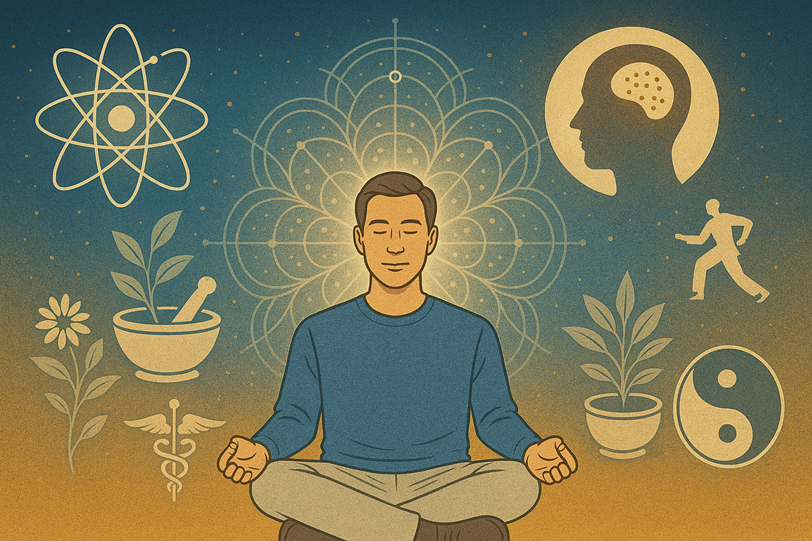
The Korean phrase Myung Sung literally translates as bright thought or clear reflection. In modern Korean, it is also the standard term for “meditation.” In English, the concept has been presented as Living Meditation, an embodied, everyday mindfulness woven into the fabric of ordinary life.

Although Myung Sung is distinctly Korean in name, its roots are Sino-Korean, derived from the Chinese characters 明 (ming, bright/clear) and 想 (xiang, thought/reflection). Comparable ideas appear across East Asian traditions: in Chinese Taoism, alignment with the Dao emphasizes clarity and flow; In Japanese, Meisō is the most direct equivalent, while Ichigyō Zanmai describes being fully absorbed in a single activity, similar to the idea of “Living Meditation.” Thus, “Living Meditation” is not confined to one culture, it is a shared practice of engaging fully and harmoniously with life.

This article critically examines the guiding principles of Living Meditation (Myung Sung), situating them within Taoist philosophy, Zen practice, and modern mindfulness research.

Taoist and Cultural Foundations of Living Meditation

Taoist philosophy views life as an ongoing process of aligning with the Tao, or the natural order of the universe. The Tao emphasizes balance, spontaneity, and effortless action (wu wei) (Kohn, 2020). In Korea, these ideas merged with Confucian ethics and Buddhist practices, producing unique expressions such as Myung Sung. In Japan, Zen Buddhism developed a parallel emphasis on mindfulness in daily activities, from tea ceremonies to martial arts (Suzuki, 1956).

The literal meaning of Myung Sung being “bright reflection” captures the essence of Taoist and Zen practice: illuminating the mind, clarifying perception, and cultivating awareness moment by moment. By viewing meditation as an active, daily process, Living Meditation stands apart from traditions that encourage withdrawal from worldly concerns. Instead, it insists that clarity, harmony, and enlightenment are found in the midst of life.

Mindfulness and Living Meditation

Western psychology defines mindfulness as “moment-to-moment awareness of one’s experience without judgment” (Kabat-Zinn, 2015, p. 148). Myung Sung aligns with this definition but extends it. Rather than being limited to seated practice, it emphasizes that every action, from working to communicating to parenting, can become an act of mindful clarity.

This mirrors Taoist teaching on yin-yang balance and Zen’s shikan taza (“just sitting”), but it goes further in emphasizing relational legacy. Myung Sung asks not only how one lives in the present, but also what seeds of goodness and compassion one leaves for future generations. This collectivist orientation aligns with East Asian traditions of intergenerational responsibility (Li, 2007).

Developments in mindfulness research indicate that these interventions can be successfully adapted to diverse environments, including schools, workplaces, clinical settings, prisons, and military contexts, confirming their wide applicability in contemporary society (Creswell, 2016).

1. Know Your True Self

Self-awareness is described as the foundation of all growth. To know the “true self” is to recognize both the visible and invisible aspects of being. Taoism encourages similar introspection, while Zen uses the term kenshō (“seeing one’s true nature”) to describe this realization.

2. The True-Right-Correct Method

Decision-making is guided by balancing the true (inner feelings), the right (socially beneficial actions), and the correct (harmonious integration of both). This echoes Taoist ethics of balance and the Confucian Doctrine of the Mean (zhongyong).

3. Stop Being Drunk on Your Own Thoughts

In Korean, the phrase Doe Chi literally means to be “drunk on” something or caught up, clouded, and overly attached to one’s own mental noise. This principle warns against excessive attachment to rigid beliefs. Taoism also cautions against clinging to fixed ideas, while Zen emphasizes detachment from discursive thinking.

4. How Will You Be Remembered?

Legacy is framed as the planting of seeds for future generations. Confucian philosophy similarly stresses filial piety and the continuation of virtue across time.

5. Seek Connectedness and Honor

All beings are interrelated, and honor means living with respect, integrity, and compassion. Taoist cosmology views humans as part of a larger web of qi (vital energy), while Confucian ren emphasizes relational humaneness.

6. Change Your Reality for the Better

Living Meditation insists that inner states shape external realities. Taoist practice of aligning qi with the environment parallels this principle, while modern psychology recognizes the transformative power of reframing thought patterns (Beck, 2011).

7. It Only Takes One Match to Light a Thousand

Small actions produce ripple effects. Taoist yin-yang dynamics and Zen karmic teachings both affirm that even minor choices influence larger outcomes.

8. Be Like Bamboo

Bamboo, strong yet flexible, symbolizes resilience. Taoist writings and Zen poetry both use natural metaphors to highlight adaptability, balance, and endurance.

The Three Pillars: Meditation, Medicine, and Movement

Living Meditation is supported by three interconnected practices:

  1. Meditation – continuous mindfulness integrated into daily activity.
  2. Medicine – natural remedies and holistic care, paralleling Chinese and Japanese traditional medicine.
  3. Movement – practices such as Qigong, Tai Chi, or martial arts, uniting body, mind, and spirit.

These three dimensions resemble integrative health frameworks that modern medicine increasingly recognizes (Rakel, 2017).

Conclusion

Though the term Myung Sung originates in Korea and literally means “bright reflection,” its essence transcends culture. Chinese Taoism calls for clarity and balance through the Tao; Japanese Zen offers expressions such as meisō, ichigyō zanmai, and kenshō. English captures it as “Living Meditation,” underscoring its practical, everyday application.

Across languages and traditions, the message is consistent: meditation is not withdrawal from life but illumination within it. By practicing Living Meditation, individuals cultivate clarity, resilience, compassion, and legacy becoming, in essence, living embodiments of bright reflection.

LanguageTermLiteral MeaningCommon Use / Context
KoreanMyung SungBright reflection, clear thoughtGeneral word for meditation; reframed as “Living Meditation”
ChineseMíng XiǎngBright reflectionClassical and modern meditation term
JapaneseMeisōClosing the eyes and reflectingGeneral meditation term, closest literal match to Myung Sung
JapaneseIchigyō ZanmaiSamadhi in one activityZen concept of mindfulness in everyday action, similar to Living Meditation
JapaneseKenshōSeeing one’s true natureZen awakening experience, parallels “Know Your True Self”
EnglishLiving MeditationPractical mindfulness in daily lifeTranslation/adaptation of Myung Sung for modern contexts

References:

Beck, J. S. (2011). Cognitive behavior therapy: Basics and beyond (2nd ed.). Guilford Press.

Creswell, J. D. (2016). Mindfulness interventions. Annual Review of Psychology, 68, 491–516. https://doi.org/10.1146/annurev-psych-042716-051139

Kabat-Zinn, J. (2015). Mindfulness. Mindfulness, 6(6), 1481–1483. https://doi.org/10.1007/s12671-015-0456-x

Kohn, L. (2020). The Taoist experience: An anthology. SUNY Press. https://archive.org/details/thetaoistexperienceliviakohn

Li, C. (2007). An Introduction to Chinese Philosophy: From Ancient Philosophy to Chinese Buddhism ? by JeeLoo Liu. Journal of Chinese Philosophy, 34(3), 458–461. https://doi.org/10.1111/j.1540-6253.2007.00432.x

Rakel, D. (2017). Integrative Medicine: Fourth Edition. ResearchGate. https://www.researchgate.net/publication/328497403_Integrative_Medicine_Fourth_Edition

Suzuki, D. T. (1956). Zen Buddhism: Selected writings. Grove Press. https://archive.org/details/zenbuddhismselec00dais

Kung – Mudo – Budo

Three Martial Worlds, One Shared Philosophy

Across East Asia, the martial arts are far more than systems of combat. In their deepest form, they are paths of personal transformation that unify physical skill, mental discipline, and moral responsibility. While each culture frames this idea differently, the underlying message is consistent: mastery of technique is inseparable from mastery of self.

In China, this idea finds expression in the concept of Kung (功), the refined skill and capability gained through sustained effort, whether in martial arts or any other discipline. Kung is not simply physical power; it is the culmination of patient, deliberate cultivation of mind and body over years or decades.

In Korea, the term Mudo (무도), literally “The Martial Way,” places emphasis on the journey of training. It describes a life lived according to the values and discipline of martial practice, with skill as the natural outcome of a moral and dedicated path.

In Japan, Budo (武道), also “The Martial Way,” draws from Bushido, Zen, and Shinto traditions. It frames martial training as a lifelong spiritual and ethical endeavor, where combat proficiency is a vehicle for self-perfection and service to others.

While the terminology and historical contexts differ, Kung, Mudo, and Budo all hold to a shared truth: martial arts are not solely about defeating an opponent, but about shaping character, nurturing wisdom, and aligning one’s actions with a higher ethical standard.

Kung (功) in the Chinese Context

In Kung Fu: History, Philosophy and Technique, (Chow, 1978) Kung (功) refers to skill acquired through hard, disciplined effort, especially in the martial arts.

In this context, it’s about the internal and external mastery that results from persistent training, including moral discipline, mental focus, and physical conditioning.

While it’s rooted in Chinese martial culture, it’s not limited to combat; Kung can apply to any art or craft perfected over years of dedicated practice.

It emphasizes process and cultivation, not just end results.

Mudo (무도) in the Korean Context

Mudo literally means “Martial Way” (武道) — mu (무, 武) = martial/military; do (도, 道) = path/way.

It is a broader ethical and philosophical concept, referring to martial practice as a path of personal development, much like Budo in Japan.

Mudo includes:

  • Physical discipline (techniques, forms, application)
  • Moral integrity (using skill responsibly, respect for life)
  • Character development (patience, humility, perseverance)

In Korean martial traditions (Hapkido, Taekwondo, traditional sword arts), Mudo is both a lifestyle and a moral code.

Budo (武道) in the Japanese Context

Budo literally means “Martial Way” — bu (武) = martial/warrior; do (道) = path/way.

It represents the unification of martial training with moral character and spiritual refinement, drawing from the traditions of Bushido, Zen, and Shinto philosophy.

Budo includes:

  • Mastery of martial technique (kenjutsu, judo, aikido, kendo, karate, and others)
  • Ethical conduct (honor, integrity, respect for life)
  • Personal growth and self-discipline as lifelong endeavors

In Japanese tradition, budo is as much about cultivating the spirit and serving society as it is about combat skill. It treats martial practice as a lifelong path toward self-perfection.

Where They Overlap

Kung, Mudo, and Budo each frame martial arts as a lifelong practice that refines mind, body, and spirit.

All three require ethical restraint, or the principle that skill is to be used justly, never recklessly.

All three value internal development as much as technical proficiency, seeing martial arts as a vehicle for character formation as well as self-defense.

In practice, a master of Kung, a practitioner living by Mudo, and a devotee of Budo would share similar daily disciplines, values, and moral outlooks.

Key Differences

  • Kung emphasizes effort and skill mastery as the result of disciplined training.
  • Mudo emphasizes the path and philosophy as a journey of living according to martial ethics.
  • Budo emphasizes harmonizing martial skills with moral character as the way of the warrior in service to self and others.

Kung is what a practitioner has after years of training.
Mudo is how a practitioner lives while they train.
Budo is how a practitioner walks the path, using martial skill to perfect the self and serve a greater purpose.

The following chart explores the philosophical, linguistic, and cultural parallels between these three concepts, revealing their unique nuances and shared spirit.

Side-by-Side Cultural Comparison: Kung – Mudo – Budo

AspectKung (功, China)Mudo (무도, Korea)Budo (武道, Japan)
Literal MeaningAchievement/skill through effort; “work” or “merit”Martial Way (Mu = martial, Do = way/path)Martial Way (Bu = martial/warrior, Do = way/path)
Cultural RootChinese martial arts & philosophyKorean martial arts & Confucian/Buddhist/Taoist influenceJapanese martial arts & Zen/Shinto/Bushido influence
Core FocusMastery of skill through disciplined training; balance of internal (Yin) & external (Yang)Moral/ethical cultivation through martial practice; path of personal growthSelf-perfection, discipline, and moral living through martial training
ScopeCan apply beyond martial arts to any discipline mastered over timePrimarily martial arts but also a life philosophyPrimarily martial arts but with deep ethical, spiritual, and cultural elements
EmphasisThe result of sustained effort and cultivationThe journey of training and living ethicallyThe way of the warrior — combining martial skill with spiritual growth
Internal vs ExternalExplicit balance of Yin/soft/internal and Yang/hard/externalOften integrated, with emphasis on discipline and form as gateways to internal growthOften integrated, but with clear philosophical codification (e.g., Zen influence)
Ethical FoundationRooted in Taoist balance, Confucian ethics, and Shaolin moral disciplineRooted in Confucian ethics and Korean cultural valuesRooted in Bushido, Zen, and Shinto moral codes
Symbolic GoalHarmonizing mind, body, and spirit to achieve exceptional skill and moral integrityLiving the martial path as a means of becoming a better personWalking the martial path to embody honor, discipline, and self-control
Training ViewSkill as proof of effort; mastery is the culminationMartial art as a continuous personal journeyMartial art as a lifelong path to enlightenment and service

References:

“Kung Fu” in Chinese martial arts. (n.d.). Wikipedia. Retrieved from https://en.wikipedia.org/wiki/Chinese_martial_arts Wikipedia

Cynarski, W. J. (2022). New concepts of budo internalised as a philosophy of life. Philosophies (MDPI). MDPI

Japanese martial arts. (n.d.). Wikipedia. Retrieved from https://en.wikipedia.org/wiki/Japanese_martial_arts Wikipedia+1

Hirose, A. (2022). Budo (martial arts). mc craftsmanship. MASTER CRAFTSMANSHIP

Sasaki, T. (2008). Budo (the Martial Arts) as Japanese Culture – The outlook on the techniques and the outlook on the human being. ARCH BUDO. archbudo.com

Moenig, U., Kim, M., & Choi, H. M. (2023). Traditional martial arts versus martial sports: The philosophical and historical academic discourse. Revista de Artes Marciales Asiáticas (RAMA), 18(1), 41–58. ResearchGate

Holt, J. (2023). Physical philosophy: Martial arts as embodied wisdom. Philosophies (MDPI). MDPI

Holistic Health & Wellness Discussions

I have been learning, practicing and studying health and wellness for 45 years, teaching and sharing for 42 years. I feel that I have a lot to share that can benefit the mind, body & spirit. Watch my video of various venues that I have held holistic health discussions.

Contact me to discuss options for you, your business, your group, etc. Good health and wellness are a journey that doesn’t happen overnight. We will all experience some pain and suffering throughout our lives. Learn how to manage it before it comes it comes knocking at your door.

Jim Moltzan – 407-234-0119 or info@MindAndBodyExercises.com

The Dynamics of Kung

Essence, Training, and Mastery

Kung is the essential concentrated force, both mental and physical, that underlies all Chinese martial arts, particularly Kung Fu. It is not mere muscular power, but a highly focused and potent concentration of will, attention, and energy that amplifies every physical technique. Without Kung, even the most refined martial skills remain incomplete; with it, a practitioner achieves exceptional power, resilience, and mastery.

The information presented here is an overview of traditional Kung concepts and techniques as described in Kung Fu: History, Philosophy and Technique (Chow, 1978). While these methods are part of historical martial arts culture, they range from well-documented conditioning practices to legendary or symbolic feats.

Internal and External Kung

Kung manifests in two primary forms:

  • Internal Kung (Yin or Negative Kung) emphasizes the cultivation of Qi (ch’i, chi, ki, gi) the vital life-breath through breathing, meditation, and calm concentration. It often favors subtlety and passive defense, enabling the practitioner to mentally subdue an opponent without direct physical contact. Its effects may be invisible, yet profound.
  • External Kung (Yang or Positive Kung) focuses on physical strength and conditioning, with energy flowing outward through the body. It subdivides into Soft Kung (Yin) and Hard Kung (Yang):
    • Soft Kung is difficult to master, emphasizing invisibility, precision, and mental control, but is sometimes viewed with suspicion for its potential unethical use.
    • Hard Kung is overtly physical, conditioning muscles and nerves to withstand and counter heavy blows or weapon strikes.

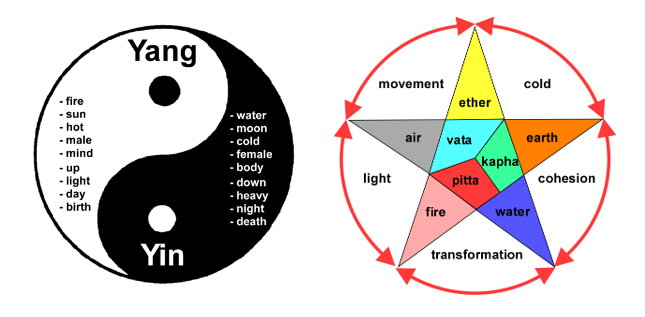
A well-rounded martial artist seeks balance between these forms, harmonizing Yin and Yang according to Taoist principles.

Discipline and Moral Foundation

Kung is as much a moral and spiritual discipline as it is a physical one. Practitioners must adhere to behavioral and emotional codes designed to preserve vital energy and mental clarity:

  • Five Restrictions to avoid:
    • Frivolity
    • Conceit
    • Impatience
    • Negligence
    • Lasciviousness
  • Seven Detriments:
    • Fornication (energy depletion)
    • Anger (breathing harm)
    • Worry (mental numbness)
    • Over trust (emotional vulnerability)
    • Overdrinking (blood dilution)
    • Laziness (muscular weakness)
    • Tenseness (weak bones).

Violating these principles disrupts energy flow and undermines training. The Shaolin tradition stresses purification of spirit, breath regulation, and ethical conduct using Kung only for defense or just causes, never for malicious harm. Misuse inevitably leads to personal ruin.

Stages of Training

Mastery requires patience, persistence, and often decades of disciplined practice. Training typically progresses through:

  1. Skin and Muscle Stimulation – Vigorous rubbing to improve circulation and tone.
  2. Tendon Conditioning – Stretching and calisthenics to enhance elasticity and force transmission.
  3. Joint Strengthening – Weight training and impact drills for endurance and striking power.
  4. Qi Development – Meditation and breath control to cultivate and store vital energy, directing it for specific purposes.

This gradual progression ensures the body and mind are prepared for advanced techniques without risk of injury.

Qi: The Power Source of Kung

Qi transforms raw physical ability into directed, dynamic force. Concentrating Qi in specific body parts creates specialized capabilities, such as an iron abdomen, immovable stance, or penetrating strike. Its development must be patient and natural; forcing the process is ineffective and potentially harmful. In rare cases, Qi manifests spontaneously in emergencies, hinting at latent human potential.

Extraordinary Kung Techniques

Through disciplined training, practitioners can achieve remarkable feats, some practical, others legendary in reputation. These include:

  • Red Sand Palm – Yin Kung capable of inflicting damage without physical contact, developed through progressive conditioning from fine sand to heavy objects.
  • One Finger Kung – Focused finger strikes that can move heavy objects or extinguish flames from a distance.
  • Dragon Claw Kung – Grip strength and joint control using progressive resistance, applied to immobilize opponents.
  • Water Dividing Kung – Palm and arm strength sufficient to part rigid bamboo poles.
  • Hing Kung (Lightness Kung) – Ability to move silently and lightly, even on fragile surfaces.
  • Speed Running Kung – Leg and eyesight conditioning for swift, sustained movement.
  • Leaping Kung – Explosive leg power built by jumping from progressively deeper trenches or with added weights.
  • Wall Climbing Kung – Vertical and horizontal wall movement using elbows and heels.
  • Tsien Yin Kung – Qi-based internal protection of vital areas.
  • Bag Kung – Abdominal conditioning to absorb and redirect strikes.
  • Iron Forearm Kung, Fist Kung, Sandbag Kung – Impact conditioning for devastating strikes and multi-angle attack defense.
  • Iron Broom Kung – Powerful sweeping kicks to fell opponents or break obstacles.
  • Jade Belt Kung – Crushing arm strength developed through tree hugging and stone lifting.
  • Head Kung – Progressive hardening of the skull for safe head strikes.

Many of these require 10–15 years of committed training and precise energy control to master.

Health, Longevity, and Mental Clarity

Beyond combat, Kung offers profound physical and mental benefits. Long-term practice strengthens circulation, tendons, joints, and immunity; enhances concentration and calmness; and may contribute to longevity. It is both a martial art and a holistic health system.

Modern Rarity and Preservation

In ancient times, Kung masters devoted decades to perfection, often beginning in childhood. Today, the demands of modern life, coupled with the secrecy of true training, make genuine mastery rare. Most authentic techniques are still transmitted privately to protect their integrity. Demonstrations by skilled masters, such as generating heat without contact, bending steel, or breaking stone, attest to the enduring power of these methods.

Anyone interested in studying these skills should understand that:

  • Authentic instruction is rare. Many of these methods require years of careful, incremental training under a knowledgeable teacher who understands both the physical and internal aspects.
  • Improper training can cause harm. Without correct supervision, certain conditioning practices can lead to serious injury, long-term health problems, or mental strain.
  • Ethics matter. True Kung training is rooted in discipline, self-control, and moral conduct. Any instruction that promotes reckless aggression, neglects safety, or bypasses ethical principles should be avoided.
  • Due diligence is essential. Seek a reputable teacher with verifiable lineage, recognized skill, and a proven track record of developing students safely. Research the school’s philosophy, teaching methods, and student experiences before committing.
  • Respect your limits. Not every method is appropriate for every individual. Health conditions, age, and personal goals should all factor into how one approaches training.

Approaching Kung with patience, humility, and discernment will help ensure that the art becomes a source of growth and empowerment, not injury or disillusionment.

Conclusion

The Dynamics of Kung reveal that true Kung Fu mastery transcends physical fighting skill. It is a lifelong path of self-cultivation, uniting body, mind, and spirit through disciplined practice, ethical conduct, and the harmonious balance of internal and external forces. The extraordinary abilities it promises—whether practical, legendary, or symbolic—stand as testimony to the heights of human potential when effort, patience, and moral purpose are perfectly aligned.

Reference:

Chow, D., & Spangler, R. (1978). Kung Fu: history, philosophy and techniques. Lulu.com. https://archive.org/details/kungfuhistoryphi0000chow

Training Methods Of 72 Arts Of Shaolin

Training Methods Of 72 Arts Of Shaolin by Jin Jing Zhong (1934) is a window into how some traditional lineages of martial arts training used to be practice in years past. Many decades ago, practitioners could and would devote many hours, for many days and over many years, even decades to develop and perfect their skills. Many of the methods explained throughout this book seem impossible with today’s hectic modern schedule, where most people find it difficult to carve out 1-2 hours to exercise, a few days per week.

The text is an extensive and detailed manual on the 72 Arts of Shaolin Kung Fu, compiled and translated from early 20th-century Chinese martial arts manuscripts. It presents a comprehensive guide to Shaolin training methods, theoretical principles, and practical exercises essential for mastering both internal (soft, spiritual, energy-based) and external (hard, physical, muscular) martial arts skills. The text includes biographies of key figures such as Jin Jing Zhong and Reverend Miao Xing, highlighting their dedication and contributions to preserving Shaolin traditions. It emphasizes the cultivation of Qi (internal energy), balance of Yin and Yang forces, and the importance of moral character and perseverance in training.

The manual systematically categorizes the 72 arts into hard and soft, internal and external skills, linking each to physical health, spiritual development, and combat effectiveness. Detailed instructions on foundational exercises (e.g., striking wooden dummies, suspending coins, kicking flying meteors), and advanced techniques (e.g., Diamond Finger, Iron Shirt, Luohan’s Night Vision, Skill of Light Body) are provided. The text stresses the need for gradual, persistent training, avoidance of harmful habits, and the ethical use of martial arts. It also includes unique Shaolin training methods such as walking on poles, swimming skills, and acrobatic movements, demonstrating the holistic nature of Shaolin Kung Fu as both a martial and health practice.

The manual concludes with a tribute to Lam Sai Wing, a renowned master of Southern Shaolin Hung Gar, whose writings similarly blend combat techniques and internal cultivation methods, affirming the enduring legacy of Shaolin martial arts.

Highlights

  • Comprehensive guide to the 72 Arts of Shaolin Kung Fu, covering theory and practice.
  • Emphasis on balancing internal energy (Qi), Yin-Yang forces, and moral development.
  • Detailed hard and soft training methods for physical and spiritual mastery.
  • Shaolin exercises improve health, resilience, and combat skills simultaneously.
  • Training principles stress persistence, patience, and ethical martial arts use.
  • Unique skills include walking on poles, swimming techniques, and acrobatic jumps.
  • Biographies of key Shaolin masters and their contributions to preserving martial traditions.

Key Insights

  • Integration of Internal and External Skills: The text highlights that Shaolin mastery requires the harmonious development of both internal energy cultivation (soft Gong Fu) and external physical power (hard Gong Fu). This dual approach ensures not only effective combat skills but also long-term health and spiritual well-being. The internal force Qi, when properly nurtured, fortifies the body against injury and disease, while external techniques develop strength, precision, and resilience.
  • Qi as the Core Vital Force: Qi is portrayed as the fundamental life energy governing health, strength, and spirit. The manual provides numerous exercises for cultivating, circulating, and concentrating Qi throughout the body. The practice of controlling Qi leads to improved blood circulation, organ function, mental clarity, and emotional stability. This understanding aligns with traditional Chinese medicine and Taoist philosophy, reinforcing Shaolin’s holistic approach.
  • Moral and Psychological Foundations of Martial Arts: The text stresses that mastery is not merely physical but deeply rooted in cultivating virtues such as humility, patience, courage, and self-control. The reverence for tutors, avoidance of arrogance, and ethical restraint in the use of force are repeatedly emphasized. This moral framework ensures that martial power is used responsibly and contributes to personal and social harmony.
  • Progressive and Systematic Training: The 72 Arts are organized to accommodate practitioners of all ages and skill levels, with clear stages of difficulty and gradual increase in intensity. Foundational exercises such as Four-Part Exercise and base conditioning prepare the body and mind for advanced techniques. The text warns against impatience and irregular practice, advocating steady, daily training for years or decades to achieve true mastery.
  • Specialized Combat Techniques and Conditioning: The manual describes a wide range of sophisticated methods that condition specific body parts (e.g., Iron Head, Iron Knees, Diamond Finger) and develop unique combat skills (e.g., One Finger Chan Meditation, Eagle’s Claws, Mantis Claws). These techniques show the detailed craftsmanship in Shaolin arts, combining physical toughness with precision targeting of acupoints and energy pathways.
  • Health Benefits and Longevity: Many exercises are designed not only for fighting but also for therapeutic effects, strengthening internal organs, improving circulation, enhancing sensory functions (night vision, keen hearing), and preventing age-related decline. The text acknowledges adaptations for children, adults, and the elderly, emphasizing that Shaolin is as much a health cultivation system as a martial discipline.
  • Practical Application in Combat and Life: The manual balances philosophical depth with direct combat pragmatism. It includes guidance on using softness to overcome hardness, redirecting opponent’s force, and applying “deadly” but hidden techniques. It also teaches survival skills like swimming, diving, and agile movement, showing Shaolin’s comprehensive training for real-world challenges.

This text is a foundational document for understanding traditional Shaolin martial arts, blending philosophy, health sciences, and combat techniques into a unified training system. It underscores the cultural, spiritual, and practical significance of the 72 Arts, offering an authentic window into the Shaolin legacy that continues to influence martial arts worldwide.

Reference:

Training Methods of 72 Arts of Shaolin by Jin Jing Zhong 1934 : Jin Jing Zhong : free download, borrow, and streaming : Internet Archive. (1934). Internet Archive. https://archive.org/details/trainingmethodsof72artsofshaolinbyjinjingzhong1934