The “Naegong House”: Internal Energy, Transmission, and the Reality Behind Esoteric Martial Traditions

Within the worlds of Neidan, Daoist cultivation, and certain internal martial arts traditions, there are recurring references to building an internal “house,” “furnace,” “cauldron,” or “vessel” capable of storing and refining cultivated energy. While terminology varies among lineages, the underlying concept remains remarkably consistent: before one can safely cultivate higher levels of internal development, one must first develop the structure capable of containing it.

In some traditions this concept is associated with Nei Dan (internal alchemy), while in Korean systems it may be discussed under Naegong or internal power cultivation. Although modern practitioners sometimes interpret these teachings literally or mystically, many of the ideas may also correspond to practical physiological, psychological, and neurological adaptations developed through long-term training.
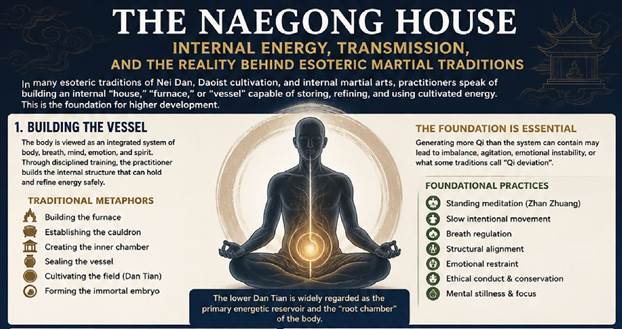
Building the Vessel

Traditional internal systems often describe the body as more than flesh and bone. The practitioner is viewed as an integrated system of body, breath, mind, emotion, and spirit. Through years of disciplined training, the individual gradually “builds the vessel” capable of stabilizing cultivated internal force.

Classical Daoist literature frequently uses symbolic language such as:

  • Building the furnace
  • Establishing the cauldron
  • Creating the inner chamber
  • Sealing the vessel
  • Cultivating the field
  • Forming the immortal embryo

These metaphors are generally associated with the development of the Dan Tian, especially the lower Dan Tian, which many traditions regard as the primary energetic reservoir of the body (Kohn, 2008).

The concept is not merely about accumulating “energy,” but about refining and integrating the practitioner as a whole. Traditional teachers often warned that attempting advanced energetic practices without sufficient preparation could result in imbalance, emotional instability, agitation, or what some systems referred to as “Qi deviation” (Despeux & Kohn, 2003).

For this reason, authentic systems historically emphasized foundational practices such as:

  • Standing meditation (Zhan Zhuang)
  • Slow intentional movement
  • Breath regulation
  • Structural alignment
  • Emotional restraint
  • Ethical conduct
  • Mental stillness
  • Conservation of vitality

In martial systems, these methods were believed to strengthen the body’s capacity to tolerate increased internal pressure, focus, and energetic intensity.

A Modern Physiological Perspective

Although traditional terminology uses the language of Qi and internal energy, some aspects of these practices may correlate with modern understandings of human physiology and psychology.

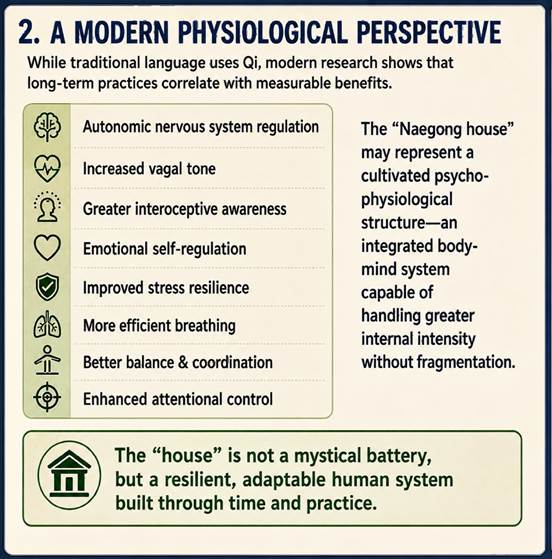
Long-term breath training, posture work, meditative focus, and slow movement practices have been associated with improvements in:

  • Autonomic nervous system regulation
  • Vagal tone
  • Interoceptive awareness
  • Emotional self-regulation
  • Stress resilience
  • Breath efficiency
  • Balance and coordination
  • Attentional control

Research on contemplative movement systems such as Tai Chi and Qigong has shown measurable effects on stress reduction, mood regulation, balance, and psychophysiological health (Wayne & Kaptchuk, 2008; Wang et al., 2010).

From this perspective, the “Naegong house” may represent a metaphor for developing a more integrated and resilient body-mind system. The practitioner gradually becomes capable of handling greater internal intensity without fragmentation, impulsivity, or emotional instability.

In other words, the “house” may not be a mystical battery storing supernatural force, but rather a cultivated psychophysiological structure developed through years of disciplined practice.

Can Internal Energy Be Passed to Another Person?

One of the more controversial aspects of internal martial and alchemical traditions involves the belief that cultivated energy or internal force can be transmitted from teacher to student.
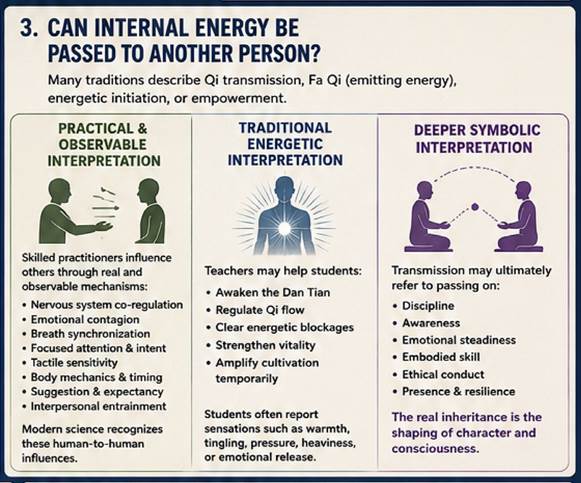
Many traditional systems discuss concepts such as:

  • Qi transmission
  • Fa Qi (“emitting energy”)
  • Energetic initiation
  • Empowerment
  • Transmission of the “seed”
  • Establishing the furnace
  • Opening the channels

Some practitioners report sensations during such experiences including warmth, tingling, heaviness, emotional release, pressure, or involuntary movement. These reports are common across many contemplative and spiritual traditions worldwide.

However, interpretations of these experiences vary significantly.

The Practical and Observable Interpretation

A grounded interpretation suggests that experienced practitioners can indeed strongly influence others through mechanisms that are entirely real and observable.

These include:

  • Nervous system co-regulation
  • Emotional contagion
  • Breath synchronization
  • Focused attention
  • Tactile sensitivity
  • Body mechanics
  • Suggestion and expectancy
  • Interpersonal entrainment

Modern neuroscience and psychology recognize that human beings constantly influence one another physiologically and emotionally (Porges, 2011). A calm and highly regulated practitioner may affect another person’s breathing patterns, muscular tension, emotional state, and sense of safety.

Likewise, highly skilled internal martial artists often demonstrate remarkable efficiency through coordinated biomechanics, fascial connectivity, timing, and intent rather than brute muscular force alone.

To an outside observer, these effects may appear mysterious or “energetic,” even when rooted primarily in refined physical and neurological skill.
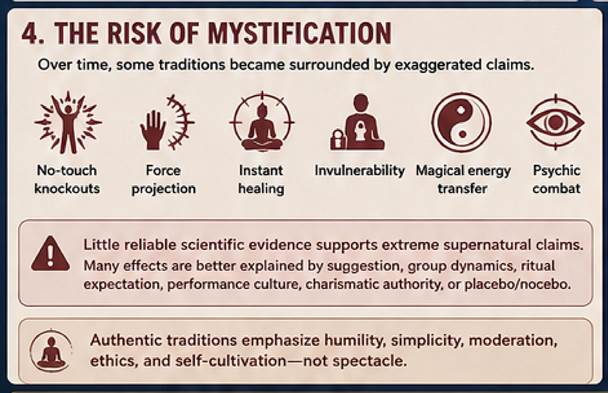
The Risk of Mystification

As with many esoteric traditions, internal martial arts also accumulated layers of mythologizing over time. Stories emerged involving:

  • No-touch knockouts
  • Supernatural force projection
  • Psychic combat
  • Instant healing abilities
  • Magical energy transfer
  • Invulnerability

While such claims remain popular in some circles, there is little reliable scientific evidence supporting extreme supernatural interpretations.

Many demonstrations of extraordinary “Qi powers” have failed under controlled testing conditions. In some cases, the effects may be better explained by:

  • Suggestion
  • Group dynamics
  • Compliance
  • Ritual expectation
  • Performance culture
  • Charismatic authority
  • Placebo and nocebo responses

This becomes especially important in high-control environments where mystical narratives can reinforce hierarchy, dependency, and unquestioned authority.

Historically, many authentic traditions actually warned against obsession with displays of power. Classical Daoist teachings frequently emphasized humility, simplicity, moderation, ethics, and self-cultivation over spectacle (Kohn, 2008).
The Deeper Meaning of Transmission

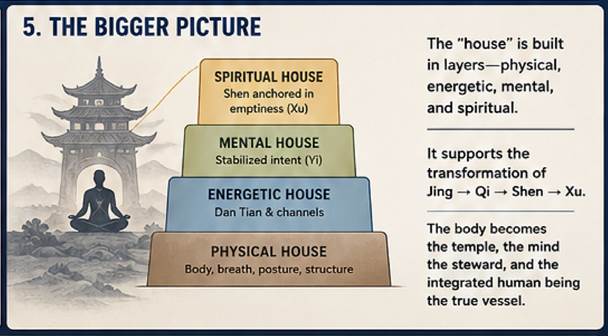
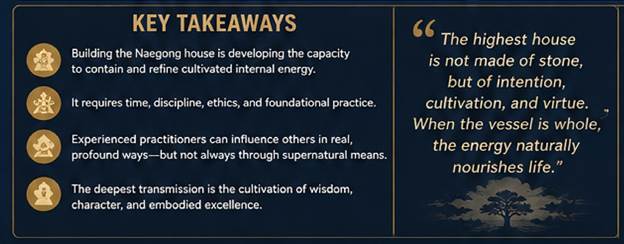
At its highest level, the idea of “passing the house” may not refer to transferring mystical energy at all. Instead, it may symbolize the transmission of cultivated human qualities developed through disciplined practice and lived experience.

A mature teacher may pass on:

  • Emotional steadiness
  • Discipline
  • Awareness
  • Presence
  • Resilience
  • Embodied knowledge
  • Ethical conduct
  • Refined perception

These qualities profoundly affect students over time.

In this sense, the real “transmission” may not be supernatural energy storage, but the gradual shaping of the practitioner’s nervous system, awareness, behavior, and character through years of intentional cultivation.

The body becomes the temple, the mind becomes the steward, and the “house” becomes the integrated human being itself.
References

Despeux, C., & Kohn, L. (2003). Women in Daoism. Three Pines Press. https://archive.org/details/womenindaoism0000desp

Kohn, L. (2008). Chinese healing exercises: The tradition of Daoyin. University of Hawai‘i Press. https://archive.org/details/chinesehealingex0000kohn

Porges, S. W. (2011). The polyvagal theory: Neurophysiological foundations of emotions, attachment, communication, and self-regulation. W. W. Norton & Company. https://archive.org/details/polyvagaltheoryn0000porg

Wang, C., Collet, J. P., & Lau, J. (2004). The effect of Tai Chi on health outcomes in patients with chronic conditions. Archives of Internal Medicine, 164(5), 493–501. https://doi.org/10.1001/archinte.164.5.493

Wang, F., Lee, E. K. O., Wu, T., Benson, H., Fricchione, G. L., Wang, W., & Yeung, A. S. (2010). The effects of Tai Chi on depression, anxiety, and psychological well-being: A systematic review and meta-analysis. International Journal of Behavioral Medicine, 17(4), 261–271. https://www.ncbi.nlm.nih.gov/books/NBK164598/

Wayne, P. M., & Kaptchuk, T. J. (2008). Challenges inherent to T’ai Chi research: Part I—T’ai Chi as a complex multicomponent intervention. Journal of Alternative and Complementary Medicine, 14(1), 95–102. https://doi.org/10.1089/acm.2007.7170A
Three Treasures plus Emptiness

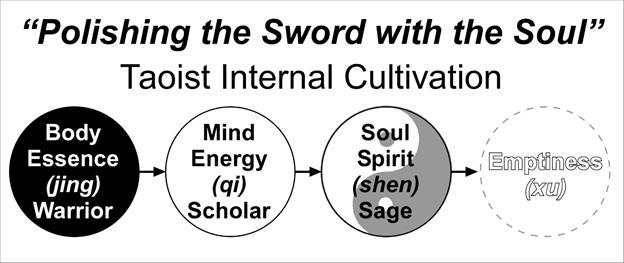
In Taoist cultivation theory, the “Three Treasures” (sān bǎo) of jīng, qì and shén describe successive refinements of being: from bodily substance to energy to spirit. Alongside and underpinning this transformative process is the principle of xū, often translated “emptiness”, “void”, or “hollow openness”. Xū is not mere nothingness, but a dynamic receptive ground that allows emergence, transformation, and return. This essay explicates the meaning of xū, its relation to the Three Treasures, and how classical Taoist texts articulate this interplay.

The Three Treasures: Jīng, Qì and Shén

The Three Treasures are central in Taoist internal alchemy (nèi dān) as the raw materials and vehicles of transformation.

TreasureChineseKey meaningRole in cultivation
Essence精 (jīng)The dense, material‐vital substance (including inherited vitality, reproductive substance) (Bartek, 2024)Reserved, refined and conserved; the “root” of life and alchemical process.
Vital energy / breath氣 (qì)The dynamic life‐force, movement, breath, transformation of substance into energy (Bartek, 2024)Circulates, refines essence into spirit; bridges body and spirit.
Spirit / consciousness神 (shén)The refined, luminous aspect of awareness, spirit, mind, divine seed (Pregadio, 2009)The outcome of refinement; the luminous presence and the vehicle of transcendence.

In internal‐alchemy texts such as the Wuzhen Pian attributed to Zhang Boduan, the Three Treasures are explicitly cited as the ingredients of the internal elixir:

Thus, the alchemist’s work is to refine jīng → qì → shén and finally to integrate with the Way (道).

Definition and nuance

The Chinese character 虛 (xū) conveys “emptiness”, “voidness”, “hollowness”, “open space”, “vacancy”, but importantly also “receptivity”, “openness”, “ungrasped potential”. In Taoist texts, xū is often the invisible space or still ground that allows form, movement, being, and return.

For example, in the classic Tao Te Ching by Laozi, Chapter 11 states:

And Chapter 16:

Thus xū is both origin and destination. It is the silent ground from which being arises and to which it returns.

Xū in internal alchemy

In internal alchemy (nèi dān), xū becomes the “vessel” or “cauldron” within the practitioner, as an inner space, body‐mind field of openness, into which essence, energy and spirit are guided. According to scholarship:

Hence, xū is the operative “space” in which the refinement jīng → qì → shén occurs, and into which shén finally dissolves.

Relationship of Xū to the Three Treasures

Here is how xū operates at each stage of the alchemical process:

Transformation stageRole of XūImplication for cultivation
jīng → qìThe practitioner first quiets distractions, reserves essence, cultivates stillness—creating an inner emptiness (xū) so that jīng does not scatter.Cultivating “emptied receptivity”: less sensory input, fewer desires, conserving jīng.
qì → shénEnergy (qì) flows within the “empty vessel” (xū), unimpeded by conceptual/motional turbulence; this allows qì to transform into shén.Cultivation shifts to subtle awareness, opening to spirit, refining vital energy in the void.
shén → Return to XūAt completion, the refined shén merges into emptiness (xū), dissolving the individual self into universal ground (道). The Three Treasures originate from xū and return to xū.The goal: abiding in xū as “Spirit and Emptiness united as one”.

In other words:

xū is neither an added “fourth treasure” nor merely an absence, but the field of transformation and integration of the Three Treasures. Without xū: jīng stagnates, qì scatters, shén remains bound. With xū: alchemy is possible, transformation flows, transcendence becomes attainable.

Classical Source Quotations

Here are selected quotations with Chinese original and annotated translation:

  1. From Tao Te Ching, Ch. 11
    • “Thirty spokes join at one hub; yet it is the emptiness therein that gives the wheel its use. Kneading clay to form a vessel; yet it is the emptiness therein that makes the vessel useful…” (Dao De Jing [Tao Te Ching], by Lao Zi [Lao Tzu] in Side-by-Side Translation: Chapter 11, n.d.)
  1. From Tao Te Ching, Ch. 16
    • “Attain complete emptiness; hold fast to stillness. The myriad beings all arise – I watch their return. The myriad things flourish and each returns to its root. Returning to the root is called stillness. Stillness is called returning to destiny. Returning to destiny is called the Constant. Knowing the Constant is called clarity…” (Garofalo, n.d.)
  2. From Wuzhen Pian
    • Though specific lines are metaphorical and sparse, one commentary notes: “The body contains the essential components. These Three Treasures are jīng, qì and shén.”  (Wikipedia contributors, 2025)
    • And that this text visualizes the human body as a cauldron refining the Three Treasures. (Wuzhen Pian 悟真篇 Also Known as “Essay on the [Immediate] Awakening to Truth”, “Chapters on Awakening to Perfection” – UBC Library Open Collections, n.d.)
  3. Scholarly exegesis: “The first stage involves replenishing essence, breath and spirit … and the final is returning to emptiness.” (Golden Elixir Press, n.d.)
  4. Interpretation of the Three Treasures in Chinese culture: “The ancient Daoists believed that man exists inseparably between heaven and earth and that there is a mutual relationship between these three (heaven, earth, man) …” in relation to jīng, qì, shén. (Bartek, 2024)

Summary

  • The Three Treasures (jīng, qì, shén) chart an inner alchemical journey: the body’s essence → refined energy → luminous spirit.
  • Xū (emptiness) is not a fourth treasure but the primordial field within which the alchemical transformation occurs and to which it ultimately returns.
  • Cultivation involves first creating receptivity and emptiness (xū) to conserve essence, then refining energy in the vessel of emptiness, and finally abiding in emptiness as spirit dissolves into the Way.
  • The classical Taoist tradition (via Laozi’s Tao Te Ching and texts like Wuzhen Pian) illustrates this with metaphors of wheel hubs, vessels, cauldrons, and return to root.
  • Practically, meditation and Qigong aim to “clear the vessel”, “quiet the hub”, “walk the empty path” so that the Three Treasures can operate in harmony.

References:

Bartek. (2024, June 28). Jing, Qi, Shen – Die drei Schätze. Path of Dao. https://path-of-dao-qigong.ch/en/jing-qi-shen/

Dao De Jing [Tao Te ching], by Lao Zi [Lao Tzu] in Side-by-Side Translation: Chapter 11. (n.d.). YellowBridge. https://www.yellowbridge.com/onlinelit/daodejing11.php?utm_source=chatgpt.com

Garofalo, M. P. (n.d.). Dao de Jing, Laozi, Chapter 16. https://mpgtaijiquan.blogspot.com/2015/05/dao-de-jing-laozi-chapter-16.html?utm_source=chatgpt.com

Golden Elixir Press. (n.d.). Foundations of Internal Alchemy — A slideshow. Scribd. https://www.scribd.com/document/99535352/Foundations-of-Internal-Alchemy-A-Slideshow?utm_source=chatgpt.com

Pregadio, F. (2009). Awakening to Reality: The “Regulated Verses” of the Wuzhen pian, a Taoist Classic of Internal Alchemy. In Golden Elixir Press. https://www.goldenelixir.com/files/Introduction_to_Awakening_to_Reality.pdf?utm_source=chatgpt.com

The Project Gutenberg eBook of Dao de Jing, by Lao Zi. (n.d.). https://www.gutenberg.org/files/49965/49965-h/49965-h.htm?utm_source=chatgpt.com

Tao Te Ching by Lao Tzu – Verse 11 – Three translations. (2021, November 30). Vishy’s Blog. https://vishytheknight.wordpress.com/2021/11/30/tao-te-ching-by-lao-tzu-verse-11-three-translations/?utm_source=chatgpt.com

Wikipedia contributors. (2025, October 1). Wuzhen pian. Wikipedia. https://en.wikipedia.org/wiki/Wuzhen_pian?utm_source=chatgpt.com

Wuzhen pian 悟真篇 also known as “Essay on the [Immediate] Awakening to Truth”, “Chapters on Awakening to Perfection” – UBC Library Open Collections. (n.d.). https://open.library.ubc.ca/cIRcle/collections/ubccommunityandpartnerspublicati/52387/items/1.0416054?utm_source=chatgpt.com

Sam Shim U Gye: Exploring Myth of Martial Multiplicity

The martial arts world has long held space for not only physically demonstrable technique but also oral teachings that border on the mystical. One such term that is rarely documented but occasionally referenced in specific martial circles is Sam Shim U Gye. Roughly interpreted as “Three Minds Merging or Projecting Energy”, or even possibly “The Three-Mind Energy Method,” this phrase suggests a layered understanding of human perception, psychological multiplicity, and strategic movement. Unlike somewhat known practices like Kyung Gong Sul Bope, Qing Gong (light body skill) or Dim Mak (death touch), Sam Shim U Gye remains mostly undocumented in formal Korean martial systems. Yet, within certain oral traditions, it is spoken of in association with the ability to move so swiftly or unpredictably that one appears to be in multiple places at once.

This article aims to examine the term’s potential meaning, its symbolic relationship to martial illusions of multiplicity, and its resonance with broader esoteric traditions such as fenshen from Daoist lore. While there is little scholarly reference to Sam Shim U Gye, analyzing its components and inferred application offers valuable insight into how martial legends and perceptual mastery intertwine.

Linguistic and Symbolic Deconstruction

A tentative breakdown of Sam Shim U Gye reveals a phrase built on classic East Asian symbolic logic:

  • Sam: “Three”
  • Shim: “Mind” or “Heart” (connoting consciousness, awareness, or intention)
  • U: Possibly a linking particle; could also mean “space” or “again”
  • Gye: Could denote “precepts,” “calculations,” or “boundaries”

Taken together, the phrase may imply a structured methodology of mental control, such as:

“Three Minds Merging or Projecting Energy”, or even possibly
“The Three-Mind Energy Method.”

In oral accounts, Sam Shim U Gye has been linked to the ability of a martial artist to move with such unpredictability, speed, or rhythm disruption that they appear to be multiplying themselves, a visual illusion often mistaken for supernatural ability.

Perceived Multiplicity and Martial Illusion

Rather than literal replication, Sam Shim U Gye may be better understood through the lens of perceptual manipulation. Human visual processing can be overwhelmed by sudden, rapid movement combined with environmental cues such as low light or limited peripheral awareness. Under these conditions, a highly trained practitioner might seem to “divide” their presence via:

  • Broken rhythm and redirection
  • Misdirection through layered footwork
  • Exploitation of perceptual lag (e.g., saccadic masking, persistence of vision)

This aligns with the more formally attested Chinese concept of fenshen, or “body division,” found in Daoist texts like Baopuzi (Ge Hong, c. 320 CE). Ge Hong recounts adepts capable of creating multiple illusory bodies or appearing simultaneously in different locations, not as a physical feat, but as a spiritual or meditative realization (Campany, 2002).

Oral Tradition vs. Scholarly Canon

The scarcity of references to Sam Shim U Gye in martial literature raises an important distinction between documented tradition and oral transmission. Some martial teachings, particularly those tied to esoteric or family-based systems, were passed down verbally, often encoded in metaphoric or poetic language. In such cases, a term like Sam Shim U Gye might serve not as a technical formula but as a mnemonic device for internal principles: controlling one’s mind, reading the opponent, and using deceptive motion to shape perception.

In modern application, this principle might be observed in elite-level athletes, such as boxers or mixed martial artists, who use feints and timing to “vanish” from the opponent’s field of awareness, creating the illusion of multiple directions or unpredictable angles.

Comparative Frameworks: Qi Gong, Taoist Visualization, and Wuxia Myths

Sam Shim U Gye also echoes internal energy traditions where the mind is trained to “split” focus between different bodily centers or project awareness beyond the self. In certain neigong practices, advanced practitioners visualize “three fields” of awareness where the head, heart, and lower dantian, are simultaneously active. Similarly, in wuxia cinema (e.g., Crouching Tiger, Hidden Dragon), warriors are depicted leaping through trees or striking multiple foes with dazzling speed, mythical metaphors for an elite practitioner’s fluid, multidimensional control of space. This myth‑making often draws on the history of the Shaolin Monastery and its integration of martial discipline and spiritual cultivation (Shahar, 2008)

This symbolism doesn’t imply literal multiplication but reflects an ideal of internal plurality and external coherence: being everywhere at once by being completely in tune with one’s body, environment, and opponent.

Though undocumented in formal literature, Sam Shim U Gye offers a compelling conceptual framework for understanding how martial artists manipulate perception through timing, positioning, and psychology. Its language evokes internal states of divided attention and strategic redirection, rather than mystical powers. When interpreted in tandem with Daoist fenshen, Aboriginal “shadow walking,” and modern neurology, Sam Shim U Gye reveals itself as a metaphorical map of how disciplined minds and bodies can create illusions so powerful they border on the mythic.

Rather than dismissing such phrases as fantasy, we are invited to explore how martial artists throughout history have refined their craft, not only through physical conditioning, but through perception, awareness, and intention. In doing so, Sam Shim U Gye becomes less a supernatural claim and more a poetic blueprint for mastering complexity within stillness, motion, and mind.

Buyer Beware: Esoteric Claims and Modern Exploitation
In the pursuit of learning rare and esoteric methods such as kyung gong sul bope, sam shim u gye, or dim mak, aspiring students should exercise discernment. While historical legends, cultural folklore, and cinematic portrayals like Crouching Tiger, Hidden Dragon stir fascination with superhuman potential, they also invite opportunism. There are individuals and groups who present these elusive skills as secrets they alone have mastered, often demanding steep financial or personal commitments. Without empirical validation or lineage-based verification, such claims can mislead the hopeful and exploit the vulnerable. As Carl Sagan aptly noted, “extraordinary claims require extraordinary evidence.” Caution, critical thinking, and humility are vital companions on any path toward human development, especially when the line between myth and mastery is intentionally blurred.

References:

Campany, R. F. (2002). To Live as Long as Heaven and Earth: A Translation and Study of Ge Hong’s Traditions of Divine Transcendents. University of California Press.

Ge Hong. (trans. Ware, J. R.). (1966). Alchemy, Medicine and Religion in the China of A.D. 320: The Nei Pien of Ko Hung. Dover Publications. https://archive.org/details/alchemymediciner00ware/page/n5/mode/2up

HKU Centre of Buddhist Studies. (2024, June 19). The Biographies of Eminent Monks 高僧傳 (Free eBook) – HKU Centre of Buddhist Studies. https://www.buddhism.hku.hk/publication-post/biographies-of-eminent-monks/

Shahar, M. (2008). The Shaolin Monastery: History, Religion, and the Chinese Martial Arts. University of Hawai’i Press. https://archive.org/details/shaolinmonastery0000shah

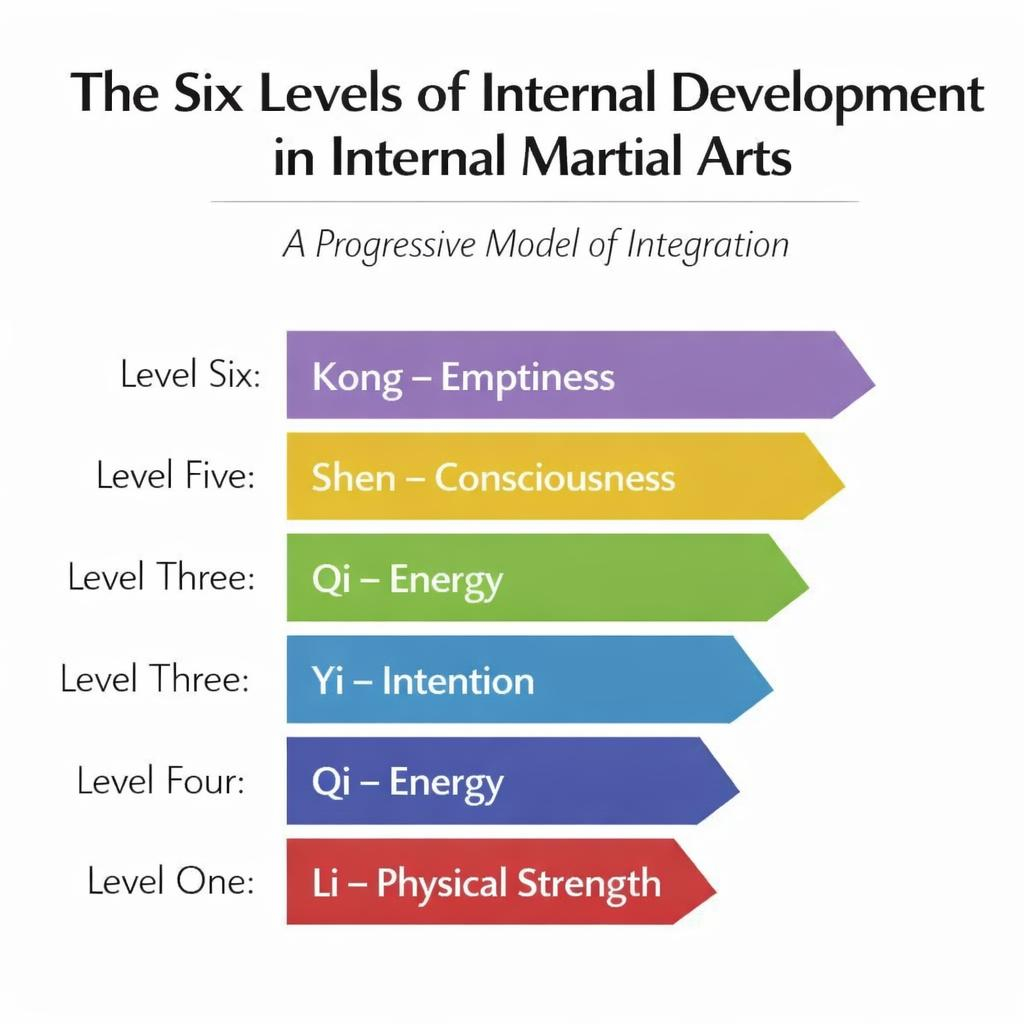
The Six Levels of Internal Development in Internal Martial Arts

A Progressive Model of Integration

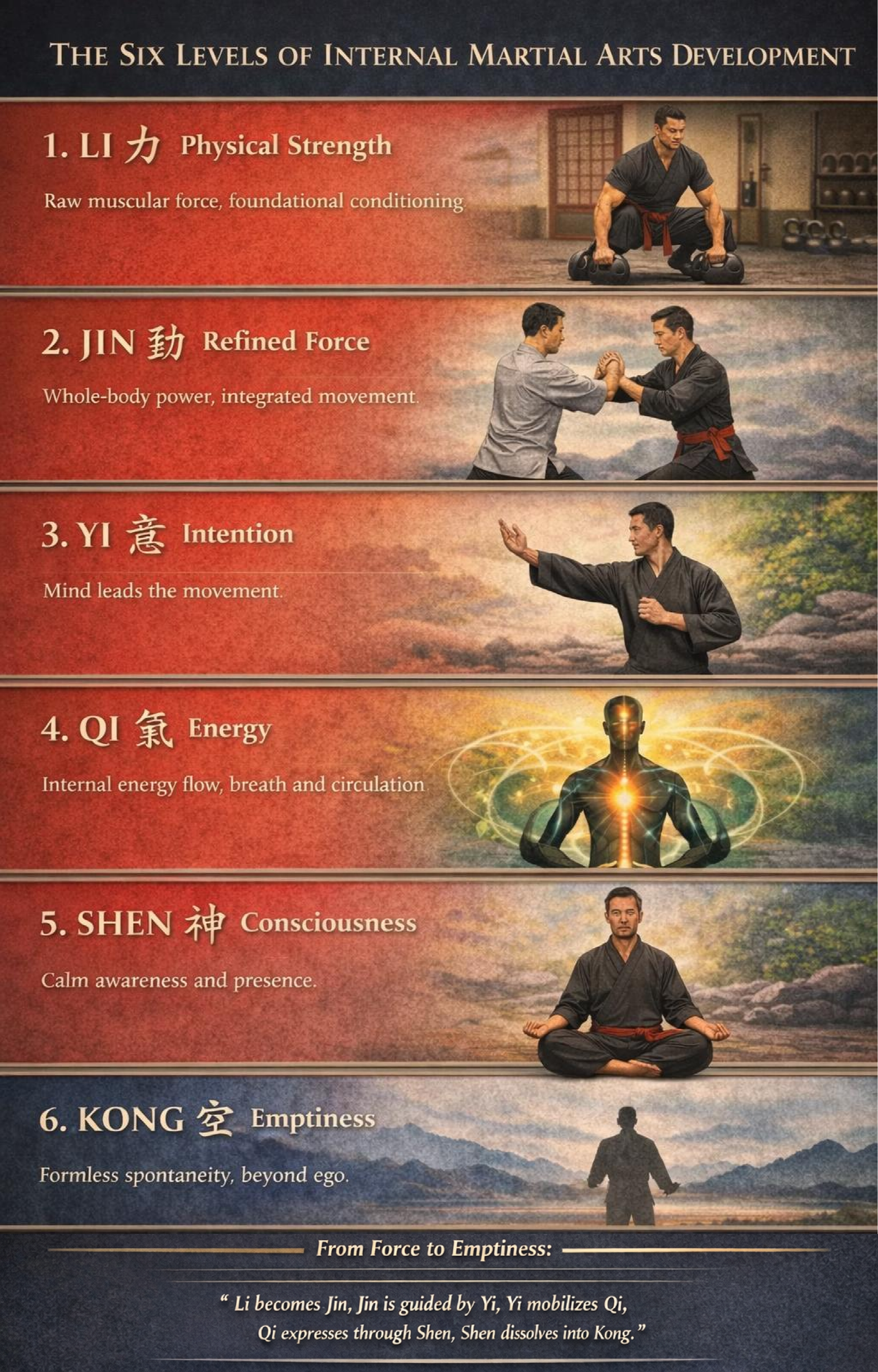
Level One: Li – Physical Strength

Level Two: Jin – Refined Force

Level Three: Yi – Intention

Level Four: Qi – Energy

Level Five: Shen – Consciousness

Level Six: Kong – Emptiness

The internal martial arts, commonly referred to as Neijia, represent a sophisticated system of human development that integrates body, mind, and consciousness through progressive refinement. The three most widely recognized internal martial arts are Hsing Yi, Tai Chi Chuan and BaguaZhang. Within these traditions, a frequently cited developmental model describes six interrelated levels: Li (力), Jin (勁), Yi (意), Qi (氣), Shen (神), and Kong (空). While not universally standardized across all lineages, this framework reflects a coherent synthesis of classical Chinese martial, medical, and philosophical thought (Yang, 1998; Chen, 2004; Kohn, 2008).

These levels are not discrete stages to be completed and abandoned, but rather nested layers of integration, each refining and reorganizing the preceding level. The progression reflects a shift from gross physical force toward subtle awareness and spontaneous action, paralleling Daoist internal alchemical models such as Jing–Qi–Shen–Xu (emptiness) (Kohn, 2008).

Level One: Li (力) – Physical Strength

Li refers to raw muscular strength and mechanical force, representing the most basic level of martial capacity. At this stage, movement is driven primarily by localized muscle contraction, often resulting in segmented and inefficient force production.

From a biomechanical perspective, Li relies heavily on voluntary muscular activation and leverage, with limited integration across the kinetic chain (McGinnis, 2013). While essential as a foundational attribute, Li is inherently limited. It is expendable, fatigue-prone, and easily countered by superior structure or timing.

Traditional training methods emphasize:

  • Static postures (e.g., horse stance, bo stance, twisted stance, etc.)
  • Repetitive conditioning drills
  • Strength and endurance development

Despite its limitations, Li provides the necessary structural and physiological base upon which higher levels are cultivated.

Level Two: Jin (勁) – Refined Force

Jin represents a qualitative transformation of force, from isolated muscular effort to integrated, whole-body power. It is often described as “trained strength” or “refined force,” characterized by efficient transmission of energy through aligned structure and connective tissues (Yang, 1998).

Biomechanically, Jin reflects:

  • Kinetic chain integration
  • Elastic recoil through fascia and tendons
  • Ground-reaction force transmission

This level corresponds with modern understandings of tensegrity and fascialconnectivity, where force is distributed across the entire body rather than generated locally (Myers, 2014).

Classical expressions of Jin include:

  • Peng (expansive, buoyant force)
  • Lu (yielding and redirecting)
  • Ji (pressing)
  • An (sinking)

The transition from Li to Jin marks a critical threshold in internal training: effort decreases while effectiveness increases.

Level Three: Yi (意) – Intention

Yi, often translated as intention or intentional awareness, serves as the directive principle that organizes movement and force. In classical texts, it is said that “Yi leads Qi, and Qi leads the body” (Yang, 1998).

At this level, movement becomes:

  • Less reliant on conscious muscular control
  • More guided by pre-reflective awareness
  • Increasingly efficient and anticipatory

Neuroscientifically, Yi may be understood as the integration of:

  • Motor planning (premotor cortex)
  • Attentional control networks
  • Sensorimotor prediction

This aligns with research demonstrating that intention and attention significantly influence motor coordination and performance efficiency (Wulf & Lewthwaite, 2016).

The practitioner begins to experience a shift from doing movement to allowing movement to be directed internally.

Level Four: Qi (氣) – Functional Energy

Qi is among the most debated concepts in both Eastern and Western discourse. Rather than interpreting Qi as a mystical substance, contemporary scholarship often frames it as a functional integration of physiological systems, including:

  • Breath and respiratory efficiency
  • Circulation and fluid dynamics
  • Neural signaling and proprioception
  • Fascial continuity

From this perspective, Qi represents the emergent coherence of the organism as a unified system (Chen, 2004; Jahnke, 2002).

Empirical studies on Qigong and Tai Chi suggest improvements in:

  • Cardiovascular regulation
  • Balance and coordination
  • Stress reduction and autonomic balance

These findings support the interpretation of Qi as system-wide functional optimization rather than an isolated energy entity (Wayne & Kaptchuk, 2008).

Level Five: Shen (神) – Consciousness and Presence

Shen refers to consciousness, awareness, and the quality of presence. In both Traditional Chinese Medicine and Daoist philosophy, Shen is associated with the clarity and stability of the mind (Kohn, 2008).

At this level:

  • Perception becomes refined and immediate
  • Emotional reactivity diminishes
  • Action arises from calm awareness rather than impulse

Shen is closely related to constructs studied in modern psychology, such as:

  • Mindfulness
  • Meta-awareness
  • Flow states

Research indicates that such states are associated with enhanced performance, reduced stress, and improved cognitive flexibility (Csikszentmihalyi, 1990; Tang et al., 2015).

In martial application, Shen manifests as timing, sensitivity, and effortless responsiveness.

Level Six: Kong (空) – Emptiness

Kong, often translated as emptiness, represents the culmination of internal development. Rooted in both Daoist and Buddhist philosophy, it does not imply nihilism, but rather freedom from attachment, rigidity, and fixed identity (Kohn, 2008).

At this level:

  • Action is spontaneous and uncontrived
  • There is no separation between intention and execution
  • The practitioner is no longer bound by technique or conceptual frameworks

This state parallels advanced descriptions of:

  • Non-dual awareness
  • Effortless action (wu wei)
  • Self-transcendent experience

From a performance standpoint, Kong reflects complete integration, where body, mind, and environment function as a unified field.

Integrative Perspective: From Force to Emptiness

The progression from Li to Kong reflects a continuum of refinement:

  • Li becomes organized into Jin
  • Jin is directed by Yi
  • Yi mobilizes Qi
  • Qi expresses through Shen
  • Shen dissolves into Kong

Importantly, advanced practitioners do not abandon earlier levels; rather, they embody all levels simultaneously, with each functioning in harmony.

This model closely parallels:

  • Daoist internal alchemy (Jing → Qi → Shen → Xu)
  • Psychophysiological integration models
  • Contemporary frameworks of embodied cognition

Implications for Training and Practice

A critical issue in modern practice is the misinterpretation or premature pursuit of higher levels. Many practitioners:

  • Remain at the level of Li while believing they are expressing Jin
  • Seek Qi experiences without structural integrity
  • Conceptualize Yi without embodied application

Effective training requires:

  1. Structural foundation (Li → Jin)
  2. Intentional refinement (Yi)
  3. Physiological integration (Qi)
  4. Conscious awareness (Shen)
  5. Letting go of fixation (Kong)

This progression underscores a central principle of internal arts:

True development is not the accumulation of techniques, but the refinement of the practitioner.

References

Chen, M. (2004). Chen style taijiquan: The source of taiji boxing. New World Press.

Csikszentmihalyi, M. (1990). Flow: the psychology of optimal experience. ResearchGate. https://www.researchgate.net/publication/224927532_Flow_The_Psychology_of_Optimal_Experience

Jahnke, R. (2002). The healing promise of Qi: Creating extraordinary wellness through Qigong and Tai Chi. McGraw-Hill.

Kohn, L. (2008). Chinese Healing Exercises: The Tradition of Daoyin. University of Hawai’i Press. http://www.jstor.org/stable/j.ctt6wqs77

McGinnis, P. M. (2013). Biomechanics of sport and exercise (3rd ed.). Human Kinetics. Biomechanics of Sport and Exercise (3rd Ed)

Myers, T. W. (2014). Anatomy trains: Myofascial meridians for manual and movement therapists (3rd ed.). Elsevier.

Tang, Y. Y., Hölzel, B. K., & Posner, M. I. (2015). The neuroscience of mindfulness meditation. Nature Reviews Neuroscience, 16(4), 213–225. https://doi.org/10.1038/nrn3916

Wayne, P. M., & Kaptchuk, T. J. (2008). Challenges inherent to t’ai chi research: part I–t’ai chi as a complex multicomponent intervention. Journal of alternative and complementary medicine (New York, N.Y.), 14(1), 95–102. https://doi.org/10.1089/acm.2007.7170a

Wulf, G., & Lewthwaite, R. (2016). Optimizing performance through intrinsic motivation and attention for learning: The OPTIMAL theory of motor learning. Psychonomic Bulletin & Review, 23(5), 1382–1414. https://doi.org/10.3758/s13423-015-0999-9

Yang, J. M. (1998). The root of Chinese Qigong: Secrets of health, longevity, and enlightenment. YMAA Publication Center.

Embodied Discipline and the Path to Self-Mastery

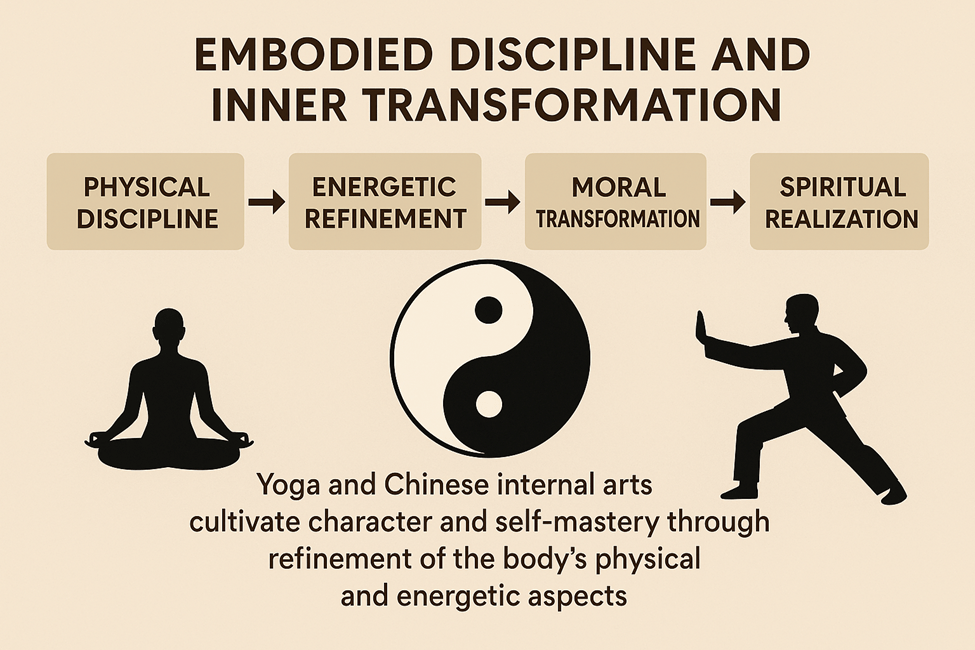
Throughout human history, disciplined movement has served as more than a means to physical fitness. It has been a gateway to moral, psychological, and spiritual development. Systems such as Yoga, Qigong, Tai Chi Chuan, Baguazhang, and Xing Yi Quan all share a common philosophical core:

The body becomes both the field and the instrument of transformation. Through sustained discipline, these arts cultivate awareness, moral rectitude, and self-regulation that extend beyond the training hall into all aspects of life.

The Body as a Mirror of the Mind

Ancient Eastern traditions view the body and mind as inseparable. In Yoga, the concept of asana (postures) is not merely a stretch but a condition for the stilling of the mind (Yoga Sutras 1.2). Similarly, in Chinese internal arts, the cultivation of qi through structured movement harmonizes the physical form (xing), the energetic field (qi), and the consciousness (shen). Each posture, breath, and intention becomes a reflection of one’s internal state. Thus, disciplining the body becomes a way to reveal and reshape the contents of the mind (Kleinman, 2023).

The process of consciously adjusting and fine-tuning the body’s components of its joints, spine, breath, and balance points, serves as a living metaphor for the refinement of one’s inner world. Each alignment demands the practitioner’s full attention, creating a bridge between external structure and internal awareness. This deliberate somatic calibration teaches the mind to observe without judgment and to respond with precision rather than impulse. Through this practice, bodily alignment becomes a mirror for mental alignment, cultivating stability and composure that extend into one’s emotional life.

In this sense, the act of refining posture, balance, and breath becomes a direct method for managing the subtle movements of thought and emotion, which are often more complex and volatile than the body itself. As the practitioner learns to coordinate intention with structure, thoughts become organized, and emotions are diffused through awareness rather than suppressed. Over time, these micro-adjustments train the nervous system to shift from reactivity to responsiveness, an embodied mindfulness that transforms self-regulation into second nature.

Practitioners quickly learn that the body resists tension, imbalance, and rigidity exposing internal conflict or emotional strain. As posture corrects, breathing deepens, and awareness refines, inner stillness and integrity naturally follow. The principle “as within, so without” is not poetic but experiential: mastery of motion becomes mastery of emotion.

Qigong, Tai Chi, and the Internal Alchemy of Transformation

Qigong and Tai Chi are expressions of Daoist alchemy, using the body as a crucible for transformation. The triad of jing–qi–shen (essence–energy–spirit) describes a process of refining vital substance into consciousness. Through slow, deliberate movement, practitioners develop song (relaxed awareness), dissolving mechanical tension and egoic striving. This cultivates balance between yin and yang, seen in aspects such as yielding and firmness, rest and action, all mirroring the Daoist understanding of harmony with nature (Wile, 1996).

Similarly, Baguazhang employs circular walking and “palm changes” or transitional exercises, as a metaphor for the ever-changing cycles of life. The practitioner learns adaptability, humility, and responsiveness. The external circle mirrors the internal one: thoughts orbit awareness, but do not dominate it. Xing Yi Quan, in contrast, channels focused, linear intent (yi) through structured forms or sets of exercises linked together. The simplicity of its five-element theory trains directness, sincerity, and willpower, qualities of both combative efficiency and moral integrity.

These arts embody an essential truth:

By repeating forms that express balance, alignment, and flow, practitioners literally encode these virtues into their nervous systems.

Yoga and the Integration of Body, Mind, and Spirit

Yoga’s physical discipline (hatha) was historically conceived as preparation for spiritual awakening (raja yoga). By mastering the breath (pranayama), the practitioner learns to govern the subtle forces of life, taming desire and restlessness. The practice builds tapas, a purifying inner heat of discipline that burns away impurities of character. In this sense, asana and breathwork are tools of ethical refinement (Feuerstein, 1998).

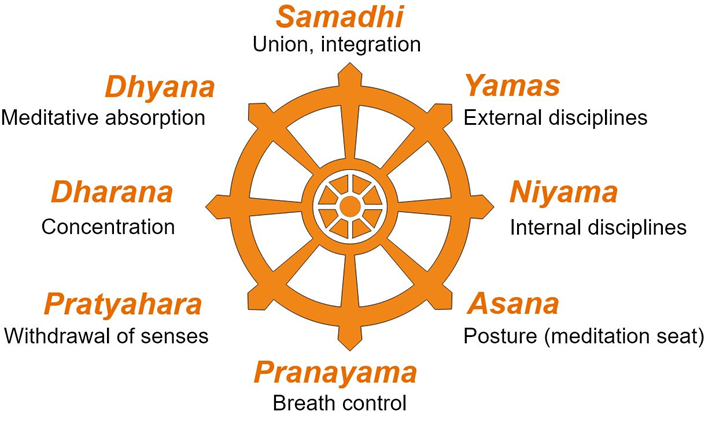
Moreover, the “eight limbs of yoga” outline a sequential refinement process: moral precepts (yama and niyama), physical posture, breath control, sensory withdrawal, concentration, meditation, and ultimately absorption (samadhi). Each step disciplines a different layer of being, ensuring that bodily control is never divorced from ethical self-cultivation.

From Discipline to Transformation

Discipline in these traditions is not punishment, but rather it is a path toward liberation through self-regulation. Through repetition and perseverance, one transcends laziness, fear, and egoic fragmentation. Neuroscientific research supports this: consistent somatic mindfulness modifies neural pathways associated with emotion regulation, empathy, and resilience (Davidson & McEwen, 2012). In effect, the physical arts train meta-awareness, or the capacity to observe one’s impulses and choose conscious response over reactivity.

True mastery, therefore, is not domination of the body but integration of the self. The martial artist, yogi, or qigong practitioner becomes calm yet alert, strong yet supple, humble yet confident. The disciplined body becomes a ritual language through which character is silently expressed.

The body is the gateway to transformation because it is the most immediate expression of consciousness. By cultivating precise movement, rhythm, and stillness, disciplines such as Yoga, Qigong, Tai Chi, Baguazhang, and Xing Yi transform instinct into intention, effort into grace, and discipline into virtue. They embody the timeless principle found across Taoist, Confucian, and Yogic traditions: that self-mastery begins with mastery of the vessel through which spirit acts. The practitioner who polishes the body as one polishes the sword finds that, in the end, it is the soul itself that shines.

References:

Davidson, R. J., & McEwen, B. S. (2012). Social influences on neuroplasticity: Stress and interventions to promote well-being. Nature Neuroscience, 15(5), 689–695. https://doi.org/10.1038/nn.3093

Feuerstein, G. (1998). The Yoga Tradition: Its History, Literature, Philosophy and Practice. Hohm Press. https://archive.org/details/yogatraditionits0000feue

Kleinman, A. (2023). Patients and healers in the context of culture. https://doi.org/10.2307/jj.2711689

Wile, D. (1996). Lost T’ai-chi Classics from the Late Ch’ing Dynasty. State University of New York Press. https://doi.org/10.2307/jj.18255579