
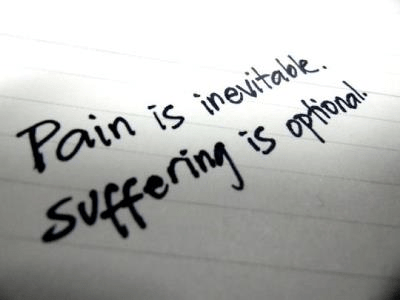
Human existence inevitably involves experiences of both pain and suffering. While the two terms are often used interchangeably in casual language, they carry distinct meanings in psychological, philosophical, and medical discourse. Understanding their differences not only clarifies the nature of human distress but also provides insight into how individuals and societies can respond to these experiences more effectively.
Defining Pain
Pain is most often understood as a sensory and emotional experience associated with actual or potential tissue damage. The International Association for the Study of Pain (IASP) defines it as both a physical signal and an emotional perception (Raja et al., 2020). In this sense, pain functions as an alarm system of the body, signaling when something is wrong or when potential harm is imminent.
Pain manifests in various forms:
- Acute pain, such as a sudden burn, fracture, or injury, is sharp, immediate, and often short-lived once the cause is addressed.
- Chronic pain, on the other hand, persists over weeks, months, or even years, sometimes long after the initial injury has healed. Conditions such as arthritis, fibromyalgia, or nerve damage exemplify this enduring form (Turk & Okifuji, 2002).
Importantly, pain has a protective and adaptive function. It compels an individual to withdraw from harmful stimuli and to take measures that promote healing or survival. Without pain, humans would be at significant risk of unchecked injuries or illnesses.
Defining Suffering
Suffering, while related to pain, is a broader and more complex phenomenon. It encompasses not only physical discomfort but also emotional, psychological, social, and even spiritual distress. Unlike pain, which often has a specific biological cause, suffering can arise from a wide range of experiences: grief, loss of a loved one, existential crises, betrayal, disappointment, or psychological trauma (Cassell, 2004).
Suffering is therefore less about a direct signal from the nervous system and more about the interpretive and evaluative dimension of human experience. It involves meaning-making, identity, and a person’s worldview. For example, two individuals with identical physical injuries may experience different degrees of suffering depending on their emotional resilience, cultural background, or spiritual beliefs.
Pain as a Component of Suffering
Pain can certainly contribute to suffering, but it does not always equate to it. A person experiencing acute physical pain might endure it without deep emotional distress, especially if they perceive it as temporary or purposeful. Athletes, for instance, may push through significant physical pain during training, framing it as progress rather than hardship (Wiech, 2016).
Conversely, suffering can exist without overt physical pain. Psychological conditions such as depression, anxiety, or post-traumatic stress disorder illustrate how individuals may endure profound suffering without a corresponding physical injury (Kleinman, 2017). In these cases, suffering is rooted in thought patterns, emotional struggles, or existential despair.
Thus, pain can be considered a subset of suffering, but suffering extends beyond the purely physical to encompass the whole spectrum of human distress.
Cultural and Existential Dimensions
The distinction between pain and suffering has been explored not only in medicine and psychology but also in philosophy and spirituality. In many traditions, suffering is tied to existential questions about meaning and purpose. For example:
- Buddhist philosophy identifies suffering (dukkha) as a central feature of existence, arising not merely from pain but from attachment, craving, and aversion (Rahula, 1974).
- Western existential thought, such as Viktor Frankl’s logotherapy, emphasizes the role of meaning-making in shaping suffering. Frankl (1992) argued that while pain is unavoidable, suffering can be transformed if one finds meaning in it.
- Medical ethics often distinguishes between the duty to treat pain and the broader challenge of alleviating suffering, particularly in palliative and end-of-life care (Ferrell & Coyle, 2018).
These perspectives underscore that suffering is as much about interpretation and context as it is about physical sensation.
Psychological Responses and Coping
Another way to distinguish pain and suffering is through the human response to each. Pain typically elicits reflexive responses of withdrawal, medication, or medical treatment aimed at reducing the sensation. Suffering, however, often requires more nuanced interventions such as counseling, support networks, mindfulness, or spiritual practices.
Psychologists note that suffering is amplified by cognitive and emotional factors such as fear, helplessness, or catastrophic thinking. For instance, chronic pain patients who interpret their pain as a sign of irreversible decline may suffer more intensely than those who frame it as a challenge that can be managed (Garland et al., 2019). In this way, suffering is not simply a passive condition, but an active process shaped by interpretation, resilience, and meaning-making.
Toward an Integrated Understanding
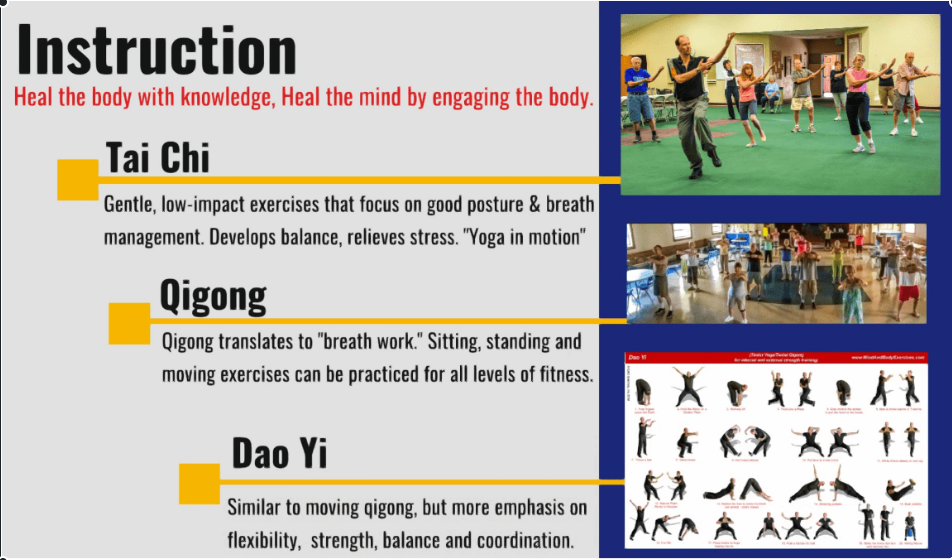
Understanding the difference between pain and suffering allows for more compassionate and comprehensive approaches to human well-being. Medicine can treat pain with analgesics, surgery, or physical therapy, but addressing suffering requires a broader, more holistic perspective. Interventions may include psychological counseling, social support, spiritual care, or practices such as meditation, Tai Chi, or Qigong that engage the body, mind, and spirit.
This distinction also empowers individuals. Recognizing that suffering is not merely the sum of physical pain but also involves interpretation and meaning provides opportunities for growth, resilience, and transformation. While pain is often unavoidable, suffering can sometimes be reframed, reduced, or even transcended.
Conclusion
In sum, pain and suffering are related but not synonymous. Pain is primarily a sensory and emotional signal tied to actual or potential bodily harm, serving a protective biological function. Suffering, by contrast, is a broader human experience that encompasses not only physical pain but also emotional, psychological, social, and existential dimensions. Pain is often a contributor to suffering, but suffering can exist independently of physical pain.
By distinguishing these concepts, individuals and practitioners alike can better understand the complexity of human distress and identify strategies to address both the body’s signals and the mind’s interpretations. In doing so, the possibility emerges not only to relieve immediate discomfort but also to cultivate resilience, wisdom, and compassion in the face of life’s inevitable challenges.
References
Cassell, E. J. (2004). The nature of suffering and the goals of medicine. https://doi.org/10.1093/acprof:oso/9780195156164.001.0001
Ferrell, B. R., & Coyle, N. (2018). Oxford textbook of palliative nursing (5th ed.). Oxford University Press. https://academic.oup.com/book/31742
Frankl, V. E. (1992). Man’s search for meaning [Personal narratives]. In Ilse Lasch (Trans.), Man’s Search for Meaning (Fourth). Beacon Press. https://antilogicalism.com/wp-content/uploads/2017/07/mans-search-for-meaning.pdf
Garland, E. L., Hanley, A. W., Riquino, M. R., Reese, S. E., Baker, A. K., Salas, K., Yack, B. P., Bedford, C. E., Bryan, M. A., Atchley, R., Nakamura, Y., Froeliger, B., & Howard, M. O. (2019). Mindfulness-oriented recovery enhancement reduces opioid misuse risk via analgesic and positive psychological mechanisms: A randomized controlled trial. Journal of Consulting and Clinical Psychology, 87(10), 927–940. https://doi.org/10.1037/ccp0000390
Kleinman, A. (2017). The illness narratives: suffering, healing, and the human condition. Academic Medicine, 92(10), 1406. https://doi.org/10.1097/acm.0000000000001864
Rahula, W. (1974). What the Buddha taught. Grove Press. https://archive.org/details/whatbuddhataught00walp
Raja, S. N., Carr, D. B., Cohen, M., Finnerup, N. B., Flor, H., Gibson, S., Keefe, F. J., Mogil, J. S., Ringkamp, M., Sluka, K. A., Song, X. J., Stevens, B., Sullivan, M. D., Tutelman, P. R., Ushida, T., & Vader, K. (2020). The revised International Association for the Study of Pain definition of pain: Concepts, challenges, and compromises. Pain, 161(9), 1976–1982. https://doi.org/10.1097/j.pain.0000000000001939
Turk, D. C., & Okifuji, A. (2002). Psychological factors in chronic pain: Evolution and revolution. Journal of Consulting and Clinical Psychology, 70(3), 678–690. https://doi.org/10.1037/0022-006x.70.3.678urk, D. C., & Okifuji, A. (2022). Psychological factors in chronic pain: Evolution and revolution. Journal of Pain, 23(4), 387–404. https://doi.org/10.1016/j.jpain.2021.07.007
Wiech, K. (2016). Deconstructing the sensation of pain: The influence of cognitive processes on pain perception. Science, 354(6312), 584–587. https://doi.org/10.1126/science.aaf8934










 United Martial Arts Association