Qigong – Heal the Mind With the Body – Detailed Description

This is another post in my series of explaining qigong practices. Qi, Chi or Gi means air, energy or breath in Chinese and Korean. Gong or Kung means work. Qigong therefore translates to energy or breath work.

The human body is made up of bones, muscles, and organs amongst other components. Veins, arteries and capillaries carry blood and nutrients throughout to all of the systems and components. Additionally, 12 major energy meridians carry the body’s energy. “lifeforce” also known as “qi”. Ones qi is stored in the lower Dan Tien. Daily emotional imbalances accumulate tension and stress gradually affecting all of the body’s systems.Each discomfort, nuisance, irritation or grudge continues to tighten and squeeze the flow of the life force. This is where “dis-ease” claims its foothold.

Qigong breathing exercises can adjust the brainwaves to the Alpha state, where the mind is relaxed and the body chemistry changes and promotes natural healing. Relaxing of the deep skeletal muscles, and working outward as one tries to release tension accumulated within the muscles, organs and nerves. Whereas conventional physical exercise can deplete energy,Qi Gong helps to replenish your natural energy.

Our emotional state directly influences how we breathe. The emotions reveal themselves in the breathing patterns:

  • Anger, fear, anxiety – shallow breaths
  • Grief – spasmodic breathing
  • Guilt – restricted breathing
  • Boredom – shallow, lifeless breathing
  • Sadness/depression – under breathing


Furthermore:

Dwelling in the past – can produce any of the above breathing patterns


Worrying about the future – can produce any of the above breathing patterns


Present in the moment – The goal here is clarity and self awareness to slow and regulate the breath


Becoming present in the moment can happen in various ways such as:
1) Immediate trauma – Fear of injury or loss of life can put one into the moment quickly.


2) Practice of mindful exercises such as meditation, yoga, tai chi, qigong and other similar mind and body interactive practices.


3) Engaging in activities such as singing, painting, performing music, dancing, etc.

Qigong exercise can change brainwaves to the Alpha state:

  • Alpha – relaxed concentration, creative state
  • Beta – attentive, alert
  • Delta – unconscious
  • Theta – drowsy state of mind

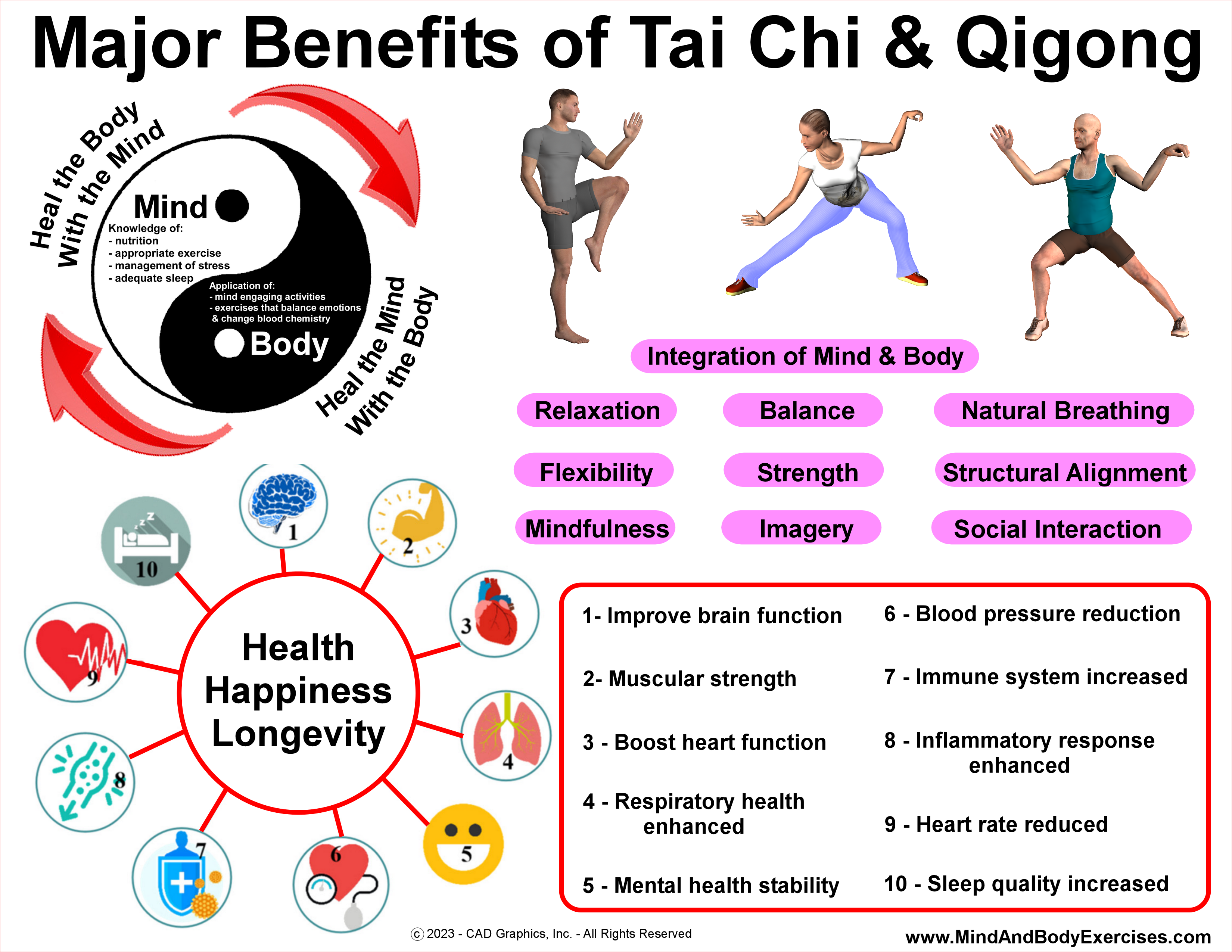
Benefits of Qigong exercises:

  • Boosts the immune system
  • Reduces stress, anxiety, depression, mood swings
  • Lowers blood pressure
  • Increases the body’s natural healing process
  • Lungs increase their capacity
  • Promotes better respiration and circulation
  • Enhanced self-awareness
  • Helps to change the body’s chemistry for the better

Qigong utilizes regulated breathing, which calms emotions, which modulates the autonomic nervous system. This engages the parasympathetic nervous system that manages blood chemistry and relative hormones and neurotransmitters.. Blood chemistry affect organ function either in a positive or negative manner.


Best Times:

  • morning (calm, nature awakening)
  • evenings (calm, tranquil)
  • anytime (even a few minutes)

Best Locations to practice:

  • outside and peaceful
  • inside and uncluttered
  • anywhere possible

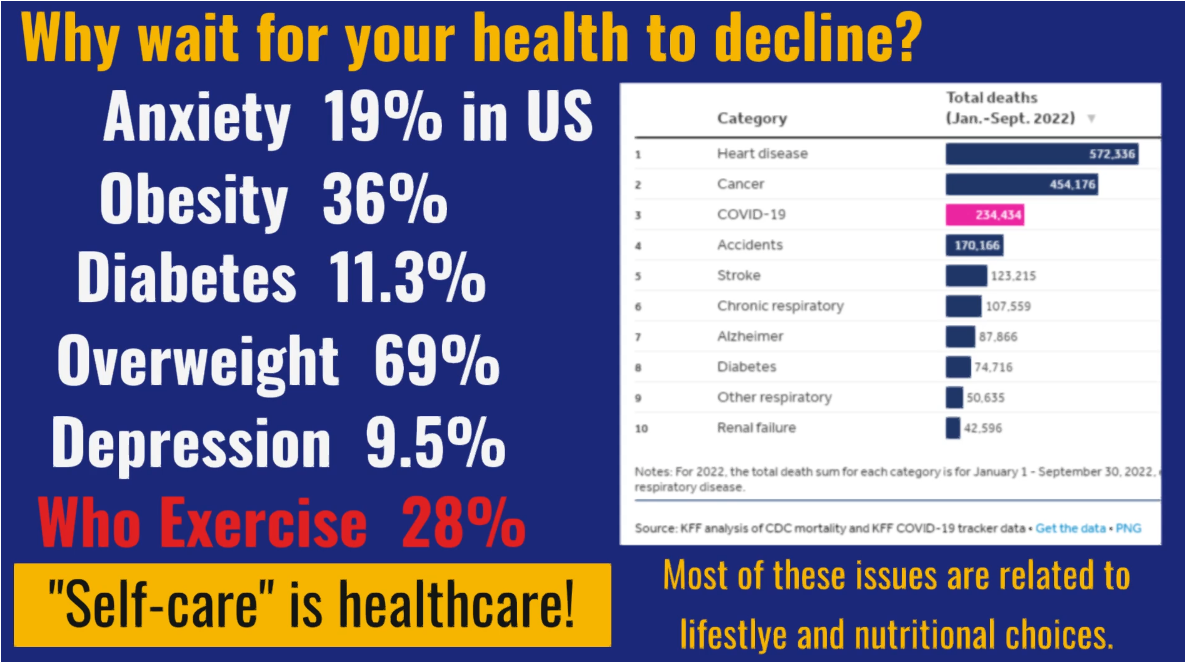
Qigong practice is a solution to the current health care crisis, where we have seen a drastic increase in diabetes, obesity, depression, anxiety, stress, suicide and so many other mental and physically related health issues.

Would it not be wise to at least consider preventing these ailments in the first place rather than using questionable pharmaceuticals and therapies after the fact? Folks, the horse has been out of the barn for many decades now. If government leaders, medical professionals, school boards and parents were to actually promote and encourage physical exercise, good nutrition, meditation and self-responsibility we might have a much different looking nation. Plant good seeds, no?

I write often about topics that affect our health and well-being. Additionally, I teach and offer lecture about qigong, tai chi, baguazhang, and yoga. I also have hundreds of FREE education video classes, lectures and seminars available on my YouTube channel at:

https://www.youtube.com/c/MindandBodyExercises

Mind and Body Exercises on Google: https://posts.gle/aD47Qo

Jim Moltzan

407-234-0119

www.MindAndBodyExercises.com

www.Amazon.com/author/jimmoltzan
Qigong – A Way to Heal the Mind, By Engaging the Body

This is a continuation of my previous post of how we can use the knowledge within our thoughts to help to heal the ill, injured, damaged or traumatized human mind and body. Knowledge such as nutrition, appropriate exercise, management of sleep and healthy social relationships. This article delves in deeper on the practice of Qigong or breath work, in order to help heal our body by using knowledge, and conversely heal the mind by using physical exercises.

No need for a gym membership, a mat, special equipment nor special clothing. Just some time, effort and a willingness to learn something different. Qigong practice is a solution to the current health care crisis, where we have seen a drastic increase in diabetes, obesity, depression, anxiety, stress, suicide and so many other mental and physically related health issues. Would it not be wise to at least consider preventing these ailments in the first place rather than using questionable pharmaceuticals and therapies after the fact? Folks, the horse has been out of the barn for many decades now. If government leaders, medical professionals, school boards and parents were to actually promote and encourage physical exercise, good nutrition, meditation and self-responsibility we might have a much different looking nation. Plant good seeds, no? Of course there will be some that look at Eastern methods of healthcare such as yoga, tai chi, qigong and meditation as that “weird stuff” that they don’t want their kids exposed to. So be it. Then maybe they can “do something” to fix all that ails our once great country.

Qi, pronounced “chee,” means energy. You may see it spelled “Chi” or even “Ki” in Japanese, but they all carry the same meaning. Qi is the energy of the body, of the meridians, of food, of the universe. While it may seem a nebulous topic there are refined theories regarding the different types of Qi within the body, the creation and actions of Qi, and consequently, ways to determine where imbalances may arise. “Gong” or “Kung” means work or diligent effort. So qigong translates to “breath work.”

Qigong or Chi Kung is breathing exercises, with little or no body movement, can be practiced while sitting, standing or moving, Regulation of the breath can adjust the brain waves to the Alpha state. When the mind is relaxed, the body chemistry changes and promotes natural healing. With deliberate regulated breaths, one is able to relax the deep skeletal muscles working outward, while releasing tension accumulated within the muscles, organs and nerves. Whereas conventional physical exercise can deplete energy, Qigong helps to replenish your natural energy.

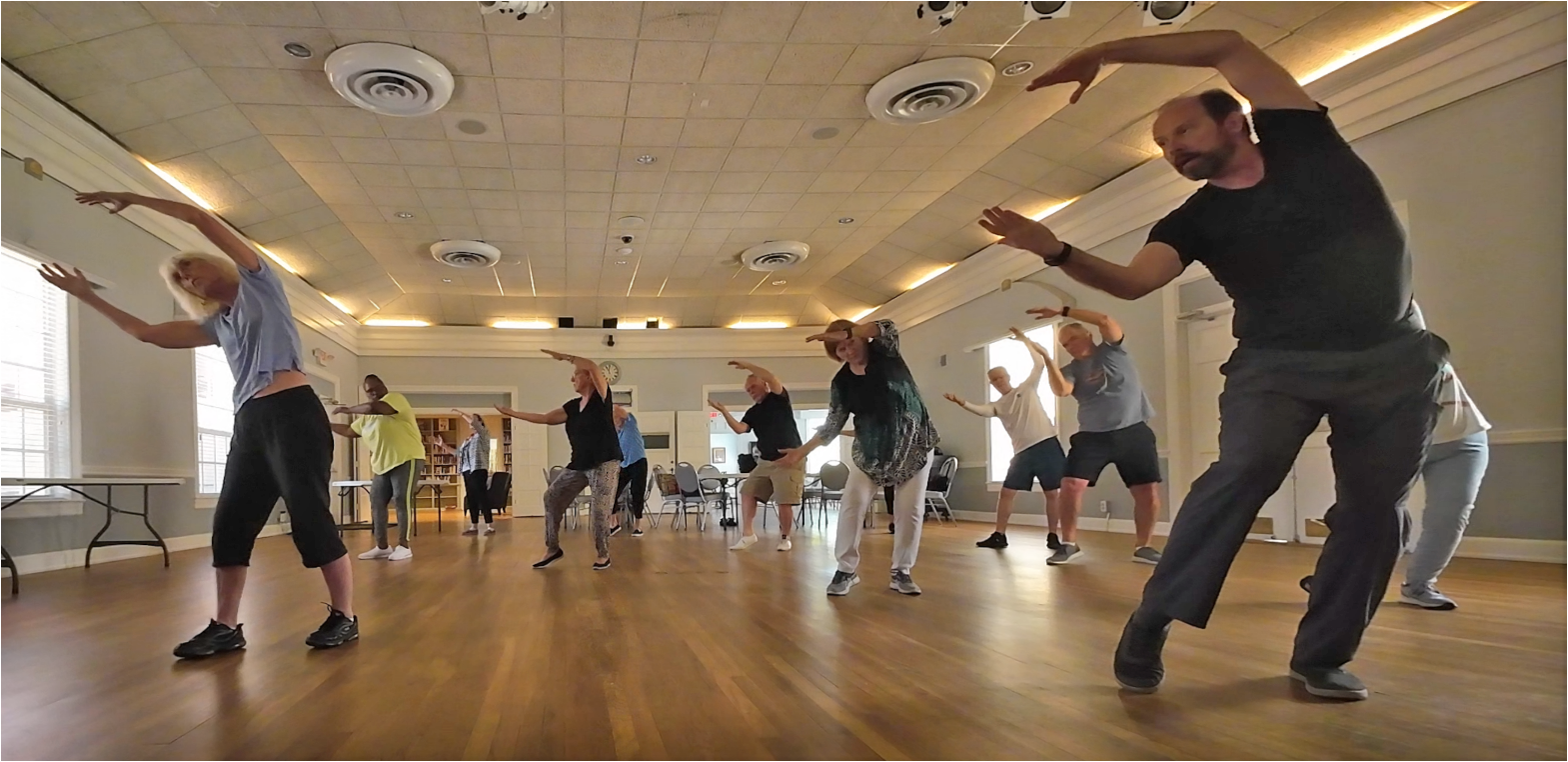
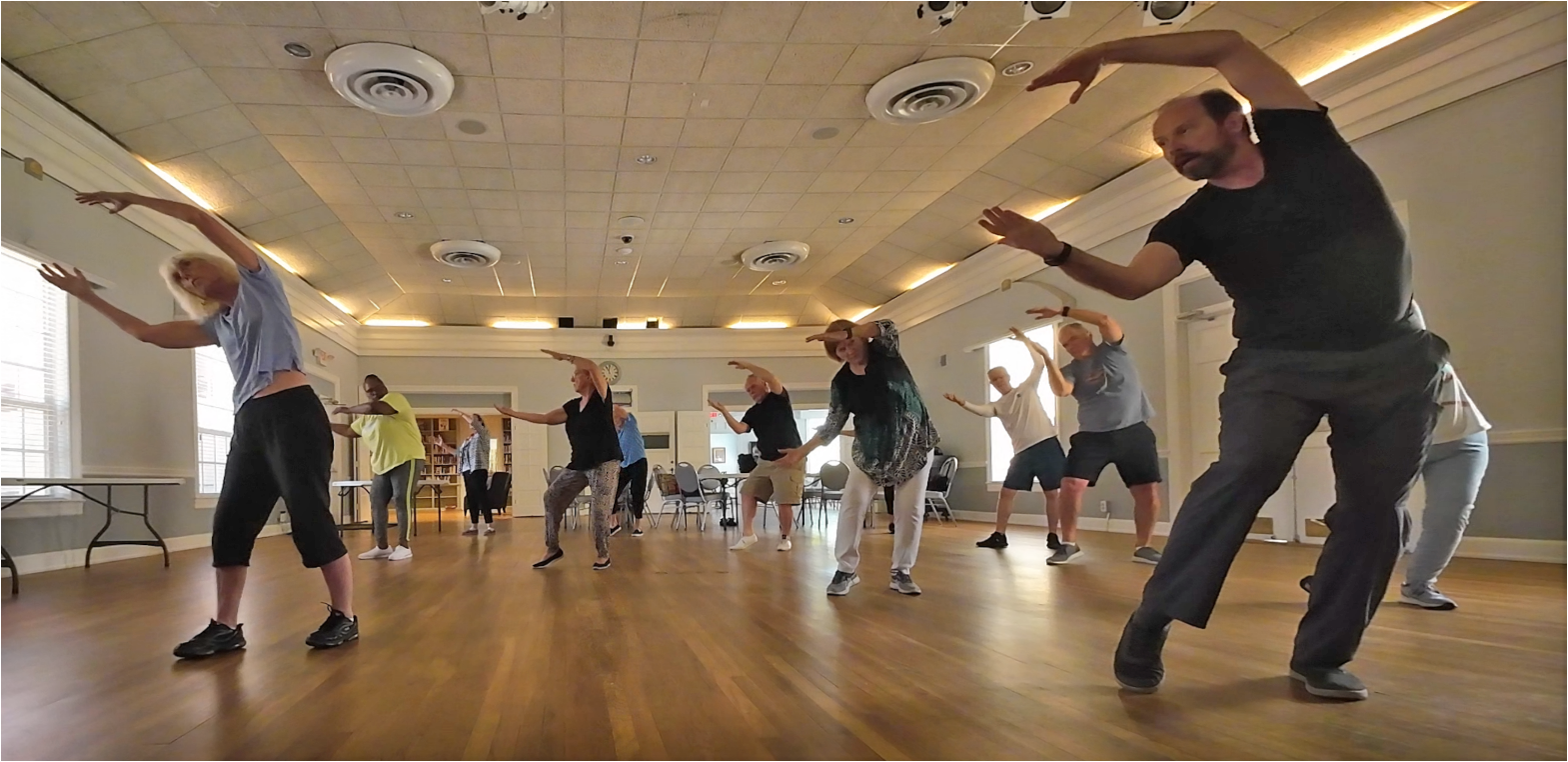
Qigong shares the same branch of origin as yoga. Both systems have sitting, standing and moving exercises with their respective curriculum. Both systems have a strong observance of the breathing mechanism and how it helps to balance out the mind, body and for some, spiritually and/or self-awareness. Qigong does have some exercises practiced like yoga on the ground, but curriculum really depends upon the teacher and intended participants. This curriculum is vast and holds many options and variations to help those that are injured, ill, disable and may have other limitations. The following graphics offer a window into what qigong exercises look like.

Knowledgeable and well experienced teachers of qigong and yoga, will drill down into the details and subtle nuances of these practices. The development is in the details. Trying to learn these methods and the many specifics can be as easy or difficult as the practitioner cares to engage. However, one of the main benefits of these practices is that by occupying one’s thoughts with the physical details, the mind becomes more engaged with the body. This is where the true healing begins when the breathing frequency is deliberately slowed down, the nervous system adjust the delicate blood chemistry which in turn positively affects organ function.

I write often about topics that affect our health and well-being. Additionally, I teach and offer lecture about qigong, tai chi, baguazhang, and yoga. I also have hundreds of FREE education video classes, lectures and seminars available on my YouTube channel at:

https://www.youtube.com/c/MindandBodyExercises

Mind and Body Exercises on Google: https://posts.gle/aD47Qo

Jim Moltzan

407-234-0119

www.MindAndBodyExercises.com

www.Amazon.com/author/jimmoltzan
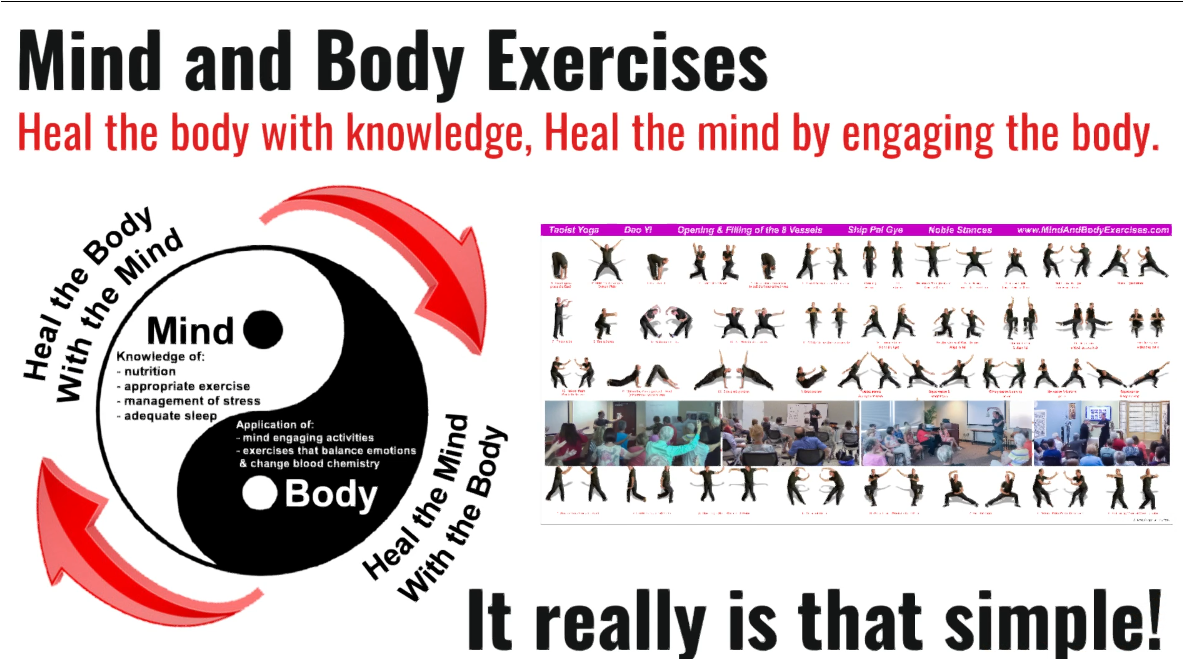
Heal the Mind With the Body, Heal the Body With the Mind

Often the hands will solve a mystery that the intellect has struggled with in vain.

– Carl Jung

Our culture is broken. Out of balance. Many feel traumatized. So many people suffering. So much stress, depression, and anxiety. The solution is not always in pharmaceuticals, therapy, alcohol or recreational drugs. Exercising regularly can help and it is often FREE if you commit to the time and effort.

Physical exercise is one of the single most beneficial mental and physical activities that we can do for ourselves on a regular basis. When we exercise, our brain produces many chemicals (hormones and neurotransmitters) that manage stress and counteract the sympathetic nervous response. If you are not currently exercising regularly, try to start by simply taking a walk around your block and build up from there. 5 minutes here and there throughout your day adds up cumulatively. One does not need to exercise for hours a day to gain the benefits. Walk, run , swim, stretch, weight train, or my preferences of qigong, tai chi and yoga. This is the “do something,” that will actually affect you and consequently those in your life.

And we as a nation have been consistently reducing the importance of physical exercise to our youth, as many schools nationwide have greatly reduced and even eliminated physical education within schools on all levels. Perhaps this is why teenage depression, anxiety, ADHD, OCD and other ailments have been contributing to the spike in youth suicides over the last few decades. Broken children grow into broken adults. Plant good seeds and harvest a good yield. Plant with rotten seeds and the crop produced will be rotten. This is ancient knowledge that seems to have been forgotten in current times.

Yin & Yang are relative terms, in relation to content and context. In the concept of Yin & Yang, nothing is
permanent nor absolute. Opposites are complementary. Many philosophers and scholars view Yin & Yang as the
motive force for the start, change and end of life. Traditional Chinese Medicine (TCM) is based upon the belief that
the existence of the universe is due to the result of the interactions between Yin & Yang.

Everyday Uses of Yin & Yang Theory:

  • Traditional Chinese Medicine (TCM)
  • Philosophy (Taoism & Confucianism)
  • Science (Chinese)
  • Meditation
  • Feng Shui
  • Spirituality
  • As a Trending Fad
  • Martial Arts
  • Qigong and Energy Movement

Mind and body – most agree that our mind and body are important and there exists a balance and harmony between the two. Just because someone can repeat the words of “mind and body” does not necessarily mean they have an understanding of this relationship. How do we achieve this beyond just the mere words of “mind” and “body?’ We need to actually use our mind to manage and regulate not only our physical bodies but our thoughts and relative emotions. We need to truly engage our physical body in movement, physical activities and exercises in order to engage our cognitive brain functions. This is how we can link the mind and body together to achieve higher levels of both self-awareness, mental and physical health as well. Self-cultivation is not free in any sense of this understanding. This takes time, effort and often sacrifice of other things we deem as important.

It is usually much easier to train our body, than it is to train our minds. By becoming aware of our body positions, alignments and movements, we train our minds by using our bodies. When we position our toes, our knees, the hips, the spine, the shoulders, and especially our breathing rhythm, we are disciplining our body into correct alignments that manifest into muscle and bone strength, increased blood and energy circulation and most specifically the change in the hormones within the blood chemistry that not only regulates organ function, but balances out emotional ups and downs.

We can use the knowledge within our thoughts to help to heal our damaged body. Knowledge such as nutrition, appropriate exercise, management of sleep and healthy social relationships. So why is is such as stretch to consider that our body holds the keys to managing mental ailments linked to emotions of anxiety, depression, anger, grief and others?

I write often about topics that affect our health and well-being. Additionally, I teach and offer lecture about qigong, tai chi, baguazhang, and yoga. I also have hundreds of FREE education video classes, lectures and seminars available on my YouTube channel at:

https://www.youtube.com/c/MindandBodyExercises

Mind and Body Exercises on Google: https://posts.gle/aD47Qo

Jim Moltzan

407-234-0119

www.MindAndBodyExercises.com

www.Amazon.com/author/jimmoltzan
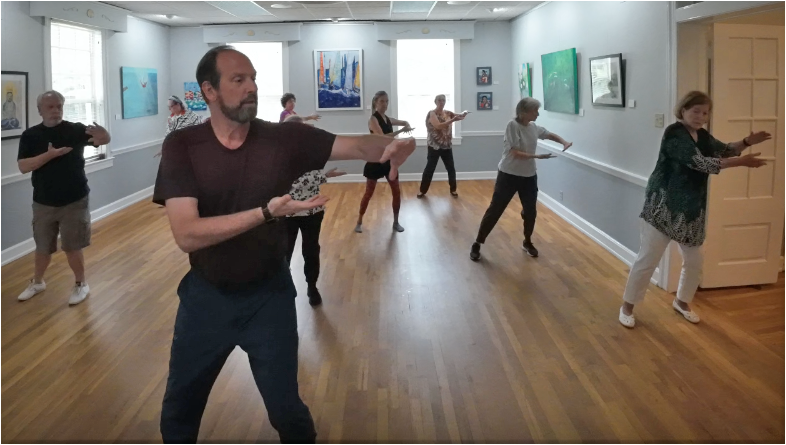
Learn How Stress Affects Our Bodies, to Better Manage Our Well-being

How do you deal with stress?

  • take a few deep breaths
  • drink a few alcoholic beverages
  • take pharmaceuticals
  • consume some form of Marijuana, hallucinogen, or psychedelic
  • physical exercise
  • listen to soothing music
  • do nothing

In order to better manage stress, wouldn’t it help to better understand what stress is, and how it affects our bodies physiologically? Do we truly manage our stressors or just go with the “band-aid” approach of treating symptoms rather than addressing root causes?

Life and the experiences that it offers, is constantly changing and evolving for all that exist. Our senses are continuously receiving and interpreting stimulus to determine what is good or bad for our survival. Consequently, this input often manifests into what we call stress. We deal with stress through our thoughts and emotions. Our emotions directly affect how our brain processes information that affects all of our physiological mechanism and organ functions through the autonomic nervous and endocrine systems. Basically, thoughts and emotions affect our health and well-being whether with positive or negative outcomes.

The HPA-Axis is the physiological mechanism for how the mind and body respond to stress.

1 – Receptors sense stress stimuli and send chemical signals to the hypothalamus, which releases corticotropic (CRH) to the pituitary gland. The pituitary gland then releases adrenocorticotropic (ACTH) to the adrenal glands.

2 – The adrenal glands respond with the secretion of cortisol, adrenaline, and noradrenaline to be released into the bloodstream.

3 – Immediate physiological changes are induced, including acceleration of heart and lung activity, elevated blood pressure, inhibition of digestive activity, tunnel vision, and sweating. Cortisol levels are then reported back to the hypothalamus completing a negative feedback loop to repeat the whole process as necessary.

Why is this important to understand? Because when cortisol levels are too high for prolonged periods of time, other physiological mechanisms become impaired. When levels are balanced cortisol plays in important role in regulating blood chemistry:

  • Increases gluconeogenesis
  • Mobilizes fatty acids from adipose
  • Breaks down stored proteins
  • Enhances SNS response
  • Puts brakes on inf‌lammation/immune response

Negative effects would include:

  • Increased insulin resistance
  • Altered perception & emotion in the central nervous system
  • Suppressed GH release
  • Suppressed TSH and inhibits peripheral activation of T4 into T3
  • Inhibited bone remodeling
  • Suppressed reproductive function

We do have the ability to consciously control and manage our stress whether through lifestyle choices, diet & nutrition, physical activity and attitude. A key component of managing stress is managing the parasympathetic (rest & digest) and sympathetic (fight or flight) nervous system through consistent regulation of our breathing frequency and relative volume of each breath. This is a topic addressed in many of my other posts. Yoga, tai chi, qigong, meditation, martial arts and other methods have been proven to help to proactively manage stress and relative cortisol levels.

________________

I write often about topics that affect our health and well-being. Additionally, I teach and offer lecture about qigong, tai chi, baguazhang, and yoga.

For more info, contact Jim Moltzan at info@mindandbodyexercises.com, 407-234-0119 or through my site at http://www.mindandbodyexercises.com

www.Amazon.com/author/jimmoltzan
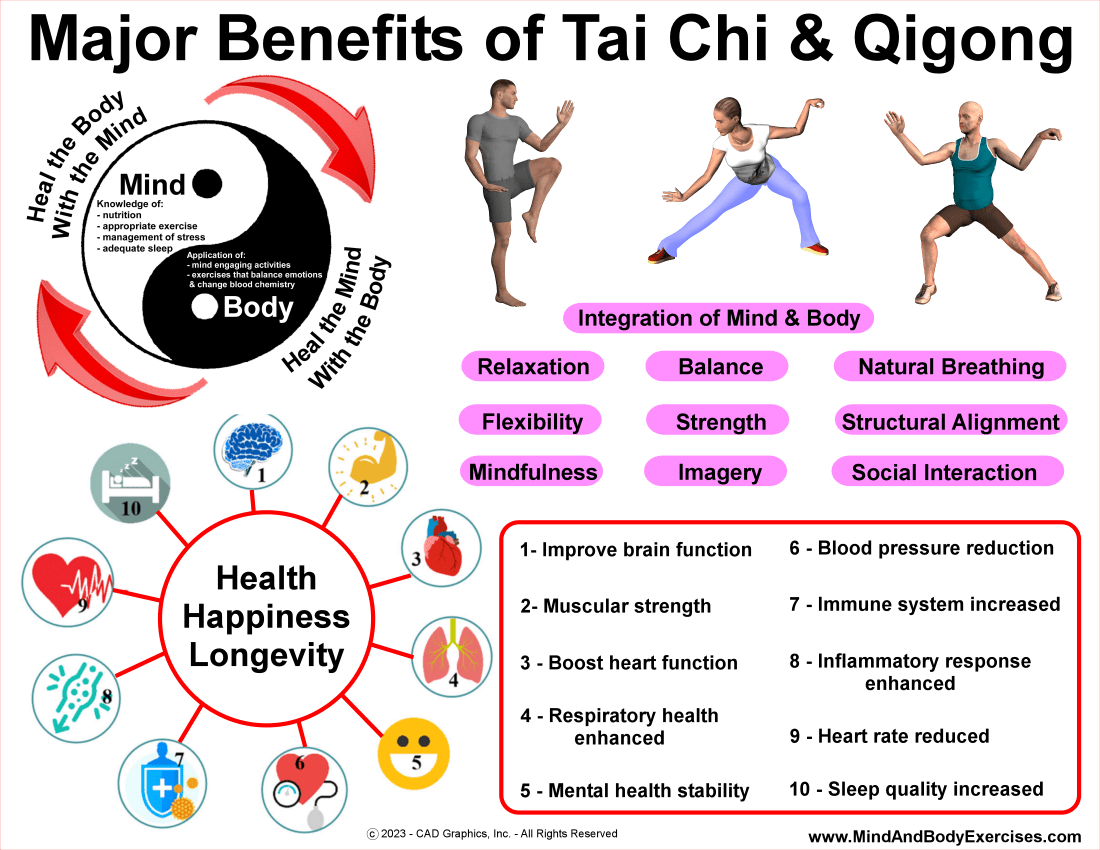
What is Qi?

Qi is pronounced as “chee” and means “breath” in Chinese. Other definitions are vitality, energy, force, air, vapor. Qi is the life energy that all living creatures require in order to exist. Different cultures call this energy Chi (English), Ki (from Japanese), Gi (Korean) or Prana (Indian).

Qi is a type of energy in the human body and circulates within the blood, cells, and tissues throughout. “When qi moves, blood follows” is a root concept with Traditional Chinese Medicine (TCM). Qi flows in a specific pattern, at specific times from one organ to the next through meridians within the body. These meridians or channels might best be described as something similar to the electrical lines on a printed circuit board. There are 12 main meridians, with 2 for each organ (situated bilaterally from head to toe) for 12 organs. Zang Fu Zhi qi, is that which circulates through the organs. Jing Luo Zhi qi is that which circulates through the meridians.

Qi has mass the same way smoke or vapor has mass; both are transitional states of form. Qi (energy) is regarded as one of the 3 Treasures (San Jiao) or essential components of life, with essence (Jing) and spirit (Shen) being the other two. When energy, essence and spirit are in harmony with one another, the person finds themselves alert, healthy, and vibrant. Or the opposite if their treasures are in imbalance. If this harmonious flow is disrupted, illness occurs.

• Physically (jing): energetically manifesting as the body’s cells and tissues into form, bone marrow, blood and bodily fluids.

• Energetically (qi): as resonant vibration, heat, sound, light and electromagnetic fields.

• Spiritually (shen): energetically manifesting through subtle vibrations which extend through space or Wu Ji.

The following graphic shows how qi can be conceptualized into the Chinese ideogram of rice cooking atop a heat source and producing the wisps of vapor (energy) that we see rising above the cooking rice.

The amount of qi in one’s body and the quality of it determines whether an individual is generally healthy or prone to illness. There is a finite amount in our bodies and is gradually exhausted due to age and possible abuses. When it decreases so does the lifespan of the individual.

A proper balance of nutrition, exercise and a healthy lifestyle directly affect the quality and abundance of qi. Emotions and their balance or lack thereof, affects the quality of an individual’s qi. The emotions of joy, anger, sadness, grief and fear affect our qi within specific organs.

I write often about topics that affect our health and well-being. Additionally, I teach and offer lecture about qigong, tai chi, baguazhang, and yoga. I also have hundreds of FREE education video classes, lectures and seminars available on my YouTube channel at:

https://www.youtube.com/c/MindandBodyExercises

Mind and Body Exercises on Google: https://posts.gle/aD47Qo

Jim Moltzan

407-234-0119

www.MindAndBodyExercises.com

www.Amazon.com/author/jimmoltzan