If You Want to Know What is Inside Something, You Squeeze it

Tempering the Self – Cultivation through Pressure, Refinement and Purpose

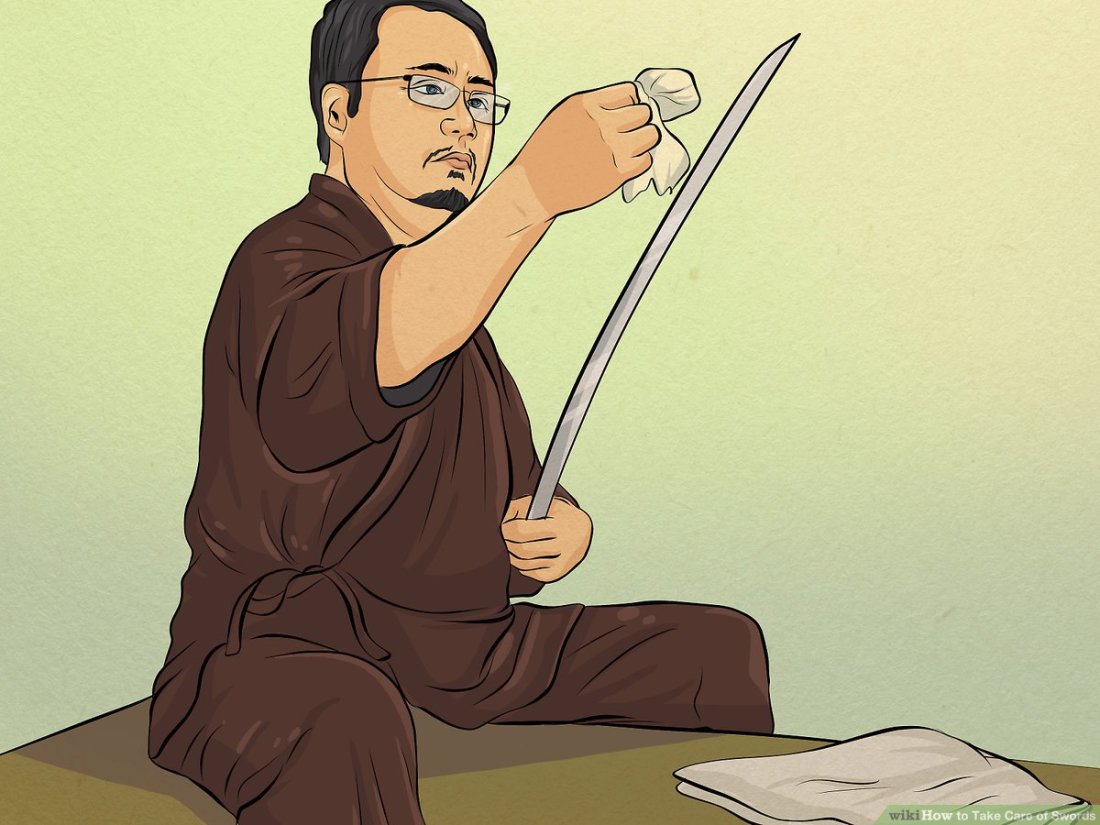
In the tradition of martial arts and Taoist self-cultivation, the process of becoming a person of refined character, resilience and integrity is often portrayed metaphorically as a transformation under pressure or through rigorous refinement. Just as coal under intense pressure becomes a diamond, as glass is tempered to strengthen it, or as a sword is heated, hammered and folded until it offers purity, sharpness and endurance, so too does the aspirant put themselves through trials, reflection, disciplined training, and “taking apart” of habitual patterns in order to emerge stronger, clearer, and more whole. This essay explores that metaphorical terrain, linking historic Taoist concepts of cultivation with martial-art training and moral growth.

At the heart of the metaphor is the notion of pressure and refinement. A lump of coal, subjected to geological force over time, becomes a diamond: the original material has been compressed, purified, and transformed into something far harder and more brilliant. In a similar way, a glass object is heated and rapidly cooled (tempered) so that its structure changes, the internal stresses are intentionally introduced, then stabilized and thus the glass becomes more resistant to shattering. A sword likewise must be heated, hammered, folded, quenched, and polished; the metal structure is reorganized so that it can hold an edge, bend without breaking, and serve a purpose. Transposed to human character and training, these metaphors suggest that to become something more than we currently are, we must face pressure (external challenges, internal struggle), go through the restructuring of habit, belief, body and mind, and emerge in a usable state: strong, resilient, sharp of focus, yet tempered by insight.

In essence, this process represents a kind of transmutation, orthe transformation of one’s coarse, unrefined nature into a state of inner clarity and integrity. Just as physical elements change state under heat or pressure, the human psyche and spirit can evolve through disciplined practice and self-reflection. In Taoist internal alchemy, such transmutation marks the transition from density to subtlety, from the crude to the luminous.

In the realm of martial arts, and particularly those influenced by Taoist philosophy, this is not merely a nice poetic image, but an embedded structure of training. The discipline, repetition, discomfort, unlearning of ingrained patterns, and gradual internalization of principles all function like the hammer and heat of the swordsmith. As one trains, one is literally breaking down old neural/structural patterns of body and mind, refining them, and integrating them into something more coherent, more “whole” and more aligned with one’s higher potential.

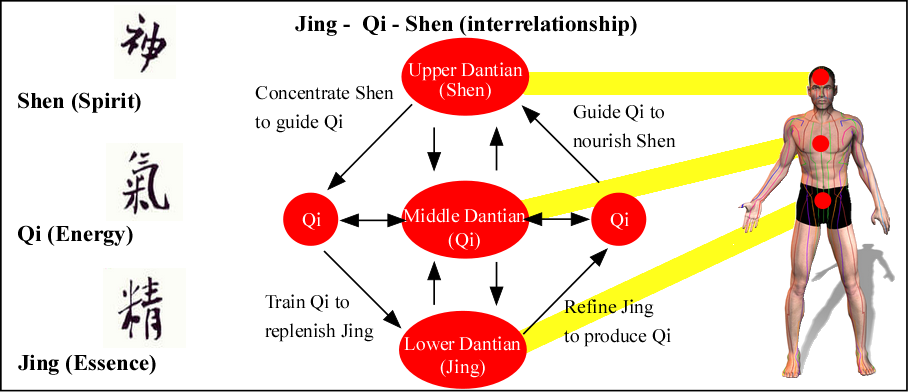
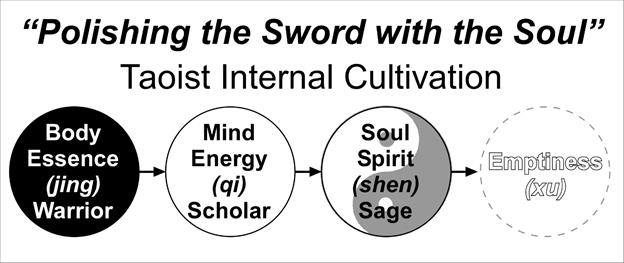
From the viewpoint of Taoist self-cultivation, this process aligns with the paradigm of internal alchemy (neidan). Internal alchemy is described as a “transformation process that involves changing both body and mind to higher levels of functioning” (Fung Loy Kok Institute of Taoism, 2025). According to Taoist doctrine, one works with the “Three Treasures” (jingqishen: essence, energy, spirit) and seeks gradual refinement of self (Wikipedia contributors, 2025). The aim is to dissolve coarse patterns (the raw coal), to apply “heat” and “pressure” in the sense of rigorous practice, moral confrontation, endurance, discipline, and then to emerge as something sharper, lighter, more refined, aligned with the Tao (道). This dynamic mirrors the alchemical notion of transmutation, in which base material (lead or raw essence) is refined into gold or spiritual purity. Taoist cultivation translates this symbolism into physiological and psychological terms: jing (essence) transmuted into qi (vital energy), and qi into shen (spirit), forming a continuum of self-refinement that bridges body, mind, and consciousness (Needham, 1983; Pregadio, 2019).

I prefer the metaphor of “if you want to know what is inside something, you squeeze it; if you want to know what something is made of, you take it apart and hopefully put it back together, maybe even better than the original.” In the training context, “squeeze” refers to tests and trials: one’s character is squeezed by adversity, by training drills, by mental stress. That brings to awareness hidden weaknesses of unseen fractures, untempered spots. “Taking apart” refers to the deconstruction of habit, belief, movement, reaction: in the martial arts one often unlearns bad posture, reflexes, tension, and rebuilds structure. Then one reassembles with new alignment, better structure, refined intent. The final state is not merely restored but upgraded, like a sword folded multiple times becomes stronger than the original billet; glass tempered is stronger than annealed glass; coal stressed in pressure becomes diamond.

In ethical or moral self-cultivation this means that facing one’s character under pressure reveals hidden fissures: impulsiveness, reactivity, unresolved fear, habit. Good training (physical, mental, moral) allows one to “see” those fissures, to let them be “heated” (examined, confronted) and “hammered” (repeated disciplined practice, correction) until the structure of self becomes more resilient, more integrated, more responsive rather than reactive. The Taoist culture encourages a kind of return to one’s original nature of goodness (德, de) and compassion, which has been obscured by life’s conditioning (Fung Loy Kok Institute of Taoism, 2025). The “sword” or “diamond” of self-character thus is not about hardness for its own sake, but a resilient clarity, readiness, humility, and refined responsiveness.

Moreover, the metaphor highlights the paradox: we often think that pressure or challenge is purely negative; yet in transformation systems, from geology to metallurgy to glass tempering, pressure and heat are required for refinement. In martial practice, avoidance of stress means never getting the internal re-working that occurs under challenge. In Taoist cultivation, the path is not easy but transformation. Indeed, the Taoist ideal of wú wéi or “effortless action” is often misunderstood; it is not doing nothing, but acting naturally from a well-tempered, integrated being (Wikipedia contributors, 2025). After the hammering, the sword is sharp without forced strength; the tempered glass resists shatter without brittle rigidity; the diamond shines because prior pressure created its internal perfection.

In integrating this into holistic and/or martial arts philosophy (Tai Chi, Bagua, Qigong, etc.), the training forms, the repetitive drills, the internal alignments, the meditations, the stance work, all of these provide the “pressure chamber” in which subtle weaknesses (postural misalignment, mental chatter, emotional reactivity) are exposed. We can “take apart” our default responses by slow mindful repetition, by breaking and rebuilding the body-mind link. Over time we can reassemble into someone who moves from center, aligned in structure, calm in mind, responsive in body, as the sword forged, the diamond formed. That formation is not only for combat or technique but for human character: greater clarity, sharper discernment, stronger resilience, deeper compassion.

Finally, the metaphors of glass and sword and diamond remind us that refinement is not about making something brittle or inflexible. A diamond is hard but also rare and valued; tempered glass remains flexible in the sense of resisting sudden break; a well-forged sword has strength but also resilience, edge but also integrity. The cultivated person is not rigid or inflexible, but resilient and discerning; not hardened by bitterness but refined by purpose. True cultivation (in Taoist terms) is returning to one’s original nature of goodness, clarity and unity with the Tao (Fung Loy Kok Institute of Taoism, 2025). Thus the journey of applying pressure, refining, deconstructing and reconstructing becomes a path to higher humanness.

Expanded Insight – Summary Table

MetaphorProcess in Training / CultivationOutcome in Character/Martial Path
Coal → DiamondUnder pressure, inner structure transformsResilience, clarity, inner strength
Glass temperedHeated and rapidly cooled, internal stresses made stableFlexibility + strength, capacity to absorb without shattering
Sword forgedHeated, hammered, folded, quenched and polishedPrecision, readiness, alignment, refined power
Squeeze/Take apart & rebuildTrials reveal hidden flaws; deconstruct habit; rebuild structureSelf-knowledge, refined movement/mind, upgraded character

  • The “squeeze” corresponds to facing real challenge, such as training under fatigue, mental adversity, resisting egoic impulses.
  • “Taking apart” corresponds to unlearning: posture, reflexes, mental habits, emotional reactivity.
  • “Putting back together” corresponds to rebuilding through alignment, mindful movement, meditative awareness, ethical discipline.
  • The end state is not perfection in the sense of rigidity, but refined flexibility, integrated power, clear purpose.


In summary, the metaphors of coal under pressure producing diamond, glass tempered, sword forged, and the squeeze/deconstruction/reconstruction process, are profoundly apt for describing a martial-art and Taoist vision of self-cultivation. They reflect an understanding that becoming a person of refined humanness involves more than mere physical technique: it demands pressure (challenge), refinement (attention, repetition, unlearning), rebuilding (integration of mind/body/spirit), and emergence into a state of character and ability that is both strong and flexible, sharp and compassionate.

In this sense, all of these metaphors of coal, glass, sword, and the squeeze, describe not only refinement but transmutation: the intentional evolution of the inner substance of the self through sustained practice, ethical tempering, and conscious transformation. In the Taoist tradition of internal alchemy, we see this very schema: transforming the body-mind through disciplined practice until one returns to original nature or emerges into a new, refined state (Fung Loy Kok Institute of Taoism, 2025; Komjathy & The Yuen Yuen Institute, 2008). These metaphors explicitly embody the concept of the Warrior, Scholar & Sage, as principles that connect physical technique with inner alchemical transformation, so that practitioners understand that the pressure in training is not incidental, but rather it is intrinsic to the forging and cultivation of their character.

References:

Fung Loy Kok Institute of Taoism. (2025). Taoism: Cultivating Body, Mind and Spirit. https://www.taoist.org/taoism-cultivating-body-mind-spirit/ (Fung Loy Kok Institute of Taoism)

Kohn, L. (2009). Internal Alchemy: Self, Society, and the Quest for Immortality. Three Pines Press.

Komjathy, L. & The Yuen Yuen Institute. (2008). Handbooks for Daoist practice [Book]. The Yuen Yuen Institute. https://ia803408.us.archive.org/3/items/daoist-scriptures-collection-english-translations/Handbooks%20for%20Daoist%20Practice%20-%20%281%29%20Introduction%20-%20Louis%20Komjathy.pdf

Needham, J. (1983). Science and Civilisation in China: Vol. 5. Chemistry and Chemical Technology, Part V: Spagyrical Discovery and Invention: Physiological Alchemy. Cambridge University Press.

Wikipedia contributors. (2025, September 30). Neidan. Wikipedia. https://en.wikipedia.org/wiki/Neidan?utm_source=chatgpt.com

Wikipedia contributors. (2025, October 11). Wu wei. Wikipedia. https://en.wikipedia.org/wiki/Wu_wei?utm_source=chatgpt.com

All In or All Out

The Power of Full Commitment and Deliberate Presence

Human potential is rarely limited by talent or intelligence; more often, it is diminished by half-hearted effort and a lack of deliberate engagement with the present moment. In every aspect of life, from work and relationships to self-cultivation and spiritual growth, the quality of our actions is determined by the depth of our commitment. Choosing to invest ourselves wholly in what we do, rather than adopting a “renter’s attitude” or performing tasks “half-heartedly,” is one of the most profound determinants of meaning, achievement, and personal integrity. To live fully is to act with intention, awareness, and total presence, to put 100% of oneself into a chosen path or consciously refrain from it altogether.

Half-Effort and the Illusion of Action

Modern society often rewards activity over substance. People multitask, chase productivity, and take pride in “being busy,” yet much of that activity is shallow and unfocused. This is what might be called the “half-effort mentality” where one does just enough to get by, but not enough to grow. Like a renter who avoids investing in a property because they do not truly own it, individuals with a renter’s mindset approach life without deep commitment, leaving their full potential unrealized. This approach is not harmless; it is corrosive. It breeds mediocrity, erodes self-respect, and dulls one’s inner drive for excellence.

The philosopher Aristotle wrote that virtue is a habit cultivated through intentional action (Aristotle, trans. 2014). Excellence, therefore, is not an act but a consistent practice. Every time we choose to give less than our best, we reinforce a pattern of mediocrity. Conversely, when we decide to give our full energy and focus to a task, we cultivate habits of discipline, character, and integrity. In psychological terms, this mirrors the concept of “flow,” a state described by Mihály Csíkszentmihályi (1990) as one in which total immersion in a meaningful activity leads to heightened creativity, satisfaction, and performance. Flow cannot occur in a state of partial attention. It demands complete commitment.

Consequences: The Natural Law of Choice

Human life is structured by choices, and choices inevitably lead to consequences. When we give only partial effort, the consequences reflect that choice: diminished outcomes, missed opportunities, and an ongoing sense of unfulfilled potential. Psychologist Albert Bandura (1997) emphasized the role of self-efficacy, the belief in one’s capacity to act effectively, as a cornerstone of human motivation. Self-efficacy is built through repeated acts of intentional effort. When effort is inconsistent, self-efficacy weakens, and we begin to doubt our own capabilities.

This principle aligns with Eastern philosophical traditions as well. In the Taoist classic Tao Te Ching, Laozi advises, “Do your work, then step back. The only path to serenity” (Laozi, trans. 2009). This teaching implies that one must give themselves wholly to the work, not clinging to the outcome, but ensure the process itself is authentic and complete. The Buddhist concept of right effort (samyak vyayama) similarly teaches that effort is a moral and spiritual imperative: it is through disciplined, wholehearted engagement that we align our actions with our deeper purpose (Rahula, 1974).

Attention, Awareness, and Intent: The Mind as a Tool

Commitment is not merely physical effort. It is also mental presence. To put one’s “mind into” a task is to bring attention, awareness, and intention fully to the present moment. In a culture saturated with distraction, this skill is increasingly rare. Yet neuroscience confirms that focused attention changes the brain: it strengthens neural pathways, enhances memory, and improves cognitive control (Cásedas, 2021). In other words, presence is a form of power.

Deliberate awareness also deepens the meaning of our actions. When we are fully present, whether cooking a meal, engaging in conversation, or practicing a martial art, we transform the mundane into the sacred. Zen teachings often emphasize the phrase ichigyo zammai, meaning “concentration on one action.” This state of single-mindedness turns each moment into a vehicle for awakening and self-transformation. Similarly, Confucius taught that the cultivation of yi (righteous intention) requires conscious attention to one’s conduct in even the smallest acts (Confucius, trans. 1997). The lesson is timeless: how we do anything is how we do everything.

Integrity and the Binary of Commitment

There is a profound simplicity in adopting a binary approach to action: either commit fully or do not commit at all. This approach eliminates the murky middle ground where excuses thrive. It demands clarity of intention before taking action, which in turn strengthens integrity, the alignment of one’s words, values, and behaviors. When we act with half-effort, we often rationalize our lack of results. When we commit fully, we accept responsibility for the outcome, whatever it may be.

Moreover, wholehearted action builds trust, both in ourselves and in others. People who consistently give their best become reliable, respected, and influential. They embody authenticity, a quality philosopher Charles Taylor (1991) argues is essential for a meaningful life in the modern world. Authentic living arises when one’s external actions faithfully express internal values and such alignment is only possible through deliberate, full-hearted engagement.

A Call to Presence and Purpose

To live “all in” is not about perfection. It is about intention. It is the daily practice of showing up fully in body, mind, and spirit, in every endeavor. It is refusing the temptation of mediocrity and the comfort of minimal effort. It is about inhabiting each moment with awareness, committing wholeheartedly to chosen paths, and accepting the consequences of those choices with humility and courage.

Life will always present us with opportunities to do things halfway. The harder, but infinitely more rewarding, path is to give ourselves completely to the work before us. To act as owners, not renters, of our time and energy. When we do, we not only elevate the quality of our actions but also the quality of our character. In the end, it is not the number of tasks we complete that defines our lives, but the depth of presence and commitment we bring to them.

References:

Aristotle. (2014). Aristotle: Nicomachean Ethics. (R. Crisp, Ed.) (2nd ed.). Cambridge: Cambridge University Press.

Bandura, A. (1997). Self-efficacy: The exercise of control. W.H. Freeman. https://archive.org/details/selfefficacyexer0000band/page/n5/mode/2up

Confucius. (1997). The analects (D. C. Lau, Trans.). Penguin Classics. https://archive.org/details/theanalectsconfucius

Csikszentmihalyi, M. (1990). Flow: the psychology of optimal experience. ResearchGate. https://www.researchgate.net/publication/224927532_Flow_The_Psychology_of_Optimal_Experience

Cásedas, L. (2021). Daniel Goleman and Richard J. Davidson: Altered Traits: Science Reveals How Meditation Changes Your Mind, Brain, and Body. Avery, New York, NY, 2017, 336 pp. Mindfulness, 12(9), 2355–2356. https://doi.org/10.1007/s12671-021-01650-4

Laozi. (2009). Tao Te Ching (J. Minford, Trans.). Penguin Books.

Rahula, W. (1974). What the Buddha taught. Grove Press. https://archive.org/details/whatbuddhataught00walp

Taylor, C. (1991). The ethics of authenticity. Harvard University Press.

Dissolving of the Ego

An Integrative Psychological, Spiritual, and Neuroscientific Perspective

This article examines the concept of ego dissolution from psychological, spiritual, and neuroscientific perspectives. It discusses Carl Jung’s theory of individuation and the ego-Self axis, Eastern spiritual traditions’ critique of ego as separateness, and recent empirical studies that illuminate what happens in the brain and consciousness when the ego dissolves. I argue that ego dissolution is not destruction of self but transformation of self-construal, leading to greater integration, well-being, and freedom from suffering.

The ego is often construed as the individual’s sense of “I,” the center of identity that distinguishes self from others and external reality. While necessary for functioning, ego overidentification can lead to distress, separation, and suffering. The idea of ego dissolution, with its roots in spiritual traditions, refers to loosening this overidentification so that a person experiences a broader, more integrated, or nondual self-awareness. This essay draws on analytic psychology, Buddhist and Vedantic conceptualizations of self and no-self, and recent empirical work in neuroscience and psychology to explicate ego dissolution: what it is, how it is cultivated, and what effects it produces.

Jungian Psychology and Ego Dissolution

Carl Gustav Jung (1968/2014) distinguished between the ego, the conscious identity and the Self, which encompasses both conscious and unconscious aspects of the psyche. For Jung, psychological growth involves individuation, a process of integrating unconscious material (shadow, anima/animus, archetypes) into consciousness, thereby reducing rigid ego boundaries. Ego dissolution, in this framework, does not mean erasing identity but transforming it, allowing the ego to serve rather than dominate the psyche (Jung, 1968/2014).

Eastern Traditions: Ego, No-Self, and Liberation

Eastern spiritual traditions have long emphasized the illusory nature of the ego. In Buddhism, the doctrine of anatta (no-self) asserts that what is typically called the “self” is actually a collection of impermanent processes in the body, perception, sensation, volition, and consciousness, without enduring essence (Rahula, 1974). Similarly, Advaita Vedānta critiques ahamkara (ego-construct) as a distortion that veils realization of the true Self, or Atman, which is identical with Brahman (Deutsch, 1969). Practices such as meditation, chanting, and selfless service are designed to loosen egoic identification and reveal unity with all life.

Meditation and Neural Correlates of Ego Reduction

Neuroimaging studies show that meditation can attenuate activity in the default mode network (DMN), a brain system linked to self-referential processing (Brewer et al., 2011). Trautwein et al. (2024) demonstrated that suspension of self-experience in meditation is associated with reductions in beta-band power in the posterior medial cortex, indicating diminished self-related cognition. A meta-analysis of 78 neuroimaging studies similarly found overlapping brain regions, including the insula, anterior cingulate cortex, and frontopolar cortex, activated during various meditative states that reduce self-focus (Fox et al., 2016).

Psychedelics and Ego Dissolution

Psychedelics such as psilocybin and LSD also induce ego dissolution. Letheby and Gerrans (2017) argue that these substances temporarily disrupt the “self-model,” the brain’s predictive process of binding sensory, autobiographical, and emotional information into a coherent sense of self. Empirical studies confirm that ego dissolution under psychedelics correlates with decreased DMN connectivity and heightened subjective feelings of unity (Carhart-Harris et al., 2014). To quantify this phenomenon, Sleight et al. (2023) developed an Ego Dissolution Scale, validating it as a reliable measure for trait-like alterations of self-experience.

Comparing Meditation and Psychedelic States

While both meditation and psychedelics can reduce egoic self-construal, their phenomenology differs. Millière et al. (2018) note that meditation typically involves gradual training and control, whereas psychedelics often create abrupt, intense shifts. Both, however, highlight the malleability of self-experience and its neurobiological underpinnings.

Transformation, Effects, and Potential Benefits

Ego dissolution produces several psychological and existential benefits. Studies report decreases in anxiety, depression, and rumination, alongside increases in well-being, resilience, and emotional regulation (Griffiths et al., 2018). On the ethical level, reduced ego identification fosters empathy and compassion by dissolving boundaries between self and other (Lutz et al., 2008). Spiritually, ego dissolution facilitates experiences of interconnectedness and meaning beyond personal striving (Rahula, 1974).

However, challenges remain. Intense ego dissolution can provoke fear, disorientation, or existential anxiety. Furthermore, the risk of “spiritual ego” where one clings to superiority based on perceived enlightenment, demonstrates that ego can reassert itself even within spiritual practice (Wilber, 2000). Proper guidance and integration are essential for healthy outcomes.

The dissolving of the ego, whether framed through Jungian psychology, Buddhist philosophy, or contemporary neuroscience, is best understood not as annihilation but as transformation. It involves loosening rigid identifications, reducing self-referential dominance, and cultivating awareness of interconnectedness. While difficult and sometimes destabilizing, ego dissolution can lead to profound psychological healing, ethical growth, and spiritual insight.

References:

Brewer, J. A., Worhunsky, P. D., Gray, J. R., Tang, Y.-Y., Weber, J., & Kober, H. (2011). Meditation experience is associated with differences in default mode network activity and connectivity. Proceedings of the National Academy of Sciences, 108(50), 20254–20259. https://doi.org/10.1073/pnas.1112029108

Carhart-Harris, R. L., Leech, R., Hellyer, P. J., Shanahan, M., Feilding, A., Tagliazucchi, E., Chialvo, D. R., & Nutt, D. (2014). The entropic brain: A theory of conscious states informed by neuroimaging research with psychedelic drugs. Frontiers in Human Neuroscience, 8, 20. https://doi.org/10.3389/fnhum.2014.00020

Deutsch, E. (1969). Advaita Vedānta: A philosophical reconstruction. University of Hawaii Press. https://archive.org/details/advaitavedantaph0000deut/page/n5/mode/2up

Fox, K. C., Dixon, M. L., Nijeboer, S., Girn, M., Floman, J. L., Lifshitz, M., Ellamil, M., Sedlmeier, P., & Christoff, K. (2016). Functional neuroanatomy of meditation: A review and meta-analysis of 78 functional neuroimaging investigations. Neuroscience & Biobehavioral Reviews, 65, 208–228. https://doi.org/10.1016/j.neubiorev.2016.03.021

Griffiths, R. R., Johnson, M. W., Carducci, M. A., Umbricht, A., Richards, W. A., Richards, B. D., Cosimano, M. P., & Klinedinst, M. A. (2018). Psilocybin produces substantial and sustained decreases in depression and anxiety in patients with life-threatening cancer: A randomized double-blind trial. Journal of Psychopharmacology, 32(1), 49–69. https://doi.org/10.1177/0269881116675513

Jung, C.G. (1968). The Archetypes and the Collective Unconscious (R.F.C. Hull, Trans.; 2nd ed.). Routledge. https://doi.org/10.4324/9781315725642

Jung, C. G. (2014). Man and his symbols. Dell. (Original work published 1960). https://archive.org/details/B-001-004-443-ALL

Letheby, C., & Gerrans, P. (2017). Self unbound: Ego dissolution in psychedelic experience. Neuroscience of Consciousness, 2017(1), nix016. https://doi.org/10.1093/nc/nix016

Lutz, A., Brefczynski-Lewis, J., Johnstone, T., & Davidson, R. J. (2008). Regulation of the neural circuitry of emotion by compassion meditation: Effects of meditative expertise. PLoS ONE, 3(3), e1897. https://doi.org/10.1371/journal.pone.0001897

Millière, R., Carhart-Harris, R. L., Roseman, L., Trautwein, F.-M., & Berkovich-Ohana, A. (2018). Psychedelics, meditation, and self-consciousness. Frontiers in Psychology, 9, 1475. https://doi.org/10.3389/fpsyg.2018.01475

Rahula, W. (1974). What the Buddha taught (Rev. ed.). Grove Press. https://archive.org/details/whatbuddhataught00walp

Sleight, F. G., Lynn, S. J., Mattson, R. E., & McDonald, C. W. (2023). A novel ego dissolution scale: A construct validation study. Consciousness and Cognition, 109, 103474. https://doi.org/10.1016/j.concog.2023.103474

Trautwein, F.-M., Kettner, H., Giegling, I., Moosmann, M., Roseman, L., & Berkovich-Ohana, A. (2024). Neural correlates of suspended self-experience in meditation. Journal of Neuroscience, 44(26), e118223. https://doi.org/10.1523/JNEUROSCI.1182-23.2024

Wilber, K. (2000). Integral psychology: Consciousness, spirit, psychology, therapy. Shambhala. https://archive.org/details/integralpsycholo00wilb

Mudo Principles: Teachings from the Warrior, Scholar, and Sage

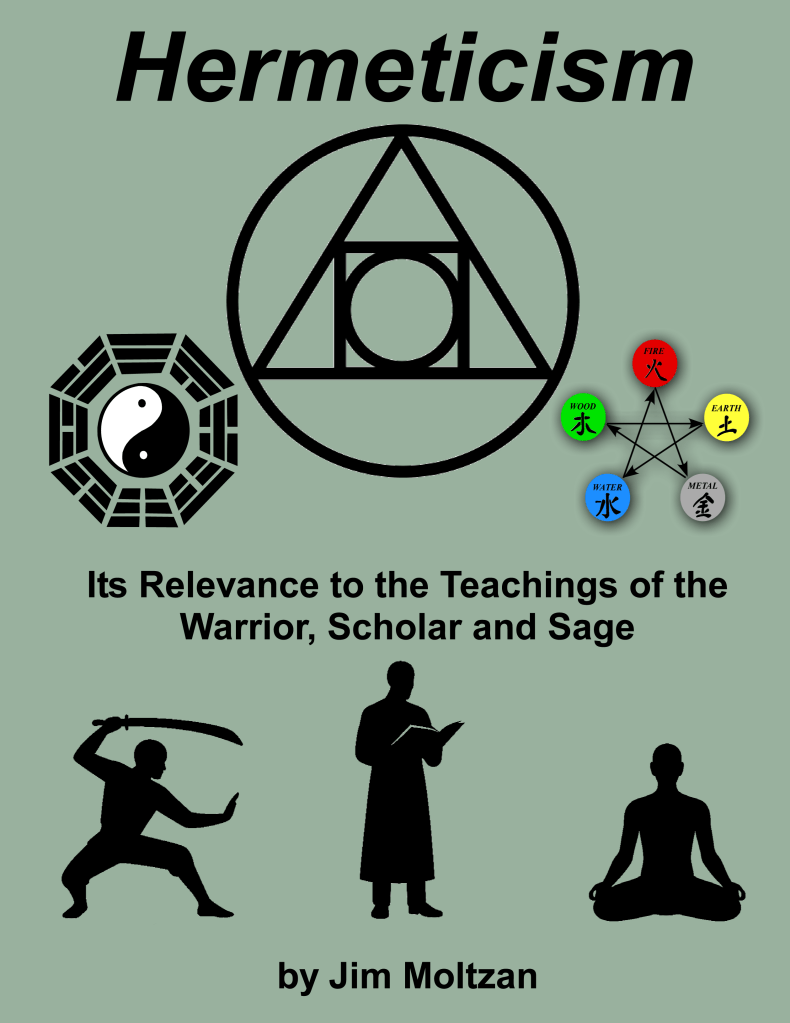
My latest book: Mudo Principles: Teachings from the Warrior, Scholar, and Sage

For over forty years, I have devoted my life to the study and practice of martial arts, qigong, Daoist yoga, psychology, philosophy, and holistic health. In Mudo Principles, my 37th book distills a lifetime of exploration into one transformative reference guide that unites the paths of the Warrior, the Scholar, and the Sage, three archetypes that together form the foundation of the human journey toward strength, wisdom, and inner peace.

Drawing upon classical martial traditions and modern science, Mudo Principles bridges the physical, mental, and spiritual dimensions of self-cultivation. It is more than a martial arts manual. It is a blueprint for living with purpose, integrity, and harmony in a world that demands balance between body, mind, and spirit.

(This book is large with over 500 pages containing many color graphics; however, it does contain some of the information from Books 31-Warrior-Scholar-Sage, Book 35-The Path of Integrity and Book 36-Spritual Enlightenment Across Traditions)

Part I – Terminology & Foundations
Establishes the essential language and structure of training. Includes comprehensive glossaries, practical instruction on discipline, energy cultivation, the Three Treasures (Jing–Qi–Shen), and the neurological science behind resilience. These foundational essays ground readers in both the external and internal dimensions of martial cultivation.

Part II – The Way of the Warrior
Explores the moral, physical, and spiritual foundations of the martial path. Essays examine the indomitable spirit, stance training, Shaolin symbolism at its 72 Arts, “burning the Chong Mai,” humility, and camaraderie. Here, martial discipline becomes a metaphor for moral strength and self-mastery.

Part III – The Way of the Scholar
Turns inward to the world of thought and inquiry. Topics include metacognition, the Dunning–Kruger effect, authenticity, mass psychology, myth versus legitimacy in martial traditions, and the ethics of teaching. This section trains the intellect to discern truth from illusion, linking ancient wisdom with modern psychology and scientific reasoning.

Part IV – The Way of the Sage
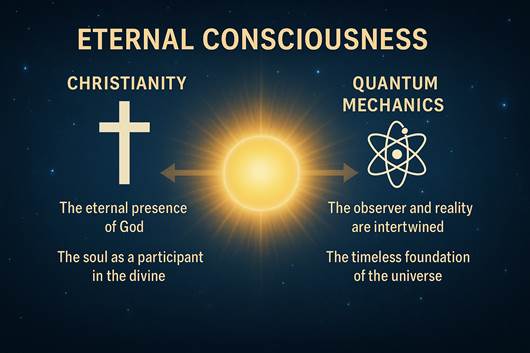
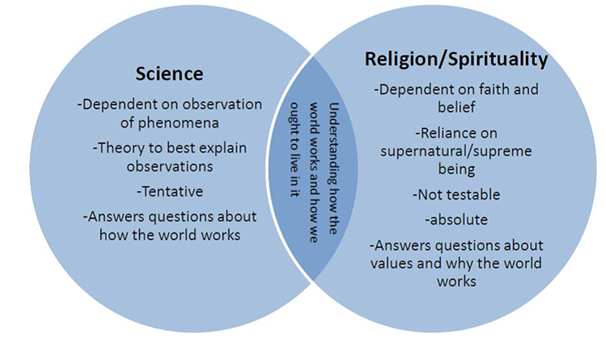
Leads beyond intellect to spiritual realization. Essays bridge faith, philosophy, and science, exploring quantum consciousness, Daoist inner alchemy, meditation, compassion, trauma healing, and the universal search for meaning.

Part V – Integration and the Path Forward
Synthesizes the lessons of the Warrior, Scholar, and Sage into a living philosophy for modern life and how to balance health, success, and purpose without losing one’s center.

Part VI – Appendices

A Pathway for the Modern Seeker
Mudo Principles serves martial artists, teachers, healers, philosophers, and all who seek to integrate physical strength, mental clarity, and spiritual understanding. It honors ancient traditions while addressing the unique challenges of contemporary life in stress, distraction, and disconnection from self and nature.

Through clear organization, over a hundred essays, and decades of lived wisdom, I invite the reader to:

  • Build discipline and resilience through mind–body training
  • Reclaim balance through ancient and modern methods of cultivation
  • Transform adversity into clarity, and confusion into purpose
  • Awaken the integrated self in the Warrior’s strength, the Scholar’s discernment, and the Sage’s compassion

This is a book for those who believe mastery begins within. Whether you are a lifelong martial artist or a modern seeker pursuing wholeness, Mudo Principles offers a map to transformation rooted in integrity, refined through discipline, and illuminated by wisdom.

Available on Amazon at: https://a.co/d/55dqOjh

Dim Mak, “Delayed Death Touch,” and the Myth of Physical Injury Without Contact

Origins and Lore

The concept of Dim Mak often translated “pressing the pulse/vessel”) occupies a curious place in martial lore. Sometimes referred to as the “delayed death touch,” it is imagined as a set of techniques targeting subtle points on the body to cause paralysis, unconsciousness, or even death, sometimes instantly, sometimes hours or days later. In Cantonese opera, wuxia fiction, and 20th-century martial arts marketing, this idea became a central trope. Related Japanese traditions, such as kyūsho-jutsu, also emphasize striking “vital points” (Kim & Bookey, 2008).

One historical root is the Bubishi, a Southern Chinese martial and medical manual carried to Okinawa and preserved in karate circles. It contains anatomical diagrams and pressure-point charts, blending medicine and combat knowledge. However, nothing in the Bubishi describes a reproducible “death touch on a timer.” The delayed-death legend is largely a product of mythologizing (McCarthy, 1995).

Physiological Realities

Although the notion of a mystical “death touch” has no scientific foundation, certain strikes can produce catastrophic effects. For example:

  • Commotio cordis: A sudden blow to the chest directly over the heart during a critical phase of the cardiac cycle can trigger lethal arrhythmias, especially in young athletes. Death is rapid, not delayed (Maron et al., 2010).
  • Carotid sinus reflex: Pressure or trauma at the neck can overstimulate baroreceptors, causing sudden fainting or, in rare cases, cardiac arrest (Sutton, 2014).
  • Internal injuries: Abdominal trauma may produce a delayed splenic rupture, with fatal bleeding occurring days after impact (Coccolini et al., 2017). Likewise, epidural hematomas following head trauma can present with a “lucid interval” before deterioration (Ganz, 2013). These medical realities may explain reports of “delayed death” after apparently minor strikes.

In short, so-called Dim Mak events correspond more closely to rare but recognized trauma complications, not an esoteric martial formula.

“Injury Without Touch” and Nei Gong

Claims that a Nei Gong (or neidan) master can injure or incapacitate another person without physical contact remain anecdotal and unverified. Controlled tests and skeptical investigations have repeatedly failed to reproduce reliable no-touch effects; where dramatic results are reported, more plausible explanations include expectancy and conditioned responses among students, theatrical staging or confederates, suggestion/hypnosis, and the nocebo/placebo effect. Importantly, some real medical conditions (for example, cardiac arrhythmia after blunt chest trauma or delayed intracranial bleeding) can cause delayed collapse and have sometimes been misattributed to mysterious causes — but these are documented trauma or medical events, not proof of transmissible ‘external qi.’ Because of the unpredictability of medical reactions, any attempt to provoke physiological responses in others without informed consent raises serious ethical and legal issues; responsible teachers therefore emphasize biomechanics, safety, and transparent demonstration methods rather than secret lethal techniques.

Some modern teachers link Dim Mak to nei gong (“internal work”) breath, alignment, and energetic exercises said to cultivate the ability to project qi or chi (vital force) externally. Demonstrations of “no-touch knockouts” or “chi projection” circulate widely, often framed as injury without contact.

Under controlled testing, however, such claims collapse. Televised investigations and academic studies show that subjects who are not suggestible or part of the teacher’s own group remain unaffected by “no-touch” attempts (Shermer, 1997). The most plausible explanation is psychological, where expectancy, compliance, or hypnotic influence are the cause, not physics or bioenergetics. Practitioners cannot safely test these methods without risking harm. Ethical training instead focuses on biomechanics, leverage, and simulation rather than attempts at real no-touch injury.

Why “injure without touch” raises serious moral problems

  • Unpredictable risk. Because some medical events (arrhythmia, stroke, internal bleeding) can be triggered unpredictably by stress or minor provocation, any attempt to produce physiological effects remotely risks serious harm. You cannot ethically justify causing that risk.
  • Consent & autonomy. Attempting to alter someone’s physiology or mental state without explicit, informed consent violates basic bodily and mental autonomy.
  • Deception and coercion. Teaching secret “no-touch” attack methods encourages deception, exploitation, and misuse, especially in hierarchical groups. That fosters abusive dynamics.
  • Legal exposure. Even “demonstrations” that cause collapse, panic, or later medical problems can produce criminal liability and civil suits. Teachers are responsible for foreseeable harm.

That said, nei gong is highly valuable when understood in biomechanical terms. Internal training improves body structure, breath regulation, and fa jin (explosive force issuance). This allows practitioners to deliver maximum impact with minimal motion and appear almost effortless. The “mystical” layer is metaphorical; the real effect is better mechanics (Frantzis, 2007).

Ethics and Modern Practice

Because of the risks of striking vulnerable areas, serious martial arts traditions emphasize responsibility. Knowing that a blow to the chest or neck could cause unforeseen medical emergencies, modern teachers stress restraint, safety protocols, and familiarity with first aid and CPR.

From a holistic view, Dim Mak reminds us that mythology often grows around kernels of truth. Striking the body does carry risk, but not in the cinematic, time-delayed fashion popularized in movies. Internal practices like nei gong do confer extraordinary skill, but by enhancing efficiency and coordination, not by transmitting lethal force through the air.

References:

Ganz, J. C. (2013). The lucid interval associated with epidural bleeding: Evolving understanding. Journal of Neurosurgery, 118(4), 739–745. https://doi.org/10.3171/2012.12.JNS121264

Coccolini, F., Montori, G., Catena, F., Kluger, Y., Biffl, W., Moore, E. E., Reva, V., Bing, C., Bala, M., Fugazzola, P., Bahouth, H., Marzi, I., Velmahos, G., Ivatury, R., Soreide, K., Horer, T., Broek, R. T., Pereira, B. M., Fraga, G. P., . . . Ansaloni, L. (2017). Splenic trauma: WSES classification and guidelines for adult and pediatric patients. World Journal of Emergency Surgery, 12(1). https://doi.org/10.1186/s13017-017-0151-4

Frantzis, B. K. (2007). Opening the energy gates of your body: Qigong for lifelong health. Blue Snake Books. https://archive.org/details/openingenergygat00fran

Kim, S. H. & Bookey. (2008). Vital point strikes. https://cdn.bookey.app/files/pdf/book/en/vital-point-strikes.pdf

Maron, B. J., Estes, N. A. M., Link, M. S., & Wang, P. J. (2010). Commotio cordis. New England Journal of Medicine, 362(10), 917–927. https://doi.org/10.1056/NEJMra0910111

McCarthy, P. (1995). The Bubishi: The Bible of karate. Tuttle Publishing. https://ia801201.us.archive.org/32/items/do-it-yourself-and-survival-pdfs/The%20Bible%20of%20Karate_%20Bubishi%20%28%20PDFDrive%20%29_text.pdf

Shermer, M. (1997). Why people believe weird things: Pseudoscience, superstition, and other confusions of our time (rev. ed.). Holt Paperbacks. https://archive.org/details/whypeoplebelieve0000sher

Sutton, R. (2014). Carotid sinus syndrome: Progress in understanding and management. Global Cardiology Science & Practice, 2014(2), 18. https://doi.org/10.5339/gcsp.2014.18