Why We Sleep Better in Cooler Rooms – And Why a Hot Shower Can Help

In the world of holistic health, quality sleep is foundational to healing, regeneration, and mental clarity. Yet many people struggle with falling or staying asleep, unaware that their sleeping environment, particularly the temperature, may be working against them. Interestingly, both science and traditional wisdom agree: a cooler room helps the body sleep more deeply. But perhaps more surprising is the fact that a hot shower before bed can actually help you fall asleep faster. How can both be true?

Let’s explore the physiology of thermoregulation, circadian rhythms, and the role of temperature in sleep and what this means for your wellness routine.
Cooler Temperatures Support the Body’s Natural Sleep Rhythms

Human sleep is governed by the circadian rhythm, a 24-hour biological clock that regulates many body functions, including core body temperature. In a healthy cycle:

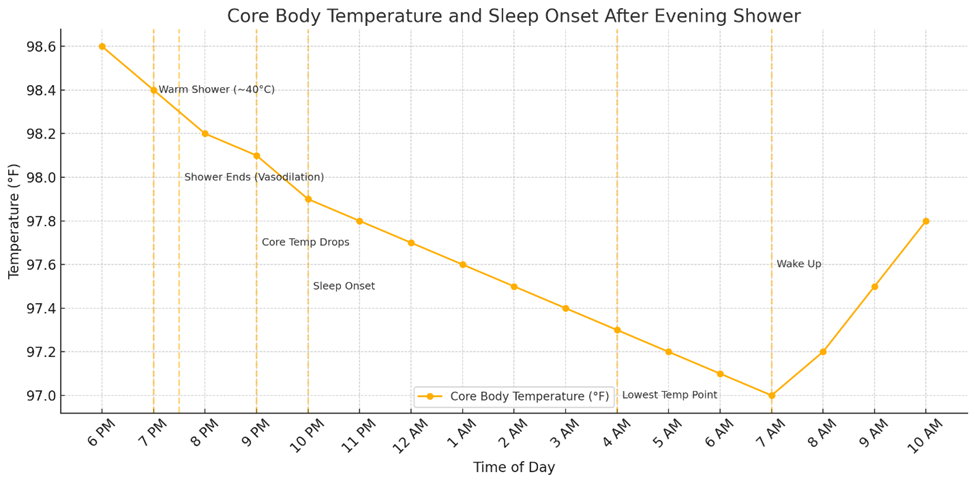
  • Core temperature begins to drop in the late evening, signaling the brain to prepare for sleep.
  • This drop continues through the night, reaching its lowest point around 4 a.m., then rising toward morning wakefulness.
  • A cooler ambient temperature supports this process, helping initiate and sustain deeper stages of sleep.

In essence, cooling the body acts as a natural signal for the nervous system to wind down. When the room is too warm, the body struggles to release heat, leading to more wakefulness, disrupted REM cycles, and less restorative sleep.

According to research, temperatures between 60–67°F (15–19°C) are optimal for most adults to achieve better sleep efficiency and fewer nighttime awakenings (Kräuchi et al., 2000).
Why a Hot Shower Before Bed Helps – Through Cooling

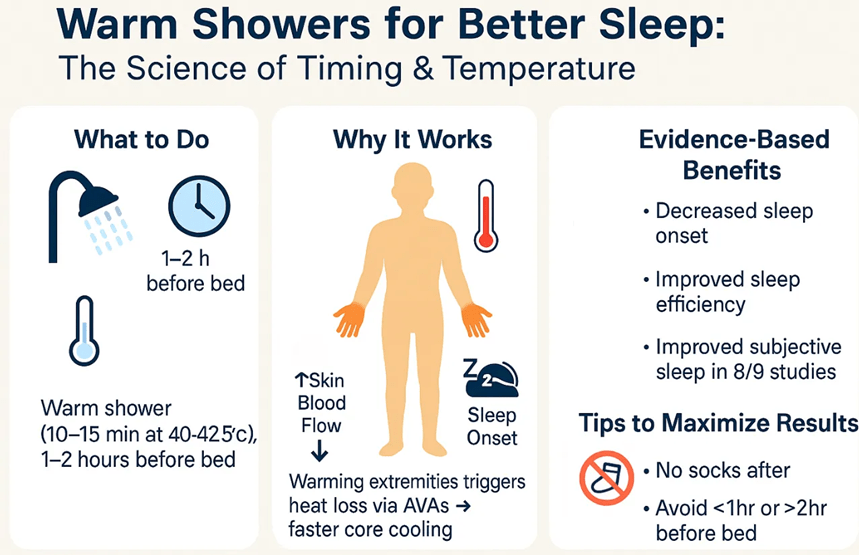
Here’s where it gets interesting. While cooler environments promote better sleep, a hot shower (or bath) about 1–2 hours before bed has also been shown to help people fall asleep faster. This isn’t a contradiction, it’s physiology in action.

Here’s how it works:

  1. A hot shower raises skin temperature, prompting the blood vessels near the surface (especially in hands, feet, and face) to dilate.
  2. This vasodilation enables the body to shed heat more effectively once you step out of the shower.
  3. As a result, your core body temperature rapidly decreases, mimicking the natural nighttime drop and signaling your brain to initiate sleep.

This process supports the body’s thermoregulation and helps shorten sleep onset latency, the time it takes to fall asleep.

A 2019 meta-analysis found that warm showers or baths taken 1–2 hours before bedtime reduced sleep onset time by up to 10 minutes, especially when combined with a cool sleeping environment (Haghayegh et al., 2019).

Holistic Implications: Sleep as a Ritual of Restoration

From a holistic health perspective, sleep is not merely a pause in activity. It is the body’s most profound period of healing and integration. Optimizing temperature regulation supports:

  • Melatonin production, which rises as the core temperature drops
  • Activation of the parasympathetic nervous system, the body’s natural “rest-and-digest” state
  • Emotional regulation, immune repair, and neurocognitive processing during REM and deep sleep

In this context, a hot shower can become more than hygiene. It can become a pre-sleep ritual, one that invites the body into a state of balance. The transition from warmth (shower) to coolness (bedroom) becomes a symbolic and physiological descent into stillness.

This aligns beautifully with Eastern practices such as Taoist bath meditations and Ayurvedic evening routines (dinacharya), which emphasize gentle warming, grounding, and purification before rest.

Practical Tips for Holistic Sleep Support

If you’re struggling with sleep or just want to deepen your nightly restoration try this:

  1. Take a warm shower (104–109°F / 40–43°C) about 90 minutes before bed.
  2. Use the time to also slow your breathing, quiet your thoughts, and mentally disconnect from the day.
  3. After drying off, transition to a cool, dark room (60–67°F).
  4. Choose natural fiber bedding and avoid artificial light sources or screens.
  5. Consider mindful breathing, gentle stretching, or herbal teas to further activate the parasympathetic nervous system.

Honor the Body’s Rhythms

The human body has an elegant wisdom built into its rhythms. By working with rather than against these cycles, we allow sleep to unfold more naturally. In holistic wellness, small shifts, like adjusting your room temperature or adding a warm shower to your evening routine can have a profound impact on your physical, emotional, and spiritual vitality.

Instead of forcing sleep through stimulants or sedatives, let the body return to its own balance. Honor the descent into stillness and let cool darkness and gentle ritual guide you into healing rest.

References:

Cagnacci, A., Elliott, J. A., & Yen, S. S. (1992). Melatonin: a major regulator of the circadian rhythm of core temperature in humans. The Journal of clinical endocrinology and metabolism75(2), 447–452. https://doi.org/10.1210/jcem.75.2.1639946

Haghayegh, S., Khoshnevis, S., Smolensky, M. H., Diller, K. R., & Castriotta, R. J. (2019). Before-bedtime passive body heating by warm shower or bath to improve sleep: A systematic review and meta-analysis. Sleep Medicine Reviews, 46, 124–135. https://doi.org/10.1016/j.smrv.2019.04.008

Kräuchi, K., Cajochen, C., Werth, E., & Wirz-Justice, A. (2000). Functional link between distal vasodilation and sleep-onset latency? American Journal of Physiology-Regulatory, Integrative and Comparative Physiology, 278(3), R741–R748. https://doi.org/10.1152/ajpregu.2000.278.3.R741

Luu, B., MD. (2025, May 22). Unlock Better Sleep with a Warm Shower. Brandon Luu MD. https://brandonluumd.substack.com/p/unlock-better-sleep-with-a-warm-shower

Open Communication, Right Communication, and the Illusion of Both

Closed Social Systems, Psychological Safety, and the Cost of Questioning

Many organizations, communities, workplaces, and social groups proudly promote the concept of “open communication.” On the surface, this sounds healthy, progressive, and emotionally mature. Members often hear phrases such as “You can ask anything,” “We are family,” “Transparency matters,” or “We encourage honest dialogue.” However, in some environments, openness exists more as an idealized slogan than an actual practice.

Over the years, I have personally experienced this dynamic within a highly structured social construct in which I was a willing participant for many years. I do not view myself merely as a victim of manipulation or coercion. Like many people who become deeply involved in organizations, I joined voluntarily because I believed in the values, purpose, community, and opportunities for growth that the group appeared to offer. There were many positive experiences, meaningful friendships, and valuable life lessons that emerged from that involvement. Yet over time, deeper patterns became increasingly apparent.

The group outwardly encouraged “open communication,” but only within carefully defined boundaries. Certain questions were welcomed, while others were heavily discouraged. Asking seemingly reasonable questions regarding organizational history, specific events, leadership behavior, financial matters, inconsistencies, or the character and conduct of certain authority figures was often frowned upon if not outright forbidden.

The issue was not always explicit censorship. More often, the pressure was subtle, psychological, and social.

People quickly learned which questions created discomfort and which subjects were considered off-limits. Eventually, members often begin censoring themselves long before direct punishment becomes necessary. This phenomenon reflects what psychologists refer to as normative social influence, whereby individuals conform to group expectations in order to gain acceptance and avoid rejection (Cialdini & Goldstein, 2004).

Over time, communication in closed systems can become increasingly performative rather than authentic. Individuals learn to say what is expected rather than what they genuinely think or feel. Independent inquiry may gradually become interpreted as negativity, ego, disloyalty, or a lack of commitment. In these environments, preserving the image and stability of the system often becomes more important than the honest pursuit of truth.

Importantly, I eventually realized that this phenomenon was not isolated to one organization. I have witnessed remarkably similar communication dynamics in toxic workplaces, dysfunctional social groups, political movements, religious organizations, educational institutions, and even certain healthcare environments. While the severity may differ, the underlying psychological mechanisms are often surprisingly similar.

Many workplaces, for example, claim to encourage feedback and collaboration. Employees are told their opinions matter and that leadership welcomes honest discussion. Yet workers may quickly discover that questioning management decisions, exposing inefficiencies, or discussing ethical concerns can carry social or professional consequences. Promotions, inclusion, reputation, and job security may become tied to conformity rather than competence or integrity.

This creates what organizational psychologists call low psychological safety. Psychological safety refers to an environment where individuals feel safe enough to ask questions, express concerns, admit mistakes, and offer feedback without fear of humiliation or punishment (Edmondson & Lei, 2014). When psychological safety is absent, communication narrows, innovation declines, stress increases, and groupthink becomes more prevalent.

Groupthink itself is a well-documented phenomenon in which the desire for harmony and conformity overrides critical thinking and realistic evaluation of alternatives (Janis, 1972). Within closed social systems, maintaining cohesion often becomes more important than seeking objective truth. Members may gradually lose the ability to distinguish independent thinking from disloyalty.

From a physiological perspective, environments lacking authentic communication can place individuals into chronic states of sympathetic nervous system activation. People become hypervigilant regarding what they say, how they say it, and who may be listening. This ongoing stress burden can influence sleep quality, cognition, mood regulation, emotional resilience, and physical health. Human beings communicate most effectively when they feel safe enough to socially engage rather than constantly defend themselves (Porges, 2011).

Ironically, many closed systems initially attract sincere, idealistic, and highly motivated individuals. People naturally seek meaning, purpose, structure, mentorship, belonging, and personal growth. According to self-determination theory, individuals flourish when they experience autonomy, competence, and relatedness (Deci & Ryan, 2000). Closed systems frequently offer the appearance of these needs being fulfilled while simultaneously restricting true autonomy and authentic self-expression.

However, another realization eventually emerged. Open communication and right communication are not necessarily the same thing. Many people hear the phrase “open communication” and interpret it as the freedom to say whatever they want, whenever they want, however they want. Yet unrestricted expression alone does not automatically create healthy communication.

A room filled with gossip, hostility, emotional outbursts, endless complaints, and personal attacks may technically be open, but it is hardly constructive.

Open communication primarily concerns access. It asks:

  • Can questions be asked?
  • Can concerns be raised?
  • Can disagreement be expressed?
  • Can information flow freely?
  • Can inquiry occur without fear?

These are important questions because without openness, truth becomes difficult to discover.

Yet openness alone is insufficient.

What might be called “right communication” addresses not only whether people can speak, but how, why, and when communication occurs.

The concept appears throughout many philosophical and spiritual traditions. In Buddhism, Right Speech asks whether communication is truthful, beneficial, timely, and compassionate. Stoicism emphasizes wisdom, restraint, and self-mastery. Confucian philosophy highlights responsibility, virtue, and social harmony. Though these traditions differ, they share a common insight: communication should serve growth, understanding, and truth rather than ego, impulse, or division.

In this sense, communication can be viewed through four possibilities:

  • Open and Right: Healthy dialogue and mutual growth.
  • Open but Wrong: Chaos, hostility, gossip, and noise.
  • Closed but Well-Intentioned: Respectful yet overly constrained.
  • Closed and Wrong: Manipulation, censorship, fear, and control.

The goal is not merely openness.

The goal is openness guided by wisdom.

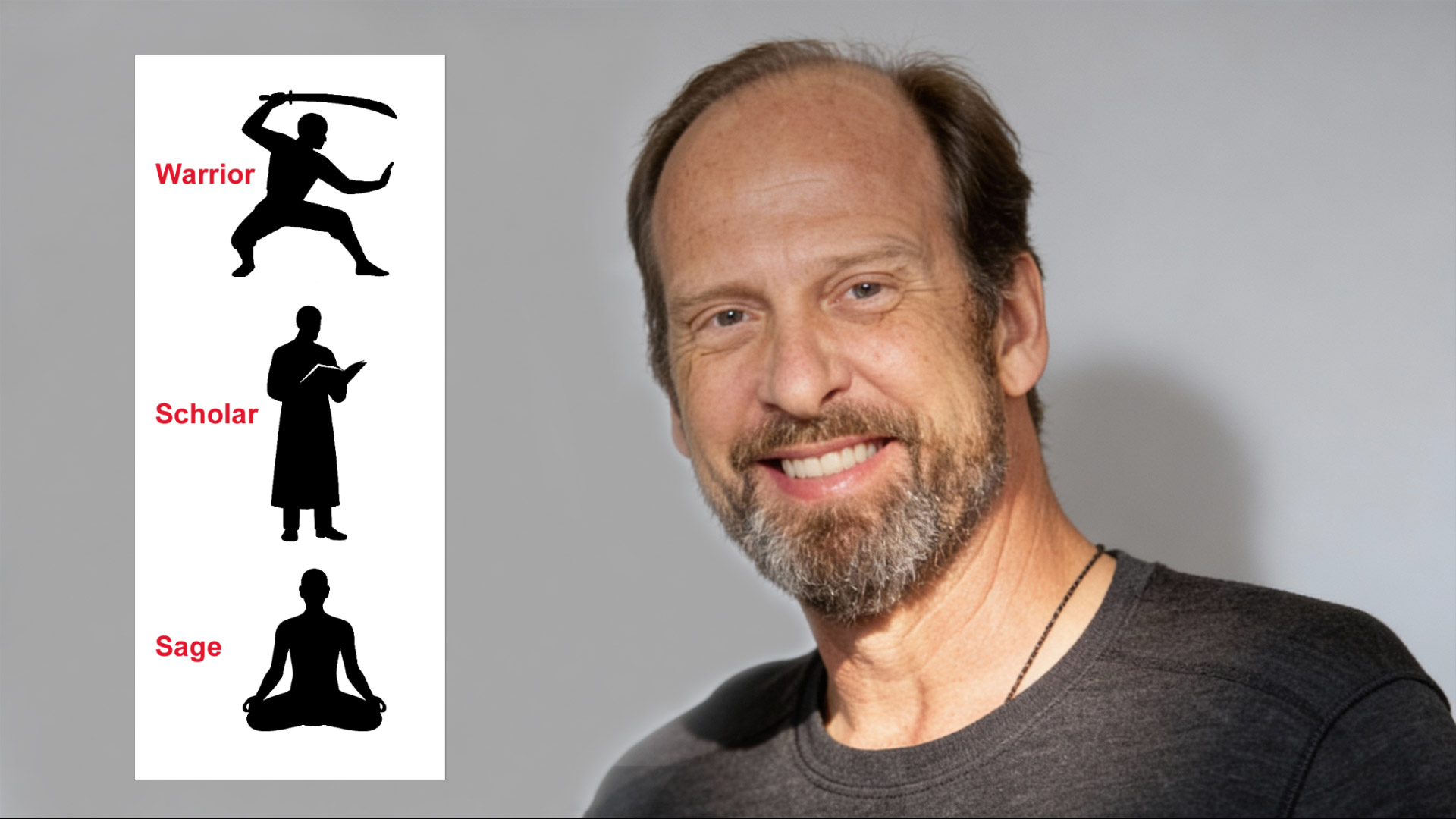
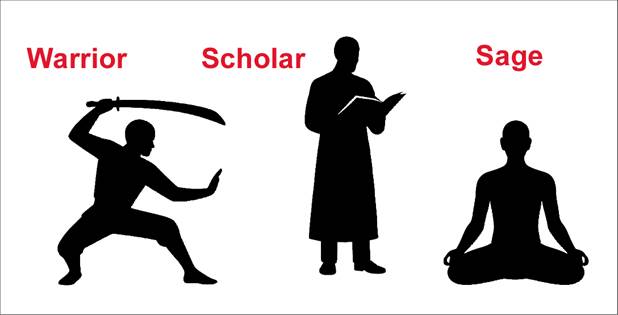
This distinction aligns closely with my framework of the Warrior, Scholar, and Sage.

The Warrior asks:

“Do I have the courage to speak the truth?”

Without courage, important issues remain hidden.

The Scholar asks:

“Is what I am saying accurate?”

Without inquiry and evidence, communication devolves into opinion masquerading as fact.

The Sage asks:

“Is this the right time, place, and manner?”

Without wisdom, even truth can become a weapon rather than a tool for growth.

When all three dimensions are present, communication becomes honest, thoughtful, respectful, and transformational.

From an Eastern philosophical perspective, communication itself reflects yin and yang dynamics. Open communication possesses a more yang quality. It expresses, questions, reveals, and engages. Right communication incorporates both yin and yang. Speaking is the yang aspect. Listening, reflecting, exercising restraint, and choosing the proper timing represent the yin aspect.

Many people learn how to talk. Far fewer learn how to listen.

Likewise, many organizations learn how to advertise openness while quietly discouraging inquiry. Others encourage unrestricted expression without responsibility or discernment. Both extremes miss the mark.

One suppresses truth.

The other drowns truth in noise.

Healthy communication occupies the middle path.

It is open enough to allow truth to emerge, yet disciplined enough to ensure that truth is expressed with integrity, respect, and purpose.

One of the most important lessons I have learned is that truth does not fear honest examination. Healthy individuals, healthy organizations, and healthy communities should be capable of tolerating respectful inquiry without perceiving every difficult question as a threat. In the end, the quality of communication within a group often reveals the true nature of the group itself.

Open communication asks whether people are allowed to speak. Right communication asks whether what is spoken serves truth, understanding, and growth.

Healthy systems require both. Without openness, truth is suppressed. Without wisdom, truth becomes noise. The goal is not merely freedom of speech, but freedom guided by courage, discernment, and responsibility.

References

Cialdini, R. B., & Goldstein, N. J. (2004). Social influence: Compliance and conformity. Annual Review of Psychology, 55, 591–621. https://doi.org/10.1146/annurev.psych.55.090902.142015

Deci, E. L., & Ryan, R. M. (2000). The “what” and “why” of goal pursuits: Human needs and the self-determination of behavior. Psychological Inquiry, 11(4), 227–268. https://doi.org/10.1207/S15327965PLI1104_01

Edmondson, A. C., & Lei, Z. (2014). Psychological safety: The history, renaissance, and future of an interpersonal construct. Annual Review of Organizational Psychology and Organizational Behavior, 1, 23–43. https://doi.org/10.1146/annurev-orgpsych-031413-091305

Janis, I. L. (1972). Victims of groupthink: A psychological study of foreign-policy decisions and fiascoes. Houghton Mifflin. https://dn710801.ca.archive.org/0/items/victimsofgroupthinkirvingl.janis/Victims%20of%20GROUPTHINK%20-%20Irving%20Janis.pdf

Porges, S. W. (2011). The polyvagal theory: Neurophysiological foundations of emotions, attachment, communication, and self-regulation. W. W. Norton & Company. https://archive.org/details/polyvagaltheoryn0000porg

The One-Handed Bow and Shaolin Salute

A Symbolic Gesture Bridging Buddhism, Martial Arts, and Philosophy

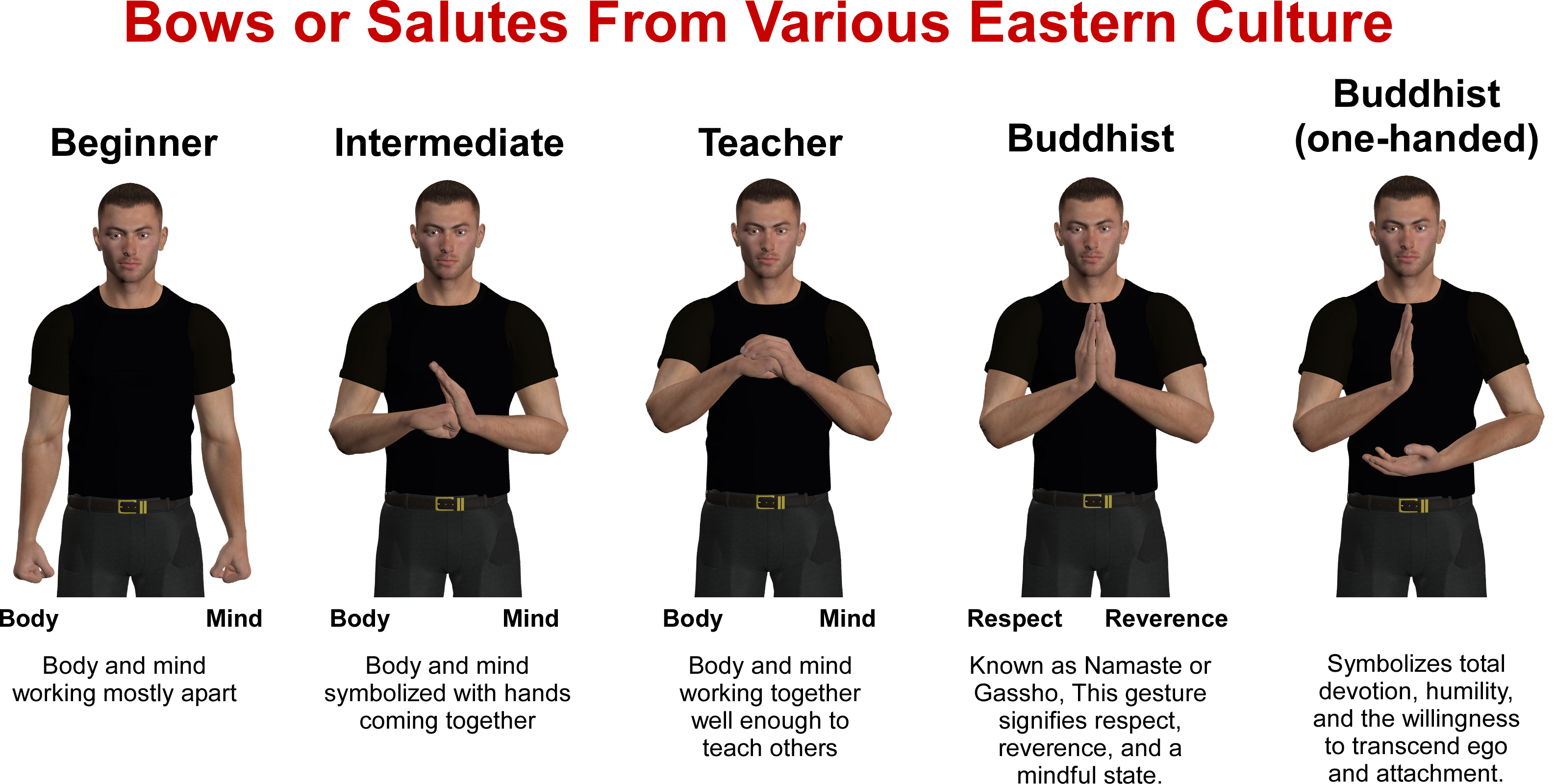
Among the many ritual gestures in martial arts and Buddhist practice, few are as rich in symbolism as the one-handed bow and the Shaolin salute. These simple movements embody centuries of cultural synthesis, spanning Buddhist devotion, Confucian ethics, and Taoist philosophy. Though often performed without conscious reflection, these gestures are living links to profound stories of sacrifice, humility, and moral discipline.

It is also important to distinguish between “bowing toward” someone and “bowing down to” them. In Buddhist and martial traditions, a bow is not a sign of subjugation or inferiority, but rather a gesture of mutual respect, recognition, and presence. To bow toward someone is to acknowledge their humanity, their role as teacher or peer, or their shared path. In contrast, bowing down to someone implies surrender, hierarchy, or submission, a dynamic not typically encouraged in authentic Chan or martial teachings, which emphasize non-attachment, humility, and equality of spirit (Suzuki, 1956; Shahar, 2008). The gesture is not about worship, but about mindful reverence for the moment and the relationship.

The Story of Huike and the One-Handed Bow

The origins of the one-handed bow can be traced to a pivotal moment in Chan (Zen)Buddhist history. In the 5th or 6th century CE, the Indian monk Bodhidharma (Damo) traveled to China, bringing the profound teachings of Dhyana (meditation) Buddhism. According to legend, Bodhidharma secluded himself in a cave near the Shaolin Temple, meditating in silence for nine years (Suzuki, 1959).

During this time, a Chinese monk named Huike sought to become his disciple. Initially rejected, Huike demonstrated his unwavering determination by standing outside Bodhidharma’s cave through a snowstorm. To further prove his sincerity, Huike cut off his own hand and presented it to Bodhidharma. Moved by this act of sacrifice, Bodhidharma finally accepted him as a student (Cleary, 1999).

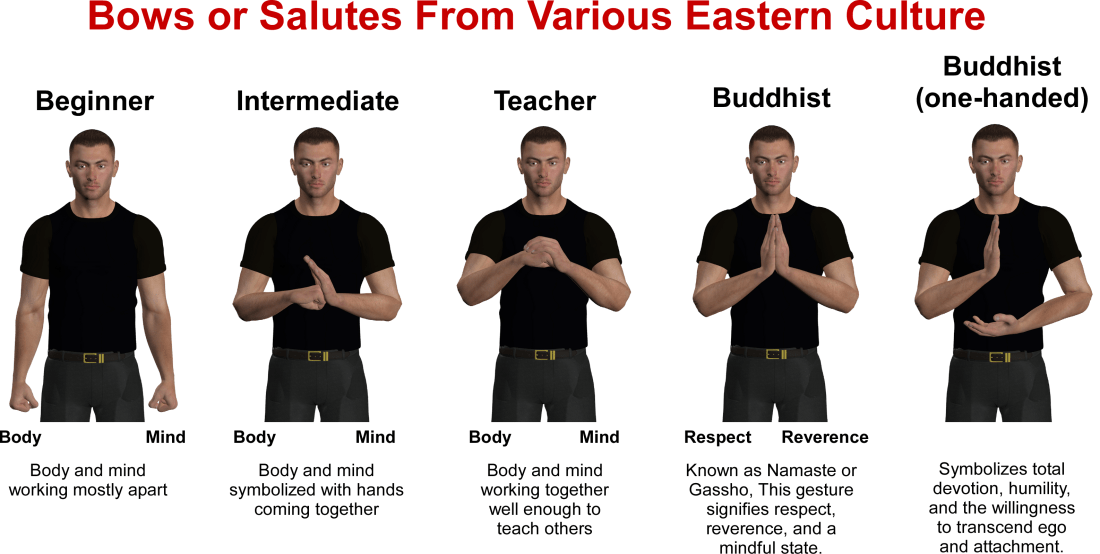
The one-handed bow evolved partly from this story. In Chan circles, bowing with one hand came to symbolize total devotion, humility, and the willingness to transcend ego and attachment. The gesture visually echoes Huike’s sacrifice, representing a commitment to the Dharma that goes beyond the physical form.

Practical Monastic Roots

Beyond its symbolic meaning, the one-handed bow also has practical origins. Buddhist monks traditionally carried alms bowls or staffs, often leaving one hand occupied. The gesture of bowing with the free hand thus became a mindful adaptation, embodying presence and respect even in simple actions (Strong, 2001).

In Shaolin monastic life, where martial training intertwined with Buddhist practice, this gesture naturally merged with martial etiquette. Over time, it evolved into the more formalized Shaolin salute, now widely recognized across martial arts traditions.

The Shaolin Salute (Fist Wrapped in Palm)

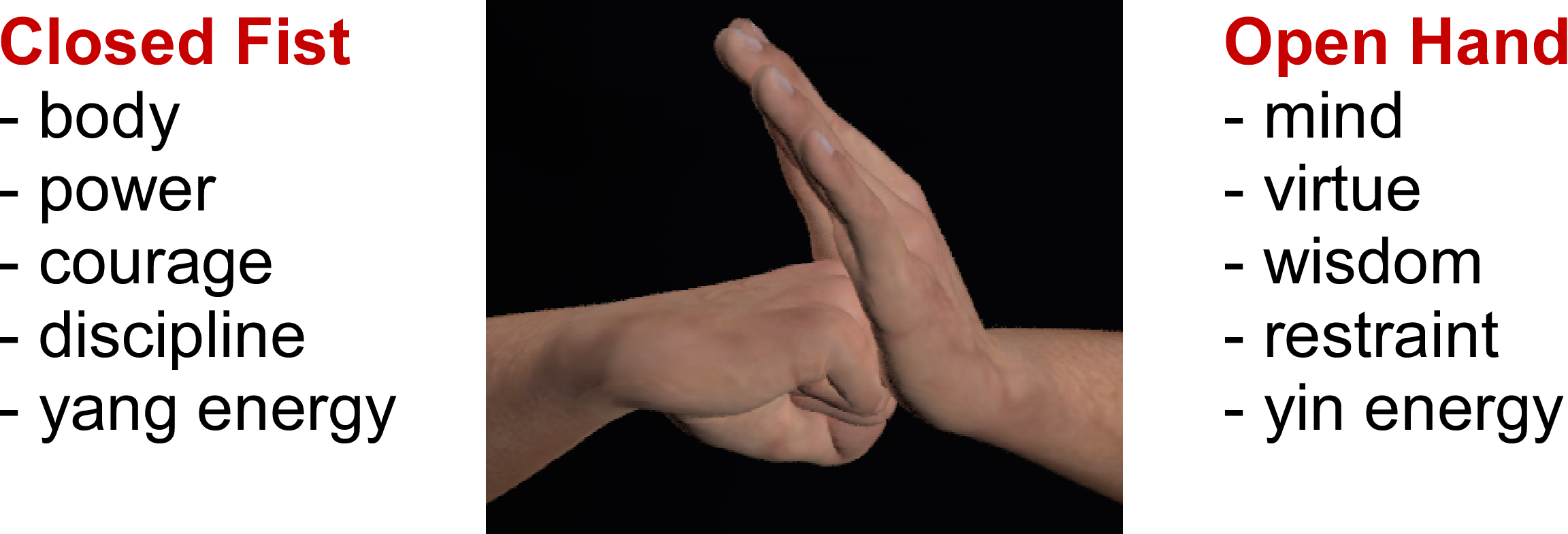
The Shaolin salute, performed with the left open palm wrapping over the right closed fist encapsulates a deep philosophical message:

  • The left palm symbolizes wisdom, virtue, and restraint.
  • The right fist represents martial strength and discipline.
  • Together, they convey the ideal that strength must serve wisdom, and that martial power should always be governed by moral integrity (Henning, 1999).

The gesture is performed at the start and end of training, as a sign of respect toward teachers, fellow practitioners, and the lineage itself.

Northern vs. Southern Shaolin Variations

Northern Shaolin

  • Gesture held closer to the chest, with a more upright posture.
  • Strong emphasis on Chan Buddhist origins, honoring the story of Huike and Bodhidharma.
  • Used as a reminder that martial arts is a spiritual path, not merely a physical practice.

Southern Shaolin

  • Gesture held lower, sometimes with a deeper bow.
  • Greater incorporation of Confucian and Taoist elements:
    • The left palm represents civil virtue (wen).
    • The right fist represents martial courage (wu).
  • Symbolizes the ideal of the “complete person” where one who balances civil ethics with martial prowess.

Across both traditions, the salute serves as a bridge between physical mastery and spiritual cultivation, reminding practitioners to walk the martial path with awareness, humility, and virtue.

Philosophical Layers of the Salute

InfluenceLeft PalmRight FistCombined Gesture
Buddhism (Chan)Wisdom, compassionStrength, disciplineStrength governed by wisdom
ConfucianismRitual propriety (礼, li)Martial courageHarmony of civil and martial virtues
TaoismYin (open hand)Yang (closed fist)Balance of opposites, alignment with Dao

These layers reflect the syncretic nature of Chinese culture, where Buddhism, Confucianism, and Taoism enriched one another and deeply influenced the martial arts (Shahar, 2008).

The Gesture Today

In modern martial arts, the Shaolin salute is used worldwide. Yet, many practitioners are unaware of its spiritual and historical dimensions. The story of Huike’s sacrifice, the practicality of the one-handed bow, and the layered meaning of the salute all remind us that external movements can carry profound internal significance.

Every time a martial artist performs this gesture, they are participating in a lineage that spans centuries of wisdom, discipline, and moral cultivation. In a world often dominated by superficial strength, the Shaolin salute offers a timeless reminder:
True power lies in restraint, and the greatest warrior is one whose actions serve a higher wisdom.

Conclusion

The evolution of the one-handed bow and Shaolin salute exemplifies the essence of holistic practice, integrating the body, mind, and spirit. These gestures are not mere formalities; they are expressions of a worldview where humility tempers strength, and discipline serves compassion.

As we move through modern life, whether in the dojo, temple, or daily interactions, this simple bow invites us to embody presence, respect, and the pursuit of wisdom in every action.

References:

Cleary, T. (1999). Zen Dawn: Early Zen Texts from Tun Huang. Shambhala Publications.

Henning, S. E. (1981). The Chinese martial arts in historical perspective. In Military Affairs (Issue 4, pp. 173–179). Society for Military History. https://themartialscholar.yolasite.com/resources/henning.pdf

Shahar, M. (2008). The Shaolin Monastery: History, Religion, and the Chinese Martial Arts. University of Hawaii Press. The Shaolin Monastery: History, Religion, and the Chinese Martial Arts on JSTOR

Strong, J. S. (2001). The Experience of Buddhism: Sources and Interpretations (2nd ed.). Wadsworth/Thomson Learning. https://openlibrary.org/books/OL7785420M/The_Experience_of_Buddhism

Suzuki, D. T. (1959). Zen Buddhism and Its Influence on Japanese Culture. Princeton University Press. https://archive.org/details/in.gov.ignca.16794

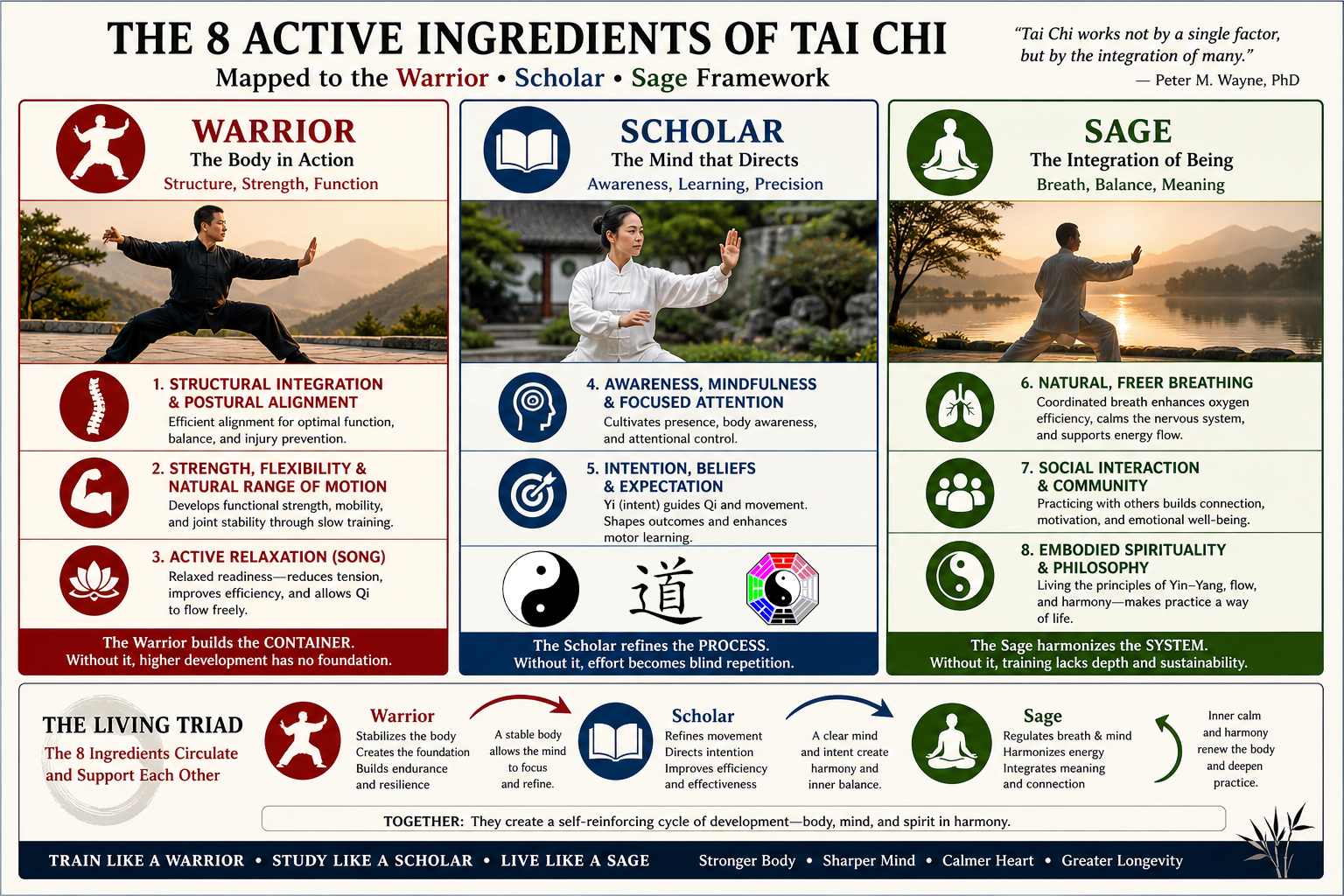
The 8 Active Ingredients of Tai Chi: A Warrior, Scholar & Sage Perspective

We often hear that Tai Chi is good for balance, relaxation, and overall health. But the deeper question is this:

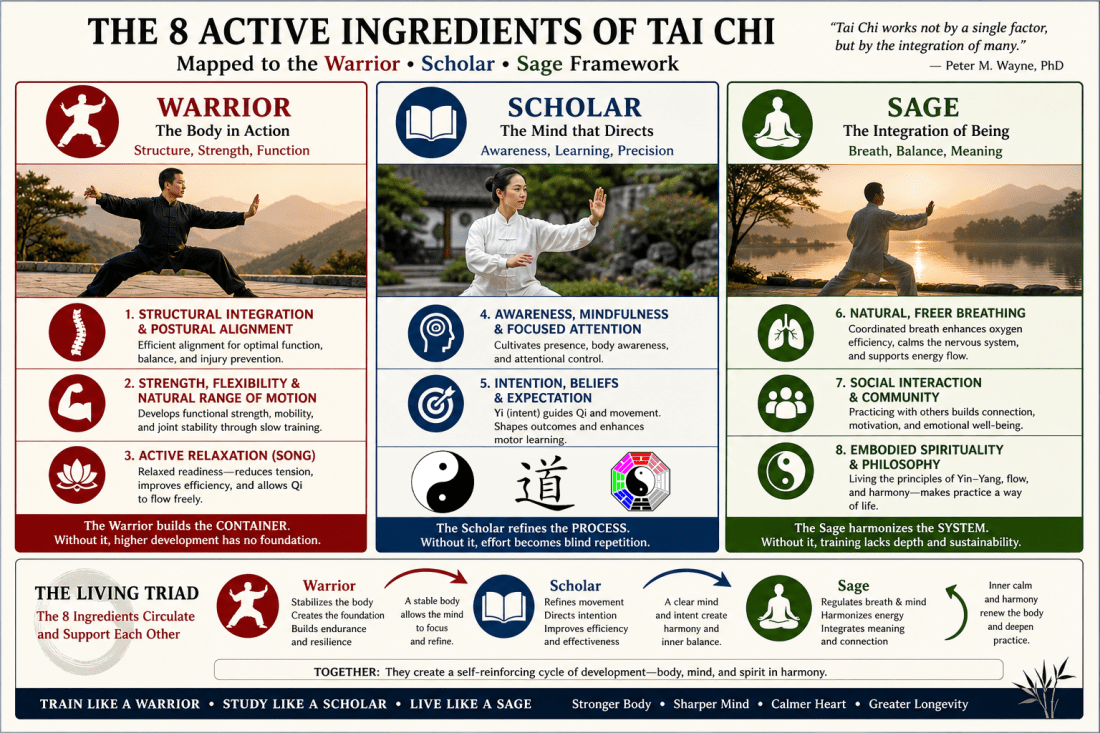
In The Harvard Medical School Guide to Tai Chi, Peter M. Wayne introduces the concept of the “8 active ingredients” of Tai Chi. His research-based perspective frames Tai Chi not as a single exercise, but as a multi-system method that integrates body, mind, and breath into a unified practice (Wayne & Fuerst, 2013; Wayne, 2014).

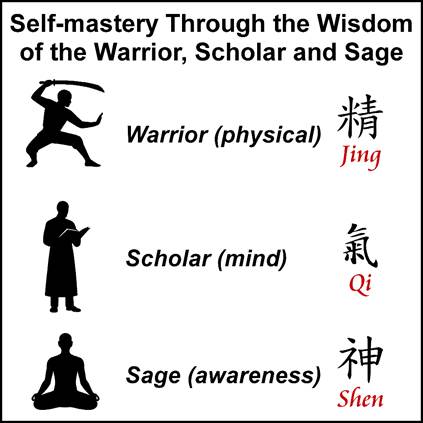
From my perspective, after more than four decades of training, teaching, and living these methods, these “ingredients” map clearly into a timeless framework:

This triad provides a practical and philosophical lens to understand how Tai Chi truly develops the human being.

Tai Chi as a Complete System

Wayne’s eight ingredients include:

  • Awareness and mindfulness
  • Intention and expectation
  • Structural alignment
  • Active relaxation (song)
  • Strength and flexibility
  • Breathing
  • Social interaction
  • Philosophy and meaning

Individually, each has value. But together, they create something far more powerful:

A self-reinforcing system of physical conditioning, mental refinement, and internal regulation (Wayne & Fuerst, 2013).

Research on Tai Chi consistently shows improvements across multiple systems, including musculoskeletal strength, balance, cardiovascular health, and psychological well-being, supporting its role as a multicomponent intervention rather than a single-modality exercise (Wang et al., 2010; Wayne et al., 2014).

The Warrior represents the physical foundation of practice.

This includes:

  • Structural alignment and posture (somatic re-calibration)
  • Functional strength and mobility
  • Active relaxation under load

Through stance training, controlled movement, and progressive endurance, the body becomes:

  • Stable
  • Rooted
  • Reliable under stress

This is not bodybuilding. It is functional integrity.

Modern research supports Tai Chi’s ability to improve balance, lower extremity strength, and reduce fall risk, particularly in aging populations (Li et al., 2005; Wayne et al., 2014).

In Traditional Chinese terms, this develops the body’s Jing, the physical essence that supports all higher functions.

_____

The Scholar represents awareness, learning, and intention.

This includes:

  • Mindfulness and focused attention
  • The use of intention (Yi) to guide movement
  • Continuous self-correction and refinement (iterative cultivation)

This is where practice shifts from repetition to intelligent training.

You begin to notice:

  • Where tension exists
  • Where alignment breaks down
  • Where effort is wasted

The mind becomes an active participant, not a passive observer.

Research in neuroscience shows that mindful movement practices like Tai Chi enhance attention, cognitive function, and neuroplasticity, while also reducing stress-related reactivity (Larkey et al., 2009; Wayne et al., 2014).

This aligns with the cultivation of Qi, the functional energy that animates movement and coordination.

_____

The Sage represents balance, breath, and meaning.

This includes:

  • Natural, coordinated breathing
  • Nervous system regulation
  • Philosophical understanding (yin and yang, flow, harmony)
  • Connection with others through shared practice
  • All of the above = transmutation

At this level, Tai Chi becomes more than exercise. It becomes:

  • Restorative
  • Meditative
  • Sustainable for a lifetime

Breathing practices associated with Tai Chi have been shown to enhance parasympathetic activity, improve heart rate variability, and support emotional regulation (Brown & Gerbarg, 2005; Wayne et al., 2014).

Social engagement and group-based movement practices also contribute to improved adherence and psychological well-being (Wayne & Fuerst, 2013).

This is the cultivation of Shen, the spirit or integrated awareness.

_____

The Living Triad: How It All Works Together

These are not separate stages. They are interdependent processes.

And in return:

  • A calm mind improves movement
  • Better movement improves structure
  • Strong structure supports deeper relaxation

This creates a continuous loop of development:

Body → Mind → Breath → Awareness → Back to Body

This systems-based interaction is precisely why Tai Chi produces broad, cross-domain health benefits, influencing physical, cognitive, and emotional systems simultaneously (Wayne et al., 2014; Wang et al., 2010).

A Practical Takeaway

If you are practicing—or teaching—Tai Chi, consider this simple framework:

  • Train like a Warrior
    Build strength, structure, and endurance
  • Study like a Scholar
    Refine awareness, intention, and precision
  • Live like a Sage
    Breathe, balance, and harmonize

When all three are present, practice becomes complete.

Modern science is beginning to validate what traditional systems have long understood:

True development is not isolated. It is integrated.The body, mind, and spirit are not separate systems to be trained independently, but aspects of a single, living process.

Tai Chi, when practiced correctly, is one of the clearest expressions of this truth (Wayne & Fuerst, 2013; Wayne et al., 2014).

References

Brown, R. P., & Gerbarg, P. L. (2005). Sudarshan Kriya yogic breathing in the treatment of stress, anxiety, and depression: Part I—Neurophysiologic model. Journal of Alternative and Complementary Medicine, 11(1), 189–201. https://doi.org/10.1089/acm.2005.11.189

Larkey, L., Jahnke, R., Etnier, J., & Gonzalez, J. (2009). Meditative movement as a category of exercise: Implications for research. Journal of Physical Activity and Health, 6(2), 230–238. https://doi.org/10.1123/jpah.6.2.230

Li, F., Harmer, P., Fisher, K. J., & McAuley, E. (2005). Tai Chi and fall reductions in older adults: A randomized controlled trial. Journals of Gerontology Series A: Biological Sciences and Medical Sciences, 60(2), 187–194. https://doi.org/10.1093/gerona/60.2.187

Wang, C., Collet, J. P., & Lau, J. (2004). The effect of Tai chi on health outcomes in patients with chronic conditions. Archives of Internal Medicine, 164(5), 493. https://doi.org/10.1001/archinte.164.5.493

Wayne, P. M., Berkowitz, D. L., Litrownik, D. E., Buring, J. E., & Yeh, G. Y. (2014). What do we really know about the safety of tai chi?: A systematic review of adverse event reports in randomized trials. Archives of Physical Medicine and Rehabilitation, 95(12), 2470–2483. https://doi.org/10.1016/j.apmr.2014.05.005

Wayne, P. & Mark Fuerst. (2012). The Harvard Medical School Guide to Tai Chi: 12 weeks to a healthy body, strong heart, and Sharp mind [Health]. In The Harvard Medical School Guide to Tai Chi (12 Weeks). Harvard Health Publications. https://honhuhai.wordpress.com/wp-content/uploads/2016/08/tai-chi-the_harvard_m.pdf

Wayne, P. M. (2014). The active ingredients of Tai Chi. Harvard Health Publishing.

The “Naegong House”: Internal Energy, Transmission, and the Reality Behind Esoteric Martial Traditions

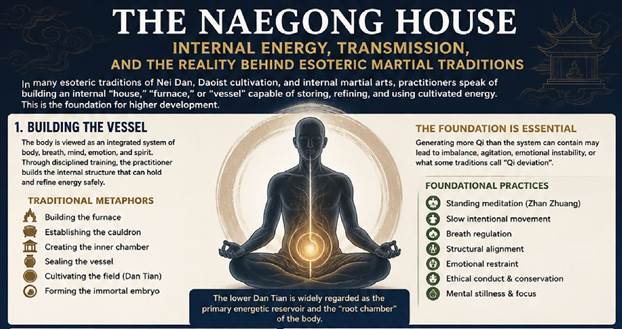
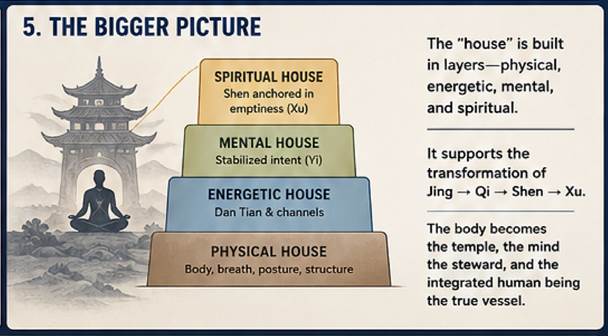
Within the worlds of Neidan, Daoist cultivation, and certain internal martial arts traditions, there are recurring references to building an internal “house,” “furnace,” “cauldron,” or “vessel” capable of storing and refining cultivated energy. While terminology varies among lineages, the underlying concept remains remarkably consistent: before one can safely cultivate higher levels of internal development, one must first develop the structure capable of containing it.

In some traditions this concept is associated with Nei Dan (internal alchemy), while in Korean systems it may be discussed under Naegong or internal power cultivation. Although modern practitioners sometimes interpret these teachings literally or mystically, many of the ideas may also correspond to practical physiological, psychological, and neurological adaptations developed through long-term training.

Building the Vessel

Traditional internal systems often describe the body as more than flesh and bone. The practitioner is viewed as an integrated system of body, breath, mind, emotion, and spirit. Through years of disciplined training, the individual gradually “builds the vessel” capable of stabilizing cultivated internal force.

Classical Daoist literature frequently uses symbolic language such as:

  • Building the furnace
  • Establishing the cauldron
  • Creating the inner chamber
  • Sealing the vessel
  • Cultivating the field
  • Forming the immortal embryo

These metaphors are generally associated with the development of the Dan Tian, especially the lower Dan Tian, which many traditions regard as the primary energetic reservoir of the body (Kohn, 2008).

The concept is not merely about accumulating “energy,” but about refining and integrating the practitioner as a whole. Traditional teachers often warned that attempting advanced energetic practices without sufficient preparation could result in imbalance, emotional instability, agitation, or what some systems referred to as “Qi deviation” (Despeux & Kohn, 2003).

For this reason, authentic systems historically emphasized foundational practices such as:

  • Standing meditation (Zhan Zhuang)
  • Slow intentional movement
  • Breath regulation
  • Structural alignment
  • Emotional restraint
  • Ethical conduct
  • Mental stillness
  • Conservation of vitality

In martial systems, these methods were believed to strengthen the body’s capacity to tolerate increased internal pressure, focus, and energetic intensity.

A Modern Physiological Perspective

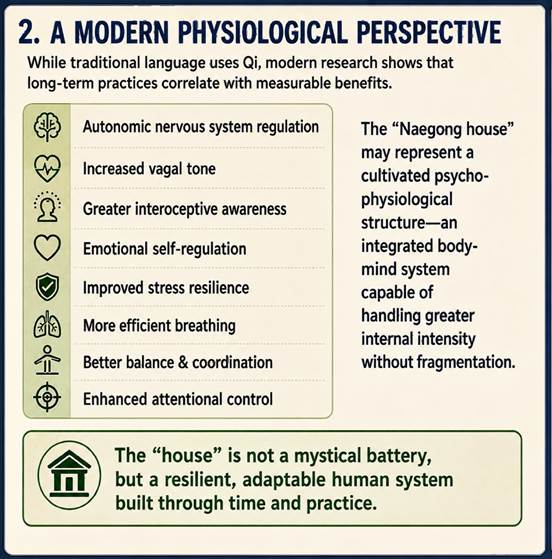
Although traditional terminology uses the language of Qi and internal energy, some aspects of these practices may correlate with modern understandings of human physiology and psychology.

Long-term breath training, posture work, meditative focus, and slow movement practices have been associated with improvements in:

  • Autonomic nervous system regulation
  • Vagal tone
  • Interoceptive awareness
  • Emotional self-regulation
  • Stress resilience
  • Breath efficiency
  • Balance and coordination
  • Attentional control

Research on contemplative movement systems such as Tai Chi and Qigong has shown measurable effects on stress reduction, mood regulation, balance, and psychophysiological health (Wayne & Kaptchuk, 2008; Wang et al., 2010).

From this perspective, the “Naegong house” may represent a metaphor for developing a more integrated and resilient body-mind system. The practitioner gradually becomes capable of handling greater internal intensity without fragmentation, impulsivity, or emotional instability.

In other words, the “house” may not be a mystical battery storing supernatural force, but rather a cultivated psychophysiological structure developed through years of disciplined practice.

Can Internal Energy Be Passed to Another Person?

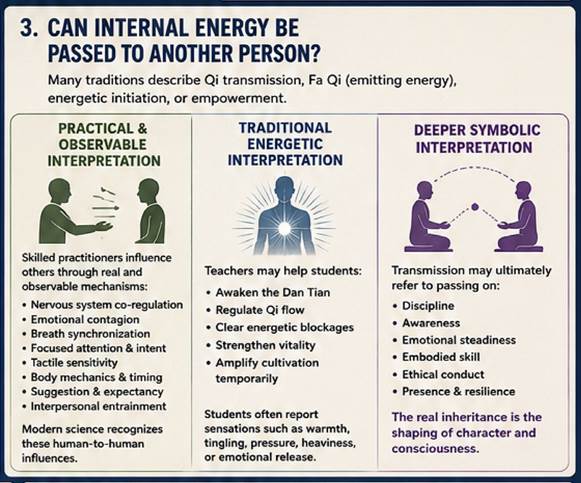
One of the more controversial aspects of internal martial and alchemical traditions involves the belief that cultivated energy or internal force can be transmitted from teacher to student.

Many traditional systems discuss concepts such as:

  • Qi transmission
  • Fa Qi (“emitting energy”)
  • Energetic initiation
  • Empowerment
  • Transmission of the “seed”
  • Establishing the furnace
  • Opening the channels

Some practitioners report sensations during such experiences including warmth, tingling, heaviness, emotional release, pressure, or involuntary movement. These reports are common across many contemplative and spiritual traditions worldwide.

However, interpretations of these experiences vary significantly.

The Practical and Observable Interpretation

A grounded interpretation suggests that experienced practitioners can indeed strongly influence others through mechanisms that are entirely real and observable.

These include:

  • Nervous system co-regulation
  • Emotional contagion
  • Breath synchronization
  • Focused attention
  • Tactile sensitivity
  • Body mechanics
  • Suggestion and expectancy
  • Interpersonal entrainment

Modern neuroscience and psychology recognize that human beings constantly influence one another physiologically and emotionally (Porges, 2011). A calm and highly regulated practitioner may affect another person’s breathing patterns, muscular tension, emotional state, and sense of safety.

Likewise, highly skilled internal martial artists often demonstrate remarkable efficiency through coordinated biomechanics, fascial connectivity, timing, and intent rather than brute muscular force alone.

To an outside observer, these effects may appear mysterious or “energetic,” even when rooted primarily in refined physical and neurological skill.

The Risk of Mystification

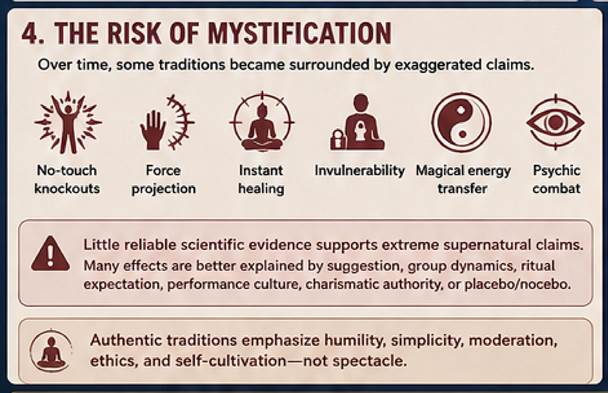
As with many esoteric traditions, internal martial arts also accumulated layers of mythologizing over time. Stories emerged involving:

  • No-touch knockouts
  • Supernatural force projection
  • Psychic combat
  • Instant healing abilities
  • Magical energy transfer
  • Invulnerability

While such claims remain popular in some circles, there is little reliable scientific evidence supporting extreme supernatural interpretations.

Many demonstrations of extraordinary “Qi powers” have failed under controlled testing conditions. In some cases, the effects may be better explained by:

  • Suggestion
  • Group dynamics
  • Compliance
  • Ritual expectation
  • Performance culture
  • Charismatic authority
  • Placebo and nocebo responses

This becomes especially important in high-control environments where mystical narratives can reinforce hierarchy, dependency, and unquestioned authority.

Historically, many authentic traditions actually warned against obsession with displays of power. Classical Daoist teachings frequently emphasized humility, simplicity, moderation, ethics, and self-cultivation over spectacle (Kohn, 2008).

The Deeper Meaning of Transmission

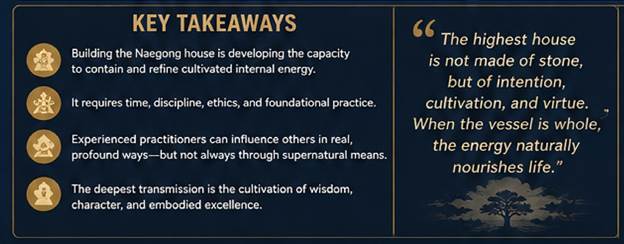
At its highest level, the idea of “passing the house” may not refer to transferring mystical energy at all. Instead, it may symbolize the transmission of cultivated human qualities developed through disciplined practice and lived experience.

A mature teacher may pass on:

  • Emotional steadiness
  • Discipline
  • Awareness
  • Presence
  • Resilience
  • Embodied knowledge
  • Ethical conduct
  • Refined perception

These qualities profoundly affect students over time.

In this sense, the real “transmission” may not be supernatural energy storage, but the gradual shaping of the practitioner’s nervous system, awareness, behavior, and character through years of intentional cultivation.

The body becomes the temple, the mind becomes the steward, and the “house” becomes the integrated human being itself.

References

Despeux, C., & Kohn, L. (2003). Women in Daoism. Three Pines Press. https://archive.org/details/womenindaoism0000desp

Kohn, L. (2008). Chinese healing exercises: The tradition of Daoyin. University of Hawai‘i Press. https://archive.org/details/chinesehealingex0000kohn

Porges, S. W. (2011). The polyvagal theory: Neurophysiological foundations of emotions, attachment, communication, and self-regulation. W. W. Norton & Company. https://archive.org/details/polyvagaltheoryn0000porg

Wang, C., Collet, J. P., & Lau, J. (2004). The effect of Tai Chi on health outcomes in patients with chronic conditions. Archives of Internal Medicine, 164(5), 493–501. https://doi.org/10.1001/archinte.164.5.493

Wang, F., Lee, E. K. O., Wu, T., Benson, H., Fricchione, G. L., Wang, W., & Yeung, A. S. (2010). The effects of Tai Chi on depression, anxiety, and psychological well-being: A systematic review and meta-analysis. International Journal of Behavioral Medicine, 17(4), 261–271. https://www.ncbi.nlm.nih.gov/books/NBK164598/

Wayne, P. M., & Kaptchuk, T. J. (2008). Challenges inherent to T’ai Chi research: Part I—T’ai Chi as a complex multicomponent intervention. Journal of Alternative and Complementary Medicine, 14(1), 95–102. https://doi.org/10.1089/acm.2007.7170A